Posts

Chinese Migrants Infiltrating Guam Military Base Raise Alarms Over National Security: CCP Wants to ‘Exploit’ Every Part of the U.S. Map

In recent years, a troubling trend has emerged in the U.S. territory of Guam, where concerns are mounting over the infiltration of Chinese migrants, raising serious questions about national security. With over 20,000 troops stationed on the island and hosting crucial military installations, Guam has become a focal point in the growing tension between the United States and the Chinese Communist Party (CCP).

Since 2022, there has been a notable increase in the number of Chinese nationals illegally entering Guam from the nearby Northern Mariana Islands. This influx poses a significant risk, as it opens avenues for potential CCP influence within the territory. According to reports from Guam’s homeland security agency, there have been 118 documented cases of “unlawful or attempted unlawful entries by Chinese citizens” since 2022, a trend that has raised red flags among top Republican officials.

House Homeland Security Chairman Mark Green, R-Tenn., has warned that the CCP is adept at exploiting vulnerabilities, and Guam’s strategic importance makes it a prime target for infiltration. He emphasized the critical role Guam plays in defending U.S. interests in the western Pacific and expressed concern over the surge in Chinese nationals entering the island, citing the uncertainty surrounding their intentions.

Green placed blame on the Biden administration for what he perceives as a failure to address the issue effectively, accusing it of displaying weakness that the CCP is quick to exploit. The situation is further exacerbated by the ongoing crisis at the U.S.-Mexico border, where Chinese migrants are reportedly the fastest-growing group being smuggled into the country.

Adding to the complexity is a visa loophole that allows Chinese nationals to visit the Northern Mariana Islands without a visa for up to 14 days.

The infiltration extends beyond Guam, prompting action from top leaders in the Senate. Sen. Joni Ernst, R-Iowa, has been vocal about the need to address the visa loophole, emphasizing the potential dangers posed by spies gathering intelligence on U.S. military activities.

Ernst, along with Rep. Neal Dunn, R-Fla., penned a letter to Department of Homeland Security Secretary Alejandro Mayorkas, urging the administration to address the policy loophole. While the administration has touted the economic benefits of the visa program for the Northern Mariana Islands, critics argue that national security concerns must take precedence.

Photo credit: Flickr
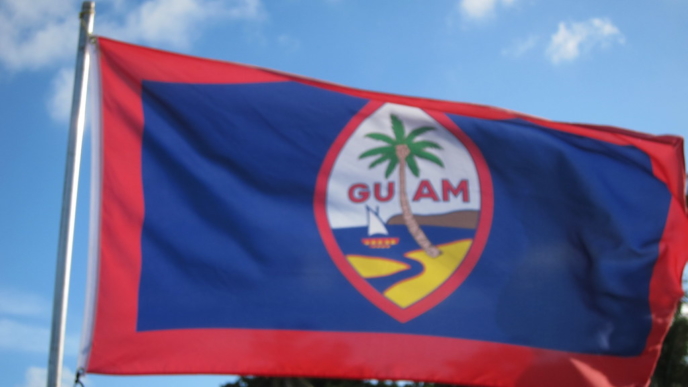
Guam Elects First Republican to Congress Since 1993

Guam elected James Moylan as a non-voting delegate to the U.S. House of Representatives, the first Republican since 1993.

The Pacific Daily News, a local outlet in Guam, reported the results of the race based on partial and unofficial results from the Guam Election Commission around 4:00 a.m. local time.

Moylan defeated former Democrat Speaker Judi Won Pat in the delegates race to represent Gaum as a non-voting member of the U.S. House. At the time of the race being called by the local outlet, Moylan led by 1,648 votes: 17,075 (52.19 percent) votes to 15,427 votes (47.15 percent).

The Republican will fill the seat currently held by incumbent Del. Michael San Nicolas.

Moylan will be the second Republican elected to represent Guam and the first Republican sent to Congress since 1993 after former Del. Vicente T. Blaz lost his reelection bid. (Read more from “Guam Elects First Republican to Congress Since 1993” HERE)

Photo credit: Flickr

Delete Facebook, Delete Twitter, Follow Restoring Liberty and Joe Miller at gab HERE.

What You Need to Know Guam and the North Korea Missile Crisis

North Korea has threatened to wipe out the western Pacific island of Guam, following ever-increasing rhetoric between Washington and Pyongyang.

On Wednesday, North Korea threatened to send a missile barrage at the U.S. territory, following President Trump’s insistence that the U.S. would retaliate against North Korean aggression with “fire and fury.”

Per PRI.org, North Korea’s Hwasong-12 missiles “flew about 489 miles in its latest test in May, when it was fired at a steep angle, and is believed to have a maximum range of about 3,106 miles.

“That puts Guam — around 2,050 miles from North Korea’s missile bases — well within range.”

Guam is the closest U.S. territory to North Korea, making it a vital defense post in the Pacific. But given its distance from the U.S. mainland, few Americans ever encounter the Pacific island territory.

Here’s what you need to know about Guam.

The small island (with a size of approximately 210 square miles), located 4,000 miles west of Hawaii, serves as an important strategic territory for the United States, given its relative proximity to the Asian continent and its important players, such as China, Japan, Indonesia, Vietnam, Taiwan, the Philippines, and North and South Korea.

Spain claimed sovereignty over Guam in 1565, and proceeded to colonize the land in 1668. A smallpox epidemic came 20 years later, wiping out much of the indigenous Chamorro population on the Island.

After four centuries of Spanish rule, Guam (and Puerto Rico) was transferred over to the United States as part of the Treaty of Paris of 1898.

Immediately after its attack on Pearl Harbor, Imperial Japan invaded and occupied the American garrison in Guam during World War II. The Japanese occupied Guam for 31 months.

After WWII, the Guam Organic Act of 1950 re-designated Guam as an unincorporated U.S. territory. The law provided U.S. citizenship for all residents of Guam, including the indigenous Chamorro people, and allowed them to vote for their governor. The act also created an elected legislature.

During the Vietnam War, the Andersen Air Force Base in Guam served as a major platform for U.S. operations. American bombers primarily departed from Guam, for close air support and heavy bombing runs.

Today, Guam is home to roughly 7,000 American service members, consisting of members of the Navy, Marines, Air Force, and Coast Guard. The military presence takes up about 30 percent of the entire island’s land, according to Fox News.

Guam’s population is about 163,000 people. A little over one-third is indigenous to the land, and another quarter is foreign workers from the Philippines. Some 85 percent of the population identifies as Roman Catholic, and the officials languages are English and Chamorro.

The U.S. territory is currently represented in Washington, D.C., by Madeleine Bordallo, who serves as Guam’s non-voting delegate to the House of Representatives. The Democrat representative has represented Guam since 2002.

The governor of Guam is Eddie Calvo, a Republican and member of the indigenous Chamorro population. During the 2016 Republican primary, Calvo endorsed Texas Senator Ted Cruz. When Cruz dropped out of the race, he endorsed Donald Trump.

Appearing on Fox News Thursday evening, Calvo supported the president’s debated “fire and fury” comments, stating: “As far as I’m concerned, as an American citizen, I want a president that says that if any nation such as North Korea attack Guam, attack Honolulu, attack the west coast, they will be met with hell and fury.”

So, what happens if North Korea does indeed go through with a missile attack on Guam?

There are several military defenses stationed on or near Guam. The THAAD (Terminal High Altitude Area Defense) missile defense system is currently deployed in Guam. THAAD is designed to detect and destroy a ballistic missile early on in its “boost phase.”

Several U.S. Navy ships possess SM-3 missiles, which are capable of hitting ballistic targets midflight in lower-earth orbit. And there is the Patriot missile, which also holds anti-ballistic capabilities.

Homeland Security officials in Guam continue to institute precautions and fact sheetsfor residents, should the defense systems fail to stop an attack. Yet through all the North Korean saber rattling, Gov. Calvo continues to reassure residents that the Island is “safe and sound.”

“Everyone should continue to live their lives,” he urged residents of the U.S. territory. (For more from the author of “What You Need to Know Guam and the North Korea Missile Crisis” please click HERE)

Follow Joe Miller on Twitter HERE and Facebook HERE.

North Korea Finalizes Plan for 'Merciless' Nuclear Strikes on U.S. as China Mobilizes Near the Border

Photo Credit: AP

By Guy Taylor. North Korea’s military ratcheted up its threat to carry out a nuclear strike on the U.S. to new heights Thursday — just hours after the Pentagon announced the deployment of an American ballistic missile defense system to Guam.

Claiming that the “moment of explosion is approaching fast” and that war could break out “today or tomorrow,” the General Staff of North Korea’s military claimed in a statement to the nation’s official government-run news agency that it has final approval to carry out “merciless” strikes on the United States.

The statement appeared to come in response to Washington’s decision to enhance U.S. military assets in the region and to the Obama administration’s own ramping up of rhetoric toward North Korea in recent days.

The escalation comes as senior administration officials say that they are searching for ways to defuse the situation, which also saw North Korea on Wednesday block South Koreans from accessing a border industrial park that has long stood as an important, albeit precarious, symbol of cooperation on the Korean Peninsula.

The State Department and Pentagon have suggested that a core part of the administration’s Korea strategy is to gently push on China to play a more active role in steering Pyongyang away from provocations and threats that may ultimately provoke military conflict. Read more from this story HERE.

Risky Business: Military buildup in China near North Korean border continues as tanks, armored vehicles spotted

By Bill Gertz. China continued moving tanks and armored vehicles and flying flights near North Korea this week as part of a military buildup in the northeastern part of the country that U.S. officials say is related to the crisis with North Korea.

The Obama administration, meanwhile, sought to play down the Chinese military buildup along the border with Beijing’s fraternal communist ally despite the growing danger of conflict following unprecedented threats by Pyongyang to attack the United States and South Korea with nuclear weapons.

According to U.S. officials with access to intelligence reports, both intelligence and Internet reports from the region over the past week revealed the modest military movements in the border region that began in mid-March and are continuing.

The buildup appears linked to North Korea’s March 30 announcement that it is in a “state of war” with South Korea after the United Nations imposed a new round of sanctions following the North’s Feb. 12 nuclear test and because of ongoing large-scale joint U.S.-South Korea military exercises.

The People’s Liberation Army (PLA) troop and tank movements were reported in Daqing, located in northeastern Heilongjiang Province, and in the border city of Shenyang, in Liaoning Province. Read more from this story HERE.

Encroachment: Russian Nuclear Bombers Circle Guam

photo credit: Andrey BelenkoTwo Russian nuclear-armed bombers circled the western Pacific island of Guam this week in the latest sign of Moscow’s growing strategic assertiveness toward the United States.

The Russian Tu-95 Bear-H strategic bombers were equipped with nuclear-tipped cruise missiles and were followed by U.S. jets as they circumnavigated Guam on Feb. 12 local time—hours before President Barack Obama’s state of the union address.

Air Force Capt. Kim Bender, a spokeswoman for the Pacific Air Force in Hawaii, confirmed the incident to the Washington Free Beacon and said Air Force F-15 jets based on Andersen Air Force Base, Guam, “scrambled and responded to the aircraft.”

“The Tu-95s were intercepted and left the area in a northbound direction. No further actions occurred,” she said. Bender said no other details would be released “for operational security reasons.”

The bomber incident was considered highly unusual. Russian strategic bombers are not known to have conducted such operations in the past into the south Pacific from bomber bases in the Russian Far East, which is thousands of miles away and over water.

Read more from this story HERE.