Posts

There’s Another Issue That’s About to Plague Biden and Democrats – Women Voters Will Be the First to Notice

. . .It’s inflation. It’s bound to plague us for many more months as well. Not good for a president whose party is barely clinging onto their majorities in the House and Senate. Now, Democratic pollsters are warning that political disaster awaits if it’s not dealt with seriously. Also, women voters will be the first to notice (via Axios)

Celinda Lake, who polled for the Biden presidential campaign and still advises Team Biden, told Axios that worries about inflation are coming through loud and clear in both public polls and her own focus groups.

“Women voters are really experiencing it, because they’re always more focused on kitchen table economics, microeconomics,” Lake said.

“The key target vote in the 2022 election is going to be non-college-educated women … because they are the most undecided.”

Lake said Democrats can’t afford to ignore the inflation issue or hope it goes away; they need to tackle it head on.

(Read more from “There’s Another Issue That’s About to Plague Biden and Democrats – Women Voters Will Be the First to Notice” HERE)

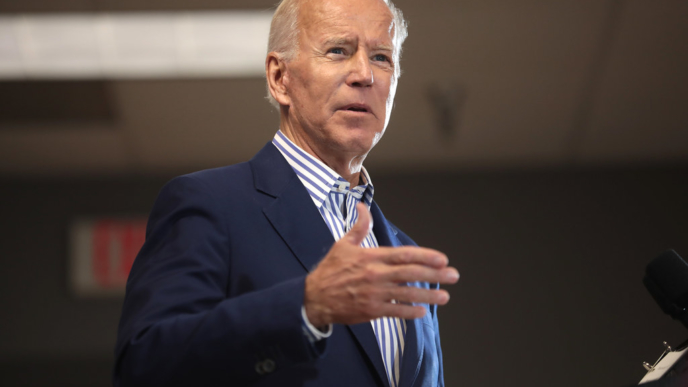
Photo credit: Gage Skidmore https://www.flickr.com/photos/gageskidmore/48548344661

Delete Facebook, Delete Twitter, Follow Restoring Liberty and Joe Miller at gab HERE.

White House Attempts To Pin Inflation on Summer

As the cost of basic goods, groceries and gas continues to skyrocket, the White House is attempting to pin rising inflation on seasonal price changes.

“Gas prices do historically rise in the summer and that’s particularly true even in moments like this when there is a spike in people traveling and even more people are hitting the road now because of our success defeating the pandemic,” Psaki said.

(Read more from “White House Attempts To Pin Inflation on Summer” HERE)

Photo credit: https://www.flickr.com/photos/23024164@N06/6797831370

Delete Facebook, Delete Twitter, Follow Restoring Liberty and Joe Miller at gab HERE.

Biden’s America: Expert Estimates US Inflation at 12% (VIDEO)

Appearing Tuesday on CNBC’s Squawk Box, hedge fund manager Kyle Bass estimated that the United States’ inflation rate is approximately 12 percent. . .

KYLE BASS: When you look at the inflation numbers, these are chain-weighted inflation numbers. These are numbers that are designed to be artificially be low. If you look at a non-chain-weighted index of inflation, we think it’s running about 12 percent, and with short term interest rates still at zero, that means people who have money in the bank, in their savings, are losing 5 to 12 percent of their purchasing power annually. We have 34 percent more money in the US system than we did 14 months ago. Of course we’re going to have inflation and it’s going to be significant.

(Read more from “Biden’s America: Expert Estimates US Inflation at 12% (VIDEO)” HERE)

Delete Facebook, Delete Twitter, Follow Restoring Liberty and Joe Miller at gab HERE.

U.S. Inflation Soars (VIDEO)

Inflation is soaring in the United States and at a higher rate than analysts predicted. In April 2021, the consumer price index saw a 4.3 percent jump, the fastest increase since 2008.

“Inflation accelerated at its fastest pace in more than 12 years for April as the U.S. economic recovery kicked into gear and energy prices jumped higher, the Labor Department reported Wednesday. The Consumer Price Index, which measures a basket of goods as well as energy and housing costs, rose 4.2% from a year ago, compared to the Dow Jones estimate for a 3.6% increase. The monthly gain was 0.8%, against the expected 0.2%,” CNBC reports. “Excluding volatile food and energy prices, the core CPI increased 3% from the same period in 2020 and 0.9% on a monthly basis. The respective estimates were 2.3% and 0.3%.”

(Read more from “U.S. Inflation Soars (VIDEO)” HERE)

Delete Facebook, Delete Twitter, Follow Restoring Liberty and Joe Miller at gab HERE.

An Idiotic Government with Idiotic Goals

Photo Credit: TownHallFor folks who are trying to ignite inflation, this sure isn’t working out very well. It’s been hoped by the country’s central bankers that the massive quantitative easing PROGRAM along with near-zero interest rates will touch off a wave of inflation that if not exactly the same thing as boom times, will at least give the appearance of a strengthening economy. However, month after month inflation in the goods that the Fed cares about seems muted. Now this month we had the horrid news that official inflation numbers are falling not rising.

“The consumer-price index declined 0.2 percent,” reports Bloomberg, “the first decrease since April 2013, a Labor Department report showed today in Washington. The median forecast of 83 economists SURVEYED by Bloomberg called for unchanged. Excluding volatile food and fuel, the so-called core measure was unchanged, the first time it failed to increase in almost four years.”

Oh, the horror of falling gas prices!

It should be noted that falling fuel costs, not coincidentally, also contributed to the robust retail SALES figures that boosted the economy in August

Read more from this story HERE.

Peter Schiff: Economy on Thin Ice, the Poor and Middle Class Should Prepare to Suffer the Most

Photo Credit: NoHoDamon / Creative Commons Friday’s release of disappointing August payroll numbers should have been a jarring wake-up call warning Wall Street that the economy has been treading on thin ice. Instead the alarm clock was stuffed under the pillow and Wall Street kept sleeping. The miss was so epic in fact (the 142,000 jobs created was almost 40% below the consensus estimate) that the top analysts on Wall Street did their best to tell us that it was all just a bad dream. Mark Zandi of Moody’s reacted on Squawk Box by saying “I don’t believe this data.” The reliably optimistic Diane Swonk of Mesirow Financial told Reuters the report “sure looks like a fluke, not a trend”.

But the opinions of those that really matter, the central bankers in charge of the global economy, are likely taking the report much more seriously. . . Since the markets crashed in 2008, central banks around the world have worked feverishly to push up the prices of financial assets and to keep consumer prices rising steadily. They have done so in the official belief that these outcomes are vital ingredients in the recipe for economic growth. The theory is that steady inflation creates demand by inspiring consumers to spend in advance of predictable price increases. . . In other words, seed the economy with money and inflation and watch it grow.

Thus far the banks have been successful in creating the bubbles and keeping inflation positive, but growth has been a no show. The theory says the growth is right around the corner, but like Godot it stubbornly fails to show up. This has been a tough circle for many economists to square.

. . .This is where we are with stimulus. Six years of zero percent interest rates and trillions and trillions of new public debt have failed to restore economic health, but our conclusion is that we just haven’t given it enough time or effort. My theory is a bit different. Maybe zero percent interest rates and asset bubbles hinder rather than help a real recovery. Maybe they resurrect the zombie of a failed model and prevent something viable and lasting from gaining traction? This is a possibility that no one in power is prepared to consider. . .

The tragedy is that if the policy fails to produce real growth, as I am convinced it will, the price will be paid by those elements of society least able to bear it, the poor and the old. Inflation and stagnation mean lost purchasing power. The rich can mitigate the pain with a rising stock portfolio and more modest vacation destinations. But they won’t miss a meal. Those subsisting on meager income will be hit the hardest.

Read more from this story HERE.

DC Continues Its Explosive Growth

spending

Photo Credit: 401(K) 2013

Adjusted for inflation, federal spending has gone up from an average of $882 billion every year in the 1980s to $1.48 trillion a year in the ’90s to $2.44 trillion a year in the first decade of the 21st century. It’s estimated that the government will have spent as much in the first four years of the new decade as it did in all of the 1990s.

Two crises — the terrorist attacks of Sept. 11, 2001, and the so-called “great recession” — further propelled the growth of government in certain areas but without the commensurate cuts in other areas that earlier generations imposed in times of crisis.

“In the past when there were various crisis like World War II or the Korean War, non-defense spending was dramatically cut by 20 to 30 percent,” Schatz said. “That didn’t happen after 9/11, and it certainly didn’t happen after the financial crisis.”

Nothing typifies the expansion of government like the growing wealth of the Washington, D.C., area. The region has few natural resources and little manufacturing base to produce wealth, yet seven of the nation’s 10 richest counties surround Washington. The average government worker’s compensation now stands at over $126,000 a year. And the fact that Washington’s traffic congestion now ranks as the nation’s worst stands as more evidence of the region’s growth.

As the rest of the country suffered through the recession with layoffs and foreclosures, Washington’s work force and its home prices remained mostly stable.

Read more from this story HERE.

Inflation Highest In More Than Three Years

Photo Credit: Reuters

U.S. consumer prices rose 0.7% in February for the largest gain since June 2009. Gasoline prices rose 9.1%, also making the largest jump since June 2009, and accounted for almost three-fourths of February’s gain in the consumer price index. The broader price category for energy increased 5.4%.

Despite the CPI’s large jump in February, longer-term trends remain within the Federal Reserve’s target. The overall CPI and the core reading, which excludes volatile energy and food categories, increased 2% over the 12 months that ended in February. Economists expect that today’s data should continue to support the Fed’s accommodative policy stance.

Looking forward, analysts expect monthly inflation to moderate as some of February’s surge in gasoline prices is reversed this month. In the most recent weekly data, average per-gallon gas prices across the U.S. fell five cents to $3.71.

“Overall, despite the sharp rise in headline prices and some modest firming in core consumer inflation pressures, the overall backdrop for consumer prices remains favorable, providing further breathing room for the Fed,” wrote Millan Mulraine, a macro strategist at TD Securities, in a research note.

Prices for food rose 0.1% in February. The core CPI rose 0.2%. Read RetireMentors: From ammunition to zucchini, prices are up.

Read more from this story HERE.
Sowell: Taxing the Poor

With all the talk about taxing the rich, we hear very little talk about taxing the poor. Yet the marginal tax rate on someone living in poverty can sometimes be higher than the marginal tax rate on millionaires.

While it is true that nearly half the households in the country pay no income tax at all, the apparently simple word “tax” has many complications that can be a challenge for even professional economists to untangle.

If you define a tax as only those things that the government chooses to call a tax, you get a radically different picture from what you get when you say, “If it looks like a tax, acts like a tax and takes away your resources like a tax, then it’s a tax.”

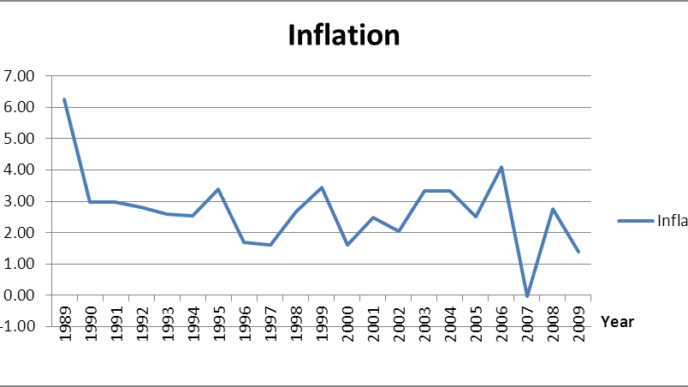
One of the biggest, and one of the oldest, taxes in this latter sense is inflation. Governments have stolen their people’s resources this way, not just for centuries, but for thousands of years.

Hyperinflation can take virtually your entire life’s savings, without the government having to bother raising the official tax rate at all. The Weimar Republic in Germany in the 1920s had thousands of printing presses turning out vast amounts of money, which the government could then spend to pay for whatever it wanted to pay for.

Read more from this story HERE.

Shrinking Product Sizes Hides Inflation

By Mary Kay Linge. These incredibly shrinking products are putting a stealth squeeze on our already thin wallets.

More companies are downsizing their packages — but many consumers don’t realize they’re getting the shaft because price and size changes are carefully camouflaged.

“We get a ton of examples of these from readers,” said Chris Morran of the Consumerist Web site. “You pay the same price but you get less product.”

Not even supermarket standards like the 5-pound bag of sugar are safe from shrinkage. The new normal: 4 pounds of the sweet stuff per bag.

Ivory Soap bars have slimmed down — going down from 4.5 to 4 ounces.

Toilet paper, once sold in standard 4.5-inch-square sheets, now may be so narrow that it slides out of your wall holder. Read more from this story HERE.

List of 10 Shrinking Products

By Consumer Reports.

Ivory dish detergent
Old: 30 oz.
New: 24 oz.
Difference: -20 percent
Reason: The 30-ounce product was discontinued in smaller stores, due to increased costs for raw materials.

Tropicana orange juice
Old: 64 oz.
New: 59 oz.
Difference: -7.8 percent
Reason: Last winter’s freeze in Florida. The choice was to raise prices drastically or drop package size. Based on consumer research, people preferred to keep the same price and get a little less juice to keep within their budgets.

Kraft American cheese
Old: 24 slices
New: 22 slices
Difference: -8.3 percent
Reason: The larger 16-ounce package was discontinued because it wasn’t selling.
More from Consumer Reports.

Kirkland Signature (Costco) paper towels
Old: 96.2 sq. ft.
New: 85 sq. ft.
Difference: -11.6 percent
Reason: “It’s a good question. I’ll look into it and e-mail a response.” (We never got one.)

Häagen-Dazs ice cream
Old: 16 oz.
New: 14 oz.
Difference: -12.5 percent
Reason: Due to the cost of ingredients and facility costs, it was either change the size of the container or raise the price.

Read more from this story HERE.