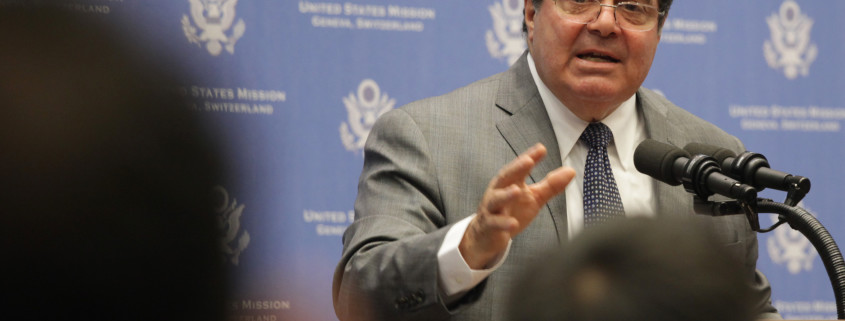
By WND. With confirmation that Supreme Court Justice Antonin Scalia was found dead Saturday morning with a pillow over his head and his clothes unwrinkled, nationally syndicated talk-radio host Michael Savage called for an investigation on the level of the presidentially appointed probe into President John F. Kennedy’s assassination in 1963.
“Was [Scalia] murdered?” Savage asked his listeners.
“We need a Warren Commission-like federal investigation,” he said. “This is serious business.”
Savage said an immediate autopsy of the body is needed.
“There was no medical examiner present. There was no one who declared the death who was there. It was done by telephone from a U.S. Marshal appointed by Obama himself,” he said. (Read more from “Was Scalia Murdered?” HERE)
___________________________________
Detectives Question Lack of Autopsy in Scalia Death
By Jamie Schram and Bob Fredericks. Veteran homicide investigators in New York and Washington, DC, on Monday questioned the way local and federal authorities in Texas handled the death of Supreme Court Justice Antonin Scalia.
“It’s not unreasonable to ask for an autopsy in this case, particularly knowing who he is,” retired Brooklyn homicide Detective Patricia Tufo told The Post.
“He’s not at home. There are no witnesses to his death, and there was no reported explanation for why a pillow is over his head,” Tufo said. “So I think under the circumstances it’s not unreasonable to request an autopsy. Despite the fact that he has pre-existing ailments and the fact that he’s almost 80 years old, you want to be sure that it’s not something other than natural causes.”
Bill Ritchie, a retired deputy chief and former head of criminal investigations for the DC police, said he was dumbstruck when he learned that no autopsy would be performed.
“I took a look at the report and I almost fell out of my chair,” Ritchie told The Post from his home in Maryland. (Read more from “Detectives Question Lack of Autopsy in Scalia Death” HERE)
___________________________________
Trump: ‘Pretty Unusual’ Scalia Was Found With ‘Pillow on His Face’
By Alex Griswold. During a Tuesday interview with talk show host Michael Savage, Donald Trump seemed to lend some credence to the conspiracy theories that Supreme Court Justice Antonin Scalia was murdered, saying it was “pretty unusual” they found a pillow on his face.
“Donald, I need to come back to the topic we’ve all been screaming about here, which is Scalia, was he murdered,” Savage said. “I know it’s pretty brutal to say that, and I’m not wanting to drag you into this, but this is going to be bigger and bigger and bigger” . . .
“They say they found a pillow on his face, which is a pretty unusual place to find a pillow,” Trump said. “I can’t tell you– I can’t give you an answer.” (Read more from “Trump: ‘Pretty Unusual’ Scalia Was Found With ‘Pillow on His Face'” HERE)
Saturday was a tough day for America. We lost the leading champion of our Constitution, Justice Antonin Scalia, a great-souled scholar who with learning, wit and principle defended the actual words, sentences and paragraphs of our precious founding document. Without men like him, it will surely become so much scrap paper for liberal elites to fill with their latest fetishes. His death affected me like the passing of Richard John Neuhaus and the resignation of Pope Benedict XVI: One by one, the lights are winking out, and the darkness grows ever deeper.
All the more reason to start a fire. For too long, Republican and Democratic senators have played by radically different rules when it came to approving Supreme Court (and other federal court) appointments by the other party’s presidents. Republicans have mostly toed the old civics-class line that every judge should be evaluated by his or her professional qualifications, and not subjected to “litmus tests” on particular issues, since the courts are not meant to be activist. (Jeb Bush is still repeating that talking point.) So in theory, a judge’s personal politics ought not to be at issue.
[Listen to this recent interview with the author:]
And liberals have nodded and smiled, as Republican senators were voting to confirm ideologues like Ruth Bader Ginsburg and Sonia Sotomayor. But when a Republican president appointed principled conservatives such as Robert Bork and Clarence Thomas, Democrats threw that fine pretense aside and acted as if the Court were a crucial power center in the struggle for America, because in fact it does legislate, and aggressively so, on issues of critical importance to life, liberty and happiness.
And the Democrats were right. Not on the kinds of judges they wanted, nor even on what the Court should do, but on what it does, and how we should respond. Ronald Reagan once quipped that in the arms race with the Soviet Union, “only one side is running.” And that is the problem with our courts, the reason that Democratic appointees are absolutely lockstep predictable in how they will vote on crucial social issues, while Republican picks are open questions.
Some of the Republican appointees, such as the late Justice Scalia, and Justices Samuel Alito and Clarence Thomas, hew closely to Constitutional principles. But George W. Bush appointee John Roberts and especially Reagan appointee Anthony Kennedy are unreliable, subject some observers say to the press of public opinion, and even political pressure. And don’t forget President George H. Bush’s now infamous David Souter appointment. Souter was a somewhat unknown quantity at the time and sailed through the confirmation process, but he became a reliably liberal vote during his tenure on the high court, and even waited out George W. Bush’s eight years in the White House in order to retire when Bush’s Democratic successor had moved into the Oval Office, thus allowing President Obama to appoint Souter’s successor, the liberal Sonya Sotomayor.
As Ted Cruz rightly observed in the first GOP debate, the reason for this pattern of Republican presidents appointing unreliable candidates for the high court is that those justices were chosen to sail through a Senate that might not confirm conservatives, by White Houses that weren’t willing to fight.
Can you imagine the outrage that would flame across America among the left if a Clinton or Obama appointee started voting with Justice Thomas? Democratic donors and activists would be on the warpath. There would be agonized “listening sessions” at Harvard and Oberlin College, and future judges would be vetted by retired East German Stasi agents. But when GOP appointees betray the voters who elected the presidents in question, and collude in the use of the Constitution to impose leftist agendas that Americans rejected at the voting booth — from legal abortion to same sex “marriage” and beyond — we mostly shrug. We are used to it. Our party’s elites are unreliable, and this is the price we pay.
This year’s primary season is showing those party elites the price of those and other betrayals. The voters don’t trust the leaders of the party or even the conservative movement, and are toying with the idea of giving the nomination to an untested, crass, unprincipled demagogue, by way of teaching the GOP a lesson. Such populism could be defined as “the dumb thing you do when elites have foreclosed all the smart options.”
But we do have smart options. There is more than one potential GOP nominee who has credibly pledged to appoint solid, pro-life conservatives to our courts. The question is whether they’d have the spine to do it, to face the firestorm of elite and media abuse that would accompany such an appointment, and be prepared to stand their ground. This is what a conservative president would need to do to overcome the fanatical opposition that a real conservative nominee would face in the Senate:
1. Choose a solid, Constitutional conservative with a long track record.
2. Make it clear that he will put all his political muscle behind winning his confirmation, and will punish any senator who opposes him.
3. Broadcast the fact that if this nominee is rejected, the next one will be as conservative or more conservative, as will the next one after that — because that president would rather leave a vacant seat on the court for the rest of his term in office than be responsible for turning over our fragile, complex Constitutional order to political perversion.
There are two pro-life senators among the presidential candidates. Each of them could show his mettle by leading the fight right now to stop the Senate from even considering any appointee by Barack Obama to fill Justice Scalia’s seat on the court. Ideally, senators Rubio and Cruz should hold a joint press conference to this effect this very week, putting aside their differences to form a common front in defense of the Constitution, religious liberty and unborn life. They should gather as many of their colleagues as they can in such an effort, with a pledge to block by any and every legal means any Obama appointment.
But they should go further. As long as Republicans control the Senate, there is no excuse for any pro-choice, anti-gun rights, anti-marriage justices to be confirmed to our highest court. If, God forbid, Bernie Sanders or Hillary Clinton is elected, they should face a Republican Senate — or even a GOP minority — that will obstruct their every judicial appointment, even if it means leaving key seats on national benches empty, for years at a time. As justices retire or die, the court will simply grow smaller. Big deal. America will muddle through. This is the kind of implacable determination that defeated the solidly conservative Justice Bork and got us the muddled Anthony Kennedy — and Casey v. Planned Parenthood and Obergefell. It is time for that worm to turn.
Conservatives must drop the facade of high-minded bipartisanship, which only ever cuts to the left. The courts have staggering power to change our lives, and damage our country. They can kill our nation’s unborn babies, seize our guns and punish our churches. If GOP senators aren’t willing to fight long, hard and relentlessly to stop that from happening, we should find other senators who can, back them in the next primary election, and cripple the re-election of squishy moderate turncoats. A presidential candidate who appreciates all this will get my vote. And I think he’ll earn yours.
In the meantime, of Justice Scalia, I feel sure that he is enjoying his reward, and I hope that the Catholic Church recognizes him soon. As they said of John Paul II, santo subito! Antonin Scalia, pray for us. (For more from the author of “Honor Justice Scalia by Keeping His Court Seat Empty — for Years, If Necessary” please click HERE)
https://joemiller.us/wp-content/uploads/Antonin-Scalia-compressed.jpg579900Joe Millerhttps://joemiller.us/wp-content/uploads/logotext.pngJoe Miller2016-02-15 23:58:502016-04-11 10:52:37Honor Justice Scalia by Keeping His Court Seat Empty — for Years, If Necessary
Photo Credit: IJReview.com The GOP debate in South Carolina is being talked about as one of the most raucous events of the season so far. But tongues are also wagging about what Donald Trump did — or more precisely for what he didn’t do — during the moment of silence for deceased judge Antonin Scalia.
As the debate started the CBS moderator asked the candidates to observe a moment of silence for Supreme Court Justice and conservative giant Antonin Scalia who had died that morning. As a sign of respect, all the GOP candidates bowed his head during the moment of silence. Marco Rubio even made the sign of the cross in memorial to the fallen judge.
All the candidates bowed their heads — that is, but one…
Notice in the video Donald Trump doesn’t bow his head, nor does he even seem to close his eyes. Trump stands ram-rod straight with his head raised high . . .
Some are saying it was arrogant and disrespectful for Trump not to bow his head. Others don’t seem to care . . .
As for the rest of the debate, it was one rowdy event, for sure. With a crowd that hooted and hollered at the candidates, not to mention the candidates themselves repeatedly calling each other a liar, it was quite an affair. (Read more from “Watch: One Thing During GOP Debate’s Moment of Silence for Justice Scalia Had Some Viewers Outraged” HERE)
https://joemiller.us/wp-content/uploads/Trump_Head_Up_01.jpg352700Joe Millerhttps://joemiller.us/wp-content/uploads/logotext.pngJoe Miller2016-02-15 23:56:322016-04-11 10:52:37Watch: One Thing During GOP Debate’s Moment of Silence for Justice Scalia Had Some Viewers Outraged
By Eva Ruth Moravec, Sari Horwitz and Jerry Markon. In the cloistered chambers of the Supreme Court, Justice Antonin Scalia’s days were highly regulated and predictable. He met with clerks, wrote opinions and appeared for arguments in the august courtroom on a schedule set months in advance.
Yet as details of Scalia’s sudden death trickled in Sunday, it appeared that the hours afterward were anything but orderly. The man known for his elegant legal opinions and profound intellect was found dead in his room at a hunting resort by the resort’s owner, who grew worried when Scalia didn’t appear at breakfast Saturday morning.
It then took hours for authorities in remote West Texas to find a justice of the peace, officials said Sunday. When they did, Presidio County Judge Cinderela Guevara pronounced Scalia dead of natural causes without seeing the body — which is permissible under Texas law — and without ordering an autopsy. . .
One of two other officials who were called but couldn’t get to Scalia’s body in time said that she would have made a different decision on the autopsy. (Read more from “Confusing, Conflicting Reports Surround Antonin Scalia’s Death” HERE)
_________________________________
Scalia Found Dead With ‘Pillow Over His Head’
By WND. Since Justice Antonin Scalia was found dead in his resort hotel room at Cibolo Creek Creek Ranch on Saturday, questions have been flying about the immediate declaration of “natural causes” as the means of death.
According to the ranch owner, Scalia was described as “animated and engaged” during dinner Friday night. He was one of three dozen invitees to an event unrelated to law or politics . . .
Houston businessman John Poindexter, who owns the 30,000-acre luxury ranch, told the San Antonio Express-News: “He was seated near me and I had a chance to observe him. He was very entertaining. But about 9 p.m. he said, ‘It’s been a long day and a long week, I want to get some sleep.’”
Poindexter knocked on Scalia’s door about 8:30 the next morning. The door was locked and the judge did not answer. Three hours later, Poindexter returned from an outing and determined Scalia was still missing.
“We discovered the judge in bed, a pillow over his head. His bed clothes were unwrinkled,” said Poindexter. (Read more from “Scalia Found Dead With ‘Pillow Over His Head'” HERE)
https://joemiller.us/wp-content/uploads/Antonin_Scalia_official_SCOTUS_portrait_crop.jpg13081046Joe Millerhttps://joemiller.us/wp-content/uploads/logotext.pngJoe Miller2016-02-14 23:39:252016-04-11 10:52:39Confusing, Conflicting Reports Surround Antonin Scalia’s Death; Found With a Pillow OVER His Head
Mere minutes after the terrible news of Supreme Court judge Antonin Scalia’s death broke across social media, left-wingers took to Twitter to gloat and spew:
[Warning: Graphic Language]
Fuck you, Scalia. Rot in hell. Learn the law while you down there, bitch. *spitshttps://t.co/XZfdZeAh5b
A few minutes after the hate wave came a stream of tweets from libs voting on their preferred replacement. Loretta Lynch? Eric Holder? Nope. The top vote-getter appears to be…Obama himself.
Justice Scalia’s final written dissent was in an obscure case that is only known to those in the electric power industry. But this case, Federal Energy Regulatory Commission v. Electric Power Supply Association, is the embodiment of what is wrong with the modern court system and exemplifies Scalia’s commitment to the written law.
Without getting into the weeds of the case, the Federal Power Act [16 U.S.C. § 791] authorizes the Federal Energy Regulatory Commission (FERC) to regulate wholesale electric power market but explicitly prohibits the FERC from regulating “any other sale” of electricity. Anything on the retail side is left to the states. In 2011, FERC promulgated a “demand response” regulation providing for monetary incentives to large electricity consumers, such as hospitals and schools, that reduce their consumption during peak usage times. This is one of the tools in the “clean energy” cartel’s arsenal to limit the use of fossil fuels.
Obviously, the case, its ramifications, and its stakeholders is an extremely complex case study. But the legal question was very simple. Does FERC have the authority to promulgate such a regulation on the consumer side when statute explicitly leaves this to the states and actually prohibits FERC from stepping outside of the wholesale market?
In an opinion eerily similar to King v. Burwell, in which Chief Justice Roberts completely rewrote Obamacare’s health care subsidy scheme in order to accommodate a lawless executive agency, Justice Kagan rewrote the Federal Power Act to do the exact opposite of its intent. Just like Obamacare was designed to only incentivized those states that establishes state exchanges, yet Roberts translated “state” into “federal,” Kagan translated “wholesale” into retail – manifestly opposite from the original intent of the statute.
At its core, the key function of the court is to apply statutes to cases and controversies, not rewrite statutes and the Constitution. As I’ve often said before, when executive agencies violate congressional laws, it is the quintessential time for the courts to step in and do their job; namely, interpret the law as written. Yet, in the FERC case, Roberts and Kennedy joined with the four liberals to overturn the D.C. Court of Appeals, which struck down the FERC rule, in an opinion written by the inimitable Janice Rogers Brown.
In his characteristic clarity for explaining the written law, Scalia demolished Kagan’s opinion, noting that anything that does not regulate wholesale markets is not within the authority of FERC:
While the majority would find every sale of electric energy to be within FERC’s authority to regulate unless the transaction is demonstrably a retail sale, the statute actually excludes from FERC’s jurisdiction all sales of electric energy except those that are demonstrably sales at wholesale. So what, exactly, is a “sale of electric energy at wholesale”? We need not guess, for the Act provides a definition: “a sale of electric energy to any person for resale.” §824(d) (emphasis added). No matter how many times the majority incants and italicizes the word “wholesale,” ante, at 19–20, nothing can change the fact that the vast majority of (and likely all) demand-response participants—“[a]ggregators of multiple users of electricity, as well as large-scale individual users like factories or big-box stores,” ante,at 7—do not resell electric energy; they consume it themselves. FERC’s own definition of demand response is aimed at energy consumers, not resellers.
Scalia went on to use the majority’s own examples against their conclusion. The bottom line in this case and in every case of statutory interpretation is that one must always interpret the law as written, not as one wants it written or in a way that would make things more practical.
This is what Scalia taught us for his almost three decades on the court. And it was so eloquently on display in this dissent published on January 25, 2016. The law is the law. If you don’t like it, there is a democratic process through which one can modify it. But the court is not the place for rewriting statutes.
It’s also worth reading another dissent Scalia wrote on January 25 in Montgomery v. Louisiana. In that case, Roberts and Kennedy joined with the four leftists to retroactively apply a decision rewriting the Eighth Amendment’s cruel and unusual punishment clause, thereby paving the road for the release of a number of violent murderers who were sentenced to life without parole.
Sadly, not only do we have 4-6 justices who, at any given time, believe it is their job to rewrite the Constitution and the role of the court, but we have 4-6 justices who abdicate their core Constitutional responsibility to interpret statutes as written and not factor in political considerations or efficient market outcomes.
Scalia’s untimely death leaves a gaping hole in an already irremediably broken institution. (For more from the author of “Justice Scalia’s Final Dissent” please click HERE)
Supreme Court Justice Antonin Scalia said in an address over the weekend that the Constitution does not dictate that the federal government must be neutral between different religions or between religion and no religion at all. He added that God has been good to the United States in the past because Americans have honored Him.
Scalia gave the remarks on Saturday at the Archbishop Rummel [Catholic] High School in a suburb of New Orleans. The justice was appointed by Ronald Reagan in 1986 and is the court’s longest serving member.
“To tell you the truth there is no place for that in our constitutional tradition. Where did that come from?” he said. “To be sure, you can’t favor one denomination over another but can’t favor religion over non-religion?”
The First Amendment to the Constitution provides, “Congress shall make no law respecting an establishment of religion, or prohibiting the free exercise thereof…”
Scalia also said there is “nothing wrong” with the idea of presidents and others invoking God in speeches.
Scalia told the audience that during the Sept. 11 attacks, he was in Rome at a conference. “The next morning, after a speech by President George W. Bush in which he invoked God and asked for his blessing, Scalia said many of the other judges approached him and said they wished their presidents or prime ministers would do the same,” the Associated Press reported. (Read more from “Supreme Court Justice Scalia Just Dropped Bombshell on Battle Over Religion and Government” HERE)
https://joemiller.us/wp-content/uploads/logotext.png00Joe Millerhttps://joemiller.us/wp-content/uploads/logotext.pngJoe Miller2016-01-04 22:55:192016-04-11 10:54:14Supreme Court Justice Scalia Just Dropped Bombshell on Battle Over Religion and Government [+video]
Photo Credit: CRAIG T. KOJIMAU.S. Supreme Court Justice Antonin Scalia told law students at the University of Hawaii law school Monday that the nation’s highest court was wrong to uphold the internment of Japanese-Americans during World War II but that he wouldn’t be surprised if the court issued a similar ruling during a future conflict.
Scalia was responding to a question about the court’s 1944 decision in Korematsu v. United States, which upheld the convictions of Gordon Hirabayashi and Fred Korematsu for violating an order to report to an internment camp.
“Well, of course, Korematsu was wrong. And I think we have repudiated in a later case. But you are kidding yourself if you think the same thing will not happen again,” Scalia told students and faculty during a lunchtime question-and-answer session.
Scalia cited a Latin expression meaning “In times of war, the laws fall silent.”
https://joemiller.us/wp-content/uploads/logotext.png00Joe Millerhttps://joemiller.us/wp-content/uploads/logotext.pngJoe Miller2014-02-06 02:57:412016-04-11 11:12:42Scalia: US Supreme Court May Force Americans Into Internment Camps Again
On Monday, Supreme Court Justice Antonin Scalia slammed President Barack Obama’s interpretation of the U.S. Constitution during oral arguments over Recess appointments.
The case, National Labor Relations Board vs. Noel Canning, is over whether the president acted legally when he made a series of temporary appointments to the National Labor Relations Board while the Senate was not conducting business but still gavelling in and out every day.
Clause three of the Constitution’s section on presidential powers states that, “The president shall have power to fill up all vacancies that may happen during the recess of the Senate, by granting commissions which shall expire at the end of their next session.”
Photo Credit: AP/Jessica Hill,Supreme Court Justice Antonin Scalia said he believes in the Devil as a living entity, “a real person,” and that the Devil is “smart” and “successful” in today’s world by convincing people to not believe in him or in God.
The topic came up in an interview with New York Magazine’s Jennifer Senior, which was published on Oct. 6.
“Hey, come on, that’s standard Catholic doctrine,” said Scalia, who is Catholic. “Every Catholic believes that…”
When asked by Senior, “Isn’t it frightening to believe in the Devil?” the Supreme Court justice said, “You’re looking at me as though I’m weird. My God! Are you so out of touch with most of America, most of which believes in the Devil? I mean, Jesus Christ believed in the Devil! It’s in the Gospels. You travel in circles that are so, so removed from mainstream America that you are appalled that anybody would believe in the Devil! Most of mankind has believed in the Devil, for all of history. Many more intelligent people than you or me have believed in the Devil.”
https://joemiller.us/wp-content/uploads/logotext.png00Joe Millerhttps://joemiller.us/wp-content/uploads/logotext.pngJoe Miller2013-10-09 00:20:582016-04-11 11:16:48Justice Scalia: ‘I Even Believe in the Devil’