Posts

The House Approves Federal Decriminalization of Marijuana

By a vote of 228-164, the House of Representatives has passed a measure to decriminalize marijuana and move forward on erasing nonviolent federal marijuana convictions. Democrats consider it a step to decreasing the racial disparities in the justice system. The bill, which was introduced by Sen. Kamala Harris (D-CA) and Rep. Jerry Nadler (D-NY), now heads to the Senate.

(Read more from “The House Approves Federal Decriminalization of Marijuana” HERE)

Follow Joe Miller on Twitter HERE and Facebook HERE

New Study: Smoking Weed Can Age the Brain by Nearly Three Years

New research suggests that smoking weed could age your brain by as much as three years.

Basically, if the new science is to be believed, consuming marijuana speeds up the ageing of the brain by around 2.8 years, which is worse than bipolar disorder or attention deficit hyperactive disorder. . .

The study shines a new light on the effects of smoking cannabis and the author of the study thinks that it should give us reason to think about how harmful it is.

Lead author Dr Daniel Amen said: “The cannabis abuse finding was especially important, as our culture is starting to see marijuana as an innocuous substance. This study should give us pause about it.”

Reduced blood flow through the brain can cause health complications such as strokes and dementia. (Read more from “New Study: Smoking Weed Can Age the Brain by Nearly Three Years” HERE)

Follow Joe Miller on Twitter HERE and Facebook HERE

U.S. University Is Paying Pregnant Women to Do Drugs

The University of Washington is recruiting pot-smoking pregnant women to participate in a study conducted by its Radiology Department, and is paying the expectant mothers to continue to smoke weed throughout their pregnancies so researchers can track the drug’s impact on babies. . .

According to the university’s website, researchers are looking for women who are less than 13 weeks pregnant, “and must either consume marijuana frequently or not at all.” If accepted, test subjects will be paid $300 to complete the program, which entails three drug tests during pregnancy and an assessment of their baby’s development at six months of age.

The project study explains that researchers “will recruit 35 pregnant women who are using cannabis to alleviate morning sickness and 35 pregnant women who are using prescribed medication for morning sickness.” . . .

KOMO-TV reported that “throughout their pregnancies, test group subjects will have to report weekly pot use, purchase marijuana only from licensed sellers, and send photos of the product’s packaging for researchers to record percentages of tetrahydrocannabinol (THC), pot’s active ingredient and cannabidiol (CBD), a non-active compound whose potential therapeutic properties are the focus of the current investigation.”

Moms + Marijuana project leader Dr. Natalia Kleinhans said in a press release, “This study is targeting a very specific population of women who are using marijuana to manage their symptoms while they’re pregnant. There’s little research to back up the medical and public health advice they’re getting to stay away from pot to control nausea.” (Read more from “U.S. University Is Paying Pregnant Women to Do Drugs” HERE)

Follow Joe Miller on Twitter HERE and Facebook HERE

New Study Reveals More Dramatic Effects Marijuana Use Causes on Brain

By Business Standard. New researches by Canadian neuroscientists have revealed that cannabis use affects the brain of adolescents and is linked to cognitive abnormalities, impairments in working memory, and inhibitory control.

The research was presented by neuroscientists Patricia Conrod, Steven Laviolette, Iris Balodis and Jibran Khokhar at the ’13th Annual Canadian Neuroscience Meeting’.

Dr Patricia Conrod, Universite de Montreal, studied the year-to-year changes in alcohol and cannabis use and cognitive function in a sample of adolescents consisting of five per cent of all students entering high school in 2012 and 2013.

The students were assessed annually for four years on alcohol and cannabis use, and their cognitive function was evaluated using computerised cognitive tests.

According to the study, cannabis use was linked to impairments in working memory and inhibitory control, which is required for self-control. Cannabis use was also linked to deficits in memory recall and perceptual reasoning. (Read more from “New Study Reveals More Dramatic Effects Marijuana Use Causes on Brain” HERE)

________________________________________________________________

Teenage Cannabis Use Linked to Memory Problems

By Newsweek. Teenagers who use cannabis could be at risk of developing problems with memory, scientists believe.

Researchers looked at 3,826 students attending schools in the Greater Montreal area of Canada. Every year from grade seven to grade 11, the team asked the participants whether they used drugs including cannabis and alcohol. They also tested their memory, visual reasoning skills and inhibition levels. On a 6-point scale marked from ranging from “never” to “every day,” participants answered how often they used a particular substance, and answered how many alcoholic drinks they’d have in one session.

Students who took part were reassured their answers would be anonymized, so they weren’t put off from answering honestly. Information like the participants’ socioeconomic status and sex was also collected.

Using cannabis was linked to issues with memory, inhibition control and reasoning. The same was not observed in those who used alcohol. The more often the students used drugs including cannabis, the lower their scores on the memory tests, reasoning and inhibition were, the authors found.

Past studies have linked alcohol and cannabis to issues with learning, decision making and thinking, and lower grades in adolescents and adults, the authors said. (Read more from “Teenage Cannabis Use Linked to Memory Problems” HERE)

Follow Joe Miller on Twitter HERE and Facebook HERE

Marijuana-Related ER Visits Have Tripled in Colorado Since Legalization

Marijuana-related emergency room visits tripled in Colorado since the legalization of cannabis in 2012, according to a study published Monday in the Annals of Internal Medicine.

Researchers at UCHealth University of Colorado Hospital reviewed the records of nearly 10,000 patients who had pot-related visits at the hospital between 2012 to 2016. They found a three-fold increase in cannabis-associated emergency department visits during that period.

“Lawmakers rushing to legalize marijuana need to slow down and consider the implications it could bring upon their state,” Dr. Kevin Sabet, founder of Smart Approaches to Marijuana, said in an email to TheBlaze. “They are certainly not receiving information such as this from the pot industry’s army of lobbyists.”

Pot smokers visited the emergency room more often, but edibles accounted for a higher number of cardiovascular and psychiatric symptoms, the study showed. Edibles are food products containing tetrahydrocannabinol, more commonly known as THC. It is the psychoactive ingredient in cannabis. . .

“Acute psychiatric visits like acute panic attacks, acute psychosis, and acute-onset of chronic conditions such as acute exacerbations of schizophrenia were also much more commonly associated with cannabis edibles,” he added. (Read more from “Marijuana-Related ER Visits Have Tripled in Colorado Since Legalization” HERE)

Follow Joe Miller on Twitter HERE and Facebook HERE
Heavy Pot Smoking Has Now Been Linked to THIS Strange Syndrome

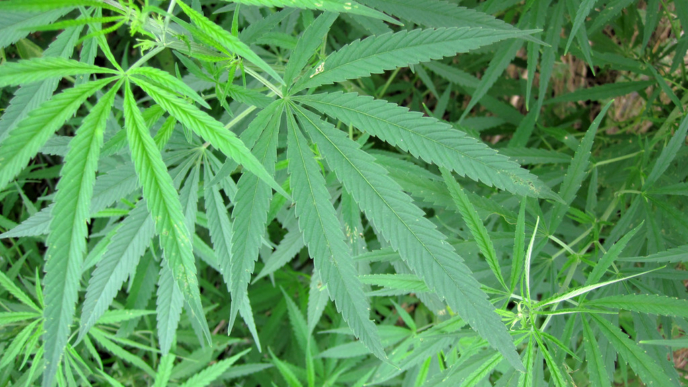
But when it comes to recreational use, the problem becomes one of how much you are smoking and for how long. Studies have shown that regular users can develop cognitive and behavioral problems, and an increased risk of anxiety and depression.

And according to a recent study at NYU Langone Health, chronic pot smokers (defined as more than 20 days per month) had almost a one out of three chance of developing Cannabinoid Hyperemesis Syndrome (CHS), an awful condition associated with varying degrees of pain and uncontrolled nausea and vomiting, which can for last several hours. This translates to over 3 million sufferers in the U.S., when you consider the current numbers of chronic pot smokers. . .

According to Dr. Joe Habboushe, associate professor of emergency medicine at NYU and first author of the study, the weed-induced vomiting doesn’t respond to routine anti-nausea drugs but only to several hours of hot showers or capsaicin (derived from peppers) cream.

While Habboushe acknowledged to me in an interview that small amounts of marijuana (containing cannabinoids) suppresses nausea and pain in the brain and nerves, at the same time, too much of it over time may “overstimulate and turn off the very receptors that were suppressing nausea and pain in the first place.” Habboushe added, “Hot showers seem to be able to stimulate the same receptors and turn them back on.” . . .

Despite the growing number of cases of CHS, many doctors are still not familiar with this condition and may misdiagnose the problem as something else. Patients have had multiple diagnostic tests and even had their gallbladders removed unnecessarily as a result of the symptoms. (Read more from “Heavy Pot Smoking Has Now Been Linked to THIS Strange Syndrome” HERE)

Follow Joe Miller on Twitter HERE and Facebook HERE

About 1 in 7 U.S. Adults Reported Using Marijuana Last Year, and Many Believe It Has Health Benefits

Nearly 15 percent of adults in the U.S. reported using marijuana last year, according to a study recently published in the Annals of Internal Medicine journal.

Researchers found that 1 in 7 adults used some form of cannabis in 2017, up slightly from 13 percent in 2016. In states where marijuana is legal for recreational use, the rate of users was as high as 20 percent.

The survey of the 9,003 adults found that Americans have a more favorable view of marijuana than existing scientific evidence supports, the study’s authors wrote. . .

Thirteen percent of adults in the U.S. reported using pot in 2016, according to a Gallup poll published earlier this month. In 2013, only 7 percent said they used it.

Sixty-six percent of respondents perceived pain management to be the most common benefit of marijuana use, followed by treatment for diseases such as epilepsy and multiple sclerosis (48 percent). Forty-seven percent believed it treats depression and anxiety. (Read more from “About 1 in 7 U.S. Adults Reported Using Marijuana Last Year, and Many Believe It Has Health Benefits” HERE)

Follow Joe Miller on Twitter HERE and Facebook HERE.

People’s Eyes Are Bleeding After They Take Synthetic ‘Weed’

By Miami Herald. There’s a fake form of marijuana going around Illinois — and it’s making people bleed from their eyes and ears.

The Illinois Department of Public Health issued a warning about synthetic “weed” known as “spice,” “K2” or “Mind Trip” on March 27. At that time, there were six people who reported “severe bleeding” after taking the fake pot since March 7, according to the state department.

That number grew to 22 people in Illinois by March 29, according to The Chicago Tribune. Dr. Melissa Millewich, an emergency room physician at an Illinois hospital, said it’s a new symptom for the drug, which some erroneously view as a safe alternative to pot.

“This bleeding is not expected,” she told the newspaper, “at least in such a significant population so quickly.”

In July, over 100 people overdosed on so-called synthetic pot in a Pennsylvania county over the span of just three days, CNN reported, but no one died. And in 2015, around 700 people in Mississippi reported overdosing after taking the fake marijuana. At least eleven people died in that case. (Read more from “People’s Eyes Are Bleeding After They Take Synthetic ‘Weed'” HERE)

_________________________________________

Synthetic Pot May Be Causing Severe Bleeding, Health Officials Say

By BND. State health officials are warning that some people using synthetic cannabis may end up hemorrhaging and should seek medical assistance.

Four people have been hospitalized in the past two weeks with severe bleeding caused by a vitamin K-dependent lack of coagulation, which reduces blood’s ability to clot. The condition is treatable if caught early, according to officials from the Illinois Department of Public Health, which sent out a warning Friday afternoon. (Read more from “Synthetic Pot May Be Causing Severe Bleeding, Health Officials Say” HERE)

Follow Joe Miller on Twitter HERE and Facebook HERE.

This Is a How Marijuana User Feels Compared to a Nonuser

Cannabis users are more likely to experience negative emotions, particularly feeling alienated from others, new research reveals.

People who use marijuana are significantly more likely to feel that others wish them harm or are deceiving them, a US study found.

Brain scans also reveal the class-B drug increases signal connectivity in regions of the brain that have previously been linked to psychosis, the research adds, which is associated with severe depression.

Teenage cannabis users are particularly affected as their brains are still developing, according to the researchers.

In the US, 44 percent of those aged 12 or over have used cannabis at some point in their lives. (Read more from “This Is a How Marijuana User Feels Compared to a Nonuser” HERE)

Follow Joe Miller on Twitter HERE and Facebook HERE.

Pot Is Dangerous, Not Funny — a Doctor Tells Us Why

As a physician, my doctoring knowledge tells me that making marijuana legally available is a bad idea, except perhaps for certain medical conditions. Marijuana is a potent mind-altering drug that can cause serious harm, as I explain below. It will be just one more substance we have to warn our children to stay away from . . .

The growing acceptance of legalized pot is an alarming trend. It has quickly spread in the past few years and today seven states and Washington, D.C., allow recreational marijuana. A total of 29 states and the District of Columbia allow some form of medical marijuana.

Too often, marijuana is treated as a harmless substance – something to joke and giggle about, and something that we see the people we admire on TV, in movies and elsewhere enjoying as a break from the workaday world. The message? Treat yourself to an ice cream cone, a piece of cake, a beer or some pot. It’s OK to enjoy yourself . . .

What is especially concerning is the fact that the marijuana of today is not the same as it was back in the 1960s or 1970s. Over the past few decades, the concentration of THC in the cannabis plant has been increasing, making it more potent than ever . . .

What causes the “high” people experience is marijuana’s effect on over-activating parts of the brain containing specific brain cell receptors. This leads to feelings of an altered sense of time, other altered senses, changes in mood, impaired body movement, impaired memory and difficulty in thinking and problem-solving. (Read more from “Pot Is Dangerous, Not Funny — a Doctor Tells Us Why” HERE)

Follow Joe Miller on Twitter HERE and Facebook HERE.