Posts

Trump Continues Illegal Obamacare Bailout for Insurers and Congress

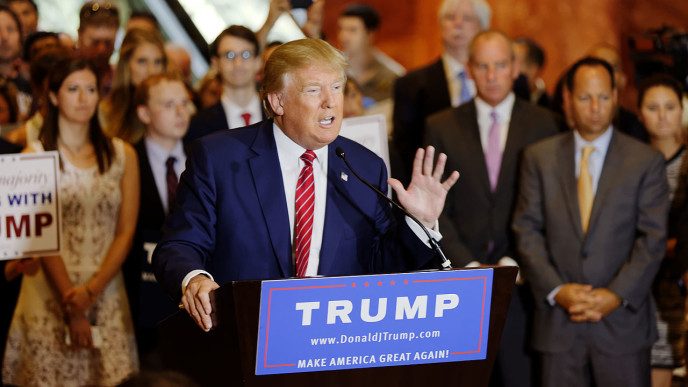
When Obama was president, we all shouted with one voice that it was unconstitutional to issue the “cost-sharing” insurance bailout funds without an appropriation from Congress. Yet, much as with the Iran deal and Obama’s amnesty, the Trump administration has once again continued an illegal policy of his predecessor, shelling out the cost-sharing subsidies for the insurance racket even though it is not only bad policy, it’s unconstitutional.

The bailout for insurance companies

Administration officials confirmed with Axios on Wednesday that they will continue paying the ransom to insurance companies known as cost-sharing subsidies. Thanks to the government-created monopoly for the few remaining insurers, along with the crushing regulations, the Obamacare consumer subsidies for premiums are not enough to sugar-coat the price inflation on health insurance plans. And in fact, those subsidies have themselves inflated the cost of the plans. Thus, the Obama administration reimbursed insurers for discounting co-payments and deductibles for low-income enrollees who earn below 250 percent of the poverty line.

The CBO projects that under current policy, this illegal program will cost $130 billion over 10 years. Never mind that UnitedHealth Group, the nation’s largest insurer, saw its profits increase 34 percent in the second quarter of this year.

The problem with this program, aside from inflating prices even further on those who are not subsidized, is that Congress never appropriated any money for such a program. In fact, this act of the Obama administration was so unconstitutional that even the courts gave Republicans a rare victory against the payments in federal court. Judge Rosemary Collyer sided with House Republicans in asserting that the cost-sharing subsidies were appropriated without consent of Congress. But the Trump administration is now overturning one of the few victories we secured in the judiciary.

There is a very profound lesson in health care economics to be learned from this. The insurance companies will always have a seat at the government table, and even if we successfully repealed Obamacare’s regulations and subsidies, they will always have the ability to extort the politicians into giving them more money or face the threat of higher prices. This is why I have proposed a free market health care plan to end-around the insurance cartel by directly addressing the cost of health care and promoting private sharing associations on an equal footing with insurance.

The reality is that government has tilted the entire playing field of health care towards medical insurance companies for over 60 years. The $275 billion tax exclusion for employers to offer pre-tax health insurance was Obamacare before Obamacare. Much as with the ethanol cartel, without this form of preferential treatment from government, insurance companies would never have been able to inflate the price of health care and twist the concept of insurance.

Even if we fail to repeal Obamacare, we should expand the exemption for cost-sharing associations to compete with insurance in a free market. Employers should be given the same tax benefits for offering to pay sharing premiums for their employee’s sharing associations as for traditional “insurance.”

Republicans ran on the promise to end Obamacare and end bailouts; now they are promoting both. If we are going to unconstitutionally spend money for parochial favors, why not hand the same cash to consumer HSAs or health-sharing ministries? The insurance companies lobbied for the very Obamacare regulations that engendered a need for subsidies; now it’s time to let them reap what they sowed and circumvent the need for corporate insurance altogether.

The bailout for Congress

It’s also troubling that the Trump administration used executive powers to bail out insurers but will not use his lawful executive power to end Obama’s order exempting members of Congress from paying the full Obamacare freight.

Under Section 1312(d)(3)(D) of Obamacare, members of Congress were no longer eligible for health subsidies through the Federal Employee Health Benefit Program. They were required, like every other resident of D.C., to purchase a plan on the exchange. And given that their income level is well above the subsidy line, they would have had to pay the full inflated price like the rest of us poor losers. Yet, in 2013, Obama’s Office of Personnel Management (OPM) wrote a rule treating Congress like a small business with less than 50 employees, which, under the D.C. Small Business Exchange, would be eligible for subsidies.

The irony of Congress and its employees being designated as a small business was brought out by the fact that, in 2014, all but 500 of the 12,907 people signed up in the D.C. Small Business Exchange were … from Congress! Subsequently, documents were uncovered via a Judicial Watch FOIA showing that members of Congress falsified applications by stating that the House had only 45 members and 45 staffers, while the Senate had only 45 employees total.

Consequently, while some of us are paying $15,000 a year for a $13,100 deductible, with the prices slated to skyrocket in November, members of Congress are shielded from much of the pain because up to 70 percent of their premiums can be covered.

Congressman Ron DeSantis, R-Fla., has been calling upon the president since January to repeal this exemption. So far … crickets.

Where is the leadership, Mr. President? (For more from the author of “Trump Continues Illegal Obamacare Bailout for Insurers and Congress” please click HERE)

Follow Joe Miller on Twitter HERE and Facebook HERE.

Freeeeedom! This All-Out WAR on Obamacare Will Make You Fist-Pump

The House Freedom Caucus has not abandoned the health care fight. In fact, it has declared all-out war on Obamacare.

On Wednesday, the conservative House members filed a motion to force a vote on the 2015 repeal bill the GOP-controlled Congress passed and sent to President Obama.

Congressman Tom Garrett, R-Va., a freshman representative, filed a special rule known as a “discharge petition” to begin the process of forcing a vote.

“Every member of this body elected prior to last year’s election who has an ‘R’ beside their name at some point voted on many of the dozens of occasions on which we passed a repeal,” Garrett told reporters, with many of his caucus colleagues accompanying his side. “Let me be clear on this: It’s not a full repeal and nothing. It’s a full repeal with two years … with a 24-month phase-out to find a replacement.”

“This is a message to House leadership that we support their best efforts and we want to work with them to continue to move the ball forward to do what we all said we wanted to do,” Garrett said.

“This is a message to the Senate that if they act as Leader McConnell has suggested that they act, we have their backs. We will be here. This is a message to the president of the United States that we haven’t abandoned the fight, nor have we relinquished our desire to fight for the promises we made.”

Rep. Garrett went on address the Left’s ad hominem attacks on Republicans.

“We hear about how Republicans ‘don’t care and they want to kill people.’ ‘They don’t care about people. ‘They want to knock people off their plans,” Garrett said.

“In this nation you can choose, in some places, to buy marijuana. You can choose to pay to go bungie jumping. You can choose to go scuba diving. You can buy explosives for the Fourth of July. But, by gosh, you can’t buy a health care plan that doesn’t have maternity or mental health care even if you want to,” Garrett said.

“So we’re about choice, we’re about freedom, and we’re about keeping our word. We’re about helping our leadership do what they say they wanted to do, and we’re about absolutely letting the people at home who are as frustrated as I am, and was, know that there are still some people here who are going to do what they said they would do.”

The repeal legislation Garrett and the other members of the Freedom Caucus want Congress to vote on would repeal most of Obamacare. To force a vote, the discharge petition will require signatures from 218 members of Congress.

Even if there aren’t enough to sign the petition, one benefit is that voters will be able to see which members of Congress support repeal, and which don’t.

“We should put on President Trump’s desk what we put on President Obama’s desk. We should demand no less,” said Freedom Caucus Chairman Mark Meadows R-N.C.

This is what it looks like to be a conservative in Congress and fight. (For more from the author of “Freeeeedom! This All-Out WAR on Obamacare Will Make You Fist-Pump” please click HERE)

Follow Joe Miller on Twitter HERE and Facebook HERE.

Trump, McConnell, Pence Call for Full, Clean Obamacare Repeal

President Donald Trump and Senate Majority Leader Mitch McConnell called for the full, clean repeal of Obamacare in late-night statements Monday.

The statements were released after four Republican senators backed away from the repeal-and-replace bill, leaving McConnell unable to reach the 60 votes required to bring the bill to the floor.

“Regretfully, it is not apparent that the effort to repeal and immediately replace the failure Obamacare will not be successful,” McConnell followed in a statement 31 minutes later, at 11:48 p.m.

“So,” he continued, “in the coming days, the Senate will vote to take up the House bill with the first amendment in order being what a majority of the Senate already supported in 2015 and that was vetoed by then-President Obama: a repeal of Obamacare with a two-year delay to provide for a state transition period to a patient-centered health care system that gives Americans access to quality, affordable care.”

(Read more from “Trump, McConnell, Pence Call for Full, Clean Obamacare Repeal” HERE)

Follow Joe Miller on Twitter HERE and Facebook HERE.

Consider Obama’s Legacy and Democrats’ Obamacare Arguments WRECKED

The rate of uninsured Americans is ticking up again, and some of the explanations offered fall somewhere between the failures of Obamacare itself and the failure of Republicans to repeal it.

According to the latest Gallup/Sharecare index, the percentage of American adults without health insurance has increased from 10.9 to 11.7 percent since the end of last year, which translates to almost 2 million people without coverage.

And the researchers at Gallup aren’t even bothering to hide the reasons why.

“Several marketplace factors could be contributing to the uptick in the uninsured rate since the second half of 2016 […] Rising insurance premiums could be causing some Americans to forgo insurance, especially those who fail to qualify for federal subsidies. Furthermore, some insurance companies are leaving the ACA marketplace, and the lack of competition could be driving up the cost of plans for consumers,” the report states.

The report goes on to suggest that uncertainty about Obamacare’s future could also be causing people to stay away from the markets — at least until they know what they’ll be dealing with once a bill is passed.

Such hesitation would make sense. Given last year’s rampant premium increases, the ever-increasing number of insurers disappearing from the individual market, and GOP leadership hesitant to repeal the worst portions of the law, naturally people are casting a wary eye at the insurance market.

The goal of Obamacare was to increase coverage with greater government control of the insurance industry, forcing Americans to buy into the industry, and then offset the rest of the cost with a mixture of subsidies and entitlements.

But, as the Cato Institute’s Michael Cannon explains, throwing everybody into the same health insurance pot and expecting things to somehow balance out is precisely why Obamacare has been so disastrous.

The dire state of the insurance market strikes a blow against the liberals’ narrative that Obamacare is somehow the only thing holding down the current insurance rate, as millions of Americans are also going without insurance with the current law in place. It also serves as a stark reminder of what Americans will still be dealing with, should the GOP fail to deliver on a substantive repeal.

As a counterpoint to the woes of the millions of people losing or going without insurance under the current system, Obamacare boosters in the policy world have been pointing to a recent study that shows how the insurance markets are “stabilizing.” However, stable doesn’t always mean good for consumers, as Conservative Review’s Daniel Horowitz explains:

“The insurance market has indeed stabilized … the same way a dead body is ‘stable’ and no longer in critical condition, the same way someone in a free fall has stabilized at the bottom of the trajectory. There is no longer any private sector left in the insurance market. The few remaining insurers have stayed in the market through a guaranteed flow of government subsidies — a regulation-controlled monopoly that has driven out competitors lacking economies of scale and tripled premiums, with endless rate hikes in sight.”

“When, thanks to insolvent government regulations but endless government subsidies, only a handful of insurers are left with a monopoly on the market, they will find a way to make a profit,” Horowitz writes.

But when that profit has not been earned on a level playing field, but through government manufacturing, he states, “Consumers are left holding the bag.” (For more from the author of “Consider Obama’s Legacy and Democrats’ Obamacare Arguments WRECKED” please click HERE)

Follow Joe Miller on Twitter HERE and Facebook HERE.

Paul: Senate Health Bill Is ‘Lit up Like a Christmas Tree’ With Spending

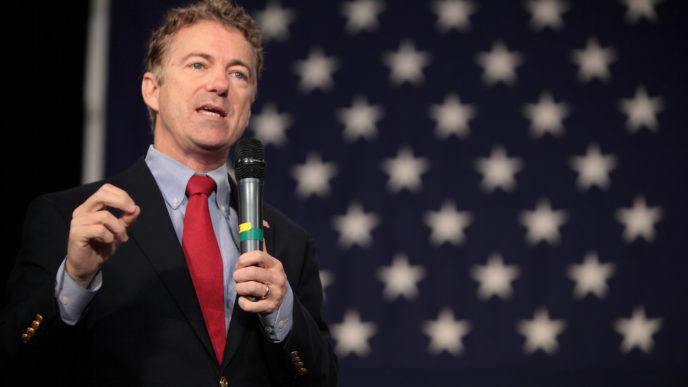
Washington Republicans are taking no July 4 holiday on the Senate’s ObamaCare overhaul bill — with President Trump calling senators and Kentucky GOP Sen. Rand Paul pushing a conservative alternative to the existing measure that he says is “lit up like a Christmas tree” with spending.

“I don’t think we’re getting anywhere with the bill we have,” Paul said on “Fox News Sunday.” “Every time you add more federal money, more spending for the big-government Republicans, it offends the conservatives. … Senate leadership is loading (up) the bill like a Christmas tree, with billion dollar ornaments.”

Senate Majority Leader Mitch McConnell, R-Ky., didn’t have enough support last week to vote on the measure, leaving it behind as Congress departed for the July recess.

The Kentucky Republican will need support from at least 50 of the chamber’s 52 GOP senators to pass the bill.

Paul is pushing a plan to divide the Senate bill into two parts — a vote on repealing ObamaCare and a separate vote on replacing it. (Read more from “Paul: Senate Health Bill Is ‘Lit up Like a Christmas Tree’ With Spending” HERE)

Follow Joe Miller on Twitter HERE and Facebook HERE.

Sen. Rand Paul on Obamacare: ‘We Gotta Really Repeal It’

After meeting with President Trump Tuesday afternoon, Senator Rand Paul, R-Ky., gave an interview with Fox News host Neil Cavuto in which he said that the president is open-minded about improvements to make the Senate version of the Obamacare bill more of a repeal.

“I think we had a good discussion, and I told the president I’m open to supporting it, but it has to get better and it has to be more of a repeal bill,” Paul said. “We keep too many of the regulations, we keep too many of the subsidies, and we create a new federal fund to subsidize insurance companies. So we’ve got to look at all of that and we have to ask the people who elected us on repealing Obamacare if this bill is really repeal.”

“I thought the president was very open-minded,” Paul said, “but everybody’s got to be open to making the bill more of a repeal bill and less of a big-government bill.”

Sen. Paul said that the president understands that regulations drive up prices and that the Obamacare insurance mandates are making insurance premiums unaffordable and causing the death spiral in insurance markets. Paul characterized President Trump as receptive to his suggestions on how to improve the bill, telling Cavuto “I didn’t get strong objections from him.”

“We have to get something that really works because – what I did tell him is ‘Look, I’ve been a doctor for twenty-some odd years, and I saw health care before Obamacare not working very well. I saw Obamacare come on and make it work even less well. I think there is some fundamental aspects to health care we have to try to fix and if we don’t fix them but we gain ownership of it, I think there is a big price to pay …’”

Paul, one of four GOP Senators opposing the Better Care Reconciliation Act on grounds that it does not go far enough to repeal Obamacare, told Cavuto that GOP leadership has not given conservatives feedback on their concerns.

“We haven’t had any feedback from leadership on their being open to changing any parts of the bill. In order for there to be negotiation, there has to be dialogue.”

Sen. Paul said he “formalized” their recommendations for the bill in writing this afternoon and will send them to Senate leadership and the president.

“I think this thing still could be done, but we have to keep our promise to the Republican voters as well as all voters that we were going to repeal the disaster that is Obamacare. But, in order to get rid of the high prices of Obamacare, you have to repeal the regulations. And if we tinker around the edge with one or two regulations, the prices won’t come down and guess who they’re gonna blame? The Republicans. So we gotta fix it, we gotta really repeal it.”

Creating a compromise the majority of the Senate can vote for is easier said than done. Two more Republican senators, Sens. Rob Portman, R-Ohio, and Shelley Moore-Capito, R-W.Va., announced their opposition to the Senate Obamacare bill Tuesday over concerns that changes to Medicaid would cause individuals to lose health insurance coverage. The Obamacare vote has been delayed by Senate leadership.

President Trump invited Senate Republicans to an emergency meeting at the White House in an attempt to find a deal that can get 50 votes in the Senate. The difficulty is that any compromise that assuages the concerns of moderates by preserving Medicaid will alienate conservatives who want to see repeal go farther.

Senator Paul believes it’s important for conservatives not to back down.

“I think it’s important that some of us stand firm now,” Paul said. “Now is the time to change the bill and I think by my steadfastness in being for repeal, I think I can get this bill to look more like repeal before it goes through.” (For more from the author of “Sen. Rand Paul on Obamacare: ‘We Gotta Really Repeal It'” please click HERE)

Follow Joe Miller on Twitter HERE and Facebook HERE.

With Senators Like These, Obamacare Repeal Was Always a Tease

This week will be marked by raging debate over the Better Care Reconciliation Act, the Senate’s version of Obamacare-lite that is drawing a swarm of criticism from conservatives for failing to repeal Obamacare and from moderate and liberal Republicans for going too far toward repealing Obamacare. Over the weekend, several U.S. senators clarified their position on the bill – casting doubts on the feasibility of its passage in its current form.

Sen. Ron Johnson, R-Wisc., elaborated on his opposition to the current version of the BCRA in an op-ed published at the New York times, explaining that “it relies too heavily on government spending, and ignores the role that the private sector can and should play.”

“Once again, a simple solution is obvious,” Johnson writes. “Loosen up regulations and mandates, so that Americans can choose to purchase insurance that suits their needs and that they can afford.”

“Like many other senators, I had hoped that this was where things were headed during the last several weeks as the Republican bill was discussed. We’re disappointed that the discussion draft turns its back on this simple solution, and goes with something far too familiar: throwing money at the problem.”

Johnson was joined in his opposition to the bill last week by Senators Ted Cruz, R-Texas, Mike Lee, R-Utah, and Rand Paul, R-Ky. All have said they are open to voting for the BCRA if certain improvements are made. In an interview with ABC’s “This Week,” Sen. Paul said that he would “consider partial repeal” if the Senate were to reach an “impasse.” Senator Cruz has offered an amendment to permit insurers to sell plans that are not compliant with Obamacare regulations, in an effort to allow insurance companies to give greater choice to consumers and drive down prices.

Senator Lee has made his vote conditional on an “opt-out provision,” acknowledging that other attempts at compromise from his position of full repeal have failed to move the liberal Republicans in the Senate.

“Conservatives have compromised on not repealing, on spending levels, tax credits, subsidies, corporate bailouts, Medicaid, and the Obamacare regulations. That is, on every substantive question in the bill,” Lee wrote Friday. “Having conceded to my moderate colleagues on all of the above, I now ask only that the bill be amended to include an opt-out provision, for states or even just for individuals.”

The liberal Republicans are wavering on the bill for vastly different reasons. Senator Dean Heller, R-Nev., declared his opposition to the bill during a press conference Friday, saying, “This bill would mean a loss of coverage for millions of Americans, and many Nevadans.” The contentious issue for these Republicans are worries that rolling back Medicaid expansion will cause some Americans to lose their insurance coverage as an entitlement is taken away. Senators Shelley Moore Capito, R-W.Va., Lisa Murkowski, R-Alaska, and Bill Cassidy, R-La., are among the moderates expressing concerns.

Senator Susan Collins, R-Maine, is waiting for the Congressional Budget Office score of the bill before making a final decision. ‘‘I have very serious concerns about the bill,’’ she said on ABC’s ‘‘This Week,’’ acknowledging that the CBO score ‘‘will be so important.’’ The CBO is expected to release its score of the Senate bill later today.

In the same interview, Sen. Collins objected to defunding Planned Parenthood in the BCRA, saying, “It makes absolutely no sense to eliminate federal funding for Planned Parenthood.” The bill would block Medicaid reimbursements to Planned Parenthood for one year. Eliminating that provision would further alienate conservative senators who have made defunding Planned Parenthood a condition of their support. Taking the provision out will alienate Sen. Collins and other liberals.

As these battles play out, other senators remain undecided or silent. Still others don’t know what to think. Senator Joni Ernst, R-Iowa, is polling her constituents for their thoughts before taking an official position.

The bottom line is that intense negotiations on this bill will dominate the work of the U.S. Senate this week. The CBO score will complicate the matter. In all likelihood, the CBO will project that millions of Americans will lose their current health insurance coverage, just as it predicted (somewhat inaccurately) would happen in the House American Health Care Act. (For more from the author of “With Senators Like These, Obamacare Repeal Was Always a Tease” please click HERE)

Follow Joe Miller on Twitter HERE and Facebook HERE.

How the Senate Can Begin to Undo the Damage of Obamacare

The Senate plans to release a draft of its counterpart to the House-passed American Health Care Act Thursday.

The House bill contains a number of sound proposals to begin to reverse the damage Obamacare caused.

These include a major reform of federal Medicaid funding, allowing states to opt out of some onerous Obamacare insurance mandates, repealing the individual and employer mandates, and providing substantial tax relief for the American people by repealing various taxes under Obamacare.

These policies will help reduce premiums and improve the environment that contributed to unaffordable (and now disappearing) health plans.

However, the bill falls short of a full repeal and replacement of Obamacare. The Senate should strive to get closer to that goal than the House-passed version as it seeks to undo the damage caused by Obamacare.

There are many areas in which the Senate can do so, but how the forthcoming bill tackles two particular problems created by Obamacare will be especially important to watch.

First, Obamacare’s insurance mandates drove up costs and decreased options for millions of Americans. Second, Obamacare made the Medicaid safety net less secure for those in need by expanding it in unsustainable ways well beyond those it was designed to serve.

The House bill took steps to address both of these problems, and the Senate can go further still to remove Obamacare’s mandates and ensure that the Medicaid safety net works for those truly in need.

Free States From Obamacare’s Federal Mandates

The Senate should pursue reforms to free states from Obamacare’s health insurance mandates and mitigate unaffordable health insurance premium increases. Ideally, all Obamacare insurance mandates should be repealed.

If procedural requirements related to the budget reconciliation vehicle under consideration restrict the Senate’s options, then the Senate should focus on near-term ways to advance regulatory relief goals.

Obamacare pre-empted state authority for insurance markets. Its imposition of new federal benefit mandates and regulations was unnecessary and short-circuited the ability of states to adopt different approaches or to modify rules to accommodate changing circumstances.

Obamacare’s structure of new federal health insurance regulations and subsidies was designed to provide lower-income individuals needing medical care with comprehensive coverage at little cost to the recipients.

Yet, Obamacare also applied those same regulations, but not the subsidies, to the broader individual and small employer health insurance markets.

The result is that Americans with unsubsidized coverage through individual market or small employer policies have borne the brunt of the premium increases and coverage disruption caused by Obamacare’s insurance market regulations. They are the ones most in need of relief from Obamacare.

The House-passed American Health Care Act provided a start toward addressing this situation. It repealed outright some costly regulations, including the individual and employer mandates, and allowed states to waive others.

The House bill’s repeal of Obamacare’s minimum actuarial value mandate will allow health insurers to offer leaner plans, including catastrophic coverage plans. Such plans would be more consistent with the type of coverage preferred by unsubsidized purchasers of individual market policies.

The House bill also expanded the allowable age-rating variation for adults from a ratio of 3 to 1 to a ratio of 5 to 1, which enables insurers to set premiums to match the normal variations in average medical expenses by age.

This would allow insurers to once again charge young adults premiums commensurate with their lower expected medical costs, and thus price their plans to be more attractive to younger, healthier individuals.

This change reverses Obamacare’s “age-rating compression,” which significantly increased premiums for young adults—contributing to lower-than-expected enrollment by those individuals in Obamacare-compliant coverage.

The House bill also created a process for waiving additional regulations (including Obamacare’s “essential benefit” requirements), and encouraging continuous coverage while repealing the individual and employer mandates, so that states can resume authority over their health insurance markets as they had before Obamacare.

The Senate should ensure that any waiver approach grants states as much flexibility as possible, with the objective of going beyond the House-passed bill.

For example, the Senate should expand the House-passed bill’s list of Obamacare insurance mandates that states may waive to include the mandate that insurers treat coverage sold on and off the exchanges as a “single risk pool.”

Additionally, it should allow states to waive Obamacare’s requirement to cover specified preventive services with no cost sharing charged to enrollees.

Prior to Obamacare, plans typically covered most of those services already, obviating the need to mandate coverage. Also, a number of those so-called preventive services are actually diagnostic tests or procedures, and allowing insurers to set patient copays is an appropriate way to manage utilization.

Second, the Senate should give states additional options to encourage continuous coverage.

The House-passed bill allowed states to authorize insurers to impose a one-year premium surcharge on individual market applicants who lack continuous coverage at the time of enrollment, or charge those without continuous coverage risk-rated premiums for a year.

The Senate should also allow states to authorize insurers to prohibit pre-existing condition exclusions only for those individuals who can demonstrate continuous coverage during the prior year.

Additionally, it should provide states with the option to allow insurers flexibility to impose additional cost-sharing requirements (e.g., higher deductibles) for a limited period of time on those who do not maintain continuous coverage.

Reform Medicaid’s Budget to Help Those Most in Need

Medicaid is a means-tested health care and social services program for low-income children, pregnant women, aged, and disabled individuals. At the federal level, Medicaid is an open-ended federal entitlement to states: If a state spends more on the program, federal payments automatically increase.

Obamacare expanded Medicaid eligibility to include able-bodied adults without children. The Medicaid expansion has accounted for over 80 percent of the net increase in total (both public and private) health insurance enrollment since Obamacare’s coverage provisions went into effect at the beginning of 2014.

The Senate should begin to address this situation by adopting, with some modifications, the House-passed reforms and end the automatic federal entitlement spending.

The Senate should, like the House, change how the federal government finances Medicaid and provide for federal payments on a per capita basis.

The federal government would provide states with a capped payment (based on average cost per enrollee) with different amounts set for each category of Medicaid enrollees: the elderly, the disabled, the “expansion” population, and poor women and children.

(Medicare dual-eligible enrollees—poor and disabled persons securing benefits under both the Medicare and Medicaid programs—would be excluded from reimbursement calculations under the House-passed per capita payment system.)

This is major reform consistent with policies recommended over the years by conservative health policy experts, including analysts at The Heritage Foundation.

It would give states new incentives to eliminate waste and fraud in the program, prevent states from gaming federal reimbursement formulas, and better target resources to the needy and most vulnerable to improve results.

An effective per capita approach requires that federal contributions grow over time at rates that are realistic and consistent with achievable expectations for the ability of states to moderate future spending.

If the indexing formula is too generous, then the incentives for states to better manage their programs will weaken over time.

The House bill set the indexing too high for some groups and too low for others. Therefore, the Senate should revise the indexing provisions in the bill to better match them to the historic and projected growth rates of the different beneficiary groups.

Further, to ensure states have the flexibility they need, the Senate should give them explicit authority to set and manage eligibility for their Medicaid programs through such means as asset tests, and remove restrictions Obamacare put on states’ abilities to make such decisions.

Finally, the Senate can adopt a much better way to help able-bodied low-income beneficiaries access care. The Senate should convert existing funding for able-bodied adults and children into a direct defined contribution (a “premium support” program) for the purchase of private health insurance coverage.

Such a change would be a major breakthrough in federal policy. It would have profound benefits for able-bodied Medicaid enrollees. It would mainstream these enrollees into the private insurance market along with their more affluent fellow citizens.

Today, many Medicaid enrollees cannot find a doctor to take care of them because the reimbursement rates and the regulatory system discourages physician participation in the program.

Moreover, low-income able-bodied adults cycle on and off of Medicaid as their employment and incomes fluctuate, experiencing disruption in their health care coverage.

With these proposed changes, the Senate would give them access to the same networks of doctors and medical professionals and superior medical care that their fellow citizens currently enjoy. This approach is also much cheaper than hospital emergency room care.

The Way Forward

Obamacare produced escalating premiums and higher deductibles. It also reduced access to insurers and providers.

Congress must act with urgency to begin reversing Obamacare’s damage and put health insurance markets back on a more stable footing. Building on the House bill’s reforms, the Senate can make further changes to provide individual Americans with better and more affordable health care options.

Even with these additional reforms, significant and ongoing work remains in order to undo the damage of Obamacare and resolve its preceding problems in the American health care system.

The list of reforms needed for the ailing health care system is lengthy. Congress must maximize every opportunity to bring relief to this system, beginning with the drafting of the American Health Care Act. (For more from the author of “How the Senate Can Begin to Undo the Damage of Obamacare” please click HERE)

Follow Joe Miller on Twitter HERE and Facebook HERE.

Major Health Insurance Provider Ditches Obamacare

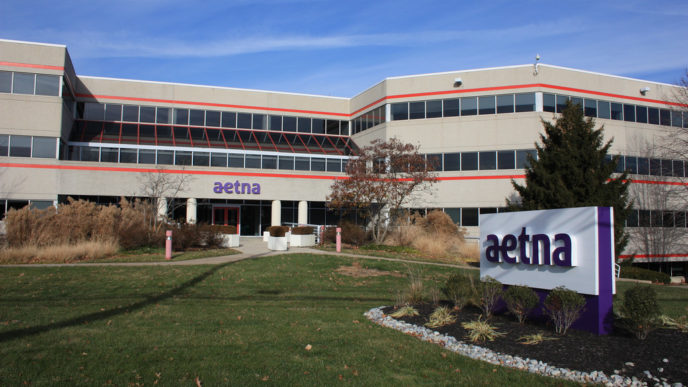
Aetna announced Wednesday that it will stop offering Obamacare exchange plans in 2018, making it the latest major health insurance provider to completely opt out of former President Barack Obama’s landmark health care legislation.

The company cites massive losses among exchange participants and projects the problems to increase over the short term. Aetna will also cease to sell individual plans in Nebraska and Delaware, Bloomberg reports.

“Our individual commercial products lost nearly $700 million between 2014 and 2016, and are projected to lose more than $200 million in 2017 despite a significant reduction in membership,” an Aetna spokesman said in an email. (Read more from “Major Health Insurance Provider Ditches Obamacare” HERE)

Follow Joe Miller on Twitter HERE and Facebook HERE.
As Senate Mulls Obamacare Repeal, Insurers in 2 States Ask Double-Digit Premium Hikes

Consumers in at least two states face the prospect of double-digit increases in health insurance rates next year, as insurers attempt to price premiums amid uncertainty, including from Congress and President Donald Trump on the fate of Obamacare.

Also driving rate increases is the fact that the millions of Americans enrolled on Obamacare’s exchanges are sicker than the general population.

Insurance companies selling plans in Maryland and Connecticut have submitted their rate requests for 2018, as other insurers decide whether they’ll continue to offer coverage on Obamacare’s state-run and federal exchanges.

Already, Tennessee and Iowa have seen an exodus of major insurers. Consumers in parts of those states are in jeopardy of having no insurers to choose from on the exchange next year.

Humana announced in February that it no longer would sell Obamacare coverage in Tennessee, leaving residents of 16 counties in the eastern part of the state at risk of having no plans available to them.

But BlueCross BlueShield of Tennessee stepped in Tuesday, notifying the state’s insurance commissioner in a letter that it would sell coverage on the Obamacare exchange in those areas.

That coverage, though, may come with a steep price, the insurer warned.

“Given the potential negative effects of federal legislation and/or regulatory changes, we believe it will be necessary to price-in those downside risks, even at the prospect of a higher-than-average margin for the short term, or until stability can be achieved,” J.D. Hickey, president of BlueCross BlueShield of Tennessee, wrote.

In Iowa, Wellmark Blue Cross and Blue Shield and Aetna already said this year they no longer would sell plans in the individual market next year. That leaves just one insurer, Medica, as the only choice for Iowans living in 94 of the state’s 99 counties.

But Medica indicated last week that it would leave Iowa’s individual insurance market.

“Without swift action by the state or Congress to provide stability to Iowa’s individual insurance market, Medica will not be able to serve the citizens of Iowa in the manner and breadth that we do today,” the company said in a statement to The Des Moines Register.

Higher Premiums

Alongside potential exits from Obamacare’s exchanges, insurers in Maryland, Connecticut, and Virginia have begun to submit proposed premium increases for 2018.

Chris Sloan, a senior manager at Avalere, stressed that the figures coming from insurers are only proposed rates, and those rates typically decrease as insurance companies negotiate with state insurance departments and their commissioners.

Still, the preliminary figures from insurance companies indicate that uncertainty about the future of the health insurance market, and the enrollment population from years past, could lead to double-digit premium increases next year.

“This is a market that continues to have underlying issues with the risk,” Sloan told The Daily Signal. “Last year, a lot of people looked at 2017 as a market correction, which is why we had such big increases [in premiums], but then going into 2018 and nothing has changed in most of these markets.”

In Connecticut, just two insurers will sell health coverage on Obamacare’s exchange next year, according to the state.

There, Anthem requested an average rate increase of 34 percent for plans sold in the individual market. ConnectiCare requested an average rate increase of 15 percent for individual health plans.

In documents filed with the state, ConnectiCare said that despite “uncertainties” in the market, the company based its pricing on “weakened” enforcement of Obamacare’s individual mandate and continuation of cost-sharing reduction payments, which are taxpayer-funded subsidies that lower the cost of deductibles and copayments for exchange customers.

Anthem also attributed its request for a 34 percent rate increase to the continuation of the subsidies that lessen the amount low-income Americans pay in deductibles and copayments. But the company also warned it has continued to enroll patients who are sicker and require more expensive care.

In Maryland, consumers purchasing coverage on Obamacare’s exchange could see substantially higher premiums next year.

There, CareFirst BlueCross BlueShield asked to raise rates by more than 50 percent.

“What we’re seeing is greater sickness levels,” Chet Burrell, CareFirst’s chief executive, told The Washington Post. “The pool of beneficiaries is becoming sicker, in part because healthier people are not coming in at the same level we hoped.”

Cigna and Evergreen Health asked to raise rates by an average of 37 percent and 28 percent, respectively.

Maryland reminded consumers, though, that the requests from insurers are preliminary.

“It’s important to remember that these rates are what companies have requested and not necessarily what will be approved,” Insurance Commissioner Al Redmer said. “There will be a thorough review of all the filings. As in years past, we may require changes.”

Uncertainties

In addition to the continuation of subsidies to reduce deductibles and copayments, some insurers attributed their requested rate hikes to the federal government’s weakened enforcement of the Obamacare mandate that all individuals have health insurance.

The health care bill passed by House Republicans last week eliminates the mandate altogether. And earlier this year, the IRS signaled it would continue accepting tax returns from taxpayers who didn’t indicate whether they had insurance for 2016.

But Sloan, of Avalere, said there wasn’t necessarily a significant shift in enforcement of the individual mandate from the Obama administration to the Trump administration.

“The secret in Washington is that the mandate hasn’t been enforced anyway,” he said. “The Obama administration gave a ton of exemptions, and the vast majority of people who were uninsured didn’t pay this penalty. It’s not as if we’re going from heavy enforcement to suddenly none. We’re going from lax enforcement to potentially more lax enforcement.”

Where Sloan does agree with insurers, though, is in the uncertainties looming as companies plot their rates for 2018.

“What [insurers] may have gained in understanding the exchange population, they’re losing in uncertainty of what the market will look like,” he said.

Those uncertainties include whether Trump will continue funding—and whether Congress will appropriate the money for—Obamacare’s cost-sharing subsidies, and how the House GOP’s health care bill will affect the insurance market.

The House-passed bill to repeal parts of Obamacare is called the American Health Care Act, or AHCA. Republican leaders in the Senate have said they will draft their own bill in coming weeks.

“With Congress, obviously if there was certainty on what the market will look like when talking about the AHCA, that would help,” Sloan said. “It would help if they committed or de-committed either way to funding or not funding the cost-sharing reductions.”

Sloan added:

There’s uncertainty around how many other carriers are going to be participating in the market, whether they’re going to have to bear all the bad risk in the market, uncertainty around what happens with the AHCA and whether subsidies will change or changes to the mandate. There’s a lot of stuff swirling around these plans. You’re going to see that in their requests going forward.

Still, the potential for double-digit rate hikes has provided fodder for congressional Republicans and the Trump administration, as both work to fulfill a campaign promise of repealing and replacing Obamacare.

“Last year alone, 83 insurers left the Obamacare marketplace and Americans living in one-third of our nation’s counties had only one choice for coverage,” Alleigh Marre, spokeswoman for the Department of Health and Human Services, said in an email to The Daily Signal. “The fact remains, insurers are fleeing because the law is fundamentally flawed.”

“Repealing and replacing Obamacare remains the best option,” Marre said.

In an interview Tuesday on “Fox & Friends,” House Speaker Paul Ryan pointed to the rate hike proposals in Maryland, as well as Medica’s decision to leave Iowa, as reasons why Obamacare has to be repealed.

“Here’s the problem: This law is collapsing. This law is failing fast,” Ryan, R-Wis., said. “And so what we’re doing is a rescue operation, which is getting rid of this law, which is collapsing.” (For more from the author of “As Senate Mulls Obamacare Repeal, Insurers in 2 States Ask Double-Digit Premium Hikes” please click HERE)

Follow Joe Miller on Twitter HERE and Facebook HERE.