Oil closed above $45 a barrel in New York for the first time since November after U.S. crude output dropped and Federal Reserve policy makers signaled they’re open to raising interest rates in June.
Crude production fell to 8.94 million barrels a day last week, the least since October 2014, Energy Information Administration data show. Futures fell on the initial release of the report because it showed crude inventories rose. Oil extended gains after the Federal Open Market Committee omitted previous language that “global economic and financial developments continue to pose risks,” instead saying officials will “closely monitor” such developments.
“We are focused on U.S. production, which was down again,” said Cavan Yie, senior equity analyst at Manulife Asset Management Ltd. in Toronto. “Production is down about 650,000 barrels from the peak, and it’s going to keep dropping because nobody is spending any money to drill new wells.”
Oil has rebounded since slumping to the lowest level since 2003 in February, amid signs the global surplus will ease as U.S. production declines. The World Bank boosted its forecast for oil prices this year, projecting that U.S. output cuts will steepen in the second half of 2016. Markets may rebalance by the end of the year, BP Plc Chief Executive Officer Bob Dudley said Tuesday as the company reported a surprise first-quarter profit.
West Texas Intermediate oil for June delivery increased $1.29, or 2.9 percent, to settle at $45.33 a barrel on the New York Mercantile Exchange. It’s the highest close since Nov. 4. (Read more from “Oil Climbs Above $45 Amid U.S. Crude Output Drop, Fed Statement” HERE)
As anyone who’s filled up their tank lately can attest, oil prices are down – way down. Inexpensive trips to the gas station may put a smile on the average driver’s face, but the ramifications are significant for economies dependent on oil. Few states are feeling this more acutely than Alaska. With oil prices and oil production in decline, the state lacks two-thirds of the revenue needed to cover this year’s $5.2 billion budget.
Unfortunately, Alaska Governor Bill Walker is proposing a quick-fix solution that could do long-term damage: the imposition of a state income tax. As analysis in An Inquiry into the Nature and Causes of the Wealth of States shows, adopting an income tax spells disaster. Each and every state (there are eleven in total) that introduced the income tax since 1960 has experienced decline across a broad array of metrics. In terms of population, all eleven states have declined in comparison to the remaining 39 states (West Virginia is the unenviable “leader” of this pack, with a relative population decline of a full 50%). In terms of state gross domestic product, all eleven states also declined as a share of the remaining 39 states (Michigan took a particularly precipitous plunge, with a relative fall in gross state product of 57%).
As my Wealth of States co-authors and I write: “The lesson is pretty basic – if you don’t currently have an income tax, do not adopt one.” No place should understand this better than Alaska, which in 1980 eliminated the state income tax for individuals. Under Governor Walker’s proposed plan, which would turn the clock back on more than 35 years of economic progress . . . (Read more from “Alaska Has a Bigger Problem Than Low Oil Prices” HERE)
https://joemiller.us/wp-content/uploads/Potlatch_gas.jpg401600Joe Millerhttps://joemiller.us/wp-content/uploads/logotext.pngJoe Miller2016-02-10 00:11:482016-04-11 10:52:53Alaska Has a Bigger Problem Than Low Oil Prices
Okay now I have your attention because Alaska’s current fiscal crisis was predicted and solved over 39 years ago with low oil prices leading to Alaska’s economic deliverance and not necessarily our bane. Let me explain.
Over at least the last half-century, commodity prices (one of the biggest being oil) and the stock market have been inversely proportional- meaning as one goes up, the other goes down. U.S. manufacturing and distribution requires inexpensive raw materials and energy for substantial economic growth. When commodity prices spike, industrial states and the resultant stock market languish while oil producing states like Alaska boom- and tend to grow huge public sectors (ours has doubled since 2005).
In 1976, Alaska Governor Jay Hammond established the Permanent Fund to fund state government when oil ran out. Imagine it like a huge investment pool worth over $50 Billion where ¼ of all state oil revenue is invested. This pool has three statutory outlets in which to distribute the substantial interest income it generates. The first outlet is to pay out our annual dividend checks. The second outlet is used to inflation proof the principal- which was very necessary during the high inflation years of the 1970s. Lastly, and most importantly, the third outlet is to fund state government via the Earnings Reserve (ER). Today, there is around $7 Billion in the ER- Alaska’s annuity that was designed to fund the majority of state government in perpetuity as Governor Hammond envisioned. As the British might say, there is no bloody reason to cap the PFD check, raise state fees, or worse, establish a state income tax as has been proposed by the hard campaigning fiscal conservative turncoat Governor Bill Walker. None.
“I wanted to transform oil wells pumping oil for a finite period, into money wells pumping money for infinity.” – Governor Jay Hammond, father of the Alaska Permanent Fund and the Alaska Permanent Fund Dividend
The state legislature has not followed the Alaska State Constitution and tapped a penny out of the ER to fund our hemorrhaging $3 to 4 Billion annual state deficits. Why? Politics of course! The Democratic minority in the Alaska State House enjoys incredible leverage by diverting public attention for using the ER to fund state government – which only needs a simple majority vote to access, to instead first depleting the $5 Billion out of the Constitutional Budget Reserve (CBR) – which takes a larger 2/3’s majority vote to access. A few cross-dressing Republicans like Representatives Jim Colver (Mat-Su), Gabrielle LeDoux (Anchorage), Paul Seaton (Homer), and Louise Stutes (Kodiak) have joined Democrats in forming a “Muscox Coalition” in refusing to access the ER because of the minority’s threat of tar and feathering them in the media during the upcoming 2016 election campaign for “spending the people’s PFD”- an outright lie of course. This gives the house minority tremendous leverage in extorting additional state spending to get to the necessary 2/3s vote threshold to pass a state budget- as what happened during the last interminable session.
Historically, when commodity prices such as oil plummet, the general economy is stimulated to grow rapidly and the stock market rises. Real estate prices along with interest rates also go up as Federal Reserve Chair Janet Yellen just indicated. It happened during the late 1960s as well as the 1980’s and early 1990’s. Low oil prices lower the price of everything. That is good for the U.S. economy and now Alaska because we now have an over $50 Billion Permanent Fund that should produce substantial investment returns to fund state government. It’s good for Republicans because there is no reason for a state income tax or potential industry killing new oil production tax. It’s good for Democrats who will see the majority of state government funded by financial investment returns rather than that dirty black carbon producing oil pumped out of the tundra by evil Big Oil. Public unions will also come around when they realize they can’t spend everything in sight and having a stable government funding source to rely on benefits them as well. Low oil prices will once and for all force Juneau to streamline our bloated state government and end automatic formula driven growth programs that threaten our entire state economy. Low oil prices will also allow Juneau to reduce hundreds of millions of dollars in fuel subsidies in areas such as the Power Cost Equalization (PCE) program which subsidizes energy in the bush and the Alaska Marine Ferry which consumes nearly half the state’s transportation budget.
Lastly but not insignificantly, on a national, state, and city security basis, low oil prices starve our biggest antagonists on the geopolitical stage. Oil funds ISIS and terrorist organizations throughout the Middle East and puts our sons and daughters that serve in the military at great risk. It also could indirectly lead to Syrian refuges being forcibly resettled in the Anchorage Bowl and all around rural Alaska- the majority of which cannot be vetted to see whether they are radicalized or not. The recent December 2nd terrorist attack in San Bernardino California that left at least 14 dead and scores more wounded attests to this fact because it was carried out by a least one recent immigrant.
I’m very supportive of maximum natural resource development in Alaska- it’s what we do. However if we are smart and run a lean and efficient state government, we now have a financial mechanism to ride out the low oil price cycle with economic stability and security. It’s now time for our Republican leadership in Juneau to shine.
https://joemiller.us/wp-content/uploads/logotext.png00Joe Millerhttps://joemiller.us/wp-content/uploads/logotext.pngJoe Miller2015-12-18 10:56:352016-04-11 10:54:57In the Long Run, Low Oil Prices are Not Bad for Alaska
Oil prices have slumped by 5% after the latest attempt by Saudi Arabia to kill off the threat from the US shale industry sent crude to its lowest level since the depths of the global recession almost seven years ago.
Signs of disarray in the Opec oil cartel prompted fears of a global glut of oil, wiping $2 off the price of a barrel of crude on Monday and leading to speculation that energy costs could continue tumbling over the coming weeks.
Shares in energy companies lost ground as the impact of the drop in oil prices rippled through European stock markets. Prices of other commodities also weakened following disappointment among traders that Opec had decided late last week to keep flooding the global market with cheap oil.
Iron ore continued its steady fall and finished the latest session at $38.90 per tonne, squeezing profit margins to the bone at even large producers such as Rio Tinto and BHP Billiton, whose shares fell sharply on the Australian stock market on Tuesday.
The consultancy Capital Economics tweeted: “#Oil sell-off after #OPEC makes even ECB look good. Better to have announced something, even if less than hoped for, than nothing at all…” (Read more from “Opec Bid to Kill off US Shale Sends Oil Price down to 2009 Low” HERE)
https://joemiller.us/wp-content/uploads/logotext.png00Joe Millerhttps://joemiller.us/wp-content/uploads/logotext.pngJoe Miller2015-12-08 00:16:462016-04-11 10:55:23Opec Bid to Kill off US Shale Sends Oil Price down to 2009 Low
Oil prices have been on a rollercoaster ride over the last year. West Texas Intermediate (WTI) oil tumbled late in 2014 from over $100 (£64.78) per barrel to just around $45 per barrel early this year.
After a recovery back to around $60 per barrel during the early summer, prices have gone through the floor again, down to $45.12 again today . . .
The price of a barrel of oil could go to just $20 soon, according to Goldman Sachs analysts led by global commodities research chief Jeffrey Currie.
There’s a huge surplus of oil in the world, put down to both buoyant supply and weaker demand, and that could leave prices at levels not seen in decades. Here’s a snippet from Goldman’s latest note on oil:
The oil market is even more oversupplied than we had expected and we now forecast this surplus to persist in 2016 on further OPEC production growth, resilient non-OPEC supply and slowing demand growth, with risks skewed to even weaker demand given China’s slowdown and its negative EM feedback loop… While not our base case, the potential for oil prices to fall to such levels, which we estimate near $20/bbl, is becoming greater as storage continues to fill. (Read more from “GOLDMAN SACHS: Oil Prices Are on the Verge of Plunging to $20 per Barrel” HERE)
https://joemiller.us/wp-content/uploads/logotext.png00Joe Millerhttps://joemiller.us/wp-content/uploads/logotext.pngJoe Miller2015-09-11 22:43:382015-09-11 22:43:38GOLDMAN SACHS: Oil Prices Are on the Verge of Plunging to $20 per Barrel
At about $50 a barrel, crude oil prices are down by more than half from their June 2014 peak of $107. They may fall more, perhaps even as low as $10 to $20. Here’s why.
U.S. economic growth has averaged 2.3 percent a year since the recovery started in mid-2009. That’s about half the rate you might expect in a rebound from the deepest recession since the 1930s. Meanwhile, growth in China is slowing, is minimal in the euro zone and is negative in Japan. Throw in the large increase in U.S. vehicle gas mileage and other conservation measures and it’s clear why global oil demand is weak and might even decline.
At the same time, output is climbing, thanks in large part to increased U.S. production from hydraulic fracking and horizontal drilling. U.S. output rose by 15 percent in the 12 months through November from a year earlier, based on the latest data, while imports declined 4 percent.
Something else figures in the mix: The eroding power of the OPEC cartel. Like all cartels, the Organization of Petroleum Exporting Countries is designed to ensure stable and above-market crude prices. But those high prices encourage cheating, as cartel members exceed their quotas. For the cartel to function, its leader — in this case, Saudi Arabia — must accommodate the cheaters by cutting its own output to keep prices from falling. But the Saudis have seen their past cutbacks result in market-share losses.
So the Saudis, backed by other Persian Gulf oil producers with sizable financial resources — Kuwait, Qatar and the United Arab Emirates — embarked on a game of chicken with the cheaters. On Nov. 27, OPEC said that it wouldn’t cut output, sending oil prices off a cliff. The Saudis figure they can withstand low prices for longer than their financially weaker competitors, who will have to cut production first as pumping becomes uneconomical. (Read more about $10 oil HERE)
By Bloomberg Business. The outlook on oil prices is clear: Oil will crash. Unless prices surge. Definitely one or the other.
Crude just had the biggest two-week gain in 17 years, but it’s still about 50 percent cheaper than it was in June. The situation is volatile, and forecasts are all over the place — from $30 a barrel predicted by the president of Goldman Sachs to as high as $200 a barrel seen by the head of OPEC . . .
What’s an investor to think? In 2015, the average price is likely to be anywhere from $35 to $80, according to a Bloomberg Intelligence survey of 86 investment specialists. That’s a pretty big range. (Read more about the increasing oil prices HERE)
By Nicole Friedman and Georgi Kantchev. Oil prices posted their largest weekly percentage gain in almost four years as traders looked past the current world-wide glut of crude to focus on signals of future production cuts.
Some market participants said oil prices, which have fallen 52% in the past seven months, could be bottoming out as producers have reacted to the low prices by cutting expenditures and reducing drilling activity. But many analysts caution that the global oil market still is oversupplied and there are few signs of a major uptick in demand, so prices could slip yet again.
The market was volatile this past week, posting a one-month high Tuesday before falling Wednesday and then regaining those losses by week’s end. (Read more from this story HERE)
https://joemiller.us/wp-content/uploads/logotext.png00Joe Millerhttps://joemiller.us/wp-content/uploads/logotext.pngJoe Miller2015-02-07 00:46:192016-04-11 11:02:41These Experts Will Tell You Where Oil Prices are Headed
The recent free-fall of crude oil prices has affected markets across the globe. Energy companies have responded by scaling back investments as their available capital shrinks. In British Columbia, delays are hampering the Pacific Northwest LNG project. Likewise, in Texas, a liquefaction project has been suspended off its coast by Excelerate Energy. Yet, meanwhile, Alaska is moving forward on an ambitious infrastructure project to develop and export its North Slope gas reserves.
Alaska’s resources are unique. The state receives approximately ninety percent of its revenue from taxes on oil production, leaving the budget vulnerable to price fluxes. Amid tumbling oil prices, Alaska could now face a projected deficit of almost $3.5 billion, opposed to a projected $1 billion deficit last year. State leaders have responded by tightening the state’s fiscal belt, with the newly elected Governor Bill Walker announcing projected cuts to six ongoing state projects.
Despite those cuts, however, state leaders are wisely continuing the Alaska LNG project. This project would be the first to capitalize upon the vast Alaska North Slope gas reserves at Prudhoe Bay and Point Thomson. With the necessary investment upwards of $65 billon, the effort would be the largest infrastructure project in North American history and would create thousands of construction and long-term operations jobs for hardworking Alaskans. And, perhaps most important for the state, the Alaska LNG project will provide a longstanding stable source of revenue.
Nonetheless, recent actions by Governor Walker are stirring concerns for project supporters. During his campaign, the Governor promised support for the project. Yet last week, he announced the unexpected dismissal of three Alaska Gasline Development Corporation (AGDC) board members, the state body charged with moving negotiations with major producers forward to build the Alaska LNG project. Moreover, he penned a recent article suggesting the state’s recently reformed oil tax structure was unfair, despite perpetual assurances during his campaign to respect the will of his constituents who voted in August to approve the reformed tax.
Most distressing, however, is his broken promise to drop the lawsuit over the Point Thomson project settlement. As a state political writer noted, “Despite what he said…Walker has not dropped the suit, and is in ‘no hurry’ to remove himself, he said through his spokesperson Grace Jang.” (Read more about the Alaska LNG going forward HERE)
As Allen Newton, 58, filled his ice-caked Ford Expedition for $3.15 a gallon, he happily tried to remember the last time gasoline was so cheap here in Alaska’s biggest city.
“It’s been a long time coming,” Newton said Sunday afternoon, breath steaming outside a downtown gas station.
At the same time a few blocks away, freshly elected Gov. Bill Walker met with his new bipartisan Cabinet. He was talking about oil prices too.
A crash in Alaska North Slope crude prices that echoes a worldwide drop in the price of oil has raised the possibility of multibillion-dollar deficits in a state where 88 cents of every dollar spent by state government comes from oil production.
Alaska crude hit a four-year low of $60.80 a barrel Thursday, a collapse that threatens jobs, public services and some of the ambitious infrastructure projects needed to harness and navigate the state’s vast natural landscape. State officials are now projecting a $3.5-billion shortfall in funding the state’s original spending plans. (Read more from this story HERE)
https://joemiller.us/wp-content/uploads/logotext.png00Joe Millerhttps://joemiller.us/wp-content/uploads/logotext.pngJoe Miller2014-12-16 02:55:112014-12-16 02:55:11Falling World Oil Prices Wreak Havoc With Alaska State Budget

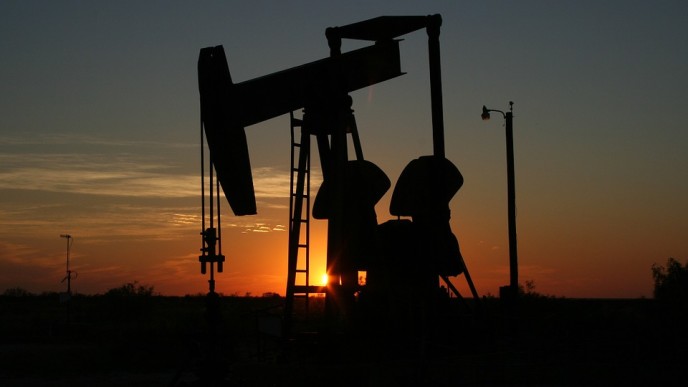
 Oil closed above $45 a barrel in New York for the first time since November after U.S. crude output dropped and Federal Reserve policy makers signaled they’re open to raising interest rates in June.


