Posts

Oil Industry Report Warns of Massive Job Losses From Biden’s Anti-Drilling Agenda

The Biden administration’s failure to pursue a plan for offshore oil and gas leasing will have long-term impacts on American jobs, gross domestic product (GDP) and energy security, an industry report found.

American oil production would decline by roughly 500,000 barrels per day and at least 57,000 energy industry jobs would be lost if the administration declined to issue a five-year leasing plan by July, according to a report published Tuesday by the American Petroleum Institute (API) and National Ocean Industries Association (NOIA). U.S. GDP would decline $5 billion per year under the projection, the study further showed.

“If this delay persists, the impacts will likely continue to grow, reducing longterm oil and natural gas development and production in the region and the economic activity and government revenues that activity supports,” the report stated.

The Department of the Interior (DOI) is required, under the Outer Continental Shelf Lands Act of 1953, to formulate and publish five-year plans detailing prospective offshore oil and gas lease sales. Without a plan in place, the federal government would be unable to hold any offshore lease sales.

But the Biden administration hasn’t moved forward on a new plan even as the current one is set to expire in June, according to a recent Congressional Research Service report. (Read more from “Oil Industry Report Warns of Massive Job Losses From Biden’s Anti-Drilling Agenda” HERE)

Delete Facebook, Delete Twitter, Follow Restoring Liberty and Joe Miller at gab HERE.

Market Mayhem: Oil Crashes, U.S. Stock Futures Tank, Bond Yields Plummet, and Trading Curbs Kick in

Sharp declines in U.S. stock index futures triggered trading curbs meant to slow panicked markets as the price of oil fell by more than 30 percent and bond yields crashed amid heightened worries over the coronavirus.

E-mini futures on the S&P 500 dropped by 5 percent in overnight trading Sunday, triggering automatic trading curbs that kick-in when the price falls below 5 percent of the closing price of the referenced index Friday. As a result, the futures contract cannot trade at a lower price until the cash market opens at 9:30 a.m., although trades may still be made at higher prices.

The last time futures trading hit the overnight limit was election night of 2016, when markets initially sold off following the news that Donald Trump had won the election. That selling pressure quickly subsided and the major indexes closed up by around 1 percent or so the following day.

The E-mini is an electronically traded futures contract based on the underlying S&P 500 index. The contracts are around one-fifth the size of the standard S&P futures contracts, earning them the monicker “mini.” They are considered highly liquid and are widely traded but they have, in a few past episodes, been prone to so-called “flash crashes.” . . .

Oil prices crashed more than 30 percent Sunday night after Saudia Arabia on Saturday slashed official crude prices for April following the collapse of talks between OPEC+, which includes the traditional OPEC nations plus Russia. Oil had fallen sharply on Friday following the news that talks had fallen apart but took an even deeper tumble, falling an additional 20 percent or so, when it became apparent that the once allied oil producers were now engaged in a price war to take market share from each other. (Read more from “Market Mayhem: Oil Crashes, U.S. Stock Futures Tank, Bond Yields Plummet, and Trading Curbs Kick in” HERE)

Follow Joe Miller on Twitter HERE and Facebook HERE

JPMorgan Chase Joins the War on America’s Energy

JPMorgan Chase has decided that it’s better for the company to join the progressive environmental gods than to continue supporting the great American energy miracle that has brought so much prosperity, stability, and job creation to this country. Has the Left finally won the war for the heart and soul of corporate America?

During the company’s annual investor day on Tuesday, the giant bank announced it would no longer be financing loans for oil and gas drilling in the Arctic and would divest from financing coal plants or mines. It also announced it would be divesting from any company that gets the majority of its revenue from coal by 2024.

When the Left can’t win at the ballot box or in a democratic debate in legislatures, it seeks recourse through the courts, or even better, the culture and markets. In this case, groups like Rainforest Action Network bullied the bank into submission, publishing a report showing JPMorgan Chase to be the single biggest lender to the oil and gas industry.

At Tuesday’s announcement, JPMorgan committed to investing in $200 billion worth of projects in support of the United Nations’ sustainable development goals. That is the company’s credential in the elite world that will make its profits kosher – sort of an extortion that the progressives make companies pay as the cost of doing business in a political system they control.

However, it is never enough for the leftist anarchists, who are now demanding the bank also pull out of financing drilling in the lower 48 states as well.

It’s truly hard to overstate the economic miracle that oil and gas drilling has ushered into our job market. We have now become the global superpower of oil and gas production and exports, to the point that even the conflict with Iran in January did not cause a spike in energy prices at all.

According to the U.S. Energy Information Administration (EIA), American crude oil production has hit an all-time record of 13 million barrels per day (bpd). That is an astounding 46 percent increase in production since Trump took office in January 2017. Poor states like New Mexico have benefited enormously with more state revenue and jobs, as oil production has increased 250 percent since 2012.

The more we drill for oil and gas, the more we recover. Far from running out of resources, proven reserves of crude oil have increased by 12 percent since 2017 and have more than doubled over the past 13 years. Likewise, proven reserves of natural gas increased to 9 percent since 2017 and more than doubled since 2005 to 504.5 trillion cubic feet.

Yet the flat-earth progressives are trying to reverse all that progress, which will result in regressive price increases and job losses for the most vulnerable citizens.

The revelation from JPMorgan comes as BP announces it is withdrawing its membership in the American Fuel and Petrochemical Manufacturers, the Western Energy Alliance, and the Western States Petroleum Association due to concerns about the environmental stances of those trade groups. “Our priority is to work to influence within trade associations, but we may publicly dissent or resign our membership if there is material misalignment on high-priority issues,” said BP chief executive Bernard Looney in a February 12 announcement.

The cancel culture and boycott campaigns of the Left, coupled with a very weak Republican Party, have ensured that the cultural inertia is moving in one direction. Whereas the Left always controlled academia, media, and entertainment, its recent conquest of the corporate world is the key to actually moving the needle of anarchist socialist policies. We are seeing this with corporations boycotting ICE as well.

However, the growth in extremism among those on the Left provides conservatives with an opportunity to finally make these companies pick sides.

Until now, Republicans have allowed corporations to promote fiscal and cultural Marxism on the cheap by saving them from high taxes and a few targeted regulatory issues that they care about. Meanwhile, as we bail out the companies, corporate America has become the number-one enforcer – even more effective than the media and academia – of promoting open borders, endless Middle East migration, weak-on-crime laws, anti-religious-liberty policies, mindless multiculturalism, eco-socialism, and the transgender agenda. Even on fiscal issues, they support the welfare state, Obamacare, and all the regulations that help them shut out competition.

The one missing issue from the Democrats’ portfolio of corporate bosses is the tax issue. If the corporations empowered Democrats on that issue too, they couldn’t survive. Thus they keep the Republican lifeline against Democrats raising taxes and still promote the rest of the progressive agenda. And remember, government-run health care is the single biggest driver of our debt, and that is being fueled by big business.

These businesses also count on traditional establishment Democrats to ease off them when it counts, even as they talk tough to jazz up their activists. Well, now Bernie Sanders is changing all of that. He will actually put them out of business. So now it’s time for conservatives to make them pick sides. They either jump off the bandwagon of progressivism, or we will step back and allow the Bernie Democrats to hurt them at their bottom line. They must remember we’re all in the same sinking ship that they helped destroy. (For more from the author of “JPMorgan Chase Joins the War on America’s Energy” HERE)

Follow Joe Miller on Twitter HERE and Facebook HERE

Once Again, Actual Science Supports Trump Admin Deregulation Plan over Obama

Methane emissions in Texas’ biggest oil and gas-producing counties cratered between 2011 and 2016, according to a report from a group that promotes natural gas production.

Emissions dropped over 211,000 metric tons of carbon dioxide equivalent during that five-year period among the state’s natural gas-producing counties, according to an analysis from Texans for Energy.

Similar reduction levels were noted among the ten largest oil-producing counties.

“The story on methane is all about technological innovation, particularly how Texas oil and gas producers have been able to make us more energy secure while also reducing emissions,” Steve Everley, a spokesman for Texans for Natural Gas, said in a statement to The Daily Caller News Foundation.

CO2e is a measure used to compare the emissions from various greenhouse gases — usually methane and nitrous oxide — based upon their global warming potential.

Production spiked while emissions significantly decreased, the analysis also found. Midland County, for instance, produced nearly 73 million barrels of oil in 2016, roughly a 296 percent increase since 2011, according to the report that was conducted using the Environmental Protection Agency’s Greenhouse Gas Reporting Program.

Technological advancements are successfully doing what regulations could only hope, Everley said of the techniques energy producers use to extract natural gas from Texas’ Permian Basis.

“Critics of the U.S. oil and gas boom have repeatedly claimed that methane is an environmental threat that requires new regulations from Washington,” he added.

Midland Country was not the only country in oil-rich Texas to see a dramatic emission decrease.

Natural gas production in Webb County increased by 127 percent between 2011 and 2016, and emissions in the county plummeted about 37,000 metric tons CO2e — or a 97 percent decline.

President Donald Trump announced in December 2017 that he would suspend or delay key requirements of a former President Barack Obama-era global warming regulation to reduce methane emissions on federal lands.

Oil companies have complained about the regulations since they were implemented in 2015.

The Bureau of Land Management will delay portions of the Obama administration’s methane flaring rule until 2019 to give the agency time to review the rule. BLM found the oil and gas industry would be “unnecessarily burdened” by a regulation that may be rewritten.

Obama finalized the rule in 2016 as part of his plan to fight global warming.

Forcing oil companies to install new equipment to reduce venting and flaring would supplement costs to taxpayers, officials claimed at the time.

A version of this article appeared on The Daily Caller News Foundation website.

Follow Joe Miller on Twitter HERE and Facebook HERE.

With the Stroke of a Pen, Trump Claims Victory in the Decades-Long Battle Over Alaskan Oil

President Donald Trump signed tax reform legislation that also ends the battle over oil and gas drilling in the Arctic National Wildlife Refuge that has divided lawmakers for decades.

Trump not only signed tax cuts into law on Friday, he also delivered Alaska lawmakers, Republicans and conservative groups a major political win in a political battle that’s raged since the 1980s.

It’s been “an unnecessarily long and contentious battle,” Tom Pyle, president of the free market Institute for Energy Research, told The Daily Caller News Foundation. “It’s a huge win for Alaskans. It’s a huge win for Americans.”

The Republican tax bill finally gives congressional authorization to open the 1.5 million acre 1002 area along Alaska’s Arctic coastline to drilling.

The so-called coastal plain is just 8 percent of ANWR’s total area, but environmentalists and Democrats have fought tooth and nail to keep it off limits to drilling.

Pyle, who headed Trump’s Energy Department transition team, said the historic decision will finally allow companies to do modern assessments of ANWR’s oil and gas resources. The last survey was conducted in 1998, estimating ANWR held as much as 10 billion barrels of oil.

“We’ve come close a few times, but until now we never got over the finish line,” Pyle said.

Previously, Republicans had never gotten approval to open ANWR out of Congress. In 2005, Senate Republicans got ANWR language in the 2006 budget bill, but it was stripped out by House Democrats.

Alaska lawmakers from both parties have long pushed to ANWR’s coastal plain area for drilling. They’ve faced stiff resistance from environmental groups and most Democrats who worry drilling could harm caribou and exacerbate global warming.

Now, with majorities in both chambers, Alaska Republican Sen. Lisa Murkowski pushed through a reconciliation bill to raise $1 billion over 10 years through opening the 1002 area to oil and gas drilling.

A 2012 Congressional Budget Office report projected that opening the 1002 area to drilling would generate $5 billion in revenue over 10 years. Oil prices have come down since then, so in reality, revenues may not end up being that high.

Environmentalists still plan on doing everything possible to keep oil and gas exploration out of ANWR, including suing the Interior Department to throw up hurdles to future lease sales in the area.

“Opening the door for oil companies to drill in the Arctic National Wildlife Refuge will devastate Alaska’s wildlife and push us farther down the road of climate disaster,” Brett Hartl, government affairs director for the Center for Biological Diversity, said in a statement.

“And doing it to fund tax cuts for billionaires is a sick joke,” Hartl said.

The League of Conservation Voters made a last-ditch attempt to rally support against the ANWR provision, arguing the “provision would do irreparable damage to one of America’s most magnificent and wildest landscapes.”

ANWR is the country’s largest wildlife refuge, spanning more than 19 million acres in northeastern Alaska. Few people live there and few ever travel to the region, which environmentalists say is a delicate ecosystem worthy of protection.

President Dwight Eisenhower first protected the area in 1960 at the urging of environmentalists, and the area became a wildlife refuge in 1980 under legislation signed by President Jimmy Carter. That 1980 law also set aside the 1002 area specifically for potential oil and gas development.

It’s been a political battle ever since.

Oil and gas companies say they’d only need a 2,000-acre space in the 1002 area for drilling operations — that footprint could be even smaller due to technological advances.

Environmentalists argued for years caribou, polar bears and other animals could be harmed by drilling operations — despite decades of drilling in nearby Prudhoe Bay not degrading the environment.

“Now, ANWR opponents have adopted a new set of talking points, claiming that we shouldn’t drill in ANWR because the price of oil is too low,” Will Yeatman, a senior fellow at the free market Competitive Enterprise Institute, said in an emailed statement.

“This suggests that if the price was right, they would support drilling,” Yeatman said. “Out of the other side of their mouths, environmentalists claim that any drilling is unacceptable, because it would contribute to supposedly catastrophic climate change.”

“By stark contrast to the reasoning of ANWR opposition, drilling is supported overwhelmingly by citizens of the state — 78 percent in fact, as well as by the governor, state legislature and the entire congressional delegation,” Yeatman said. (For more from the author of “With the Stroke of a Pen, Trump Claims Victory in the Decades-Long Battle Over Alaskan Oil” please click HERE)

Follow Joe Miller on Twitter HERE and Facebook HERE.

Massive Oil Discovery in Alaska Is Biggest Onshore Find in 30 Years

Some 1.2 billion barrels of oil have been discovered in Alaska, marking the biggest onshore discovery in the U.S. in three decades.

The massive find of conventional oil on state land could bring relief to budget pains in Alaska brought on by slumping production in the state and the crash in oil prices.

The new discovery was made in just the past few days in Alaska’s North Slope, which was previously viewed as an aging oil basin . . .

The discovery is 20 miles south of where the two companies have already found oil in a project known as Pikka. That northern project is already in early development and is 51% owned by Armstrong, which is the operator on both developments. (Read more from “Massive Oil Discovery in Alaska Is Biggest Onshore Find in 30 Years” HERE)

Follow Joe Miller on Twitter HERE and Facebook HERE.

Road Trip! Check out What the Oil Industry Is ACTUALLY Doing to America

The recent news of a large discovery of oil in Texas’ Permian Basin reminded me of how little everyday Americans know about the size and scope of the energy industry in this country. I certainly didn’t until I took a long trip across the country on backroads. What I learned is that there are working oil fields in places I never would have thought — all the way across this great land. Here is some of what I found.

But first, about that discovery. Earlier this month the U.S. Geological Survey announced that it had found 20 billion barrels of oil in the Wolfcamp Shale portion of the Permian Basin. The Permian Basin is where a young George W. Bush was an oilman. The discovery adds to the 264 billion barrels of oil that estimates place in the U.S. reserves. This means that because of recent advances in technology and discoveries the U.S. has more reserves than Saudi Arabia and Russia.

As I found out, much of those reserves are in places you never thought they would be, unless you are from those areas. While Alaska, North Dakota, and Texas are the states that immediately come to mind when thinking about oil and energy, the truth is oil is being pumped out of the ground in places most people wouldn’t even think of. Crude oil is being pumped out of the ground in 29 of the 50 states. I saw a lot of this production first hand.

To get a great idea of the history of oil production in America, a must see is the Drake Oil Well museum. This museum, located in Titusville, Pennsylvania, is a monument to the oil industry and American spirit. It tells the story of the early oil industry in Pennsylvania — something that is taught in school, but you think is a thing of the past. With new discoveries Pennsylvania currently pumps on average 500,000 barrels of oil per month out of the ground. Coupled with the gas shale boom in the area, the economy is booming again in that part of the country. It has people excited again.

Leaving northwestern Pennsylvania, I traveled through Cleveland down to the Ohio River valley straight through to Missouri. All along the way, I found a peculiar thing I had no idea about. Oil wells on farmland almost the whole way along that trip. Ohio alone pumps on average over two million barrels of oil per month out of the ground.

Most of this oil is located in those red counties that voted for Donald Trump back on November 8th. It represents some of the good jobs that are left in those areas. As I wrote shortly after the election, visiting the rest of the U.S. would do everyone good, especially coastal liberals who see the oil and energy industry as evil. Go visit and see the benefits the industry has on communities across the country. The oil industry is just one facet of daily life in vast swaths of the country.

After leaving the Ohio Valley I travelled to the upper Midwest, and I wasn’t that far from oil production for very long periods of time. One of the highlights of the trip for me was a tour of the North Dakota Bakken oil fields. What you see when you visit is an industry truly cognizant of environmental stewardship. Where in the Ohio Valley there were small wells on individual farms for miles, in North Dakota, because of newer horizontal drilling techniques, the oil was pumped from super pads. That means a large pad with multiple pumps, brought oil out of the ground from wells scattered over a large area. With this, the oil industry is able to minimize the footprint of their drilling, and pumping sites. It saves them money, and gives a smaller environmental footprint.

When compared to the large wind farms scattered across the country, the North Dakota oil fields have a much less noticeable visual impact. It was truly surprising to see.

More important than seeing the individual wells, and production across the country, was talking to people that were involved in the industry or affected by the booming micro economies in oil producing areas. In northwest Pennsylvania for instance, the new shale finds have put many, in a formerly economically depressed area back to work. It is especially noticeable after driving through the central part of the state and seeing economic malaise and then driving through the shale-affected areas and see houses freshly painted, new cars in driveways, and other markers of a thriving economy.

There are countless stories to be uncovered by visiting the parts of this country off the beaten path. When you travel to these places you uncover things about your own country you can’t really grasp by reading about them. Boring data, from the Department of Energy, becomes real life, with real people.

Do yourself, and America a favor. Get in your car and drive, and don’t worry about the oil. We got plenty. (For more from the author of “Road Trip! Check out What the Oil Industry Is ACTUALLY Doing to America” please click HERE)

Follow Joe Miller on Twitter HERE and Facebook HERE.

$65 Billion Alaska LNG Project Crashes and Burns

Alaska’s proposed $45-$65 billion liquefied natural gas (LNG) project that was supposed to help the state refill its coffers from decades of dwindling crude oil production and more than two years of low oil prices, took several steps backward a few weeks ago when three of the project’s four partners, BP , ConocoPhillips COP -0.40%, and ExxonMobil XOM -1.23%, all North Slope producers, pulled out. The fourth project partner is state-owned Alaska Gasline Development Corp (AGDC) . . .

The project proposal was conceived in happier days for global oil and gas producers. When LNG prices in Asia breached $20 per million British thermal units (MMBtu) in February 2014, hopes soared for new LNG project proposals.

However, what a difference a few years can make. After reaching $115 per barrel in mid-2014, global oil prices have more than halved and are hovering in the mid-$40s range, with little hope of market equilibrium in sight. LNG prices, which largely track oil prices, have fared even worse.

LNG prices for November delivery in Asia, which accounts for around two-thirds of global LNG demand though that demand growth is slowing, are trading just over $5/MMBtu. (Read more from “$65 Billion Alaska LNG Project Crashes and Burns” HERE)

Follow Joe Miller on Twitter HERE and Facebook HERE.

Alaska: State of Chaos?

Our regular readers know we long for good news but are dedicated to connecting logical dots wherever they may lead.

The connections between politics, economics and energy demand that they be looked at as a whole, not separately–for they truly are all connected.

[The] avalanche of political, economic and energy news is both broad and deep.

The connection we see among these dots forms a worrisome picture.

That picture today reflects a rudderless ship of state.

Alaska’s governor is loud, dogmatic and demanding but vacillates between contrary positions, as today’s news and an unremarkable year in office demonstrate.

The legislature is struggling to put the state’s budget and fiscal crisis in order without stable navigation from the helm.

The oil and gas industry, upon which the state government and private economy depend, is trying valiantly to maintain its own stable course amid the stormy political winds and waves.

We would hate to label Alaska a “State of Chaos”. But if decision makers and citizens do not connect the dots and see their state as it is, there is little hope for correcting its dangerous course.

We hope someone or several Alaskans with extraordinary leadership skills can now emerge to diplomatically but decisively and wisely calm the winds, waves and storms of uncertainty and unnecessary dispute.

We will eagerly jump on that good news as soon as it rises and distinguishes itself.

We long to once again think of our land as the great, Last Frontier rather than as a troubled, declining place.

Events are moving rapidly, deteriorating, and time is of the essence.

Follow Joe Miller on Twitter HERE and Facebook HERE.
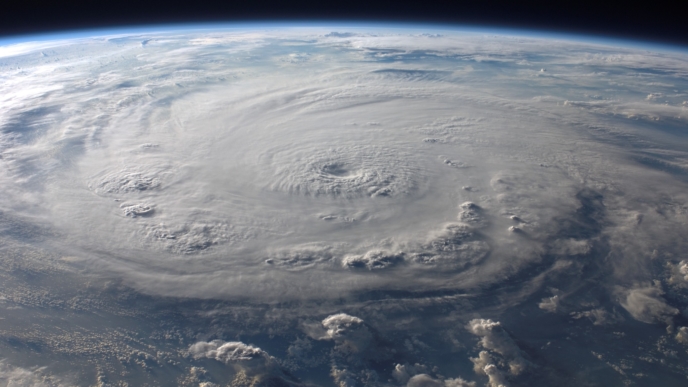
Crude Falls Below $35 per Barrel in New York for First Time Since 2009

Oil held gains after rebounding from the lowest price since February 2009 as the U.S. Congress sought to advance on a deal to allow unfettered crude exports for the first time in 40 years.

Futures were steady in New York after rising 1.9 percent Monday, the first increase in seven days. Senate leaders faced resistance from some Republicans and House Democrats, who were willing to discuss lifting trade restrictions depending on concessions they’d get in exchange, according to a Democratic leadership aide. Oil prices won’t continue at current levels, OPEC Secretary-General Abdalla El-Badri said in New Delhi on Tuesday.

Oil is trading at levels last seen during the global financial crisis after the Organization of Petroleum Exporting Countries effectively abandoned output limits as it sought to defend market share. Hedge funds and other large speculators raised bets on falling U.S. crude prices to a record while the International Energy Agency predicted the market will remain in surplus at least until late 2016.

“If the U.S. starts to ship its crude to Asia, this will further intensify competition with OPEC producers,” Kang Yoo Jin, a commodities analyst at NH Investment & Securities Co. in Seoul, said by phone. If oil drops to about $30 a barrel, OPEC “will find the need to protect prices as internal discord and conflicts among themselves persist.” (Read more from “Crude Falls Below $35 per Barrel in New York for First Time Since 2009” HERE)

Follow Joe Miller on Twitter HERE and Facebook HERE.