Posts

Trump Administration Denies Permit for Pebble Mine

The U.S. Army Corps of Engineers has denied a permit for the Pebble Mine on Wednesday, likely dealing a lethal blow to the controversial project in Alaska’s Bristol Bay.

The decision on the proposed gold and copper mine is a victory for environmentalists, Native American groups, and the state’s commercial fishing industry, all of which opposed the project.

In a statement, the Corps said it “determined that the applicant’s plan for the discharge of fill material does not comply with Clean Water Act guidelines and concluded that the proposed project is contrary to the public interest.”

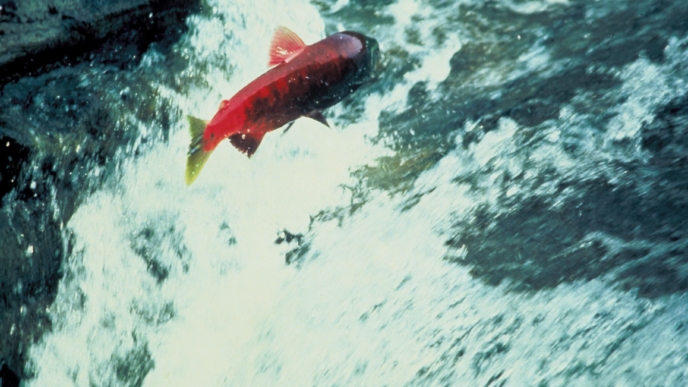
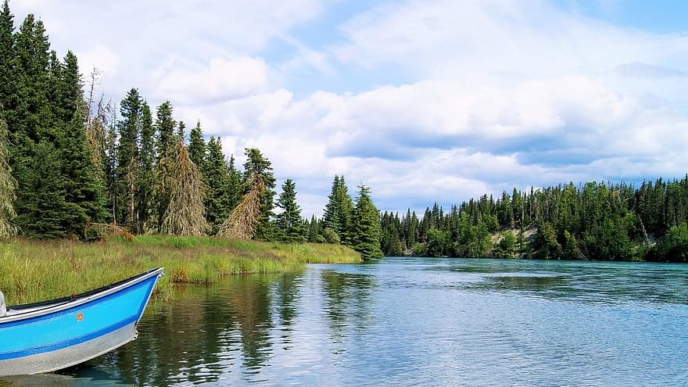
Opponents had argued the open-pit mine would leach sediment into nearby waters, harming the state’s salmon population while scarring pristine wilderness.

“Sometimes a project is so bad, so indefensible, that the politics fall to the wayside and we get the right decision. That is what happened today,” Tim Bristol, executive director of SalmonState, which promotes Alaska’s salmon industry, said in a statement. (Read more from “Trump Administration Denies Permit for Pebble Mine” HERE)

Follow Joe Miller on Twitter HERE and Facebook HERE

Alaska Gold and Copper Mine Project Moves Forward, Despite Environmentalist Objections

The U.S. Army Corps of Engineers released its final environmental impact statement on Friday which found gold and copper mining in Alaska “would not be expected to have a measurable effect on fish numbers.”

That clears the final hurdle for the Corps to issue a permit this year to Northern Dynasty Minerals Ltd., the Canadian company that has proposed the mining operation in the state.

Environmentalists oppose the project and the Obama administration did what it could to keep the Alaskan wilderness off limits to energy production.

“In a scientific review conducted under the Obama administration, the U.S. Environmental Protection Agency found that the mine could result in ‘significant and unacceptable adverse effects’ on fishery areas and ecologically important streams, wetlands, lakes, and ponds,” the Los Angeles Times reported.

Tom Collier, chief executive of Pebble Limited Partnership, the U.S. subsidiary of Northern Dynasty, said in the Times report that the Corps’ process was “extensive, rigorous and transparent,” and not in fact rushed, taking more than two years, about average for environmental reviews in Alaska. (Read more from “Alaska Gold and Copper Mine Project Moves Forward, Despite Environmentalist Objections” HERE)

Follow Joe Miller on Twitter HERE and Facebook HERE

Fight Heats Up Over EPA Sabotage of Alaska Gold Mine

Photo credit: NPCA Photos

Photo credit: NPCA Photos

The Environmental Protection Agency is under fire for a preemptive strike against a massive copper and gold mine in Alaska, where hundreds of billions of dollars and thousands of jobs are at stake.

The controversy centers on Pebble Mine, located 200 miles southeast of Anchorage. It is the largest deposit of copper and gold in North America.

But environmental groups and fishermen, worried about the impact to the world’s most abundant salmon run in Bristol Bay, fought the mine from the beginning.

“It was people from Alaska that requested the EPA come in and take action,” said Tim Bristol, of Trout Unlimited in Anchorage. “We just don’t feel like we’re getting our concerns heard by the state of Alaska.”

The EPA did act, using the 1972 Clean Water Act for the first time ever to stop a mine before the owners even came out with a detailed plan.

Read more from this story HERE.

Internal Memos Reveal EPA Worked Behind the Scenes to Kill Alaska Mine Project

Photo Credit: Fox News

Photo Credit: Fox News


The Environmental Protection Agency came under fire Thursday after new emails surfaced that allegedly show government officials worked in secret with tribal leaders and other environmental groups to preemptively oppose the controversial Pebble Mine project in Alaska before a review was even conducted.

The internal memos published by The Washington Times show EPA officials working behind the scenes as early as 2008 to kill the gold and copper mine project — two years before any scientific study or survey was conducted looking into the environmental impact.

“As you know I feel that both of these projects (Chuitna and Pebble) merit consideration of a 404C veto,” EPA official Phillip North wrote, according to the emails.

North, according to the Times, pushed to have the mine’s veto added to the agenda of a 2009 agency retreat.

But the EPA announced in 2011there would be a neutral and scientific review of the mining project. At the time, they said that concerns raised by environmental groups and local tribes would be investigated, but that no decision had been made.

Read more from this story HERE.

Will EPA ‘Force’ Another Decision on Alaska’s Native Communities?

Photo Credit: AP

Photo Credit: AP

Lary Hill grew up in a crowded house surrounded by generations of family deep in the Alaska bush country.

In Iliamna, some 180 air miles southwest of Anchorage, communities hunted and fished to survive.

Hill, 68 and an elder of the community of 120 residents, said his family had no idea they were poor until the federal government told them.

“We always had enough food to eat and a warm place to live, with family all around. We had no understanding of what poor meant,” he said.

Then, through years of government-administered programs in which “being poor meant you could get free stuff,” the destiny of the region’s people seemed to be in the hands of bureaucrats.

Hill knows all too well, though, what the government giveth, it can taketh away.

“There’s been a pattern here for so many years where the federal government once they start giving us all these things, once they do that we pretty much lose control over our own life, our own society,” he said. “If we don’t behave, the government will take the benefits away.”

Poverty prevails in Iliamna and the region, where at least a quarter of the population is unemployed.

Now there is opportunity in Iliamna, and the potential for so much more.

Hill and several others in his community are employees of the Pebble Limited Partnership. The development initiative of London-based Anglo American and British Columbia’s Northern Dynasty Minerals, proposes developing the mine, a multibillion-dollar capital investment that would create thousands of good paying, short-and long-term jobs, according to PLP.

In conversations with Watchdog.org, Hill and other community members on the PLP payroll say they are not yet sold on the project. They want to know more about it. If the large-scale copper and gold mine can’t co-exist with Alaska’s salmon fishing industry — if a mine can’t operate without destroying their tribe’s native land — they don’t want it.

But they also don’t want the government and environmental groups with an ax to grind telling them — again — what’s good or bad for them.

That’s what it feels like to Iliamna community members who worry that the EPA could drop a regulatory hydrogen bomb on the town’s potential — 404(c) of the Clean Water Act, which could pre-emptively kill the mine project before a plan is submitted.

“People aren’t asking us, they are just pushing things on us,” said Lisa Reimers, CEO of the Iliamna Development Corp.

There are a number of residents of Iliamna, many more outside the region, asking the EPA to veto the project. They fear a large-scale mine would ruin the Bristol Bay Watershed, which feeds 50 percent of the world’s sockeye salmon population, critical to the region’s economy.

But critics vehemently opposed to large-scale mining in Anchorage and elsewhere also expressed their dismay that the project may not have the opportunity to be heard and that EPA has the power to strip basic due process.

You’ll have to excuse Pebble officials for feeling a little anxious with the arrival on Tuesday of the EPA’s new administrator, Gina McCarthy.

The last time an EPA administrator came to Alaska to talk about the Pebble project, in late July 2010, then-EPA chief Lisa Jackson apparently forgot to mention to PLP that some Alaska communities and tribes had submitted a petition asking the EPA to impose the pre-emptive veto provision. In February 2011, EPA opted to perform a Bristol Bay Watershed Assessment that predicted massive damage but was criticized by many of the document’s peer reviewers for faulty, hypothetical science.

An EPA official told Watchdog.org that McCarthy is not expected to make any announcements regarding the Pebble project during her stop Tuesday in Alaska.

Mike Heatwole, vice president of public affairs for Pebble Partnership, said Pebble officials are more optimistic about this EPA visit this time around, that the tone of the new administrator seems more open to a “transparent effort.”

The past is problematic, however.

Reimers and other community members say they had tried on several occasions to meet with the former EPA administrator, to no avail. At the same time, Jackson opened her door on several occasions to opponents of the mine proposal.

So, community members like Sue Anelon, who also works for Pebble, have a lot to say to the new EPA administrator.

“We don’t want this regulation (404(c)) enforced upon us,” Anelon said. “We’ll make that decision, not somebody else forcing it on us. We’re going to tell her, this is not fair to our communities.”

Hill said he wants to know just what another outside agency will decide for his community.

“If she invokes the power of the Clean Water Act, that might rob our area of the chance to have an industry that would allow us to do more than survive, but thrive,” Hill said.

___________________________________________

Courtesy of The Franklin Center’s Watchdog Wire

EPA Study on Pebble Mine Relies on Report from 'Admitted Data Fakers'

Photo Credit: Getty Images The Environmental Protection Agency’s revised draft assessment of an Alaska mine project cites research from environmental consultants who admitted falsifying a report in an environmental lawsuit.

The EPA’s new review of the potential Pebble Mine in Bristol Bay, Alaska, relied on research from Stratus Consulting and Ann Maest, the company’s managing scientist. Stratus recently admitted to providing false statements in a decades-long $19 billion lawsuit against the oil company Chevron.

Maest and Stratus claimed earlier this month that they had been misled by a plaintiffs’ lawyer when they provided an environmental report detailing the damage done by Chevron subsidiary Texaco to areas of Ecuador. They disavowed the report as “tainted.”

The environmental impact report used against Chevron was supposed to be written by an independent expert, but was instead written by Stratus, which was employed by lawyers representing Ecuadorian villagers.

Read more from this story HERE.

Rep. Issa Threatens Congressional Subpoena Over EPA Pebble Mine Review

photo credit: donkeyhotey

Rep. Darrell Issa (R-Calif.), chairman of the House Committee on Oversight and Government Reform, has threatened subpoenaing the Environmental Protection Agency (EPA) for documents regarding a potential Alaska mine.

Issa, along with Rep. Jim Jordan (R-Ohio), said he wants to know more about the intentions behind a water impact test EPA is conducting near a discussed mine site in Bristol Bay, Alaska.

The lawmakers said in a Thursday letter that EPA’s actions have “bordered on the absurd” by since the committee’s initial May 10 inquiry about the matter.

“It strains credibility that EPA has been unable to provide a full response to the Committee more than seven months after the initial request,” Issa and Jordan wrote to EPA Administrator Lisa Jackson.

“If EPA fails to provide the documents as requested, the Committee will consider use of the compulsory process.”

Read more from this story HERE.

EPA’s Alaska Power-Grab Will Hurt the Nation

Photo credit: NPCA Photos

That’s because the U.S. Environmental Protection Agency is about to lock some of America’s poorest communities into a permanent economic depression as a favor to national environmental groups. If the EPA succeeds, what happens in Alaska won’t stay in Alaska – there will be huge economic and employment consequences for the rest of the country.

The Pebble Project is a proposed copper mine about 15 miles from my hometown of Iliamna in southwestern Alaska. The Pebble deposit contains one of the world’s largest discoveries of copper, and if the proposed mine secures more than 60 different regulatory approvals from about a dozen state and federal agencies, the project would create about 2,000 construction jobs and 1,000 permanent positions. For permitting, the developers will have to prove to regulators the project will not harm the surrounding environment, including Bristol Bay’s sockeye salmon population.

The Pebble Partnership has invested $120 million so far on environmental and socioeconomic studies that will be used to develop a formal permit application, which regulators will spend three to five years reviewing. But that’s not good enough for the national environmental groups who oppose the Pebble mine. Instead, they want the EPA to take the unprecedented and probably unlawful step of using Section 404 of the Clean Water Act to preemptively veto the project before any permit applications can be filed. The EPA appears to be following those marching orders, because in May the agency issued a draft report stating that a copper mine in the Bristol Bay Watershed would likely harm salmon populations. If the draft report is finalized, the EPA could then veto all mining activity in the region.

The State of Alaska is deeply troubled by this potential EPA power grab, as the Pebble site is located on state-owned land that’s been set aside for mineral development. The EPA’s draft report is essentially a literature review that contains no new or on-the-ground scientific research conducted as part of the assessment. Without a permit application, the EPA made up its own mine plan, assuming environmentally harmful technologies and practices “from the late 1800 and early 1900s” – historic examples that do not apply directly to a modern mine under current regulations , according to Alaska’s Department of Natural Resources. The draft report presents a “biased picture of only adverse impacts of a hypothetical mine,” and key sections “start with conclusions, and then subsequently follow with facts that support the conclusion,” which is “inappropriate for a scientific document developed by a regulatory agency.” But of all the State of Alaska’s criticisms, this was perhaps the most revealing: “No reference to, or consideration of, winter freezing or permafrost is provided in the risk assessment.” That’s right – the EPA wrote a report about Alaska and forgot the part about winter.

Read more from this story HERE.