Posts

Liberals Boo God and Natural Rights at GOP Town Hall

At a rambunctious town hall in his district, Rep. Dave Brat, R-Va., ran into something he probably never expected to see in his district: voters booing the concept of fundamental, God-given rights.

“As a seminary graduate, do you believe in the separation of church and state?” the questioner began. “Would it be acceptable for you for churches to support specific candidates?”

The question was in reference to the Johnson Amendment, which President Trump recently gutted somewhat with his lackluster order on religious liberty.

“Absolutely,” Brat initially answered, cautioning that he was asked “a loaded question.”

“It’s in the Constituiton. They got it pretty good,” Brat said amidst the crows of hecklers.

“The politics shouldn’t establish any religion, right?” Brat added, to a response of claps and cheers. “But you should all, under the First Amendment, have the free expression thereof.”

But he took the argument deeper, asking an enthusiastic audience if they wanted a “total separation of state,” and cautioning that he did not think such an arrangement would be a good thing.

“Some of you have said that health care is a right,” the congressman explained. “And in the Western tradition, rights come from God. The role of government is to protect those rights.”

The hecklers responded with a chorus of sustained boos.

The question and its response came during a Tuesday night event – his first since the House’s most-recent health care vote – and was attended by hundreds, and fraught with jeers.

In an op-ed published the day after, the Richmond-Times Dispatch’s editorial board lauded the congressman for attempting to engage in civil discourse while excoriating the crowd’s “astonishing rudeness.”

“People have every right to rage at their congressmen, their president, or anybody else they care to,” the board stated. “After a while, though, the emotional vomiting gets old … when did banging on a high chair with a spoon ever lead to a solution?

(The below clip shows most of the townhall with Rep. Brat:)

Brat’s answer about rights was not wrong, of course. This republic was founded by men of different faiths who had a common understanding that their rights came from a transcendent, pre-political source, and established a system of government to ensure that these inalienable rights would be protected, rather than metered out by kings and demagogues.

Our denominationally neutral Declaration of Independence reflects this, appealing to the “Laws of Nature and Nature’s God” as the font from which our fundamental liberties and inherent equality spring.

Apparently, the concept of rights coming from God – or civil discourse in general – just wasn’t what Rep. Brat’s constituents showed up to hear that night. (For more from the author of “Liberals Boo God and Natural Rights at GOP Town Hall” please click HERE)

Follow Joe Miller on Twitter HERE and Facebook HERE.

Why Is the Religious Left Not More of a Force?

Recently in Religion Dispatches Daniel Schultz criticized a Reuters column that claimed that the religious left is becoming a strong political force. Schultz is a United Church of Christ pastor, and very much on the left himself. He’s right that some media mistake slight bouts of liberal religious activism as signs of broader revival. Such stories may highlight a rally of religious leaders wearing clerical collars and robes for show. Do these demonstrators have a popular following among the religious? It’s not clear that they do.

But I don’t think Schultz understands why the religious left has so little influence. He thinks it has too much diversity — ethnic and otherwise — to ever unite and draw on a larger popular base. Perhaps, but I think that misses the larger point.

It’s true that the religious right is largely made up of conservative white evangelicals, Catholics, Mormons and Jews. But the religious left is largely made up of white liberal mainline Protestants, Catholic social justice activists and Jewish groups. It’s been that way for a long time. Black Protestant church leaders sometimes work with the religious left. But their religious and moral differences have hindered full unity.

So why isn’t the religious left more of a force in politics?

The religious left had weight years ago because it was made up of strong mainline Protestant denominations. It had large ecumenical groups like the National Council of Churches. The “God Box” at 475 Riverside Drive in New York was their headquarters. They had hundreds of staffers and millions of dollars. They were protected by church bodies that founded and sustained American democracy.

Most of that old liberal Protestant world is now gone or much deflated. Most of those church agencies have left New York. The old mainline seminaries became the hotbed of the religious left a century ago. Most are now marginalized with far fewer students and reduced funding. A few have closed despite storied histories.

What institutions represent the religious left today? There is Jim Wallis’s Sojourners, the Interfaith Alliance and Faith in Public Life, among a few others. Much of their constituency is the ever-dwindling base of liberal Mainline Protestants. They can organize petitions and small demonstrations. But they don’t have wide, broad-based followings. That’s why the media usually ignore them, as do politicians. The National Council of Churches worked with the Clinton Administration 20 years ago. There was nothing like this during the Obama Administration.

The religious right, in contrast, came about through groups that work with churches, not denominational heads. The right was often headed by well-known evangelicals followed by Christian media. They were supported by mail campaigns. The Moral Majority and later the Christian Coalition were the early models. After the fall of a pastor or advocacy group, there were many early claims that the religious right was dead. But always there are new leaders and new organizations that have popular appeal.

The religious right is inventive while the religious left is still stuck to declining liberal Protestantism. Even now, most lay mainline Protestants ignore their own denominations and vote conservative.

Here’s the twist that most claims about religious left revival ignore or don’t appreciate: religious left activism is almost always the work of elites who have lost touch with their religious base. Take evangelicalism. It is now the largest religious demographic. But many evangelical colleges, relief and other groups have moved left. Many of the evangelical elite tilt left and don’t want to be associated with the conservative base in their own denominations. Most political witness jamborees for young college educated evangelicals are left-leaning. Much of the evangelical blogosphere is left-leaning.

In short, much of evangelicalism is retracing the steps of Mainline Protestantism 100 years ago. As the elites move left, they also lose touch with their religious roots.

This is why the religious left will never have a very wide following. Religion is about keeping traditions and holding fast to teachings that may go against the culture. Religious people are committed to Scripture, family, and real church institutions. They may engage in politics, but it will never be their top concern. The religious left may have religious motives, at least at first. But it’s often more wedded to politics than to the religious convictions of the ordinary faithful. As a result, it slowly loses its religious identity in favor of secular politics and activism.

This cycle at least in American Protestantism never seems to end. Religious liberals may stretch the boundaries of their faith or leave it altogether. Then, a new generation of excited converts rediscover the old orthodoxy and replace those who are content to provide a religious gloss to left wing politics. (For more from the author of “Why Is the Religious Left Not More of a Force?” please click HERE)

Follow Joe Miller on Twitter HERE and Facebook HERE.
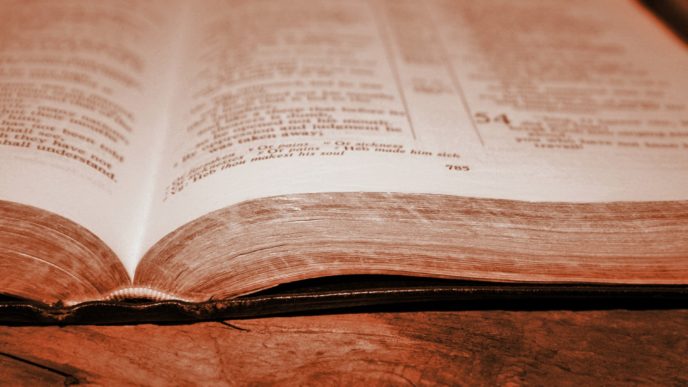
Study: Only 4 Percent of Millennials Hold a ‘Biblical Worldview’

Four percent of millennials hold a biblical worldview, according to a recent study.

The American Culture and Faith Institute (ACFI) published results of a survey earlier this month. The survey measured the core beliefs of millennials compared to older generations.

The study shows that millennials hold more liberal views of things like socialism and same-sex marriage than older generations. But there’s another big difference. Millennials are much less likely to become conservative in the future.

While it’s normal for younger generations to hold liberal views, they drift to the right over time. Not so for millennials.

“Millennials are so far to the left-of-center” that “even a typical amount of repositioning” will leave them very liberal, says George Barna. It’s unlikely that even 10 percent will ever hold a biblical worldview, he says. Barna is the Executive Director of the ACFI and is cited in the study.

Millennials vs. Older Generations: Major Differences

ACFI conducted the study in February 2017. It measured responses from 1,000 millennials, that is, those under age 30.

Notable findings include:

Only 59 percent of millennials identify as Christian. This compares to 72 percent of adults from older generations.

Only 33 percent of millennials (one in three) are born again Christians.

Only twelve percent of millennials identify as conservative. Twenty-six percent are liberal. For adults
older than 30, conservatives outnumber liberals two to one.

Almost have (44 percent) of millennials prefer socialism over capitalism.

As many as 15 percent of millennials identify as LGBT. Only six percent of those over 30 identify as LGBT.

The only question more millennials than older adults held a biblical worldview on? Whether all people are good. Millennials are less likely to believe this than adults over 30. This lines up with the biblical concept of original sin and man’s fallen nature.

Worldview Development: Christians, Get Busy

What exactly is a worldview, anyway? “A comprehensive conception or apprehension of the world especially from a specific standpoint.” That’s according to Merriam-Webster.

Dictionary.com defines the the original German word, weltanschauung. “A comprehensive conception or image of the universe and of humanity’s relation to it.”

So how do people develop their worldviews? Barna says that parents are the most powerful influencers of worldview. And most often, a person’s worldview develops between 18 months and 13-years-old.

There will of course be exceptions to this rule. But in general, “the worldview a person possesses at age 13 is … the worldview they will die with.”

What does this mean for future Americans? “Millennials entering their prime childbearing years,” Barna notes. They will likely pass their current worldview to their children. Christians must take action if they want future generations to embrace a biblical worldview.

Christians will need to “step in and impact the spiritual well-being of our future adults,” he says.

Growing Trends

ACFI’s study on millennials’ worldview isn’t the first to reach these conclusions. Recently The Atlantic noted that people are leaving the church in large numbers. The Pew Research Center also noted the trend among millennials. (For more from the author of “Study: Only 4 Percent of Millennials Hold a ‘Biblical Worldview'” please click HERE)

Follow Joe Miller on Twitter HERE and Facebook HERE.
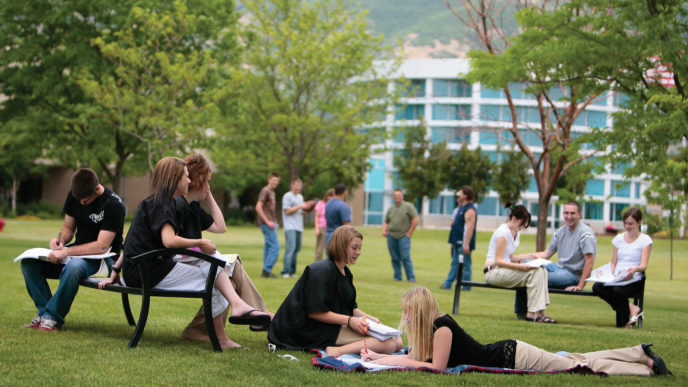
Proponents of ‘Diversity’ Tried to Force My Religious Group off Campus

Recent news about U.S. colleges has not been flattering. We’ve seen a tidal wave of stories from campus protests and violent riots, to sexual assault and purported millennial “safe spaces.”

But obscured by the attention-grabbing headlines is the reality that many students are actively engaged in campus communities that foster cultural and intellectual diversity, encourage innovative thinking, and create opportunities for enriching and helping others in their campus communities and around the world.

I know, because that’s part of my story.

As a student at Missouri State University, I was first a member, then a leader, of Chi Alpha—a student Christian organization devoted to supporting students of faith and promoting campus diversity and community service.

As one of the most engaged students on campus, the best part of my college experience was seeing the huge variety of student groups—faith-based or otherwise—working, sometimes together and sometimes independently, to promote and act on shared values that were important to each groups’ members.

More than any class assignment, the interaction with students and interest groups allowed me to see that all groups on campus, even those with diametrically opposing viewpoints, can flourish under the same university banner.

Yet politicians and campus administrators in some states are trying to push certain groups off campus for daring to be distinct. Religious groups that require their student leaders (not general members) to actually believe and uphold the groups’ beliefs and mission are being accused of bigotry and kicked off campus.

In a puzzling irony, this aggressive ideology only sacrifices true campus diversity and academic freedom in the name of ambiguous and subjective political correctness.

My participation and leadership in Chi Alpha showed me the true value of campus diversity. While Chi Alpha is religious in nature, I interacted and became friends with students who chose to be a part of Chi Alpha for a safe and uplifting social environment.

Some joined Chi Alpha to participate in our shared ethos of community service and humanitarian efforts, like our partnership with feedONE, feeding starving children worldwide. Other students valued our work promoting campus diversity.

I personally led multiple service trips, like taking Chi Alpha students to work with the homeless in Milwaukee, the widowed and orphaned on a New Mexico Navajo reservation, and neglected elementary school children in Kenya.

For all of us, our shared Christian faith fostered a commitment to each other and to caring for others no matter who they are or where they come from.

Schools Are Squelching, Not Empowering, Student Choice

Whether motivated by faith or not, all students should be free to join their own groups to express shared values. But faith-based groups are especially being targeted. Two recent examples come to mind.

Just last year at Southeast Missouri State University, virtually every religious student group on campus was discriminated against because the groups required their leaders to share their faith (to essentially practice what they preach) while other campus groups like fraternities and sororities were allowed to continue selecting both leaders and members based on the groups’ mission or purpose.

Only after months of lobbying (and months of academic distractions) were religious students at the university able to regain equality with the other campus groups.

And two years ago, my fellow Chi Alpha student leader, Bianca Travis, had her entire Chi Alpha chapter a California State University campus.

Despite 40 years of service within the Cal State community, including assisting the school with international students, helping campus police hand out free water during major student activities, and fundraising to address issues like human trafficking, Travis and her friends were singled out, denied the ability to function equally alongside other student organizations, and literally locked out of their meeting space.

All this because they required their leaders (again, not their students) to uphold the group’s mission and purpose.

These are just two examples. Similar problems are going on in Florida, Indiana, Maine, New York, and Washington. All across the country, religious organizations are being scrutinized and investigated for a leadership philosophy that almost all groups with student leaders share.

The only difference is that the religious nature of these groups make it easier for misinformed, misguided administrators to yell “foul play.”

Let Students Freely Engage

A true commitment to academic freedom, diversity, and intellectual engagement (objectives that all colleges and universities say they desire) requires giving students and groups the ability to operate freely as they add value to their campuses by sharing their unique perspectives—religious or secular.

The world is a complex place. Forcing certain groups off campus and thus shielding students from ideas in college won’t help students adequately prepare for the increasingly diverse world ahead of them.

All student groups—even those who require their leaders to uphold their mission to adequately function—must have an equal place at the table.

True academic freedom and diversity cannot exist otherwise. (For more from the author of “Proponents of ‘Diversity’ Tried to Force My Religious Group off Campus” please click HERE)

Follow Joe Miller on Twitter HERE and Facebook HERE.

Victory for Christians: Georgia State Employee Fired for Weekend Sermons Prevails

Dr. Eric Walsh’s lawsuit against the State of Georgia came to an end when the state agreed to pay the Seventh-Day Adventist and former state employee $225,000. First Liberty Institute, the non-profit law firm representing Walsh, announced the victory Thursday.

The settlement comes after a nearly three-year legal battle in which Walsh, a lay-minister for his church, accused Georgia of religious discrimination.

Accusations of Religious Discrimination

Walsh, a member of former President Barack Obama’s Presidential Advisory Council on HIV/AIDS and holder of multiple advanced degrees, was hired as a district health director with Georgia’s Department of Public Health in 2014. But officials abruptly fired him after reviewing YouTube videos of sermons he had preached on the weekends.

First Liberty Institute, a national non-profit law firm based in Texas, helped Walsh file a complaint with the Equal Employment Opportunity (EEOC). As The Stream reported last April, Title VII of the 1964 Civil Rights Act prohibits the discrimination of employers based on their religion.

“No one should be fired from their job for something they said in a sermon, First Liberty Senior Counsel Jeremy Dys told The Stream at the time. “It will be fair game to examine the notes you took in church or the Sunday School lesson you prepared during your annual review.”

Six months later, after receiving the EEOC’s go-ahead, Walsh sued the state of Georgia in April of 2016. Georgia responded in September by demanding that Walsh produce “sermon notes and/or transcripts” and “all documents relating to your service as a pastor.”

Dys responded that the demand was intrusive, calling it “an excessive display of the government overreaching its authority and violating the sanctity of the church.”

Victory for Religious Liberty

First Liberty called the settlement a victory for religious freedom. “We are grateful that the State of Georgia agreed to settle the case and acknowledge the right of their employees to express their religious beliefs,” Dys said in a press release.

Dys pointed out that the law was on Walsh’s side. “No one should be fired for simply expressing his religious beliefs,” he said. He called Walsh “a man of courage and conviction who suffered a serious injustice.”

“It’s been a long, difficult journey,” Walsh commented, “but it’s worth it to have my name cleared and to ensure that all Georgia government employees know they have religious liberty.”

Walsh has been working as a medical missionary and as a medical doctor in California since being fired. Now that the lawsuit has ended, Walsh hopes he can continue to care for his community, First Liberty’s Director of Legal Communications Kassie Dulin told The Stream. (For more from the author of “Victory for Christians: Georgia State Employee Fired for Weekend Sermons Prevails” please click HERE)

Follow Joe Miller on Twitter HERE and Facebook HERE.

God’s Relentless Pursuit: One Woman’s Journey From Darkness to Light

The story of Yvette Castillo is a testament of God’s love and pursuit of his children — even children who, like Yvette, have struggled with drugs, alcohol, promiscuity, abortions, suicidal thoughts and even a pact with the devil.

Lasting Pain and a Pact with the Devil

Yvette was 3 years old when she was molested. As Yvette tells her own story on YouTube, her alcoholic father and “disappointing” mother failed to protect her, and the act of selfishness that took her innocence set her up for a life of self-destruction, Yvette said in her testimony on YouTube.

One day, alone in her bedroom, Yvette invoked satanic power. “I said, ‘Give me the power to hurt everyone, to stop people from messing with me. … I didn’t know that I was making a pact with the devil. I knew who I was talking to, but I didn’t know how serious it was.”

Her life spiraled downhill from there. She began cutting, using drugs, fighting at school and disrespecting teachers. Given multiple opportunities to change, she refused each time. At 14 years old she gave birth to her first child — but being a new parent couldn’t change her. “Not even my child stopped me from doing bad things,” she says. “It was a force that had taken over me, and nobody could stop me.”

She became involved with an abusive boyfriend — and says she felt like she deserved every hit. She had two abortions; then one day her boyfriend kicked her out and she became homeless. Pregnant once again, Yvette continued to use drugs and drink alcohol. She ended up in a crack house where she was raped. “I was trusting the drugs instead of trusting God to make me happy. I thought it was an easier solution, but it wasn’t.”

No Heart

“I no longer had a heart,” she says. “I couldn’t love my kids, I couldn’t love myself. I was so drained.”

A new boyfriend accepted Christ and began attending church. He asked Yvette to go with him. For a while she went, but became disenchanted with “older Christians whose lives she thought didn’t align with Jesus’ teachings.” She left the church and Christianity — saying, “God I’m sorry, but this is not going to work.”

“Little did I know that this was the enemy messing with me. I ran from God for five years.”

Yvette returned to her partying ways, but soon experienced depression, anxiety and panic attacks. She began hearing voices. At one point she heard the devil laughing: “This is where I wanted you. We’re going to destroy you and your children.”

‘You and God are Good’

In this moment of desperation Yvette cried out to God. She returned to church, initially thinking she would just drop off her teenage daughter, who was also struggling. Convinced by friends to stay, Yvette ended up walking to the altar following the service for prayer. Out of the blue, the preacher came up to her and said, “God just wants you to know that you and Him are good. He doesn’t hold anything against you.”

Those words broke through the hardness of her heart and tears rolled down her face. “I felt so much lighter. It was crazy. Something awoke inside of me that God spoke to me and said, ‘I love you.’” She cried out, “I’m sorry God!”

But a real moment of surrender came on a Thursday morning as she walked in a park. After years of struggling with drugs and praying for deliverance, she felt the atmosphere change. “Something spoke to me: ‘Worship God. Lift up your hands and worship God.’ That voice kept coming and got so overwhelming.” She looked around and felt embarrassed, but did it anyway. “As soon as I lifted up my hands, something began to happen. I started to cry and couldn’t stop crying. I started feeling the presence of God, his holiness, his love, his mercy. It was like I wasn’t even at the park. I was in front of His throne. It was God.”

A New Creation

She says God’s forgiveness and mercy were beautiful to her then, that God truly made her into a new creation. “God told me: You are no longer bound to sin, to addiction, to anxiety. I have rescued you from darkness.” She envisioned Jesus descending and wrapping her in His robe. “When I saw that, I was in tears because I knew that God had made me clean,” she said, “It was such a beautiful experience.”

Yvette went home and threw out all of her drugs. She had no desire for them anymore — in fact, they made her nauseated. “Never am I going to put that inside of my body again. I’ve abused the temple of the Holy Spirit. God delivered me. God brought me back even stronger.”

“His grace … I didn’t deserve it. I didn’t deserve His love, I didn’t deserve His grace,” she says. “Even though I walked away from God, God loved me so much that He brought me back again.”

(For more from the author of “God’s Relentless Pursuit: One Woman’s Journey From Darkness to Light” please click HERE)

Follow Joe Miller on Twitter HERE and Facebook HERE.

Queen Elizabeth: I Follow Christ’s Example of ‘Doing Small Things With Great Love’

Her Majesty the Queen, in her annual Christmas address, said she draws strength from ordinary people doing extraordinary things and takes her example from Jesus Christ.

“At Christmas, our attention is drawn to the birth of a baby, some 2,000 years ago,” said Queen Elizabeth.

It was the humblest of beginnings and his parents, Joseph and Mary, did not think they were important. Jesus Christ lived obscurely for most of his life and never traveled far. He was maligned and rejected by many, though he had done no wrong. And yet billions of people now follow His teaching and find in him the guiding light for their lives. I am one of them because Christ’s example helps me see the value of doing small things with great love. Whoever does them, and whatever they themselves believe, the message of Christmas reminds us that inspiration is a gift to be given as well as received. And that love begins small but always grows.

While she praised the efforts of the British Olympians and Paralympians, she made it clear that it isn’t just the gifted or famous who can do great things for others. These Olympians inspire others, said the queen, but she recently saw inspiration “of a different kind,” when she met doctors, nurses and EMTs. Heroes, however, do not have to save lives or win medals, but just do extraordinary things for others with great love.

Sometimes we think we cannot do anything of significance, said the Queen, but the cumulative effect of small acts amount to quite a lot.

More than Paralympians or EMTs, the Queen said she is inspired by the life of Jesus Christ and the selfless acts He did many years ago, and through His example, encouraged others to perform “small acts of goodness.”

(For more from the author of “Queen Elizabeth: I Follow Christ’s Example of ‘Doing Small Things With Great Love” please click HERE)

Follow Joe Miller on Twitter HERE and Facebook HERE.

Georgia Student Sues After His Public School Censored Him From Sharing His Faith on Campus

A student in Georgia has sued his school after he claims the public college prohibited him from sharing his Christian faith on campus.

Lawyers for Georgia Gwinnett College student Chike Uzuegbunam filed a lawsuit against the school on Monday.

Uzuegbunam “believes it is his duty to inform others” of his evangelical Christian beliefs and “for their own benefit, that they have sinned and need salvation through Jesus Christ,” the lawsuit says.

“Today’s college students will be tomorrow’s legislators, judges, commissioners, and voters,” Casey Mattox, senior counsel with Alliance Defending Freedom, said in a statement.“That’s why it’s so important that public universities model the First Amendment values they are supposed to be teaching to students, and why it should disturb everyone that [Georgia Gwinnett College] and many other colleges are communicating to a generation that the Constitution doesn’t matter.”

Alliance Defending Freedom, a Christian nonprofit legal organization representing Uzuegbunam, says the university cannot censor Uzuegbunam because it would be a violation of his First Amendment rights.

“The First Amendment guarantees every student’s freedom of speech and religion,” Travis Barham, Alliance Defending Freedom legal counsel, said in a statement. “Every public school—and especially a state college that is supposed to be the ‘marketplace of ideas’—has the duty to protect and promote those freedoms.”

The student says officials at his college restricted his ability to share his faith with other students, limiting him to free speech in a small zone and requested he ask permission in advance to use the space.

The lawsuit claims the college “burdens his free speech because he is prohibited from saying anything that might offend, disturb, or discomfort anyone who happens to hear him lest he be punished for ‘disorderly conduct.’”

All students must submit a free speech zone request three days prior to using the two small speech zones on campus, the lawsuit says. The college has a “Freedom of Expression Policy” that requires students to submit a free speech area request form, along with all publicity materials, for all activities in the designated free speech area.

“Georgia Gwinnett College (GGC) is committed to providing a forum for free and open expression of divergent points of view by students, student organizations, faculty, staff, and visitors,” the college’s student handbook says. “GGC also recognizes its responsibility to provide a secure learning environment which allows members of the community to express their views in ways which do not disrupt the operation of the college.”

The Freedom of Expression Policy says:

Reasonable limitations may be placed on time, place, and manner of speeches, gatherings, distribution of written materials, and marches in order to serve the interests of health and safety, prevent disruption of the educational process, and protect against the invasion of the rights of others as deemed necessary by Georgia Gwinnett College.

The college defines the free speech zones as “the concrete area/walkway between Student Housing and the Student Center or the concrete in front of the Food Court area, Building A.”

The areas are “generally available from 11:00 a.m. to 1:00 p.m. and 5:30 p.m. to 7:30 p.m., Monday through Thursday, and 11:00 a.m. to 1:00 p.m. on Friday,” the handbook says.

“On occasion upon written request, other areas and other times may be authorized, and the college reserves the right to modify the free speech areas based on the operational needs of the institution,” the policy adds.

Alliance Defending Freedom calls the zones “ridiculously” small and says they take up less than 0.0015 percent of the campus.

The school stopped the student named in the lawsuit from handing out religious literature and talking to students about his religion this past summer even after he followed the protocol set by the college, Alliance Defending Freedom claims.

The student claims that in August, he was allegedly following school rules while “preaching the love of Christ.” Campus police stopped him after about 20 minutes because of “some calls” complaining about him, according to the lawsuit.

“If students want to speak—whether through oral or written communication—anywhere else on campus, then they must obtain a permit from college officials,” the lawsuit says. “Thus, students may not speak spontaneously anywhere on campus. If students violate this policy, they violate the college’s Student Code of Conduct and expose themselves to a variety of sanctions, including expulsion.”

A spokeswoman for the college told The Daily Signal that Georgia Gwinnett College is unable to comment on the lawsuit.

“Officials at Georgia Gwinnett College were not notified of the lawsuit and cannot comment on pending litigation,” the spokeswoman told The Daily Signal in an email.

“When Mr. Uzuegbunam tried to share his religious views in one of the speech zones after reserving it for this purpose, defendants required him to stop because his speech had generated complaints [and] informed him that his speech constituted ‘disorderly conduct’ because it had generated complaints,” the lawsuit goes on to say.

The lawsuit requests that the school suspend its policy on free speech zones. (For more from the author of “Georgia Student Sues After His Public School Censored Him From Sharing His Faith on Campus” please click HERE)

Follow Joe Miller on Twitter HERE and Facebook HERE.

Campus Disinvitations Hit Record Number in 2016, Report Says

The number of speakers who faced opposition or disinvitation this year reached a record high, according to a report from the Foundation for Individual Rights in Education.

FIRE, which has been tracking the number of incidents involving campus speakers since 2000, found that in 2016, at least 42 separate incidents occurred—double the number that occurred in 2015. That represents a 24 percent increase in the number of incidents compared to 2013, the last record-setting year. In 2013, there were 34 incidents.

Eleven of the 42 incidents pertained to a single speaker: Breitbart’s Milo Yiannopoulos. Yiannopoulos has been the target of protests and has had to cancel some talks due to security concerns. Other conservative speakers, such as The Daily Wire’s Ben Shapiro, also faced dangerous protests.

FIRE noted that commencement speakers used to make up the bulk of incidents. This year, former House Speaker John Boehner and Vice President Joe Biden each faced backlash at the University of Notre Dame. Former Secretary of State Madeleine Albright ran into trouble at Scripps College.

One of the highest-profile disinvitations in 2016 was journalist Jason Riley, who was disinvited from Virginia Tech. But the oddest disinvitation was John Derbyshire, who was disinvited by Williams College President Adam Falk due to fears his speech would be offensive to black students.

Ironically, Derbyshire was invited by a black student, Zach Wood, who heads up the “Uncomfortable Learning” series that brings controversial speakers to campus.

Ari Cohn, FIRE’s director of the Individual Rights Defense Program, posted a statement to the website about this year’s disinvitations.

“The resurgence of disinvitation attempts following a year of decline in their prevalence is a disturbing development,” he wrote.

“The increasing unwillingness to allow anyone on campus to hear ideas with which one disagrees poses a grave risk to students’ intellectual development. Rather than seeking to banish controversial or offensive ideas from campus, students would be far better off if they confronted, grappled with, and rigorously debated the views that they find disagreeable.”

Right-leaning speakers made up the majority of disinvitations and incidents, with 35 of the incidents caused by left-leaning students. The activity follows a recent pattern of leftist students calling for “safe spaces” and “trigger warnings” while attempting to shut down anyone they disagree with by calling them racists or sexists. (For more from the author of “Campus Disinvitations Hit Record Number in 2016, Report Says” please click HERE)

Follow Joe Miller on Twitter HERE and Facebook HERE.
The Reason This Pastor Isn’t Handing Over His Sermon Transcripts to the Government

A public health official who also is a lay minister says he will not turn over his sermons and related documents to the state of Georgia, which he contends fired him for what he preached from the pulpit of his church.

“My faith has fueled me,” Dr. Eric Walsh, who served as an associate pastor and still preaches, said at a press conference Wednesday at the Georgia State Capitol in Atlanta. “I want to be able to protect the faith of others, so I really have no intention of turning over the sermons.”

Walsh, 45, accepted a job as district health director with Georgia’s Department of Public Health in May 2014. He expected to start work around the middle of June, according to his lawyers at First Liberty Institute.

But a week later, officials with the health agency requested copies of sermons Walsh had preached before congregations of the Seventh-day Adventist Church.

After reviewing the contents of the sermons, the agency fired Walsh, according to First Liberty, a legal organization that defends religious freedom.

Walsh’s sermon topics include compassion for the poor, health, marriage, sexuality, world religions, science, and creationism, his lawyers say. In 2014, the Los Angeles Times noted a controversy over his sermons on homosexuality and evolution.

Walsh previously served as director of the Public Health Department in Pasadena, California, for four years. He has a medical degree and a doctorate of public health and is a former member of the Presidential Advisory Council on HIV/AIDS.

As The Daily Signal previously reported, Georgia Department of Public Health spokeswoman Nancy Nydam said Walsh’s religious beliefs “had nothing to do with the decision to withdraw the [job] offer.” In an email to The Daily Signal, Nydam wrote:

During the background check process, DPH learned Dr. Walsh failed to disclose outside employment to his previous public health employer, which also was in violation of California law. Due to violation of both California state law and DPH policy, the offer to Dr. Walsh was rescinded. During his interview, Dr. Walsh disclosed his religious beliefs to DPH staff and indicated that he preached at his church in California. Dr. Walsh’s religious beliefs had nothing to do with the decision to withdraw the offer.

Walsh has said the situation was “devastating.”

“It has been and would be very difficult for me to work in public health based on the things that have transpired,” Walsh told The Daily Signal in a phone call Wednesday before his press conference.

On behalf of Walsh, First Liberty Institute and the Atlanta law firm of Parks, Chesin & Walbert sued the Georgia Department of Public Health in April for religious discrimination.

“What’s really shocking right now is the state of Georgia is requiring this pastor to turn over his sermon notes and transcripts,” Jeremy Dys, senior counsel for First Liberty Institute and counsel for Walsh, told The Daily Signal. “There’s no subject limitation. There’s no time limitations … every sermon he’s produced since he was about 18 would have to be turned over to the state of Georgia.”

In late September, the state of Georgia requested as part of the legal case that Walsh hand over copies of his sermon notes and transcripts, along with other documents related to his ministerial training, service as a pastor, and publication or postings of his sermons online.

“Any document that has a note or a transcript having to do with his sermons are required to be produced,” Dys told The Daily Signal. “That means that the notes he writes in the margins of his Bible—the Bible has to be produced now. Anything he’s written on his computer has to be turned over. … This is an incredible intrusion upon the sanctity of the pulpit.”

Walsh’s lawyer added:

I think every pastor, every rabbi, every church leader in the state of Georgia should be very concerned when their government is refusing to pass laws that would protect their religious liberty and now ransacking the pastor’s study to try to find information and evidence that they can use to justify their illegal behavior in firing Dr. Walsh. That’s wrong. It’s illegal.

A spokeswoman for the Georgia Department of Public Health told The Daily Signal Wednesday the agency does not comment on pending litigation.

In a press release, Dys said it was “clear” the Georgia agency “fired Dr. Walsh over his religious beliefs, which is blatant religious discrimination.”

Also Wednesday, the Family Research Council, a Christian policy organization based in Washington, called on Georgia Gov. Nathan Deal, a Republican, to “correct this egregious overreach of the state into church affairs.”

“This is something that I would have expected to see in a communist country, not America,” Tony Perkins, president of the council and an ordained pastor, said in a written statement. “The pulpit is to be governed only by the word of God. Government scrutiny of speech in the pulpit is unconstitutional, and unconscionable.” (For more from the author of “The Reason This Pastor Isn’t Handing Over His Sermon Transcripts to the Government” please click HERE)

Follow Joe Miller on Twitter HERE and Facebook HERE.