Posts

Trump Is Right: Bin Laden Pal Khashoggi Is No Reason to Wreck the U.S.-Saudi Alliance

The death of Saudi dissident Jamal Khashoggi is not nearly enough of a reason to upend the United States-Saudi Arabia relationship, as President Trump made clear in a statement released Tuesday afternoon.

In a three-page statement titled “Standing with Saudi Arabia,” the president articulated why it is important to continue moving past this in our relationship with the Middle Eastern nation. He began by reminding the country that “America First” is always the priority, and the reality is that the “world is a dangerous place.”

“We may never know all of the facts surrounding” Khashoggi’s death, but “our relationship is with the Kingdom of Saudi Arabia,” the president said in the lengthy statement, which also noted that the Saudis denied that the crown prince and king of Saudi Arabia were involved in the plot.

Jamal Khashoggi disappeared in Istanbul on October 2, following his entrance into the Saudi consulate in Turkey. It was later revealed that he was murdered.

Saudi Arabia’s enemies, Turkey, Qatar, and Iran, through their state media outlets, and some leftist and Islamist Western thinkers and influencers have waged an all-out propaganda campaign to use Khashoggi’s death to undermine the Saudi monarchy and the U.S.-Saudi alliance.

Countless outlets, including the Washington Post, where Khashoggi was an op-ed contributor, not a journalist, have sought to position Khashoggi as a freedom fighter and a voice for individual rights and democracy. The legacy media has also sought to attach the misleading “journalist” label to Khashoggi, perhaps to tie him to the president’s supposed battle against the press. While Khashoggi was once a journalist for state-run Gulf publications, he has not been anything remotely resembling a journalist for decades.

The truth about Khashoggi is found in his own writing. He was a dedicated Islamic fundamentalist and an apologist for the Muslim Brotherhood and Al Qaeda terrorists. In his native Saudi Arabia, the government in Riyadh wanted to distance itself from his favorite Islamists in the Muslim Brotherhood.

Khashoggi had a decades-long relationship with Osama bin Laden, well into the 1990s, when the al Qaeda chieftain was in the midst of carrying out several terrorist attacks against the U.S. and its allies. The Saudi exile remained a terrorist supporter until his last days.

In his Arabic writings and commentary, he articulated a regressive Islamist worldview that followed the Muslim Brotherhood playbook, calling for imposing Islamic law, overthrowing American allies, and waging endless political and kinetic warfare against Israel.

He consistently and openly wished death upon Israel and other countries and leaders he perceived as his enemies. His tweets are rife with anti-Semitism. He has excused Palestinian terrorism as a reaction to “Jewish usurpers.” He hoped Israel would “die by force.”

Khashoggi also downplayed the importance of the Holocaust, comparing it to the Palestinian “Nakba.” As a Muslim Brotherhood supporter, he wanted to fan the flames for violent revolutions across the Middle East. Outside publications such as Conservative Review, The Federalist, and Frontpage Mag, there has been a total media blackout on Khashoggi’s fundamentalist worldview.

No one deserves to be murdered for what he believes, but the Trump administration is right that Jamal Khashoggi is no reason to fundamentally alter the U.S.-Saudi relationship, which has encouraged unprecedented reforms within Saudi Arabia and has benefited both countries under President Trump and Crown Prince Mohammed Bin Salman. (For more from the author of “Trump Is Right: Bin Laden Pal Khashoggi Is No Reason to Wreck the U.S.-Saudi Alliance” please click HERE)

Follow Joe Miller on Twitter HERE and Facebook HERE.

Saudi Crown Prince Ordered Killing of Journalist Jamal Khashoggi

A CIA investigation has concluded that Saudi crown prince Mohammed bin Salman ordered the killing of journalist Jamal Khashoggi, who was killed in the Saudi consulate in Istanbul, Turkey, in early October, officials with knowledge of the investigation told The Washington Post.

The CIA made its assessment with “high confidence” that the 15 Saudi agents who flew on government aircraft to Istanbul were acting on Mohammed’s orders, despite denials from Saudi Arabia that the crown prince had any involvement.

A U.S. official told The Washington Post that “The accepted position is that there is no way this happened without [Mohammed] being aware or involved.” Meanwhile, a Saudi spokeswoman said the CIA’s claims in the “purported assessment are false. We have and continue to hear various theories without seeing the primary basis for these speculations.” . . .

What’s the possible motive? Mohammed had reportedly told Bolton and White House adviser Jared Kushner that he felt Khashoggi was a dangerous Islamist who was too sympathetic to the Muslim Brotherhood.

Sanctions come down: The Trump administration sanctioned 17 people: The 15 people directly involved in the killing, the Saudi consul general in Turkey, and a senior adviser to the crown prince. The Saudi government agreed with the U.S. about the 17 people involved, despite the disagreement about crown prince Mohammed’s knowledge and involvement. (Read more from “Saudi Crown Prince Ordered Killing of Journalist Jamal Khashoggi” HERE)

Follow Joe Miller on Twitter HERE and Facebook HERE.

What the Media Isn’t Telling You About the Jamal Khashoggi Affair

The legacy media isn’t telling you the full truth about Jamal Khashoggi, the Saudi exile who is feared dead after he was last seen entering the Saudi consulate in Istanbul earlier this month. His disappearance has created a media firestorm, resulting in tensions between the United States and its traditional Middle East partners.

We’ve been told that Khashoggi — who was living in the U.S. for the past year — was a voice for reform and democracy in a Middle East that is in desperate need of such individuals. However, a closer look at Khashoggi’s past activities reveals a man with an extremely regressive, anti-Western worldview and a consistent pattern of supporting fringe Islamist movements in the region.

Of course, no one deserves to be harmed for his views. However, Khashoggi’s disappearance (and likely death, at this point) does not give the foreign and domestic media a green light to play fast and loose with the facts.

Khashoggi the “journalist”

Pretty much the entirety of the legacy media has attached a wildly misleading “journalist” label to Jamal Khashoggi. While he was once a journalist for several state-controlled Gulf media enterprises, Khashoggi has not been anything resembling a journalist for quite some time.

Prior to his disappearance, Khashoggi was an opinion writer for the Washington Post’s “Global Opinions” section. He was also working with Islamists tied to the Muslim Brotherhood to create an organization called Democracy in the Arab World Now (DAWN).

Why does the “journalist” label continue to stick to Khashoggi?

We know that Saudi Arabia’s rivals, such as Turkey, Qatar, and Iran, seek to undermine the U.S.-Saudi alliance by any means necessary. And the optics are much worse for Riyadh if the Saudi monarchy is found to have executed a “journalist” rather than an Islamist activist.

Domestically, perhaps the media stubbornly insists on calling Khashoggi a “journalist” because it helps to advance the false media narrative that President Trump is waging a war on the free press. Notably, legacy reporters have been leveraging the Khashoggi situation to take shots at the president’s rhetoric.

Lee Smith over at The Federalist also points out that the “Obama echo chamber” of former Obama officials and their media lackeys have used the Khashoggi situation to score points against the Trump administration’s foreign policy.

Khashoggi the “reformer”

Jamal Khashoggi was never a reformer in the sense that he wanted to advance individual rights and overall freedoms in the Middle East. In fact, all of the evidence points to the reality that he was a regressive thinker and a dedicated Islamist who wanted to move Saudi Arabia to a more cleric-led society.

As an early ally to al Qaeda founders Osama Bin Laden and Abdullah Azzam, Khashoggi has been an Islamist for decades. While he may have disagreed with his old friend Bin Laden about how to impose an Islamic state on the world, the two shared the same endgame.

While Bin Laden preferred a much more aggressive strategy, Khashoggi appeared to be a supporter of the Muslim Brotherhood model of governance advanced by groups like Hamas and the short-lived Muslim Brotherhood regime in Egypt.

Both Hamas and the Morsi regime in Egypt were elected through the democratic process. Yet almost immediately after seizing power, the Brotherhood-aligned groups sought to impose extra-constitutional measures that would tighten their grip on power and ensure that there would never be another election.

Khashoggi’s “democracy” project is nothing more than a facade that would allow for the empowerment of Islamist actors. For the Muslim Brotherhood and its allies, history shows us that their first victorious election campaign quickly becomes the last election.

Khashoggi the “man of peace”

Today’s Middle East reform movements are largely backed by individuals and leaders who have rejected calls for perpetual Islamist warfare. Those in the U.S.-allied reformer camp — such as Saudi Crown Prince Mohammed Bin Salman, Egyptian President Abdel Fattah El Sisi, and UAE Crown Prince Mohammed bin Zayed — have preferred to focus on bolstering patriotism, combatting Islamism, pursuing secularization and modernization, and encouraging foreign and domestic entrepreneurism and investments.

The “soft-spoken” Khashoggi, on the other hand, has sought to drag the Islamic world into endless conflict.

And as is typical for many Islamists, Jamal Khashoggi had a serious bloodlust when it came to violence against the state of Israel. He expressed these violent aims in a 2014 piece for the Muslim Brotherhood-tied Middle East Monitor, in which he wrote that he hoped one day Islamic nations would join the U.S.-designated terrorist group Hamas in its campaign to destroy Israel. In another piece he wrote that year, Khashoggi shamed Arab states for not supporting the jihadi terror group.

What’s next?

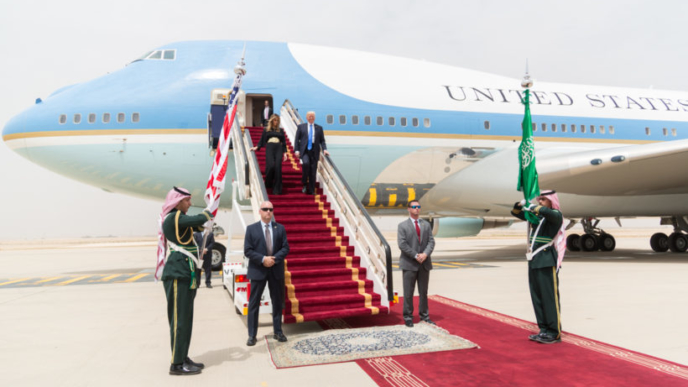
Of course, violence is never the answer to political disagreements, and that is a clear message to all of our Middle East partners. The Khashoggi affair, however, is no reason to destroy all of the progress that the Trump administration has made in supporting historic, measureable Middle East reform efforts. The White House must continue following the pro-reform message articulated in president’s Riyadh speech in May 2017. To abandon reform now would empower America’s adversaries, strengthen Islamist movements, and jeopardize our Middle East allies. (For more from the author of “What the Media Isn’t Telling You About the Jamal Khashoggi Affair” please click HERE)

Follow Joe Miller on Twitter HERE and Facebook HERE.
4 Critical Unanswered Questions About Jamal Khashoggi

It has been over two weeks since Jamal Khashoggi disappeared in Istanbul, Turkey, on October 2. While a quick search for Jamal Khashoggi will result in thousands of new daily articles on the latest details in his case, we still do not have answers to the most basic questions surrounding his likely death.

How did Khashoggi establish U.S. residency?

We still do not know how Khashoggi managed to immediately establish U.S. residency in June 2017, following his self-exile from Saudi Arabia.

It’s quite shocking that a man with direct connections to the founders of al Qaeda and who openly supported and rooted for the U.S.-designated terrorist organization Hamas was able to skip the line and acquire a green card in such a short time.

Perhaps Khashoggi was helped by several influential backers. He had at least one billionaire patron in the controversial Saudi Prince Alwaleed bin Talal, who has several connections to American companies and government figures.

Khashoggi did spend his college years in the United States, graduating from Indiana State University in 1983. It’s unclear whether that helped him establish residency.

How did Khashoggi cut to the front of the line?

How did Jamal Khashoggi lose his life?

Turkish and Qatari media outlets have insisted for weeks, without providing evidence, that Khashoggi was a victim of torture and brutal dismemberment by Saudi officials. The state-sponsored news outlets continue to repeat the claims, citing audio and video footage of Khashoggi’s supposed execution. Yet following his October 2 disappearance, none of that reported evidence has seen the light of day.

It’s safe, at this point, to assume that Khashoggi is no longer with us. However, we still have no idea what exactly happened to him after he entered the consulate in Istanbul. Was Khashoggi the victim of a botched rendition? Was he brutally murdered? That remains entirely unknown.

Why is there a media blackout on Khashoggi’s radicalism?

From his decades-long relationship with Osama bin Laden to his support for terror until his last days, Jamal Khashoggi wished death upon whom he perceived as his enemies and wanted to instigate violent revolutions in the Middle East. These simple facts are readily available in publications such as Conservative Review, The Federalist, Frontpage Mag, and in other new media sites, but are very difficult to find in the pages of legacy media publications.

His Arabic writings and commentary are readily available for all to read. They reveal his clear ideology as a regressive Islamist who followed the Muslim Brotherhood playbook on overthrowing America’s Gulf allies and waging war against Israel.

Khashoggi’s writings have on several occasions expressed support for the U.S.-designated terrorist group Hamas. He was also staunch defender of al Qaeda co-founder Abdullah Azzam.

Moreover, Khashoggi’s tweets are rife with anti-Semitism. He excused Palestinian terrorism as a reaction to “Jewish usurpers.” He hated Israel in its entirety, hoping that it would one day “die by force.” Khashoggi also mitigated the importance of the Holocaust, comparing it to the Palestinian “Nakba.”

The New York Times, Washington Post, and countless more outlets have published hour-by-hour updates on the Khashoggi situation. Yet hardly any legacy media publications have found the space to recount his well-documented radicalism. Why is that?

Why did the Washington Post hire Khashoggi?

Mr. Khashoggi began writing for the Washington Post in September 2017, only a couple months after he moved to the United States.

We know that he was a virulent critic of President Trump. Khashoggi came on as a “Global Opinions” columnist following his claim that he was banned from Saudi Arabia for criticizing Riyadh’s relationship with the new president. Was Khashoggi hired to provide an international angle to the paper’s anti-Trump resistance?

There’s also the reality that the Left has become very cozy with the Muslim Brotherhood and other regressive Islamist groups. It’s possible that the Khashoggi hiring was simply more evidence of the Left’s sympathy for Islamists. Or did one of his billionaire patrons or U.S.-based contacts use connections to secure the gig for Khashoggi?

With so much at stake, it’s time to get to the bottom of these critical questions surrounding the Khashoggi affair. (For more from the author of “4 Critical Unanswered Questions About Jamal Khashoggi” please click HERE)

Follow Joe Miller on Twitter HERE and Facebook HERE.

Brutal: Report Are Saying This Is How Saudi Arabian Operatives Reportedly Killed Missing Journalist

The mystery over the disappearance of Saudi Arabian journalist Jamal Khashoggi has new grisly developments. Khashoggi was last seen on October 2, entering the Saudi Arabian embassy in Istanbul to obtain a document proving he was divorced in order to marry in Turkey. The wedding was set to be the following day. He never left the premises—and theories as to what happened to him, along with increased diplomatic tension between the U.S. and the Kingdom have ensued. . .

What has happened since his disappearance was reported is an ever-growing tale of the international spy game—and has shown a spotlight on its darkest corners. Apparently, a 15-man team from Saudi Arabia flew into Istanbul, did their business, and flew back. The Saudi government reportedly has been caught in intercepted communications of discussing ways to lure Khashoggi back onto Saudi soil . . .

Through Turkish sources, Khashoggi was abducted inside the embassy, tortured, and dismembered. The Huffington Post said the torture was done with a high-ranking Saudi official watching. Khashoggi’s murder has reportedly been caught on audio recording (via WSJ):

The recording indicates how Mr. Khashoggi was killed in the office of the Saudi consul general, Mohammad al-Otaibi, minutes after he walked into the consulate building on Oct. 2, said people familiar with the matter. Mr. Khashoggi wasn’t interrogated, the people said. Instead, he was beaten up, drugged and killed by Saudi operatives who had flown in from Riyadh earlier in the day, the people said.

Then, on the recording, a voice can be heard inviting the consul to leave the room, the people familiar with the matter said. The voice of a man Turkish authorities identified as Saudi forensic specialist Salah Al Tabiqi can be heard recommending other people present to listen to some music while he dismembered Mr. Khashoggi’s body, the people said.

(Read more from “Brutal: Report Are Saying This Is How Saudi Arabian Operatives Reportedly Killed Missing Journalist” HERE)

Follow Joe Miller on Twitter HERE and Facebook HERE.

Fiance of Missing Saudi Journalist Asks for Trump’s Help

By Daily Wire. Last month, a Saudi Arabian journalist, Jamal Khashoggi, reportedly went missing inside the Saudi Consulate in Istanbul. Now his fiance is requesting the help of the Trump administration to find Khashoggi.

According to The Washington Post, Khashoggi went to the consulate for “what should have been routine paperwork,” yet his fiance who waited for him outside claims he did not leave the building, despite Saudi Arabia’s claims that he did. Khashoggi reportedly closely follows the Saudi royalty and communicates with them, but has been critical in the last year. He also moved out of the kingdom after being told to no longer write or use Twitter.

“I have left my home, my family and my job, and I am raising my voice. To do otherwise would betray those who languish in prison. I can speak when so many cannot,” Khashoggi wrote in September 2017.

In an opinion piece for The Washington Post, Hatice Cengiz called on President Trump and the first lady to “help shed light on Jamal’s disappearance.” . . .

“We were in the middle of making wedding plans, life plans. After the consulate, we were going to buy appliances for our new home and set a date,” Cengiz wrote. “All we needed was a piece of paper.” (Read more from “Fiance of Missing Saudi Journalist Asks for Trump’s Help” HERE)

______________________________________________

Please, President Trump, Shed Light on My Fiance’s Disappearance

By The Washington Post. . .On Sept. 28, Jamal visited the Saudi Consulate in Istanbul for the first time, despite being somewhat concerned that he could be in danger. Yet he noted that there was no warrant for his arrest in his native country. Although his opinions had angered certain people, he said, the tensions between himself and Saudi Arabia did not amount to hate, grudges or threats.

He was, however, increasingly worried about an unprecedented wave of arrests in his country. Yet Jamal did not think the Saudis could force him to stay at the consulate in Turkey, even if they wanted to arrest him. In other words, he did not mind walking into the Saudi Consulate in Istanbul because he did not believe that something bad could happen on Turkish soil. It would be a violation of international law to harm, arrest or detain people at a diplomatic mission, he said, and noted that no such thing had ever happened in Turkey’s history. After a positive first meeting with consular staff, who welcomed him warmly and assured him that the necessary paperwork would come through, Jamal was hardly concerned ahead of his second visit. He walked into the consulate of Saudi Arabia, his native country, without doubting he would be safe there. (Read more from “Please, President Trump, Shed Light on My Fiance’s Disappearance” HERE)

Follow Joe Miller on Twitter HERE and Facebook HERE.

Country May Execute Its First Non-Violent Female Activist

Saudi Arabia’s Public Prosecution is seeking the death penalty against a female human rights activist for her non-violent activist work.

According to Human Rights Watch, Israa al-Ghomgham is facing the death penalty along with four other activists for charges including “‘participating in protests in the Qatif region,’ ‘incitement to protest,’ ‘chanting slogans hostile to the regime,’ ‘attempting to inflame public opinion,’ ‘filming protests and publishing on social media,’ and ‘providing moral support to rioters.’” All of the activists and one additional activist who is not facing the death penalty, have been held in pretrial detention without legal representation for over two years.

The grounds for execution are reportedly based on ta’zir, a principle of Islamic law that gives a judge discretion over the sentence and definition of what constitutes a crime.

Al-Ghomgham is a Shia and the first female activist to ever face the death penalty, which, if executed, will set a dangerous precedent for other detained activists. She was arrested on December 6, 2015 after participating and documenting the 2011 demonstrations in the Eastern Province and calling for an end against discrimination for Saudi Shias.

In 2014 eight men were sentenced to death for their participating in the 2011 Eastern Province demonstrations, and an additional 14 were sentenced to death in 2016. (Read more from “Country May Execute Its First Non-Violent Female Activist” HERE)

Follow Joe Miller on Twitter HERE and Facebook HERE.

Saudis Agree to Build Christian Churches

For the “first time in the country’s history,” Saudi Arabia has agreed to build Christian churches for its Christian population, which before now has been banned by law from practicing their faith openly.

The Egypt Independent reports the signing of a cooperative agreement between Saudi officials and the Vatican to “build churches for Christian citizens to advocate the important role of religions and cultures in renouncing violence, extremism, terrorism and achieving security and stability in the world.”

The report explains the deal was reached between the president of the Pontifical Council for Interreligious Dialogue, Secretary General of the Muslim World League Sheikh Mohammed bin Abdel Karim Al-Issa and the French cardinal of the Catholic Church Jean-Louis Tauran.

“The agreement also states that a coordinating joint committee will be established comprising two representatives for both sides to organize future meetings. The committee is expected to be held once every two years and its meetings will be alternated between Rome and a city chosen by the Islamic World League,” the report said.

An Italian newspaper published by the Vatican also reported that Tauran expressed support for the equal treatment of all citizens, “regardless their religion.” (Read more from “Saudis Agree to Build Christian Churches” HERE)

Follow Joe Miller on Twitter HERE and Facebook HERE.
Saudi Arabia and Iran Battle for Power in the Middle East

Saudi Arabia’s order for its citizens to evacuate Lebanon is the latest ominous signal in an escalating confrontation between the Middle East’s chief regional rivals, the Kingdom of Saudi Arabia and the Islamic Republic of Iran.

The two nations have long fought proxy wars against each other, but many fear that the newly empowered Saudi Crown Prince Mohammed bin Salman is looking to assert Saudi Arabia’s regional dominance at any cost. The conflict heated up last year when Saudi Arabia executed a Shiite cleric and then severed diplomatic ties with Iran.

Now the Saudis are publicly airing their disapproval with Iran’s chief foreign affiliate, Hezbollah, which has significant representation in Lebanon’s parliament and has asserted its influence in neighboring Syria.

Experts, however, don’t think a regional conflagration is imminent. “The Saudis have always thought the wrong solution for their problem with Iran and now their hope is the Trump administration will come in and tilt the balance in their favor,” said Ali Vaez, the Iran project director at Crisis Group. “It’s unlikely to change Iran’s regional policy — Iran will continue to support its allies and proxies in the region — but it’s unlikely to result in a major conflict.”

Even if the conflict doesn’t boil over, there is plenty at stake for the U.S. and the world in the battle between the Kingdom of Saudi Arabia and the Islamic Republic of Iran. There’s the price of oil, which rises during crises — an ironic benefit to the belligerents, who have some of the world’s largest oil reserves — and there’s the regional balance of power. (Read more from “Saudi Arabia and Iran Battle for Power in the Middle East” HERE)

Follow Joe Miller on Twitter HERE and Facebook HERE.

Veterans Claim They Were Duped Into Lobbying for Saudis

With all the worry about Russian influence over U.S. elections it’s easy to overlook the many foreign interests working to impact U.S. policy every day–through paid lobbying.

American lobbyists have made billions working for foreign entities. Who’s paying whom for what is subject to federal disclosure laws. But the system may not always work as intended. In the latest episode of “Full Measure” we investigated a case in point: some U.S. military vets who claim they were duped into lobbying for the wrong side.

This twisted tale of Washington, D.C., lobbying begins in an unlikely place. With a rock band from Utah.

That’s Tim Cord singing … his brother on lead guitar … both Iraq war vets.

Tim Cord, U.S. Military veteran: My brother and I were in a rock band called American Hitmen … so we’ve kind of made a name for ourselves in the music scene as veterans.

They hoped to play at President Donald Trump’s inauguration. But when that gig didn’t come through, a political contact they’d met on the road offered what sounded like a decent consolation prize.

Cord: He just said it’s going to be an all-expensive, all-expense paid trip for four days basically to see how D.C. works is basically how they worded it.

Shortly before the January trip, one organizer sent an email mentioning a political angle: a new law called “JASTA”—the Justice Against Sponsors of Terrorism Act.

It allows families of 9/11 victims to sue Saudi Arabia for any alleged ties to the Islamic extremist terrorist attacks.

Cord: We thought we were going to just go hang out in … D.C. and basically see politicians, see this, meet with this group of vets that were there to talk about the JASTA bill.

The trip to the Capitol began with open bar at a luxurious hotel with retired generals and Purple Heart recipients.

Folders were handed out claiming JASTA was disastrous for veterans. Then came an odd announcement, Cord says, from organizer Jason Johns—a veterans’ advocate.

Cord: Jason Johns stood up and he said, ‘Thank you all so much for coming … we want to protect the veterans and I know there’s a lot of rumors going around but we can assure you there’s no Saudi money behind this.’ … I don’t think any of us, at least at my table, had even thought about the Saudis. It was just kind of a weird statement to make opening night.

He says things got stranger the next day when they were split into groups to visit Senate offices to promote supposed improvements to JASTA.

Cord: Every time we would go into one of their offices, they would say, ‘Who are you here on behalf of?’ And whoever was our group leader would say, like flat out, “Oh no, we’re just a group of concerned vets volunteering our time.

That night, he says, his suspicions were confirmed by a drunk confession from an organizer.

Cord: I said, ‘So, by the way, who’s paying for all of this?’ And he’s like, ‘Dude, it’s the Kingdom.’ And I said, ‘The Kingdom of Saudi Arabia?’ And he’s like, ‘Yeah, man.’ So this was unraveling into something that I wanted no part of. We joined the Marine Corps after 9/11. I mean 15 of the 19 hijackers on 9/11 were Saudis, so I don’t want anything to do with the Saudi Arabian Kingdom or their money.

Cord says he shared the news with his group and confronted the contact who first invited him on the trip.

Cord: He goes, ‘Well, welcome to politics, Tim. It’s either Obama and the Iranians or the Republicans and the Saudis. Welcome to Washington.’ It came to the realization that my brother and I were sitting there eating catered dinner on the Saudi dime in an attempt to shoot down the 9/11 victims’ families lawsuit against the Saudi Arabian Kingdom. It was probably one of the worst feelings I’ve had in my life.

Lydia Dennett, Project on Government Oversight: That seemed to be a tactic from recruiting veterans to talk about the negative implications of this law and to do so in a way that sort of obscured Saudi Arabian involvement in it.

Lydia Dennett is an investigator with the nonprofit watchdog Project on Government Oversight … which has been tracking Saudi lobbying efforts.

Dennett: Because it was done through this lobbying firm, the veterans themselves, and the public, may not have known that these were talking points and issues that were coming from the Saudi Arabian government. That sort of undermines the entire transparency and intent of the Foreign Agents Registration Act.

The Foreign Agents Registration Act (FARA) of 1938 requires lobbyists for foreign interests to register and file reports.

Dennett: By the end of 2016, the Saudi Arabian government had 22 different lobbying firms to promote their interests in the U.S., of which were added in the fall of 2016 alone. Right around the time that JASTA was or the 9-11 bill was introduced, going through debate hearings, and then ultimately passed.

For example, a company called Qorvis has been on the Saudi payroll since two months after the 9/11 attacks. The original contract disclosed $200,000 a month in payments—$2.4 million a year.

Sharyl Attkisson: What do you sense the Saudis were trying to do when it comes to that bill?

Dennett: They were trying to get their message out there, which was that it was a dangerous bill that would set a dangerous precedent across the world.

That messaging flooded the media … that JASTA would cause foreign countries to retaliate and sue our military personnel in foreign courts. Which is the argument President Barack Obama made in September when he vetoed the bill.

Former President Barack Obama: That concern that I have has nothing to do with Saudi Arabia per se or my sympathy for 9/11 families. It has to do with me not wanting a situation in which we’re suddenly exposed to liabilities from all the work that we’re doing around the world.

But Congress overrode the veto. So Qorvis sprang into action, hiring none other than the man who would go on to help organize the Washington, D.C., trip: Jason Johns. It turns out he’s not just a veterans’ advocate. He owns a lobby firm of his own and officially registered to lobby elected officials on behalf of Saudi Arabia.

Cord: We found out afterward, that Jason Johns was a registered Saudi agent, and he made $100,000, it’s on public record that he was paid $100,000 by the Kingdom and registered as a Saudi agent. That’s the guy that said in the beginning, ‘There’s a lot of rumors that this is Saudi money and it’s not, I can assure you.’

By email, Johns told us that vets with “ulterior motives” are issuing “mistruths and false allegations.” He declined our request for a one-on-one interview and insisted we interview “at least three other” unnamed vets he would arrange in a group setting with him. We explained that under news policies, we can’t agree to terms, such who we must interview. Johns added we shouldn’t focus on “a few veterans feeling they were ‘duped’ but … why hundreds … volunteered to go to D.C. and speak about why amending JASTA is so vital to them, our currently serving military, and our national security.”

Qorvis declined our interview requests but has previously denied deceiving veterans, said it reports disclosures accurately, and it’s “hard to believe anyone would feel they didn’t know why they were in Washington.

Attkisson: Saudi Arabia might say everything we did was perfectly legal. U.S. law allows them to hire people in this country and lobby for their interests. What did they do wrong?

Dennett: In any written materials distributed, if there were emails sent to these veterans or their veteran groups, they’re required to say very clearly in there, ‘This is information, we’re being paid to distribute this information by the Kingdom of Saudi Arabia and more information is available at the Department of Justice.’ If the emails or any documents did not include that statement, then that’s a violation of the law.

In fact, an examination of some emails trip organizers allegedly sent to vets made no mention of Saudi lobbying. This one billed the D.C. trip as “basically like a 5-star vacation,” noting, “you don’t have to know anything about JASTA.”

Attkisson: Why should ordinary Americans care about this?

Dennett: The issues that these foreign countries are lobbying on can be everything from foreign aid to arms deals, … appropriated funds, which come from taxpayer dollars. So, the public deserves to know exactly how the policy is being made.

Cord says, in the end, one promise of his trip was fulfilled. He did learn a lot about how Washington works.

Cord: It was the worst feeling ever because there’s nothing I can do about it. My name will forever be on a ledger, my brother’s name will forever be on a ledger saying that we were wined and dined by the Saudis. And it’s not a good feeling. It sucks. (For more from the author of “Veterans Claim They Were Duped Into Lobbying for Saudis” please click HERE)

Follow Joe Miller on Twitter HERE and Facebook HERE.