Posts

Massive Solar Storm Results in Magnificent Views of Northern Lights; Officials Warn of Possible Electronic Disruptions

Scientists say that a massive solar storm will lead to communications disruptions across the globe as well as magnificent photographs of the Northern Lights.

The National Oceanic and Atmospheric Administration issued the first geomagnetic storm watch in 20 years over the solar flares that began on Wednesday.

NOAA said the flares appear to be associated with a sunspot that is believed to be 16 times the diameter of the Earth. On Friday, the organization said there was evidence of “major disturbance in Earth’s magnetic field,” but by the end of the day, they elevated their projection to G5, the highest for solar storms. . .

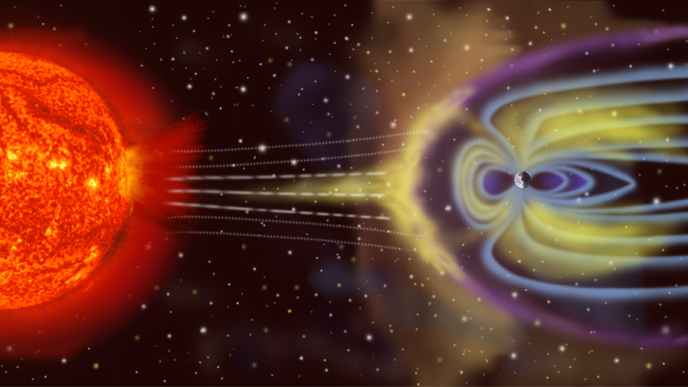
The solar eruptions are called coronal mass ejections and send streams of cosmic particles into space that collide with the Earth’s atmosphere.

“Widespread voltage control problems and protective system problems can occur,” read a warning from NOAA. “Some grid systems may experience complete collapse or blackouts. Transformers may experience damage.” (Read more from “Massive Solar Storm Results in Magnificent Views of Northern Lights; Officials Warn of Possible Electronic Disruptions” HERE)
Solar Storm Could Hit This Week

A minor solar storm is traveling toward Earth and is expected to hit as early as Wednesday.

If a solar storm is powerful enough, it can damage satellites and cut power. But the incoming storm is said to be minor, even though it may create an impressive display of the Northern Lights.

A major explosion in the sun’s atmosphere known as a flare, which took place on March 6 and 7, triggered the solar storm. Charged particles from the burst are now headed straight for Earth.

Meanwhile, scientists believed the Earth’s magnetic field forms “equinox cracks” around March 20 and Sept. 23 each year. The cracks, which are said to stay open for hours, create weaknesses in Earth’s natural defenses and could leave GPS systems and commercial flights more exposed to the damaging effects of a solar storm.

But the cracks could also create amazing opportunities for stargazers to catch a better view of the Northern lights. (Read more from “Solar Storm Could Hit This Week” HERE)

Follow Joe Miller on Twitter HERE and Facebook HERE.

What Would Happen If a Massive Solar Storm Hit the Earth?

1395861452855424172We all know that major storms can wreak havoc, flooding cities and decimating infrastructure. But there’s an even bigger worry than wind and rain: space weather. If a massive solar storm hit us, our technology would be wiped out. The entire planet could go dark.

“We’re much more reliant on technology these days that is vulnerable to space weather than we were in the past,” said Thomas Berger, director of the Space Weather Prediction Center at the National Oceanic and Atmospheric Administration. He told Gizmodo, “If we were hit by an extreme event today, it’d be very difficult to respond.”

“Solar storm” is a generic term used to describe a bunch of stuff the Sun hurls our way, including x-rays, charged particles, and magnetized plasma. A massive solar storm hasn’t hit the Earth since the mid-19th century, but space weather scientists are very worried about the possibility of another . . .

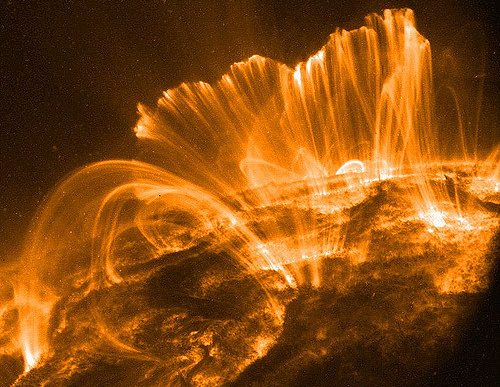
A solar storm usually starts with a solar flare — a giant explosion on the surface of the sun that sends energy and particles streaming off into space. Small, C-class flares occur all the time and are too weak to affect the Earth, while mid-sized M-class flares can produce minor radio disruptions. X-class flares, meanwhile, are the largest explosions in the solar system, releasing up to a billion hydrogen bombs worth of energy. These eruptions occur very rarely, but when they do, they’re an epic sight.

One of the most powerful flares measured with modern instruments took place during a solar maximum in 2003. It was so large it maxed out our satellite sensors, which registered an X-28 (28 types larger than an X-1 flare, which itself is 10 times greater than an M1 flare). (Read more from “What Would Happen If a Massive Solar Storm Hit the Earth?” HERE)

Follow Joe Miller on Twitter HERE and Facebook HERE.