Posts

Drones Are Swarming U.S. Military Bases, and Our Incompetent Bureaucracy Won’t Do Anything About It

If you had told President Dwight D. Eisenhower that the military-industrial complex he famously warned against would find itself repeatedly foiled by an off-the-shelf product available at the grocery store, he probably would not have believed you.

The Oct. 12 story published in The Wall Street Journal, about how mysterious drones over Langley Air Force Base have baffled the best of America’s military and homeland security apparatus, is clearly not intended to leave you with this impression, yet it does.

The Journal article was likely intended as yet another entry in the now-extensive subgenre of Pentagon reporting that might be called, “What are we going to do about the UFOs?”

In these stories, which seem to regularly appear several times a year (possibly timed with congressional appropriations), military and intelligence officials either publicly or anonymously complain to their regular Pentagon beat journalists about how they are stumped by the mysterious lights in the sky. In 2022, the Pentagon set up the All-domain Anomaly Resolution Office (AARO) to better collect and analyze reports of these UFO sightings. Before AARO was the wordier Airborne Object Identification and Management Synchronization Group (AOIMSG), set up in 2021. Congress has had multiple UFO hearings, ranging from fairly serious investigations into the likely role of Russian and Chinese drones surveilling U.S. national security sites to “X Files”-style hearings with whistleblowers claiming the U.S. has recovered alien corpses — or, as they phrase it, “biologics.” (Read more from “Drones Are Swarming U.S. Military Bases, and Our Incompetent Bureaucracy Won’t Do Anything About It” HERE)

Lawsuit Attempts to Hold Foreign Governments Accountable for Spying on Americans

On Thursday April 13, the Electronic Frontier Foundation asked an appeals court to review a decision that will allow foreign governments to monitor the activities of Americans in America. The Electronic Frontier Foundation (EFF) is calling on the court to reverse the decision made in a case involving an American living in Maryland and the Ethiopian government. The case, Kidane v. Ethiopia, relates to the Ethiopian government attaching a malware program known as FinSpy to Mr. Kidane’s computer. FinSpy is capable of copying every keystroke made by the user, as well as Skype calls, and sending all of the data back to Ethiopia.

In March, a U.S. Court of Appeals for the District of Columbia Circuit ruled against Mr. Kidane and stated that foreign governments could not be held accountable for surveillance in American courts if they did not send a human agent to perform the spying. “In essence, this would mean governments around the world have immunity for spying, attacking, and even murdering Americans on American soil, as long as the activity is performed with software, robots, drones, or other digital tools,” the EFF writes.

“We already know about technology that will let attackers drive your car off the road, turn off your pacemaker, or watch every communication from your computer or your phone. As our lives become even more digital, the risks will only grow,” said EFF Senior Staff Attorney Nate Cardozo. More than likely, her comments regarding driving cars off road is a reference to recent revelations from WikiLeaks’ Vault7, CIA leaks which show that, among other things, the agency can remotely control vehicles. Cardozo said the courts need to make it clear to governments around the world that “any illegal attack in the United States will be answered in court in the United States.”

The result of the court’s decision is that foreign governments are not expected to follow the same requirements for surveillance that the U.S. government is expected to. Of course, the reality is that the U.S. does not even follow its own rules on domestic surveillance or foreign surveillance.

“American citizens deserve to feel safe and secure in their own homes using their own computers,” EFF Executive Director Cindy Cohn said. “The appeals court should vacate this decision, and ensure that the use of robots or remote controlled tools doesn’t prevent people who have been harmed by foreign government attacks from seeking justice.”

Whether or not this particular court reverses this particular decision, it should serve as a reminder of the ever growing, interconnecting nexus of surveillance programs, tools, and compliant courts. The only freedom and privacy left in America is what you are willing to stand up and fight for. We must organize on the local level to oppose and counter the State’s surveillance. (For more from the author of “Lawsuit Attempts to Hold Foreign Governments Accountable for Spying on Americans” please click HERE)

Follow Joe Miller on Twitter HERE and Facebook HERE.

Congress Just Cleared the Way for Internet Providers to Sell Your Web Browsing History

Internet providers now just need a signature from President Trump before they’re free to take, share, and even sell your web browsing history without your permission.

The House of Representatives passed a resolution today overturning an Obama-era FCC rule that required internet providers to get customers’ permission before sharing their browsing history with other companies. The rules also required internet providers to protect that data from hackers and inform customers of any breaches.

The resolution was first passed by the Senate last week and now heads to the president, who’s expected to sign it. At that point, there’ll only be a vague baseline of privacy rules governing internet providers and some promises from them not to misbehave.

It’s hard to see this as anything but a major loss for consumers. While reversing the FCC’s privacy rules will technically just maintain the status quo — internet providers have actually been able to sell your web browsing data forever (it’s just not a thing we think about all that much) — they were about to lose permission to keep doing it, unless they got explicit consent or anonymized the info.

This is an increasingly important issue as Americans spend more and more time online — and keep more and more devices with them at all times. Internet providers can see what sites you visit and what apps you use, and they can see how long you’re using them for. That information is extremely revealing, and it’s easy to imagine most people would prefer to keep their reading habits private. (Read more from “Congress Just Cleared the Way for Internet Providers to Sell Your Web Browsing History” HERE)

Follow Joe Miller on Twitter HERE and Facebook HERE.

Security Alert: Windows 10 Has Been Quietly Logging EVERY KEYSTROKE You Type And Sending It To Microsoft (This Is How To Stop It)

Yesterday we reported that an international group of hackers claim they have breached Apple’s iCloud user database and stolen 300 million usernames and passwords. The group has threatened to initiate a widespread factory reset on April 7th, 2017, potentially wiping out data on tens of millions of iPhones and iCloud accounts should Apple fail to pay a ransom.

But that breach by nefarious hackers, while serious, is nothing compared to what your trusted operating system provider may be doing on your personal computer.

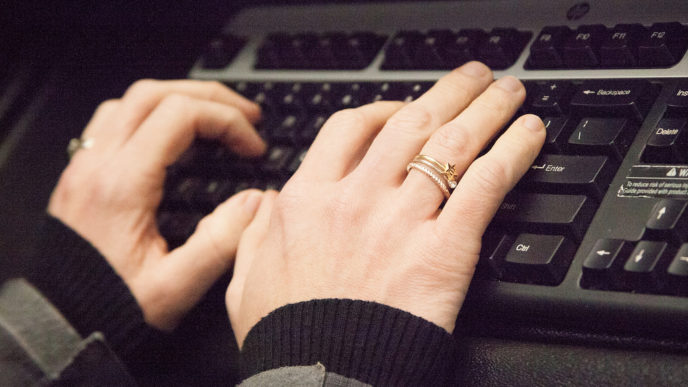
According to a recent report, if you are a Windows 10 user then every single keystroke you have ever typed on your computer may have been logged and sent to Microsoft.

You know those nagging questions during the installation process that ask you whether or not you want to “help” improve Windows by sending data to Microsoft? If you happened to answer “yes” to one of these questions, or if you went with the Microsoft default installation, there is a real possibility that everything you have done on your computer from the get-go, including sending “secure” messages (because the keyboard logger captures your keystrokes before they appear in your secure messaging app), is now a part of a massive user database somewhere.

There’s been heaps of controversy associated with Microsoft’s latest operating system Windows 10 since it was launched, but the latest issue takes the cake – apparently Windows has been quietly logging every single keystroke users make on their keyboards from the beginning. Even better, that data is being constantly sent to Microsoft’s servers on a regular basis.

Via IB Times

It’s been reported that Microsoft has been using the data to improve artificial intelligence writing and grammar software, but it’s not clear what else they are doing with it.
If you are OK with sharing your personal messages, usernames and passwords with Microsoft for the betterment of the Windows universe, then there is nothing else you need to do at this time.

But if you are concerned about your personal privacy, there are two ways to avoid having your computer spied on using this keylogger method.

Choose A Custom Installation

When installing Windows 10 for the first time you’ll want to select a ‘Custom Install’. This will allow you to choose what you do or do not want activated. To be safe, select ‘no’ for all options related to sending information or data to Microsoft or third-parties.

Update Your Privacy Settings

There is a simple way to identify whether or not your typing activities are being logged.

Simply click on your Windows 10 Start Menu. From there, go to Settings (or the gear icon) -> Privacy -> General

You’ll want to turn off the option that says, “Send Microsoft info about how I write to help us improve typing and writing in the future.”

msft-screenshot2

Once moved to the ‘Off’ position, Microsoft keyword logging should no longer be a problem.

But even though Microsoft will no longer be accessing your data, keep in mind that recent leaked documents reveal most devices have been compromised by intelligence services, meaning that not only can they see what you are typing to friends, family and business colleagues, but they can remotely monitor your voice and video communications in real-time without you even knowing its happening, including when you think your computer is turned off. (For more from the author of “Security Alert: Windows 10 Has Been Quietly Logging EVERY KEYSTROKE You Type and Sending It to Microsoft (This Is How to Stop It)” please click HERE)

Follow Joe Miller on Twitter HERE and Facebook HERE.

D.C. Circuit Court Issues Dangerous Decision for Cybersecurity

The United States Court of Appeals for the District of Columbia Circuit today held that foreign governments are free to spy on, injure, or even kill Americans in their own homes–so long as they do so by remote control. The decision comes in a case called Kidane v. Ethiopia, which we filed in February 2014.

Our client, who goes by the pseudonym Mr. Kidane, is a U.S. citizen who was born in Ethiopia and has lived here for over 30 years. In 2012 through 2013, his family home computer was attacked by malware that captured and then sent his every keystroke and Skype call to a server controlled by the Ethiopian government, likely in response to his political activity in favor of democratic reforms in Ethiopia. In a stunningly dangerous decision today, the D.C. Circuit ruled that Mr. Kidane had no legal remedy against Ethiopia for this attack, despite the fact that he was wiretapped at home in Maryland. The court held that, because the Ethiopian government hatched its plan in Ethiopia and its agents launched the attack that occurred in Maryland from outside the U.S., a law called the Foreign Sovereign Immunities Act (FSIA) prevented U.S. courts from even hearing the case.

The decision is extremely dangerous for cybersecurity. Under it, you have no recourse under law if a foreign government that hacks into your car and drives it off the road, targets you for a drone strike, or even sends a virus to your pacemaker, as long as the government planned the attack on foreign soil. It flies in the face of the idea that Americans should always be safe in their homes, and that safety should continue even if they speak out against foreign government activity abroad.

Factual background

Mr. Kidane discovered traces of state-sponsored malware called FinSpy, a sophisticated spyware product which its maker claims is sold exclusively to governments and law enforcement, on his laptop at his home in suburban Maryland. A forensic examination of his computer showed that the Ethiopian government had been recording Mr. Kidane’s Skype calls, as well as monitoring his (and his family’s) web and email usage. The spyware was launched when Kidane opened an attachment in an email. The spying began at his home in Maryland.

The spyware then reported everything it captured back to a command and control server in Ethiopia, owned and controlled by the Ethiopian government. The infection was active from October 2012 through March 2013, and was stopped just days after researchers at the University of Toronto’s Citizen Lab released a report exposing Ethiopia’s use of FinSpy. The report specifically referenced the very IP address of the Ethiopian government server responsible for the command and control of the spyware on Mr. Kidane’s laptop.

We strenuously disagree with the D.C. Circuit’s opinion in this case. Foreign governments should not be immune from suit for injuring Americans in their own homes and Americans should be as safe from remote controlled, malware, or robot attacks as they are from human agents. The FSIA does not require the courts to close their doors to Americans who are attacked, and the court’s strained reading of the law is just wrong. Worse still, according to the court, so long as the foreign government formed even the smallest bit of its tortious intent abroad, it’s immune from suit. We are evaluating our options for challenging this ruling. (For more from the author of “D.C. Circuit Court Issues Dangerous Decision for Cybersecurity: Ethiopia Is Free to Spy on Americans in Their Own Homes” please click HERE)

Follow Joe Miller on Twitter HERE and Facebook HERE.

Mysterious Malware Performs 'Stealthy Surveillance'

Photo Credit: REUTERS

Photo Credit: REUTERS

A highly sophisticated piece of malware began quietly spying on governments and businesses in 2008, according to security specialist Symantec, which warns that the complex code was likely the handiwork of a nation state.

In a note released on Sunday, Symantec Security Response described the Regin malware as a “top-tier espionage tool,” which enables “stealthy surveillance.”

Regin is what is known as a backdoor Trojan, which lets an attacker gain access, or send commands to, a compromised computer. Like the mysterious Stuxnetworm which crippled Iran’s nuclear production in 2010, Regin loads onto a targeted computer in stages – it can also be customized to specific targets.

“Its capabilities and the level of resources behind Regin indicate that it is one of the main cyberespionage tools used by a nation state,” explained Symantec. The malware, it added “has been used in systematic data collection or intelligence gathering campaigns.”

While fear of a cyber attack on critical U.S. infrastructure is high at the moment, Regin appears to be a bigger worry for foreign powers. The Russian Federation accounts for 28% of Regin “infections,” according to Symantec, closely followed by Saudi Arabia. Other countries experiencing Regin infections include Mexico, Ireland, India, Afghanistan, Iran, Belgium, Austria and Pakistan.

Read more from this story HERE.

U.S. Law Enforcement Seeks to Halt Apple-Google Encryption of Mobile Data

Photo Credit: Politico U.S. law enforcement officials are urging Apple Inc. (AAPL) and Google Inc. (GOOG) to give authorities access to smartphone data that the companies have decided to block, and are weighing whether to appeal to executives or seek congressional legislation.

The new privacy features, announced two weeks ago by the California-based companies, will stymie investigations into crimes ranging from drug dealing to terrorism, law enforcement officials said.

“This is a very bad idea,” said Cathy Lanier, chief of the Washington Metropolitan Police Department, in an interview. Smartphone communication is “going to be the preferred method of the pedophile and the criminal. We are going to lose a lot of investigative opportunities.”

The dispute is the latest flare-up that pits the federal government against the nation’s leading technology companies since National Security Agency contractor Edward Snowden disclosed last year the extent of U.S. snooping on phone and Internet communications — and how companies cooperated.

U.S. Justice Department and FBI officials are trying to understand how the new Apple and Google Android systems work and how the companies could change the encryption to make it accessible when court ordered. Their requests to the companies may include letters, personal appeals or congressional legislation, said a federal law official who requested anonymity to discuss the sensitive issue.

Read more from this story HERE.

Investigator Says He Found Multiple ‘Fake Cell Towers’ Near White House, Russian Embassy

Photo Credit: IntegricellThink about the phone conversations you’ve had in the last 48 hours. Is there anything personal or sensitive you wouldn’t want a stranger to hear or record?

Now imagine the cell phone conversations that took place about the Islamic State this week between lawmakers, their staff members and anyone who testified on the Hill. Think any sensitive information or key plans were discussed during those phone calls?

An investigator looking into the claims that “fake cell towers” are popping up all over the country says he discovered several active sites just in the last 48 hours within feet of the White House, around the Russian Embassy and covering the Senate buildings where key Islamic State hearings took place this week.

“On Tuesday, I believe it was at the exact time the ISIS hearings were ongoing, we drove by the Senate and our phones were targeted,” Aaron Turner, an expert in MOBILE SECURITY and information protection, told TheBlaze.

Read more from this story HERE.

Spying Cell Towers May be Spread Across US

Photo Credit: REUTERS / Kacper PempelThere are at least 19 bogus cellphone towers operating across the United States that could be used to spy upon, and even hijack, passing mobile phones.

So says Les Goldsmith, head of ESD America, a company that imports and sells tightly secured mobile phones that can detect “baseband” hacking attempts. Goldsmith calls fake cell towers “interceptors.”

“Interceptor use in the U.S. is much higher than people had anticipated,” Goldsmith told Popular Science in a piece posted online last week. “One of our customers took a road trip from Florida to North Carolina, and he found eight different interceptors on that trip.”

The better to spy on you with

Cellphones communicate with cellular-service towers using the baseband processor, a chip that controls some or all of the radio signals sent to and from the device. Baseband processors run their own operating systems and are made by a handful of companies that zealously protect their trade secrets; not even phone makers know exactly how the baseband processors work.

Read more from this story HERE.

Spying, Lying and Torture: Obama, CIA, DOJ vs Congress

Photo Credit: CNSNews.com / Penny Starr

Photo Credit: CNSNews.com / Penny Starr

In some respects, the recent admission by CIA Director John Brennan that his agents and his lawyers have been spying on the senators whose job it is to monitor the agency should come as no surprise. The agency’s job is to steal and keep secrets, and implicit in those tasks, Brennan would no doubt argue, is lying.

Yet in another respect, this may very well be a smoking gun in the now substantial case against President Barack Obama that alleges that much of his official behavior has manifested lawlessness and incompetence. It is hard to believe that the president did not know about this but not hard to believe he would look the other way.

In the post-9/11 world, Congress has become a potted plant, ready to give any president whatever he wants, lest it appear less than muscular in the face of whatever danger the president says is lurking in the dark.

About four months ago, California Democrat Dianne Feinstein, the chairwoman of the Senate Select Committee on Intelligence, went to the Senate floor and accused the CIA of committing torture during the presidency of George W. Bush and of spying on the committee that she chairs as it was examining records of that torture. Brennan responded by denying both charges and leveling his own — that investigators for the Senate Intelligence Committee had exceeded their lawful access to CIA records and that that constituted spying on the CIA.

Brennan even got his predecessor, George Tenet, under whose watch Feinstein claimed the torture had occurred and the attacks of 9/11 took place, to deny vehemently that his agents had committed torture. With this mutual finger-pointing, both the CIA and the Senate Intelligence Committee reported each other to the Department of Justice, which promptly punted.

Read more from this story HERE.