 In each of the States that elected Republican governors during the Tea Party dominated 2010 midterm elections, unemployment rates have gone down. According to an Examiner.com analysis, since Tea Party Republicans took over in January 2011, the average reduction in unemployment for those 17 States has been 1.35%. When compared nationally, job creation in those States has been 50% better than the rest of the country.
The unemployment rate in States that elected “progressive” Democrats in 2010 saw a drop in rates that did no better than the .9% national rate of decline. In at least one of these “progressive”-run states, the unemployment rate actually went up, not down. New York’s jobless rate increased from 8.2% to 8.6%, an increase of 0.4%.
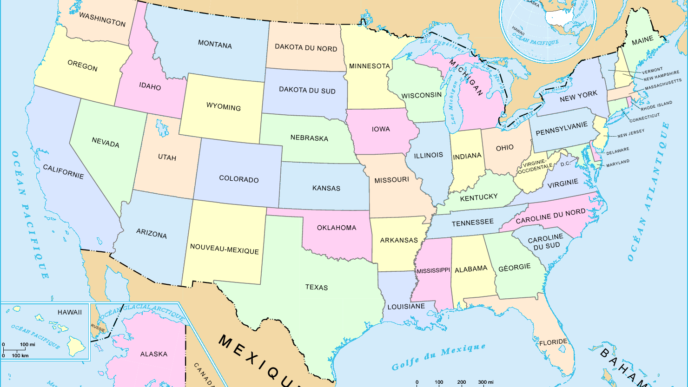
Compare that lackluster performance to a solid decrease in unemployment in each of the 17 States that elected fiscally Conservative governors back in 2010: Michigan -2.4%, Florida -2.3%, Nevada -2.2%, Alabama -1.9%, Ohio -1.7%, Tennessee -1.6%, South Carolina -1.5%, Georgia -1.2%, Wyoming -1.1%, Iowa -1.0%, New Mexico -1.0%, Wisconsin -0.9%, Kansas -0.8%, South Dakota -0.7%, Maine -0.6%, Pennsylvania -0.6%.
This is another substantiated example of how, when compared to fiscally Conservative Tea Party solutions, “progressive” economic policies fall short. It also blows a gigantic hole in the “we’re-making-progress-but-can’t-go-back-to-policies-that-caused-our-economic-problems” talking points lie that “progressives” insist on repeating ad nauseam.
This also indicates that the real problem in America is “progressive” ideas, which have been being imported into the United States from Europe since the early 20th century. Since then, these “progressive” ideas – hostile to the Republic envisioned by our Founders – have managed to infiltrate and infest both of America’s major political Parties.
The Republican vs. Democrat political paradigm is obsolete. This is especially true where economic policies and government power are concerned. To more accurately describe the philosophical divide in today’s political landscape, think Patriots vs. “progressives.”
It should be noted, “progressives” easily occupy a space within the “globalist” category. Globalism is a clear and present danger to the very concept of national sovereignty . . . any nation’s national sovereignty. Be assured, United States sovereignty is being targeted; “progressives” are eagerly playing a large part in this.
Patriots want the United States to follow the Constitution, which limits the size, scope, reach and power of the central government to that prescribed by the Constitution. “Progressives” wish to “evolve” beyond America’s foundation document, favoring a central government that usurps the maximum amount of power possible from the States and from the people.
Although many Americans supported the invasion of Iraq and George W. Bush’s strong backing of the U.S. military, a careful examination of his Presidency shows that Bush increased the size and cost of the federal government. He created the DHS, a large, expensive and essentially unnecessary Cabinet level bureaucracy. If the underlying cause of the 9/11 terrorist attacks was the FBI and the CIA not sharing information, that could have been rectified with the proper use of an Executive Order directing the two intelligence agencies to share pertinent data. Bush also greatly expanded the size, cost and presence of the TSA. Remember that the next time your 87 year old grandmother or four year old niece is being openly groped by an overly-controlling faux uniformed union member who can probably never be fired.
Bush also worked with a Republican majority Legislature to enact Medicare part D, which imposed that financial burden onto the States. Near the end of his Presidency he and his Goldman Sachs Treasurer promoted TARP, which put taxpayers on the hook to the tune of $700 billion. The Feds then used some of that money to bail out GM and Chrysler. And, of course, we also have Bush’s role in adding $5 trillion to the national debt, War Powers Act issues, and nominating the current Supreme Court Chief Justice, who recently sided with “progressives” in preserving the biggest, farthest reaching government power grab in U.S. history.
Like it or not, the results of George W. Bush’s presidency indicate that in many instances he acted as a “progressive” Republican.
The chief discernible distinction between “progressive” Democrats and “progressive” Republicans is the rate at which government grows and individual Liberty is lost.
The government of the United States needs to shrink, not grow. Europe has been growing their governments decade after decade after decade. That is one of the major reasons why their economies are failing. “Progressives” are trying to make America more and more like Europe. Increasing government spending while expanding the size and scope of government bureaucracies and increasing the people’s dependency on government is not the way to fix a problem caused by big government spending, bloated bureaucracies and government dependency.
The last time America had an anyone like a patriot in the Oval Office was Ronald Reagan. Under the influence of the anti-American “progressive” economic policies of Obama, America’s GDP growth is currently 1.9%. At this point in his first term, under the influence of Reagan’s pro-American economic policies, America’s GDP growth was 7.2%.
For the America envisioned by its Founders to survive, “progressives” must be stopped. Forget the (R) and the (D). These political Party designations are growing increasingly meaningless. Voters need to realign their thinking and begin voting for Patriots and against “progressives”, regardless of Party affiliation.
If “progressives” currently living in America want to live in a European country doomed to economic failure, they can move to Europe. They would be doing America a favor. An even bigger favor would be if they sent disenfranchised Europeans who want to live the American way to the United States. America would definitely benefit from that exchange.
************************
Michael Fell is a former MCA recording artist from the seminal punk rock era who toured America from coast to coast. Today, he’s a leading voice in the L.A. Tea Party movement, active since the February 2009 inception. Mr. Fell currently chairs the Westwood Tea Party, is a founding member of the L.A. Metro Tea Party Coalition, serves as the Vice Chairman of the Westside Republicans Club in L.A. CA, and is an elected Republican delegate to the L.A. 47th AD Central Committee. He’s been Campaign Manager for a primary winning Congressional candidate, as well as Santa Monica and L.A. City Council candidates. Mr. Fell is a contributing writer for https://conservativedailynews.com/, https://rightwingnews.com/, https://www.hollywoodrepublican.net/, https://beforeitsnews.com, https://www.redcounty.com/, https://www.uspatriotpac.com and, https://westsiderepublicans.com/. His opinions on today’s news events and political climate can be found on his blog: https://mjfellright.wordpress.com/
Photo credit: andyarthur

 In a few short weeks Gov. Tom Corbett will go before the state legislature and submit his FY 2013-14 budget. One vital decision the governor and our state leaders will have to make is whether to expand Pennsylvania’s Medicaid program beyond the nearly 20 percent of the population already covered. The Patient Protection and Affordable Care Act (PPACA), also known as Obamacare, mandated the expansion to include all individuals below 133 percent of the federal poverty level – $30,000 for a family of four; however, last summer the Supreme Court held this mandate was too onerous for states.
 Several Republican governors are proposing an end to their state income taxes in exchange for closing loopholes including mortgage deductions — plans to make their states more competitive in the U.S. economy but already being criticized by Democrats.