Posts

‘Never Relent’: Trump Admin Strikes ISIS Targets In Syria

The Department of War (DOW) carried out airstrikes against ISIS targets in Syria, U.S. Central Command (CENTCOM) announced Saturday afternoon.

CENTCOM, a unified combatant command of the DOW, wrote in a statement posted to X it conducted “large-scale strikes against multiple ISIS targets across Syria” at about 12:30 p.m. EST “alongside partner forces.”

“The strikes today targeted ISIS throughout Syria as part of our ongoing commitment to root out Islamic terrorism against our warfighters, prevent future attacks, and protect American and partner forces in the region. U.S. and coalition forces remain resolute in pursuing terrorists who seek to harm the United States,” CENTCOM wrote.

“Our message remains strong: if you harm our warfighters, we will find you and kill you anywhere in the world, no matter how hard you try to evade justice,” CENTCOM added.

Secretary of War Pete Hegseth replied to CENTCOM’s statement on X, simply writing, “We will never forget, and never relent.”

(Read more from “‘Never Relent’: Trump Admin Strikes ISIS Targets In Syria” HERE)

Syrian Army Orders Evacuations as Fighting Intensifies in Kurdish Aleppo

The Syrian Army on Thursday told residents of Kurdish neighborhoods in the city of Aleppo to evacuate in the face of airstrikes, even as the Kurdish-led Syrian Democratic Forces (SDF) said it was winning the intensifying battle for control of the city.

Aleppo has been restless since mid-December, when tensions between the Kurds and the military government headed by former al-Qaeda lieutenant Ahmed al-Sharaa boiled over into a skirmish at a security checkpoint.

The SDF was a major U.S. ally during the war against the Islamic State and it has been pushing for a degree of autonomy from Sharaa’s government, which took control after seizing Damascus and ousting dictator Bashar Assad in December 2024.

The autonomous zone claimed by the SDF includes a swath of northeastern territory and portions of Aleppo, the most important city in the region. The SDF has its own internal police force, known as the Asayish, which operates in the Kurdish-majority districts of the divided city. The checkpoint where fighting broke out in December was jointly manned by the Syrian Army and the Asayish. Each blames the other for shooting first and triggering the conflict.

The situation in Aleppo seemed to stabilize after a few days in December, but on Tuesday a fresh round of even more intense fighting broke out, displacing thousands of civilians and killing at least four. Tens of thousands of Kurdish civilians were seen fleeing Aleppo for the presumably safer ethnic enclave of Afrin. (Read more from “Syrian Army Orders Evacuations as Fighting Intensifies in Kurdish Aleppo” HERE)

Syria Registers Its First-Ever Jewish Organization

Syrian Minister of Social Affairs and Labor Hind Kabawat on Wednesday approved the registration of the Jewish Heritage in Syria Foundation (JHS) – the first Jewish organization to be officially recognized by Syria since it became an independent nation in the 1940s.

Registration will allow JHS to establish offices in Syria, work with local and national government officials, and serve as the government-sanctioned protector of Jewish sites.

Kabawat, the first female minister in Syria’s transitional government, told Fox News Digital on Thursday that Jews “have long been part of Syria’s religious and cultural landscape.”

“Restoring their right to belong, to visit and to live back in their homeland is a natural step toward a more just, tolerant and inclusive society,” she said.

“For decades, Syrian Jews were denied the right to celebrate their own cultural and religious heritage, and today we take a step toward long-term peace, security and stability,” she said. (Read more from “Syria Registers Its First-Ever Jewish Organization” HERE)

Afghan and Syrian Migrants Up to Ten Times More Likely to Be Suspected of Crimes in Germany

Afghan and Syrian nationals are significantly overrepresented among suspects of violent crimes in Germany, according to official statistics.

This week, the Bild newspaper revealed some of the data from Germany’s Federal Criminal Police Office (BKA) report “Crime in the Context of Immigration” demonstrating that some foreign groups were much more likely to be suspected of serious crimes than German nationals.

When looking at violent crimes, there was a rate of 163 suspects per 100,000 Germans in 2024. In contrast, the rate for Afghan nationals stood at 1,722 suspects per 100,000 inhabitants. Meanwhile, the rate for Syrian nationals was 1,740 suspects per 100,000 inhabitants, or more than ten times the rate of German citizens.

According to the paper, a similar trend was born out in other categories of crime, including sexual offences or drug crimes, both of which are also led by Syrians and Afghans.

Separate figures revealed last month that foreigners now account for over 40 per cent of all suspected criminals in Germany last year. This jumped to over 43 per cent when only looking at violent crimes, recorded in the Police Crime Statistics 2024 (PKS 2024). (Read more from “Afghan and Syrian Migrants Up to Ten Times More Likely to Be Suspected of Crimes in Germany” HERE)

Photo credit: Flickr

Tensions Rise as U.S. Pressures Israel to Change Course in Syria

According to Israeli officials, the raid was one of many preemptive missions designed to disrupt jihadist groups before they could entrench themselves in southern Syria — an increasingly volatile region following the collapse of the Assad regime last year.

But what unfolded afterward — an ambush on Israeli forces and a wave of retaliatory airstrikes — quickly transformed an isolated counterterrorism action into an international crisis stretching from Damascus to Washington.

The clash took place on the first anniversary of the Assad regime’s fall, a day that began with orchestrated pro-government celebrations. Those demonstrations rapidly spiraled into protests, fueled by outrage over Israeli military activity on Syrian soil. What Israelis framed as an essential strike against terrorism was denounced by Syrians as a blatant violation of sovereignty and an early test of whether their new leadership could defend national dignity.

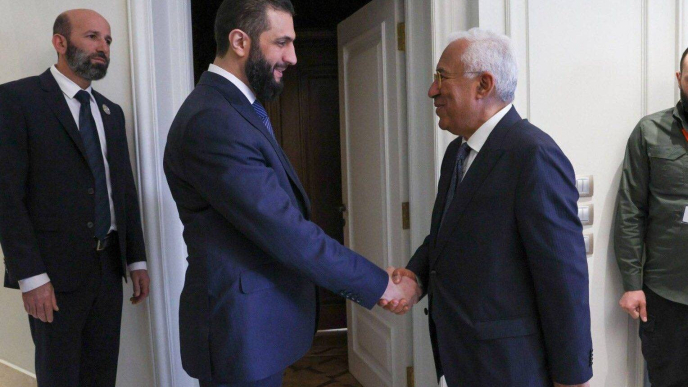
Seeking to contain the escalation, U.S. Special Envoy to Syria Tom Barrack traveled to Damascus on Monday for talks with President Ahmed al-Sharaa. The United States has been working to stabilize Syria’s fragile transition and probe the possibility of future security cooperation between Jerusalem and Damascus.

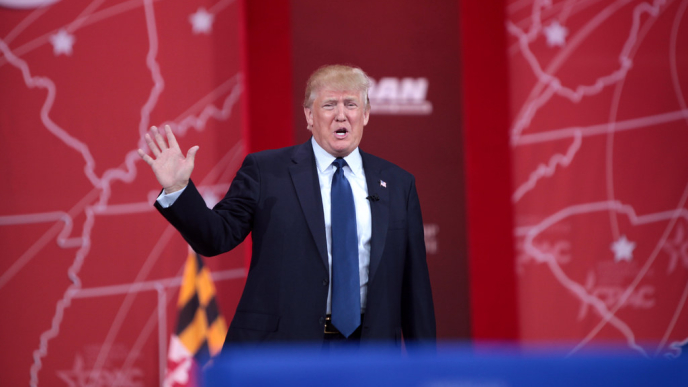
But the White House’s reaction suggested frustration. Shortly after Barrack’s meeting, President Donald Trump posted a pointed message on Truth Social praising Syria’s new leader for his “hard work and determination” and urging Israel to maintain a “strong and true dialogue” with Damascus so as not to hinder Syria’s evolution into a “prosperous State.”

The timing — and the tone — made Washington’s message clear: Israel’s escalating operations are seen as complicating a diplomatic opening the Trump administration considers historic.

Senior U.S. officials have signaled growing impatience with Prime Minister Benjamin Netanyahu’s posture. One administration source quoted in Axios said Netanyahu was “seeing ghosts everywhere,” warning that Israeli strikes risk weakening Sharaa at the exact moment Washington believes he may be willing to engage Israel on regional security.

The fallout comes at a pivotal moment for Trump’s Middle East agenda. The president has championed a security pact between Israel and Syria as a cornerstone of what he envisions as a wider regional peace — complementing a fragile ceasefire in Gaza and the expansion of diplomatic normalization initiatives.

The administration has already lifted sanctions on Syria and welcomed Sharaa to the White House, betting that reintegration into the global community will steer Damascus toward cooperation against ISIS and a more stable regional order.

In a statement after Trump’s public warning to Israel, Netanyahu’s office confirmed that the two leaders had spoken and discussed “expanding” peace agreements, and that Trump had invited the prime minister to Washington once again — part of an ongoing pattern of close, high-level coordination between the longtime allies.

Photo credit: Gage Skidmore via Flickr

Ex-Terrorist Leader Goes On Fox News, Gives Wild Answer About 9/11

Syrian President Ahmed al-Sharaa deflected responsibility for the Sept. 11, 2001 terrorist attacks during a Fox News interview on Monday.

Nearly 3,000 people died across New York City, Washington, D.C., and Shanksville, Pa. during the 9/11 attacks, according to the Pew Research Center. When asked directly on “Special Report with Bret Baier” if he regrets the attack, al-Sharaa distanced himself entirely from the event.

“I was only 19 years old, so I was a very young person, and I didn’t have any decision-making power at that time, and I don’t have anything to do with it,” al-Sharaa said. “And al-Qaeda was not present right then in my area. So you’re speaking to the wrong person about this subject.”

The Syrian leader then shifted the conversation.

“We mourn for every civilian that got killed, and we know that people suffer from the war, especially civilians who pay the price, a hefty price for the war,” al-Sharaa said.

President Donald Trump hosted al-Sharaa at the White House on Monday, welcoming the former al-Qaeda member who once fought U.S. forces in Iraq and served time in Abu Ghraib prison. The U.S. government removed al-Sharaa from its terror list just days before his meeting with Trump, according to CBS News. (Read more from “Ex-Terrorist Leader Goes On Fox News, Gives Wild Answer About 9/11” HERE)

Trump Hints at Agreements With Syria After Meeting Jihadi President: ‘I Think This Leader Can Do It’

President Donald Trump hinted that Syria could possibly join several agreements, which include joining an anti-ISIS coalition and the Abraham Accords, after meeting with Syrian President Ahmed al-Sharaa on Monday.

While taking questions from reporters in the Oval Office, Trump was asked how his meeting went with Sharaa. Trump described Sharaa as a “very strong leader” and a “tough guy.” Trump also indicated that his administration wanted to “see Syria be successful.”

“Could you update us on your meeting? Did you come to any agreements?” a reporter asked Trump.

“He’s a very strong leader, he comes from a very tough place, and he’s a tough guy,” Trump said. “I like him. I get along with him — the President, the new President of Syria. We’ll do everything we can to make Syria successful, because that’s part of the Middle East.”

Trump also noted that there was “peace now in the Middle East” for the first time that people could remember, and described Syria as being a “very big part of the Middle East.” (Read more from “Trump Hints at Agreements With Syria After Meeting Jihadi President: ‘I Think This Leader Can Do It’” HERE)

Photo credit: Gage Skidmore via Flickr
Asylum-Seeker Allegedly Stabs 5, Kills Teen In Attack

A Syrian asylum-seeker allegedly killed a 14-year-old boy and seriously injured five people in a stabbing spree Saturday in southern Austria, the BBC reported.

The suspect, 23, allegedly carried out the attacks around 4 p.m. local time near the main square of the alpine city of Villach, on the border with Italy and Slovenia, according to the outlet. A delivery worker then reportedly rammed his vehicle into the suspect before two police officers detained him at the scene. The delivery worker — himself a Syrian — said he witnessed the attack while driving by and intentionally attacked the suspect, the outlet reported.

Local reports identified the alleged attacker as “Ahmad G” and reported that he laughed and smiled while carrying out the attack, according to Metro. The suspected stabber had a temporary residence permit while awaiting the decision on his asylum application, the BBC reported.

Police halted all train travel amid initial reports of a second potential stabber but later told the BBC only one attacker was involved.

The food delivery worker was identified as Alaaeddin Alhalabi by Austrian outlet 5 Minuten. Alhalabi claimed he was driving to deliver an order when he happened upon the gory stabbing scene, he told the outlet. (Read more from “Asylum-Seeker Allegedly Stabs 5, Kills Teen In Attack” HERE)

Trump Pentagon Reportedly Preparing To Close Curtain On One Of America’s Projects Abroad

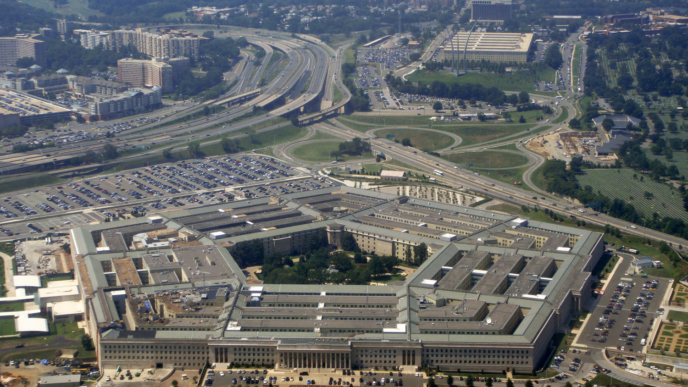
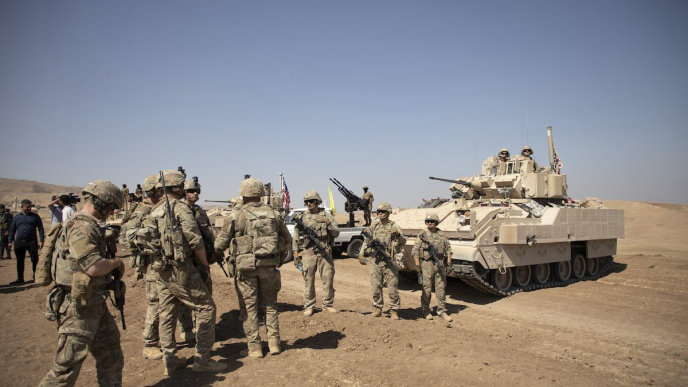
The Trump administration is reportedly developing a plan to withdraw U.S. troops from Syria, marking an end to the decade-long excursion in the region, two defense sources told NBC News on Wednesday.

The Department of Defense (DOD) is reportedly drafting a plan to withdraw all 2,000 troops from Syria in either 30, 60 or 90 days, sources told NBC News. Since 2014, the U.S. has maintained a troop presence in the region, mainly to fight the Islamic State out of its headquarters at al-Tanf in southern Syria.

Trump previously expressed his desire to avoid involvement in the region’s civil war, which reignited after a long quiet period after Islamic fundamentalist rebels Hayat Tahrir al-Sham (HTS) swiftly toppled President Bashar al-Assad’s regime in December.

“I don’t know who said that. I mean, I don’t know who said that, but we’ll make a determination on that. We’re not getting, we’re not involved in Syria,” Trump said on Jan. 28 in response to rumors that he had informed Israel of his intentions. “Syria is its own mess. They got enough messes over there. They don’t need us involved in everyone.” (Read more from “Trump Pentagon Reportedly Preparing To Close Curtain On One Of America’s Projects Abroad” HERE)

Nobody In The Biden Admin Wants To Explain How 1,100 More US Troops Appeared In Syria — Or If The President Knew

The increased force presence has “been going on for a while,” with Pentagon press secretary Maj. Gen. Pat Ryder estimating that the troops have been there “at a minimum, months.” But he stressed the extra troops are supporting the counter-ISIS mission and were unrelated to the fall of Syrian dictator Bashar Assad’s regime two weeks ago.

The new figures are particularly notable as the Pentagon in recent days and weeks has been asked repeatedly about its troop presence in Syria, with the stark increase never disclosed.

A “core 900” U.S. service members are in the country as part of an official nine to 12 month deployment, with another 1,100 troops there on a temporary basis for 30 to 90 days “to address shifting mission requirements,” Ryder told reporters. He added that Army conventional and special operations troops make up most of the extra forces.

Pressed on why the Pentagon did not reveal the updated numbers until now, Ryder said he had only learned of the new figure earlier Thursday and cited “sensitivity from a diplomatic and operational security standpoint.” . . .

It’s also unclear as to whether President Biden was aware of the extra forces, as Ryder said he would not speak for the White House. (Read more from “Nobody In The Biden Admin Wants To Explain How 1,100 More US Troops Appeared In Syria — Or If The President Knew” HERE)