Posts

Trump Imposes 10 Percent Global Tariff After Supreme Court Struck Down Emergency Powers Tariffs

President Donald Trump announced he is imposing a ten percent global tariff on top of tariffs already in place after the Supreme Court struck down his duties imposed under the International Emergency Economic Powers Act (IEEPA).

Trump’s announcement came during a press briefing the White House scheduled on short notice after the 6-3 ruling against the IEEPA tariffs, in which Chief Justice John Roberts, Justice Neil Gorsuch, and Justice Amy Coney Barrett sided with liberal judges to rule against the president.

The 10 percent global tariff Trump is imposing on Friday is not under IEEPA but under Section 122 of the Trade Act of 1974, which Justice Brett Kavanaugh emphasized is another vehicle for imposing tariffs in his dissenting opinion.

“Effective immediately, all national security tariffs under Section 232, and existing Section 301, tariffs… remain in place, fully in place, and in full force and effect,” Trump said.

“Today, I will sign an order to impose a 10 percent global tariff under Section 122, over and above our normal tariffs already being charged, and we’re also initiating several Section 301 and other investigations to protect our country from unfair trading practices of other countries and companies,” he added.

(Read more from “Trump Imposes 10 Percent Global Tariff After Supreme Court Struck Down Emergency Powers Tariffs” HERE)

Photo credit: Gage Skidmore via Flickr

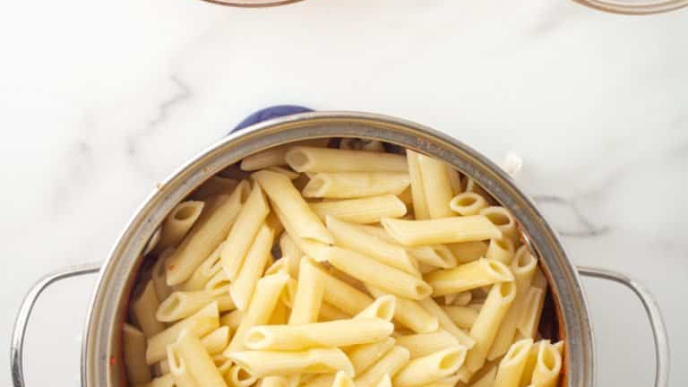
Pasta La Vista! 13 Major Italian Pasta Brands Could Disappear From US Store Shelves as 107% Tariffs Take Effect

. . .Thirteen Italian pasta brands could pull their products from US grocery stores — or potentially be forced to hike prices dramatically as soon as January, when punishing 107% tariffs are set to take effect.

The levies — the highest the White House has moved to impose on a specific product since the start of President Trump’s crackdown on imports — come from the US’ 15% baseline tariff on European Union goods plus a punishing 92% levy over accusations that Italian pasta makers have been undercutting US competitors.

The Commerce Department says the penne purveyors have been violating “antidumping” laws, exporting their products to the US market at a very low price to gain an advantage over local businesses.

One affected company decried the new policy to The Post, declaring it would not pass on costs from the new tariff to customers.

“This will be devastating to all the Italian pasta companies, not just Rummo,” said Jim Donnelly, chief commercial officer for Rummo USA. (Read more from “Pasta La Vista! 13 Major Italian Pasta Brands Could Disappear From US Store Shelves as 107% Tariffs Take Effect” HERE)

Trump Announces 100% Tariff on Semiconductors Made Outside the U.S. in Potential Blow to Domestic Businesses

President Trump announced plans Wednesday for a 100% tariff on “all chips and semiconductors” — insisting that there would be an orderly economic transition despite potential major impacts on US businesses.

“We’ll be putting a tariff, approximately 100%, on chips and semiconductors,” Trump said at an Oval Office event with Apple CEO Tim Cook, who arrived to announce plans for $600 billion in new investments in the US.

Trump said he would exempt companies that have plans to transition their manufacturing to the US — a hint that the world’s largest chip manufacturer, Taiwan’s TSMC, which is building massive manufacturing plants in Arizona, would be spared.

“If you’re building in the United States of America, there’s no charge, even though you’re building and you’re not producing yet in terms of the big numbers of jobs and all of the things that you’re building. If you’re building there will be no charge,” Trump said.

“So 100% tariff on all chips and semiconductors coming into the United States. But if you’ve made a commitment to build, or if you’re in the process of building, as many are, there is no tariff.” (Read more from “Trump Announces 100% Tariff on Semiconductors Made Outside the U.S. in Potential Blow to Domestic Businesses” HERE)

Trump Says He’s ‘Thinking About’ Sending Tariff-Funded Rebate Checks To Americans

President Donald Trump said on Friday that he was contemplating sending rebate checks to Americans using tariff revenue.

The U.S. government ran a $27 billion budget surplus in June, fueled partly by record tariff revenue, which exceeded $100 billion for the first time in a fiscal year, Reuters reported. When a reporter asked Trump at the White House if there was a chance of a rebate for Americans due to the revenue, the president said his administration was prioritizing paying off debt, but that a small rebate for some Americans was possible.

“We’re thinking about that, actually. We have so much money coming in,” Trump said. “We’re thinking about a little rebate, but the big thing we want to do is pay down debt. But we’re thinking about a rebate.”

“That’s a very good question. You just made a lot of news,” he continued. “We’re thinking about a rebate because we have so much money coming in from tariffs that a little rebate for people of a certain income level might be very nice.”

Trump unveiled sweeping “Liberation Day” tariffs on nearly every other nation on April 2, but announced a 90-day pause one week later, which cut most of them to a 10% baseline rate. (Read more from “Trump Says He’s ‘Thinking About’ Sending Tariff-Funded Rebate Checks To Americans” HERE)

Photo credit: Gage Skidmore via Flickr

Trump’s Tariffs Are Back in Effect After Appeals Court Ruling

An appeals court on Thursday stayed the ruling of the U.S. Court of International Trade that blocked President Donald Trump’s Liberation Day tariffs, meaning the tariffs are back in effect.

The U.S. Court of International Trade issued an injunction on Wednesday night, ruling that President Donald Trump’s “Liberation Day” tariffs are illegal. The White House filed a motion to stay the ruling, and the tariffs were reinstated Thursday afternoon, as CNBC noted, shortly after the White House slammed the ruling.

White House press secretary Karoline Leavitt said hours before the stay that the three judges on the trade court “brazenly abused their judicial power to usurp the authority of President Trump, to stop him from carrying out the mandate that the American people gave him.” (Read more from “Trump’s Tariffs Are Back in Effect After Appeals Court Ruling” HERE)

Photo credit: Gage Skidmore via Flickr

Judge Says Tariffs Are Authorized by Emergency Powers Act in Win for Trump

You can buy a set of three pads of legal paper, “proudly made in the U.S.A.” by TOPS, for $16.64 (that is, $5.55 per pad). Or go to Simplified and get an imported two-pad set, currently marked down to $22 ($11 a pad).

Simplified is not confident customers are willing to pay much more for its products, so when President Donald Trump put tariffs on China, it went to court to object.

The case was filed in U.S. District Court in the Northern District of Florida, Pensacola Division, on April 3 by Emily Ley Paper, Inc., an upscale stationery website doing business under the name Simplified.

The Trump administration asked to move the case to the U.S. Court of International Trade (CIT). The outcome of that request could make this case an easy win for Trump once the CIT reviews the transfer order.

Fentanyl from China

The case was triggered by Trump’s effort to stem the flow of drugs coming into the U.S. On Jan. 20, Trump signed a proclamation declaring a national emergency exists at the U.S. southern border, based in part on the many Americans who have died from overdosing on drugs smuggled into the country. Among those drugs were fentanyl and other synthetic opioids made in China. Drugs also enter the U.S. hidden in shipping containers. (Read more from “Judge Says Tariffs Are Authorized by Emergency Powers Act in Win for Trump” HERE)

Photo credit: Gage Skidmore via Flickr

US and China Agree to Slash Tariffs Temporarily After Trade Talks

The United States and China agreed Monday to a 90-day truce in their raging trade war — with each agreeing for now to slash reciprocal tariffs by more than 100 percentage points, bringing China’s duty rate down to just 10%.

Under the agreement, the US will drop its 145% tariff rate on most Chinese goods to 30%, while China will lower its rate to 10% from 125%, officials said.

The agreement also includes a mechanism for talks toward a permanent deal to continue — and the two sides spoke about how they will both address the flow of fentanyl from China to the US, a White House readout of the agreement read.

“The relationship is very, very good. I’ll speak with President Xi [Jinping] maybe at the end of the week,” Trump told reporters, adding that “to me, the biggest thing that came out of that meeting is they’ve agreed — now we have to get it papered — but they’ve agreed to open up China.”

The president also warned that if China doesn’t agree to a final deal in 90 days, the US tariff rate would raise to “substantially higher” than the current 30%.

“I think they’re going to follow,” Trump predicted. “I think they want [a deal] very badly.” (Read more from “US and China Agree to Slash Tariffs Temporarily After Trade Talks” HERE)

Trump Announces U.K. Trade Deal Hours After Media Predict Failure

When President Donald Trump announced tariffs on most countries, the propaganda press reported that he was dangerously offending allied nations like the United Kingdom. The sky was falling. It would be a disaster!

And while they doubted much good would come of Trump’s strategy to renegotiate U.S. trade agreements, the media complained it was taking him too long to show any results. As if countries benefiting from trade deals that have been in place for decades would be willing to ink new deals in a matter of weeks.

CNN’s Senior Business Editor Olesya Dmitracova wrote this week that there was a new trade deal between the United Kingdom and India but still no deal from Trump.

“For weeks, Trump has said that at least one trade deal is imminent with one of the dozens of countries in active negotiations with the United States to avoid his punishing tariffs — with India among the most likely to reach such an agreement first,” Dmitracova wrote. “The prospect of an agreement with any one major trading partner has boosted confidence in US financial markets and raised hopes that the world may avoid the worst impacts of America’s tariffs. But so far, no deal has emerged. Instead, it’s the United Kingdom that has secured a trade deal with India.”

Former Biden mouthpiece Jen Psaki mocked Trump on CNN for not yet having a deal. (Read more from “Trump Announces U.K. Trade Deal Hours After Media Predict Failure” HERE)

Photo credit: Gage Skidmore via Flickr

Replacing the Income Tax With Tariffs?

During the 2024 campaign and since, President Trump has mused about replacing the income tax with tariffs. Trump believes that tariffs will put the burden of financing the U.S. government on the backs of foreigners.

Nice idea. Who wouldn’t want somebody else paying our government’s bills? To support his case, Trump correctly points out that until the modern income tax was adopted by the 16th Amendment in 1913, the United States collected the bulk of its revenue through tariffs (customs duties) and manufacturers excise taxes (discussed below).

So why can’t the U.S.do that again? If foreign producers of products imported into the U.S. in fact pay tariffs, it might be good idea. The problem is that’s just not how it works.

What is a Tariff?

A tariff (or customs duty) is an excise tax on foreign products brought into the U.S. An excise tax is imposed on a specific product or activity. Examples of excise taxes on products are those on cigarettes, alcohol, and gasoline.

A tariff is paid by the domestic importer, not the foreign producer. For example, suppose ABC Imports, Inc., a U.S. corporation, brings $1 million of home goods into the U.S. from Mexico. At the point the products are received in a U.S. port, ABC Imports pays the tariff to the U.S. government. The amount of the tariff is based on the specific goods in question. Different products have different rates. The amount also depends on the foreign source of the product. Products from China may carry a heavier tariff than products from the European Union, for example.

The price of the tariff gets folded into the overall cost that ABC Imports pays for the product. That price is passed on to the retailer, and then to the final purchaser. As such, when a foreign product is sold in the U.S., the tariff is ultimately paid by the end-user of the product. President Trump’s apparent belief that foreign producers take the hit on tariffs ignores the economic reality that corporations don’t pay taxes; people do. Corporations invariably pass production and distribution costs on to consumers in the form of higher prices for goods, or lower quality goods at the same price.

The economic reality of a tariff is that U.S. consumers pay it, not the foreign producer or foreign government. That makes foreign products more expensive for U.S. consumers.

Why Impose Tariffs?

1. Raising revenue. Raising revenue to help fund the government is one reason to impose tariffs. However, the revenue raised from tariffs by the federal government in the present era is insignificant. In 2024, the U.S. collected about $4.92 trillion in revenue from all sources. Only about 2 percent of that came from tariffs.

To consider replacing all income taxes with tariffs, there would have to be massive increases in tariff rates, on a huge number of and from most nations. This would have substantial negative economic effects, not the least of which is substantially higher prices on consumer goods, and likely a substantial reduction in consumer options as foreign products become increasing unavailable. At a minimum, such a move would trigger retaliatory tariffs by other governments. We are already seeing some of this with the new tariffs.

2. Encouraging and protecting domestic investment and production. As stated above, tariffs make imports more expensive. Because those products are more expensive, they become less desirable to U.S. consumers. This can favor U.S. producers. For example, suppose a U.S.-produced home good sells at Walmart for $25. A comparable un-tariffed Chinese product with a wholesale cost of $10 sells at retail for $20. Consumers will generally choose the less expensive Chinese product.

In the simplest scenario, if the government imposes a 50% tariff on the Chinese product, the wholesale cost goes from $10 to $15, and the retail price goes from $20 to $30. That imported product now costs $10 more than the similar domestic product. This can have the effect of encouraging domestic production of that product.

The irony is that increased tariffs on foreign products can reduce tariff revenue. A seminal economic principle is that what you tax you get less of. When you tax foreign products, you get fewer foreign products. High tariffs incentivize manufacturers to produce their product domestically so as to avoid the tariff. Likewise, customers are incentivized to purchase lower-cost domestic products. In both cases, people stop paying the tariff, undercutting the goal of raising revenue.

3. Addressing market distortions. A “distortion” is a phenomenon that leads people to do something they otherwise would not do; or discourages people from doing something they otherwise would do. All taxes cause distortions at some level. Graduated income taxes, for example, cause distortions in that they discourage production because the more money one earns, the higher the rate of tax is paid; thus, the less a person benefits from his own labor and industry.

Tariffs can mitigate market distortions caused by foreign governments flooding U.S. markets with subsidized products or those produced with (by U.S standards) artificially cheap labor.. The Chinese workforce does not enjoy the luxury of U.S. labor unions, minimum wage laws, workmen’s comp protections, medical insurance, and retirement benefits, etc. Because of that, Chinese products are frequently far cheaper than comparable U.S. products. The distortion is that U.S. consumers are driven to purchase the lower-cost product, where they might otherwise purchase the U.S.-produced product at a comparable price.

4. Retaliation and negotiating leverage. Tariffs can be used to retaliate against other nations that are trading unfairly.. In this regard, tariffs serve to level the playing field between nations. The U.S. imposes tariffs and then promises to remove them if the unfair behavior stops. This undercuts both the goals of domestic production and of raising revenue, since the entire point of the tariffs is to eventually negotiate them away.

5. National security. The U.S. may impose tariffs on certain foreign products deemed essential to U.S. national security. High tariffs on such items discourage imports, thus protecting domestic producers. This helps to ensure that the U.S. does not become dangerously dependent on foreign products that are integral to national security and defense.

Can Tariffs Replace the Income Tax?

The president argues that because the United States operated chiefly on tariffs and manufacturers excise taxes in the past, it can do so again. The reason that the federal government could operate on tariffs 125 years ago is because the federal government spent very little money. Its need for revenue was nowhere close, even in inflation-adjusted numbers, to what federal spending is today.

Between the years 1895 and 1910, federal spending went from about $366 million (not billion) to $758 million per year. Today, the federal government spends over 1,300 times more than that on interest payments alone.

During that same period, around 60 to 70 percent of federal revenue came from tariffs. The balance came from excise taxes and other insignificant sources. The modern personal and corporate income tax did not begin until after 1913.

To make Trump’s idea work, the federal government would have to slash its spending considerably. And by that, I don’t mean by 3 to 5 percent, or even 10 to 20 percent. Even cutting spending in half would require the federal government to collect about $3 trillion in revenue from a system that currently collects only about $100 billion.

And even if that would work to raise enough revenue, it would be impossible for Trump to accomplish his other tariff goals, such as encouraging domestic production or negotiating better trade deals. Tariffs work against themselves, which is one of the reasons they are such a destructive tax, one the U.S. should avoid layering on top of its already uncompetitive tax system.

Rare Earth Minerals Affected by China Export Ban Used in EVs, Green Energy, and Military Tech

China has restricted the export of several crucial rare earth minerals to the United States in response to President Donald Trump’s tariff increases.

The restrictions come up short of a total ban, but they will probably slow the delivery of minerals needed by defense, energy, and electronics companies.

The term “rare earth minerals” is sometimes used broadly to refer to all valuable or unusual minerals, but in fact it refers to a specific list of 17 metallic elements. Fifteen of them are lanthanides, meaning they occupy a specific region of the periodic table of the elements that begins with lanthanum (atomic number 57). The lanthanides all share similar atomic structure and chemical behavior, so the grouping is not arbitrary.

The other two rare earth minerals are scandium and yttrium. They are collectively known as “rare earths” simply because the scientists who first discovered them believed they must be rare in nature, as they were difficult to identify. For example, the name of lanthanum comes from a Greek word that means “hidden,” and it was discovered by a chemist who was studying strange impurities in another mineral.

Explorers over the past 150 years discovered that some of the “rare earths” can actually be found in abundance by digging into the Earth’s crust. Many of those abundant deposits are under the control of Communist China – affording China a near-monopoly on processing and refining these metals. (Read more from “Rare Earth Minerals Affected by China Export Ban Used in EVs, Green Energy, and Military Tech” HERE)