Posts

China ‘Shocked’ by U.S. Actions in Trade Dispute

By BBC. China said it is “shocked” after the US announced plans for fresh tariffs, escalating a trade war between the two countries.

The US listed $200bn (£150bn) worth of additional products it intends to place tariffs on as soon as September.

The move comes just days after the two countries imposed tit-for-tat tariffs of $34bn on each other’s goods.

Beijing described Washington’s latest threat as “totally unacceptable,” saying it would harm the world.

“The behaviour of the US is hurting China, hurting the world and hurting itself,” a spokesperson for China’s commerce ministry said in a statement. (Read more from “China ‘Shocked’ by U.S. Actions in Trade Dispute” HERE)

_______________________________________________

Markets Rattled as Trump Escalates China Trade War With Tariffs on $200bn of Imports

By The Guardian. . .Overnight, Donald Trump began the process of slapping 10% tariffs on a further $200bn of imports from China, on top of the $34bn (soon to be $50bn) imposed last week.

The move is a significant escalation of the trade war between Washington and Beijing, further raising the dangers of a major economic shock.

US trade representative Robert Lighthizer announced that the US was acting because China had not heeded previous warnings.

For more than a year, the Trump administration has patiently urged China to stop its unfair practices, open its market, and engage in true market competition.

We have been very clear and detailed regarding the specific changes China should undertake. Unfortunately, China has not changed its behaviour — behaviour that puts the future of the US economy at risk.”

(Read more from “Markets Rattled as Trump Escalates China Trade War With Tariffs on $200bn of Imports” HERE)

Follow Joe Miller on Twitter HERE and Facebook HERE.

How Free Trade and Economic Freedom Help the Poor

Today, many people argue that trade disproportionately hurts poor Americans.

They say free trade creates a wage gap between low- and high-income earners, and constructs barriers that make it increasingly difficult for the less fortunate to climb the economic ladder.

But recent data from The Heritage Foundation shows that this simply is not true.

The Heritage Foundation’s 2017 Index of Economic Freedom shows that removing tariffs and other trade barriers leads to a number of tremendous benefits.

The creation of freer trading conditions establishes a mutually beneficial relationship between both parties—people voluntarily trade with each other only if it is in their own interest.

As a result, those who have greater opportunity to participate in the global exchange of goods and services find themselves with increased prosperity and diminished poverty.

According to the Pew Research Center, from 2001 to 2011, the number of “poor” individuals—those living on less than $2 a day—decreased by 14 percent globally.

During the same period, world trade (as a percentage of gross domestic product) increased by over 9 percent, from 51.5 percent up to 60.7 percent.

This strong correlation between trade freedom and reductions in poverty seems to refute the narrative we often hear. Rather than hurting the poor, the removal of international trade barriers allows millions of impoverished people to escape poverty.

A recent report from the World Bank Group gives further support to this correlation. Based on the most recent estimates, while 35 percent of the world’s population lived on less than $1.90 a day in the year 1990, that percentage had dropped to 12.4 percent in 2012.

The percentage dropped even further in the year 2013 to 10.7 percent.

For a practical example of how trade barriers hurt the American poor, consider U.S. import restraints on food and clothing.

These inflict substantial financial burdens on the poor because they drive up the price of these goods, which make up a larger proportion of poor people’s incomes than of wealthy people’s incomes.

The Heritage Foundation’s Patrick Tyrrell and Daren Bakst show the effects of these restraints in their recent special report: Americans paid a 20 percent import tariff on some dairy products in 2016, a whopping 132 percent import tariff on certain peanut products, and up to a 35 percent import tariff on canned tuna.

Reducing or getting rid of tariffs will clearly reduce these prices for consumers, and will relieve a disproportionate amount of pressure from the poor.

But the benefits of economic freedom extend well beyond aiding the poor. The data show a strong correlation between economic freedom and other positive outcomes.

As James M. Roberts and Ryan Olson of The Heritage Foundation report, countries with higher levels of economic freedom have citizens who enjoy a longer life expectancy, take better care of the environment, and spend more time in school—an important factor for poverty reduction.

On trade and economic freedom, the data speak loud and clear. In order to further reduce global poverty, governments should promote economic freedom and allow their citizens to participate in and enjoy the benefits of free trade. (For more from the author of “How Free Trade and Economic Freedom Help the Poor” please click HERE)

Follow Joe Miller on Twitter HERE and Facebook HERE.

Don’t Blame the Trade Deficit for America’s Economic Problems

A new report from the United States trade representative links America’s trade deficit with other countries to trade deals entered into going back to the Reagan administration.

Those deal include the North American Free Trade Agreement, the Uruguay Round Agreements that created the World Trade Organization, China’s 2001 Protocol of Accession to the World Trade Organization, and a series of others.

The report notes that in 2000, the U.S. trade deficit in manufactured goods was $317 billion, but by 2016 this had grown to $648 billion. It says that “[o]ur trade deficit in goods and services with China soared from $81.9 billion in 2000 [the last full year before China joined the World Trade Organization] to almost $334 billion in 2015.”

The report further states that “the largest trade deal implemented during the Obama administration—our free trade agreement with South Korea—has coincided with a dramatic increase in our trade deficit with that country.”

The report then implies that the trade deficit caused the typical American household’s economic situation to get worse since 2000, and that in reducing the trade deficit we would be improving the plight of the typical American household.

The problem with this analysis is that the trade deficit did not make things worse for the typical American household.

A trade deficit should not be used as a reason to legislatively prohibit everyone in the U.S. from buying low-priced goods. In fact, Americans are better off when we have the freedom to pay lower prices at Wal-Mart, or when buying a new automobile containing parts from around the world, for instance.

It is true that some workers are displaced by low-priced imports. While this is sad, other workers—like those employed in the retail sector or in industries using imported intermediate goods to make their products—actually need those low-priced imports to stay employed.

In reality, many of the problems listed in the report were caused by decades of high and complicated taxes, ever-increasing regulations on businesses, and growing uncertainty by business owners about how the rule of law will apply to their businesses.

Before blaming the trade deficit as the scapegoat, it would be wise to review the words of President Ronald Reagan in discussing trade deficits toward the end of his successful presidency:

We hear talk about the trade deficit, but we must beware of single-entry bookkeeping. The other side of the ledger shows that the growing, dynamic United States economy has attracted $159 billion in foreign capital into the United States. Trade deficits and inflows of foreign capital are not necessarily a sign of an economy’s weakness. During the first 100 years of our nation’s history, while we were developing from an agricultural colony to the industrial leader of the world, the United States ran a trade deficit. And now, as we’re leading a global movement from the industrial age to the information age, we continue to attract investment from around the world.

Now, some people call this debt. By that way of thinking, every time a company sold stock it would be a sign of weakness, and it would be much better to be a company nobody wanted to invest in rather than one everybody wanted to invest in. Take the case of high-tech, high-growth California. Milton Friedman argues that California’s external debt—to other states and other countries—almost certainly dwarfs the external debt of the United States. Does this augur bad days ahead for California? On the contrary, one might argue it’s a sign of strength.

Historically, fast-growing economies often run deficits in the trade of goods and services, experiencing net capital investment from abroad. This predictable and, up to a point, desirable process has been accentuated by slow growth in parts of Europe and the need for debt-ridden third world nations to generate trade surpluses to service their debt. Germany, which has actually lost half-a-million jobs in the last 10 years, has a trade surplus in goods. Mexico has a trade surplus in goods. The United States, which has been the engine keeping the world economy moving forward, has a trade deficit because our growing economy enables us to buy their goods.

Over time, however, these imbalances should be reduced, and there are two ways to do it: We can become more like them, or they can become more like us. We can raise taxes, reregulate our economy, and adopt protectionist legislation of the kind now being considered in Congress. That will effectively slow growth in this nation and stifle international trade. We won’t be able to buy their goods and, certainly, no one will want to invest in the United States. The world can all shrink together, and we can all look forward to hearing the experts once again pontificating about convergence and the limits to growth.

The other solution is for them to become more like us: to adopt low-tax, pro-growth policies; to encourage trade, not discourage it—to make it freer and fairer and more plentiful; to join with the other nations in a cooperative, upward cycle of growth in which all participate; to embrace the possibilities of the new world economy. In fact, we’re beginning to see this happen. Several major industrialized countries have followed the U.S. lead in cutting high marginal tax rates to spur growth. These changes and other market forces are already causing the volume of U.S. exports to boom, with continued growth expected.

-President Ronald Reagan
Partial remarks at the City Club of Cleveland, Ohio — Jan. 11, 1988

(For more from the author of “Don’t Blame the Trade Deficit for America’s Economic Problems” please click HERE)

Follow Joe Miller on Twitter HERE and Facebook HERE.

Protectionism or Trade Freedom: What Do the Experts Say?

The recent presidential election has sparked a debate about international trade. Many politicians, policymakers, and media outlets seem to be unsure about whether trade is good or bad. It seems everyone has an opinion about trade.

But what do the experts say?

N. Gregory Mankiw, the Robert M. Beren Professor of Economics at Harvard University, observed: “Economists are famous for disagreeing with one another … But economists reach near unanimity on some topics, including international trade.”

Earlier this month, a panel of 51 leading economists of differing ideological views were asked to respond to this statement: “Adding new or higher import duties on products such as air conditioners, cars, and cookies—to encourage producers to make them in the U.S.—would be a good idea.”

Of those economists, 100 percent said they disagreed with the statement. Economists understand that trade provides a great benefit to Americans.

Trade means lower prices for products ranging from T-shirts to televisions, increasing families’ disposable incomes. Trade also results in the creation of new, better jobs for U.S. workers. This results in a boost in overall well-being and quality of life.

The realization that people benefit from free trade is not new. Adam Smith, the father of modern economic thought, explained that “it is the maxim of every prudent master of a family never to attempt to make at home what it will cost him more to make than to buy.”

Looking around the world, there is a striking correlation between the freedom to trade and economic prosperity. The Index of Economic Freedom, published by The Heritage Foundation, provides data that continue to show a strong correlation between trade freedom and economic prosperity.

Americans win when the government removes barriers to all kinds of freedom—including the freedom to trade. (For more from the author of “Protectionism or Trade Freedom: What Do the Experts Say?” please click HERE)

Follow Joe Miller on Twitter HERE and Facebook HERE.

World Trade Projected to Grow at Lowest Rate Since 2009

The World Trade Organization announced this week that it expects global trade to grow much slower than originally projected.

WTO analysts, who projected global trade would grow by 2.8 percent this year, now expect it to grow by 1.7 percent, the lowest rate since 2009.

Trade growth rates in North America contributed to the WTO’s revised projection. Analysts now expect the region’s imports to grow by 1.9 percentage points, a significant drop from the 6.5 percent growth rate in 2015.

WTO Director-General Roberto Azevêdo said this slow growth:

should serve as a wake-up call. It is particularly concerning in the context of growing anti-globalization sentiment. We need to make sure that this does not translate into misguided policies that could make the situation much worse, not only from the perspective of trade but also for job creation and economic growth and development which are so closely linked to an open trading system.

The benefits of trade are made clear each year in The Heritage Foundation’s Index of Economic Freedom, echoing the World Trade Organization’s sentiments. Countries with greater trade freedom have higher per capita incomes and lower rates of poverty, and do a better job at protecting the environment.

The United States has an average tariff rate of 1.5 percent and currently is ranked 40th in the world for trade freedom. But the federal government still protects many sectors.

Special interest tariffs and nontariff barriers for domestic sugar producers, truck manufacturers, steelmakers, and footwear producers, just to name a few, hinder Americans’ freedom to trade. They are really just another tax on American consumers—just one more thing that makes it harder for average families to get by.

The United States should reject protectionism and embrace the principles of free trade, which expand economic opportunity for all Americans. (For more from the author of “World Trade Projected to Grow at Lowest Rate Since 2009” please click HERE)

Follow Joe Miller on Twitter HERE and Facebook HERE.
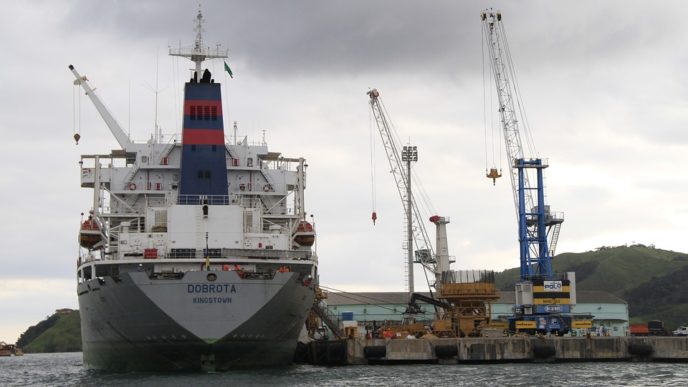
Trade Deficit Balloons to $48.3 Billion

By Akin Oyedele. The trade deficit swelled to $48.3 billion in August, according to the Department of Commerce.

Economists had estimated that the trade deficit, or the excess of imports over exports, increased to $48 billion from $41.81 in the prior month. Core imports rose 2.6%, driven by consumer goods.

“In one line: Horrible; trade is set to be a significant drag on Q3 GDP growth,” wrote Pantheon Macroeconomics’ Ian Shepherdson in a client note.

Shepherdson added that exports have not yet recovered from the West Coast port disruptions earlier this year.

The goods and services deficit has increased 5.2%, or $17.6 billion year-to-date. (Read more from “Trade Deficit Balloons to $48.3 Billion” HERE)

____________________________________

Deal Reached on Pacific Rim Trade Pact in Boost for Obama Economic Agenda

By David Nakamura. President Obama hailed the historic 12-nation Pacific Rim trade deal completed here Monday as an accord that “reflects America’s values,” but within hours the administration had turned from the negotiating table to selling the agreement on Capitol Hill, a reflection of the harsh political climate the controversial pact is expected to face in Congress.

Obama pledged that the ­Trans-Pacific Partnership (TPP), the largest free-trade agreement in a generation, would open new markets for U.S. goods and services and establish rules of international commerce that give “our workers the fair shot at success they deserve.”

But almost immediately there were signs of the tough fight ahead to win final ratification from Congress next year. Lawmakers from both parties criticized the pact as falling short in crucial areas, raising the prospect that the White House could lose the support of allies who had backed the president’s trade push earlier this year.

“Closing a deal is an achievement for our nation only if it works for the American people and can pass Congress by meeting the high-standard objectives laid out” by lawmakers in the spring, said Sen. Orrin G. Hatch (R-Utah), chairman of the Senate Finance Committee. “While the details are still emerging, unfortunately I am afraid this deal appears to fall woefully short.”

Monday’s announcement that trade ministers had reached consensus on the deal, after five days of negotiations, started the clock on the final stages of winning approval from national legislatures. The United States, where the 2016 presidential campaign is underway, is not the only nation where political turbulence could affect completion of the deal. (Read more from this story HERE)

Follow Joe Miller on Twitter HERE and Facebook HERE.

RINOs to the Rescue: A Rare Partnership on Free Trade

“It was like an out-of-body experience,” Senate majority leader Mitch McConnell says. He was talking about his congratulatory phone call from President Obama after Trade Promotion Authority (TPA) passed the Senate last week. “It was kind of fun.” McConnell enjoyed hearing the president castigate Democrats who voted against TPA and oppose the Trans-Pacific Partnership trade treaty whose passage is now all but certain.

It was an important victory for Obama, undoubtedly the biggest accomplishment of his second term. He gets credit for sticking with a treaty that his party and its interest groups loathe. He lobbied Democrats in the House and Senate.

Presidents have traditionally played an influential role in struggles over trade. But Obama’s role was small. He was expected to keep the minority of Democrats who support free trade from defecting—nothing more. “I give the president credit,” McConnell says. “He did reinforce those who intended to vote for it.” Their votes were crucial.

In the Senate, 14 of 46 Democrats voted for TPA when it came up in early June. Last week, Obama lost 1 of the 14, Ben Cardin of Maryland, as the measure survived a Democratic filibuster. Cardin voted no only after TPA had gotten the 60 votes required to move ahead to the treaty itself later this summer. TPA bars amendments, preventing a trade agreement from being killed by hostile amendments.

For weeks, House Republicans were in constant contact with the White House. Republicans found that relations were positive and professional. “White House officials found it easier to work with Congress on trade now that Republicans control both houses,” the New York Times reported. (Read more from “Republicans to the Rescue: A Rare Partnership on Free Trade” HERE)

Follow Joe Miller on Twitter HERE and Facebook HERE.
Here’s How Much Corporations Paid US Senators to Pass the Sovereign-Killing Trade Bills

Fast-tracking the TPP, meaning its passage through Congress without having its contents available for debate or amendments, was only possible after lots of corporate money exchanged hands with senators. The US Senate passed Trade Promotion Authority (TPA) – the fast-tracking bill – by a 65-33 margin on 14 May. Last Thursday, the Senate voted 62-38 to bring the debate on TPA to a close.

Those impressive majorities follow months of behind-the-scenes wheeling and dealing by the world’s most well-heeled multinational corporations with just a handful of holdouts. (Read more from “Here’s How Much Corporations Paid US Senators to Fast-Track the TPP”

Using data from the Federal Election Commission, this chart shows all donations that corporate members of the US Business Coalition for TPP made to US Senate campaigns between January and March 2015, when fast-tracking the TPP was being debated in the Senate:

•Out of the total $1,148,971 given, an average of $17,676.48 was donated to each of the 65 “yea” votes.
•The average Republican member received $19,673.28 from corporate TPP The average Democrat received $9,689.23 from those same donors.

The amounts given rise dramatically when looking at how much each senator running for re-election received.HERE)

Follow Joe Miller on Twitter HERE and Facebook HERE.

The House Just Passed a Trade Bill, but Obama’s Trade Agenda Might Still Be Doomed

In a razor-thin 218-208 vote, the House of Representatives just approved Trade Promotion Authority (TPA). The legislation guarantees that trade deals negotiated by the president will get a prompt up-or-down vote. President Obama has said the legislation is essential to completing work on the controversial Trans-Pacific Partnership, a trade deal being negotiated by about a dozen Pacific Rim nations.

However, it remains far from certain whether TPA will become law. The Senate has also passed a TPA bill, but that bill came with an extension of Trade Adjustment Assistance (TAA), programs that help workers who lose their jobs due to international competition. For TPA to become law, congressional leaders need to either get the House to pass TAA or get the Senate to pass a TPA bill that doesn’t include TAA. (Read more from “The House Just Passed a Trade Bill, but Obama’s Trade Agenda Might Still Be Doomed” HERE)

Follow Joe Miller on Twitter HERE and Facebook HERE.

Sneak: Republicans Plan New Obamatrade Push Next Week

U.S. Sen. Jeff Sessions warns:

It appears there will be another attempt by Tuesday to force through new executive powers for President Obama. A vote for TAA next week is a vote to send fast-track to the President’s desk and to grant him these broad new executive authorities. If that happens, it will empower the President to form a Pacific Union encompassing 40 percent of the world’s economy and 12 nations—each with one equal vote. Once the union is formed, foreign bureaucrats will be required to meet regularly to write the Commission’s rules, regulations, and directives—impacting Americans’ jobs, wages, and sovereignty. The union is chartered with a “Living Agreement,” and there is no doubt it will seek to expand its membership and reach over time.

Fast-track will not only apply to the Pacific Union, but can expedite an unlimited number of yet-unseen international compacts for six years. There are already plans to advance through fast-track the Trade in Services Agreement, the goal of which includes labor mobility among more than 50 nations, further eroding the ability of the American people to control their own affairs.

Americans do not want this, did not ask for it, and are pleading from their hearts for their lawmakers to stop it.

(Read more from “Sneak: Republicans Plan New Obamatrade Push” HERE)

Follow Joe Miller on Twitter HERE and Facebook HERE.