Posts

Trump Treasury Secretary Has a Message for Countries Hit With Reciprocal Tariffs

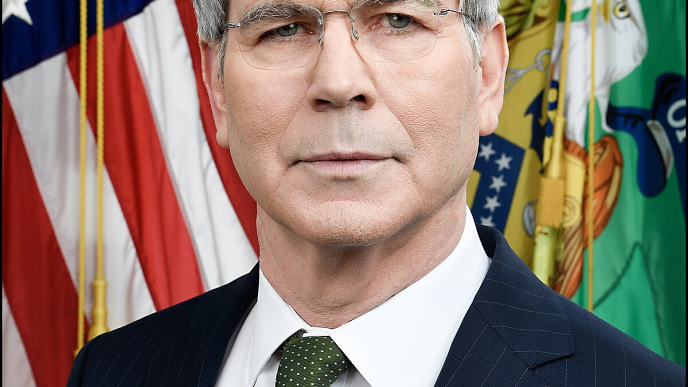
Treasury Secretary Scott Bessent offered a three-word reply on Wednesday to countries looking to respond to the United States’ broad tariffs: “Do not retaliate.”

President Donald Trump announced on his self-proclaimed “Liberation Day” a 10% baseline tariff across the board and retaliatory tariffs on some of the country’s closest allies, who he says are taking advantage of the U.S.

Among some of the notable tariffs are 34% on China, 20% on the European Union, 24% on Japan and 32% on Taiwan.

The tariffs on China increased to 54% due to an existing 20% tariff.

“My advice to every country right now is do not retaliate. Sit back, take it in, let’s see how it goes. Because if you retaliate, there will be escalation,” Bessent said Wednesday in an interview on “Special Report” shortly after the announcement. “If you don’t retaliate, this is the high-water mark.”

Notably absent on the list of countries subject to tariffs were Mexico, Canada, Russia and Belarus. (Read more from “Trump Treasury Secretary Has a Message for Countries Hit With Reciprocal Tariffs” HERE)

Treasury Secretary Quietly Admits Serious U.S. Dollar Collapse Fears as Trump Primes Bitcoin for a $4 Trillion Price Surge

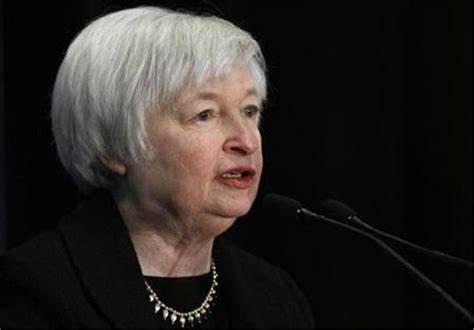
U.S. Treasury secretary Janet Yellen has warned countries around the world are moving away from the U.S. dollar—as the spiraling $34 trillion U.S. debt pile fuels fears of collapse—with bitcoin and crypto slowly chipping away at dollar dominance.

The bitcoin price has rocketed over the last year, climbing despite a “critical” Federal Reserve warning, and helped by bettors who are increasingly confident former U.S. president Donald Trump will retake the White House in November.

Now, as the radical Project 2025 policy plan puts bitcoin on a collision course with gold, Yellen has said she fears U.S. financial sanctions will reduce the role of the dollar around the world, as Russia encourages the use of bitcoin and crypto.

“We have very powerful sanctions that are available because of the important role of the dollar in international transactions,” Yellen told U.S. lawmakers on the House financial services committee this week.

“The more we have used sanctions, the more countries look for ways to engage in financial transactions that don’t involve the dollar.” (Read more from “Janet Yellen Quietly Admits Serious U.S. Dollar Collapse Fears as Trump Primes Bitcoin for a $4 Trillion Price Surge” HERE)

150 Straight Days: Treasury Says Debt Stood Still at $16,699,396,000,000

Photo Credit: AP/Susan WalshEvery business day since May 17, the U.S. Treasury has published a daily statement claiming that the federal debt subject to the limit set by Congress closed the day at $16,699,396,000,000—about $25 million below the legal limit.

Monday, the Columbus Day holiday, according to the Daily Treasury Statement released today, marked the 150th straight day that the Treasury has said the debt subject to limit was stuck at $16,699,396,000,000.

On May 17, the first day the debt closed the day at $16,699,396,000,000, Treasury Secretary Jacob Lew sent a letter to House Speaker John Boehner stating that since the Treasury was about to hit the debt limit he would begin to use “extraordinary measures” to prevent it from doing so. These included, among other things, suspending investment of the Civil Service Retirement and Disability Fund in U.S. Treasury securities, and redeeming securities already held by this fund.

“In total, the extraordinary measures currently available free up approximately $260 billion in headroom under the limit,” Lew wrote then.

But in that letter, Lew described the unpredictability of the Treasury’s flow of funds to explain why he could not predict exactly when the extraordinary measures would be exhausted.

Read more from this story HERE.

Treasury Secretary Jack Lew Says Oct. 17 is the Debt Ceiling Deadline

Photo Credit: Alex Wong/Getty

Photo Credit: Alex Wong/Getty

Treasury Secretary Jack Lew warned Congress in a letter Wednesday morning that Oct. 17 will be the last day that the government has the funds to meet all its obligations if the debt ceiling is not raised.

That is within the range Lew has previously indicated, and in line with projections from outside analysts. But now Congress has a specific deadline. If it does not act before Oct. 17, a Thursday, the government risks defaulting on the debt, an outcome that Lew warned “could be catastrophic.”

Lew previously said that the Treasury would exhaust the extraordinary measures it has used to create headroom under the debt limit by mid-October, at which point it would have only $50 billion in cash on hand and whatever revenues come in on a given day with which to pay the government’s bills.

Read more from this story HERE.

July 3: The Day Big Government Finally Imploded

Photo Credit: Douglas JonesMark July 3, 2013, as the day Big Government finally imploded.

July 3 was the quiet afternoon that a deputy assistant Treasury secretary for tax policy announced in a blog post that the Affordable Care Act’s employer mandate would be delayed one year. Something about the “complexity of the requirements.” The Fourth’s fireworks couldn’t hold a candle to the sound of the U.S. government finally hitting the wall.

Since at least 1789, America’s conservatives and liberals have argued about the proper role of government. Home library shelves across the land splinter and creak beneath the weight of books arguing the case for individual liberty or for government-led social justice. World Wrestling smackdowns are nothing compared with Hayek vs. Rawls.

Maybe we have been listening to the wrong experts. Philosophers and pundits aren’t going to tell us anything new about government. The one-year rollover of ObamaCare because of its “complexity” suggests it’s time to call in the physicists, the people who study black holes and death stars. That’s what the federal government looks like after expanding ever outward for the past 224 years.

Even if you are a liberal and support the goals of the Affordable Care Act, there has to be an emerging sense that maybe the law’s theorists missed a signal from life outside the castle walls. While they troweled brick after brick into a 2,000-page law, the rest of the world was reshaping itself into smaller, more nimble units whose defining metaphor is the 140-character Twitter message.

Read more from this story HERE.

Lew Asks Congress for Debt Increase, Says it’s ‘Not Open to Debate’

Treasury Secretary Jack Lew on Friday urged congressional leaders to raise the debt limit and insisted that the White House is not going to negotiate over the increase because lawmakers have “no choice.”

“We will not negotiate over the debt limit,” Lew wrote. “The creditworthiness of the United States is non-negotiable. The question of whether the country must pay obligations it has already incurred is not open to debate.”

Lew said that while President Obama is willing to discuss plans to reduce the nation’s deficit with Congress, those talks must be kept separate from any effort to raise the nation’s debt cap.

Read more from this story HERE.

Alaska: the next Libor litigation frontier?


Photo credit: dullhunk

The Libor scandal, which began in London with bankers accused of manipulating a key global interest rate, has reached the Alaskan wilderness.

Or at least that’s the hope of New York plaintiffs’ lawyer Brian Murray. He filed a lawsuit Wednesday on behalf of investors in Alaska – as well as investors in Wyoming, North Dakota and about 20 other states – that accuses banks of violating various state antitrust laws in allegedly rigging the London interbank offered rate.

Libor is a key rate for everything from credit cards to trillions of dollars of financial derivatives.

So far, Murray says, no Alaskans have signed on to the case, and it’s unclear how many people in the state may have been affected by the alleged rate manipulation. His lawsuit contends that investors in certain preferred securities were shortchanged on dividend payments when banks set Libor artificially low.

Murray, a partner at the law firm Murray Frank, says he’s also looking for clients in the other states, though to date he has only signed on investors from New York.

Read more from this story HERE.

Crime of the century: LIBOR and the Global Bank Conspiracy

In what may prove to be the “Crime of the Century,” recent evidence has come to light that some of the world’s largest banks were involved in a scheme to manipulate a key interest rate index, thereby cheating investors out of hundreds of billions of dollars.

LIBOR which stands for London Interbank Offering Rate is where 16 major international banks with offices in London each day inform the British Bankers’ Association (BBA) what each bank must pay in order to borrow cash from other banks.  The BBA then takes those rates and tosses out the highest rates and the lowest rates and averages the ones that are left and it’s published as LIBOR.  It has just become public knowledge that the banks making up the LIBOR system apparently were manipulating these rates to their advantage.

LIBOR is like the prime lending rate for banks and affects hundreds of trillions of dollars of investments in derivatives, bonds, and mortgages.  Because LIBOR is, by far, the largest interest rate index in the world, it has far reaching affects both short-term and long-term.  For example, if you had a 30-year mortgage with an interest rate set at LIBOR plus 4 percent, a few tenths of percent could cost you tens of thousands of extra dollars.  And you would be struck with that interest rate for the life of the mortgage.

Of course, the banks deny that they manipulated the LIBOR.  That’s despite the fact that Barclays Bank, a trillion dollar British bank and one of the largest in the world, had to negotiate a settlement with the British government for several hundreds of millions of dollars in penalties.  But it still claims it did no wrongdoing. Some of the biggest banks in America including Citibank, JP Morgan Chase, and Bank of America are also involved in setting LIBOR along with some of the other largest banks in the world.

The world’s major banks gained massive advantage in manipulating the LIBOR in two different ways.  The first is pretty straightforward, based upon the simple fact that these banks themselves hold trillions of dollars of investments that are LIBOR-rate sensitive.  With respect to investments that made them money if LIBOR dropped, the banks could manipulate the rate to drop when everyone in the world was expecting the rates to shoot up.  That is when the financial markets were in turmoil and the banks were exposed to massive losses.  Emails released by Barclays conclusively demonstrate that is what they did. They manipulated their stated interest rates to the BBA so as to affect the LIBOR in a way to maximize the value of their trading positions.

This is where the banks get their second advantage of manipulating LIBOR.  During the height of the 2008 financial crisis, LIBOR was viewed as a gauge of the financial strength of banks.  If the banks were charged high interest rates by other lenders who supposedly were most familiar with the borrowers’ financial condition, then it would indicate they were at a high risk of defaulting on their loans and therefore in a poor financial state.  So if a bank was actually charged a high rate of interest by another bank but falsely informed the BBA they were actually charged a lower rate, they would be looked at as a healthier bank.  This was important because, at the time, there were major investors and financial institutions withdrawing funds or refusing to lend to other institutions like Bear Sterns or Lehman Brothers.  An institution could go bankrupt in a matter of days without such investment given the heavy dependence on short term funds, the funds LIBOR was created to rate.

Now, the question of the century is, did the British government encourage the banks to manipulate the LIBOR downwards during the financial crisis?  There is some evidence that this is exactly what happened.  Barclays’ former chief operating officer, Jerry del Missier, contends that Barclays was told by the Bank of England in 2008 to underreport its borrowing costs.  He bases this on a discussion between Bank of England deputy governor Paul Tucker and Barclays’ then-head of investment banking Bob Diamond.  The subject of their discussion? Barclays’ persistently high LIBOR submissions to the BBA.

Barclays argues that Mr. del Missier misinterpreted the call, that Barclays had not been urged by the Bank of England to underreport its own borrowing costs in order to appear to be in line with other banks.  But in one transcript of a telephone call from April 11, 2008, released by the New York Fed this past Friday, a Barclays employee told the New York Fed that Barclays was underreporting its rate to avoid the stigma associated with being an outlier with respect to its LIBOR submissions, relative to other participating banks.  Another smoking gun came from a subsequent phone call, on October 24, 2008, in which another Barclays employee told a US Fed official that the LIBOR rate was “absolute rubbish”.

Under US law it’s a criminal conspiracy to falsely report and manipulate interest rates for the financial benefit of a cartel.  If the Bank of England encouraged this, then it becomes even worse.  On top of the Bank of England’s involvement, Treasury Secretary Timothy Geithner, the then-New York Federal Reserve Chairman, allegedly knew about the LIBOR manipulations in 2007.  Geithner even corresponded with the British financial services regulator as well as the Bank of England in 2008 on the LIBOR manipulations and on how to prevent them.  But nothing was done to stop the continued manipulation.

This brings into question whether Geithner, the Fed, and the British authorities can be trusted to regulate the global financial network for the benefit of the citizens.  If what’s all alleged is confirmed, this is truly a global criminal conspiracy.

Photo credit:  Matt from London