Posts

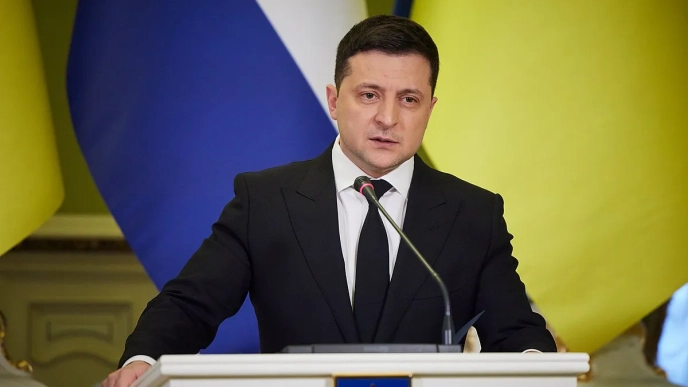
Zelensky Demands Using U.S. Weapons on Targets in Russia

The war in Ukraine continues to rage on two-and-a-half years after Russian forces breached their neighbor’s borders. The protraction of the conflict has only made a Russian victory—through a favorable settlement or Ukrainian surrender—more likely, though it will come at a much higher cost to the Russians than originally anticipated by both Moscow and Washington. The simple truth is that Russia has more men, more resources, and is not reliant on the goodwill of Western benefactors.

While continued aid from the United States keeps the Ukrainian war effort afloat, that aid has come with certain strings attached. U.S. weapons given to Ukraine, for example, cannot be used to strike targets within Russian territory.

Whether Ukraine has upheld its end of the bargain is unlikely. Ukraine has privately received permission from President Joe Biden to use U.S. weapons in strikes on Russia in the past. Now, Ukrainian President Volodymyr Zelenskyy is looking to negotiate, not with Russia but with the United States and other benefactors, to permanently loosen those restraints.

While Zelenskyy has made a habit of making this request, he did so again fervently on Monday after Russia launched one of its largest drone and missile strikes of the campaign so far.

In a video statement posted to X on Monday, Zelenskyy said the Russian strike “involv[ed] over a hundred missiles of various types and around a hundred ‘Shaheds’ [attack drones].”

(Read more from “Zelensky Demands Using U.S. Weapons on Targets in Russia” HERE)

What is Happening in the Ukraine War Should Scare the Hell Out of Us

There is a lot to criticize about America’s current military – and I’ve criticized it – but there’s another problem no one seems to want to talk about. It’s scary as hell. The United States is not ready for the kind of war we are seeing played out in Ukraine, a peer-to-peer conventional fight that is rewriting the rules of what we thought war was supposed to be. And, with leadership in the White House sitting in a rocker staring slack-jawed at Matlock reruns, we are not in a position to fix what will mean defeat in our next real war.

This is not solely about wokeness and how the officer corps has embraced the ridiculous shibboleths of the progressive left regarding race, gender, and the climate scam, but wokeness relates to the problem that the Ukraine War has revealed. When the leadership is focused on ridiculous frivolities like “white nationalism” and trans idiocy, it is not integrating the massive changes to how we fight that we need to compete on a modern battlefield.

And we do need massive changes. The old wisdom is that the military always fights the last war. Now, we’re trying to fight the last two wars. We are trying to refight the conventional Cold War model that won the Gulf War while also fighting the counterinsurgencies of the Global War on Terror. What we are not preparing to fight is the kind of war we are seeing in Ukraine.

The Russo-Ukraine War is a test bed for new technologies overlaid over old styles of warfare, particularly the static, dug-in trench warfare of World War I. What is different? A lot. For one thing, electronic warfare (EW) is an enormous new factor. You know all those awesome precision-guided munitions we saw America use in Iraq and Afghanistan? We gave many of them to Ukraine. According to open source reports – I do not know anything secret and would not write about it if I did – the Russians, who are very good at this sort of thing, have figured out how to use EW to defeat them. Remember, GPS is based on radio waves, which can be jammed, spoofed, or otherwise messed with. A missile that misses is useless. Imagine America going into a fight with its limited or completely defeated precision strike capabilities. Yeah, scary, right? (Read more from “What is Happening in the Ukraine War Should Scare the Hell Out of Us” HERE)

UN Issues Horror Nuclear Warning as Russia Evacuates Thousands and WW3 Fears Mount

The head of the nuclear safety watchdog has called for “maximum restraint” amid ongoing hostilities in Russia’s Kursk region.

The call comes amidst reports showcasing towering infernos in Kursk as Ukraine intensifies its unexpected offensive into Russian territory, now in its sixth day.

As Ukraine’s bold strike against Russia continues an effort to push back against the invasion started in 2022 alarm bells are ringing over possible escalation, especially after Ukraine allegedly sent drones flying into Belarus airspace last Friday, shot down in what was described by the Putin-endorsed regime as ‘provocation’.

In reaction to these Ukrainian movements, Moscow has broadcasted its intention to carry out a “counter-terrorism operation” across Kursk and the neighbouring districts of Bryansk and Belgorod, with Saturday witnessing supposed clips of Ukrainian soldiers marking their presence in one village.

The alarm is also being raised about the Kursk Nuclear Power Plant given the fierce combat in that sector, which has seen Russian military forces activate both airstrikes and a thermobaric weapon, an explosive device known for its blast wave and subsequent vacuum effect causing asphyxiation. This isn’t the first instance where the extended conflict has ignited concerns about nuclear facilities; the Zaporizhzhya plant located near Ukraine, now under Russian control, has indeed been a previous point of contention. (Read more from “UN Issues Horror Nuclear Warning as Russia Evacuates Thousands and WW3 Fears Mount” HERE)

U.S. Veteran Journalist, Investigating Ukraine Military, Murdered in Kiev

Titawny Cook, 41, had traveled to Kyiv to write about life in a country pummeled by bombings, ground skirmishes and widespread power outages since Russia invaded in February 2022. A U.S. Marine Corps veteran raised in the East Bay, Cook had dreamed of becoming a war correspondent and documenting the suffering in Ukraine, his mother Christine Cook said, even though he knew the assignment would be dangerous.

Having served in Iraq, Cook wanted to bring his experience and expertise to document the conflict in Ukraine, according to his mother. Getting to the war-torn country wasn’t easy: Titawny Cook had to convince administrators at Chabot, the community college he attended in Hayward, to sponsor the trip so that he could secure a press pass. . .

Over time, Cook linked up with Ukrainian soldiers who had returned from the front lines to hear their stories and understand the battle conditions. Throughout the assignment, he communicated with his mother via the Signal smartphone app, which allowed them to exchange texts and chat over video.

In recent weeks, Christine Cook said, her son somehow roused the suspicions of people in his circle. She didn’t know how the tension flared up, but she said Titawny was unable to quell it because of the language barrier. When she last spoke with him on July 25, he said he believed someone was inside his fifth-floor apartment with a gun. He gave her the name and phone number of another friend to call for help. . .

Later, she received a call from a woman who had found her son’s phone on the street. Then, on the morning of July 26, an official at the U.S. Embassy in Kyiv called, saying that police had found her son lying unconscious. They transported him to a nearby hospital where he was pronounced dead. The location and circumstances of his death were not clear.

(Read more from “U.S. Veteran Journalist, Investigating Ukraine Military, Murdered in Kiev” HERE)

Romania Confirms Russian Drones in Its Airspace

Russia launched 38 Shahed kamikaze drones at Ukraine overnight, three of which strayed into Romania’s airspace, Romanian and Ukrainian ministries have confirmed.

Ukraine’s air defense systems managed to shoot down 25 of the drones, the Ukrainian air force said in a statement on Thursday. Three of the Shaheds crossed the border with Romania, bordering Ukraine’s Odesa region, which was heavily bombed overnight, the air force said.

“More heinous attacks have been perpetrated by Russia against Ukrainian civilian infrastructure,” Romanian Foreign Minister Luminiţa Odobescu said in a post on X. “Debris has been found on Romanian territory. We have informed and are coordinating with our Allies on this matter. Romania strongly condemns these irresponsible actions,” Odobescu said.

As the Russian drones were attacking ports in the Odesa region, residents of Romania’s Tulcea area heard multiple blasts and were warned by authorities that fragments of drones might fall to the ground, local media reported. The authorities asked the public not to panic, saying the Russian drones “were not specifically targeting Romania.” (Read more from “Romania Confirms Russian Drones in Its Airspace” HERE)

US Announces $1.7 Billion in Military Aid to Ukraine

The Pentagon announced $1.7 billion in new military assistance for Ukraine on Monday, including missiles, ammunition and anti-tank weapons to counter Russia’s invasion.

The package includes $200 million in immediate assistance drawn from existing weapons and equipment stockpiles within the Department of Defense and a $1.5 billion long-term commitment from Ukraine Security Assistance Initiative (USAI) funds.

The firepower heading Ukraine’s way includes surface-to-air missiles; short- and medium-range air defense munitions; RIM-7 missiles for air defense; electronic warfare equipment; High Mobility Artillery Rocket Systems (HIMARS) rockets; artillery and mortar rounds; Tube-Launched, Optically-Tracked, Wire-Guided (TOW) missiles; and Javelin and AT-4 anti-tank weapons, among other pieces of equipment.

The latest package represents the 62nd drawdown of military equipment for Ukraine authorized by President Biden and the 20th tranche distributed under USAI, according to the Pentagon.

“The United States is sending Ukraine a significant new package of urgently needed weapons and equipment to support its military forces as they defend against Russia’s assault,” Secretary of State Antony Blinken said in a statement. (Read more from “US Announces $1.7 Billion in Military Aid to Ukraine” HERE)

Photo credit: Flickr

Trump Pledges to End Ukraine-Russia War in Phone Call With Zelensky

Former President Donald Trump has announced a diplomatic initiative aimed at ending the ongoing conflict in Ukraine, following a pivotal phone call with Ukrainian President Volodymyr Zelensky. Trump’s bold commitment was outlined in a statement on Truth Social.

In his statement, Trump described the conversation with President Zelensky as productive, highlighting bipartisan American support for Ukraine’s sovereignty and condemning recent acts of aggression by Russia. He pledged to leverage his potential return to the White House to facilitate peace talks.

“We agreed to discuss at a personal meeting what steps can make peace fair and truly lasting,” Zelensky affirmed in a subsequent post.

Trump’s initiative comes amid escalating tensions and ongoing military clashes in Ukraine, exacerbated by what Hungarian Prime Minister Viktor Orbán describes as a concerning escalation of conflict. Orbán, who recently met with Trump at Mar-a-Lago and engaged in diplomatic missions across key capitals, has been a vocal advocate for renewed peace efforts and a critic of Western policies that he perceives as fueling further discord.

Orbán expressed confidence in Trump’s readiness to act decisively as a peace broker, stressing that Trump’s approach is grounded in detailed plans aimed at de-escalation and fostering conditions conducive to ceasefire and negotiations.

Ukraine’s Hopes of NATO Entry Dashed Over Its Persistent Corruption

Ukraine has been jockeying for a spot in NATO since it gained independence from the former Soviet Union in 1991 and has good reason to believe it has a shot. After all, NATO allies agreed at the 2008 Bucharest Summit that the country would one day become a member of the military alliance.

Despite early eagerness, Ukraine pursued a non-alignment policy from 2010 to 2014; however, it jettisoned this approach around the time of Russia’s annexation of the Crimean Peninsula. In 2017, the Ukrainian parliament — which has not had elections since 2019 — adopted legislation recommitting the pursuit of membership in NATO.

A senior official in the U.S. State Department recently told the Telegraph that NATO will soon inform Ukraine ahead of the alliance’s annual summit next week that it remains too corrupt to enter the alliance.

“We have to step back and applaud everything that Ukraine has done in the name of reforms over the last two-plus years,” the official told the British paper. “As they continue to make those reforms, we want to commend them, we want to talk about additional steps that need to be taken, particularly in the area of anti-corruption. It is a priority for many of us around the table.”

This is hardly the first time the alliance has thrown cold water on Ukraine’s dreams of membership over its struggles with corruption. (Read more from “Ukraine’s Hopes of NATO Entry Dashed Over Its Persistent Corruption” HERE)

Pentagon Says $62 Million In Ukraine Weapons Aid Was ‘Lost Or Destroyed’ — But It Doesn’t Know Which

The Pentagon doesn’t know whether $62 million in missing U.S. weapons aid to Ukraine has been lost or destroyed, according to a new report released on Wednesday.

The $62 million in weapons were designated for end-use monitoring (EEUM), but problems in reporting and tracking between U.S. and Ukrainian forces left an information gap as to what equipment may have been destroyed, lost or diverted through November 2023, according to a Department of Defense Office of the Inspector General report (OIG) report. The Pentagon has had consistent problems tracking U.S. aid to Ukraine since the country’s war with Russia began in 2022.

“The absence of timely and complete EEUM loss reporting, along with the lack of thorough analysis of the loss reports, impedes the DoD’s understanding of any potential violations on EEUM‑designated defense articles,” the inspector general report reads. “This increases the risk that the DoD could lose accountability over EEUM‑designated defense articles provided to Ukraine.”

The U.S. European Command’s (USEUCOM) Office of Defense Cooperation (ODC) hadn’t consistently obtained routine or thorough loss reports from Ukrainian forces, despite in-place protocols and standards, according to the inspector general report. On average, the time it took from the initial loss of a “defense” item to the time of the final loss report was 301 days, when requirements call for a roughly 30-day report.

Additionally, the U.S. forces tasked with tracking did not conduct a proper analysis of existing loss reports for the risk of weapons being captured by Russian forces, according to the report. The report was unable to ascertain whether U.S. weapons assistance had been diverted, noting that the OIG “continues to investigate allegations of criminal conduct regarding U.S. Security assistance to Ukraine.” (Read more from “Pentagon Says $62 Million In Ukraine Weapons Aid Was ‘Lost Or Destroyed’ — But It Doesn’t Know Which” HERE)

American Factory Supplying Ammo to U.S., Ukraine is Apparently Reliant on Foreign Tech

A new domestically-based plant supplying arms to the U.S. and Ukraine is filled almost entirely with foreign technologies, The Wall Street Journal reported on Monday

A new factory built by defense contractor General Dynamics in Texas is playing a key role in producing the needed armaments, but it is nearly totally reliant on foreign-provided technology and machinery, underscoring the U.S.’ increasing reliance on the international community to revamp domestic weapons production, according to the WSJ. The Biden administration is spending billions of dollars to quickly boost arms production amid the ongoing Russia-Ukraine war and a commitment to supply weapons to Kyiv — and to restock the U.S.’ own military stockpiles.

“Without the support from Turkey, this facility would be empty,” U.S. Army Secretary Christine Wormuth said during a recent tour of the factory, according to the WSJ.

General Dynamics tapped Repkon, a Turkish-based defense contractor, to supply hydraulic presses critical in the production of artillery shells, according to the WSJ. The Biden administration is seeking to ramp up shell production from roughly 30,000 to 100,000 by the end of 2025, and the General Dynamics Texas plant would account for roughly half that total.

The Turkish company provided the presses because no U.S.-based supplier would have been ready in time to get the plant operational within the next two years, according to the WSJ. Robotic and automated machines in the factory are supplied from Germany by the manufacturer Kuka, which was bought out in 2016 by Chinese-based company Midea, according to the WSJ. (Read more from “American Factory Supplying Ammo to U.S., Ukraine is Apparently Reliant on Foreign Tech” HERE)

Photo credit: Flickr