Posts

US Coast Guard denies claim it will stop classifying swastikas as hate symbols: ‘Categorically false’

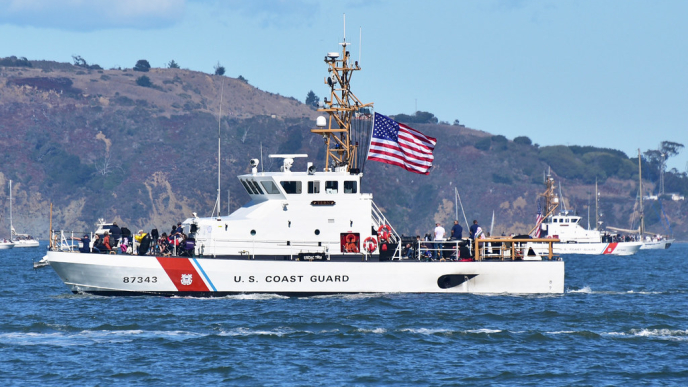
The US Coast Guard denied claims it’s revising its policies to reclassify hate symbols, including the swastika and nooses, as “potentially divisive” symbols — slamming the suggestion as “categorically false.”

The claim, first reported by the Washington Post on Thursday afternoon, picks apart the Coast Guard’s “Harassing Behavior Prevention, Response, and Accountability” manual that was approved this month.

The military branch flatly denied the outlet’s report that it was planning to reclassify its list of hate symbols

“The claims that the U.S. Coast Guard will no longer classify swastikas, nooses or other extremist imagery as prohibited symbols are categorically false,” Admiral Kevin Lunday, acting commandant of the US Coast Guard, wrote in a statement on X. “These symbols have been and remain prohibited in the Coast Guard per policy. Any display, use or promotion of such symbols, as always, will be thoroughly investigated and severely punished.”

“The Coast Guard remains unwavering in its commitment to fostering a safe, respectful and professional workplace. Symbols such as swastikas, nooses and other extremist or racist imagery violate our core values and are treated with the seriousness they warrant under current policy.” (Read more from “US Coast Guard denies claim it will stop classifying swastikas as hate symbols: ‘Categorically false’” HERE)

Photo credit: Flickr

Questions Mount as Missing Surveillance Footage Emerges in Charlie Kirk Murder Case

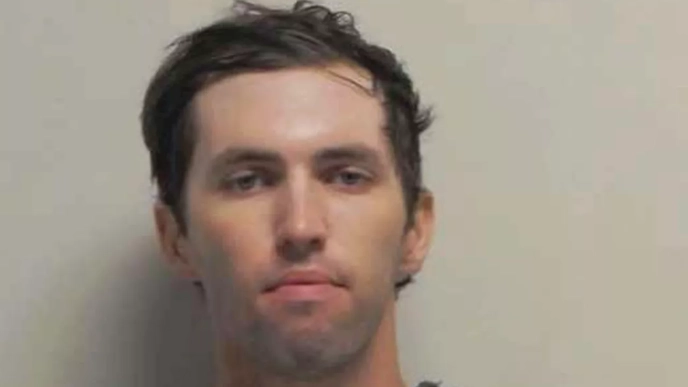
The investigation into the assassination of conservative commentator Charlie Kirk has taken a sharp turn after the discovery that key surveillance footage of the accused shooter, Tyler Robinson, is missing.

On September 10, 2025, Kirk was shot and killed during an event at Utah Valley University. Authorities later recovered a scoped Mauser Model 98 rifle believed to have been used in the shooting. The suspect, 26-year-old Tyler Robinson, surrendered shortly after the killing. Washington County Sheriff Nate Brooksby stated on September 17 that Robinson was brought to the sheriff’s office within the hour by a family friend, accompanied by his parents, and was met by plainclothes detectives. “Our job was not to interview; our job was just to get him here,” Brooksby explained.

Despite that timeline, public records requests later filed with the sheriff’s office painted a different picture. When local outlet 2News requested security footage showing Robinson arriving at the sheriff’s office or entering a holding area, the department initially responded that no such records existed, stating that Robinson “did not go to or enter the jail area.” After a second, broader request seeking any surveillance video showing Robinson entering the building at all, the sheriff’s office offered a new explanation: the footage had once existed but was automatically deleted due to a 30-day retention policy. Officials further stated the video was never shared with prosecutors, the FBI, or any outside investigative agency.

The conflicting accounts have drawn sharp criticism. Defense attorney Rudy Bautista, who has handled death-penalty cases in Utah, called the situation “very concerning,” noting that in a high-profile murder case, every piece of potential evidence should have been immediately secured. Without video confirmation, the timeline of Robinson’s surrender is based solely on the sheriff’s office account, offering no visual record of the conditions under which he was taken into custody.

Political commentator Candace Owens has also weighed in, telling her audience that the unexplained absence of surveillance footage “raises bigger questions than it answers.” She suggested that either the footage was never archived properly or “maybe it never existed in the first place,” noting that such an oversight would be unthinkable in a case of this magnitude.

Robinson is currently facing the death penalty, and prosecutors have already requested additional security measures in court, including video appearances in which Robinson’s face is partially concealed. The intense public scrutiny surrounding the case means that evidence handling will likely continue to be a central issue as the trial approaches.

Coast Guard cutter catches Chinese “pirate ship”, but turns over crooks to … Chinese!

Photo credit: mikebaird

The high-seas driftnetter the U.S. Coast Guard chased across the North Pacific Ocean has been turned over to Chinese Fishery Law Enforcement.

The crew from the Hawaii-based cutter Rush, which had been patrolling Alaska waters, boarded the ship, identified as the Da Cheng, just over two weeks ago and found 30 metric tons of illegally-caught albacore tuna and six metric tons of shark and shark fin on board.

While in Kodiak, Coast Guard Admiral Robert Papp called the 177-foot gillnetter a pirate ship, prompting Louisiana Senator Mary Landrieu to call for prosecution of not only the crew, but of the illegal seafood’s buyers.

High seas driftnetting has been outlawed by international treaty for 20 years. The 10-mile nets the Da Cheng and other illegal, unregulated and unreported fishing boats efficiently catch tuna, but also scoop up everything in their path. Some nets are lost and drift for years, killing thousands of fish.

Read more from this story HERE.

Welcome to Barrow, AK: Coast Guard Finally Establishes Presence in the Arctic

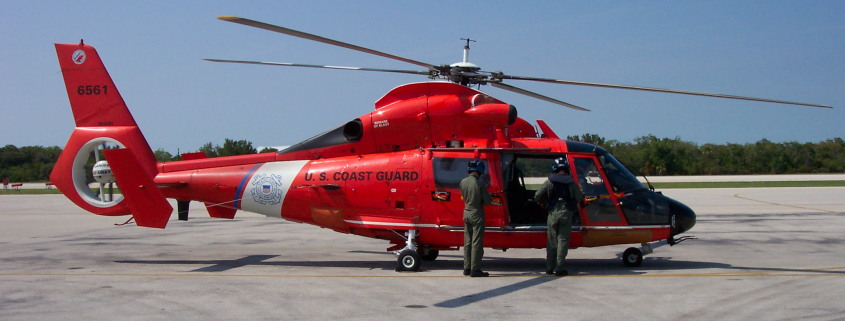
Barrow, Alaska – When the United States Coast Guard arrived in this remote corner of the Arctic this month to begin its biggest patrol presence in the waters north of Alaska, only one helicopter hangar was available for rent, and it was not, to put it mildly, the Ritz. Built by someone apparently more familiar with the tropics than the tundra, the structure had sunk several feet into the permafrost, with the hangar entrance getting lower as the building sank. Squeezing two H-60 helicopters into the tiny space? Think of parallel parking a stretch limousine. And for this — the only game in town, take it or leave it — the owner demanded $60,000 a month, a price that made Coast Guard leaders gasp.

“Not perfect, but you’ve got to learn to do it somehow,” Josh Harris, a Coast Guard aircraft mechanic, said as he stood surveying his first and not entirely straight attempt at towing in an aircraft.

In the land of the midnight sun, the Coast Guard’s learning curve is steep indeed.

The effort, called Arctic Shield, began this month as a pilot project combining search and rescue responsibilities with disaster response and maritime safety enforcement. It will presumably only expand, Coast Guard officials say, as global warming melts these once ice-locked waters.

With air operations based here in the nation’s northernmost community, more than 300 miles past the Arctic Circle, the assignment is expensive, logistically complicated to supply and far from backup should things go wrong.

Read more from this story HERE.

Photo credit: Juliancolton2