Posts

Socialism and Sinking Oil Prices Leave Venezuelans Picking Through Trash for Food

Venezuela’s poverty had eased during the administration of the late President Hugo Chavez. But a study by three leading Caracas universities found that 76 percent of Venezuelans are now under the poverty line, compared with 52 percent in 2014.

Staples such as corn flour and cooking oil are subsidized, costing pennies at the strongest of two official exchange rates. But fruit and vegetables have become an unaffordable luxury for many Venezuelan families.

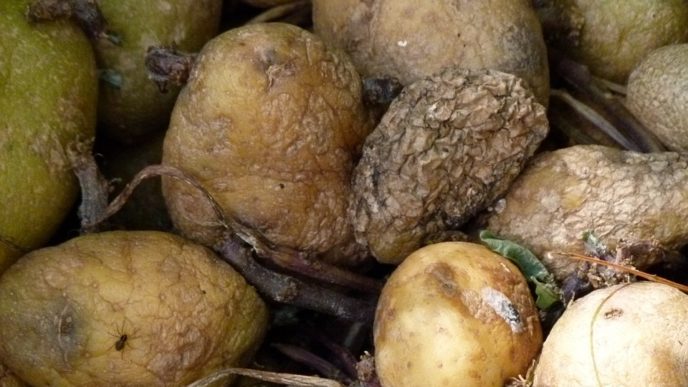
“We’re seeing terrible sacrifices across many sections of society,” said Carlos Aponte, a sociology professor at the Central University of Venezuela. “A few years ago, Venezuela didn’t have the kind of extreme poverty that would drive people to eat garbage.” (Read more from “Socialism and Sinking Oil Prices Leave Venezuelans Picking Through Trash for Food” HERE)

Follow Joe Miller on Twitter HERE and Facebook HERE.

8 Lessons We Can Learn From the Epic Economic Meltdown in Venezuela

We are watching an entire nation collapse right in front of our eyes. As you read this article, there are severe shortages of just about anything you can imagine in Venezuela. That includes food, toilet paper, medicine, electricity and even Coca-Cola. All over the country, people are standing in extremely long lines for hours on end just hoping that they will be able to purchase some provisions for their hungry families. At times when there hasn’t been anything for the people that have waited in those long lines, full-blown riots have broken out. All of this is happening even though Venezuela has not been hit by a war, a major natural disaster, a terror attack, an EMP burst or any other type of significant “black swan” event. When debt spirals out of control, currency manipulation goes too far and government interference reaches ridiculous extremes, this is what can happen to an economy. The following are 8 lessons that we can learn from the epic economic meltdown in Venezuela…

#1 During an economic collapse, severe shortages of basic supplies can happen very rapidly…

“There’s a shortage of everything at some level,” says Ricardo Cusanno, vice president of Venezuela’s Chamber of Commerce. Cusanno says 85% of companies in Venezuela have halted production to some extent.

At this point, even Coca-Cola has shut down production due to a severe shortage of sugar.

#2 If you have not stored up food ahead of time, your diet could quickly become very simple during a major emergency. The Los Angeles Times recently covered the plight of a 42-year-old single mother in Venezuela named Maria Linares, and according to the story her family has not had any chicken to eat since last December…

In December, she was spending about half her salary on groceries. It now takes almost everything she earns to feed her two children, who subsist on manioc (also known as cassava or yuca), eggs and cornmeal patties called arepas, served with butter and plantains.
“The last time we had chicken was in December,” she said.

The best deals are generally at government-run stores, such as Mercal and Bicentenario, where the prices are regulated.

To shop there, however, Linares said, she has to line up overnight. Even then, she might come home empty-handed if everything sells out before she gets to the front of the line — or if she is robbed leaving the store.

#3 When people get hungry, they become very desperate. And very desperate people will eat just about anything.

In a recent article, I detailed the fact that some people down in Venezuela have already become so desperate that they are actually hunting dogs and cats for food.

Could you ever do that?

I couldn’t, but just like in Venezuela there are people in this nation that will eat anything that they can get their hands on when they are desperately hungry and their children are crying out for food.

#4 When an economy melts down, it isn’t just food that is in short supply. This week, there have been several mainstream news stories about the severe shortage of toiletries in Venezuela…

Toiletries are running in short supply across the country. Many Venezuelans say that people wait in lines for several hours to buy basic toiletries, only to sell them at much higher prices on the black market.

Bloomberg reported last year that Trinidad & Tobago had offered to exchange tissue paper for oil with Venezuela. It’s unclear if the deal ever came through.

Condoms and birth control are hard to find, Venezuelans say. You won’t have any more luck with toothpaste, soap, toilet paper or shampoo. And Maduro has asked women to stop using blow dryers.

What would your life be like if you had no toothpaste, soap, toilet paper or shampoo? If you do not want to do without those items in the future, you might want to start stocking up on them now.

#5 If you need medical care during a major economic meltdown, you might be out of luck. Just consider what sick Venezuelans are going through right at this moment…

The Luis Razetti Hospital in the portal city of Barcelona looks like a war zone.

Patients can be seen balancing themselves on half-broken beds with days-old blood on their bodies.

They’re the lucky ones; most are curled up on the floor, blood streaming, limbs blackening.

Children lie among dirty cardboard boxes in the hallways without food, water or medication.

Without electricity or functioning machines, medics have had to create their own solutions. Two men who had surgery on their legs have their limbs elevated by makeshift slings made out of water bottles.

#6 During a currency meltdown, owning precious metals such as gold and silver becomes much more important. This even applies to entire countries. So far during this crisis, Venezuela has had to ship 2.3 billion dollars worth of gold to Switzerland because the bankers won’t take their paper currency any longer…

Venezuela’s government has been running out of foreign reserves and literally shipping gold to help pay for its debt. Venezuela only has $12.1 billion in foreign reserves as of March, according to the most recent central bank figures.

That’s down by half from a year ago. In order to get cash loans to pay for its debt, Venezuela has shipped $2.3 billion of gold to Switzerland so far this year as collateral, according to Swiss government import data.

#7 When an economy crashes, crime goes through the roof. As I discussed the other day, there were 107 major episodes of looting or attempted looting in the first quarter of 2016 down in Venezuela, and things have gotten even worse over the past couple of months.

Meanwhile, crime continues to rise in major cities all over America too. According to Breitbart, 66 people were shot in the city of Chicago over the Memorial day weekend, and that was an all-time record. So far for the entire year, a grand total of more than 1,500 people have been shot in Chicago, and police are bracing for what promises to be a very chaotic summer.

#8 This may be the most controversial lesson in the list. Sometimes it takes a shaking to awaken a nation. Of course nobody really likes to go through a shaking, but in the end it can have some very positive results. Just look at what is happening in Caracas…

Churches in the capital Caracas recently organized a prayer walk. Thousands came to the main streets of the city crying out to God to ease their misery.

Under the slogan “I pray for my country,” dozens of Christians marched and prayed for unity of the church and for God to finally intervene to end their country’s plight.

Will a similar shaking be necessary to bring America to her knees?

What is it ultimately going to take to bring about a widespread awakening in this country?

If you follow my work closely, then you already know that I believe that a great shaking is coming to the United States. In the end, it will be far more serious than what Venezuela is going through right now, and it is going to shake this nation to the very core.

But a great shaking could turn out to be exactly what the United States needs, because without a great shaking I don’t believe that there would be a major awakening in America.

Or could it be possible that I am wrong about this? (For more from the author of “8 Lessons We Can Learn From the Epic Economic Meltdown in Venezuela” please click HERE)

Follow Joe Miller on Twitter HERE and Facebook HERE.

Venezuela Economic Crisis Means Fewer Meals

Turkish_foodVenezuela’s soaring prices and chronic shortages have left 65-year-old homemaker Alida Gonzalez struggling to put meals on the table.

She and her four family members in the Caracas slum of Petare now routinely skip one meal per day and increasingly rely on starches to make up for proteins that are too expensive or simply unavailable.

“With the money we used to spend on breakfast, lunch and dinner, we can now buy only breakfast, and not a very good one,” said Gonzalez in her home, which on a recent day contained just half a kilo of chicken (about a pound), four plantains, some cooking oil, a small packet of rice, and a mango . . .

Recession and a dysfunctional state-run economy are forcing many in the South American OPEC country of 30 million to reduce consumption and eat less-balanced meals.

In a recent survey by researchers from three major universities often critical of the government, 87 percent of the respondents said their income was insufficient to purchase food. (Read more from “Venezuela Economic Crisis Means Fewer Meals” HERE)

Follow Joe Miller on Twitter HERE and Facebook HERE.
Pentagon Papers Whistleblower Says Snowden Made the Right Call in Fleeing US

Photo Credit: The GuardianSnowden made the right call when he fled the U.S.

By Daniel Ellsberg. Many people compare Edward Snowden to me unfavorably for leaving the country and seeking asylum, rather than facing trial as I did. I don’t agree. The country I stayed in was a different America, a long time ago.

After the New York Times had been enjoined from publishing the Pentagon Papers — on June 15, 1971, the first prior restraint on a newspaper in U.S. history — and I had given another copy to The Post (which would also be enjoined), I went underground with my wife, Patricia, for 13 days. My purpose (quite like Snowden’s in flying to Hong Kong) was to elude surveillance while I was arranging — with the crucial help of a number of others, still unknown to the FBI — to distribute the Pentagon Papers sequentially to 17 other newspapers, in the face of two more injunctions. The last three days of that period was in defiance of an arrest order: I was, like Snowden now, a “fugitive from justice.”

Yet when I surrendered to arrest in Boston, having given out my last copies of the papers the night before, I was released on personal recognizance bond the same day. Later, when my charges were increased from the original three counts to 12, carrying a possible 115-year sentence, my bond was increased to $50,000. But for the whole two years I was under indictment, I was free to speak to the media and at rallies and public lectures. I was, after all, part of a movement against an ongoing war. Helping to end that war was my preeminent concern. I couldn’t have done that abroad, and leaving the country never entered my mind.

There is no chance that experience could be reproduced today, let alone that a trial could be terminated by the revelation of White House actions against a defendant that were clearly criminal in Richard Nixon’s era — and figured in his resignation in the face of impeachment — but are today all regarded as legal (including an attempt to “incapacitate me totally”).

I hope Snowden’s revelations will spark a movement to rescue our democracy…Read more from this story HERE.

________________________________________________________________________

Paper reveals NSA ops in Latin America

By Juan Forero. A Brazilian newspaper on Tuesday published an article it said is based on documents provided by the former American contractor Edward Snowden asserting that the United States has been collecting data on telephone calls and e-mails from several countries in Latin America, including important allies such as Brazil, Colombia and Mexico.

The paper, O Globo, based in Rio de Janeiro, says the documents show the National Security Agency amassed military and security data on countries such as Venezuela, an American adversary that has been accused of aiding Colombia’s Marxist rebels and maintaining close ties with Iran. But the documents also show that the agency carried out surveillance operations to unearth inside commercial information on the oil industry in Venezuela and the energy sector in Mexico, which is under state control and essentially closed to foreign investment.

U.S. officials have declined to address issues about intelligence gathering or the O Globo report, except to issue a statement saying that “we have been clear that the United States does gather foreign intelligence of the type gathered by all nations.”

The report on Tuesday came after O Globo on Sunday published a story contending that Brazil is a major target of the NSA’s international effort to monitor telecommunications. The newspaper said that in gathering data in Brazil, the NSA counted on the collaboration of American and Brazilian telecommunications companies, though O Globo did not name them.

The revelations of the American agency’s operations across a swath of Latin America coincided with news from Russia about where Snowden, who is believed to be at the Moscow airport, may be headed. A leading Russian lawmaker, Alexei Pushkov, said on Tuesday via his Twitter account that Snowden, who had been a contractor for the NSA, had accepted the offer of asylum that Venezuelan President Nicolas Maduro had made on Friday. Read more from this story HERE.

________________________________________________________________________

WikiLeaks: Snowden Has Not Accepted Asylum in Venezuela

By CBSDC/AP. WikiLeaks claims that National Security Agency leaker Edward Snowden has not yet formally accepted asylum in Venezuela after a Russian lawmaker tweeted, then deleted minutes later, that Snowden accepted asylum from the South American country.

“The states concerned will make the announcement if and when the appropriate time comes. The announcement will then be confirmed by us,” WikiLeaks posted on Twitter.

The Associated Press reports that Russian lawmaker Alexei Pushkov initially tweeted that Snowden accepted Venezuelan President Nicolas Maduro’s political asylum request.

“Predictably, Snowden has agreed to Maduro’s offer of political asylum. Apparently, this option appeared most reliable to Snowden,” Pushkov tweeted.

But the post was deleted minutes after Pushkov tweeted the information. Read more from this story HERE.

________________________________________________________________________

Edward Snowden: U.S., Israel ‘Co-Wrote’ Cyber Super Weapon Stuxnet

By Lee Ferran and Kirit Radia. The former National Security Agency contractor on the run from U.S. authorities halfway around the world said that Stuxnet, an unprecedented cyber weapon that targeted Iran’s nuclear program, was the product of a joint American-Israeli secret operation.

Before Edward Snowden became a household name, he conducted an interview via encrypted emails with cyber security expert Jacob Appelbaum and was asked about the game-changing computer code, according to the interview published in the German newspaper Der Spiegel Monday.

“NSA [U.S. National Security Agency] and Israel co-wrote it,” Snowden said.

Snowden said that the NSA regularly works with foreign governments and has a “massive body” called the Foreign Affairs Directorate to deal with international partners.

In the interview Snowden did not discuss Stuxnet further and, so far, none of the newspapers Snowden has worked with have published any documents directly relating to the cyber weapon. Read more from this story HERE.

The Iran, Hezbollah, Venezuela Axis to “Grow Exponentially” Under Chavez’s Successor

Photo Credit: AP

Iran has illegally laundered billions of dollars through the Venezuelan financial sector and is currently stashing “hundreds of millions” of dollars in “virtually every Venezuelan bank today,” according to a former senior State Department official.

“It’s a huge blind spot in those trying to implement sanctions” on Iran, Roger Noriega, a former United States ambassador and assistant secretary of state for western hemisphere affairs, told the Washington Free Beacon.

Venezuela served as Iran’s closest Western ally under the late President Hugo Chavez, who allowed the rogue regime to establish a military and financial presence at the highest levels of the Venezuelan government.

Iran’s foothold in the country is expected to grow exponentially under the rule of Chavez’s likely successor, Vice President Nicolas Maduro.

Noriega and other experts warned House lawmakers at a Foreign Affairs Committee hearing on Wednesday that Iran’s terrorist proxy Hezbollah is gaining power in Venezuela.

Read more from this story HERE.

Venezuela’s Maduro Calls on Obama to Halt US Plan to Assassinate Rival

Venezuela’s acting president urged U.S. leader Barack Obama to stop what he called a plot by the Pentagon and the Central Intelligence Agency to kill his opposition rival and trigger a coup before an April 14 election.

Nicolas Maduro said the plan was to blame his opponent’s murder on the OPEC nation’s government and to “fill Venezuelans with hate” as they prepare to go to vote following the death of socialist leader Hugo Chavez.

Maduro first mentioned a plot against his rival, Henrique Capriles, last week, blaming it on former Bush administration officials Roger Noriega and Otto Reich. Both rejected the allegations as untrue, outrageous and defamatory.

“I call on President Obama – Roger Noriega, Otto Reich, officials at the Pentagon and at the CIA are behind a plan to assassinate the right-wing presidential candidate to create chaos,” Maduro said in a TV interview broadcast on Sunday.

Maduro, who is Chavez’s preferred successor, said the purpose of the plot was to set off a coup and that his information came from “a very good source.”

Read more from this story HERE.

Venezuela Opening Investigation Into Whether Chavez Given Cancer By US

Photo Credit: Getty Images

The Venezuelan government announced Monday that it will open an inquiry into the conspiracy theory that the cancer that helped kill Hugo Chavez last week was implanted by his American imperialist enemies, but doctors say such a scenario is impossible.

Chavez died last week from a heart attack while suffering from cancer. Even before his death, conspiracy theorists suggested that the anti-American leader’s cancer was the product of an American plot to kill him. Even Chavez gave voice to the conspiracy.

“It’s very difficult to explain, even with the law of probabilities, what has been happening to some of us in Latin America,” Chavez said in 2011, speaking of several Latin American leaders who had recently been diagnosed with cancer, including himself. “Would it be so strange that they’ve invented technology to spread cancer and we won’t know about it for 50 years?”

“We will seek the truth,” Chavez disciple and acting Venezuelan President Nicolas Maduro said Monday while announcing the investigation, according to Reuters. “We have the intuition that our Commander Chavez was poisoned by dark forces that wanted him out of the way.”

Read more from this story HERE.

Hugo Chavez, Venezuelan President, Dead At 58

Photo Credit: Getty ImagesHugo Chavez, Venezuela’s fiery and controversial socialist president who came to power on wave of popular sentiment and befriended some of the world’s most notorious dictators, has died at the age of 58, Venezuelan Vice President Nicolas Maduro said today.

Chavez had been fighting cancer, recently seeking treatment at a clinic in Cuba.

A self-described champion of the poor who first tried to overturn Venezuela’s powerful elites in a failed 1992 coup, Chavez was democratically elected in 1999, with huge support from the country’s poor.

During his time in office, he became one of Latin America’s most well-known and polarizing figures. A constant thorn in the side of the United States, he commanded headlines in newspapers around the world. A populist who suppressed free speech, he remained immensely popular among his country’s poor.

From the time he won election in 1999, Chavez held onto power through tightly controlling the media and through a series of populist elections and referenda, including one that allowed him to seek a limitless number of terms.

Watch video here:

Read more from this story HERE.

Chavez Wins Again, Opponent Concedes

It was supposed to be a close vote; some even believed that an upset was in the works. But when the dust settled, Venezuelan President Hugo Chavez had won another election. This time, however, his margin of victory was considerably reduced, from 25 percentage points six years ago to about 10 percentage points on Sunday. Despite Mr. Chavez’s vow to complete the “Bolivarian revolution” he launched in 1998, he must take into account the views of the many Venezuelans who voted against him. That assumes the president will complete his six-year term — an open question given his health problems.

Mr. Chavez was a retired lieutenant colonel, best known for launching a failed coup in 1992, when he won the presidency 14 years ago. He was then, and remains, a fiery populist who has promised a socialist revolution for his country in the name of the Latin American nationalist Simon Bolivar. During his tenure in office, he has transformed Venezuelan society, using class warfare — he refers to the rich and middle class as “the squalid ones” — to bolster his support: He has nationalized private property and businesses, while providing free medical care, housing, education and food to the country’s poor.

Essential to his success is the flood of oil revenues Venezuela enjoys as a member of OPEC, the global petroleum cartel. With proven reserves putting the country in the ranks of the top 10 oil producers, oil revenues account for about 94 percent of Venezuela’s export earnings, more than half of federal budget revenues, and around 30 percent of gross domestic product. Fonden, the country’s state investment fund, accounts for nearly a third of all investment in Venezuela and half of public investment; in 2011, it received 25 percent of government revenue from the oil industry. Over the last seven years, it has absorbed about $100 billion of Venezuela’s oil revenue — much of it used to buy support for Mr. Chavez.

But those investments have been less than effective. The country suffers from power shortages and regular blackouts, a decaying infrastructure, failure to provide other basic services and a pall of corruption and favoritism that hangs over all segments of the economy. More ominous still, Venezuela has the world’s fourth highest murder rate — at least it is estimated as such, since the government stopped publishing official crime statistics in 2004.

That is fertile soil for an opposition movement, and after years of division, the various groups coalesced around a candidate, Mr. Henrique Capriles. He is the 40-year old governor of Miranda state, which includes Caracas. The son of a real estate developer, he devoted special energy to press-the-flesh campaigning to counter Mr. Chavez’s message that his opponent was an elitist who cared little about the concerns of ordinary citizens.

Read more from this story HERE.

Vote Fraud in Venezuela: Exit Polling Shows Opponent Won but Chavez Declared the Winner

According to the Associated Press, Venezuela’s electoral council has declared that Hugo Chavez beat Henriques Capriles in Sunday’s presidential election with about 54 percent of the vote, despite exit polls showing otherwise.

Venezuela Twitter users have claimed Chavez’s victory was wrought with election fraud, and that the socialist incumbent president sent tanks into the streets of his country as those exit poll reports showed him losing. A picture of the tanks surfaced on Twitter Sunday evening.

The British Guardian newspaper reported that Chavez also sent troops armed with AK-47s into Venezuela’s streets to fight against any protests in case unrest came as a result of the news.

A Spanish news outlet reported earlier on Sunday that exit polls showed Capriles defeated the socialist president by a narrow margin.

Read more from this story HERE.