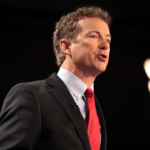
Video: Rand Paul on Diplomacy

Photo Credit: National Interest
Like many conservative middle-class families, our inclination was to resist anything to do with Red China. In that black and white world, you were either for us or against us. Trade with China was thought to be trade with the enemy. A funny thing happened, though, along the way. Many conservatives came to understand a larger truth. As trade began to blossom with China, many conservatives, myself included, came to admit that trade improves our economic well-being AND makes us less likely to fight. The success of trade with China made many conservatives rethink their view of the world.
People sometimes ask me what my worldview is. My response is that even if you’ve crisscrossed the globe, I’m not sure that the world doesn’t change by the time you return to the same spot twice. I really am a believer that foreign policy must be viewed by events as they present themselves, not as we wish them to be.
A few years ago, I read a review of John Gaddis’ biography of George Kennan. I laughed when I read that Dr. Gaddis promised Kennan not to publish it until after his death. And that twenty years later Gaddis’ students were jokingly wondering who might die first. I loved the book. To me, containment is not a dead letter. I look at the worldwide menace of radical jihad and I think we need a long-term vigilance like containment.
Read more from this story HERE.