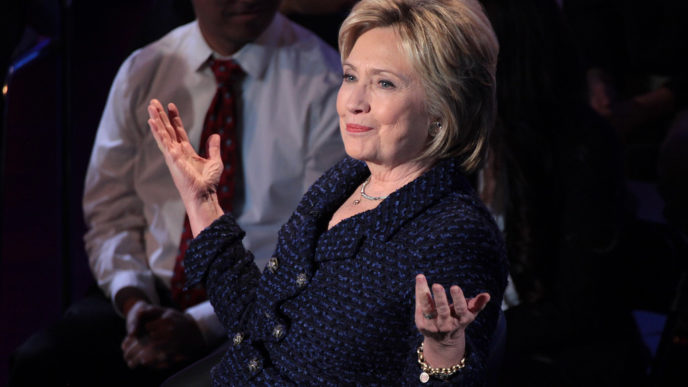
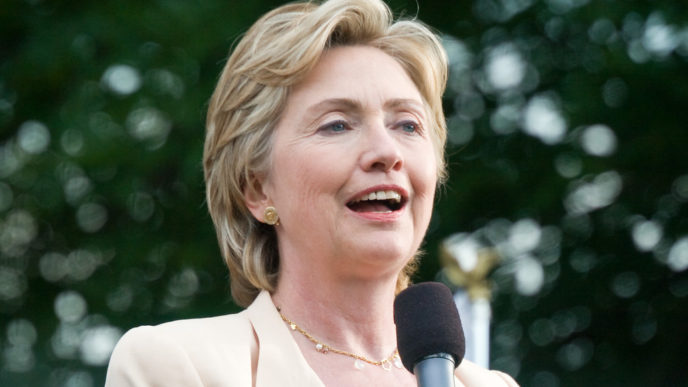
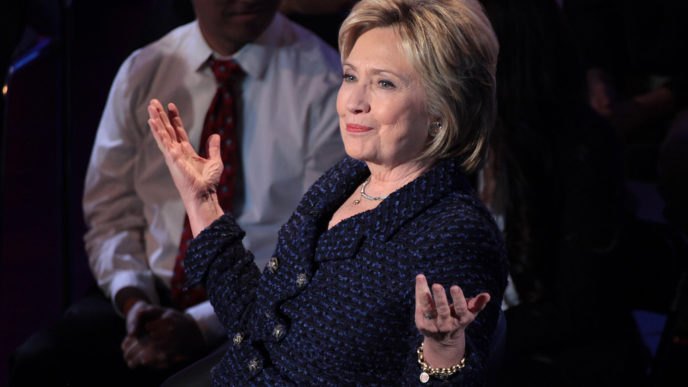
Hillary Clinton’s well-heeled backers have opened a new frontier in digital campaigning, one that seems to have been inspired by some of the Internet’s worst instincts. Correct the Record, a super PAC coordinating with Clinton’s campaign, is spending some $1 million to find and confront social media users who post unflattering messages about the Democratic front-runner.
In effect, the effort aims to spend a large sum of money to increase the amount of trolling that already exists online.
The plan comes as Clinton operatives grapple with the reality that her supporters just aren’t as engaged and aggressive online as are her detractors inside and outside the Democratic Party.
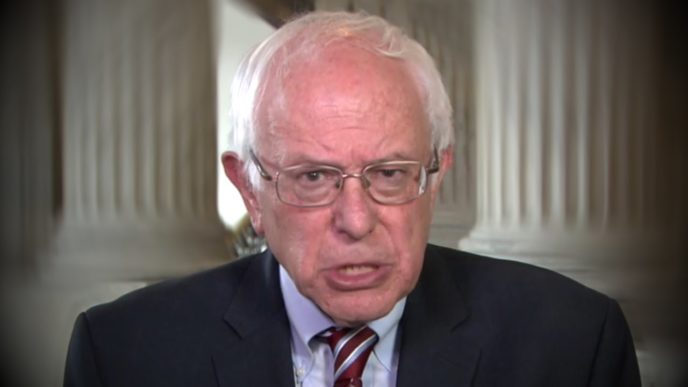
The lack of engagement is one of Clinton’s bigger tactical vulnerabilities, particularly when compared with rivals like Donald Trump, whose viral social media attacks are legion, and Sen. Bernie Sanders, who is backed by a passionate army of media-savvy millennials…
…using a super PAC to create a counterweight to movements that have sprung up organically is another reflection of the campaign’s awkwardness with engaging online, digital pros said.
“It is meant to appear to be coming organically from people and their social media networks in a groundswell of activism, when in fact it is highly paid and highly tactical,” said Brian Donahue, chief executive of the consulting firm Craft Media/Digital.
“That is what the Clinton campaign has always been about,” he said. “It runs the risk of being exactly what their opponents accuse them of being: a campaign that appears to be populist but is a smokescreen that is paid and brought to you by lifetime political operatives and high-level consultants.”
With Granny Catlady’s favorability rating trending to that of the Zika virus, one would assume that times are getting desperate in the Clinton campaign. (For more from the author of “GRASSROOTS: Clinton Super PAC Attacking Hillary Online Critics” please click HERE)
The aircraft parked on the ramp at this military base in northern Iraq offer a symbolic counterpoint to the White House narrative that U.S. forces are on the sidelines of the ground war against the Islamic State.
U.S. Army medevac Blackhawk helicopters are based here, including the one that picked up mortally wounded Navy SEAL Charles Keating IV under heavy enemy fire during a May 3 battle north of Mosul.
Also lined up on the tarmac are Army Apache attack helicopters; intelligence, surveillance, and reconnaissance aircraft; and a variety of armed special operations aircraft from different military branches.
“We’re in a war zone, and this place is dangerous,” an Army officer told The Daily Signal.
The U.S. base is an operational hub for Operation Inherent Resolve, the U.S.-led, 66-nation coalition combating Islamic State, the terrorist army also known as ISIS that holds territory in Iraq and Syria.
From the base in the vicinity of Erbil, capital of Iraqi Kurdistan, U.S. and coalition personnel coordinate airstrikes to support Kurdish peshmerga forces. U.S. special operations troops also stage operations from here to advise and assist the peshmerga during combat.
To accomplish the advise-and-assist mission, U.S. special operations troops frequently go into areas where combat is happening.
While embedded with the peshmerga on the ground, U.S. special operations troops sometimes call in airstrikes from coalition warplanes against ISIS forces, a U.S. Army officer told The Daily Signal on condition of anonymity due to security concerns and restrictions on speaking with news reporters.
The White House, however, has insisted U.S. ground forces in Iraq are not in combat.
The day of Keating’s death, White House Press Secretary Josh Earnest told reporters in Washington: “The relatively small number of U.S. service members that are involved in these operations are not in combat but are in a dangerous place.”
The night after Keating was killed, the mood on the base in northern Iraq was somber, yet there was not a feeling of shock or surprise.
For many U.S. military personnel on the ground in Iraq, Keating’s death underscored something they’ve known for a long time—U.S. special operations forces are neck-deep in the daily grind of the ground war against ISIS.
“Most people took it in stride,” the Army officer told The Daily Signal. “We’re in a war zone, and this place is dangerous. We know people are going to get hurt.”
Indispensable
The base in northern Iraq has all the trappings of other U.S. military installations spread across the Middle East, North Africa, and Central Asia.
It has a tent gym loaded with Crossfit equipment and truck tires stacked out back. Civilian contractors in khaki 5.11 Tactical cargo pants and button-down shirts are here. And inside the chow hall, called a DFAC, an eclectic mix of uniforms from coalition countries and military branches is on parade.
There’s also a subgroup of oft-bearded, elite troops who tend to stick to themselves.
The infrastructure at the base has expanded noticeably since this correspondent last visited in September 2015. More troops, tents, aircraft, and equipment are here than eight months ago.
The installation’s growth reflects the creeping growth in the U.S. presence in Iraq, and the increasingly indispensable role U.S. airpower and special operations support play in the ground war against ISIS.
“We can’t fight without U.S. airstrikes or U.S. support,” a Kurdish official at the Kurdistan Region Security Council told The Daily Signal on condition of anonymity due to security rules. “But the U.S. mission can’t exist without us. It’s a partnership.”
A Dangerous Place
U.S. special operations forces in Iraq for the advise-and-assist mission are not sequestered inside fortified compounds impervious to attack.
These members of the military, including Navy SEALs and Army Special Forces, deploy to team safe houses behind the front lines to carry out their mission and to forward stage as land-based, quick-reaction forces in case U.S. servicemen and servicewomen come under attack.
The Navy SEAL quick-reaction force in which Keating served was stationed at one such team house outside Mosul.
The SEALs deployed in “nontactical vehicles,” military jargon for civilian SUVs. The ensuing firefight lasted for hours, according to military personnel and news reports.
The U.S. Army DUSTOFF Blackhawk helicopter that picked up Keating came under heavy fire and returned pockmarked with bullet holes.
Keating was the third U.S. service member to die in Iraq from enemy fire since Operation Inherent Resolve began in 2014. And the May 3 battle wasn’t the first time U.S. aircraft took fire from ISIS over Iraq.
In September 2015, Air Force pararescuemen, also known as PJs, and combat rescue officers from the 57th Rescue Squadron, then deployed to this location, told The Daily Signal that ISIS forces frequently fired on the HH-60G Pave Hawk helicopters they used to forward position behind enemy lines.
“We take fire every time we go out,” a combat rescue officer said then.
Also in September, U.S. Air Force A-10 attack pilots flying missions over Iraq and Syria from a base in the Persian Gulf region said the volume of surface-to-air fire they faced was much higher than in Afghanistan.
“There’s a real threat here, unlike in Afghanistan,” an A-10 pilot told The Daily Signal at the time. “I’ve had a few close calls. Do we respect the threat? Yes. Are we afraid of it? No.”
Center of Gravity
The Department of Defense said it officially maintains 4,087 troops or less in Iraq and has plans to increase the number of special operations troops and support personnel in Syria from 50 to 300.
The number of U.S. troops on the ground in Iraq and Syria does not, however, reflect the aggregate U.S. war effort against ISIS.
To support Operation Inherent Resolve and military operations in North Africa, as well as operations in Afghanistan, the U.S. is standing up new bases and refurbishing old ones across the Middle East, reflecting a reversal of White House plans to draw down U.S. forces in the region.
“It’s busier now than it was a year ago,” Air Force Lt. Col. Mike Cummings, a C-130 pilot from the Alaska National Guard, told The Daily Signal during an interview at an undisclosed location in the Persian Gulf region.
“We were drawing down and now we’re building back up,” Cummings said. “Now we’re moving in the opposite direction.”
As of the end of April, the U.S. had conducted 9,073 airstrikes in Iraq and Syria in support of Operation Inherent Resolve, according to the Pentagon. Nearly all the U.S. military aircraft, manned and unmanned, launched from bases and Navy vessels outside Iraq and Syria.
U.S. Central Command, or CENTCOM, declined to disclose the number of bases U.S. forces use throughout the Middle East to support the operation.
CENTCOM also declined to disclose the total number of U.S. military personnel committed to Operation Inherent Resolve due to “host-nation sensitivities and operational security.”
According to news reports and open source data, about 50,000 U.S. military personnel are deployed throughout the Middle East, including locations in Turkey and Navy personnel at sea. And, according to CENTCOM, 9,800 personnel remain in Afghanistan.
In an emailed statement to The Daily Signal, a CENTCOM spokesperson said: “We maintain the necessary forces and capability throughout the region to assist our partners and respond to threats as appropriate.”
Chasing the Front Lines
The total number of U.S. troops throughout the Middle East region is only a fraction of the approximately 170,000 U.S. troops who were in Iraq alone during the “surge” in 2007.
And unlike the days of Operation Iraqi Freedom and Operation New Dawn, no countrywide network of U.S. forward operating bases and combat outposts inside Iraq exists from which ground and air forces can project power.
The war against ISIS in Iraq is a frontal war, with a clear delineation between enemy and friendly territory. The 1,200-mile-long front line in Iraq is defined in places by trenches and hilltop forts. Opposing camps trade potshots across no man’s land.
As Iraqi and Kurdish forces take back ground from ISIS, coalition air assets and advise-and-assist personnel constantly move to new bases closer to the shifting front lines. Some bases that were strategically positioned to launch warplanes a year ago are now inconveniently distant from the battlefield’s northward shifting center of gravity.
Bases in Turkey, consequently, play a more important role due to their geographical proximity to the battle space.
The Turkish air base at Incirlik, for example, was reopened to U.S. Air Force F-16s in August 2015 to conduct airstrikes against ISIS targets. The F-16s were swapped out for A-10 attack planes in October. And, according to news reports, F-15C fighter jets and F-15E strike aircraft also have deployed to Incirlik since August.
The total U.S. military force deployed at Incirlik has grown to nearly 2,500, up from about 1,300 last year, according to news reports.
Long-Term Plans
The Daily Signal recently visited an Air Force base at an undisclosed location in the Persian Gulf region. Military officials at the base said about 1,800 U.S. troops and about 2,200 civilian support personnel are deployed there.
The base is a key airlift hub for Operation Inherent Resolve and for supporting military operations in the Horn of Africa. The location is also the launching pad for U.S. and British drones flying missions over Iraq and Syria. Other coalition partner countries fly intelligence, surveillance, and reconnaissance missions from here.
Air Force Col. Clarence Lukes Jr., commander of the 386th Air Expeditionary Wing headquartered at the base, said Pentagon planners drew up a three- to five-year plan to build up its infrastructure after Operation Inherent Resolve kicked off in 2014. And, Lukes added, the Pentagon plans to use the base “for much longer.”
“This puts us in a perfect crossroads for different types of mission sets … regardless of the adversary,” Lukes said.
The base has a swimming pool, a movie theater, and a state of the art gym. Plans are under way to build brick and mortar dormitories to replace the tents and trailers in which most personnel now live.
A recreation center, called the Drop Zone, includes ping-pong tables, flat screen TVs tuned to the Armed Forces Network, and cans of nonalcoholic Beck’s beer in the fridge.
A coffee shop, the Green Bean, offers free Wi-Fi, mocha lattes, and protein shakes. Wi-Fi is available throughout the base. Self-serve ice cream and Krispy Kreme doughnuts can be found in the DFAC.
“Morale hinges on three things,” Lukes said. “Self-serve ice cream, laundry, and Wi-Fi.”
U.S. servicemen and servicewomen say there has been a noticeable uptick in operational tempo since Operation Inherent Resolve began almost two years ago. Yet, many also consider the battle against ISIS to be just the latest chapter in nearly 15 years of nonstop combat operations.
For them, combat deployments are now a way of life.
“It’s just the status quo,” Lt. Col. Corey Reed, deputy operations group commander for the 386th Air Expeditionary Wing, said. “As Afghanistan tapered off, OIR [Operation Inherent Resolve] kicked off. So it’s business as usual.”
“It’s like the last one never ended,” Cummings, the C-130 pilot, said. “It’s not really the start of something new.” (For more from the author of “‘People Are Going to Get Hurt’: America’s Quiet War in Iraq” please click HERE)
https://joemiller.us/wp-content/uploads/Elements_of_the_3rd_Stryker_brigade_on_patrol_in_Iraq_-a.jpg13122000Joe Millerhttps://joemiller.us/wp-content/uploads/logotext.pngJoe Miller2016-05-12 02:47:432016-05-12 02:47:43‘People Are Going to Get Hurt’: America’s Quiet War in Iraq
America’s oldest veteran Richard Overton celebrated his 110th birthday with family and friends on Wednesday, saying “I don’t think about dying… I just think about living.” Maybe that’s the secret recipe to long life.
Overton, of Austin, Texas, fought in the 1887th Engineer Aviation Battalion in World War II, and served as a corporal in Hawaii, Guam and Iwo Jima.
“I feel good. A little old, but I’m getting around like everybody else,” Overton told NBC News on Wednesday by phone from the same Austin house he’s lived in since he returned from the war. He paid $4,000 for it.
His tips for longevity are far from traditional: He chain-smokes cigars, insists on a splash of whiskey in his morning coffee, and enjoys a steady diet of fried catfish and butter pecan ice cream, he told TODAY two years ago.
While Overton has been surrounded by the spotlight in recent years receiving media attention, awards, and visits from politicians, it never fazes him.
After meeting former Gov. Rick Perry on his 106th birthday he said of Perry, “He’s human, ain’t he?”
You can watch their meeting here. Overton has also met President Barack Obama when he had breakfast at the White House 3 years ago. (For more from the author of “Meet Richard Overton: He’s America’s Oldest Veteran and He Turned 110 Today” please click HERE)
Just over two years after narrowly escaping off the back of a truck to freedom in the middle of the night, a Nigerian schoolgirl who was kidnapped by Boko Haram in 2014 says that she still has hope for the future of her country and her classmates.
“I have had dreams. With what I have been through, some of the dreams are scary. But now my dreams are good,” ‘Sa’a’ (a pseudonym used for protection), told congressmen at a hearing of the House Subcommittee on Africa, Global Health, Global Human Rights. I have a dream of a safe Nigeria; a Nigeria where girls can go to school without fear of being kidnapped; a Nigeria where girls like me are not made into suicide bombers and little boys are not routinely stolen and turned into terrorists.”
You can watch her full testimony here.
Below are excerpts from Sa’a’s submitted written testimony:
I am one of the 276 Schoolgirls who was kidnapped from the Government Secondary School in Chibok by the terror group Boko Haram. Sa’a is not my real name. It is a name that I use for my protection.
Before attending the Chibok Secondary school, I also survived an earlier Boko Haram attack at my former high school. After I escaped from that school invasion, my parents decided to move me to the Chibok Secondary School because they thought that it would be a safer place nearer home for me to continue my education.
However, on the 14th of April 2014, the Boko Haram came to my school at Chibok when we were all sleeping at night. They were shooting guns and yelling. They were yelling, “Allahu Akbar.” Everyone woke up, and came out of their rooms. We were wearing our pajamas when they came in. They asked us, “Where are the boys?” The boys are day students. The boys usually came to school in the morning but went home after school. They also asked us where the food was kept. They pointed out two girls to show them where the food store was and took it in a truck. Then they made us move from where we were staying to the class area. Next, they started burning everything – our clothes, our books, our classrooms – everything in our school.
They marched us out of the school for miles to where their trucks were. Then they asked us to enter the trucks and said that if we did not, they were going to shoot all of us. We were all scared, so we entered the trucks. They started driving us through the forest. When we were all riding in the trucks through the forest, I just had this feeling I should try to escape because I don’t know where I’m going and neither do my parents. I said to one of my friends that “I’m going to jump out of the truck. I would rather die so my parents will see my body and bury it than to go with the Boko Haram.”
So my friend said, “OK.” She would jump out with me. I jumped out first, and she jumped after me. We hid in the forest while the cars passed. We were in the forest that night without knowing what to do. It was very dark. We didn’t know where we were. My friend injured both of her legs from jumping. She couldn’t walk. We just sat under a tree until morning. She cried. She said that I should go home and let her die in the forest. I said, “No. If we are going to die, we are going to die together. I won’t leave you here.”
I decided to go and look for help in forest. I was going around not far from where we slept, and I found a Fulani man – a shepherd. I asked him for help, but he said, “No, I can’t help you.” So I tried to convince him. Then he did help us. He put my friend on his bicycle and took us to Chibok, and that’s how we got home.
Before I got home in the morning, my parents heard what happened in my school and one of my brothers and his friend went back to Chibok to find out what happened. When I got home, my mom, my dad, and my family, everyone was crying. Our neighbors came to the house. They were all happy and crying because I’m home, but they were asking about the other girls. There was a man who came to my home. He was asking about his daughters. I told him we managed to escape, but I didn’t know if his daughters would manage to escape the way we did. I didn’t know what happened next after we jumped out of the truck…
Recently I saw the video of some of my classmates that were missing for two years now. I am glad to see that some of them are alive. The moment I saw them and recognized their faces, I started crying, with tears of joy coming rolling down from my eyes, thanking God for their lives. Seeing them has given me more courage not to give up. Seeing them gives me the courage to tell the world today that we should not lose hope.
Boko Haram, now also known as The Islamic State in West Africa, is now considered the deadliest terror organization in the world, with a deal toll surpassing that of ISIS. According to a report at the International Business Times, the group, which is primarily organized in and around northeastern Nigeria, has killed roughly 20,000 people and displaced over 2 million others since 2009.
More than two years have passed since the “Chibok girls” were kidnapped by Boko Haram in a nighttime raid on their northern Nigerian Boarding school April 2014. Despite efforts by the Nigerian government, 219 of them still remain missing. According to another IB Times story, Andrew Pocock, the former British High Commissioner to Nigeria, revealed in a March interview that both the U.S. and U.K. knew about the location of at least 80 of the kidnapped girls, but declined to enact rescue operations for them because it was deemed “too risky.”
“A couple of months after the kidnapping, flybys and an American eye in the sky spotted a group of up to 80 girls in a particular spot in the Sambisa forest, around a very large tree, called locally the Tree of Life, along with evidence of vehicular movement and a large encampment,” Pocock diplomat told a British newspaper. “A land-based attack would have been seen coming miles away and the girls killed. An air-based rescue, such as flying in helicopters or Hercules, would have required large numbers and meant a significant risk to the rescuers and even more so to the girls.”
When asked about the statement, a spokesman for the U.S. State Department responded:
“The United States continues to support actively the efforts to locate and bring home the Chibok girls along with other kidnapped victims of Boko Haram’s acts of terrorism. The search for the kidnapped schoolgirls is ongoing. While the Nigerian government maintains its lead role, the United States continues to lend its unique assets and capabilities to assist in the search.”
Video released by CNN last month and reportedly filmed in December seems to show at least fifteen of the girls alive with “no obvious signs of maltreatment.”
However, once the girls return home, things do not necessarily return to normal for them.
“Young girls and women who have been raped, but released, by Boko Haram face extreme stigmatization from their communities where many label them as ‘Boko Haram wives. and fear that they have been radicalized and will be potential attackers,” testified former Congressman Frank Wolf, who is now Distinguished Senior Fellow at the 21st Century Wilberforce Initiative at the same hearing.
“They’re victims twice. They’re victims when they’re captured and they’re victims when they’re released.” (For more from the author of “Watch: Boko Haram Survivor Tells the Story of Her Escape” please click HERE)
https://joemiller.us/wp-content/uploads/maxresdefault-44.jpg10801920Joe Millerhttps://joemiller.us/wp-content/uploads/logotext.pngJoe Miller2016-05-12 02:28:442016-05-12 03:29:13Watch: Boko Haram Survivor Tells the Story of Her Escape
FBI Director James Comey challenged Hillary Clinton’s characterization of the federal investigation into her use of a private email server Wednesday when speaking with reporters.
Clinton and her allies have repeatedly called the probe a routine “security inquiry.” But Director James Comey told reporters that wasn’t an accurate description.
“It’s in our name. I’m not familiar with the term ‘security inquiry,’ ” Comey said at a roundtable with reporters, according to Politico.
“We’re conducting an investigation … That’s what we do,” he said, according to Fox News. Comey reportedly declined to say whether or not the investigation is “criminal” in nature.
While Comey acknowledges the FBI is not “tethered to any external deadline,” the federal probe is likely heading into its final stages. Hillary Clinton herself is expected to face in-person questioning within weeks.
As badly as Clinton wants to dismiss the gravity of the situation, the outcome of the investigation could potentially have seriously damaging effects for her presidential bid. (For more from the author of “FBI Chief: Email Investigation More Serious Than Clinton Says” please click HERE)
https://joemiller.us/wp-content/uploads/837481204_c32a33e794_b.jpg6821024Joe Millerhttps://joemiller.us/wp-content/uploads/logotext.pngJoe Miller2016-05-12 02:17:142016-05-12 02:17:14FBI Chief: Email Investigation More Serious Than Clinton Says
The number of fatal crashes involving drivers who had recently used marijuana doubled in Washington after the state legalized the drug, according to new research. But the impact of impaired drivers on the state’s roads remains unknown.
Those are the conclusions from a pair of new studies conducted by the AAA Foundation for Traffic Safety. More than anything, the organization’s dual findings illustrate the complexity of determining impairment in marijuana-using drivers and, more broadly, how difficult it is to measure the scope of stoned driving.
With at least 20 states considering marijuana legalization this year, the studies’ findings heighten concerns about drugged driving spreading across a nation already grappling with a historic rise in traffic fatalities, but they also show early approaches in trying to legislate solutions might be wrong-headed.
While increases in blood-alcohol content correlate with decreases in driving abilities, there’s no such correlation with THC, the active component of marijuana, in the bloodstream. AAA says there is no scientific evidence that drivers perform more poorly behind the wheel at a certain level of marijuana use. As a result, arbitrary thresholds “could result in unsafe motorists going free and others being wrongfully convicted for impaired driving.”
The AAA studies are the latest in a growing body of research that shows Americans should be concerned about stoned driving, but that quantifying both risks and solutions is a confusing process. (Read more from “Post-Legalization, Marijuana-Related Fatal Crashes Double in Washington” HERE)
https://joemiller.us/wp-content/uploads/maxresdefault-43.jpg7201280Joe Millerhttps://joemiller.us/wp-content/uploads/logotext.pngJoe Miller2016-05-12 01:31:592016-05-15 12:27:39Post-Legalization, Marijuana-Related Fatal Crashes Double in This State
The Islamic Revolutionary Guards Corps (IRGC) threatened to “drown” any US warships approaching Iran, a top general said Tuesday, according to state-controlled media.
“We have informed Americans that their presence in the Persian Gulf is an absolute evil,” Rear Admiral Ali Fadavi stated to state media. “Americans are aware that Iran would destroy their warships if they take a wrong measure in the region.”
He further threatened that the US would “lose control of everything” by drawing others into Middle-East affairs.
“There has never been normal conditions in the Persian Gulf and Americans can feel the presence of IRGC navy forces at any spot,” he added. “Iran’s great power has forced US to consider creation of deterrent capabilities” . . .
The threats surface just days after top White House adviser Ben Rhodes revealed the US deliberately misled the American public about the 2015 Iran deal. (Read more from “Iran Threatens to Sink US Warships” HERE)
https://joemiller.us/wp-content/uploads/IRIN_Jamaran.jpg8052000Joe Millerhttps://joemiller.us/wp-content/uploads/logotext.pngJoe Miller2016-05-12 01:16:182016-05-12 01:16:18Iran Threatens to Sink US Warships
Donald Trump rolled out the latest of his brand names that he employs against opponents, labeling Democrat presidential candidate Sen. Bernie Sanders, “Crazy Bernie.”
The presumptive Republican presidential nominee made reference to the new moniker both in an interview on Fox & Friends Wednesday morning and with his ever-active Twitter account.
“I call him ‘Crazy Bernie’ because he’s not very good,” Trump told Fox.
“Who is going to run against a socialist and lose?” he asked. “I mean, he’s a socialist. You’re going to pay 95 percent tax.”
He added, “I’d love to run against him in one way, but there’s something about running against Hillary [Clinton] that I really do [inaudible].”
Co-host Ainsley Earhardt noted that Trump would have crossover appeal with Sanders voters if Clinton became the Democrat nominee. Exit polling from the West Virginia primary Tuesday night found one-third of Sanders voters would cast their ballot for Trump over Clinton in the general election.
Co-host Brian Kilmeade pointed out a Clinton match-up would be better for the billionaire candidate than one with Sanders, based on most recent polling. The Real Clear Politics average of polls gives Sanders a double-digit lead over Trump: roughly 52 to 39 percent.
“I never hit him, don’t forget. I haven’t started on him. I haven’t said anything about him. Maybe I’m going to have to start,” the GOP candidate responded.
Trump tweeted Wednesday:
I don't want to hit Crazy Bernie Sanders too hard yet because I love watching what he is doing to Crooked Hillary. His time will come!
As reported by Western Journalism, a Public Policy Polling survey released on Tuesday finds Clinton up a scant four points over Trump, 42 to 38 percent. The Real Clear Politics average of polls taken over the last month gives Clinton approximately a six-point lead over the presumptive GOP nominee.
The Trump campaign also received some welcomed polling news Tuesday from the battleground states of Florida, Ohio and Pennsylvania. A Quinnipiac University poll found very tight races in the three states. Clinton is up by a single point in both Florida (43-42 percent) and Pennsylvania (43-42 percent), while Trump has a four-point lead in Ohio (43-39 percent). (For more from the author of “Donald Trump Rolls out His Nickname for Bernie Sanders” please click HERE)
https://joemiller.us/wp-content/uploads/maxresdefault-41.jpg7201280Joe Millerhttps://joemiller.us/wp-content/uploads/logotext.pngJoe Miller2016-05-11 22:39:202016-05-11 22:39:20Donald Trump Rolls out His Nickname for Bernie Sanders
By Associated Press. Donald Trump, the Republicans’ presumptive presidential nominee, says he’s narrowed his list of potential running mates to “five or six people,” all with deep political resumes.
He says he has not ruled out New Jersey Gov. Chris Christie, a former rival who has embraced the billionaire’s campaign with gusto . . .
The real estate mogul and former reality television star said he’s giving special weight to political experience because he wants a vice president who can help him “with legislation, getting things through” Washington if he wins the White House. (Read more from “Donald Trump Just Made a Huge Announcement About His Vice President Pick” HERE)
___________________________________
Bernie Sanders, Donald Trump Pick up Victories, but Little Changes
By Emily Schultheis. Coming on the heels of a dramatic primary night last Tuesday, when Ted Cruz left the GOP race after losing in Indiana and effectively ceded the Republican nomination to Donald Trump, this week’s primaries largely stuck to expectations and did little to change the trajectory of the race.
On the Democratic side, Vermont Sen. Bernie Sanders won West Virginia’s Democratic primary, but his victory there will do little to help him close the deficit with Democrat Hillary Clinton in both pledged delegates and raw votes.
Sanders benefited from an open primary in West Virginia, in which independents could choose to vote in the Democratic or Republican primary. Of those who identified as independents — a full 34 percent of the Democratic electorate — exit polling finds Sanders had a 61-to-22 edge among those voters. Clinton, meanwhile, edged Sanders slightly among self-described Democrats, 49 percent to 46 percent.
With another victory under his belt, Sanders has a fresh data point for his decision to remain in the race — his campaign noted in a statement Tuesday night that this is now Sanders’ 19th win of the primary season. (Read more from “Bernie Sanders, Donald Trump Pick up Victories, but Little Changes” HERE)
https://joemiller.us/wp-content/uploads/25152026311_b408100ddb_b.jpg6831024Joe Millerhttps://joemiller.us/wp-content/uploads/logotext.pngJoe Miller2016-05-11 03:23:442016-05-11 03:23:59Donald Trump Just Made a Huge Announcement About His Vice President Pick
#12 “We just can’t trust the American people to make those types of choices … Government has to make those choices for people.” [to Dennis Hastert regarding Americans selecting their own health insurance policies when she was pushing for HillaryCare]
#11 “This is the great story here, for anybody willing to find it and write about it and explain it, is this vast right-wing conspiracy that has been conspiring against my husband since the day he announced for president.”
#10 “We are going to take things away from you on behalf of the common good.”
#9 “I’m not going to have some reporters pawing through our papers. We are the president.”
#8 “Who is going to find out? These women are trash. Nobody’s going to believe them.” [on a series of women accusing Bill Clinton of sexual assault]
#7 “I have to confess that it’s crossed my mind that you could not be a Republican and a Christian.”
#6 “He ran a gas station down in St. Louis… No, Mahatma Gandhi was a great leader of the 20th century.”
#5 “Come on Bill, put your d*** up! You can’t f*** her here!” [to Gov. Clinton when she saw him talking with an attractive female]
#4 “God bless the America we are trying to create.”
#3 “F*** off! It’s enough I have to see you s***-kickers every day, I’m not going to talk to you too!! Just do your G***amn job and keep your mouth shut.” [to her State Trooper bodyguards after one of them greeted her with “Good Morning”]
#2 “With all due respect, the fact is, we had four dead Americans. Was it because of a protest or because of guys out for a walk one night who decide to kill some Americans, what difference at this point does it make? It is our job to figure out what happened and do everything we can to prevent it from ever happening again, Senator.”
#1 “And don’t let anybody, don’t let anybody tell you that, umm, you know, that it’s corporations and businesses that create jobs.”
(For more from the author of “12 Funniest (and Most Diabolical) Hillary Clinton Quotes” please click HERE)