Houston’s ‘All Gender Bathrooms’ Discriminate Against Everyone

A recent trip to a doctor’s office in Houston, Texas, presented a heterosexual female with a conundrum. She asked where the bathroom was, and the receptionist told her down the hall. There were two bathrooms on either side of the hall, with the same signs and interior. Her choice was to use an “All Gender Restroom” along with heterosexual, homosexual, transgender, intersex, bisexual, and lesbian users, transpecies, or none at all.

She entered when the bathroom was empty, but she exited her stall to run right into a man using the urinal. A non-transgender man.

Both of their right to privacy was violated. Both of their choices were eliminated.

What about her choice to protect her body? What about his?

She could have easily taken a picture of his penis. Just recently someone was caught running out of a Target after harassing a woman. There are over 24 recent examples of the transgender bathroom policy harming women and children.

And women and children are not alone. What about protecting little boys?

What’s to stop a predator from exposing himself or abusing a child or teenager in a stall?

What about this woman’s right to choose to express her own gender as a heterosexual female?

In essence, this ludicrous bathroom policy prevents all heterosexual men and women and children from exercising their right to privacy, which is protected by the Fourteenth Amendment’s Due Process Clause.

The 99.99 percent of heterosexuals who do not want to intermix with the opposite sex while they are sitting on the toilet are discriminated against– and not because of any transgender nonsense. Transgender people, which is a misnomer that actually hurts people suffering from gender dysphoria, represent less than half of one percent of the population in America. Less than half than one percent.

The 99.99 percent of men who would prefer for strangers to not see them using a urinal, or the parents who would like their minor children to not be exposed to a man’s private parts, are completely disregarded and discriminated against.

A woman’s right to privacy on the toilet is no longer allowed.

A man’s right to privacy at a urinal is no longer allowed.

Children, who can easily be abducted, kidnapped, or trafficked, are often targeted while alone– in bathrooms, in stores, in areas where there are no video cameras.

If bathrooms can be open to anyone at any time, then so also should there be security guards and cameras in every bathroom to prevent and hopefully minimize a crime being committed.

And, if everyone can express themselves however they want, does this mean that everyone is now disabled and can apply for disability benefits? Are all genders now handicapped? The signs seems to indicate that. But it also welcomes pedophiles who advocate that their expression is normal. And it also welcomes niblings and transpas.

Same with a man wearing a wig.

Or a woman who identifies as a cat.

Perhaps the next time she uses a bathroom in Houston she should bring her cat with her. And a camera. Or even a gun.

At least in Houston, open and concealed carry is legal.

As is insanity at every level. (For more from the author of “Houston’s ‘All Gender Bathrooms’ Discriminate Against Everyone” please click HERE)

Follow Joe Miller on Twitter HERE and Facebook HERE.

Sanders Dings Disney Near Disneyland

Bernie Sanders spent his Tuesday morning campaigning mere miles from Disneyland, a.k.a. “The Happiest Place on Earth.” But the Democratic candidate devoted a portion of his speech to supporters in Anaheim, California, ripping into The Walt Disney Company, or the “Disney corporation,” as he referred to it, for unfairly compensating its workers and representing another corporation benefiting from an unjustly rigged economy . . .

“Let me just start off and be very blunt. We’re here in Anaheim. Everybody knows the major economic force here in Anaheim is the Disney corporation. Anybody here work for Disney?” Sanders asked. The crowd cheered. Sanders then asked, “Anybody here making a living wage from Disney?” The audience responded with a louder, “No!”

“Here in Anaheim and the surrounding areas, Disney pays its workers wages that are so low that many of them are forced to live in motels because they can’t afford a decent place to live,” Sanders said, as the crowd booed. “Meanwhile Disney made a record-breaking profit of nearly $3 billion last quarter.” (Disney’s $2.9 billion profit came in the first fiscal quarter of 2016 reported in January; in its most recent report of the second quarter on May 10, the company reported earnings of $2.1 billion.)

At Walt Disney World in Florida, Sanders noted, the company replaced 250 workers with low-wage foreign workers through H-1B visas. “Meanwhile the CEO of Disney made $46.5 million in total compensation last year,” Sanders said, as the crowd booed again. “That is what we’re talking about in a rigged economy.” (Read more from “Sanders Dings Disney Near Disneyland” HERE)

Follow Joe Miller on Twitter HERE and Facebook HERE.

STAR CHAMBER: EPA Holding Secret Meetings to Decide How to Dole out Billions in Illegal Slush Funds

Two internal Environmental Protection Agency (EPA) committees secretly control how billions of dollars are spent, a Daily Caller News Foundation investigation has found.

Congress appropriates about $1 billion annually for EPA’s Superfund program, and the agency has accumulated nearly $6.8 billion in more than 1,300 slush fund-like accounts since 1990.

Two committees consisting entirely of EPA officials meet behind closed doors twice annually to decide how the agency spends those funds on highly polluted – and often dangerous – Superfund sites. All reports to and from the groups, as well as the minutes of their meetings and all other details, are kept behind closed doors.

“The National Risk-Based Priority Panel and the Superfund Special Accounts Senior Management Committee engage in pre-decisional deliberations which are internal to the agency and not open to the public,” an EPA spokeswoman who requested anonymity told TheDCNF.

She was referring to Exemption Five of the Freedom of Information Act, which is the most often abused exemption federal officials cite to justify withholding information about government activities and programs.

“The public is given ample time to weigh in on during the public comment period once the site is proposed for [National Priorities List (NPL)] addition,” the spokeswoman continued. “EPA considers those comments before making a final decision.”

These committees, however, are involved in financial decisions, rather than adding a site to the NPL – how the EPA finalizes a Superfund designation, so the comment period does nothing to advance public understanding of how the two committees spend billions of tax dollars every year.

“Established in January 2009, the Special Accounts Senior Management Committee … is responsible for EPA’s national oversight and management of special accounts,” the agency’s website says. The committee “ensures appropriate management, transparency, and accountability … with special accounts.”

Yet, the committee’s work is kept secret from the public.

Meanwhile, the agency has collected $6.3 billion in approximately 1,308 special accounts from lawsuits and settlements with parties responsible for polluting superfund sites, but details beyond regional balances are withheld from the public, TheDCNF previously reported.

It’s nearly impossible to determine where the estimated $3.3 billion spent so far went, or who will get the remaining $3.5 billion (after adding interest). The EPA will also continue collecting funds from new superfund sites, such as the recently proposed Gold King Mine, where the agency spilled 880,000 pounds of dangerous metals into drinking water.

Additionally, the EPA’s Inspector General has criticized numerous aspects of the special accounts, including the agency’s overall bookkeeping. The watchdog previously recommended transferring $65 million out of special accounts, for example.

The second group – the Superfund National Risk-Based Priority Panel – determines which unfunded sites require immediate attention based on several factors, such as the risk to the nearby community.

But the panel’s secrecy prevents residents from knowing where nearby hazardous places stand as an agency priority. This is particularly important, since 329 Superfund sites could expose dangerous contaminants to humans, according to EPA.

This confidentiality is necessary “to prevent polluters from taking advantage of the EPA’s funding decisions,” the EPA told the Center for Public Integrity in 2007. “Agency insiders,” however, told the center the real reason was to avoid congressional scrutiny.

That revelation is crucial, considering EPA withholds details about the special accounts, as well as sites endangering humans, from Congress. Not having such information effectively prevents Congress from exercising its constitutionally mandated oversight of executive branch agencies like EPA.

The EPA, for example, refused to divulge information about the sites exposing humans to dangerous contaminants to Senate Committee on Environment and Public Works democrats – including then-Sen. Barack Obama and Ranking Member Barbara Boxer of California, CPI reported. Some of the documents were eventually obtained, but were marked “privileged,” and could only be reviewed under EPA supervision.

Boxer’s spokeswoman did not respond to repeated DCNF requests for comment. (For more from the author of “STAR CHAMBER: EPA Holding Secret Meetings to Decide How to Dole out Billions in Illegal Slush Funds” please click HERE)

Follow Joe Miller on Twitter HERE and Facebook HERE.

3 Ways TSA Could Improve Wait Times

We’ve all had to awkwardly stand in line at airport security as the Transportation Security Administration (TSA) herds hundreds of passengers to departure gates. Long lines only add to the already stressful event of flying.

Our current airport security process has become a running joke (along with long waits at the DMV or the “simplicity” of doing taxes).

Here are a few measures that could increase security at airports while shortening the wait time:

1. Expand the Screening Partnership Program

TSA’s current budget isn’t allowing it to meet the demand at airports but throwing more money at TSA won’t solve any long term inadequacies. As my colleague David Inserra has previously written:

Almost all European countries and Canada use private airport screeners. In the United States, airports have the right to opt out of TSA-administered screening through the Screening Partnership Program, which swaps out TSA screeners in favor of private contractors with TSA oversight.

The Screening Partnership Program’s ability to take advantage of private security companies is one way the TSA can meet high passenger demand without sacrificing security.

However, the Screening Partnership Program isn’t being used to its full potential. Burdensome regulations mandating the TSA hand-pick Screening Partnership Program contractors are limiting and slowing airports’ access to security vendors.

2. Enlarge and Strengthen TSA PreCheck

TSA PreCheck is a trusted traveler program that allows members to expedite the security process after going through a background check and vetting process.

The program allows TSA to move its resources towards a more risk-based approach by focusing less time on low-risk travelers. Congress and the TSA should be looking for ways to expand enrollment in TSA PreCheck.

3. Ensure Airports Screening is Subject to Risk Assessments and Red Team Tests

Waiting in TSA lines is partially alleviated because the TSA is supposedly providing extra security. That’s why it’s important to continue assessing the effectiveness of the TSA’s security measures. Red Teams, or undercover agents are one way to test that TSA security measures are working.

In the meantime, it’s up to passengers to also take personal responsibility in preparing themselves for security check points.

Checking wait times at the local airport before flying and making sure not to carry-through any prohibited items will help the TSA maintain order and alleviate waiting time—though this is no panacea.

It will ultimately be up to Congress to improve the TSA and better our airport security waiting times and security. (For more from the author of “3 Ways TSA Could Improve Wait Times” please click HERE)

Follow Joe Miller on Twitter HERE and Facebook HERE.

Thanks to GOP, Washington’s Summer Spending Spree Has Started

Washington’s summer spending spree is off to a very bad start for taxpayers.

Congress couldn’t agree on a budget deal earlier this spring, but that isn’t stopping them from passing spending bills at historic levels. And President Barack Obama is fully engaged in budget gimmickry as well.

The good news is that the majority of voters across the political spectrum are opposed. The bad news is that Washington doesn’t appear to be listening. (For more from the author of “Thanks to GOP, Washington’s Summer Spending Spree Has Started” please click HERE)

Follow Joe Miller on Twitter HERE and Facebook HERE.

Why These 3 Senators Are Standing up to Obama on Internet Freedom

Three senators are fighting to keep the internet free for rest of the world, according to a letter recently sent to the Department of Commerce.

Last week senators Mike Lee (R-UT), Ted Cruz (R-TX) and James Lankford (R-OK) wrote to the Secretary of Commerce expressing their “deep concerns with a proposal submitted to the Department of Commerce and NTIA for review by the Internet Corporation for Assigned Names and Numbers (ICANN).” The proposal would be the culmination of a more than two-year push by the Obama administration to relinquish United States oversight of the internet to an international body, somewhat analogous in structure to the United Nations. Opponents of the measure have cited several problems with its implementation.

What is ICANN?

Originally chartered in 1998, ICANN’s job essentially is to handle the nuts and bolts of the internet’s basic operations. It’s a nonprofit body responsible for the maintenance and procedures of a lot of databases tied to internet domain names like ‘.com,’ ‘org,’ or ‘.net,’ performing technical maintenance work and traffic direction — as it is also responsible for ensuring that data goes from the correct places to the correct places — on the things that make the internet work stably and securely.

What is the current role of the United States?

A lot of the United States’ role in the current debate revolves around a department of ICANN known as the Internet Assigned Numbers Authority (IANA). Under ICANN’s current structure, IANA is “responsible for coordinating some of the key elements that keep the Internet running smoothly,” according to its website. Currently, the department operates under a contract from the U.S. Department of Commerce, which means that the organization, and therefore the internet’s maintenance department, essentially answers to the American people, which makes some sense, seeing as the internet is an American invention. Simply put, IANA’s contract has historically functioned as a backstop and guarantee of oversight that would likely not otherwise be present.

Why does the administration want to turn it over?

Proponents, like the Obama administration, see the internet as a global engine of commerce in the administering of which more countries and corporations deserve a stake.

“All of us are stakeholders in a strong and vibrant, global Internet,” said Commerce Secretary Penny Pritzker at an ICANN meeting in 2014.

The Internet has thrived precisely because citizens around the world have a voice in how the Internet is governed. That is why we — the United States government — support multistakeholder processes. This is our bedrock principle for Internet governance. Let me be clear about this. The United States will not allow the global Internet to be coopted by any person, entity, or nation seeking to substitute their parochial worldview for the collective wisdom of this community — you, the community of stakeholders represented so well here today.

We must make clear this approach is the best tool to secure the openness and the vibrancy of the Internet. We must ensure that ICANN can build on its efforts to strengthen the multistakeholder process and can become directly accountable to the customers of the IANA functions and to the broader Internet community.

Essentially, because the internet has become a global phenomenon, the administration contends, it requires more global oversight.

Why not turn it over?

As it turns out, there are lots of things problematic with the administration’s approach to doing this. Opponents find several problems with the specific implementation laid out by the Obama administration.

Since its development by researchers under United States contract, the Internet has become a fundamental important tool for connecting peoples and ideas across the globe. Secretary Pritzker was absolutely right when she argued that the preservation of a free and open Internet is far more important than any parochial or particular interests,” Sen. Lee said. “ICANN’s recent proposal endangers this freedom and transparency by paving the way for control by foreign governments to the detriment of all users, regardless of nation or ideology.

Foreign influence:

Among several other concerns, Lee, Lankford and Cruz mention international control, human rights, and the constitutional handling of United States property in the letter sent on May 19.

ICANN’s proposal significantly increases the power of foreign governments. Under the proposal, the foreign government body at ICANN known as the Government Advisory Committee (GAC), which consists of 162, will not only continue to have a special advisory power with ICANN’s Board of Directors, but the threshold for the board to reject GAC advice will increase from 50 percent to 60 percent. The inclusion of this provision directly contradicts an assurance ICANN CEO Fadi Chehade made to Senator Deb Fisher during a 2015 Senate Commerce Committee hearing in which he stated that increasing the margin that it would take to reject government-led proposals or advice would be “incongruent” with the stated goals of the IANA transition and that ‘[t]the board has looked at that matter and has pushed it back so that it’s off the table.’

Human rights:

Should regimes with terrible free speech records have a say in how information is made available? Not according to opponents of the administration’s proposal.

[T]he proposal insert into ICANN’s bylaws an undefined commitment to respect ‘internationally recognized human rights’ would open the door to the regulation of content. Inclusion of such a commitment would unquestionably be outside the historical mission of an organization whose functions are supposedly ‘very limited to the names and numbers and the protocol parameters which are way down in the plumbing of the internet.’

They are arguing that any addition to the bylaws implicitly also becomes part of the core mission of the organization, which becomes problematic for human rights/free speech/free press advocates when one takes a look at the track records of some of the “multistakeholders” involved, two of which mentioned by name are China and Iran.

“[W]e have uncovered that ICANN’s Beijing office is actually located within the same building as the Cyberspace Administration of China, which is the central agency within the Chinese government’s censorship regime,” reads the letter. According to the arguments made by the authors, allowing Beijing to house such a vital office so close to where it controls internet traffic for its own population would only serve to give the communist regime more leeway to contradict the above claims made by the Secretary of Commerce and further suppress free speech inside and about the Middle Kingdom.

“For the average Chinese citizen freedom of publication is actually nothing more than the freedom to submit,” reads a report from the United States Congressional-Executive Commission on China.

In meetings with Commission staff Chinese officials have stated that anyone wanting to publish their opinions may submit their article or book to a government-licensed publisher, but if they are unable to find a licensed publisher, then the only way they can legally exercise their constitutional right to freedom of publication is to ‘enjoy their works themselves, or give copies to friends and family.’
Currently, if an average person in China wants to publish their opinions to an audience broader than their voice can carry and they do not have a free speech elite patron or a willing government publishing house, the safest mechanism is via Internet bulletin board systems run by the government.
Iran has also made overtures against the United States’ current oversight of the world wide web.

During a recent CCWG-Accountability “Review of Draft Bylaws” meeting on April 11, 2016, a representative for Iran stated: “We should not take it granted that jurisdiction is already agreed to be totally based on U.S. law.” Iran was supported by representatives from Argentina and Brazil who suggested that jurisdiction should be a subject for work stream 2, which as previously discussed, will not be subjected to review by the administration or Congress.

Cue a report from the BBC last year, which claims that Islamist “hardliners” have turned up the heat on freedom of expression inside the Shia Regime.

“This year more than a dozen concerts, lectures and other cultural events have been called off after pressure from hardliners — despite being officially sanctioned by the authorities,” reads the story, published in May 2015. “It’s been happening across the country, at concert halls and on university campuses.”

Nor have such free speech violations been restricted to last year. Hila Sedighi, an Iranian poet who backed a reformist candidate in the country’s 2009 presidential election, was jailed in January of 2016 amidst an “apparent crackdown” on free speech and political dissent, according to Reuters.

Though not mentioned in the letter, Saudi Arabia also deserves an honorable mention in this section. Perhaps the most visible example of the Sunni Kingdom’s restriction of internet freedom is Raif Badawi, a blogger who was convicted of “insulting Islam” in 2014 and sentenced to jail time and no fewer than 1000 lashes. Two years prior, as Badawi sat in jail awaiting trial, the Sunni Kingdom, which currently ranks 165 out of 180 countries in press freedom, used its delegate status at ICANN to protest several domain names including ‘.gay’ and ‘.islam,’ mostly on cultural and religious grounds.

“Few tech media outlets are reporting the risks from the planned radical changes to Internet governance. Many tech reporters have simply accepted the Obama administration’s disingenuous claim that the U.S. role is merely ‘clerical,’” reads an op-ed by L. Gordon Crovitz in the Wall Street Journal. “It’s as clerical as the passage of the U.S. Navy in the South China Sea: The U.S. defends the open Internet by making sure no one else interferes, just as it dispatches ships to ensure that the sea lanes stay open.”

The Constitution:

Changing IANA’s contract without Congress’ authority could also create constitutional problems, depending on whether or not things created by the U.S. military actually belong to the U.S. government.

The argument works this way, the root zone file, which is essentially the internet’s roadmap and establishes where everything goes in the virtual world, was developed by the Department of Defense with taxpayer funds, and is therefore very limited to the names and numbers and the protocol parameters which are way down in the plumbing of the internet.” Legal experts surrounding the case are still fuzzy on whether this means that the file is property of the United States government, but if it is, then it will literally take an act of Congress to relinquish control of ICANN.

Article IV, section 3 of the United States Constitution states, “The Congress shall have power to dispose of and make all needful rules and regulations respecting the territory or other property belonging to the United States.” This means that the administration’s plan to internationalize control of the internet through the Department of Commerce could be an unconstitutional move if the root zone file is indeed determined to be property of the U.S. government.

“[N]either Congress nor the administration knows with absolute certainty if the IANA transition would include the transfer of government property,” reads the Cruz-Lee-Lankford letter. “This is despite the fact that Assistant Secretary Strickling testified before the United States Senate that “there is no Government property that is the subject of this contract… I think the GAO agrees with us as well based on a study they did back in 2000 when they looked at this question.”

“The 2000 GAO report was actually indeterminate on the property question and concluded that it was ‘unclear whether such a transition would involve a transfer of government property to a private entity.’”

What happens now?

As it stands, the handover was originally supposed to happen in September 2015, but was delayed for a year. Now, whether or not the administration hands over the keys to the web depends on whether Congress takes action against the move in the next few months.

How can this be stopped?

Congress has blocked funding for the transition under the last three appropriations bills, which it could very well do again. They could also prohibit the Department of Commerce’s authority to relinquish the contract, but this again depends on whether the contract constitutes property of the federal government.

“He who controls all IP addresses controls the Internet,” stated former Network Solutions, Inc. CEO Mike Daniels in the late 1990s. Whether or not the United States cedes its oversight of this control now lies almost completely with the United States Congress. (For more from the author of “Why These 3 Senators Are Standing up to Obama on Internet Freedom” please click HERE)

Follow Joe Miller on Twitter HERE and Facebook HERE.

Big Donor to Clinton Foundation Linked to ‘Blood Minerals’

Leonardo DiCaprio once starred in Blood Diamond, a 2006 thriller that takes place during the Sierra Leone civil war in 1999. According to a synopsis on IMDB, “The film shows a country torn apart by the struggle between government soldiers and rebel forces. The film portrays many of the atrocities of that war …” Those atrocities were often committed in the fight over “blood diamonds” — precious stones whose mining and sales are used to fuel brutal conflicts.

While the Hollywood film reflects the real-life stories in the behind-closed-doors dealings of diamonds and minerals in war-torn areas, what it doesn’t portray are the deep-pocket corporations funding the front-door deals involving the extraction of those diamonds and precious minerals.

According to the Daily Caller, one of those corporations donated $100 million to the Clinton Foundation in 2007.

Richard Pollack writes, “When the Vancouver, Canada-based Lundin Group gave its $100 million commitment to the ‘Clinton Giustra Sustainable Growth Initiative,’ the company had long been cutting deals with warlords, Marxist rebels, military strongmen and dictatorships in the war-torn African countries of Congo, Sudan and Ethiopia.”

The accusations that a donor company was engaged in the often bloody business of precious metal excavation may be of no consequence to the Clinton Foundation, but with the foundation raking in millions from foreign governments, and now corporations with shady business dealings, those questionable donations are now of concern to others, including watchdog groups and humanitarian organizations.

Adolf Lundin, who founded the Lundin Group, reportedly secured mineral rights from the Congo’s brutal dictator Mobutu Sese Seko in 1996 by allegedly donating to Mobutu’s campaign fund, although Lundin reportedly denies it. And in 1997, Pollack writes, the Lundin Group reportedly cut a deal “with Congolese Marxist warlord Laurent Kabila, with a $50 million down payment toward $250 million they would give to the rebels in exchange for mining rights, according to U.N. Inspector Jason K. Stearns. Lundin eventually won majority rights to one of the country’s richest mineral veins.”

Watchdog and humanitarian groups, including Swedwatch, Christian Aid, Enough.org and Human Rights Watch, have all decried abuses for which they say the Lundin Group is responsible. They cite the jailing of journalists, large-scale relocations of entire villages to make way for mining, and starvation of refugees as evidence the mining firm cares more about its business dealings than with humanity as a whole.

The fact the Clinton Foundation received funds from Lundin Group even drew criticism from Washington. Rep. Joe Pitts (R-Pa.) who co-chairs the Tom Lantos Human Rights Commission, told the Daily Caller that “areas with high conflict over minerals are breeding grounds for human rights abuses on a massive scale, and when entities like the Clintons’ Foundation accept donations from these corrupt actors, they are sanctioning the exploitation.” (For more from the author of “Big Donor to Clinton Foundation Linked to ‘Blood Minerals'” please click HERE)

Follow Joe Miller on Twitter HERE and Facebook HERE.

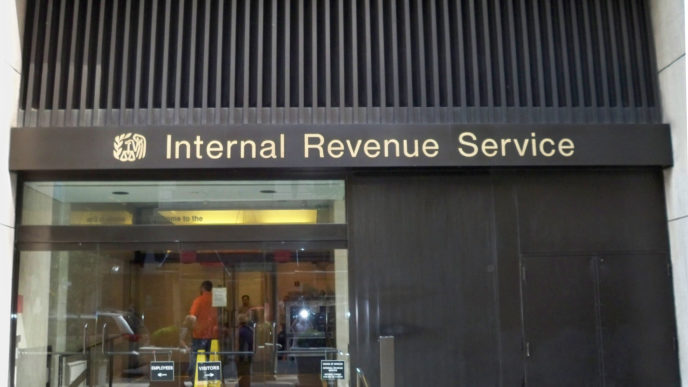
Has the IRS Been Illegally Deleting Records?

The Cause of Action Institute (CoA) filed a legal complaint against the Internal Revenue Service for illegally destroying records Tuesday, at the same time that IRS commissioner John Koskinen approaches an impeachment trial before Congress.

In the complaint, CoA alleges that the IRS and Koskinen refused to “capture and preserve” employees’ electronic communication dealing with official business, as the law requires.

Here’s a piece of the press release from CoA’s website:

“The IRS and Commissioner Koskinen have a legal obligation to preserve official work communications between employees. It appears that federal records are being deleted because the IRS, in a deal with its employee union, refuses to preserve certain types of electronic communications. This lawsuit seeks to ensure that IRS follows the law. No agreement with a union or any other party can supersede Americans right to know how the IRS makes decisions.”

Documents obtained by CoA Institute show that the IRS has a private agreement with its employee union stipulating that the agency will not save the instant message records of its employees. But the IRS cannot allow such an agreement to supersede its statutory obligations to preserve records. In addition, the IRS is violating the law by regularly deleting all employee text messages as a matter of convenience.

The IRS’s obligation to capture and preserve relevant records is drawn from the Federal Records Act (FRA). The complaint filed by CoA is intended to establish a court order requiring the IRS to create and implement guidelines for acquiring and keeping such information.

As reported by the Washington Post, commissioner Koskinen could become the first agency leader to be removed from office since 1876 when War Secretary William Belknap was facing corruption charges. The House Judiciary Committee is set to hold impeachment hearings next week. (For more from the author of “Has the IRS Been Illegally Deleting Records?” please click HERE)

Follow Joe Miller on Twitter HERE and Facebook HERE.

Infant Survives, Thrives After Being Born With No Skull on the Back of His Head

After finding out they were pregnant, Ben and Alyssa Reidhead thought they were going to the doctor to find out the sex of their baby . . .

At 23 weeks, doctors told them their son’s brain was growing outside of his skull . . .

However, when she delivered by C-section last week at Primary Children’s Hospital, the couple was shocked . . .

Their little boy Will has defied the odds.

“He’s not hooked up to anything. He’s breathing fine. He’s lifting his head. He’s moving around. He’s pretty much acting like a completely normal baby,” Alyssa Reidhead said. (Read more from “Infant Survives, Thrives After Being Born With No Skull on the Back of His Head” HERE)

Follow Joe Miller on Twitter HERE and Facebook HERE.
Ask This 13-Year-Old Girl If Transgender Bathrooms Pose a Threat

In the midst of outcries from the transgender community that women don’t face threats in public bathrooms, police in England are looking for a man who allegedly took photos of a 13-year-old girl while she used the bathroom at a McDonalds in Berkshire.

According to police reports, while using the bathroom in an individual stall, the girl heard a click over her head, looked up and saw someone hovering over the cubicle wall. Police say the girl was very upset by the incident, and her family is concerned about what’s going to happen to the photographs and where they might be published.

Police have released photos of the suspect in hopes that someone will be able to identify him. They have asked anyone who recognizes the man to contact them immediately.

This incident has occurred at the same time that transgender activists in America are saying there are no threats to women should transgendered women (i.e., men) be allowed in their bathrooms. The LGBT lobby has been releasing ads in North Carolina that voice opposition to the state’s law requiring people to use public restrooms that match their biological sex. HB2, as the law is known, was designed to help protect the privacy and security of women.

North Carolina has been boycotted by companies and celebrities, who have called the privacy and security law discriminatory against transgender people. Most recently, Elton John wrote an article for The Hill, admonishing N.C. Governor Pat McCrory for being insensitive to transgender people.

John writes:

Forcing transgender people to use the bathroom of a gender with which they don’t identify isn’t just inconvenient or impractical. For many, especially young students still grappling with their transition, it can be traumatic, and at worse, un safe. The failure of McCrory and other lawmakers to see this is a failure of compassion, a failure to recognize the difficult and frequently unwelcoming world transgender people must navigate every day, stigmatized by the fear and ignorance of others.

John says McCrory and others who oppose letting people use the bathroom according to their perceived, not actual, gender “need a lesson in compassion.” If only they could get to know transgender people on a personal level, they would understand, John says.

Those who support privacy and security laws “need to recognize the existence of trans people,” John writes, “and they need to acknowledge that all people have a fundamental desire — and a fundamental right — to be treated fairly.”

Here’s the thing. Does the 13-year-old girl in England have a fundamental right to privacy? Do all the girls in America who don’t want to shower with boys and men or have them in their bathrooms desire the fundamental right to privacy and security as well? Or do only the desires of mentally ill people, who suffer from a dissonance between their mental state and their physical reality, take precedence over 99.7 percent of the population who aren’t confused about their genitalia?

John and others say laws that require people to use public bathrooms that match their biological sex are somehow unfair. How? Everyone has a bathroom to use that correlates with their biology — the parts that are relevant when using a bathroom. There is no such thing as a third sex. Despite this fact, HB2 takes the compassionate step to accommodate those who are confused about their gender, allowing public agencies to create a third bathroom or shower for this tiny minority.

Clearly, the ones who are compassionate in this scenario are those who are supporting laws like HB2 — laws that won’t make it easier for perverts like the one in England to have free rein in women’s restrooms. Yes, this kind of thing obviously happens even with bathrooms being separated by sex, but what will happen if we throw open the doors to these perverts who make up a larger percentage of the population than transgender people?

Media outlets like the Charlotte Observer have tried to make the case that there have been no statistics of sexual predators benefiting from transgender bathroom policies, but this is nonsensical because the practice hasn’t been in effect for very long. It also flies in the face of common sense that there are predators out there — predators like the one in England — who do prey on women and young girls. Why do we want to put them at greater risk?

The law in Charlotte that forced the North Carolina General Assembly to step in and enact HB2 forced all organizations — public and private — to open their bathrooms to men. A man doesn’t have to dress like a woman or even have surgery to make him externally a woman; all he has to do is “identify as a woman” to use the showers, locker rooms, and restrooms reserved for women.

HB2 says that if someone has had an actual sex change and it’s recorded on their birth certificate, then they can use the bathroom that matches that sex. The original Charlotte law just threw open the bathrooms to everyone, whether they’ve actually had a change or not.

In addition, HB2 does not impose its will on private entities, allowing them to decide for themselves what they want to do with their own bathrooms. Those who oppose the North Carolina law want to dictate to private citizens what they can and cannot do with their bathrooms, threatening lawsuits if they don’t comply.

Elton John and other celebrities are presenting themselves as the truly “compassionate” ones, but this is hardly the case. Compassion extends to private entities that have the right to exercise freedom of choice — a choice people like John want to take away. Compassion also extends to women and girls who don’t want their privacy violated or boundaries removed so predators can take advantage of transgender policies.

I would also like to point out that when it comes to transgender people themselves, the compassionate approach is to refuse to accommodate their body dysphoria and delusions. The help they really need is psychological, not legal or political.

If you want to show transgender people compassion, stand by their side as they work through the difficult journey of treating hormone and neuro-chemical dysfunctions as well as psychological disorders that lead to a crisis of identity. Don’t put other people at risk, infringe on their freedoms, or violate the privacy of young girls and women just to advance a political agenda that really does nothing to help gender-confused people in the long run. That’s the opposite of compassion. That’s cruel. (For more from the author of “Ask This 13-Year-Old Girl If Transgender Bathrooms Pose a Threat” please click HERE)

Follow Joe Miller on Twitter HERE and Facebook HERE.