
What Pokémon Go Teaches Us About Job Creation
The zombie apocalypse has arrived. Just look around. Our streets and neighborhoods appear as though we are living a scene from the Walking Dead. People everywhere are aimlessly limbering around without any clear destination.
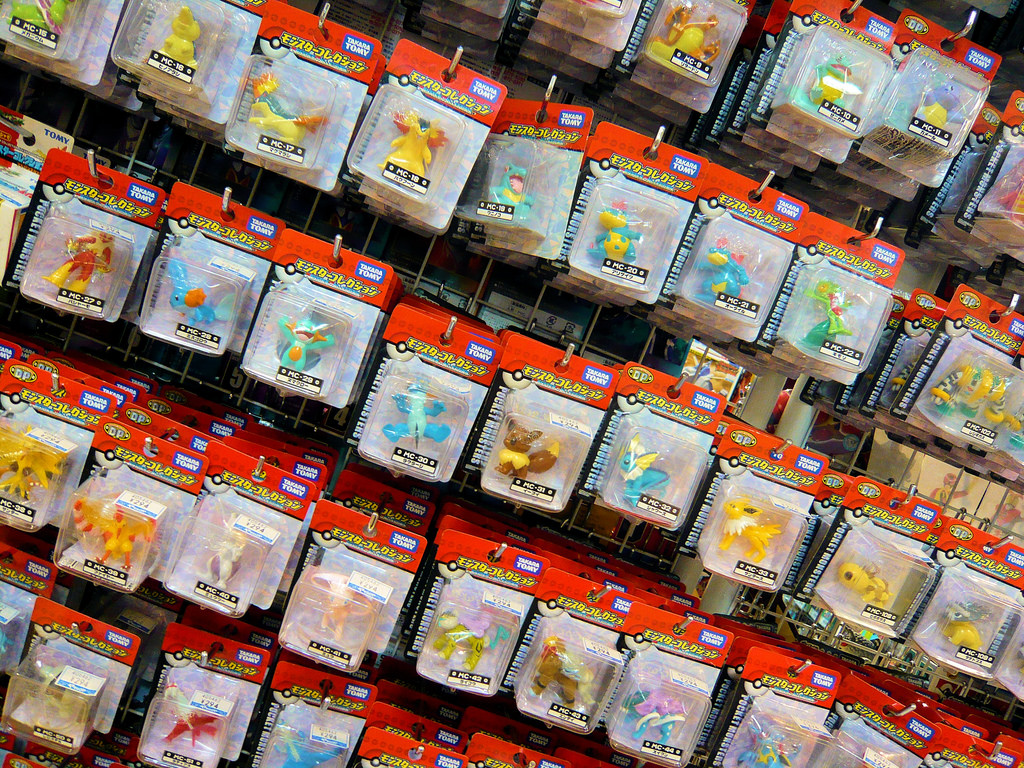
But fear not. Those people are not zombies—just addicted to a new Nintendo game called Pokémon Go. It’s a game that is played only your smartphone by downloading an app. After you’ve downloaded the app, you’ll find yourself on an endless quest to hunt virtual creatures that appear in your actual surroundings.
Having been blessed with a serious case of FOMO (Fear of Missing Out), I recently decided to see what everyone was raving about. I downloaded the app on my iPhone, and before long I was in a zombie-like trance chasing after cartoon creatures that leapt, hopped and flew down sidewalks, alleys and parks. In short order, I had bagged a Squirtle.
I may be a new devotee of the game, but I’m not alone – the game has more than 65 million users worldwide.
While the game’s success has captured the news, perhaps the more fascinating aspect of this new game is the impact it’s having on small businesses.
Unlike other Nintendo games, this game requires a lot of walking. You have to walk to catch Pokémon, but told you also want to hatch eggs (some of which require 10 kilometers – 6 miles – of walking to incubate) and collect Pokéballs (used to catch Pokémon), which are found at various locations. It’s these Pokéstops that have caught the attention of small businesses.
As Fortune writes, “Many shops are attracting customers by advertising themselves as ‘Pokestops,’ a place where gamers can grab new Pokémon balls and increase their level of power within the app.”
The in-app purchases are also catnip for business. “Lures,” which can be purchased within the game, allow a business to set themselves up as a stop that attracts Pokémon to its location. Take for example the now-viral story of Tom Blaze, founder of L’Inizio Pizza Bar in New York City, who purchased a “lure” from Pokémon Go for $10. The result has been a swell of new customers. As Blaze says, “[business has been] unbelievable.” Since he began to use Pokémon Go to attract customers, his bar has seen more than a 75 percent increase in business over the past few days.
Pokémon Go is perhaps the most positive news resonating from the small business community in a while. Small businesses are the pillar of the U.S. economy. The 28 million small businesses in America make up more than 50 percent of all sales, they employ 55 percent of workers; and have created 66 percent of all new jobs since the 1970s.
The birth of small businesses in America is on the rise after a slump during the Great Recession. Yet, as the engine of the U.S. economy, they are not growing fast enough. One culprit for this malaise is the Obama administration’s desire to make doing business harder than ever. Consider how Obamacare unleashed a myriad of unaffordable healthcare mandates—on top of 674 federal regulations that businesses must comply with today.
According to the Competitive Enterprise Institute, it costs small businesses (50 employees or less), $11,724 to comply with federal regulations – per employee. Of that amount, 30 percent of that costs results from environmental regulations.
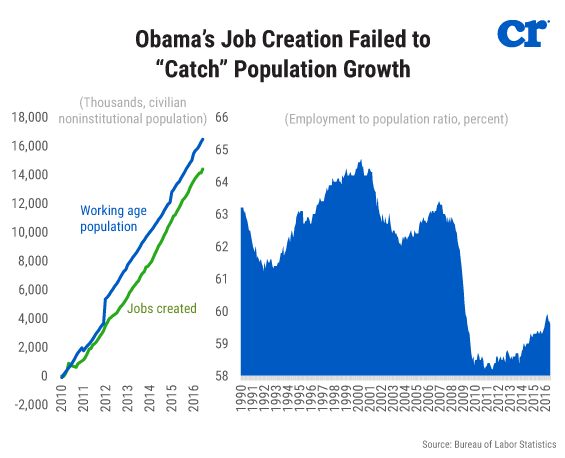
Since small businesses are the most prolific job creator, their growth is instrumental in a healthy economy. But while Obama’s small business numbers appear on the rise, they are falling well behind a level needed to create jobs that keeps up with the growth in the population.
The population has grown at a far quicker pace, particularly for those entering the workforce. As you can see from the chart, the job market has left millions without the opportunity to find work since Obama has been in office. Those figures are reflected in the employment to population ratio, which today is at its lowest levels compared to recent history.
It’s telling that the most recent surge in small business growth hasn’t come from the government, but is instead the result of innovation and creativity in the private sector. It’s also a sad commentary on the state of small business in America that we’re excited about the recent economic prospects that comes from virtual creatures named Pidgeotto, Diglett and Poliwag. Here’s hoping the next president powers up in the name of small business. (For more from the author of “What Pokémon Go Teaches Us About Job Creation” please click HERE)
Follow Joe Miller on Twitter HERE and Facebook HERE.

