President Obama Continues to Divide Americans

It is no secret that America is deeply divided today, due in no small part to the words and actions of our president. Unfortunately, rather than drawing us together as we approach the 2016 elections, President Obama continues to divide us.

First, there was his appeal to African Americans, insinuating that if they didn’t get out and vote (meaning for Hillary Clinton) it would be a personal insult to him and a blemish on his legacy.

Next, there was his claim that the only reason Americans would not vote for Hillary was that they were sexist, not wanting a woman to lead the country, a woman who, in his eyes, was infinitely more qualified to be president than Donald Trump.

As reported by the UK’s Independent, “During an impassioned speech to the Congressional Black Caucus Foundation, an organisation that carries out research on issues affecting African-Americans, Mr Obama said it would be an ‘insult to his legacy’ if the black community voted for Donald Trump — or refrained from voting at all — in the upcoming election.”

The president said, “I will consider it a personal insult — an insult to my legacy — if this community lets down its guard and fails to activate itself in this election.

“You want to give me a good sendoff? Go vote.”

So, black Americans who choose not to vote because they cannot, in good conscience, back either candidate, or worse still, black Americans who have had it with Democratic policies and feel that Trump is their better choice, are personally insulting the president.

And what about the many black Americans who are disillusioned with the president himself? Perhaps they’re not thinking about a sendoff. Perhaps they’re thinking about change. And perhaps the insult is in the president’s comments, as if this is all about race, not policy, as if Americans need to vote based on skin color rather than character and policy. How utterly divisive.

Viewed in that light, President Obama’s comments are borderline racist (or even blatantly racist).

Shades of Hillary Clinton’s “deplorable” category!

As for dividing on gender lines, Breitbart reports that, “President Barack Obama suggested at a New York fundraiser that American society is sexist, which is why Hillary Clinton is struggling to beat Donald Trump in the polls.”

He said, “There’s a reason why we haven’t had a woman president — that we as a society still grapple with what it means to see powerful women. And it still troubles us in a lot of ways, unfairly, and that expresses itself in all sorts of ways.”

And in the president’s judgment, while the election looks to be close, it ought not be, since Hillary is so much more qualified than Trump: “She’s been in the room where it happens, repeatedly. And her judgment has been unerring, and she has been disciplined, and she has been extraordinarily effective in every job that she’s had.”

Once again, this is a divisive tactic and a slam on the American people. Of course there are abundant reasons not to vote for Hillary Clinton.

Of course there are abundant reasons to distrust her integrity, to question her honesty, to lack confidence in her ability to lead — and none of this has anything to do with her being a woman. It has to do with who she is (or is perceived to be) as a politician, as a leader, as a human being.

We could just as easily argue that the reason people hate Trump is because he’s a man. After all, look at all the deals he has made! Why would anyone vote against him unless they were sexist? That would be an equally ridiculous argument, yet it is an argument (in reverse) that the president is making.

And does President Obama really believe that if we had the equivalent of a Margaret Thatcher running against the equivalent of a Jimmy Carter that Americans would not overwhelmingly vote for Thatcher just as they voted for Reagan?

The reality is that many Americans of all colors and sexes have strong reasons not to vote for Hillary Clinton (or even to sit out the presidential election entirely). It is a terrible shame that our president chooses to make this a matter of race and sex.

He is, sadly, proving to be divisive to the end. (For more from the author of “President Obama Continues to Divide Americans” please click HERE)

Watch a recent interview with the author below:

Follow Joe Miller on Twitter HERE and Facebook HERE.
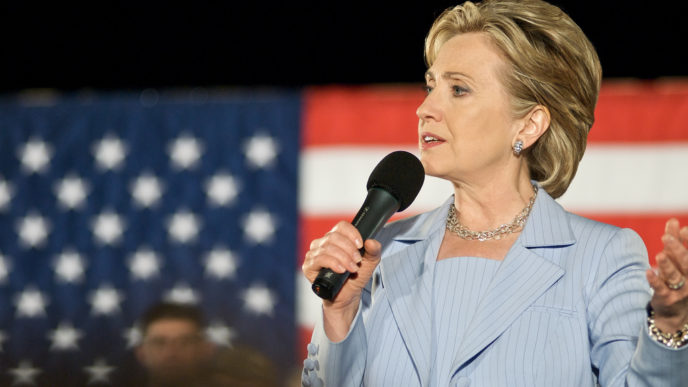
Pandering in a Pantsuit: Clinton Promises Socialism to Millennials

Hillary Clinton doubled down on socialism and the pandering to special snowflakes in her speech at Temple University in Philadelphia, Monday.

Speaking to an audience mostly comprised of millennials, the Democratic presidential candidate lauded their generation as “the most inclusive, progressive, and entrepreneurial generation we’ve ever seen.”

As such, she blasted her Republican opponent Donald Trump as a racist hate-monger and circus-like act. Taking a shot at Trump’s recent statement on birtherism, Clinton said, “This election isn’t a reality TV show. It shouldn’t be about birth certificates, or name-calling, or stunts to get on the cable news.”

“The next 50 days will shape the next 50 years,” she reminded the audience. “We can’t get distracted when the media or my opponent turns this election into a circus.”

Clinton then proposed a litany of socialist policies to uproarious applause from her college-age audience.

Among her promises were connecting every household to broadband internet by 2020, investing in half a billion solar panels and “green jobs,” and, of course, she touted a plan she developed with Bernie Sanders to make “public college tuition free for working families and debt-free for everyone.”

The Democratic nominee also pledged to institute a “living wage”; ensure that “affordable quality healthcare” was a right for every man, woman, and child in America; guarantee equal pay for women; and also to secure paid leave for parents.

Clinton noted that though she does not share her former rival Sanders’ appeal to millennial voters, she — in her telling — remains a vastly superior candidate to Donald Trump.

“I do spend a lot of time on the details of policy,” she said, “like the precise rate of your student loan right down to the decimal!”

Clinton accused Trump of promoting hate speech, and of inciting “hatred and violence unlike anything we have seen before.”

“[Trump] led the birther movement to delegitimize our first black president … we have to stand up to this hate, we cannot let it go on,” she said to loud cheers and applause from the safe-space sensitive students.

Clinton concluded her remarks by galvanizing her young audience to “register everyone you know” to vote. According to the Democratic candidate, millennials have a responsibility to “reject prejudice and paranoia” in this election. (For more from the author of “Pandering in a Pantsuit: Clinton Promises Socialism to Millennials” please click HERE)

Follow Joe Miller on Twitter HERE and Facebook HERE.

Despite Weekend Terror Attacks, Obama Wants to Increase Syrian Refugee Resettlement

With the nation reeling from three terrorist attacks this weekend in Minnesota, New York, and New Jersey, President Obama will host a “Leaders’ Summit on Refugees” Tuesday at the United Nations. In June, the White House gave a preview of what Obama plans to ask for:

“[A]t least a 30 percent increase in financing for global appeals and international humanitarian organizations; to double the global number of resettled refugees and those afforded other legal channels of admission; and to increase the number of refugees worldwide in school by one million, and the number of refugees granted the legal right to work by one million.”

At the refugee summit on Monday — the U.N. General Assembly’s first-ever summit on “Addressing Large Movements of Refugees and Migrants” — the Associated Press reports, “[A]t least 45 countries are expected to make pledges that are in line with U.S. goals of increasing humanitarian aid by $3 billion, doubling resettlement and increasing access to education for 1 million youngsters and access to employment for another million of the displaced.”

Just last week, the Obama administration proposed to increase the number of refugees — particularly from Syria — into the United States next fiscal year, CNSNews.com reported.

The administration is set to surpass its target number for Syrian refugees this year by about 3,000, for a total of about 13,000 refugees from Syria. More than 98 percent of the Syrian refugees let into the United States this year are Sunni Muslim, while the massively underrepresented Christian community makes up just 0.4 percent. (For more from the author of “Despite Weekend Terror Attacks, Obama Wants to Increase Syrian Refugee Resettlement” please click HERE)

Follow Joe Miller on Twitter HERE and Facebook HERE.

The Tides Are Turning in North Carolina Bathroom Fight

The tides of North Carolina’s bathroom battle are starting to turn in favor Governor Pat McCrory’s administration, if statements made by various business owners and associations in the state are any indication.

According to a story at The Charlotte Observer, hospitality and tourism leaders, as well as the Charlotte Chamber, are urging state and local leaders to repeal the various ordinances and statutes that led to the current controversy in the first place.

“This is not about politics. This is not about who’s right and who’s wrong,” stated Vinay Patel, CEO of SREE Hotels and a board member of the North Carolina Restaurant & Lodging Association. “We’ve been caught in a crossfire. … We’re in a crisis, and this is the time to take action.”

While the effort from liberal organizations, individuals, and corporations from both within and outside the state has focused on pressuring McCrory and the Republican legislature to repeal HB2, what N.C. business leaders are calling for in this situation would actually be on the governor’s terms.

A McCrory spokesman said last week that state lawmakers would consider repealing HB2 if the Charlotte City Council — who originally started the controversy — would drop the ordinance that provoked it in the first place.

“For the last nine months, the governor has consistently said state legislation is only needed if the Charlotte ordinance remains in place,” spokesman Josh Ellis said last week, per the Observer.

“If the Charlotte City Council totally repeals the ordinance and then we can confirm there is support to repeal among the majority of state lawmakers … the governor will call a special session,” he continued. “It is the governor’s understanding that legislative leaders … agree with that assessment.”

The idea is, of course, not a popular one with the LGBT lobby, members of which still believe that McCrory should be the one to flinch — rather than have the state return to the status quo pre bellum.

“Repealing Charlotte’s ordinance would be a step backward for equality, inclusion and fairness,” stated Simone Bell, southern regional director for the gay rights group Lambda Legal.

“Nondiscrimination policies like Charlotte’s are good and necessary measures that protect the LGBT community,” Bell said in a statement, issued Sunday.

It’s unclear whether or not Monday’s meeting of the Charlotte City Council will yield any developments toward returning North Carolina to a state of pre-transgender bathroom normalcy, but McCrory’s example presents a big, fat, teachable moment for conservative lawmakers who end up besieged by cultural cronyism.

Several concerts, business projects and sports tournaments have been pulled from North Carolina, with concerns like “equality” frequently cited. However, the NBA’s supposed human rights concerns don’t stop it from playing in China; Paypal still does business in countries that execute gays; and the NCAA doesn’t believe in the traditional sexes, but still hasn’t merged its male and female leagues. But I digress.

Pat McCrory wasn’t the first governor to fall victim to these tactics over a common-sense provision in state law. Just look at what happened in Arizona, Indiana, and Georgia when those states tried to pass basic religious freedom laws. The LGBT lobby and their big business cronies swarmed the states in an Alinsky-esque effort to get the laws repealed. And in each situation, it worked.

Jan Brewer (R) of Arizona and Nathan Deal of Georgia (R) both vetoed their respective laws, while Indiana’s governor-turned-Trump-running-mate Mike Pence eventually signed into law a “compromise” that has drawn repeated criticism and serious concern from First Amendment advocates.

McCrory and GOP legislators in Raleigh have broken this mold so far, it would seem. Despite every single boycott effort imaginable, they’ve refused to cave to the Left’s public pressure and misinformation campaign. Now voices outside the administration — the very kind of people the cronies were trying to turn against the administration — are now calling for exactly the kind of situation the governor et al. wanted in the first place.

True to his state’s nickname from the start, McCrory has provided an example of what conservative leaders are capable of accomplishing if they’re simply willing to prudently expend political capital, ignore the demonizing, and stand up to those who prefer to push their agendas with lies and mafia-like tactics.

Now it’s on the Charlotte City Council to decide whether or not they want to call off what they started, or continue to blame Pat McCrory for taking a stand for safety and common sense in response. (For more from the author of “The Tides Are Turning in North Carolina Bathroom Fight” please click HERE)

Follow Joe Miller on Twitter HERE and Facebook HERE.

We Shouldn’t Give Away the Internet to Authoritarian Regimes

The essence of human freedom, of civilization itself, is cooperation: cooperation between friends and family; businesses and customers; entrepreneurs and employees.

History and human experience teach that humans cooperate best when they do so voluntarily, without government coercion. That is why I fully support the eventual transition of control over the internet from the Department of Commerce and to a private entity.

But I also worry that President Barack Obama is hastily rushing the current transfer of power to the Internet Corporation for Assigned Names and Numbers (ICANN), which could make it easier for the United Nations to take over the internet.

Today, the internet is so vast and ubiquitous that it is hard to imagine it existing in any other form. But for the first few decades of the internet’s existence, the basic roadmap for navigating the internet—the Internet Assigned Numbers Authority (IANA), the system that allocates and records the unique numerical addresses to computers—was managed by just one man on a voluntary basis.

In 1998, the Commerce Department began contracting with ICANN, a California nonprofit corporation, to take over management of IANA and the internet’s domain name system. For the most part, the Commerce Department has allowed ICANN to govern itself, but it has always maintained the authority to pull the nonprofit’s contract, which allowed the federal government to ensure that its contracting partner did not stray from its original mission.

But some governments do not like ICANN’s current hands-off approach to internet regulation. They want more control over how internet traffic is managed and what domain names are allowed to exist.

Just five years after ICANN was created, the United Nations established a Working Group on Internet Governance “to investigate and make proposals for action … on the governance of Internet.” And in 2012 at the World Conference on International Telecommunications, several authoritarian regimes—including Russia, China, and Saudi Arabia—called for the “sovereign right” of governments to “establish and implement public policy, including international policy, on matters of Internet governance.”

The United States firmly resisted these calls for more international control over the internet until 2013 when Edward Snowden leaked details of the National Security Agency’s surveillance program, which led the Obama administration to believe it could not maintain international support for the current system. So in March 2014, the Commerce Department announced it would be fully transferring the internet’s names and numbers functions to ICANN. In other words, the federal government would relinquish its leverage over ICANN by giving up its ability to renew—or threaten to cancel—ICANN’s contract.

Normally, I would applaud the loss of federal government leverage over a private entity. But in this case, there are some ominous signs that ICANN is not ready for the role it is about to take on.

ICANN is currently involved in litigation over alleged improper interference from governments who objected to how the organization awarded the .africa domain name. And the organization was recently admonished by an independent review panel for making decisions that were “cavalier” and “simply not credible” in relation to an application for domain names.

Also, it is unclear whether the new bylaws ICANN is set to adopt for the transition will be strong enough to prevent Russia and China from exerting more control over internet governance.

For these reasons, I am working closely with Sen. Ted Cruz, R-Texas, and other senators to delay the final transfer of internet governance to ICANN. There is no reason this transfer has to happen this year. There is no reason not to allow ICANN to work through its new governance structure on a trial basis for two years so we can make sure it will run smoothly and in a truly independent manner.

If we rush this transition and ICANN fails, it will be nearly impossible to get the internet back from the authoritarian regimes that are pushing for more control.

That is simply not a risk we can take. (For more from the author of “We Shouldn’t Give Away the Internet to Authoritarian Regimes” please click HERE)

Follow Joe Miller on Twitter HERE and Facebook HERE.
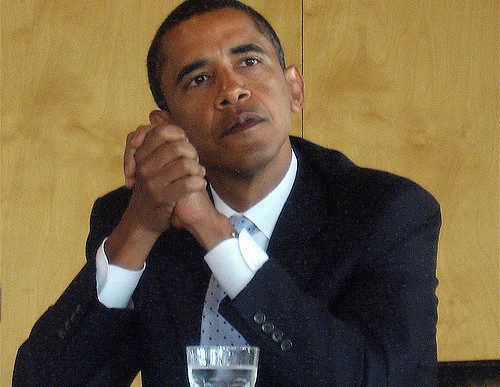
7 Weeks Before Election, Republicans Help Advance Another Obama Judicial Nominee

As President Barack Obama’s time in office nears its end, the Senate Judiciary Committee has advanced another one of his judicial nominees toward a lifetime post. She may not get to the finish line, though.

While the Senate has entered that part of the political calendar when confirmations traditionally halt, the Judiciary Committee on Thursday voted 13-7 to advance the nomination of U.S. District Judge Lucy Koh for the 9th Circuit Court of Appeals.

The cadence of judicial nominations customarily follows what’s known as the Thurmond-Leahy rule. The rule, a longstanding gentleman’s agreement among senators, prohibits confirmations of new judgeships in the months before a presidential election.

Even though Koh has advanced out of committee, it’s not clear the Californian will receive a confirmation vote on the Senate floor. Republicans could be sending the nomination out of committee halfheartedly, in an effort to appease the left while running out the clock before the Nov. 8 elections.

Still, Democrats seem intent on getting Koh confirmed regardless of the Thurmond rule.

Sen. Dianne Feinstein, D-Calif., has shepherded Koh’s nomination from the beginning. Before Thursday’s vote, the California senator heralded the judge as “a nominee with very strong, impeccable credentials, and a distinguished track record.”

But when a Republican was last in the White House, Democrats demanded observation of the Thurmond rule. Insisting the rule was apolitical, they pushed to apply it before both the 2004 and 2008 presidential elections.

“Not reflecting on any single judicial nominee or that person’s qualifications,” Sen. Dick Durbin, D-Ill., said in October of 2004, “it has been a practice and tradition in the Senate that in a presidential election year, we suspend the approval of federal judges after the nominating convention of a major party.”

This year’s Republican National Convention ended July 21.

Every Democrat on the Judiciary Committee voted to advance Koh’s nomination. Three Republicans joined them: Chairman Chuck Grassley of Iowa, Lindsey Graham of South Carolina, and Jeff Flake of Arizona.

While Koh’s nomination is out of committee, she is not guaranteed a confirmation vote on the floor before the next president enters the White House on Jan. 20.

Before voting for Koh, Grassley made clear his support was only to “move her nomination out of this committee” and was without “any commitment about a floor vote.”

“Passing out of committee is only a first step,” a GOP Senate aide said of Koh’s prospects for confirmation, telling The Daily Signal that “it remains to be seen what, if anything, will happen.”

Sen. Jeff Sessions, R-Ala., a committee member who opposed the nomination, predicted a floor vote isn’t on the horizon.

“I don’t think we will see any more [judicial] confirmations this fall, certainly not before recess,” Sessions told The Daily Signal. “That’s just the way it’s always been. We will let the election move forward, and then confirmations will move depending on the outcome.”

Koh, the first federal district judge of Korean descent, is the fourth of Obama’s nominees to the U.S. Court of Appeals still awaiting a confirmation vote in the Senate.

The committee advanced another nominee to the 7th Circuit Court of Appeals, Donald Schott, by a nearly identical 13-7 vote June 16. Like Koh, he has not been added to the Senate’s calendar for a vote.

If confirmed, Koh would be another feather in Obama’s already-bristling judicial cap. In almost eight years, Obama has transformed the federal judiciary, appointing two Supreme Court justices, 55 appeals court judges, and 268 district court judges.

But after a bruising confirmation hearing in the Judiciary Committee, it would be difficult for Koh to add her name to that list. The judge’s judicial philosophy opened her up to broadsides from Sen. Thom Tillis, R-N.C., as well as Grassley.

While attending Harvard Law School, Koh wrote in its Women’s Law Journal that “minority judges still need to maintain the disguise of ‘objectivity’” in order to be taken seriously in the legal world.

“Yes, [a minority judge] is going to identify with [minorities’] experiences,” Koh wrote in 1991, “but she can’t ‘admit’ this. We’ve got to get more clever and say, look, we’re just as neutral as any 60-year-old white man.”

Pushed by Grassley for an explanation of that statement, Koh, 48, said she no longer subscribes to those views and that her experience after law school taught her that judges “must be fair and impartial to all parties in all cases.”

“I made that statement as a first-year law student 26 years ago,” she said. “I completely disagree with it.”.

After graduating law school in 1993, Koh worked as a public prosecutor and in private practice before Obama appointed her in 2010 to the U.S. District Court for the Northern District of California. The Senate confirmed her unanimously for that post.

Koh’s track record could prove a stumbling block, though.

Sen. John Cornyn, R-Texas, opposed Koh’s nomination because of her decision in a 2015 case involving the Electronic Communications Privacy Act. She ruled that the government must get a warrant before collecting data generated by mobile devices.

Ahead of the committee’s vote, Cornyn criticized her decision as “an example of judicial activism” that contradicted established law.

“Judges should not be policymakers,” Cornyn said, “substituting their views for those of the elected representatives of the American people—that would be Congress—and the written Constitution.” (For more from the author of “7 Weeks Before Election, Republicans Help Advance Another Obama Judicial Nominee” please click HERE)

Follow Joe Miller on Twitter HERE and Facebook HERE.

3 Simple Ways to Win the Debate on Obamacare

Before March 2010, health care reform was already a divisive political issue. People chose sides for very personal reasons, which made it a difficult topic to discuss using an indoor voice.

Then Obamacare hit the scene. Promises made were not kept, and Americans are still facing the consequences—including higher premiums, fewer choices of doctors, and waiting periods.

With the first presidential debate and open enrollment season just around the corner, health care is poised to be a hot topic yet again.

Whether you’re talking to a neighbor about your increasing premiums or a co-worker about the latest health care debate on Capitol Hill, here are some tips for talking about Obamacare from a free-market, limited-government perspective that beats back socialism without beating down your opponent.

1. Find Common Ground

The common denominator on both sides of the argument is the desire for access to quality, affordable health care. Regardless of position, class, income, or location, health care should be cost-effective and accessible for everyone.

Furthermore, the part of the health care debate that nearly everyone agrees on is the need to address what happens to those with pre-existing conditions. For too long, those who suffered with a pre-existing condition were up against a nearly impossible task to find affordable, quality health care—those who needed it the most were often denied. A solution to this issue is something we can seek to solve together.

These well-known aspects of the health care debate create a common goal and make room for a discussion to work toward a solution.

2. Use Examples

There are numerous facts and statistics that prove Obamacare is not working as we were promised.

Just this year, average premium costs for an employment-based insurance family plan have skyrocketed to $15,500. In just a few years, those costs are projected to increase another 60 percent.

In March, on the sixth anniversary of the Affordable Care Act, The Daily Signal released this video, detailing six broken promises made by President Barack Obama regarding his health care plan.

Among other promises that were not kept, Americans were assured: you would be able to keep your current plan if you liked it; families making less than $250,000 would see no tax increase; Obamacare would not add to the deficit; premiums would decrease; and federal conscience laws would remain in place.

If you want to cite personal anecdotes, there are plenty. For example, I am a small business owner and therefore purchase my own health care. My premiums have tripled (while my health has remained the same) since the introduction of Obamacare. And I know my story isn’t unique.

Use stats and examples that prove Obamacare has achieved the opposite of what we were promised. Focus on the broken system, higher costs, longer wait times, and less choice.

3. Choose Your Words Carefully

The words and terms you use in this debate have the power to determine how your argument is received.

Even though the president embraced this legislation as his own, use the “president’s health care law” or the “Affordable Care Act” when talking to people who like it. Throwing “Obamacare” around will put liberals on the defensive, and then any chance for a reasonable conversation is harder to achieve.

While we may consider it unconstitutional to mandate that Americans buy a product whether or not they want it or need it, don’t focus on Obamacare being “unconstitutional.” That isn’t a winning argument for someone who is in favor of the health care law. Instead, focus on real-life implications like fewer choices, longer waits, and higher costs—all of which are happening and are the opposite of what we were promised. Proving injustice is easier, and fairness is a term they care a whole lot about.

Obamacare has not turned out to be a good deal for any of us, and this election season is an important time to discuss the law and its long-term implications. Civil discourse may be our best starting point to hold the president accountable and develop a health care system that truly works for all Americans. (For more from the author of “3 Simple Ways to Win the Debate on Obamacare” please click HERE)

Follow Joe Miller on Twitter HERE and Facebook HERE.

US Senator Introduces Bill to Ban Dismemberment Abortions Nationwide

Dismembering a child in the womb is not merely ghastly, it should be punished with potentially crippling financial damages and multiple years in prison, according to one of the nation’s foremost pro-life leaders.

Earlier this month, Sen. James Lankford, R-OK, introduced a nationwide ban on dismemberment abortions (S. 3306).

The proposed law would make it illegal for an abortionist to “knowingly dismembering a living unborn child and extracting such unborn child one piece at a time from the uterus through the use of clamps, grasping forceps, tongs, scissors or similar instruments that, through the convergence of two rigid levers, slice, crush or grasp a portion of the unborn child’s body in order to cut or rip it off.”

Any abortionist found guilty of performing the procedure, commonly known as dilation and evacuation, or dilation and extraction (D&E) abortion, would be subject to fines and up to two years in prison.

The mother, or her parents if she is a minor, could also file a lawsuit in civil court against the abortionist, opening the door to massive fiscal settlements. (Read more from “US Senator Introduces Bill to Ban Dismemberment Abortions Nationwide” HERE)

Follow Joe Miller on Twitter HERE and Facebook HERE.

Who Was the First ‘Birther’?

Donald Trump was wise not to take the advice of some of his staff and political allies by apologizing to Barack Obama for questioning his eligibility for the presidency and, yes, even whether he was born in the U.S.

Trump was hardly the first “birther.” Neither was I. Nor was my colleague Jerome Corsi. And neither was Hillary Clinton.

That honor belongs to one person and one person alone – Barack Obama.

Obama went to extreme lengths to conceal his past. And, indeed, if he was born in the U.S. and was eligible to serve as president, he certainly did his best to create the mystery that led to the question being asked.

Years earlier, he billed himself as having been born in Kenya. (Read more from “Who Was the First ‘Birther’?” HERE)

Follow Joe Miller on Twitter HERE and Facebook HERE.

$65 Billion Alaska LNG Project Crashes and Burns

Alaska’s proposed $45-$65 billion liquefied natural gas (LNG) project that was supposed to help the state refill its coffers from decades of dwindling crude oil production and more than two years of low oil prices, took several steps backward a few weeks ago when three of the project’s four partners, BP , ConocoPhillips COP -0.40%, and ExxonMobil XOM -1.23%, all North Slope producers, pulled out. The fourth project partner is state-owned Alaska Gasline Development Corp (AGDC) . . .

The project proposal was conceived in happier days for global oil and gas producers. When LNG prices in Asia breached $20 per million British thermal units (MMBtu) in February 2014, hopes soared for new LNG project proposals.

However, what a difference a few years can make. After reaching $115 per barrel in mid-2014, global oil prices have more than halved and are hovering in the mid-$40s range, with little hope of market equilibrium in sight. LNG prices, which largely track oil prices, have fared even worse.

LNG prices for November delivery in Asia, which accounts for around two-thirds of global LNG demand though that demand growth is slowing, are trading just over $5/MMBtu. (Read more from “$65 Billion Alaska LNG Project Crashes and Burns” HERE)

Follow Joe Miller on Twitter HERE and Facebook HERE.