
Who’s Going to Save the Church?

“I’ve got a word this group really needs to hear this morning. Do you mind if I give today’s message instead of you?” It was 6:00 in the morning. Men were already scooping up their scrambled eggs and biscuits and gravy for our church’s regular Tuesday men’s breakfast.

I wasn’t scheduled to share with the group this time, but at the previous Sunday’s church business meeting, one of our members had made an impassioned call for us all to work together to “save the church.” I was just a layman, but I knew his plea needed an answer. So I approached the morning’s designated leader and made this very unusual last-minute request to speak.

A Church in Crisis

There was nothing idle in my friend’s call to “save the church.” In the short space of just three or four years:

Based on high hopes and a steep growth curve we built a new $4 million dollar sanctuary, but that growth leveled out right when we moved into the new addition and giving expectations went unmet. Result: we were becoming strapped for funds.

Our construction coordinator embezzled funds from the church.

Our greatly loved youth pastor had to admit to disqualifying issues in his life and resigned his position.

He and his family had remained in the church, but one morning not long after that, an undiagnosed lung problem caught up with him and he stopped breathing and died. He was about 35 years old.

Speaking for the whole church, his resignation and especially his death hurt like absolutely crazy. But we went on:

We hired an extremely dynamic new youth pastor.

Then our senior pastor decided (wisely, in my view) that he had led the church as far as he could take it, so he resigned.

The church split into ugly factions, first over his severance package, then over the interim leadership team taking his place. Church meetings were tension-filled nightmares.

The worst meeting by far was also the shortest: our pastor both opened and closed it with the announcement that our youth pastor was under investigation by the sheriff’s department, and had been ordered not to have any contact with minors. He ended up in federal prison.

For me and many others, that last blow hurt the worst of all. I can’t begin to describe it. I don’t even really want to try. It was that bad.

Save the Church? Not Us!

So the church was reeling, no doubt about it. We were losing members, and having trouble making the budget, and a church across the river had just closed its doors after declaring bankruptcy, and people were wondering if we were heading the same direction, and — “We’ve got to pull together to save this church!”

That was what I knew I had to speak to that Tuesday morning. Save the church? No! Emphatically no! Not us! Jesus Christ saved the Church! He died on the cross for His Church. He rose again in victory for His Church. He sent His Holy Spirit to establish His Church as His body.

The same Spirit is still with us with the same life and power. Jesus’ Church was thoroughly saved once, and it remains thoroughly saved.

Our job is to follow our Lord faithfully in the light of His fully finished, perfectly complete salvation. The men there that morning already knew that, I’m sure — but it needed saying anyway.

As time went on and as we trusted Christ together, we saw Christ’s power among us. The church made it through, and it’s thriving beautifully today. The factions let go of their enmity. The surrounding community noticed our endurance through that trial, and recognized it as testimony to the powerful work of Jesus Christ.

I can’t tell you how deeply I miss the richness of the love and fellowship there, since moving to another state four years ago. My wife and I would go back in a minute if God called us.

We Don’t Need To Save the Church

There’s a message here for the wider Church in America, and indeed the whole Western world. We’re under unprecedented stress, to the point that it feels like we’re seriously in danger.

Massachusetts just passed regulations empowering the state to decide what counts as a true religious gathering and what doesn’t. If a church holds a meeting — a spaghetti supper, for example — that doesn’t fit the state’s religion standards, then it must accede to the state’s version of what counts as sexual morality — even inside the church building. Who’s going to save Massachusetts’ churches from that encroachment on their liberty?

Individuals across the country are being coerced into denying conscience to fulfill state-designated moral standards. Businesses have been told they must spend their own money to fund abortion. Who’s going to save them from those infringements?

Without discounting in any what they have lost, still it is true, and I’m sure they know it: Jesus has already saved His people.

God Didn’t Put the First Amendment In the Bible

I’m a firm believer in the U.S. Constitution. I am deeply grateful for the First Amendment. I’ve got friends serving as attorneys with the Alliance Defending Freedom, and I give my unreserved support to efforts like theirs to defend religious liberty. We need to stand firm on the ground our Founders established for us. Our legal and public information battles are indeed important. I fervently hope and pray we win every one of them.

And yet I think we may be in danger of seeing our Constitutional conflicts as if we were fighting to save the Church. That’s wrong. Neither the Church nor any individuals following Christ are ultimately at risk, for God has a perfectly good eternal plan for us.

What’s really at risk is a certain familiar way of living as Christians and as the Church. It’s a good way, a way of freedom — and because it’s good, it’s well worth fighting for — but it’s not the only good way.

God didn’t put the First Amendment in Holy Scripture, and (have we forgotten?) the Church grew for seventeen centuries without it. Christians through the ages and around the world stand as witness to the way oppressed and persecuted churches can shine bright in the darkness. We could lose every legal battle, and the Church would still have the resurrection life of Christ.

The Battle Is the Lord’s

So whatever battles we may be fighting, we must remember the hope on which we stand. Speaking to persecuted Christians, the book of Hebrews (verse 10:23) says, “Let us hold fast the confession of our hope without wavering, for he who promised is faithful.”

One way we know whether we’re holding on to hope is whether we can keep smiling no matter what the world may bring against the Church. Jesus told those who would be persecuted (Matthew 5:12), “Rejoice and be glad, for your reward is great in heaven, for so men persecuted the prophets who were before you.

Meanwhile we must remember that the battle is the Lord’s. As Paul tells us:

For though we live in the world we are not carrying on a worldly war, for the weapons of our warfare are not worldly but have divine power to destroy strongholds. We destroy arguments and every proud obstacle to the knowledge of God, and take every thought captive to obey Christ (2 Cor. 10:3-5).

Saving the Church isn’t our responsibility. Jesus Christ has already done it, once and for all time, even for times like ours. Let’s hold on that hope with confidence and with joy, whatever may come. (For more from the author of “Who’s Going to Save the Church?” please click HERE)

Follow Joe Miller on Twitter HERE and Facebook HERE.
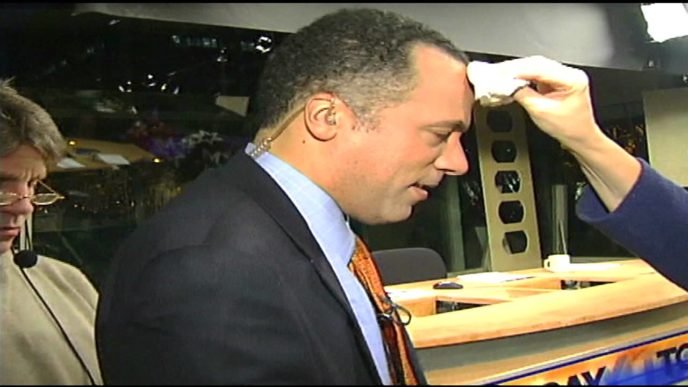
5 Times Lester Holt Came to Hillary’s Rescue in Debate Number 1

Monday night’s debate confirmed several presidential debate truisms. For example, substantive discussions of the issues tend to dissolve during these debates. That happened at Hofstra University.

Another tried and true fact of presidential debates is the mainstream media moderator will act as a praetorian guard for the Democrat. And yes, that too happened.

Debate moderator Lester Holt repeatedly challenged statements from Republican candidate Donald Trump while permitting Democratic candidate Hillary Clinton to slip away. The questions he asked, at times, were also completely irrelevant to the issues facing American citizens, and contributed to the lack of substance in the candidates’ policy stances.

Let’s go over just five quick points to demonstrate Holt’s biased performance.

1) The NBC News anchor interrupted Trump twice on a question on jobs.

The question was, “How are you going to bring back the industries that have left this country for cheap labor overseas?”

Trump suggested renegotiating trade deals like NAFTA and was explaining the different tax systems in the U.S. and Mexico when Holt interrupted to ask the question again that Trump had just answered. Perhaps his answer wasn’t satisfactory, but that’s a point the other candidate — not the moderator — should make.

2) Holt dragged Trump’s tax returns into a discussion on tax policy.

“Mr. Trump, we’re talking about the burden that Americans have to pay, yet you have not released your tax returns. And the reason nominees have released their returns for decades is so that voters will know if their potential president owes money to …who he owes it to and any business conflicts. Don’t Americans have a right to know if there are any conflicts of interest?”

Whether or not Donald Trump could or should release his tax returns has absolutely no bearing on the tax policies the next president will enact in office. And in the context of “American prosperity,” which was the nominal topic of this segment of the debate, it was a completely irrelevant point.

Consider that the previous question asked Hillary Clinton to spend two minutes defending raising taxes on the wealthy and Trump to spend the same amount of time defending his plan for tax cuts. Instead of digging deeper into these policy ideas and their effects on the pocketbooks of American families, we were treated to Hillary Clinton asserting Donald Trump may not be as rich as he says he is, and Trump reciting how much his real estate/buildings are worth.

3) Holt brought up the constitutionality of “stop and frisk”; he forgot to do so regarding the due process rights of Americans on the terror watch list.

In the segment on “America’s direction,” Lester Holt began a discussion on race in which both major party candidates agreed that some form of gun control was necessary to curb violence in America’s inner-cities.

As Clinton herself said: “We finally need to pass a prohibition on anyone who’s on the terrorist watch list from being able to buy a gun in our country.” If the moderator is going to challenge the candidates on some political points, this would’ve been a great time to point out the due process rights of American citizens that are threatened by banning individuals on an arbitrary government list from purchasing firearms.

Instead of a follow-up on that point, Lester Holt decided to follow up on Trump on his advocacy for a possible nationwide “stop and frisk” policy — noting that a judge in New York ruled that policy unconstitutional. Constitutional questions are crucial, but shouldn’t the moderator serve them to both sides?

4) Speaking of forgetting issues, where were the questions on the Clinton Foundation’s incestuous relationship to the Clinton State Department? What about Benghazi? Or Hillary’s email server?

When the topic turned to “America’s security,” Lester Holt asked each candidate to describe how they would protect America from cyber warfare by foreign agents like the those that are believed to have hacked the Democratic National Committee.

Unbelievably, Lester Holt did not ask Hillary Clinton about her mishandling of classified information on a private email server, despite the fact that experts have said Clinton’s private email server was likely hacked. Further, not a single question directed to Hillary Clinton regarding her multiple grievous lies.

5) Questions directed to Trump were about personality, not policy.

“Mr. Trump, for five years, you perpetuated a false claim that the nation’s first black president was not a natural-born citizen. You questioned his legitimacy. In the last couple of weeks, you acknowledged what most Americans have accepted for years: The president was born in the United States. Can you tell us what took you so long?”

“Mr. Trump, this year Secretary Clinton became the first woman nominated for president by a major party. Earlier this month, you said she doesn’t have, quote, “a presidential look.” She’s standing here right now. What did you mean by that?”

If the candidates want to have a back and forth over who is more sexist/racist/intolerant/bigoted/what-have-you, that’s the candidates’ prerogative. Should the moderator of a presidential debate, whose job is to make these two individuals running for president give the American people an idea of what they will do in office, do their work for them? (For more from the author of “5 Times Lester Holt Came to Hillary’s Rescue in Debate Number 1” please click HERE)

Follow Joe Miller on Twitter HERE and Facebook HERE.
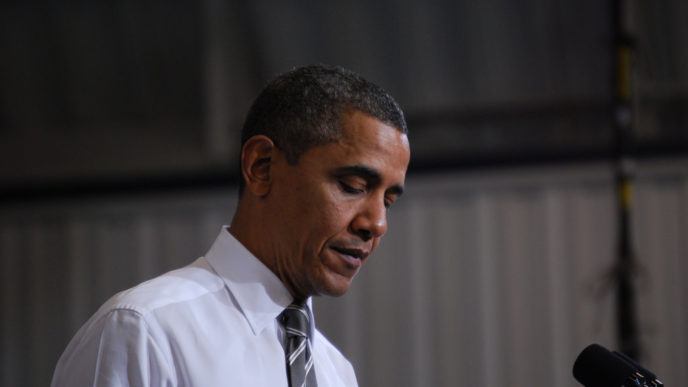
Obama Could Be First Modern President to Serve Two Full Terms and Have Only One Veto Overridden

President Barack Obama could likely face his first veto override of his presidency this week—which will probably also be the last given his pending exit in January 2017.

The Justice Against Sponsors of Terrorism Act, generally referred to as the 9/11 bill, will return to the Senate Wednesday and to the House as early as Thursday for an override vote before lawmakers take another pre-election recess.

It was the rare bipartisan piece of legislation that met a presidential veto last Friday. The bill grants families of 9/11 victims the right to sue Saudi Arabia for any role the monarchy might have played in the 2001 terrorist attacks.

The last president to have only one veto overridden was President George H.W. Bush, who served one term from 1989 through 1993. For Obama’s two immediate predecessors, Congress mustered up the needed two-thirds majority twice to override Bill Clinton’s vetoes and four times to override George W. Bush’s vetoes.

Obama could become the first president to serve two full terms with just a single veto overridden, according to numbers tracked by the U.S. Senate, although some two-term presidents had zero vetoes overriden.

Vetoes themselves are tied heavily to political circumstances, said Sarah Binder, a political science professor at George Washington University.

“The pattern for vetoes and veto overrides is a pattern less about the president and his leadership ability than it is tied to the congressional partisanship of the time,” Binder told The Daily Signal in a phone interview. “Vetoes are unusual when you have unified party control, which the president had for his first two years, and the Democrats controlled the Senate for the first six years. So, any bills that passed the House, such as a repeal of Obamacare, were stopped in the Senate. Split control makes it less likely the president will cast a veto.”

Up to this point, Obama was the first president since Lyndon B. Johnson to have zero vetoes overridden. Johnson’s predecessor, John F. Kennedy, also had no vetoes overridden.

The first nine U.S. presidents didn’t have a single veto overridden. Vetoes were somewhat less common in in the early days, as Thomas Jefferson issued zero during his two first terms. James Madison issued seven vetoes and James Monroe issued one veto.

Andrew Jackson was the first to regularly veto bills, issuing 12 over his two terms in office from 1829 to 1837, and Congress didn’t overturn any.

Other presidents to have zero vetoes overturned were Warren Harding, who served from 1821 until his death in 1823; William McKinley, elected in 1896 and assassinated during the first year of his second term; Abraham Lincoln, elected in 1865, also murdered in the first year of his second term; and Lincoln’s predecessor James Buchanan, who served a single term. Other one-term presidents, James Polk and Martin Van Buren, also had zero veto overrides.

White House press secretary Josh Earnest said Obama is very sympathetic to the 9/11 families. But, he said such legislation could expose Americans to lawsuits around the world in international courts.

“Carving out exceptions to sovereign immunity puts the United States at greater risk than any other country in the world by virtue of the fact that we are more engaged around the globe than any other country in the world,” Earnest said Tuesday during the White House press briefing. “That’s the concern the president has. … It’s the president’s responsibility to consider the broader impact that this bill, as it’s currently written, would have on our national security and standing around the world and on our diplomats and service members who represent America around the world.”

Sens. John Cornyn, R-Texas, and Charles Schumer, D-N.Y., co-sponsored the legislation. Cornyn said he looked forward to overriding the veto to “send a clear message that we will not tolerate those who finance terrorism in the United States.”

“It’s disappointing the president chose to veto legislation unanimously passed by Congress and overwhelmingly supported by the American people,” Cornyn said in a statement. “Even more disappointing is the president’s refusal to listen to the families of the victims taken from us on Sept. 11, who should have the chance to hold those behind the deadliest terrorist attack in American history accountable.”

The scarce number of veto overrides is less astounding when considering the comparatively few vetoes. Obama, and his predecessor George W. Bush, each cast a dozen vetoes, and both maintained at least one house of Congress for the first six years of their presidency. In contrast, the previous two-term presidents, Clinton and Ronald Reagan, had 37 vetoes and had 78 vetoes respectively. Clinton had a Democratic Congress for his first two years. Reagan, who had a Republican Senate for his first six years, had nine of his vetoes overridden by Congress.

Even the last two single-termers used the veto pen far more often. George H.W. Bush vetoed 44 bills from a Democratic Congress. Jimmy Carter actually vetoed 31 bills in a Congress controlled by his own party, only two of which were overridden.

Further, the successive presidencies of Franklin Roosevelt, Harry Truman, and Dwight Eisenhower produced more than 1,000 vetoes. Roosevelt, elected to four terms and serving the entirety of three, vetoed 635 bills, and Congress overturned nine. Truman vetoed 250 bills and Congress reversed 12. Eisenhower vetoed 181 bills and Congress only vetoed two.

It isn’t entirely surprising that a veto override would come at this juncture in Obama’s term, Binder added.

“Normally, enough Democrats would stick with the president to prevent a two-thirds majority, but in this case, they might not want to be on the unpopular side of a vote,” Binder said. “When the issue is framed as either standing with 9/11 families or standing with the Obama administration, Democratic members will be hard-pressed to stand with the Obama administration.”

Other presidents with just one veto overridden are John Tyler, who served from 1841 to 1845; Rutherford B. Hayes, who served a single term from 1877 to 1881; Chester A. Arthur, who served from 1881 through 1885; Benjamin Harrison, who served a single term from 1889 to 1893; Theodore Roosevelt, who fulfilled one president’s term and won another in his own right serving from 1901 through 1909; William Howard Taft, who served one term from 1909 to 1913; and the first President Bush.

Having just one discarded veto likely doesn’t speak to Obama’s legacy, said Tim Hagle, a political science professor at the University of Iowa.

“The difference under Obama, and it really started under Bush, is we’ve seen minorities in the Senate blocking a lot of legislation,” Hagle told The Daily Signal in a phone interview. “It’s a nice trick to accuse a do-nothing Congress when nothing gets done, but it’s not a great sign of Obama’s leadership.”

In the final weeks of a national election, the veto override comes at an interesting time, said Gary Rose, the chairman of the political science department at Sacred Heart University, noting Obama’s approval rating is higher than it has been in years.

“It’s unusual for a president to have his veto overridden when his approval rating is actually strong, but this demonstrates that members of Congress are looking ahead to their own re-election and are ready to move on and distance themselves from the president,” Rose said in a phone interview. (For more from the author of “Obama Could Be First Modern President to Serve Two Full Terms and Have Only One Veto Overridden” please click HERE)

Follow Joe Miller on Twitter HERE and Facebook HERE.

Cruz, Lee Step up Claims That Justice Department Isn’t Doing Enough to Protect Churches

Sens. Ted Cruz of Texas and Mike Lee of Utah are pressing their case that the Department of Justice favors abortion clinics over churches, demanding that the law enforcement agency take steps to ensure “the rights of all American citizens”—not just some—are protected.

In a letter sent Tuesday, obtained first by The Daily Signal, Cruz and Lee criticize the Justice Department’s enforcement of a 1994 law. The intent of the law was to prohibit the use or threat of force and physical obstruction outside abortion clinics, guaranteeing safe access to such facilities.

Before passing the legislation, called the Freedom of Access to Clinic Entrances (FACE) Act, lawmakers extended the protections to apply to places of worship.

In their letter, addressed to Attorney General Loretta Lynch, Cruz and Lee accuse the Justice Department of a double standard in enforcing the law. They argue that while the agency has pursued more than two dozen cases involving actions to safeguard access to abortion clinics, the agency hasn’t pursued a single case involving churches and other places of worship.

This is the second letter Cruz and Lee have sent to the Justice Department concerning the FACE Act. They sent the first March 16.

The Justice Department responded to Cruz and Lee in June, arguing the reason it has not used the FACE Act to protect religious liberty is because other statutes that are “broader in scope” already enable them to do so.

The FACE Act allows people to protest peacefully, and exercise their First Amendment rights outside abortion clinics and places of worship. However, if those demonstrations turn violent, they could face civil or criminal charges.

Since January 2009, the Justice Department has listed 25 cases it pursued under the FACE Act that involved access to women’s health clinics, some of which performed abortions.

In the response to Cruz and Lee, Assistant Attorney General Peter Kadzik wrote:

With respect to the protection of religious freedom, the department has prosecuted dozens of cases of violence directed at houses of worship and interference with the free exercise of religion under 18 U.S.C. 247, a statute that is broader in scope than the FACE Act.

According to the Justice Department, that statute “prohibits anyone from intentionally defacing, damaging or destroying any religious real property because of the race, color, or ethnic characteristics of any individual associated with the property.”

As a result, the Justice Department “has not filed any criminal or civil actions under the FACE Act in this enforcement area,” Kadzik said, citing several cases involving religious freedom that the agency pursued.

In one case, Jedediah Stout “pleaded guilty to the arson of a mosque and two attempted arsons of a Planned Parenthood clinic in Joplin, Missouri,” Kadzik wrote.

Another was the well-publicized mass murder June 17, 2015, at Emanuel African Methodist Episcopal Church in Charleston, South Carolina. Dylann Roof, now 22, was charged with “killing and attempting to kill African-American parishioners … because of their race and in order to interfere with their exercise of their religion.”

But Cruz and Lee weren’t satisfied with the Justice Department’s argument. They responded with the detailed letter to Lynch, dated Tuesday, arguing that the FACE Act “clearly offers broader protections than 247, which greatly undermines the DOJ’s rationale for not using FACE.”

“But even this somewhat misses the point,” the Republican senators add. “FACE is the law. It is not the DOJ’s prerogative to decide which laws merit enforcement and which ones merit no enforcement at all.”

By way of example, Cruz and Lee accuse the Justice Department of taking a pass on an instance in Los Angeles involving accusations involving a massive protest against Mormons for the church’s support of the ballot question known as Proposition 8. Voters eventually approved the measure, which overturned a California Supreme Court decision legalizing same-sex marriage by upholding the definition of marriage as the union of one man and one woman.

A news clip, Cruz and Lee write, “shows ‘more than a thousand’ angry protesters chanting hateful slogans and blocking the entrance of the Los Angeles Temple of the Church of Jesus Christ of Latter-day Saints.”

“Demonstrations like this,” they add, “were part of a larger campaign of intimidation and harassment carried out against the Mormon Church for its support of California’s Proposition 8.”

Cruz and Lee write:

This campaign of hate was covered extensively by the press; for example, stories ran in major newspapers like the Los Angeles Times, and on national news networks like CNN and CBS. The DOJ’s explanation for its inaction on this issue, that the matter ‘had not previously been brought to our attention,’ simply lacks credibility.

“In short, it would appear the DOJ’s process for tracking violations of religious liberty is either woefully inadequate or purposefully biased.”

In their letter, the senators ask the Justice Department to answer a series of follow-up questions and “respond to several inquiries made in our March letter that have gone unanswered.”

“The information we ask for is necessary to carry out our duty to conduct oversight of the DOJ, and to determine whether the DOJ is doing everything it can to protect the rights of all American citizens,” they write. (For more from the author of “Cruz, Lee Step up Claims That Justice Department Isn’t Doing Enough to Protect Churches” please click HERE)

Follow Joe Miller on Twitter HERE and Facebook HERE.

The State of Tax Reform in 2016

Tax reform remains a central issue in Washington because of its overwhelming necessity.

Tax reform is badly needed to revive the slow-growing economy and increase job creation and wages for American families. The current tax system is a large weight holding the economy back from growing as strongly as it could, thereby suppressing opportunity for Americans at all income levels.

To free the economy to grow larger, tax reform must lower marginal tax rates for families, businesses, investors, and entrepreneurs. Lower rates would increase their incentives for working, saving, investing, and taking risks.

These activities are the basic elements of economic growth. When more of them occur, the economy grows faster.

The right kind of tax reform also would need to eliminate the multiple layers of tax on saving and investment. The current system applies these multiple layers, raising the marginal tax rate on these economically crucial activities and consequently stunting job creation and wage growth.

Lastly, tax reform should make sure the tax code does not pick winners and losers in the marketplace.

The business side of the tax code is most badly in need of repair. The U.S. has the highest corporate income tax rate in the developed world, as defined by the countries in the Organization for Economic Cooperation and Development.

The U.S. is also one of only a few countries that taxes its businesses on their foreign income. Under the tax code’s cumbersome system of depreciation, businesses must deduct the cost of capital over many years.

Tax reform would need to abandon worldwide taxation and move to a territorial system of taxing only businesses on the income they earn domestically. It also would need to allow businesses to fully deduct, or expense, the cost of capital when they make such purchases.

If Congress constructed a plan that adhered to these principles, it could increase economic growth by as much as 15 percent over 10 years.

To achieve these aims, conservatives generally favor a system that eliminates multiple levels of taxation levied on saving and investment, which can be accomplished through a consumption tax.

There are four ways to establish such a system:

• A flat fax, either the traditional method or a consumed income method.
• A national retail sales tax.
• A business transfer tax.
• A hybrid of these approaches.

House Republicans’ Tax Reform Plan

Whether tax reform becomes a reality depends on its status in Congress and whether the president has a plan and makes that plan a prominent part of his or her agenda.

In the House of Representatives, Republicans released a tax reform blueprint earlier this year that adhered to many of the principles outlined above.

The blueprint would lower tax rates for everyone, reduce taxes on saving and investment, create a territorial system, and establish expensing. It also would abolish the estate tax, better known as the death tax. It could benefit, however, from a better treatment of interest.

House Republicans’ blueprint bodes well for tax reform. Should the House follow through and write a bill that follows the blueprint, it would create a tax plan that would grow the economy more than 9 percent over a decade.

Donald Trump’s Tax Reform Plan

Republican presidential candidate Donald Trump has a tax reform plan too. His plan would reduce rates for families to the same levels as the House blueprint.

The Trump plan also would reduce rates on saving and investing. It would lower the rate for businesses to 15 percent, although it remains unclear to which businesses the rate applies.

It would allow more businesses to expense their capital purchases. It would maintain a worldwide tax system. And it too would eliminate the death tax.

The plan is strongly pro-growth, although not as much so as the House blueprint. It would grow the economy between 6.9 percent and 8.2 percent, depending on how it treats pass-through businesses.

The Trump plan would benefit strongly from greater clarity on what tax rate pass-through businesses pay.

The combined rate for C corporations, after accounting for the 15 percent corporate rate and the 20 percent capital gains rate, is 32 percent. The pass-through rate, if the 15 percent business rate does not apply to them, is 33 percent.

A separate rate for pass-throughs in the 25 percent range, such as the House blueprint calls for, could be an agreeable middle ground.

The plan also could be improved by granting all businesses expensing and by moving to a territorial system.

The Trump plan would reduce revenues by between approximately $1 trillion and $2.5 trillion over 10 years, depending on the treatment of pass-through businesses, after accounting for the economic growth it would foster, according to the Tax Foundation’s analysis.

This is a reasonably-sized tax cut considering revenues are set to exceed their historical average as a share of the economy each year over the next decade.

Hillary Clinton’s Tax Hike

Democratic presidential candidate Hillary Clinton proposes several tax increases. A sample of them includes:

• A 4 percent surcharge on adjusted gross incomes (AGI) over $5 million.
• A 30 percent minimum tax for AGIs over $1 million (the so-called Buffett rule).
• Limiting the value of itemized deductions to 28 percent.
• Increasing capital gains tax rates.
• Capping the size of Individual Retirement Accounts (IRAs).
• Raising the death tax rate to 65 percent for estates over $1 billion and reducing the exemption amount from $5 million to $3.5 million per person.
• Assessing an exit tax on businesses that invert.

These assorted tax increases combined do not create a tax reform plan that will lessen the impediment the tax code creates for economic growth.

Instead, the Clinton plan would hurt economic growth by reducing incentives for working, saving and investing, and taking risks.

The death tax proposal would be particularly harmful. The confiscatory rate would strongly deter investment, reducing job creation and wage growth.

Tax Reform Hinge on Who Wins in November

Tax reform will have a chance of becoming law in 2017 because of the House’s commitment to it.

If Trump becomes president, he and the House can work to meld their plans. The prospects of a strong pro-growth plan in that scenario are high.

If Clinton becomes president, tax reform would become less likely. Instead, Congress would need to stop her desired tax increases, much as they worked against President Obama’s tax hikes for many of his years in office.

That effort would deter time and focus from the primary goal of reforming the nation’s outdated tax code. (For more from the author of “The State of Tax Reform in 2016” please click HERE)

Follow Joe Miller on Twitter HERE and Facebook HERE.
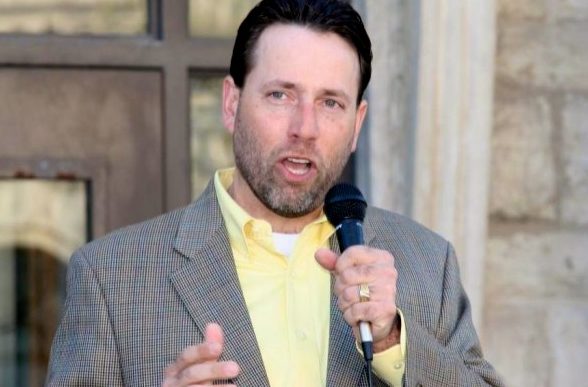
Joe Miller Campaign Releases First Campaign Ad ‘Testimonials’

Fairbanks, Alaska. September 27, 2016 — The campaign of Libertarian U.S. Senate candidate Joe Miller released its first radio ad on Monday, which is called “Testimonials.”

The ad features four members of the Alaska Republican Party Central Committee, who left their positions (and in one case was removed) to publicly back Miller’s candidacy for U.S. Senate over incumbent Sen. Lisa Murkowski.

Others featured include Amy Demboski, the 2015 GOP nominee for Anchorage mayor, who was threatened with removal as district secretary by the vice chairman of the state Republican Party for backing Miller, as well as Russ Millette, who was elected the Alaska Republican Party chairman in 2012.

In the ad, former Anchorage district 25 chairman Dave Bronson states he “was removed for supporting the Constitutional Conservative for United States Senate . . . Joe Miller.”

Others voicing support for Miller are district chairs Shannon Connelly (Palmer), Ron Johnson (Chugiak), and state Central Committee member Mike Widney (Big Lake).


The ad began airing on stations in multiple markets in Alaska on Monday.

“I am very honored that members of the central committee would take the extraordinary step of leaving their positions to back my candidacy,” said Miller. “We have seen a groundswell of support during these last few weeks, which I believe will continue to grow and carry us to victory in November.”

In announcing his candidacy earlier this month, Miller pointed to the near historic low voter turnout in the Republican primary as evidence that Alaskan voters want another choice.

Despite entering the race in September, Miller has already garnered the endorsement of Alaska Right to Life and the support of the Alaska Republican Assembly.

Miller also has the support of the co-chair of Donald Trump’s campaign in Alaska and the former co-chair of Sen. Ted Cruz’s Republican presidential primary campaign.

The Gun Owners of America and conservative talk show host Mark Levin endorsed Miller during the past week.

Joe Miller is a limited government Constitutionalist who believes government exists to protect our liberties, not to take them away. He supports free people, free markets, federalism, the Constitutional right to life, the 2nd Amendment, religious liberty, American sovereignty, and a strong national defense

National ICE Council Announces First-Ever Presidential Endorsement in Its History

Early Monday morning, the National Immigration and Customs Enforcement Council made a huge announcement that rocked the political world.

“We hereby endorse Donald J. Trump, and urge all Americans, especially the millions of lawful immigrants living within our country, to support Donald J. Trump, and to protect American jobs, wages and lives,” the organization’s president, Chris Crane, wrote in a statement published at DonaldJTrump.com.

What made the endorsement so stunning was that the National ICE Council had never before in its history made an endorsement for a candidate running for an elected office.

Plus, the council represented 7,600 federal immigration officers and law enforcement support staff members.

Yet this time around, the council chose to have a vote, and according to the results of that vote, GOP candidate Donald Trump received the vast majority of the council members’ support.

“This first-ever endorsement was conducted by a vote of our membership, with Hillary Clinton receiving only 5 percent of that vote,” Crane’s statement clarified.

In explaining why council members disliked Democrat candidate Clinton so much, Crane pointed to her support of “the most radical immigration proposal in U.S. history.”

He also claimed that her plan had been crafted with the assistance of “special interests and open-borders radicals.”

“Her radical plan would result in the loss of thousands of innocent American lives, mass victimization and death for many attempting to immigrate to the United States, the total gutting of interior enforcement, the handcuffing of ICE officers, and an uncontrollable flood of illegal immigrants across U.S. borders,” his statement went on.

The Democrat candidate would also expand executive amnesty, expand catch-and-release and prioritize the non-enforcement of America’s federal immigration laws, Crane wrote.

Trump’s plan, on the other hand, would “restore immigration security” by, among other things, cancelling President Barack Obama’s executive amnesty, putting an end to sanctuary cities and providing immigration agents with the tools and resources they need to effectively carry out their jobs.

“America has been lied to about every aspect of immigration in the United States,” Crane continued.

“We can fix our broken immigration system, and we can do it in a way that honors America’s legacy as a land of immigrants, but Donald Trump is the only candidate who is willing to put politics aside so that we can achieve that goal,” he concluded. (For more from the author of “National ICE Council Announces First-Ever Presidential Endorsement in Its History” please click HERE)

Follow Joe Miller on Twitter HERE and Facebook HERE.

The Hillary Movie to Show Your “Undecided” Friends

There’s a fascinating new documentary, Clinton, Inc., which every voter in America really ought to see. Media are full of news stories, most of them hyped and some of them false, that highlight objections which conservative or moderate voters might have to Donald Trump. The same reporters and editors who fawned over Trump in the primaries and granted him billions in free coverage seem to have turned on him the day he clinched the GOP nomination.

Now some of them have abandoned even the frayed mask of objectivity and openly taken up the cause of trying to throw the election the Democrats’ way. Amiable Jimmy Fallon was subject to a public shaming because he gave Trump the same kind of friendly, softball interview he gives every other guest on his light-hearted late night show.

Conversely, major media have been virtually complicit in smoothing over Hillary Clinton’s scandals, particularly since she defeated Bernie Sanders for the nomination. Little coverage goes to Jill Stein, the Green Party candidate, who embraces Sanders’ agenda. It’s as if a quiet memo had been issued across the media, instructing reporters and editors: “Lay off until the election.”

The makers of Clinton, Inc. didn’t get the memo. The film’s producer is Doug Sain, who also produced 2016: Obama’s America, which was a huge hit among conservatives. Clinton, Inc. is based on the book of that title by Weekly Standard editor Daniel Halper. But this film doesn’t focus on ideology. In fact, it’s a movie you can take your liberal friends and family members to see. They’ll emerge from it deeply troubled about Hillary Clinton’s character and her fitness to be president.

Clinton, Inc. is a cool, objective look at the rise of both Bill and Hillary Clinton. It consults biographers, former advisers such as Dick Morris, psychologists, marital therapists, FBI agents, and progressive activists, to analyze the characters of both candidates and the changes they’ve undergone over the decades. The film asks (and goes far toward answering) critical questions such as:

Why did such a highly intelligent, ambitious politician as Bill Clinton get himself into a long series of squalid, potentially embarrassing sexual affairs with poorer, less powerful women while joined in a very public, political marriage to Hillary? Why couldn’t he control himself?

Why did a strong-willed, overtly feminist woman such as Hillary accept Bill’s humiliating infidelities, and step in to save him from political bankruptcy again and again — even targeting and demonizing the women who truthfully admitted their part in these affairs?

How was Hillary’s political acumen crucial to Bill’s political career?

Why did Bill Clinton back the trade deal NAFTA against the fierce objections of his labor union voting base? How did that decision open the door to massive fundraising from international corporations, which far outweighed the anger of disgruntled Teamsters and auto-workers?

What behind-the-scenes bargain existed between Bill and Hillary, rewarding her for her silence about his compulsive infidelities?

How have two politicians who left the White House deep in debt accumulated a private fortune of more than $100 million, while running what is supposedly a non-profit charity, the Clinton Foundation? Why has the foundation never been properly audited?

What favors did they trade, while Hillary Clinton was Secretary of State, to foreign governments such as Saudi Arabia and Russia, in return for multi-million dollar donations?

Why did Hillary Clinton flout the law to use an insecure private email server to send hundreds, or even thousands, of classified emails while she was Secretary of State? What might have been on the 30,000 emails which Congress had requested, which she deleted instead?

It’s Not About Sex. It’s About Perjury.

Sex scandals, while unsavory, are a key part of the Clintons’ story. Those of us who lived through the late 1990s will well remember the sordid spectacle of Bill Clinton’s exploitative affair with intern Monica Lewinsky — a White House intern who was only eight years older than Clinton’s daughter, Chelsea. What we might have forgotten, and what younger voters won’t even know, is the reason that such private conduct became an issue of public debate. It wasn’t prurient interest on the part of Special Prosecutor Kenneth Starr, though that’s how most media choose to retell the story.

No, the question of Bill Clinton’s sexual activities while in public office became relevant because he was being sued for sexual harassment by a former Arkansas state employee, Paula Jones, an accusation which he denied under oath. Perjury is a crime, which Starr was obliged to investigate. That was what forced Starr to look into the news of Bill’s affair with Lewinsky. It established a pattern of conduct.

What most of America wondered, as that sordid story unfolded and Hillary backed Bill in public lie after lie, was why such a strong-willed, steely woman stood by her cheating husband from the beginning to end of the scandal. What did she get in return for enduring that gross humiliation?

Clinton, Inc. gives the answer: Bill Clinton essentially appointed her the Democratic nominee for Senate in New York State. She received that party nomination without even facing a primary — a staggering coup d’etat in a state full of ambitious Democratic candidates.

The Clintons had never lived, worked, or paid taxes in New York. The one time Hillary appeared in a Yankees baseball cap reporters burst out laughing. But the New York State Democratic Party is an old-style political machine, one that a sitting Democratic president could work to his advantage. And as Clinton, Inc. makes clear, the price that Hillary demanded for backing up Bill’s lies all through those sexual scandals was that Bill jump-start her own career by short-circuiting democracy for New York Democratic voters.

As this film makes clear, that nasty back-room trade-off epitomizes the Clintons. Their governing motive isn’t even ideology. It is naked ambition — a ravenous hunger for power and wealth that trumps political issues. So fixated are the Clintons on building a political dynasty, that they are more than willing to get in bed with the crony capitalists at Goldman Sachs, or Saudi princes whose government executes homosexuals.

They will lie for each other, lie to Americans, lie under oath, and punish old friends and allies who happen to stand in their way. If you wondered how on earth someone as offbeat as Bernie Sanders became a major threat to Clinton, this film will help you understand why so many well-meaning Democrats refused to back Mrs. Clinton. She offended their sense of smell. (For more from the author of “The Hillary Movie to Show Your “Undecided” Friends” please click HERE)

Follow Joe Miller on Twitter HERE and Facebook HERE.

Priebus Still ‘Hopeful’ Bush 41, 43 Come on Board for Trump

Republican National Committee Chairman Reince Priebus said Monday that he’s “hopeful” former Presidents George H.W. Bush and George W. Bush will be able to come around and support Donald Trump as the Republican presidential nominee.

“I’m hopeful that that is going to change soon,” Priebus told Laura Ingraham of the absence of any support from the Bush family. “I know that Bush 41 is very upset over what [Kathleen Hartington Kennedy] had said and is not happy.”

Kennedy claims that President George H.W. Bush told an audience in private that he was going to vote for Clinton, but Bush denied ever saying that. Priebus agreed he could clear it up by saying he’d vote for Trump, and downplayed the divide in the Republican Party.

“I think the divide is like … 90/10. It’s 88/12. It’s not much of a divide. We have a sliver that’s resistant, and I think if people are serious about getting our country in a place that has been a bunch of talk, but is actually some action, then they need to get on board and elect Donald Trump president. I think they’re getting — I think they’ll get there.” (Read more from “Priebus Still ‘Hopeful’ Bush 41, 43 Come on Board for Trump” HERE)

Follow Joe Miller on Twitter HERE and Facebook HERE.

9 Big Lies the Hillary Campaign Tells America

Hillary Clinton’s campaign is having a tough time spinning a web of half-truths, misrepresentations, and distortions around an American public that just doesn’t trust her.

The nine biggest Clinton campaign whoppers, falsehoods, and deceptions are listed below.

1. Americans trust Hillary

The Clinton spin machine is furiously peddling the lie that the American people trust Hillary, yet they it’s clear that they really don’t. According to a Newsday poll, 60 percent of the voters who know Hillary the best — New Yorkers — say they don’t believe she is honest or trustworthy. (A mere 37 percent believe she is.) An August 15, 2016 Rasmussen poll also indicates that most voters don’t trust her.

2. Hillary is a real, down-to-Earth person

Hillary believes that if you use a fake laugh and tell people you are a real person, they will believe you.

3. Hillary is just like you and me

Hillary’s net worth, according to Moneynation is between $31.3 and $10.8 million.

4. Hillary has been under live fire in a war zone

Looking back to Hillary’s first run for president, on March 17, 2008, Hillary claimed she was under sniper fire while landing in Bosnia on an official trip for the White House in 1996. The Washington Free Beacon reported in March of last year that she lied about it. Watch the CBS report here.

5. Hillary is not a serial or compulsive liar

“Louder with Crowder” hits it out of the park on this whopper.

6. A ‘vast right-wing conspiracy’ is the root of all of the Clinton problems

According to a Washington Times report, Hillary was the point person to destroy women who accused Bill Clinton of sexual harassment.

7. Hillary did not Lie on ‘Fox News Sunday’ about her email scandal

The Washington Post fact checker Glenn Kessler concluded on July 31, 2016 the following about her repeating lies on “Fox News Sunday”:

As we have seen repeatedly in Clinton’s explanations of the email controversy, she relies on excessively technical and legalistic answers to explain her actions. While Comey did say there was no evidence she lied to the FBI, that is not the same as saying she told the truth to the American public — which was the point of Wallace’s question. Comey has repeatedly not taken a stand on her public statements.

8. Hillary supports the Second Amendment

For those who treasure Second Amendment rights and don’t want to be playing defense for the next four years on Supreme Court nominees and gun control legislation, this fall’s election will have a significant impact on the government’s respect for the Bill of Rights – because Hillary wants to effectively erase the Second Amendment from the Constitution.

9. Hillary is not a faker

(For more from the author of “9 Big Lies the Hillary Campaign Tells America” please click HERE)

Follow Joe Miller on Twitter HERE and Facebook HERE.