No Amnesty for 2 ‘Treasonous’ Open-Borders Republicans

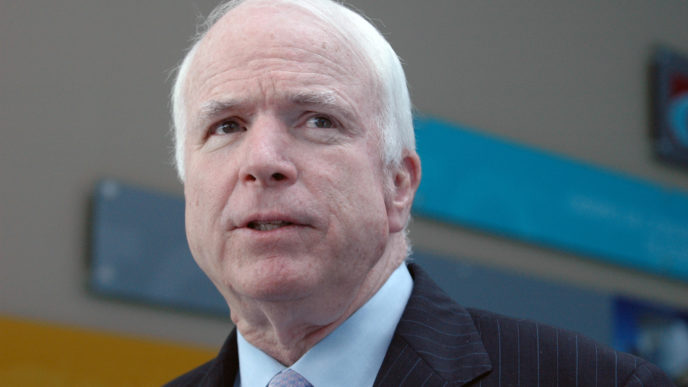
Citing their support for illegal immigration and the rising influx of Muslim refugees, one of the nation’s most hawkish immigration lobbying groups has launched a new strategy to remove John McCain, R-Ariz., and House Speaker Paul Ryan, R-Wisc., from office.

Americans for Legal Immigration PAC, also called ALIPAC, is endorsing their Democrat opponents in the Nov. 8 general election.

That’s a first for the organization. In its 12-year history ALIPAC has never endorsed a single Democrat.

But it makes sense, said ALIPAC President William Gheen, given the two lawmakers’ persistent support for amnesty for illegals, their support for President Obama’s bulging numbers of Muslim refugees being secretly funneled into hundreds of U.S. cities and towns, and their efforts to elect Hillary Clinton by “undermining the campaign of Donald Trump.”

“If Republicans like McCain and Ryan are going to act like and help Democrats, why not elect Democrats and try for better Republicans next time?” asked Gheen. (Read more from “No Amnesty for 2 ‘Treasonous’ Open-Borders Republicans” HERE)

Follow Joe Miller on Twitter HERE and Facebook HERE.

Hey Catholics, This Is What Team Hillary Really Thinks of You

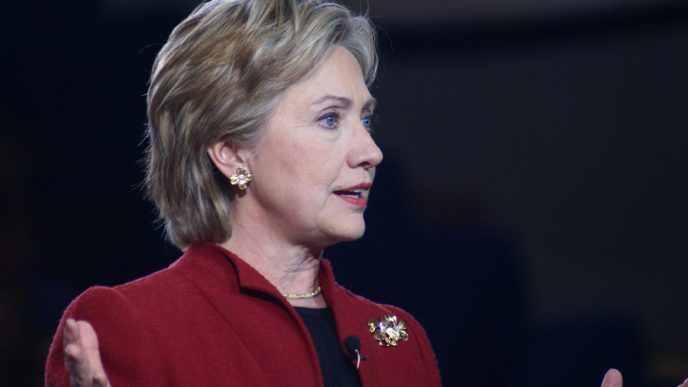
Another Wikileaks email dump came out this week, and there are all sorts of windows into the Clintons’ world that should give Americans pause. This candid look into the liberal mind, and the Clinton campaign psyche, reveals not only the disgust they have for Catholics, but for those who choose to believe in something more than social standing and progressive politics.

The exchange features John Halpin of the Center for American Progress, a liberal think tank that is part and parcel of the Obama & Clinton world; Jen Palmieri, the communications director for Hillary; John Podesta, chairman of Hillary’s campaign; and longtime Clinton confidant, aide, and former chief of staff for Bill Clinton.

The email chain begins with a subject line: “Conservative Catholicism” with Halpin writing:

Ken Auletta’s latest piece on Murdoch in the New Yorker starts off with the aside that both Murdoch and Robert Thompson, managing editor of the WSJ, are raising their kids Catholic. Friggin’ Murdoch baptized his kids in Jordan where John the Baptist baptized Jesus.

Many of the most powerful elements of the conservative movement are all Catholic (many converts) from the SC and think tanks to the media and social groups.

It’s an amazing bastardization of the faith. They must be attracted to the systematic thought and severely backwards gender relations and must be totally unaware of Christian democracy.

“I imagine they think it is the most socially acceptable politically conservative religion,” Palmieri responded. “Their rich friends wouldn’t understand if they became evangelicals.”

Had this been conservatives talking about some liberal cause celebre, the media and Planet Clinton would be feasting on it and calling for the heads of all involved. Imagine for a moment if you replaced the actors with conservatives and Catholicism and the conversation topic with Black Lives Matter, LGTB rights, or women. The rebukes would come fast and furious, and with wicked vengeance.

Another email shows Podesta discussing the groups he founded to incite rebellion and schism within the Church, when confronted with the suggestion of a “Catholic Spring” against church doctrine and leadership in favor of “gender equality.”

As conservatives react to these revelations, it is important to not the controversy does not center on the actors in these emails. Rather, it should center around the beliefs being discussed in these email chains.

It is unfathomable to Clinton allies that “enlightened minds” would expose their children to “systematic thought” or “backwards gender relations” that teach a man and wife are the normative family construct. Likewise, these liberals cannot understand that social conservatives or Catholics would believe what they do because they believe it to be true, rather than just “socially acceptable.”

Palmieri seems to insinuate that Catholicism is supposed to be somewhat “liberal” or at least socially acceptable as such. But in doing so, she condemns what these Clinton surrogates have dubbed “conservative Catholicism,” which is really just Catholicism that hasn’t been repurposed towards her party’s political ends.

Podesta puts the cherry on top, when he prods fun at “Thomistic thought” and “subsidiarity” and those who don’t understand them. He seems to say that Catholicism, especially in this conservative form, is nothing more than a set of misunderstood ancient beliefs that are mere window dressing for high society types on the Right to justify their “backwards” views on marriage, the family, abortion, contraception, etc.

It goes to show that tolerance is a one-way street for progressives. Liberals don’t actually want tolerance, acceptance, and free thought. What they want is a society constructed on intellectual pillars of progressivism. Thomism is an archaic “systematic” thought construct, but Alinskyism is enlightenment. Subsidiarity is a tool of fools, while Rawlsian justice is the pathway to utopia.

Brian Burch of CatholicVote summed it up best saying:

Everyone has a unique faith journey, and it’s just insulting to make blanket statements maligning people’s motives for converting to another faith tradition. Had Palmieri spoken this way about other groups she would dismissed. Catholics will be watching Hillary Clinton to see whether she thinks our religious faith should be respected, or whether it’s fair game to mock us.

Just as impoverished in this email exchange is the recipients’ view of religion. Theology is not something to be judged on its claims and pathway to the truth, but rather or on how “socially acceptable” its manifestations are. Political views shouldn’t flow from revealed truth; rather, revealed truth must be contorted until it matches political agendas.

It doesn’t matter that what they call “Christian Democracy” in the American context which, as R.R. Reno explains in his recent book, was little more than an outgrowth of liberal Protestantism that was quickly secularized and co-opted into the modern progressive fold, to the detriment of Christian truth. It doesn’t matter those “backwards” ideals carry with them millennia of philosophical tradition that precede and supersede the Left’s modern and post-modern social experiments. What matters is what you can talk about at a cocktail party, and how it gets along with everyone else’s plans for the Republic.

The truly tragic thing is that the mentality is more widespread than any serious person of faith would like to admit. The incomprehensibility of objective truth believed by faith, near-universal on the American Left, strikes to some of the most important issues of our time.

The fact that nuns have to go to the Supreme Court to defend their conscience rights against a contraception mandate, and that churches in Massachusetts are now suing for thei basic religious rights against a so-called “non-discrimination” order speaks volumes. How else would we end up with a Democrat presidential candidate who believes that religious beliefs have to be changed to accommodate her abortion agenda? How else would we have her running mate, merely the latest in a long line of “Catholic” Democrats whose “personal” beliefs on abortion dare not interfere with their shilling for the party line?

And this theological poverty has also left our discussions on conscience to infect our discourse on national security. At a panel discussion last month, Dr. Sebastian Gorka explained how an inability to “get” religion is crippling our efforts to fight jihadism.

“If you don’t have faith, yourself, you will never understand our enemy; you will never understand the logic of a suicide bomber,” he explained at the 2016 Values Voters Summit. “The trouble is that we have a political elite on the Left — and, unfortunately, sometimes on the Right — that does not take faith seriously. If they go to church or temple, it’s a cool networking thing with the coffee and doughnuts afterward.”

Unfortunately for Catholics, and most likely other supposedly “backwards” faith groups, a Hillary Clinton win in November meansthis mentality is only going to march further and more boldly into our lives. When it makes perfect sense to sue nuns for not buying the pill and openly mock someone for having their child Baptized in the River Jordan, it is truly frightening to imagine what comes next. (For more from the author of “Hey Catholics, This Is What Team Hillary Really Thinks of You” please click HERE)

Follow Joe Miller on Twitter HERE and Facebook HERE.
InterVarsity Learns That You Cannot Straddle the Fence When It Comes to Homosexuality

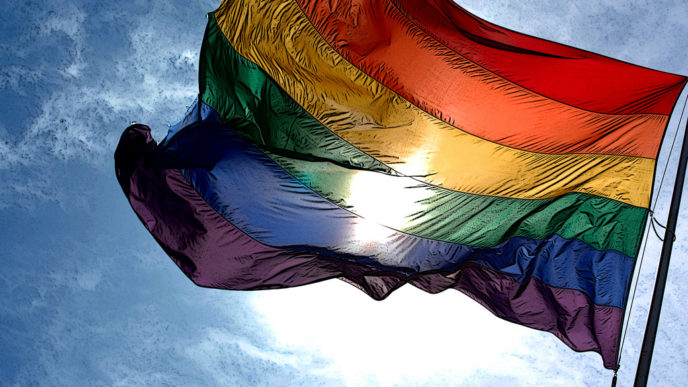
InterVarsity Christian Fellowship is one of the leading campus ministries, and its publishing arm, InterVarsity Press, is one of the top Christian publishers. But this fine ministry is learning the hard way that, when it comes to homosexuality, you cannot straddle the fence.

In a moment, I’ll explain exactly why I say that InterVarsity has tried to straddle the fence when it comes to homosexuality, but first, here’s the relevant background.

Last week, InterVarsity announced “that it will begin dismissing employees who disagree with its theological stance on human sexuality starting on November 11.” As reported on The Atlantic, “Rather than force employees to sign a document outlining their position, the organization is asking employees to out themselves. Once the employees inform their supervisor of their personal views, the ‘involuntary terminations’ will be triggered.”

From the standpoint of the historic, biblical faith, there is nothing in the least bit controversial about this, and InterVarsity is actually calling on its employees to act with integrity: If they do not agree with the ministry’s moral and spiritual standards, standards they agreed to uphold when joining the ministry, they should immediately resign.

As for the specific issue of men having sexual and romantic relationships with other men and women having sexual and romantic relationships with other women, this is a non-negotiable and it represents a line that must be drawn in the sand.

Not surprisingly, given today’s confused and compromised spiritual climate, there has been a backlash from within InterVarsity.

The Backlash

As Jonathan Merritt reports on the Religion News Service, “40 authors in InterVarsity’s publishing house stable including Shane Claiborne, David Dark, Christena Cleveland, Ian Morgan Cron, and Chris Heuertz are calling on IVCF head Tom Lin to immediately replace the policy with one that makes space for opposing views. The letter indicates that the signers ‘do not all share the same theological or political views’ but ‘are united in our concern for the dignity and care of our fellow Christians whose jobs are threatened by your policy.’”

Also this week, “a public protest letter from ‘concerned ICVF alumni’ was posted on Change.org and addressed to Tom Lin and IVCF’s board of trustees. Similar to the authors’ letter, this petition stated that signers ‘hold a range of beliefs with regard to marriage and human sexuality.’”

The protest letter specifically states that, “we would be remiss not to address the particular pain, rejection, and fear that this policy has caused lesbian, gay, bisexual, transgender, queer, and intersex members of InterVarsity in the days since its publication. Being LGBTQI in InterVarsity has never been easy, even for those who agree with its traditional position, but this policy places additional burdens on our siblings in Christ who too often have been marginalized or outcast among Christian communities. Whatever our disagreements, InterVarsity can and must do better.”

To be sure, we are called to exercise compassion towards brothers and sisters who struggle with same-sex attraction and gender identity confusion, walking together with them as they seek wholeness and pursue holiness. But those who claim that you can follow Jesus and engage in homosexual practice must be lovingly corrected and, if they refuse to repent, put out of the fellowship, in particular if they are living this out themselves. That’s what love requires.

And it is here that InterVarsity has brought some of these troubles on itself (and I say this with the utmost respect for this important ministry).

InterVarsity and Andrew Marin

In 2009, InterVarsity published Andrew Marin’s book Love Is an Orientation: Elevating the Conversation with the Gay Community, a book which at one and the same time was incredible and terrible, a book that everyone needed to read and everyone needed to avoid.

To explain, Marin’s recounting of the painful experiences of many LGBT people and their sense of being hated by God and rejected by the church is powerful and moving, something that every caring Christian should read. I remember one particular night when I had to put the book down, get alone in my room, and fall to my knees and weep. These stories were absolutely heartbreaking, moving me to tears of love for LGBT individuals.

On the other hand, the scriptural section of the book was absolutely abysmal, representing, in my mind, the worst treatment of scripture I have ever seen in a book published by a major evangelical publisher.

The clear words of the Bible prohibiting homosexual practice were twisted beyond recognition by Andrew Marin – again, I have never seen that which is so clear be made into that is which is so obscure – to the point that Prof. Robert Gagnon, the foremost authority on the Bible and homosexuality, wrote a lengthy review that absolutely savaged Marin’s treatment of Scripture.

Marin’s response to Gagnon, to which Gagon replied, further underscored the bankruptcy of his scriptural and moral arguments.

Although other examples could be cited, this is the most glaring example of InterVarsity giving major exposure to an author who refuses to say that homosexual practice is sin (he has not responded to several invitations to join me on the air to clarify his position) and who intentionally dances around the issue when addressing what the Bible clearly says. (Again, see Gagnon on this; there’s no real dispute about Marin avoiding these issues.)

And so, while InterVarsity did well to call for churches to reach out with sensitivity and compassion to the LGBT community and to recognize the struggles experienced by many true believers, they erred seriously by putting forth the mixed message of Marin and others, a message that surely was felt in InterVarsity’s campus ministry as well.

Now, they are paying the price, as others who feel that Christians can differ when it comes to fundamentals of sexual morality are calling on InterVarsity to reverse its position, thereby committing spiritual suicide.

There is, then, only one way forward for InterVarsity in the days ahead. They must hold the line without wavering, not backing down or apologizing for the policy they have announced, taking whatever flack or backlash comes their way. And they must be careful not to put out mixed messages in the future.

If they do, the blessing of God will be with them. If they fold here, they will cease to be a relevant ministry in the years to come.

Let’s pray for the leaders of InterVarsity to do what is right and for those who oppose them in the name of Jesus to see the error of their ways. (For more from the author of “InterVarsity Learns That You Cannot Straddle the Fence When It Comes to Homosexuality” please click HERE)

Follow Joe Miller on Twitter HERE and Facebook HERE.
Firms Charged in California for Profiting off of Baby Part Sales

Orange County, California District Attorney Tony Rackauckas has filed charges against two companies he says illegally profited off of the sale of fetal tissue.

In a press conference held on Wednesday, Rackauckas laid out what he called a “profit-making … scheme” conducted by DaVinci Biosciences and sister company DV Biologics. According to Rackauckas, employees used discounts “to close a sale,” and prices changed to match market value of fetal tissue.

“This is not about politics,” Rackauckas told The Orange County Register before the press event. “This is about a clear violation of the law.”

According to The Register, the lawsuit highlights an employee writing in an email that “…it costs us roughly $25 per unit to manufacture, and we are selling from $170.” Additionally:

From 2009 to 2015, the companies collected $56,678 in “packing and handling” fees marked up by roughly 50 percent over the actual cost of packaging and handling, according to the suit. Employees were paid a commission on profits they earned from the packing and handling charges, the lawsuit says.

In a press statement, Center for Medical Progress founder David Daleiden said that Planned Parenthood also acted illegally. “The wheels of justice are beginning to turn against Planned Parenthood and their corrupt business partners in the illicit trade in aborted baby body parts.”

According to Daleiden, “For eight years, Planned Parenthood supplied aborted baby hearts, lungs, brains, and intestines to DV Biologics, which DV Biologics then resold for profit. In exchange for merely providing access to aborted baby body parts, Planned Parenthood received kickback contributions from DaVinci Biosciences over the course of their eight-year contract.”

Rackauckas disagreed, telling a reporter at the press conference that Planned Parenthood donated bodies. Another reporter asked whether the donations were legal, to which the DA replied that not only are donations for research allowed, but “our evidence indicates that, no, no money was exchanged between these companies and Planned Parenthood.”

“We’re not indicating Planned Parenthood did anything unlawful,” Rackauckas clarified. His office is seeking a $1.6 million fine against the companies.

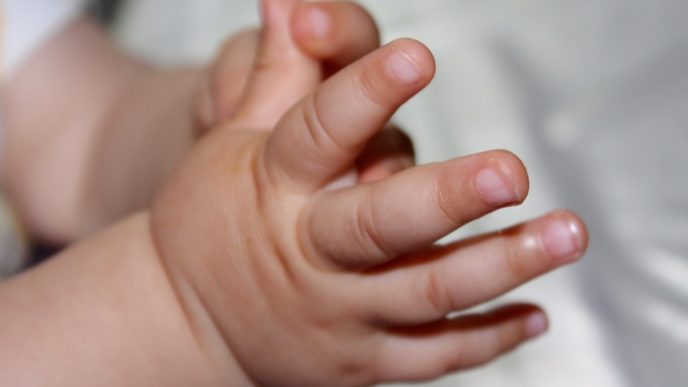
House Select Panel on Infant Lives Chairman Marsha Blackburn (R-TN) said in a statement, “Based on the evidence uncovered during our Panel’s investigation, we have been deeply troubled about the relationship between DaVinci and PPOSBC, which appears to have created a market for the donation of human fetal tissue.”

Blackburn continued: “As a result, our Panel is continuing to look at connections between Planned Parenthood and tissue procurement companies. The lawsuit filed by the Orange County DA shows that there is also broad support at the state and local level to uncover the truth about what is going on in the abortion and fetal tissue industries.”

Earlier this year, Daleiden’s group released an undercover video highlighting activity that led to Rackauckas’ investigation. In that video, a Center for Medical Progress investigator was told by the medical director of Planned Parenthood of Orange and San Bernardino Counties that the abortion giant attempts to use ultrasound to create circumstances where a baby’s parts can be harvested.

Lila Rose of Live Action also commended the Orange County DA. “I hope this sets a precedent for prosecutors and law enforcement across the nation.” she said in a statement, “Abortion is a barbaric and cruel practice, and it should come as no surprise that those callous enough to profit off killing defenseless children in the womb would allegedly profit off selling their organs piecemeal.”

A phone call requesting comment from Da Vinci Biosciences was not immediately returned. (For more from the author of “Firms Charged in California for Profiting off of Baby Part Sales” please click HERE)

Follow Joe Miller on Twitter HERE and Facebook HERE.

James Robison: Unwanted and Nearly Aborted but God Takes Him Beyond His Dreams

In 1943, James Robison’s mother was a single 40-year-old whose job was caring for a sick, elderly man. One day, the elderly man’s alcoholic son forced himself on James’ mother and raped her — and James was conceived. James’ mother went to a doctor to get an abortion for this child, this product of rape. The doctor, however, refused to perform an abortion and sent James’ mother on her way.

Shortly after his birth on October 9, 1943, James’ mother — not believing she could care for an infant — put an ad in the paper advertising for a Christian couple to raise her newborn son.

The Reverend and Mrs. H.D. Hale from Pasadena, Texas responded to the ad and for the next five years raised him as their own. He knew them as Mommy and Daddy, and when his mother unexpectedly showed up one day to take him back, he was confused and didn’t want to go. James’ mother did not have a solid plan for raising her son, or even getting him back home. They ended up hitchhiking 175 miles to Austin, and James spent the next 10 years bouncing from place to place with his mother, living in poverty, not feeling like he had a home anywhere. Constant moving and poverty left James feeling like an outsider, and as a result, he was an extremely shy, insecure kid.

When he was 14 years old, James had an opportunity to move back with the Hales. It was a life-changing experience for two reasons — one, with the love and support of the Hales, James encountered Christ and asked Him to be His Lord and Savior; and two, he met Betty Freeman, whom he married in 1963. By the time he married Betty, James’ evangelistic ministry was well underway. Within a couple of years, James had over a thousand invitations to preach in 27 states.

It is estimated that during the 21 years James Robison held crusades, he preached to 20 million people and saw two million of them receive Christ.

James and Betty went on to host LIFE Today, a talk show that spans across the globe, welcoming guests from various backgrounds to discuss relevant and current faith-related issues. LIFE Outreach International helps build fresh water wells, feeds the poor and hungry in Africa and supports local missionaries. Mission Feeding, another outreach, has saved 7 million starving children.

James stopped counting after 20 million people made professions of faith through his various ministries.

James Robison is a living example of Isaiah 49:15: “Can a woman forget her sucking child, that she should have no compassion on the son of her womb? Even these may forget, yet I will not forget you.” And He didn’t. He raised up a child who would’ve been aborted, who lived in poverty, who felt abandonment and the sting of rejection — and yet … He became a man of God, who sought the Lord with all of his heart, who listened to God’s call on his life to evangelize and has won millions for the kingdom of God as a result.

For newly-pregnant mothers, those who are scared they cannot take care of a baby and are considering abortion, take to heart James’ story. God took a tragic situation and made it beautiful — and incredibly fruitful for His kingdom and His purpose. God can and will take a tragic situation and make it into something precious. (For more from the author of “James Robison: Unwanted and Nearly Aborted but God Takes Him Beyond His Dreams” please click HERE)

Follow Joe Miller on Twitter HERE and Facebook HERE.

Why This Judge’s Showdown Over Same-Sex Marriage Could Mean Big Trouble for the Future of Federalism

Alabama’s Chief Justice was suspended from the bench for upholding state law in the face of the Supreme Court’s 2015, 5-4 decision about same sex marriage. Now, thanks to the actions of an unelected commission, he’s stuck in limbo with no source of income, but it doesn’t stop there.

The most troubling part of all this, says his lawyer, are what it could mean for judge in America who issues a legal opinion that deviates from the Supreme Court’s line.

The case of Alabama Chief Justice Roy Moore, and his suspension over a gay marriage order, has “startling implications” for judges around the country, his attorney states.

“The implications of a judicial inquiry commission targeting a judge for a legal opinion is quite startling,” says Liberty Council founder and chairman Mat Staver.

“That means that every dissenting, majority, or concurring opinion is fertile ground for a judicial inquiry body to go after. And if they don’t agree with the legal body or the legal conclusions or the legal reasoning, the judge who wrote it could be disciplined or removed from the bench.”

Stemming from complaints by the far-left Southern Poverty Law Center, Moore was suspended on Sept. 30 for the remainder of his term on the Alabama Supreme Court after a state judicial body found him guilty of six charges of violation of the canons of judicial ethics.

“This decision clearly reflects the corrupt nature of our political and legal system at the highest level,” read a statement by Moore, who is currently appealing the verdict.

While the case against the suspended chief justice portrayed him acting in defiance of the U.S. Supreme Court, the contention is primarily over his administrative order to the state’s 68 probate judges in January regarding same-sex marriage licenses. Moore told the judges that a previous order from March 2015 — preceding the Obergefell v. Hodges decision — was still in place and, as such, prevented the issuance of same-sex marriage licenses.

“After the Attorney General of Alabama declined to prosecute this case, the JIC [Judicial Inquiry Committee] employed the former legal director of the Southern Poverty Law Center (SPLC) which filed the charges against me, at a cost of up to $75,000.00 to the taxpayers of Alabama,” Moore’s statement continued.

“This was a politically motivated effort by radical homosexual and transgender groups to remove me as Chief Justice of the Supreme Court because of outspoken opposition to their immoral agenda.”

While the JIC found Moore guilty of ethics charges for defying federal court orders, he and his lawyer contend that he was simply following the judicial canons, which state that administrative orders like the one under contention from 2015 are under the sole authority of the Alabama Supreme Court.

“Administrative orders are under the authority of the Alabama Supreme Court,” Staver explained to Conservative Review in a phone interview Tuesday. “So if a Chief Justice ever issues an administrative order that is not in compliance with the law, or that the other justices disagree with, the body of authority over it is not the JIC, it’s the Alabama Supreme Court. They can convene and overrule it.”

“This is the first time that someone has been disciplined for a legal opinion,” said Staver. “Their prerogative is looking at facts and the actions of a judge to determine whether or not those violate the law. It is not for them to evaluate the legal opinions of a judge to determine whether or not case law supports or are in opposition to it.”

“That’s how it’s supposed to work,” he said. “It’s unprecedented that the JIC got into the meaning of this administrative order, because it’s a legal matter … There’s no factual dispute here. There’s no act that [Moore] did. It’s just a four-page administrative order.”

“Whenever a charge is issued by the JIC in Alabama, the judge is automatically removed, pending the entire process before you ever get a chance to defend yourself,” Staver explained. “You’re fighting to get back,” as opposed most states require proof of guilt for anything less than a felony indictment to remove, suspend, or reprimand a judge.

“The process is the punishment,” Staver concluded. “A bad charge can automatically remove somebody. And even if the charge is proven to be erroneous, you’re months removed from the bench and the damage is done.”

And Roy Moore is feeling the squeeze right now. Moore’s suspension was even worse than removal in many ways, according to Staver, who says that his client now can’t even practice privately, retire, or draw his retirement benefits, as the suspension is for the remainder of his term, ending in 2019. As of right now, Staver told Conservative Review, the 69-year-old Moore has even been cut off from his previous health plan as a result of the suspension.

“For the next two-and-a-half years, he has no income, no insurance benefits, no approval of retirement … cannot work. So he’s in a horrible situation,” he said. “It’s a horrible situation.” (For more from the author of “Why This Judge’s Showdown Over Same-Sex Marriage Could Mean Big Trouble for the Future of Federalism” please click HERE)

Follow Joe Miller on Twitter HERE and Facebook HERE.
Will This Christian Woman Hang for Taking a Sip of Water?

It was June 14, 2009. A Sunday. It was hot and falsa berry season was in full swing. Asia Bibi decided to pick berries in a local field in exchange for 250 rupees — enough to buy flour to feed her family for a week, she recorded in a memoir about her ordeal.

It was backbreaking work, and when Asia took a sip of water from a well, the women she was laboring with refused to drink from the same source. Asia is a Christian, and the Muslim women insisted that the well was unclean after she drank from it.

An argument ensued, and the women accused Asia of blasphemy against the Islamic prophet Muhammad — an umbrella charge in Pakistan under which anyone can be accused of crime. Asia has consistently maintained her innocence.

A trial was held, and Asia was found guilty of blasphemy and sentenced to hang in 2010. There have been appeals through the years, but the judgment stood. In the meantime, Asia has been kept in solitary confinement in a cell so small her arms can span wall to wall.

Thursday, the Supreme Court of Pakistan will make a final ruling on Asia’s execution. Her torturous, nearly seven-year purgatory will finally come to an end. But will her life?

The German Deutsche Welle reports that “[l]egally, the judges have very little room under the blasphemy law to overturn their 2010 decision” to execute Asia, and that the “issue is no longer only religious; it is a sensitive political matter now.”

Two prominent, politically-connected men in Pakistan have been murdered for speaking publicly in defense of Asia —Salman Tasser (the former governor of Punjab and a Muslim) and Shahbaz Bhatti (former minority affairs minister, who served as the sole Christian in Pakistan’s cabinet). And a mullah previously put forth a reward for Asia’s murder.

There are voices all over the world — from Pope Francis to the European Parliament to hundreds of thousands of people in the online community — pleading with Pakistan’s government to spare Asia’s life and allow her to go back to her husband and five children. The mayor of Paris even offered refuge for her and the family.

Congressman Joe Pitts, R-Penn. (F, 52%) introduced a resolution to make the State Department prioritize the repeal of global blasphemy laws, noting that Pakistan, Saudi Arabia, and Egypt sanction “particularly severe violations of religious freedom[.]” It never was brought up for a vote on the House floor.

Perhaps intense global pressure could sway the minds of Pakistan’s Supreme Court. Perhaps the justices fear the potentially deadly repercussions for freeing a Christian woman accused of blasphemy.

If the 2010 judgment holds and Asia Bibi is hanged, she will be the first person executed by the Pakistani government for blasphemy laws.

As people around the world await to hear Asia Bibi’s fate, the least we can do is offer up a prayer for her and her family. As Asia tells the world in her memoir:

“I’m asking you for help. Please don’t forget about me. I need you.” (For more from the author of “Will This Christian Woman Hang for Taking a Sip of Water?” please click HERE)

Follow Joe Miller on Twitter HERE and Facebook HERE.
The All-Out Assault on the First Amendment

The Constitution has long been subject to attacks from individuals hostile to its guarantees of freedom, economic opportunity, and limited government, but in recent days no other provision has been as widely and intensely attacked as the First Amendment.

From the IRS targeting conservative groups to those trying to limit the ability of Americans to freely practice their religious beliefs, to membership organizations being forced to disclose their donors, the First Amendment is being assaulted on all sides.

Americans are familiar with the recent attacks on religious liberty, present in everything from forcing religious business owners to offer abortion-inducing drugs and perform same-sex wedding services that violate their fundamental beliefs to the exclusion of churches from secular public projects.

Cases questioning the government’s encroachment on religious liberty continue to come before the U.S. Supreme Court, as seen in Zubik v. Burwell last term and potentially Trinity Lutheran Church v. Pauley this term, which deals with a church’s exclusion from public funding for construction of a playground.

The First Amendment has also been caught in the crosshairs of a battle between the IRS and various conservative organizations. As a result of the IRS inappropriately targeting conservative organizations because of their “disfavored viewpoints,” they were subjected to long delays, investigations, and intrusive and unjustified interrogations about their opinions, views, members, and practices.

As a federal appeals court recently said, the IRS “utterly failed” to apply “the tax law with integrity and fairness.” Instead, its behavior was a “blatant violation of the First Amendment.”

This abuse of governmental power against organizations with a conservative and traditional view of the Constitution, culture, and government policy does not bode well for protection of free speech and freedom of association. Neither does the continual push to overturn the Supreme Court’s 2010 decision in Citizens United, which restored vital First Amendment rights that had been limited by unconstitutional campaign finance laws.

Nor does the aggressive move by certain state attorneys general to criminalize scientific dissent by initiating criminal investigations targeting companies and others who disagree with the unproven theory of catastrophic, man-made global warming.

And, of course, the attacks on freedom of speech are most prevalent on college campuses, as speech codes and safe spaces abound. These attacks are evident in “speech zones,” which restrict free speech activities to only a small area of campus, and “speech codes,” which include broad anti-harassment policies frequently construed to limit speech on the basis of content or viewpoints that are not politically correct.

These policies are starkly at odds with the First Amendment, yet students are often some of the staunchest defenders of these misguided and unconstitutional policies, and the administrations follow suit.

This was most recently demonstrated in a University of Virginia professor’s forced leave of absence for engaging in classic First Amendment activity—posting a comment critical of the Black Lives Matter movement on Facebook.

The backlash from students and administrators alike resulted in his swift removal. Ironically, the great damage being done to college students’ First Amendment rights is self-inflicted, as they advocate for further restrictions of their own rights and the rights of others.

All of these attacks on the freedoms guaranteed by the First Amendment will be discussed at The Heritage Foundation on Thursday, Oct. 13, in its fifth “Preserve the Constitution” event. It can be watched online or attended in person.

“The All-Out Assault on the First Amendment: Restricting Speech, Religion, and Association” will start at noon and feature four of the country’s leading experts on the First Amendment, including Christina Hoff Sommers of the American Enterprise Institute; Robert Alt, president of the Buckeye Institute; John Eastman of the Chapman University Fowler School of Law; and Cleta Mitchell, a partner at Foley & Lardner. (For more from the author of “The All-Out Assault on the First Amendment” please click HERE)

Follow Joe Miller on Twitter HERE and Facebook HERE.

Group Claims YouTube Is Restricting PragerU Educational Videos

YouTube is restricting educational videos from a well-known conservative advocacy organization, prompting the nonprofit website to petition for restoration of the content.

PragerU, an institution that, according to its website, “presents the most important ideas in free, five-minute videos,” is currently being restricted by YouTube. YouTube has restricted 21 of the organization’s videos.

Videos are restricted on YouTube based on vulgar language, violence and disturbing imagery, nudity and sexually suggestive content, and portrayal of harmful or dangerous activities, according to YouTube. Videos that are age-restricted “are not visible to users who are logged out, are under 18 years of age, or have restricted mode enabled,” according to YouTube.

The list of restricted videos include, “Are The Police Racist?,” “Why Don’t Feminists Fight for Muslim Women?,” “Why Did America Fight the Korean War?,” “Who’s More Pro-Choice: Europe or America?,” and “What ISIS Wants.”

“Over the last several months, PragerU and YouTube have been in communication regarding a number of PragerU videos that YouTube has listed under ‘restricted mode,’” Jared Sichel, PragerU’s communications director, said in a statement provided to The Daily Signal. “That number has since grown to 21 videos. Restricted mode is something that many parents and schools use so that children don’t watch explicit adult and sexual content—not so they can’t find animated, educational videos on topics ranging from history and economics to happiness and philosophy.”

YouTube was bought by Google in 2006 and is a subsidiary company of the search engine giant. According to a PragerU press release, PragerU filed a complaint with Google executives but received a generic response.

“In response to an official complaint PragerU filed, Google specialists defended their restriction of our videos, and said, ‘We don’t censor anyone,’ although they do ‘take into consideration what the intent of the video is’ and ‘what the focus of the video is,’” the press release said.

The Daily Signal contacted YouTube about the restrictions on PragerU’s videos, but they did not respond.

Sichel said that in an effort to protest and end YouTube’s restrictions, they have launched a petition for viewers to sign.

“After months of official and back-channel communication with YouTube and Google led nowhere, PragerU released [yesterday] a petition against YouTube to stop restricting these 21 videos. That petition already has over 15,000 signatures, and it’s growing fast,” Sichel said.

“Based on our review of YouTube’s policies and user guidelines, none of our videos meet the requirements of being inappropriate, sexually explicit, or hate speech,” Elisha Krauss, director of outreach at PragerU, told The Daily Signal in an email. “Some places of employment and many libraries and schools use restricted mode to prevent vulgar and inappropriate content. So we know students and adults are being prevented from doing research and using our videos as a source.” (For more from the author of “Group Claims YouTube Is Restricting PragerU Educational Videos” please click HERE)

Follow Joe Miller on Twitter HERE and Facebook HERE.

Why Virginia’s ‘Reasonable’ Voter ID Law Could Survive the Courts

Virginia Republicans are making the case that this state’s voter identification law is different than versions in other states that came and failed before it.

“We like our facts; we have better facts than some of other cases that have struggled in court,” said Del. Robert B. Bell, a state Republican legislator. “That’s why we believe this result will be different than the outcome in other states.”

With election day less than a month away, the U.S. Court of Appeals for the 4th Circuit is still reviewing the merits of Virginia’s law requiring citizens to produce photo identification to vote.

The outcome of the court case will almost certainly not impact voting in 2016, the first year the voter identification law will be in place during a presidential election.

Even if the appeals court were to rule against the law, passed in 2012 by a Republican-controlled legislature, it is too close to Election Day to undo the law’s implementation, elections experts say. Indeed, in-person absentee voting has already begun in Virginia.

Yet even so, with the case being reviewed under the shadow of recent court rulings against voter identification laws, Virginia Republicans and elections experts say the fate of this state’s law—especially if the court lets it stand—will impact how states approach the issue of voting rights in the future.

“Obviously many states are trying to find a way to do voter ID in a way that passes judicial muster,” Bell told The Daily Signal in an interview. “We believe we were careful with ours based on recent precedent at the time we passed it. Hopefully, the court will say we complied with the constitutional requirements, and other states can look to Virginia as a way to prevent voter fraud in a fair, reasonable way.”

‘A Different Posture’

More than two months ago, judges on the same appeals court reviewing Virginia’s case overturned North Carolina’s more sweeping voting restrictions, ruling Republican legislators there had intentionally made it more difficult for minorities to cast ballots.

This summer, other states also saw their voter identification laws weakened or blocked in court, including Texas, Wisconsin, and North Dakota.

While the judges on the appeals panel—all appointed by Republican presidents—are different than the ones who reviewed North Carolina’s law, Virginia’s version is facing similar scrutiny.

In May, U.S. District Judge Henry E. Hudson upheld Virginia’s voter identification requirement, writing that the state “has provided all of its citizens with an equal opportunity to participate in the electoral process.”

The Democratic Party of Virginia and affected voters—the plaintiffs in the case—appealed to the 4th Circuit.

During Sept. 22 oral arguments before the appeals court, one judge on the panel, Dennis W. Shedd, made a comparison to North Carolina.

“Is what Virginia did just as egregious?” Shedd asked the attorney for the state Democratic Party that is challenging Virginia’s photo identification requirement. “Is the evidence of intentional discrimination as strong?”

But experts, and individuals who devised Virginia’s law, say it is different from North Carolina’s law in a few ways.

For one thing, Virginia’s law passed the Legislature prior to the time considered to be a turning point in election laws, when the Supreme Court in 2013 struck down a section of the Voting Rights Act of 1965.

That decision eliminated the requirement that states with a history of racial discrimination—Virginia was considered to be one of those states—seeking to change election procedures have to get federal court approval to do so.

In addition, proponents and experts note that Virginia’s law is more flexible than voting restrictions in other states, and that this attempt to limit the burdens on voters shows that legislators did not have a discriminatory intent.

“This case comes at the court with a different posture than the North Carolina case,” said Rebecca Green, the co-director of the Election Law Program at the College of William & Mary in Virginia. “It doesn’t seem there’s as much evidence of intent in the Virginia case,” Green told The Daily Signal in an interview.

‘A Testament to Insanity’

State Sen. Mark D. Obenshain, a Republican who helped write Virginia’s voter identification law, says he’s been motivated to toughen voter identification requirements ever since the 2000 presidential election recount in Florida, when paranoia about the integrity of the U.S. election system had increased.

In 2005, a year after taking office, Obenshain introduced his first version of a voter identification law, which went nowhere. He “tried and tried” again over the years to address the issue, but kept failing to get different iterations of his bill passed, he says, due to resistance from Democrats and others, who argued the measure would challenge the most vulnerable of potential voters, including minorities, the poor, and the elderly.

“It’s a testament to my insanity that I kept coming back and introducing it year, after year, after year,” Obenshain told The Daily Signal in an interview.

To attract enough support, Obenshain said he and other bill supporters created a number of workarounds to help people who don’t have access to a driver’s license, the most common form of photo identification.

Virginia’s law allows for voters to present alternatives to driver’s licenses and passports, including employer identification—both private and government issued—and student identification from institutions in Virginia. Under a provision to the bill approved last year, student identification issued by private schools is also permitted.

Voters who don’t have one of the approved forms of identification on Election Day can fill out a provisional ballot. The state also issues free voter identification to people who present themselves to their local registrar. Those people do not have to provide supporting documentation, like a birth certificate, to prove they are a citizen.

“We benefited from not being at the leading edge of the wave, being able to learn from what states did right, and some states did wrong,” Obenshain says. “And so what we did is this: Nothing we have done has placed a burden on any voter who really wants to vote. The burden to vote is essentially nonexistent in Virginia. The three principles that are really important to preserve in a system of elections is we need it to be free, open, and fair. It has to be all three. To have a free and open, but unfair, system of elections will do us no good.”

‘Clash’ of Values

Democrats and others who oppose the Virginia law acknowledge the workarounds are helpful.

But they contend that any extra restriction a state imposes on voting will have a disenfranchising impact. They cite studies that show the rarity of in-person voter fraud, and say Republicans are intentionally trying to overstate a problem in order to deter Democratic constituencies from voting.

“When I vote for legislation, it is really important to me that the problem we are trying to fix is well defined and accounted for, and that is just not the case with voter fraud,” state Sen. Barbara Favola, a Democrat, said in an interview with The Daily Signal. “Voting should be made as easy as possible, and elections should affect the widest swath of people. I believe that some of the proponents of the bill really wanted to limit participation in voting because they were trying to fix a problem that didn’t exist.”

Favola also described the challenges in reaching poorer voters, who may not understand the nuances of Virginia’s voter identification law, and will be discouraged from trying to meet its requirements.

“When you pass a law, there’s always a public message there,” Favola said. “The public message when you pass this law is you better prove yourself if you want to vote. So people who are always knocked down by the system say to themselves, ‘Why bother? This is another barrier to accessing the system.’ So that’s a real struggle.”

Republicans like Bell and Obenshain counter that even if in-person voting fraud is rare, recent events have threatened the integrity of the election system, and warrant efforts to tighten voting procedures.

Last month, The Washington Post reported that the FBI and local police are investigating how least 19 dead Virginians were recently re-registered to vote in the state. No one actually casted a vote in the names of the dead.

Meanwhile, at the national level, the Obama administration last week accused the Russian government of interfering with the U.S. elections process by hacking emails of the Democratic National Committee, and other institutions and individuals.

Green, the William & Mary elections expert, said this context is important in evaluating the appropriateness of voter identification laws.

“Particularly in a year when there is talk of elections being rigged, and voter confidence in the election system is of such importance, it could be that having people go through extra steps to vote is helpful,” Green said. “But it’s a hard balance. It depends on what you care more about—reducing burdens on voting or taking steps that may or may not shore up the system, and unfortunately, those two values can clash.” (For more from the author of “Why Virginia’s ‘Reasonable’ Voter ID Law Could Survive the Courts” please click HERE)

Follow Joe Miller on Twitter HERE and Facebook HERE.