3 Ways to Use the Presidential Debate to Talk Taxes

With the leak of Donald Trump’s tax records by The New York Times, and following round two of the presidential debates in which both candidates spoke about their tax plans, taxes are in the news to stay.

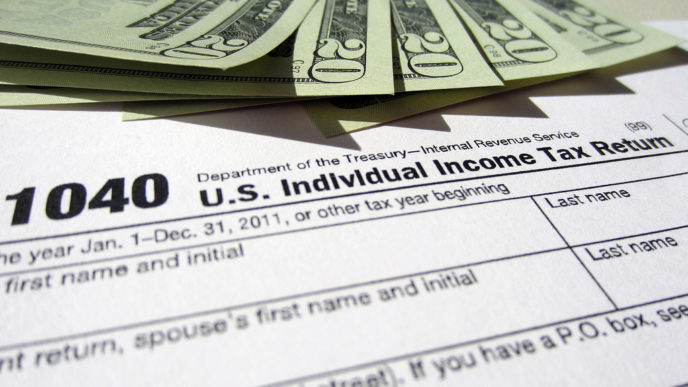
But like its code, taxes are complicated. There’s the corporate tax rate, the sales tax, personal income tax, and loopholes to apply. The likelihood anyone does their own taxes without the help of an online program or accountant is low. Ain’t nobody got time for that, even if they could figure it out.

Starting today, and over the next few months, tax reform will be a hot topic to discuss with neighbors, family, friends, and co-workers. So where do you begin, and what angle provides the best argument for tax reform?

Here’s how to break it down.

Common Ground

It’s a pretty safe bet that most people agree: 1) we should all pay our fair share, but 2) the current tax system is difficult to understand. Too many loopholes exist that authorize some to legally circumvent a hefty payment or pay nothing at all. It’s not fair, but reform can make it fair; transparency works wonders.

Even though there is an argument to be made for private vs. public management, taxes fund services we use every day—think infrastructure, public transportation, etc. If we have to pay our fair share to ensure these services continue, we’d appreciate if our neighbor pays his fair share too. Removing the loopholes and simplifying the tax code achieves this end.

So, start with “we’re in this together.”

Examples

If we agree that all should pay their fair share, then the simplification of the tax code will better guarantee that happens. It will also reduce costs for families and small businesses.

The Daily Signal reported in August on how much money people have to pay just to file their taxes. The code is so complicated that a ridiculous amount of time and money is spent before the check is written to the state and/or federal governments. As the article notes: “Tax complexity is a charge on a charge.” What?

If that seems absurd, it’s because it is. Think of the possibilities if the time and money spent just to file taxes were eliminated with a simpler tax code—job creation! And other worthy endeavors. A bad tax system—unfair, complicated—decreases opportunity.

The Daily Signal also points out that the United States suffers from the highest corporate tax rate in the developed world. We’re ranked 154 of 178 in reference to “fiscal freedom.”

Let’s talk Burger King. Not many in the media were reporting on the corporate tax rate at the time—and even fewer Americans had been paying attention—but in 2014, Burger King made an announcement that it was planning to move its headquarters to Canada because the corporate tax rate was lower. I repeat, Burger King left the U.S. for Canada in order to pay lower taxes. (A little-known fact: The U.S. has the highest corporate tax rate in the developed world—higher than France!)

That caught the attention of the media and nearly every good, burger-loving American. All of a sudden, the corporate tax rate was in the news because everyone knows Burger King and nothing is more American than a burger!

Words

In addition to using words like “fair” and “simple” to describe the tax reform you want, be mindful of the phrases you choose to frame your argument.

For example, the “estate tax.” This is the technical name for the onerous federal tax levied against the property or business of someone who has just died, before the inheritance is passed on to the heirs. However, the term “estate tax” sounds regal and out of touch. If you want to illicit an emotional response (and better describe the tax), use “death tax.”

And if you ever get hit with the 99 percent argument? I often say: “The rich can afford to pay more, but you know who can’t? Everyone else. The more money the rich have to give to Uncle Sam, the more they have to downsize, which often leads to fewer jobs for you and me. It’s a losing situation.”

Taxes are tricky, both to pay and talk about. But hopefully the common ground, examples, and the right words/phrases outlined are a great starting point to make an argument for tax reform. Keep it simple, and we’ll cross our fingers that the tax code will soon follow suit. (For more from the author of “3 Ways to Use the Presidential Debate to Talk Taxes” please click HERE)

Follow Joe Miller on Twitter HERE and Facebook HERE.
Improper Recycling Could Land You in Jail: How Overcriminalization Threatens Everyone

Criminal laws and regulations in the United States have increased to absurd proportions in the past few decades, posing a growing threat to our constitutional liberties.

There are nearly 5,000 criminal laws and an estimated 300,000 or more criminal regulations at the federal level alone. In fact, there are so many possible criminal offenses that Harvey Silverglate, a civil liberties attorney, contends the average American probably commits at least three felonies a day, most without knowing it.

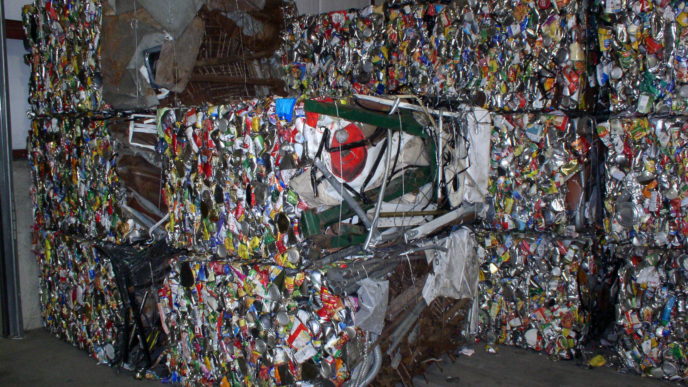
In April, the perils of overcriminalization were on full display when Brian Everidge traveled to Michigan with more than 10,000 bottles and cans, seeking to capitalize on Michigan’s generous 10 cents-per-bottle refund program. He stood to make $1,000.

Everidge was pulled over for speeding and found himself facing a $5,000 fine and up to five years in prison after the state trooper discovered his cargo. As it turned out, transporting more than 10,000 bottles into Michigan with the intent to collect a deposit is a felony.

Besides Michigan, nine other states have bottle deposit laws—California, Connecticut, Hawaii, Iowa, Massachusetts, Maine, New York, Oregon, and Vermont. Though each state law varies slightly from the others, each law operates on the same basic premise: Consumers pay a deposit on specified beverage containers and get reimbursed upon returning the emptied container.

Deposits vary from 5 cents to 15 cents by state and container size. When a person knowingly brings in containers sold outside the state, they are deceiving state officials by seeking the return of a deposit they never paid.

Surprisingly, interstate bottle fraud can be big business. In 2015, California officials uncovered a recycling ring that raked in $14 million from 2012 to 2014 on approximately 250 million containers brought from Arizona to California recycling centers.

The Michigan Treasury Department reported that interstate bottle fraud costs the state $10 to $13 million every year. Michigan state Rep. Kenneth Kurtz, a Republican, said of repeat “scammers who drive car and truck loads of cans from Indiana, Wisconsin, and Ohio,” that “If you are intending to defraud … then you should be held accountable for it.”

Six of the 10 bottle bill states—California, Maine, Massachusetts, Michigan, New York, and Vermont—have codified penalties specifically for cashing in on out-of-state bottles, or attempting to. Only Michigan and California, however, make it a crime.

Michigan’s penalties work on a sliding scale. Attempt to return up to 99 containers, you’ll get off with a civil fine; attempt to return 100 to 9,999 containers, you’re guilty of a misdemeanor; and if you attempt to return 10,000 or more, you’re now a felon and subject to up to five years in prison, a $5,000 fine or both.

Other types of fraud, such as dishonest practices in connection with official records on milk and butter production or failing to label imitation leather boots as such, are misdemeanors—no matter how much butter is produced or how expensive the boots are.

In California, trading in out-of-state recyclable containers is also a felony if the redemption value is more than $400. One truck driver faced criminal charges for smuggling 7,000 pounds of containers worth more than $7,100 in redemptions, with possible jail time of six months to three years.

The United States Supreme Court stated recently, in Bond v. U.S. (2014), that states “have broad authority to enact legislation for the public good—what we have often called a ‘police power.’” It also ruled in Minnesota v. Clover Leaf Creamery (1981) that a state can outright ban the sale of retail goods in a “plastic nonreturnable, nonrefillable container” if it so chooses, respecting the states’ broad discretion to implement environmental policies.

Heritage Foundation scholars have argued, however, that “the most successful environmental policies emanate from liberty.”

Criminal laws and penalties, writes John Malcolm, director of Heritage’s Meese Center for Legal and Judicial Studies, are “meant to enforce a commonly accepted moral code that is set forth in language the average person can readily understand and that clearly identifies the prohibited conduct.”

Administrative schemes like state bottle recycling programs, Malcolm writes, should “establish rules of the road (with penalties attached for violations of those rules) to curb excesses and address consequences in a complex, rapidly evolving, highly industrialized society.”

Maine’s bottle fraud rules exemplify a proper understanding of how law ought to work. Maine imposes civil fines whenever a person attempts to deposit more than 48 containers not sold in the state, with the penalty being the greater of a $100 fine for each container or $25,000 fine for each attempted transaction.

This creates a disincentive for cashing in on out-of-state containers and more than compensates the state for its losses without branding every person who violates the scheme as a criminal.

Moreover, Maine requires all recycling centers to post a sign that clearly defines “bottle fraud” and warns customers of its penalties, so anyone who unlawfully takes advantage of Maine’s incentive structure does so with a full understanding of the consequences.

Heritage scholars have identified ways to address the overcriminalization crisis. Lawmakers must reassess current laws and scrutinize any new laws that use criminal instead of civil penalties, incorporating safeguards to ensure that the criminal code is not a trap for the unwary. Everidge and the many others caught up in cases of overcriminalization deserve better from our justice system. (For more from the author of “Improper Recycling Could Land You in Jail: How Overcriminalization Threatens Everyone” please click HERE)

Follow Joe Miller on Twitter HERE and Facebook HERE.

Thick as Thieves: Murkowski, Alaska’s Political Establishment, and the PFD Grab

Ever wonder why our politicians never seem to represent us? Keep reading.

Alaska Dispatch News recently reported that telecommunications giant GCI funneled more than $2 million into the Alaska’s Future campaign in an attempt to strong-arm the legislature into a PFD grab that would direct half of the designated statutory payout to fund State deficit spending.

Over the past week, US Senate candidate Joe Miller has flooded the radio airwaves with an ad highlighting Senator Lisa Murkowski’s repeated attempts to tap the Permanent Fund for State spending while she was a State legislator, and reminding voters of the fact that Murkowski made statements earlier this year that appear to double-down on support for the PFD grab.

But is there really a connection between the corporate-sponsored Alaska’s Future campaign to take Permanent Fund earnings from Alaskans and Senator Lisa Murkowski?

Here’s what I found.

While Alaska’s Future campaign is a bipartisan group, run by Senator Dan Sullivan’s campaign manager Ben Sparks and former Senator Mark Begich’s spokeswoman Heather Handyside, it is in large part a campaign funded and directed by Murkowski donors. She is, in fact, the common denominator.

The Washington DC-based consulting firm, Black Rock Group, who is working Lisa Murkowski’s US Senate campaign is also consulting the Alaska’s Future campaign.

Alaska’s Future Co-Chair Ron Duncan of GCI has personally given the maximum $5,400 to Lisa Murkowski’s 2016 re-election campaign, and donated to numerous PACs who have funneled thousands more into the senior senator’s coffers.

At least three of Duncan’s Vice Presidents at GCI have donated a combined $9,900 more in personal contributions, and have also donated to PACs supporting Murkowski with thousands more.

Co-Chair Helvi Sandvik, President of NANA Development Corporation, has personally donated $3,500 to Murkowski, and steered an additional $7,000 to her from the NANA Development Corporation Inc. PAC.

Co-Chair Sophie Minich, President and CEO of the CIRI Corporation, is a past Murkowski donor.

No less than 17 of the 32 Alaskans named to the Alaska’s Future Leadership Council have either endorsed Mrukowski or donated to her, or to PACs that have donated no less than $34,875 to her campaign.

Further, corporate members have donated tens of thousands more through their PACS, and this before the latest disclosures have been posted to reflect donations since Murkowski picked up a legitimate challenger in the senate race.

Murkowski also has the backing of the AFL-CIO, whose leader in Alaska, Vince Beltrami, reportedly assisted GCI chief Ron Duncan with lobbying efforts in Juneau.

With just a handful of exceptions, the remainder of the Alaska’s Future Leadership Council are donors to either sitting Senator Dan Sullivan or former Democratic Senator Mark Begich.

    And to no one’s surprise, not one member of the group trying to grab your PFD has donated to any of Joe Miller’s three US Senate campaigns.

Alaska’s Future is a thinly veiled pay-to-play racket. They give money to the politicians, who take your money, and give a portion back to them. And the favor is returned come election time. This is what we call a quid pro quo. Everyone wins but the taxpayer.

And you wonder why Senator Murkowski offers consent to the politicians stealing your PFD? Wonder no more. Follow the money. The permanent political class is indeed thick as thieves, and they’re all in this thing together.

Thankfully, Joe Miller fought back, drafting the Save The PFD recall petition application in July.

And how can we fight back? Elect a man to the United States Senate who isn’t party to the theft.

In early September, when United States Senate Libertarian nominee Cean Stevens decided to step down, Joe Miller agreed to replace her on the ballot. He is the only viable candidate in the US Senate race capable of displacing this cabal and giving ordinary Alaskans a truly independent voice in Washington.

This One Tweet Shows Why You Can’t Trust Media ‘Fact Checkers’

In the wake of another debate, the self-appointed media fact checkers are at it again. Instead of fact checking, they often dispense opinions packaged as facts, and in some cases outright obfuscate on behalf of Democrats. NBC gave America a textbook case of the latter last night.

During the second presidential debate, Trump explained how, after a congressional subpoena, Clinton’s team had her server deleted of emails. During the exchange Trump made a metaphorical reference to Clinton wiping the server clean. NBC News, hilariously tried to fact check that.

The Claim

Trump says Clinton ‘acid washed’ her email server.

The Truth

Clinton’s team used an app called BleachBit; she did not use a corrosive chemical.

NBC rated the claim a “NOPE.”

This was not satire; they actually did this. What makes it more outrageous is Trump, in the same sentence, used the prhase “Bleach them.” Here’s the exchange as transcribed by the Washington Post.

When I speak, I go out and speak, the people of this country are furious. In my opinion, the people that have been long-term workers at the FBI are furious. There has never been anything like this, where e-mails — and you get a subpoena, you get a subpoena, and after getting the subpoena, you delete 33,000 e-mails, and then you acid wash them or bleach them, as you would say, very expensive process.

Two words after ‘acid wash’ Trump said ‘bleach them,’ which was an obvious reference to the computer program (not an app but that’s an aside) BleachBit.

It is noteworthy that NBC News did not try to fact check whether or not the underlying premise —that Hillary Clinton deleted emails after getting a subpoena — is true. Because it is. Morther Jones, not exactly a member of the Vast Right Wing Conspiracy, reported what the FBI report had to say about the emails (emphasis mine).

Pages 18-19: According to Mills, in December 2014, Clinton decided she no longer needed access to any of her e-mails older than 60 days. […] On March 2, 2015, The New York Times (NYT) published an article titled “Hillary Clinton Used Personal Email Account at State Dept., Possibly Breaking Rules.” […] In his interviews with the FBI, REDACTED [a PRN techie] indicated that sometime between March 25-31, 2015, he realized he did not make the e-mail retention policy changes to Clinton’s clintonemail.com e-mail account that Mills had requested in December 2014. […] He believed he had an “oh shit” moment and sometime between March 25-31, 2015 deleted the Clinton archive mailbox from the PRN server and used BleachBit to delete the exported .PST files he had created on the server system containing Clinton’s e-mails.

This explains why data was removed from the PRN server after the New York Times article and after the Benghazi committee had subpoenaed Hillary’s emails. It had nothing to do with anyone around Hillary Clinton. An IT guy at PRN realized one day that he’d forgotten about the retention order and went ahead and implemented it.

The report makes clear that Cheryl Mills sent an email, which the PRN techie received, telling PRN about the preservation request from the Benghazi committee. The techie said he knew it meant he shouldn’t disturb the Clinton server but apparently got confused and didn’t realize this meant he shouldn’t touch the old archives or the backups.

What is not being questioned is whether or Clinton’s team deleted the emails after the subpoena. It is established fact. By rating Trump as false — or in this case ‘NOPE’ – NBC News is intentionally misleading the public.

Remember when you read a “fact check” do some digging on your own, no matter who is providing the “facts.” (For more from the author of “This One Tweet Shows Why You Can’t Trust Media ‘Fact Checkers'” please click HERE)

Follow Joe Miller on Twitter HERE and Facebook HERE.

From Hacking to Fracking: Bombshells in Hillary’s Speeches

There are some startling revelations in the WikiLeaks data dump on what Hillary Clinton told the insiders at those speeches for which she was handsomely compensated.

In 2014, Clinton told a Canadian public-relations firm, tinePublic, that Russian oligarchs were behind the funding of the anti-fracking campaign in the U.S. – even to the point of creating phony environmental groups who supposedly opposed the extraction of oil from shale because its impact on “climate change.”

Clinton told the company: “We were up against Russia pushing oligarchs and others to buy media. We were even up against phony environmental groups, and I’m a big environmentalist, but these were funded by the Russians to stand against any effort, oh that pipeline, that fracking, that whatever will be a problem for you, and a lot of the money supporting that message was coming from Russia.”

That’s quite a revelation, indeed. She portrays a picture of old-fashioned disinformation right out of the old KGB playbook. But wait a minute! Hasn’t Hillary Clinton told Americans “climate change” represents one of the greatest threats to global stability and the survival of the human race? Hasn’t she opposed “fracking” for years? Wasn’t it a major issue in her campaign for the Democratic nomination? Yes, to all of the above.

So why is Clinton portraying herself in battle with Russian oligarchs and as a proponent of “fracking”? (Read more from “From Hacking to Fracking: Bombshells in Hillary’s Speeches” HERE)

Follow Joe Miller on Twitter HERE and Facebook HERE.
Emails: Firm That Hired Abedin Called Chelsea Clinton a ‘Spoiled Brat Kid’

Emails published by WikiLeaks on Monday show Chelsea Clinton was worried about a consulting firm that was founded by former aides to Bill and Hillary Clinton as she clashed with fellow employees of the Clinton Foundation.

Teneo Strategies, founded by Doug Band and Declan Kelly, has drawn scrutiny for its decision to employ longtime Clinton confidante Huma Abedin during the final months of Hillary Clinton’s State Department tenure. The firm created potential conflicts of interest when Abedin and Band went to State Department officials to seek assistance for Teneo’s clients.

In a Nov. 2011 email to John Podesta, Hillary Clinton’s current campaign chair, Band worried that “if this story gets out, we are screwed.” He was referring to Chelsea Clinton’s assertions that Teneo employees had begun to invoke Bill Clinton’s name, without his knowledge or consent, on behalf of corporate clients.

“She is acting like a spoiled brat kid who has nothing else to do but create issues to justify what she’s doing because she, as she has said, hasn’t found her way and has a lack of focus in her life,” Band said of the former first daughter’s criticisms.

Band later described an incident in which the Clinton Foundation’s chief operating officer, Laura Graham, contemplated suicide in Dec. 2011 due to the “stress” of the foundation. (Read more from “Emails: Firm That Hired Abedin Called Chelsea Clinton a ‘Spoiled Brat Kid'” HERE)

Follow Joe Miller on Twitter HERE and Facebook HERE.

GOP Women Stand by Donald Trump, Blast Those Jumping Ship Over ‘Antique Locker-Room Talk’

Elected female members of the Republican Party’s national governing body, joined by state lawmakers and county-level party officials, are rallying to Donald Trump’s side.

“I am still solidly behind Mr. Trump,” said Minnesota state Sen. Carrie L. Rudd, a Republican. “Why are we even talking about locker-room comments from 11 years ago when there are so many important issues at hand? The people who supported Trump still do.”

The Republican women began to circle the wagons around their party’s presidential nominee after a string of big names loudly parted company with Mr. Trump in the wake of a press-led attack involving leaked live-microphone sexual comments by him about women.

“Those that are jumping ship are establishment GOP that never supported him in the first place,” Mrs. Rudd said.

Some female lawmakers and party officials said Mr. Trump’s lewd comments managed to alienate more women, but those who remained on his side spelled out what he needed to do to recover in the town hall debate Sunday night in St. Louis with Democratic presidential nominee Hillary Clinton. (Read more from “GOP Women Stand by Donald Trump, Blast Those Jumping Ship Over ‘Antique Locker-Room Talk'” HERE)

Follow Joe Miller on Twitter HERE and Facebook HERE.
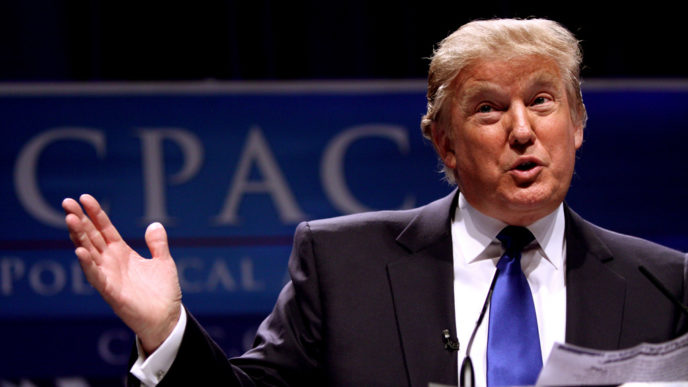
These State Pensions Are Most Likely to Enforce Benefit Cuts

A new research note from Moody’s found that State pension funds were underfunded by $1.3 trillion at the end of FY15 but was expected to grow to $1.8 trillion at the end of FY17 as pensions continue to struggle with low returns. We’ve discussed the unintended consequences of the Central Bank’s low-rate polices on pension funds multiples times (see “Pension Duration Dilemma – Why Pension Funds Are Driving The Biggest Bond Bubble In History”)…with the two most likely outcomes being benefits cuts for pensioners and/or crippling tax hikes for citizens.

Total US state aggregate adjusted net pension liabilities (ANPL) totaled $1.25 trillion, or 119% of revenue in fiscal 2015, Moody’s Investors Service says in a new report. The results, based on compliance with new GASB 68 accounting rules, set a new ANPL baseline and are poised to rise for the next two fiscal years as market returns fall below annual targets.

“The median return for public pension plans in FY 2016 was 0.52% compared to an average assumed investment return of 7.5%,” Moody’s Vice President — Senior Credit Officer Marcia Van Wagner says. “We project that aggregate state ANPL will grow to $1.75 trillion in FY 2017 audits.”

The states with the highest pension burdens — measured as the largest three-year average ANPL as a percent of state governmental revenue — were consistent with previous years. Illinois topped the list with pension liabilities at 280% of total governmental revenue, followed by Connecticut (Aa3 negative) at 209%, Alaska (Aa2 negative) at 179%, Kentucky at 162%, and New Jersey at 157%.

Given that pretty much every state pension is now underfunded, Moody’s introduced a new metric which they referred to as the “Tread Water” benchmark. The largest underfunded plans in Kentucky, Illinois and New Jersey would require an incremental 7 – 7.5% of annual state revenue for contributions in order to simply stop unfunded liabilities from growing further. (Read more from “These State Pensions Are Most Likely to Enforce Benefit Cuts” HERE)

Follow Joe Miller on Twitter HERE and Facebook HERE.

Man Wearing Bill Clinton ‘Rape’ Shirt Appears Behind Hillary During Rally

A man attending a rally for Democratic presidential nominee Hillary Clinton in Detroit on Monday appeared behind her wearing a T-shirt with an image of former President Bill Clinton along with the word “Rape.”

Once the man was spotted, he was escorted from the rally by security officers, falling down the stairs right behind Clinton. Some observers believed he had been pushed.

When she realized what was going on, Clinton said, “You know, I do hope somebody follows that gentleman out and stages an intervention. He clearly has not been following this election very closely.”

The Bill Clinton “Rape” image, found on T-shirts and posters, and similar words and images have been seen at various venues recently.

A man wearing a shirt bearing the slogan attended a recent campaign appearance by Democratic vice presidential nominee Tim Kaine. The man interrupted Kaine’s speech by shouting “Bill Clinton is a rapist” several times.

A poster warning about “rapist” Bill Clinton was seen outside the campus of Washington University in St. Louis before the second presidential debate. The poster showed Clinton holding a small sign bearing the names of several women he has been accused of sexually assaulting.

On Wednesday, Bill Clinton was in Canton, Ohio, giving a speech when a woman carrying a T-shirt that read “BILL CLINTON A RAPIST” walked past the members of the press. As she passed them she remarked, “Bill Clinton is a rapist.”

After the woman was removed by security, Clinton said, “I love it when people come to my rallies.”

Texas talk show host Alex Jones recently offered up to $5,000 to any listener successful in interrupting a live television broadcast by showing up in one of the T-shirts and shouting, “Bill Clinton is a rapist.”

A young man succeeded when he interrupted a segment of Fox and Friends.

Security arrived to extract the man from the area, but he was able to briefly get free. The young man could be heard saying, “Get your hands off me,” as security was able to subdue him.

Since Friday’s leak of a tape revealing Republican nominee Donald Trump made vulgar remarks about a married woman in 2005, he has increased the spotlight on Bill Clinton’s alleged sexual misconduct.

Before the presidential debate Sunday, he posted a video in which he was surrounded by women — Paula Jones, Kathleen Willey, Juanita Broddrick — who have accused Clinton of rape or inappropriate behavior. Kathy Shelton, a rape victim whose alleged attacker was represented by a young Hillary Clinton, was also in attendance.

Trump later said during the debate, “If you look at Bill Clinton, far worse. Mine are words, and his was action. His was what he’s done to women. There’s never been anybody in the history politics in this nation that’s been so abusive to women. So you can say any way you want to say it, but Bill Clinton was abusive to women.” (For more from the author of “Man Wearing Bill Clinton ‘Rape’ Shirt Appears Behind Hillary During Rally” please click HERE)

Follow Joe Miller on Twitter HERE and Facebook HERE.
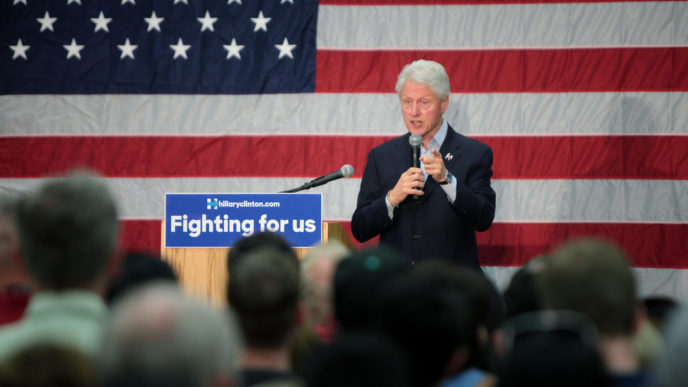
Leaked Memo Shows Democrats Targeting Trump Before He Was a Candidate, Manipulating Election

Donald Trump was a political target of the Democratic National Committee two months before he officially joined the 2016 presidential race, according to an email released by WikiLeaks on Monday.

The April 7, 2015, email from Hillary Clinton’s campaign to the DNC is designed to help make anyone nominated by the Republican Party “unpalatable” to the voters. It states that the goals of the Clinton campaign and the DNC are “one and the same.”

The email labels as “Pied Piper” candidates three men who, the campaign believes, would move the GOP in a direction that would make it hard for Clinton to lose the presidential race. The memo lists the eventual GOP nominee as well as Sen. Ted Cruz, R-Texas, and retired neurosurgeon Ben Carson as “Pied Pipers.” At that point, only Cruz had publicly said he was running for the White House.

“[W]e don’t want to marginalize the candidates, but make them more ‘Pied Piper’ candidates who actually represent the mainstream Republican Party,” the memo says.

It says Democrats should work with the media to boost such candidates.

“We need to be elevating the Pied Piper candidates so that they are leaders of the pack and tell the press to [take] them seriously,” the memo reads.

The memo also suggests three overall approaches to protect Clinton. They are:

1) Force all Republican candidates to lock themselves into extreme conservative positions that will hurt them in a general election;
2) Undermine any credibility/trust Republican presidential candidates have to make inroads to our coalition or independents;
3) Muddy the waters on any potential attack lodged against HRC.

The memo suggests that Democrats should “use the [Republican primary] field as a whole to inflict damage on itself similar to what happened to Mitt Romney in 2012. The variety of candidates is a positive here, and many of the lesser known can serve as a cudgel to move the more established candidates further to the right.”

After suggesting starting points to “undermine” the more establishment candidates the DNC expected to be running, the memo called for the start of a wide-ranging development of material to use against the GOP’s candidates.

“As we all know, the right wing attack machine has been building its opposition research on Hillary Clinton for decades,” the memo reads.

“The RNC et al has been telegraphing they are ready to attack and do so with reckless abandon. One way we can respond to these attacks is to show how they boomerang onto the Republican presidential field. The goal, then, is to have a dossier on the GOP candidates on the likely attacks HRC will face.”

Those areas were “transparency & disclosure; donors & associations; and management & business dealings.”

The DNC memo says, in essence, that all dirt was good dirt.

“In this regard, any information on scandals or ethical lapses on the GOP candidates would serve well. We won’t be picky. Again, we think our goals mirror those of the DNC,” the memo adds. (For more from the author of “Leaked Memo Shows Democrats Targeting Trump Before He Was a Candidate, Manipulating Election” please click HERE)

Follow Joe Miller on Twitter HERE and Facebook HERE.