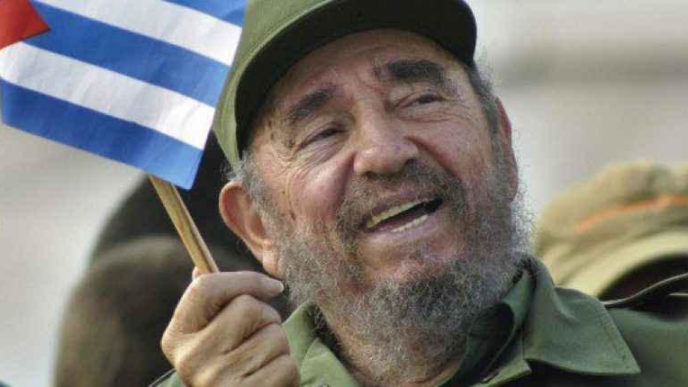
After Castro’s Death, Trump Seeks ‘Concessions’ From Cuba

Under the Castro regime in Cuba, Sebastian Arcos spent a year of his life in prison for trying to escape the grip of communism.

But the death of Fidel Castro on Friday did not give Arcos immediate relief, because the regime that altered the course of his life remains in power.

“I have become old and cynical, so I was not particularly happy when he died—I was not sad either,” said Arcos, who spent the first 30 years of his life in Cuba before coming to Miami, where he is now the associate director of the Cuban Research Institute at Florida International University.

“Unquestionably, the world is a better place today without Fidel Castro,” Arcos added in an interview with The Daily Signal.

“More importantly, even if I don’t have any hope the regime will change in the short term, as a friend said to me yesterday, nothing changes and everything changes. Nothing changes because in the short term, Raul Castro [Fidel’s brother and Cuba’s president] remains firmly in control. But everything changes because the paramount leader of the Cuban Revolution has died, and when they bury him, they will bury the Cuban Revolution with him.”

Arcos, like many Cuban-Americans and others with a stake in Cuba’s future, views Fidel Castro’s death as an inflection point in how the U.S. engages with the Communist-ruled island.

Supporters of President Barack Obama’s decision to normalize relations with Cuba hope that Fidel Castro’s death will hasten the rapprochement of the two countries. But skeptics like Arcos say Fidel Castro’s death, and the attention it is drawing, will expose the human rights abuses and oppression that he says has continued under Raul Castro’s leadership, providing an opportunity for the next U.S. administration to press harder for change.

“President-elect Donald Trump made a campaign promise here in Miami, and he has to find a way to fulfill that campaign promise,” Arcos said.

Trump has sent mixed signals on his potential Cuba policy.

During a campaign event in Miami in September, Trump accused the Obama administration of making “concessions” to Cuba and he said he would reverse the president’s actions, many made by executive authority, unless “the Castro regime meets our demands.”

Monday, Trump took to Twitter to clarify his policy, writing: “If Cuba is unwilling to make a better deal for the Cuban people, the Cuban/American people, and the U.S. as a whole, I will terminate deal.”

But Trump also spoke positively of Obama’s policy early in his campaign, saying restarting diplomatic relations with Cuba was “fine.”

Obama’s Dramatic Change

In December of 2014, Obama announced a renewal of diplomatic ties with Cuba that included a loosening of decades-old restrictions on travel, trade, investment, and remittances.

Within a year, the countries reopened their embassies.

It is now easier for Americans to visit Cuba and send money and goods there, and also for American businesses to establish a presence on the island. Obama recently used executive action to expand the legal importation of Cuban cigars and rum by Americans who visit the island.

Hundreds of commercial flights go to and from the island weekly, with U.S. airlines scheduled to join this week.

Obama could not end the trade embargo against Cuba. Only Congress can do that.

Ricardo Herrero, the executive director of #CubaNow, an advocacy group that supports Obama’s policy change, said that the opening to Cuba has encouraged private industry and promoted free expression from reform-minded citizens.

“It would be a grave mistake to pull back now,” Herrero told The Daily Signal in an interview. “By demanding concessions, all you are doing is empowering the regime and enabling them to go to reformers on the island and say, ‘See, they [the U.S.] are trying to govern us already.’ That’s why we need to remain strong. Let’s not give more oxygen to those who want to continue fighting the Cold War forever.”

‘Important Opportunity’

If Trump moves forward with changing Obama’s Cuba policy, he will find influential allies in the Republican-controlled House and Senate.

Rep. Mario Diaz-Balart, R-Fla., told The Daily Signal that he and other Cuban-American Republicans in Congress are “so encouraged” by Trump’s public statements regarding Cuba.

He said he would push for Trump to “eliminate” all of Obama’s actions unless Cuba meets certain conditions, including freeing all political prisoners “without exception,” allowing for “basic freedoms,” and starting the process “toward multiparty elections.”

“Let’s help the internal opposition,” Diaz-Balart said. “Let’s stand with them, and encourage and legitimize them, as opposed to what Obama has done to legitimize the dictatorship that oppresses those folks. This is a very important opportunity for the president-elect to do an awful lot of good for the prospects of a free Cuba.”

Rep. Mark Sanford, R-S.C., who supports Obama’s policy change, is more circumspect about radically shifting course.

“I am hopeful he [Trump] will come out on the side of his earlier statements that were pro-engagement and question the validity of a 50-year policy that has not brought about change,” Sanford told The Daily Signal in an interview. “I have no problem with the idea of asking for more. If one can come up with a better deal, we should. What I would hope not to see is the perfect being the enemy of the good. Wherever you are in the debate, people are foreseeing change in Cuba. The question is how do we get there.”

Eric Hershberg, the director of the Center for Latin American and Latino Studies at American University, said Trump has the authority to walk back much of Obama’s Cuba policy.

He argues that in this uncertain period after Fidel Castro’s death, and the election of Trump as U.S. president, Raul Castro and his communist regime may be more tempted to act out in the short term.

“Fidel leaving the scene may accentuate the regime’s message to the Americans that we are still here and will act in our interests, not yours,” Hershberg said. “The Cubans aren’t going to give any concessions at all. The Cubans have never gave concessions since the revolution and they won’t start now.” (For more from the author of “After Castro’s Death, Trump Seeks ‘Concessions’ From Cuba” please click HERE)

Follow Joe Miller on Twitter HERE and Facebook HERE.

How Abolishing the Electoral College Would Destroy the Power of the States

Nearly a month after Donald Trump defeated Hillary Clinton in this year’s presidential election, progressive groups and activists are attempting to undermine the result along with fundamental institutions created by the Founding Fathers.

Clinton appears to have won the national popular vote in 2016, primarily fueled by massive landslides in populous Democratic states like California and New York. This has sparked efforts to do away with the state-based and not entirely democratic Electoral College.

Though a huge part of the anti-Electoral College push is sour grapes in the wake of a surprise electoral defeat, it serves the broader interest of the progressive movement’s goal to both delegitimize the incoming administration and subvert the idea of federalism as enshrined in the Constitution.

Electoral College Worked in 2016

The Electoral College was carefully designed by the Founders after lengthy deliberation at the 1787 Constitutional Convention. The design is this: Americans don’t cast their vote for president, but instead for electors pledged to their preferred candidate. Each state has a set number of electors based on the total number of representatives and senators. You can read about why the Founders created this seemingly complex system here.

Founding Father Alexander Hamilton, who was fairly popular with progressives just a week ago, supported the Electoral College process in Federalist 68. He said that “if the manner of it be not perfect, it is at least excellent.”

But a number of prominent Democrats have ignored Hamilton and called for an end to the Electoral College post-election.

Opponents of the Electoral College claim that the institution is fundamentally flawed. The fact that the winner of the most recent presidential contest didn’t have the highest total vote further demonstrates why it needs to be scrapped, according to their logic.

This narrative couldn’t be farther from the truth, as the issues surrounding the election prove exactly why the Electoral College is such an excellent system for the United States.

For instance, Green Party presidential candidate Jill Stein is leading a movement to recount votes in three key states that Trump won: Wisconsin, Michigan, and Pennsylvania. This was in part justified by the idea that Russia had tampered with the election.

The recount process will likely be messy, but it would be vastly more complicated if America had to undergo a national as opposed to state-level recount. Votes have trickled in for the last month, and it is possible that without the state-based system it might still be unclear who the next president would be.

As ugly as the 2016 election was, it would have been far uglier without the moderating, stable process afforded by the Electoral College.

Having states conduct their own elections is a strength of our system, not a weakness. For instance, without the Electoral College and respect for state powers, it would be difficult for America to experiment with solutions to prevent voter fraud. This should be a priority for those suddenly concerned about voting integrity.

Assault on Federalism

What is lost in the Electoral College debate is the underlying attack on America’s cherished and inherited idea of federalism.

The Founders in their wisdom designed this republic with the intent of checking ambition with ambition, and delegating specific powers to both the national as well as state governments. They created a nation in which states could operate independently, experimenting with different policies and laws to fit their people.

The elimination of the Electoral College would be just another blow to the role of the states in the American system of government. No longer would presidential candidates have to appeal to the farmers of rural Iowa alongside the bankers of urban New York. They would be incentivized to campaign directly to the interests of the largest population centers alone.

The reasoning used to abolish the Electoral College could easily be applied to some of the most important aspects of America’s constitutional republic.

If the Electoral College is simply an ancient, undemocratic, and defunct relic of the Founding, then why isn’t the Senate? After all, treating the states equally and allowing them only two senators regardless of population is silly if one thinks the states hold no special place in our system. One writer was open about this in a Washington Post op-ed calling for abolishing the states entirely.

“Times have changed, and we need to rethink the notion of the ‘United States of America,’” Lawrence R. Samuel wrote in The Washington Post. “Our states are no longer culturally diverse regions with their own respective identities; rather, they are artificially constructed geographic entities that certainly would not be formed today.”

Samuel concluded:

A federation of states was a wonderful idea in the late 18th century, but represents an unnecessary and costly burden in the early 21st. Two layers of government—federal and local—offers a cleaner, more sensible, and much more affordable system than our current one …

This is the essential issue at the heart of the Electoral College that extends far beyond the results of a single election.

The left wants to fundamentally change the system of federalism so venerated and protected by the founding generation. But those who believe that the United States was built on timeless ideas about man’s relation to man should look to preserve the system that allowed America to rise to the status of a superpower while preserving individual liberty. (For more from the author of “How Abolishing the Electoral College Would Destroy the Power of the States” please click HERE)

Follow Joe Miller on Twitter HERE and Facebook HERE.
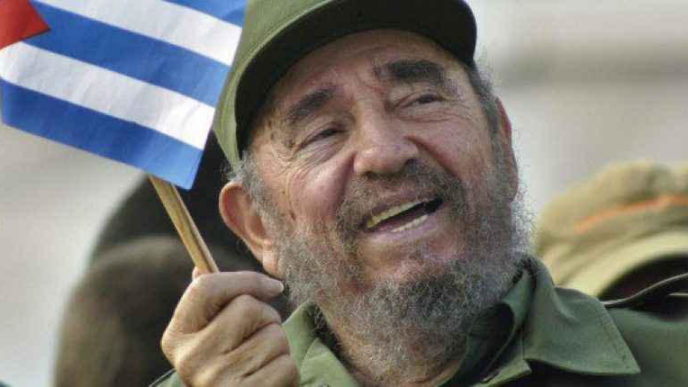
Castro May Be Dead, but Religious Freedom in Cuba Still Suffers

Fidel Castro is dead, but even with the passing of the tyrannical persecutor religious freedom in Cuba still has a long way to go.

Late Friday night, Fidel’s little brother Raul, who took over the country due to Fidel’s health problems in 2006, confirmed the death of the dictator on Cuban state television.

Unfortunately, communism in the island nation will not die with him, thanks to his brother Raul and the callous actions of western governments in recognizing the regime.

The New York Times’ obituary hailed the Marxist dictator as a “revolutionary,” Liberal Party Canadian prime minister Justin Trudeau said in a statement that he was “deeply saddened” by the passing of “Cuba’s longest serving president” who “made significant improvements to the education and healthcare of his island nation.” U.S. president Barack Obama also chimed in with a sterilized recognition of “the countless ways in which Fidel Castro altered the course of individual lives, families, and of the Cuban nation.”

Meanwhile, U.S. President-elect Donald responded (correctly) to the news as the passing of a brutal dictator who oppressed his citizens for the greater part of the 20th century:

Well, at least one world leader is willing to speak to the regime’s true nature.
As a result of the reign of terror and persecution wrought by the Castro brothers, the state of religious freedom and other vital human rights in the tiny communist country just 90 miles from America’s shores, is still dismal despite the meager, nominal improvements that Raul has sought since taking power in 2006.

The Castro regime, first through Fidel, then through his brother Raul, has engaged in a decades-long campaign against the religious liberty of its citizens. This has included the jailing of religious and political dissidents in prisons and concentration camps, the demolition of places of worship, and the systematic regulation of religious groups through the state.

In just one of the most recent and egregious examples of this systematic persecution, the nonpartisan United States Commission on International Religious Freedom’s 2016 report on the country noted that in 2015 “the government designated 2,000 Assemblies of God churches as illegal and ordered their closure, confiscation, or demolition.”

When the Obama administration visited Cuba after symbolically opening up diplomatic relations with the country earlier this year, president Obama said, while standing next to Fidel had the audacity to claim that the two could hopefully learn from each other on human rights.

Meanwhile, just a few days before, scores the Ladies in White – pro-democracy protestors, many of which are the relatives of jailed dissidents – were arbitrarily rounded up by the truckload and were imprisoned so that their demonstrations wouldn’t interfere with the proceedings.

The irony was, and is still, incredible in the worst sense of the word.

As long as Raul remains in place and communism reigns across the Caribbean island, religious freedom is a dream for many not yet realized, and will remain a distant memory so long as governments continue to deem themselves governors of the human soul and the final arbiters of human worth.

If the United States has anything to learn about human rights from the Castro brothers on human rights, that lesson is a case study in what never to do if you believe in fundamental human rights in the first place.

Fidel Castro is dead, and may God have mercy on his soul; he’s going to need it. (For more from the author of “Castro May Be Dead, but Religious Freedom in Cuba Still Suffers” please click HERE)

Follow Joe Miller on Twitter HERE and Facebook HERE.

Post Election Survey of Third Party Movement Leaders: Part One

“I believe 2016 was a phenomenal breakthrough for independent candidates and 3rd parties; the fact that independent candidates formed networks to support each other and to push the independent message is a development they cannot be underestimated.”

That’s Lynn Kahn’s overview of this year’s election. Kahn, who ran for President as an independent, was on the ballot in two states and qualified as a write-in in 10 more. To date, she is credited with winning 5,623 votes.

However, author and political activist Darcy Richardson, who was a candidate for the Reform Party nomination, said he is “not too optimistic” about the future of third parties. “Given the widespread disdain for both major parties this year and the fact that the vast majority of Americans believed the country is headed in the wrong direction,” he noted, “then realistically, if it couldn’t happen this year, then I’m not sure if a third-party breakthrough is possible any time soon.”

The final vote tallies are not in yet, but 2016 appears to be the best election for independents and third parties since 1996, when Reform Party nominee Ross Perot received eight percent of the vote. The combined vote for all alternative candidates currently stands at over five percent (1,787 individuals ran for President this year.) In addition, according to Independent Voter News, “the Democrats saw voter turnout drop from approximately 34 percent in 2008, to 31 percent in 2012, to a twenty-year low of 26.5 percent. Republicans saw their turnout drop from 29 percent in 2008, to 28 percent in 2012, to their own twenty-year low of 26 percent in 2016.”

The Libertarian Party nominee Gary Johnson’s share of the national vote is approaching 3.3 percent, better than any other presidential result in the party’s 45-year history. Arvin Vohra, Vice Chair of the Libertarian National Committee, asserted that, “During this election cycle, millions of new people have come to the Libertarian Party. These will be our future activists, state and county chairs, and candidates.” Vohra also stated, “We have seen much wider acceptance of Libertarian ideas, such as ending the War on Drugs, eliminating the income tax, repealing the Patriot Act, and getting the government out of healthcare and education. The increased traction of these ideas is spreading our message and bringing new people into the LP every day.”

When asked if 2016 was a step forward for third parties and independent candidates, Libertarian State Leadership Alliance Political Coordinator George Phillies answered, “No, we had a wonderful opportunity – given the two worst Presidential candidates in recent times – and we did not get much out of it.” He went on to say:

Once again, [the Libertarian Party] ran a pair of recent Republicans. Their campaign did not emphasize major libertarian issues, such as the surveillance state and the warfare state. The Presidential candidate was significantly under-informed, and kept passing issues over to the Vice Presidential nominee … [Governor William Weld] appeared to endorse Clinton for President, and his after-the-fact denials were less than completely helpful.

However, the Libertarian Party’s Vohra emphasized that the election, “was a major step forward for our party specifically, and may have also helped other parties. Just days ago, for example, an LP candidate training program which in the past usually had 7-10 attendees had over 100.”

Darcy Richardson did have praise the Libertarian Party’s progress: “One of their biggest accomplishments was the party’s successful petition drive in Oklahoma – an amazing feat made possible in large part by the personal generosity of ballot access expert Richard Winger and the on-the-ground presence of longtime Libertarian Party activist Paul Frankel, who coordinated much of that effort. I believe he is one of the country’s most experienced signature seekers.”

Richardson also observed, “Impressively, under Frankel’s direction, the party collected 42,182 signatures – where they needed 24,745 – some 30,500 of which were deemed valid. At more than 72 percent, it was a remarkable validity rate.” Of the Oklahoma effort, Richardson also said:

It was the first time in 16 years that the Libertarian Party qualified for the ballot in the Sooner State, thereby giving the party’s presidential ticket a realistic shot at appearing on the ballot in all fifty states and the District of Columbia this year. That was an extraordinary accomplishment.

Libertarian Party Vice Chair Vohra claimed, “Our 2016 success was built largely on the groundwork of countless activists as well as the excellent job done by the Gary Johnson campaign. That includes the exponential increase in state and county level organization, the incredible work of our social media volunteer teams, and the unprecedented outreach done by the Johnson campaign.”

Rocky De La Fuente, the presidential candidate of both the Reform Party and the America Delta Party, and who earned more than 32,000 votes in the election, observed, “2016 was a step forward for third parties and independent candidates. We saw some upward movement among third party candidates that was helped by the historically weak nominees offered by the two major parties. However, the two next-most ‘favored’ parties, the Libertarians and the Greens, enjoyed most of that movement. They offered candidates who brought nothing new to the race. In fact both parties faded from the scene months before the election, but they’re seemingly happy to finish in their traditional third and fourth places.”

De La Fuente, whose name appeared on 20 state ballots and who qualified as a write-in in 16 more, continued, “Had either of these parties offered a stronger candidate with fresh ideas and the tenacity to fight until the end, perhaps they would have won a few states and potentially thrown the election into the House of Representatives. Instead, we only saw modest progress while witnessing what was potentially a ‘perfect storm’ in a political sense.”

Prohibition Party nominee Jim Hedges agrees: “I suspect that 3rd party results this year were partly due to widespread voter disgust, even despair, with the poor quality of major-party candidates.” Hedges, qualified as a write-in candidate in five states and was on the ballot in three more. The Prohibition Party garnered more than 5,500 votes – its best showing since 1988. In June, he ran a strong race in California’s American Independent Party presidential primary, tallying 11 percent of the vote.

Constitution Party Chairman Frank Fluckiger says his 25-year-old party may surpass its all-time high vote as well [in 2008, Rev. Chuck Baldwin captured 199,304, votes.] “It is clear that interest in the party is increasing. In every case each state in which we were on the ballot in both elections [2012 and 2016], the vote totals increased.” Fluckiger also said, “2016 was a very good year for the Constitution Party. Other third parties – the Libertarian Party in particular – seemed to have serious morale problems. Numerous times we were told by members of that party that they intended to vote for the [Darrell] Castle-[Scott] Bradley ticket since they were most unhappy with many of the stands on issued taken by the Libertarian ticket.”

Darrell Castle, the Constitution Party nominee, stated, “2016 was the greatest opportunity for 3rd parties in history. Unfortunately, some were not ready to take advantage of it. Many members decided to openly support the opposition perhaps not realizing the chance to make their party viable for the first time.” Castle also said, “One prominent 3rd party went down the ‘big name’ route instead of picking someone who truly reflected their party’s stated values. This was a misunderstanding of the true depth of dissatisfaction among disaffected people of the two major parties, especially the Republicans.”

American Solidarity Party (ASP) presidential nominee Mike Maturen is upbeat about the impact of 3rd parties on the 2016 election. He said, “We are very proud of the fact that we were able to not only gain access to the Colorado ballot, but were able to be authorized as write-ins on the ballots of 27 other states. Our party was not only able to not only recruit members in all 50 states – and state chapters in 38 states – but we were able to get a great deal of positive press, not only here in the United States, but internationally as well.”

ASP Chairman Matthew Bartko pointed to the passage of Maine’s Ranked Choice Voting Initiative as a measure of success for third parties. The instant-runoff voting initiative establishes ranked-choice voting for federal and statewide candidates excluding President. “This is a great step in the right direction for election reform,” Banko stated, ‘but we know that this is a long game and there is so much work to do. But we are here for the long haul and we are in it to win it.”

Darcy Richardson also commented that, “The Progressive Party of Vermont was clearly a big winner on November 8th, but of the nationally-organized minor parties, my hat is off to the Greens for scratching and clawing their way onto the ballot in 44 states and the District of Columbia – a record for that left-leaning party. Despite heartbreaking setbacks in Nevada and Georgia, it was an incredible achievement. Much of the party’s success, of course, was due to the efforts of longtime Green Party activist Rick Lass of New Mexico, the party’s national ballot access coordinator.”

Libertarian Party Vice Chair Arvin Vohra is optimistic about the third party movement: “I have never before seen this level of enthusiasm, organization, dedication to principle, and passion in any organization, including the Libertarian Party.”

Mike Maturen is confident as well: “I believe the vicious campaign of 2016 contributed more to the growth of third parties than just about anything in the past few decades. People are tired of the divisiveness and hatred. They are looking for a political home where they can discuss ideas and policies without being attacked and vilified.”

Constitution Party presidential candidate Darrell Castle is cautious however: “The Constitution Party and other 3rd parties will have to reexamine their commitment to the cause of liberty if they want to have any meaningful future.” Darcy Richardson reminds third party activists that “the dearth of third-party candidates in this year’s congressional and state legislative races was also disappointing.” And Rocky De La Fuente adds this observation on the future prospects of the third party movement: “It will depend on what the parties do with the opportunity that has been presented. We have the opportunity to exploit the exposure we received.”

Finally, Joe Miller, Libertarian Party nominee for U.S. Senate in Alaska – who received the highest vote as Libertarian in the national party’s history – assesses the situation this way: “Whether 2016 acts as a roadblock or change-point depends almost entirely on whether Trump governs as the anti-Establishment candidate he campaigned as. A Trump failure – especially one caused by the GOP – will create unparalleled opportunities for a viable third party candidate in 2020.” (For more from the author of “Post Election Survey of Third Party Movement Leaders: Part One” please click HERE)

Follow Joe Miller on Twitter HERE and Facebook HERE.
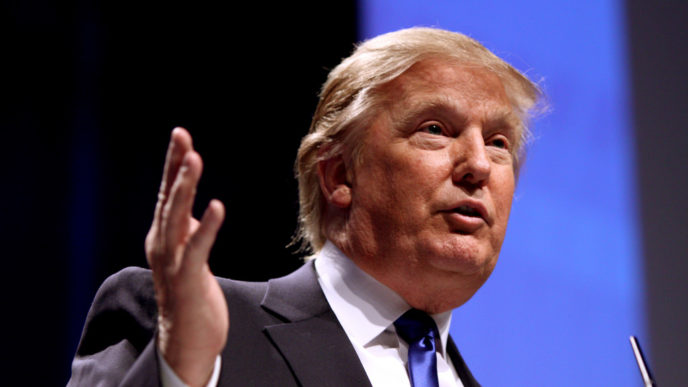
Mexican Cement Maker Ready to Help Trump Build Border Wall

A Mexican cement maker is ready to lend its services to U.S. President-elect Donald Trump to build the wall he wants to erect on the southern border of the United States to curb immigration.

“We can’t be choosy,” Enrique Escalante, Chief Executive Officer of Grupo Cementos de Chihuahua (GCC) said in an interview. “We’re an important producer in that area and we have to respect our clients on both sides of the border.”

Republican Trump campaigned vowing to build a “big, beautiful, powerful” wall across the 2,000 mile (3,200 km) frontier in order to stop illegal immigrants from Mexico, which he accused of sending rapists and drug traffickers north.

The campaign of the New York businessman who has never previously held public office was widely reviled in Mexico.

Parts of the border are already divided by high fences, and a huge part of the boundary runs along the Rio Grande river. (Read more from “Mexican Cement Maker Ready to Help Trump Build Border Wall” HERE)

Follow Joe Miller on Twitter HERE and Facebook HERE.
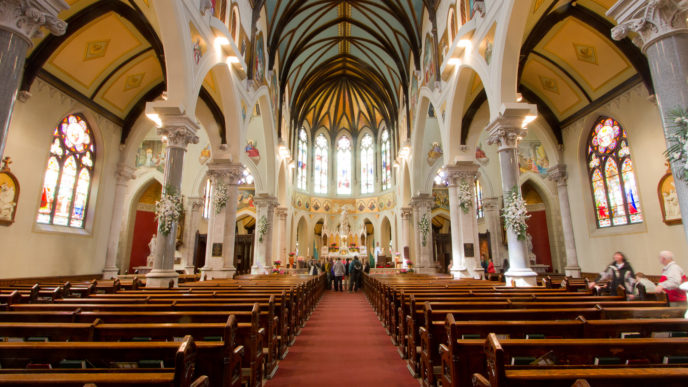
Surprise! Conservative Theology Keeps People in Church

A recent study found that conservative theology (meaning a more literal interpretation of scripture) is a much better driver of church attendance than liberal theology, according to a five-year academic study of Canadian churchgoers.

This isn’t surprising whatsoever and should be a big fat “duh” moment for everyone remotely familiar with Christianity and/or the Holy Bible in the first place.

According to a story at the Guardian:

“If we are talking solely about what belief system is more likely to lead to numerical growth among Protestant churches, the evidence suggests conservative Protestant theology is the clear winner,” said David Haskell, the Canadian study’s lead researcher.

The findings contradict earlier studies undertaken in the US and the UK, which attempted to discover the underlying causes of a steep decline in church attendance in recent decades but concluded that theology was not a significant factor.

The findings corroborate research published in Baylor sociologist Dr. Rodney Stark’s The Triumph of Faith last year, which also found that while liberal Protestant denominations have been hemorrhaging membership for years now, conservative Catholic and evangelical congregations are actually growing, while actually levels of irreligion are holding steady.

“I don’t know what study ever found that doctrine didn’t matter in church growth,” Stark told Conservative Review in an email. “It always matters a lot. Note which churches are shrinking rapidly – all liberal – and which are growing rapidly, all traditional/conservative.”

A 2011 Study by the National Council of Churches also found similar trends among conservative evangelical and Pentecostal denominations.

But why is this? Why are those archaic strains of thought, the ones that Hillary Clinton advisers Jon Podesta, and Jennifer Palmieri mocked as “backwards” in the now-infamous “Catholic Spring” emails? After all, conventional wisdom would dictate that more progressive, comfortable, and permissive brands of Christianity ought to sell better than those whose prescriptions seem out of step with a post-Sexual Revolution society. Wouldn’t it?

Perhaps conservative theology is the key to attendance simply because it is much closer to the truth than all the various strains of modern liberal theology that tells the church to get with the times. After all, if you subscribe to the bible as written, you’d have to believe in all sorts of taboo things like natural marriage and the unborn child’s fundamental right to life. It would make far more sense for someone to avoid all the negative things that come with those beliefs — unless, of course, those beliefs are true.

Perhaps G.K. Chesterton put it best when he said, “We do not want, as the newspapers say, a Church that will move with the world. We want a Church that will move the world.” In order for that to happen, the church, whether Protestant, Orthodox, or Catholic, has to stick to the script, rather than make it accommodate the very world from which it seeks to save souls.

After all, we’re talking about the greatest story ever told in the greatest book ever written. Some watered-down, platitude-laden, post-modernist-friendly, safe space-approved substitute just won’t do.

If what you’re hearing from the pulpit makes little to no claim to absolute truth, why listen? If worship — what we render to God, and how we render it — is not of dire importance, why get up out of bed to a church on your day off? If you’re looking for a social club with a message that makes you fit in with your friends at cocktail parties, why not sleep in an hour and just meet them for brunch? It has to be far more appealing than the coffee and donuts they give you after service anyway.

But that’s the wonderful, transformative thing about Christianity: It doesn’t matter whether or not a belief is socially palatable, contemporary, or popular. It never has. The only thing that matters is whether or not that belief is true. And there is no substitute for the truth, once it is revealed.

Once people find the truth, they’ll suffer all sorts of calumnies and abuses for it. They’ll even die for it, as we’ve been tragically and heroically reminded of by the martyrs of the Islamic State over the past two years. And, yes, you can be for absolutely certain they’ll actually get out of bed and get to church for it. (For more from the author of “Surprise! Conservative Theology Keeps People in Church” please click HERE)

Follow Joe Miller on Twitter HERE and Facebook HERE.

Trump Must End the Obamacare Sex Change Mandate on Day 1. Oh, You Didn’t Know About That?

Over the summer, without much notice at all from the national media, President Obama’s transgender agenda quietly crept out of the locker room and into your doctor’s office, thanks to a largely underreported Obamacare rule.

The Health and Human Services transgender mandate, which went into effect in July, forces doctors to participate in sex changes if they conduct procedures that can also be a part of a sex transition. It does this by following the example of other agencies by expanding the traditional definition of sex discrimination to include people suffering from gender dysphoria.

“We believe that it is important to ensure that civil rights protections are extended to transgender individuals to afford them equal access to health coverage, including for health services related to gender transition,” reads a section of the federal registry.

So what does this “Nondiscrimination in Health Programs and Activities” mandate mean in practice? It means that a great deal of doctors are going to be subject to much coercion, courtesy of Obama’s administrative state.

Have you ever performed a mastectomy for breast cancer? Congratulations: You now have to perform sex-change surgeries for women who want to look like men, according to executive fiat. Ever performed an orchiectomy because a patient had testicular cancer? Ditto.

And this applies to child patients, too. Indeed, under the new regulatory regime, any doctor who has ever prescribed hormone therapy but doesn’t want to help a teenage boy look like a girl now stands accused of sexual discrimination.

And the regulators in charge don’t want to allow any room for dissent, either.

“[W]e decline to adopt a blanket religious exemption in the final rule as any religious concerns are appropriately addressed pursuant to pre-existing laws such as RFRA and provider conscience laws,” the registry reads.

Wait, you mean the same laws that were invoked to protect Hobby Lobby and the Little Sisters of the Poor? Sometimes you have to wonder if there’s somebody in Obama’s HHS who just enjoys suing people with traditional beliefs.

Now the Becket Fund for Religious Liberty is helping represent multiple clients in lawsuits in Texas and North Dakota stemming from the mandate, which they say (in similar fashion to the abortion and contraception mandates) violates the conscience rights of religious health care providers.

“No doctor should be forced to perform a procedure that he or she believes will harm a child,” reads a statement from Becket senior counsel Lori Windham. “Decisions on a child’s medical treatment should be between families and their doctors, not dictated by politicians and government bureaucrats.”

The distinction is worth noting because the HHS created the rule despite the American College of Pediatrics calling transgender conditioning child abuse in a paper earlier this year. Other research also suggests that a vast majority of cases of gender dysphoria in children will naturally resolve by adolescence’s end — without permanently altering the child’s life and body. But hey, they say that is what “progress” looks like, folks.

But the good news for religious people is that this can all be reversed by close of business on Jan. 20, 2017. As Congress prepares for the upcoming legislative session, there’s already discussion among Republicans on whether Obamacare should be fully or partially repealed, and how that should be accomplished.

This could get ugly, but fixing this egregious problem — just like removing the abortion and contraception mandates that have proven to be equally as damaging to conscience rights — is that it can be undone with a single use of the “pen and phone” that created it in the first place.

In addition to the skyrocketing premiums, collapsing exchanges, and host of other problems associated with the law, Congress now just has one more reason to completely scrap the system before spring. But, even if some less-than-conservative Republicans manage to misread the struggles of the American people and stymie a full repeal of the Affordable Care Act, at least President Trump could (and should) quickly eliminate the madness that is the transgender mandate.

Do it for the kids … and the consciences. (For more from the author of “Trump Must End the Obamacare Sex Change Mandate on Day 1. Oh, You Didn’t Know About That?” please click HERE)

Follow Joe Miller on Twitter HERE and Facebook HERE.
I’ve Had It With the Phrase ‘You White Evangelicals’

A gentleman named Luis posted a lengthy comment to a YouTube video where I explained why I ultimately decided to vote for Donald Trump, and I cite his comment here because it reflects the sentiments of many others who have declared open season on white, conservative Christians in America.

Luis began by saying, “I respected you as a wise Christian Dr. Brown,” but that respect disappeared when he noticed who I voted for. As he stated, “It makes me think of you as the same hollow headed Christians who think they vote on principles when there’s nothing to vote on principles for.”

So, despite my many caveats and concerns regarding Donald Trump, and despite the important pro-life, pro-family, pro-religious liberties of the Republican platform, no solid principles of any kind could cause anyone to vote for Trump. There must be other reasons, none of them good.

Of course, Luis is not alone in his disdain for Trump — he does a good job of summarizing the most egregious charges against Trump, be they true or not — which is why I stated numerous times in writing and on radio that I respected those who could not vote for him.

The Flippant and Easily Flipped Charge of White Evangelical Bias

Unfortunately, Luis is not alone in claiming that a vote for Trump was a reflection of white evangelical bias. As he explained, “Your view is casually related to the view of white evangelicals in this country but if you ask Christian Hispanics and black and Asian Christians, our views are totally different. Why would that be Mr. Brown?”

Actually, Luis could have asked the same question four years ago or eight years ago, when roughly the same percentage of black and Hispanic Christians voted Democrat. Was it because Romney and McCain were also evil men, or was it because these minorities have a history of voting for Democrats? And what of the 28 percent of Hispanics, 27 percent of Asians, and 8 percent of blacks who voted for Trump? Were they as blind as the many white evangelicals who voted for him? Were they also hollow-headed and lacking in principles?

After making the claim that I voted for Trump because of pressure from my radio audience (is he referring to the large number of African American listeners or the large number of anti-Trump listeners?) he continued, “But you have become the mockery of this world who can’t trust you because of your amoral morality and have show[n] us the minorities that your huge bible studies, books and Universities are worthless when politics are involved, because of your grandeur white evangelical spirituality all us Christians will suffer with this man in the White House.”

There you have it in a nutshell. Trump will be our next president because of the sinful “grandeur” of “white evangelical spirituality.”

Does Luis really believe that it was some kind of white nationalism that caused so many evangelicals to vote for Trump? Did we all just wake up one day and decide to sell our souls to the devil?

Racism is Sometimes in the Eye of the Beholder

But there’s more. Luis writes, “And if it’s true that God chooses and deposes Kings, when Obama is and was President you white evangelicals disrespected him as many times as possible calling him a Muslim, a dictator and the Antichrist and since it is a biblical imperative and spiritual law that people reap what they sow, it might come to be that all you call President Obama will become true in President Donald Trump.”

There it is again. A professing Christian man writing with passion and conviction throws around the phrase “you white evangelicals,” as if he himself is exempt from racism. After all, he is (presumably) a minority Christian and therefore, as a member of a minority, cannot himself be guilty of racism (at least, according to the latest, PC definitions of racism, which claim that only the majority class can be racist).

The reality is that racism is a two-way street, and just as we must call out anti-black or anti-Hispanic or anti-Asian or anti-Native American racism when we see it, we must call out anti-white racism too. Justice and fairness and honesty require it, whether it’s PC or not to do so.

Critics can shout “white privilege” all they want, but truth is truth. They can claim that minorities cannot be guilty of racism against the cultural majority, since racism, they say, has to do with oppression. But that is a conveniently manufactured definition of racism rather than the real definition of racism.

Of course, some people claim that you can only address the sins and shortcomings of your own community, not someone else’s community. But if that is true, it would mean that blacks, for example, could not call out racism when they saw it among whites. Does anyone really believe this? And can we not address sins within our own, larger community, namely, the Body of Christ?

Unfortunately, Luis makes the all-too-common error of assuming that all criticism of President Obama was based on race, failing to realize that: 1) our issues had everything to do with the content of his policies and nothing to do with the color of his skin; 2) liberal criticism of President George W. Bush was as least as harsh as conservative criticism of Obama; 3) those making the ridiculous claim that Obama was the antichrist did so despite his race rather because of his race (which prophecies speak of a black antichrist?); and 4) most of those falsely claiming that Obama was a Muslim did so because of his background (being the son of a Muslim who was listed as a Muslim while in school in Indonesia) and because of his pro-Islamic words, not because of his skin color.

Unfortunately, like many of those who throw around the race card today, Luis fails to see his own blind spots, asking, “Who of you white Christians will stand now and openly accuse Donald Trump of his policies that will harm minorities?”

We Can Do Better Than This

Is he truly unaware that, for more than one year, prominent white Christians raised many concerns regarding Trump’s policies, even leading the way in the Never Trump movement? And is Luis truly unaware that many of those who voted for Trump believe that, in the end, he will prove himself to be the president of all Americans, including minorities?

Again, I fully understand why many Americans, including Christians, have deep concerns about President-elect Trump, and I recognize (and have many times addressed) the highly divisive nature of his campaign.

I also understand how his campaign and election have unearthed a lot of ugly attitudes (perhaps among Christians in particular), one of which is an anti-white hostility, a hostility fueled by bitterness, judgmentalism, and misinformation.

I urge my brothers and sisters in the Lord to search their hearts and ask Him to reveal racism of any kind – be it anti-black, anti-Hispanic, anti-Jewish, anti-Asian, anti-Native American, or anti-white. It is unbecoming for the family of God and contrary to our nature as followers of Jesus.

Surely we can do better than this. (For more from the author of “I’ve Had It With the Phrase ‘You White Evangelicals'” please click HERE)

Follow Joe Miller on Twitter HERE and Facebook HERE.
Evangelicals Who Voted for Trump, and the Value of Listening

Like many Christians who opposed Donald Trump’s election for president, I was disturbed at exit surveys showing that 81 percent of white evangelicals voted for him. Some Christians have already begun criticizing those evangelicals and distancing themselves from them. In time I may join those critics. What has intrigued me recently, though, is why only 16 percent of white evangelicals voted for Hillary Clinton, so I set out to explore that question in an informal way. What I learned was something of a completely different nature, and possibly more important for all of us in the long run.

Not Welcome Here?

The first thing I noted about Clinton’s 16 percent support from Christians was how small that number was. When such a small proportion of a group gives its votes to a candidate, it’s fair to conclude that members of that group do not feel welcomed into that candidate’s party. It’s fair to say that blacks do not feel welcomed in the Republican party, given that only 8 percent voted for Trump. Likewise white evangelicals must not feel welcomed in the Democrat party. Why?

Reluctant Trump Supporters

This is the question I set out to explore. I reached out through Facebook to find Christian “Reluctant Trump” supporters, specifically those who did not support him in the primary but voted for him in the general election. (I have no intention of this being a representative, publishable survey, but simply a way to satisfy some of my curiosity.) I asked their reasons for deciding to support him in the end, and I promised not to argue with them.

Patterns of Responses

Dozens of people answered. Some of my Facebook friends said they supported Trump simply because he was the Republican candidate, and they were either political conservatives or Republicans. Several mentioned supporting the platform rather than the person. Others told me they considered the controversies surrounding Trump to be no worse than those surrounding Clinton, so that, for example, Trump’s sexism was no worse than Clinton’s. Finally, some attributed Trump’s bad image to an unfair media: no matter what charge was leveled at Trump, they would not believe it, coming as it did from what they saw as a corrupt media machine.

Other patterns emerged from the responses. The top issue my Facebook friends expressed concerning Clinton was abortion, followed by concerns about religious freedom. Among those who admitted the controversies surrounding Trump made them hesitant to vote for him, the chief stated concerns had to do with his comments about sexual assault on the Access Hollywood tape. I seldom heard race relations being mentioned, leading me to wonder whether that issue might be the main thing distinguishing NeverTrump Christians from Reluctant Trump Christians.

Someday in the future I might explore this question more rigorously using a proper scientific research design. At this stage all I wanted to do was to actively listen to individuals I disagreed with concerning Trump; to learn their perspectives, so that I could understand better how to relate to them. For now this project was sufficient for me and my curiosity at this time.

The Importance of Listening

I fear that too often we as Christians are too eager to engage in the fight, and are not ready to reach out and hear where others are coming from.

But there is another lesson to be learned here, one that had nothing to do with my survey or everything to do with it, depending on how you view it. It’s about listening.

Listening to others you disagree with can be hard work. I put considerable time and energy into my little project. It was worth it. Gaining understanding of others, particularly of other Christians, is important in a post-Christian society. This is especially true considering all the denominational and racial factions separating Christians today. There is a time for arguing your points and making your objections known. For me that time was leading up to the election. (I am not ashamed in the least for my opposition to Trump.) But there is also a time when the wiser course is simply to take stock of a situation and listen to others.

I fear that too often we as Christians are too eager to engage in the fight, and are not ready to reach out and hear where others are coming from. Listing to one another — genuinely interested, active listening — can help build bridges over the barriers that trouble the Church.

So I wonder how many white Christians are willing to listen to the perspectives of Christians of color? How many Christians of color will listen to whites? How many Christians are open to hearing from others who disagree with them on the role of women in the church? Can we listen to Christians across the political aisle?

The day may come when I will feel obligated to renew my opposition to Trump. I hope if that day comes I will be in a better position to communicate with others who support him, to explain why I feel the way I do, and learn how to work with them in areas both where we disagree and where we agree. (For more from the author of “Evangelicals Who Voted for Trump, and the Value of Listening” please click HERE)

Follow Joe Miller on Twitter HERE and Facebook HERE.
Among World Religions, Christianity Provides a Middle Way Between Jihad and Pacifism

Every heresy starts with at least a tiny mustard seed of truth. However great a distortion it is to say that Christianity preaches pacifism, non-violence, and passive surrender to the aggressions of other cultures, faiths, and ideologies, that notion begins with something real. There is a stark difference between Christianity and the religions that have surrounded it for most of its history. To put it another way: would we need a long article of to refute the idea that Islam is a pacifist religion?

Hardly. It won’t take that long. In fact, let’s go ahead and do it. The self-styled prophet Muhammad began by preaching his distinctive religion, which many scholars see as cobbled-together bits of Judaism and extreme Arian Christianity (which denies Jesus’ divinity), two creeds that were common in the region of Arabia where he grew up, all filtered through an intense tribal nationalism. The Arabs had been disorganized, dispossessed, and frequently governed by foreign rulers for many centuries, practicing either fractured and primitive forms of paganism, or faiths that came to them from other nations — such as Christianity and Judaism.

Islam: A Warrior’s Religion

Muhammad’s creed, by contrast, told them that Arabs were in fact the people of God, that God’s own Word had been written in their own language before all eternity and dwelt alongside Him in heaven. No translation of the Koran from Arabic into any other language is even considered authentic by true believers, merely a paraphrase. The holy place where all must come to pray would be in Mecca, not Jerusalem, and the whole Arab peninsula must be purged of every other religion. After a decade or so of preaching this message with little success in Mecca itself, Muhammad fled to Medina, where warring clans turned to him as a peacemaker — and a political savior. He began to reign over Medina as a theocratic king.

Suddenly, the constant stream of messages that Muhammad claimed to be hearing from the Angel Gabriel took on a quite different tenor. While he had been weak and almost friendless, God had told him to preach tolerance and peaceful coexistence with other religions. Once he had at his disposal significant wealth and an army keen for commerce raids and conquest, Muhammad began hearing messages of quite another sort. These later messages, he would explain to his followers, “abrogated” the first set of teachings: the God in whom he believed was perfectly free to change his mind. (Indeed, the Islamic concept of Allah leaves Him quite unbound by reason, logic, self-consistency, or even the duty to keep His promises — only His Will is sovereign, and it’s quite free to prove capricious.)

It was at this point that the Islamic faith we have come to know and love took the shape it has kept ever since: it’s a creed of conquest that claims the whole non-Muslim world consists of sinful rebels against Allah who deserve to be subjugated by force and either converted or killed — though reluctant exceptions are offered in principle (quite often ignored in practice) for other monotheists such as Jews and Christians. Those peoples are damned to hell in the next life, but in this one they may be left to live in peace, provided they accept absolute subjugation to the authority of Muslims, defer to them in every sphere of life, refrain from making converts or advertising their faith, and pay a special, heavy tax.

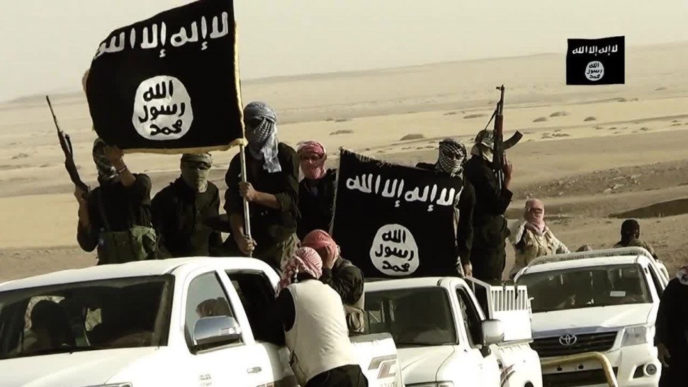
Muhammad put this creed into practice, leading armies into battle, raiding caravans to raise money, and after massacring unbelievers who resisted his offer of faith or subjugation, taking women and girls as sex slaves. To this day, Muslim men are restricted to “only” four permanent wives, but are free to keep as many captured concubines as they can kidnap in wars fought for Islam. This doctrine is used today by ISIS in Iraq and Syria to justify the sex slavery of hundreds of non-Muslim women and girls. Unfortunately, Muslims consider Muhammad as the “perfect example” of human behavior, which means that virtually everything he did is worthy of imitation. Since he married a nine-year-old, that means that strict Muslim countries make it legal for their men to do the same — as Iran did in 1979 after its Islamic Revolution.

Christianity: A Middle Way Between Jihad and Servile Passivity

The example set by Jesus is … different, to put it mildly. Jesus responded to religious authorities who challenged His authority by engaging them in debate. He preached that we must go beyond the Old Testament’s call for proportional justice (“an eye for an eye”), and that when insulted with a slap we should “turn the other cheek.” He ordered us to “love your enemy” and “pray for those who persecute you.” He told His disciples that when they preached His message and were rejected, they should just quietly leave town. When gendarmes of the corrupt Temple establishment had Him arrested, He forbade His disciples to fight them, even healing the single Temple guard an apostle had rashly wounded. Insulted and beaten by guards, He spoke not a word of rebuke. From the Cross He did not denounce His persecutors, but called on His Father to forgive them, because they knew not what they were doing.

Jesus issued a powerful challenge to our natural (but fallen) instinct to avenge every slight, humiliate our enemies, treasure grievances, and wait for a chance for vengeance — in other words, to follow the advice of Niccolo Machiavelli, whose politics manual The Prince was essentially a self-help book from the anti-Christ. But the contrast between Jesus and Muhammad can be taken much too far, particularly if we pluck Christ’s statements out of their proper context and misunderstand His mission in a way that turns out to be perversely self-aggrandizing.

Don’t Try to Compete with Jesus

Because here’s the thing: Jesus is not meant to serve as our example in every single way. We are not called on to overturn the existing interpretation of sacred scriptures, for one thing. (Imagine if every Christian showed up at church and preached, “The Bible says unto you X, but I tell you Y!”) Nor is each of us a prophet preaching a brand new covenant between God and man. Few of us miraculously heal the sick, give sight to the blind, or dispense forgiveness to sinners on our own authority. As bad as some liberal Catholic parish Masses can be, we don’t have the right to rampage through the sanctuary, overturning the altar and scattering the liturgical dancers. (Resist the temptation, okay?)

Most of us are not even called to poverty, chastity, and obedience — as many of the apostles were, on whom monks and nuns model their very special and rare vocations.

Most important of all, not one of us is called to be a pure sacrificial victim, going willingly to our deaths at the hands of unjust authorities so that our suffering can make reparation to the Father for the sins of all mankind. Really. No matter how righteous and altruistic you’re feeling at the moment, Jesus has been there, and done that.

While Jesus called on us to carry our daily crosses, He did not threaten to nail us all up to them. The infinitesimally small percentage of Christians who face the stark choice between renouncing Jesus or dying as martyrs are in some ways emulating Jesus, but even they fall far short: their deaths do not forgive sins, though they can offer their sufferings in union with Christ’s for the sake of other sinners.

We are not sacrificial lambs going peacefully to the slaughter out of obedience to the Father for the sake of man’s redemption. And martyrdom isn’t God’s plan for the human race — or else He would have told us so. A few Christians in the early Church, during the Roman persecution, got it into their heads that it was virtuous to seek out martyrdom and turned themselves in to the pagan procurators to claim a glorious Christ-like death. The Church Father St. Gregory of Nazianzus condemned them for their rashness.

Our Duty to Defend the Innocent, on Pain of Sin

The Catholic Church at least does not teach that we are to simply surrender our lives to anyone who attacks us. The Catechism of the Catholic Church, relying on St. Thomas Aquinas, defends the lethal use of force for the “legitimate defense of persons and societies”:

Love toward oneself remains a fundamental principle of morality. Therefore it is legitimate to insist on respect for one’s own right to life. Someone who defends his life is not guilty of murder even if he is forced to deal his aggressor a lethal blow: ‘If a man in self-defense uses more than necessary violence, it will be unlawful: whereas if he repels force with moderation, his defense will be lawful. . . . Nor is it necessary for salvation that a man omit the act of moderate self-defense to avoid killing the other man, since one is bound to take more care of one’s own life than of another’s.’” (2263-4)

Nor are we expected — or even permitted — to leave innocent third parties defenseless at the hands of violent aggressors. As St. Thomas points out in another passage quoted in the Catechism: “Legitimate defense can be not only a right but a grave duty for one who is responsible for the lives of others. The defense of the common good requires that an unjust aggressor be rendered unable to cause harm.” (2265)

We are called to use force, if need be at the risk of our own lives, to protect others. That responsibility has motivated Christian policemen, soldiers, and spies over the centuries. (For more from the author of “Among World Religions, Christianity Provides a Middle Way Between Jihad and Pacifism” please click HERE)

Follow Joe Miller on Twitter HERE and Facebook HERE.