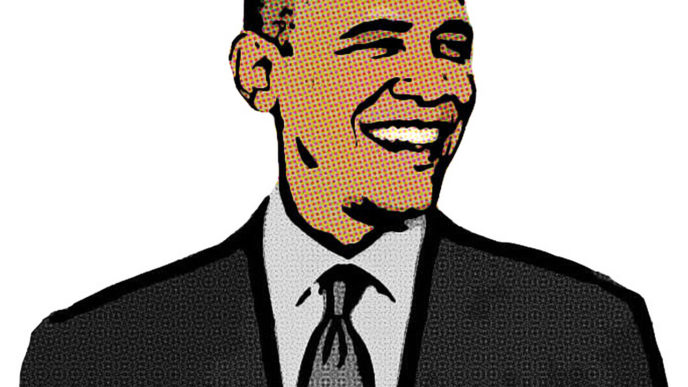
The Ultimate Lame-Duck Move? How President Obama Could Actually Pardon Hillary Clinton

The American people have a right to know if President Barack Obama will pardon Hillary Clinton after Election Day, and before the next president is inaugurated.

On Friday, the Clinton campaign melted down when Federal Bureau of Investigation (FBI) Director James B. Comey sent a very short letter to the chairmen of the relevant committees in Congress explaining a supplement to his testimony in which he’d said that the FBI had completed an investigation into former Secretary of State Hillary Clinton’s personal email server. Comey wrote: “In connection with an unrelated case, the FBI has learned of the existence of emails that appear to be pertinent to the investigation.” This letter has caused advocates of Hillary Clinton to attack the character of Comey.

News broke over the weekend that the Justice Department has obtained a warrant to review Clinton aide Huma Abedin’s newly discovered emails. Team Clinton has pulled out all the stops and is saturating the news with disparaging statements and implications about James Comey’s competence and motives. Former Attorney General Eric Holder even penned a piece this week in the Washington Post arguing that Comey has made a “serious mistake.”

The most fascinating debate, however, is whether President Barack Obama can wipe the slate clean by pardoning Hillary Clinton.

Law Newz published a piece on October 28, 2016, titled, “If Hillary Is Indicted, President Clinton Could Pardon Herself and Congress Might be Helpless.”

While Comey didn’t indicate how long the investigation could take, it’s pretty safe to bet investigators won’t come to any kind of decision before November 8th. It may even take months for the FBI to wrap up round two of this. So what happens if Clinton is elected, takes office, and then finds her self under indictment? It might not be likely, but it is worth exploring the legal possibilities.

It is Friday, January 20, 2017 and Hillary Clinton has just been sworn in as the 45th President of the United States after narrowly defeating Donald Trump in November. Republicans managed to hold both the House of Representatives and the Senate. A few weeks after winning the election, however, the Department of Justice handed down a multi-count indictment against Clinton over her handling of classified information and her involvement in an alleged pay for play scandal with the Clinton Foundation during her time as Secretary of State. It is a scenario that several of our commentators, and twitter followers have asked us to analyze.

Under Article II, Section Two, the president’s power to issue a pardon for a federal offense is nearly limitless. The Law NewZ site analyzed whether President Hillary Clinton has the power to pardon herself, but a more likely hypothetical is whether President Obama will pardon Clinton regardless of the result of the election.

The power of the president to pardon before a person has not even been charged with a crime has been established by the Supreme Court. This issue came up at the end of the presidency of George W. Bush when the question was raised as to whether Bush could pre-emptively pardon government employees involved in counter-terrorism programs who had not been charged.

As reported by Slate on July 21, 2008:

In 1866, the Supreme Court ruled in Ex parte Garland that the pardon power “extends to every offence known to the law, and may be exercised at any time after its commission, either before legal proceedings are taken, or during their pendency, or after conviction and judgment.” (In that case, a former Confederate senator successfully petitioned the court to uphold a pardon that prevented him from being disbarred.) Generally speaking, once an act has been committed, the president can issue a pardon at any time — regardless of whether charges have even been filed.

The power of President Obama to pre-emptively pardon Hillary Clinton has been established, and under the two likely election scenarios presented below there are reasons to believe that he will.

If Hillary wins the election, it would seem like something Obama might do because he has publicly stated that he didn’t think Hillary’s mishandling of classified information “posed a national security problem.” Remember that Obama reportedly used a pseudonym in emails with Clinton, too. For those two reasons, it seems reasonable to believe that President Obama would issue a pardon to clean the slate and let Hillary take office without the possibility of this legal question clouding her tenure as president of the United States. It would be ethically wrong, but perfectly within the power of a president under the Constitution.

If Trump wins the election, it would also seem like something President Obama might do to protect an elongated prosecution of a former presidential candidate. Again, President Obama would not want this litigated under a Republican administration, therefore it seems like he has a strong motive to pardon under either circumstance.

A reporter needs to ask President Obama right now if he will take a pardon off the table. (For more from the author of “The Ultimate Lame-Duck Move? How President Obama Could Actually Pardon Hillary Clinton” please click HERE)

Follow Joe Miller on Twitter HERE and Facebook HERE.

Republican Rep. Receives Death Threats for Tweeting About FBI’s Hillary Investigation

Democrat overreaction to the FBI’s reopening of the Hillary Clinton investigation has reached peak bizarre. Rep. Jason Chaffetz, R-Utah (C, 76%) has become a target of the Left all because of a tweet.

The House Committee on Government Oversight and Reform chairman is facing an ethics complaint and has even received death threats over a tweet he sent Friday. The congressman’s offense? Announcing he received new information from FBI Director James Comey concerning the investigation into Clinton and her private email server.

Apparently serious enough in nature, Rep. Chaffetz told Lisa Riley Roche of the Deseret News Monday night that he’s required increased security protection due to the death threats.

Roche reports that Chaffetz is not backing down, however:

“I thought I would put it out there. People have a right to know. It was newsworthy. It caught me by surprise,” the 3rd District congressman said, calling it “a totally accurate statement” to say the case has been reopened.

“It is absolutely correct. They are spending time, money and resources investigating,” he said, after the case was closed in July. “Nobody knows where it’s going to lead, but the reality is, it is reopened.”

Meanwhile, The Democratic Coalition Against Trump has filed an ethics complaint against the Utah congressman for what they described as “an ill-planned partisan attempt […] that compromised the integrity of the FBI when he irresponsibly tweeted.”

The grassroots organization has also filed a complaint against Comey with the Department of Justice, seeking an investigation into whether the FBI director’s letter to Congress violated the federal Hatch Act, which prohibits federal employees’ influencing of elections.

Chaffetz has dismissed the ethics complaint against him as “silly.”

Democrats can kick and scream all they like, but the fact of the matter is there would be no FBI investigation at all had their party’s presidential nominee not been a lying, corrupt crook.

This ill-placed rage against Congressman Chaffetz would be better directed at candidate Hillary Clinton for putting the Democrats in a position where support for Republican Donald Trump is surging just one week before the election.

But “accountability” and “objectivity” aren’t words in the Left’s dictionary, are they? (For more from the author of “Republican Rep. Receives Death Threats for Tweeting About FBI’s Hillary Investigation” please click HERE)

Follow Joe Miller on Twitter HERE and Facebook HERE.

Early Voting Is Fundamentally Unfair and Undermines Fair Elections

Ever four years, the world of politics is completely consumed with Election Day. However, election days have, ironically, become somewhat anti-climactic events because they no longer exist as they have since our Founding. We now have “election month.”

With the revelation that the FBI is re-opening its investigation into Hillary’s emails and Trump on the rise because he is keeping his mouth shut, many are wondering if Trump could pull off a major come-from-behind victory. The problem is even if his positive trajectory continues through Election Day, it might already be too late for him. Hillary might have already banked an insurmountable lead prior to the authentic Election Day set by Congress since 1845. According to the New York Times, with eight days until official Election Day, over 22 million people had already voted early. Some estimate that two-thirds of voters in critical states such as Colorado, Florida, Nevada, and North Carolina will have cast ballots before Election Day.

Irrespective of one’s view of either candidate, this dynamic is fundamentally unfair. It’s akin to having the jury begin casting its vote while the evidence in the case is still being presented and before closing arguments.

Constitution and federal law

Clearly, our Founders never envisioned protracted voting periods for as long as 4-6 weeks when ballots were cast and the results of how many registrants voted would be shaping the momentum of the election.

When discussing the election of the president, Art. II §1 cl. 4 of the Constitution states: “The Congress may determine the Time of chusing the Electors, and the Day on which they shall give their Votes; which Day shall be the same throughout the United States.”

Although states were to have control over all the administrative aspects of voting and voter eligibility (which courts are now violating), Congress was granted the authority to set the national Election Day for president. In 1845, Congress designated that day as “the first Tuesday after the first Monday in November.” In 1872, Congress enacted the same law governing elections to the U.S. House [2 U.S.C. § 7], and when the Seventeenth Amendment was ratified, Congress dictated that Senate elections should be held on the same day as well [2 U.S.C. § 1]. Congress never intended voting to begin more than a month before that day, as is practiced in many states.

Also, the spirit of the Constitution clearly dictates that Election Day should be uniform. Although the clause dictating that the “Day shall be the same throughout the United States” was referring to the day the electors choose the president, it was clearly understood as granting Congress the sole authority to set the uniform day for choosing the electors (what we regard as national Election Day).

The great constitutional historian, Justice Joseph Story, wrote that when Congress first designated the date for choosing the electors in 1792 (not just the date for the electors choosing the president), it was “[I]n pursuance of the authority given by this clause.”

When defending the election clause from those who felt it gave the federal government too much power, former North Carolina Governor Richard Dobbs Spaight gave a robust defense at the North Carolina ratification convention. From the context of his words, it is clear that the power granted to Congress and the desire for uniformity applied both to the day the people choose the electors and to the day the electors actually vote for president:

Mr. Spaight replied, that he was surprised that the gentleman objected to the power of Congress to determine the time of choosing the electors, and not to that of fixing the day of the election of the President; that the power in the one case could not possibly answer the purpose of uniformity without having it in the other; that the power, in both cases, could be exercised properly only by one general superintending power; that, if Congress had not this power, there would be no uniformity at all, and that a great deal of time would be taken up in order to agree upon the time.

While many delegates to various state conventions objected to any federal control of elections, it was very clear that the Constitution had indeed vested Congress with the power to create a single election day. Ever since the Presidential Election Day Act set that date as “the Tuesday after the first Monday in November,” it’s hard to see how a state holding multiple election days for in-person voting — without any excuse — is not a violation of this law, at least in spirit.

What is doubly ironic is that the federal courts have obliterated legitimate state control over methods and procedures of elections. Yet, when it comes to the actual date of the presidential election, which is fixed by Congress pursuant to the Constitution, the courts actually mandate that states have additional early voting. A backwards system indeed.

Rendering a Verdict before the Trial

Aside from the dubious constitutionality of early voting, the notion that, over the course of a volatile campaign, different people would vote at different times is absurd because there are so many events that could alter the public perception about a candidate. It makes sense that everyone should observe the same campaign for the same duration and render their verdict based on a uniform set of information only available once the entire campaign is completed. What if a major revelation comes to the forefront — either positive or negative — about a given candidate after ballots have already been cast?

In recent years, some states have gone as far as allowing early voting even before the presidential debates! Minnesota has been voting since September 23, prior to the first debate at Hofstra University. This is especially damaging for congressional races where challengers to incumbents are often lacking name recognition at this stage. Yet many people who would otherwise have an open mind voting for a known quantity will reflexively vote for the incumbent at this early stage.

Influencing the Outcome of Election Day

A quick glance at the congressional debates preceding passage of the election day law for presidents in 1845, and the election day for the House of Representatives in 1872, reveals that Congress clearly intended that states should have polls open only on the day prescribed in the statute. In 1871, Rep. Benjamin Butler (R-MA) spoke on the House floor about the need for a uniform voting day because otherwise “we may have a canvass going on all over the union at different times.” Butler’s concern was that it would give some states and political parties “an undue advantage.” He spoke of how the announcement of vote results in some states helped influence the momentum of the election.

While official election results are not announced to the public prior to Election Day, practically everything else — from turnout by party to demographics — is either announced or can be ascertained. It is now known who has voted on every block in every state with early voting. The New York Times has an entire blog page dedicated to influencing the momentum of this election by prejudging the results. And as Rep. Butler feared, this certainly is designed to benefit a political party, in this case, the Democrats. It’s no coincidence that the electoral map substantially shifted in favor of Democrats beginning in 2008 when early voting first became a significant factor. As has been the case over the past decade, preliminary estimates of early voting turnout show a significant advantage for Democrats. Ace reporter, Jon Ralston, predicts that based on early voting, Hillary has a near-insurmountable lead in the critical state of Nevada. And since the Democrat base is comprised of monolithic groups, they can harness their GOTV machine to completely influence the perception of an election long before Election Day. This is obviously not an excuse for Republicans lacking a decent ground game for early voting, but it doesn’t make the state laws fair or just.

In his “Commentaries on the Constitution,” Justice Story presciently observed that the need for a uniform day was “self evident”:

Every reason of public policy and convenience seems in favour of a fixed time of giving the electoral votes, and that it should be the same throughout the Union. Such a measure is calculated to repress political intrigues and speculations, by rendering a combination among the electoral colleges, as to their votes, if not utterly impracticable, at least very difficult; and thus secures the people against those ready expedients, which corruption never fails to employ to accomplish its designs.

It goes without saying that, aside from the aforementioned reasons to end early voting, holding the vote over a protracted period invites corruption and fraud. It gives “those ready expedients” (think Soros community organizing groups) ample time “to employ to accomplish its designs.”

Early Voting a killer for Insurgent Candidates in Primaries

Democrats will never agree to cede their advantage in early voting during general elections, but both parties should agree to reform the process for primaries, which affects both parties equally. Given that primaries are so heavily influenced by name recognition, new insurgent candidates — even the ones who are ultimately victorious — tend to surge in the final days of the election when there is the most intense coverage of the race. Unfortunately, states with early voting give incumbents and candidates with ubiquitous name ID an automatic advantage by allowing them to bank votes before enough voters know there is another viable candidate in the race.

Nowhere is early voting more deleterious and absurd than in presidential primaries. Unlike general elections which were designed to occur on the same date in each state, the whole point of the staggered primary process is to allow unknown candidates to gain momentum gradually instead of competing in a national primary day with few resources. Yet, with the advent of early voting, the momentum from a surprise upset win in an early state could be mitigated by the fact that so many “early” votes were already cast in the “later” states for the initial front-runner.

Moreover, in what is perhaps the inanest outcome of early voting, presidential primaries are extremely fluid with multiple candidates dropping out after performing poorly in earlier states, yet a number of voters in later states with early voting have already cast thousands of ballots for a candidate that is no longer in the race on election day. We saw this across the board in the GOP primary when Cruz was vying for a mano-a-mano fight against Trump (who had the universal name ID from day one), but for weeks after candidates dropped out so much of the anti-Trump vote was already wasted on Rubio or other candidates no longer in the race.

If nothing else, it would make sense for the parties to come together and get rid of early voting at least for the primary process. Sadly, the establishments of both parties love early voting precisely because it benefits incumbents.

The trend for early voting is only getting worse. Democrats are seeking to expand the days, hours, and locations of early voting at every turn. In the states where they are out of power, the courts have enacted their early voting agenda for them. With modern communication and transportation, it is easier than ever to register to vote and cast a ballot or request and send back an absentee ballot if one is unable to vote in person on Election Day. If a single Election Day was good enough for our first two centuries when it was harder to travel or communicate, it should certainly work for us today. (For more from the author of “Early Voting Is Fundamentally Unfair and Undermines Fair Elections” please click HERE)

Follow Joe Miller on Twitter HERE and Facebook HERE.

Tackling the Claims of ‘Right to Die’

Five states have legalized physician-assisted suicide—California, Oregon, Vermont, Washington, and Massachusetts. If Colorado votes “yes” on Proposition 106 next week, it will become the sixth. The District of Columbia is looking to adopt similar legislation.

End of life care is deeply personal. Watching a loved one suffer is something no one ever wants to do. And if you’ve been in the position to care for someone as they lay dying, you know that you’d give anything to relieve their pain.

Needless to say, this issue is emotional. This means the common ground you find, the examples you cite, and the words you use matter a lot. Your goal isn’t to present a dry, emotionless argument, but to tread lightly with the right emotion.

Here is how to do just that and call out the “death with dignity” and “right to die” movements for what they are.

Common Ground

The common ground in this argument seems obvious—no one wants to suffer, and no one wants to watch other people suffer.

You see a toddler fall and scrape his knee and you immediately want to comfort him.

You watch a friend care for her dying husband and you want to alleviate both her pain as the caretaker and his pain as the terminally ill.

Though it seems obvious that suffering is never anyone’s goal, it’s important to state it. If you start rattling off statistics without first establishing your motivation, you risk allowing the person on the other end of your conversation to assume the worst.

Instead, reiterate that suffering is painful, and messy, and hard, both for the one experiencing it and their loved ones. We should be looking to innovative medical care and better hospice treatment to manage pain at all price points.

It’s the working out of this desire to its logical conclusion that calls for discussion.

Examples

The best way to communicate your position on a sensitive issue is to use examples and anecdotes, and highlight the consequences not widely reported in the mainstream media.

A terminally ill patient in a state with physician-assisted suicide says she received a letter from her insurance company explaining that it’s cheaper to cover the medication to end her life than purchasing the medication to ease symptoms.

In other words, your chemotherapy is more expensive than this pill to end your life, so we can no longer cover your chemotherapy treatment. This is a scary reality, especially as the government becomes more involved.

If you want to use the power of a story, it’s worth citing J.J. Hanson’s experience (as covered by The Daily Signal a few weeks ago).

Hanson is a veteran and brain cancer survivor. He was initially told he had only four months to live, which made him eligible for physician-assisted suicide. But Hanson, who sought additional medical opinions, is still alive more than two years after that diagnosis and speaks out against physician-assisted suicide.

Physician-assisted suicide is also an issue for the most vulnerable among us. Think the elderly and disabled.

The Daily Signal reported on Friday that “evidence from the Netherlands, where physician-assisted suicide has been legal for years, suggests that many instances of physician-assisted suicide there were nonvoluntary. It is the marginalized who are most vulnerable to being pressured, tricked, or coerced into killing themselves.”

Physician-assisted suicide allows a medical professional you don’t know (and who doesn’t know you) to decide if your life is worth living. Advocates will argue that there are rules in place—18 years old, mentally fit, less than six months to live—to prevent coercion. But the possibility remains, and studies show otherwise.

Last, it may be helpful to note the implication for doctors and religious liberty. If you’re practicing medicine in a state with physician-assisted suicide and your faith instructs you not to take a life, is your job in jeopardy if you refuse a patient their right to die? Possibly.

Words

There are a lot of euphemisms thrown around when people discuss physician-assisted suicide—“death with dignity,” “aid in dying,” “right to die.”

These phrases make it seem impossible for anyone to disagree with legislation that seeks to promote an end to suffering via “death with dignity.” But talk about the disabled as people who “live with dignity” and explain that those suffering with a terminal illness still have the “right to live.”

Remember: There is a lot of emotion on either side of this argument, so find that common ground and use it to your benefit before launching into examples and statistics.

Don’t shy away from reclaiming the words and phrases the other side likes to use. They may cite “death with dignity” as void of suffering, but there is a case to be made to the contrary. (For more from the author “Tackling the Claims of ‘Right to Die'” please click HERE)

Follow Joe Miller on Twitter HERE and Facebook HERE.

DC City Council Votes to Allow Physician-Assisted Suicide. That’ll Change Us All, for the Worse.

Ultimately, it will change how society views the weak and the marginalized and affect our family relationships—how we view our elders and our duties toward them.

No one is perpetually self-sufficient. We enter life entirely dependent on our parents, and many of us exit life dependent on our children. Along the way, through life’s ups and downs, we’ll rely on neighbors, friends, and family. A healthy society will help shoulder the burdens of life, recognize everyone’s intrinsic worth and dignity, and thus respect human equality.

But assisted suicide denies this. It says that some lives are unworthy of legal protection. That if you’re sick enough or disabled enough, you’re better off dead—and that doctors can give deadly drugs to you, but not to people with allegedly greater social value.

Diane Coleman of the Center for Disability Rights puts it like this:

Assisted suicide sets up a double standard for how health care providers, government authorities, and others respond to an individual’s stated wish to die. Some people get suicide prevention while others get suicide assistance, and the difference between the two groups is the health status of the individual.

Once you start down the road of making some lives eligible for assisted suicide, the lethal logic is clear. Baroness Mary Warnock, a leading ethicist in the United Kingdom, has argued, “If you’re demented, you’re wasting people’s lives—your family’s lives—and you’re wasting the resources of the National Health Service.” Such people, she suggests, have a “duty to die.”

Dr. Paul McHugh of Johns Hopkins Hospital explains what happens when this boundary is crossed:

Once doctors agree to assist a person’s suicide, ultimately they find it difficult to reject anyone who seeks their services. The killing of patients by doctors spreads to encompass many treatable but mentally troubled individuals, as seen today in the Netherlands, Belgium, and Switzerland.

D.C.’s proposed assisted suicide law is ripe for abuse. As I explain in the Heritage report, a family member or friend who might benefit financially from the death of a patient may act as a witness that the patient is voluntarily requesting the lethal prescription, and doctors who support the ideology of death can judge patients to be “qualified” under the law—even if they’ve never before met the patient (or the patient’s family). Finally, it sets no safeguards whatsoever to ensure voluntariness or competence—or to guard against coercion—at the time the deadly drug is administered.

The lack of legal protections at the time the lethal choice is made has led Judge Neil Gorsuch to ask: “How does it serve the putative goal of autonomous patient decision making to set up a regime that allows people to commit suicide without considering whether they are, in fact, acting freely, competently, and autonomously at the time of suicide?”

Instead of changing our entire ecosystem of medicine and family relations, we should respond to suffering with true compassion and solidarity. People seeking assisted suicide typically suffer from depression or other mental illnesses, as well as simply from loneliness. Rather than help them kill themselves, we should offer them appropriate psychological and psychiatric care as well as human presence.

For those in physical pain, pain management and other palliative medicine can manage their symptoms effectively. For those for whom death is imminent, hospice care and fellowship can accompany them in their last days. Anything less falls short of what human dignity requires. The real challenge facing society isn’t to legalize assisted suicide, but to make quality end-of-life care available to all.

Doctors should help their patients to die a dignified death of natural causes, not assist in killing. They are to eliminate illness and disease but never eliminate their patients. Not every medical means must be used. Patients can refuse or doctors can withhold particular treatments that are useless or causing more harm than good. But in deciding that a treatment is useless, we must not decide that a patient is worthless. Physicians are always to care, never to kill. (For more from the author of “DC City Council Votes to Allow Physician-Assisted Suicide. That’ll Change Us All, for the Worse.” please click HERE)

Follow Joe Miller on Twitter HERE and Facebook HERE.

The Government Seized $100K From This California Family’s Bank Accounts, College Savings

James Slatic was sitting in a breakfast meeting when he heard the news.

An employee who worked for him and his medical marijuana business, Med-West Distribution, called to tell him he arrived at Med-West’s facility in San Diego, California, to find “25 police cars” outside.

It was Jan. 28, and on that day, an estimated 30 armed agents with the San Diego Police Department and Drug Enforcement Administration raided Med-West, a company that manufactures cannabis oil cartridges for medical use, according to court filings.

The company has complied with state medical marijuana laws, registered with the city of San Diego and paid taxes to the IRS, the state, and the local government, Slatic, Med-West’s CEO, told The Daily Signal.

But the agents with the task force ended up seizing computers, records, equipment, and more than $324,000 from Med-West.

Police also arrested two employees working that day, but they were released and never charged with a crime.

“It was like a scene out of a bad movie,” Slatic said.

But for Slatic, the movie didn’t end there.

Five days later, the San Diego County District Attorney’s Office froze bank accounts belonging to Slatic, his wife, Annette, and their two teenage daughters, Lily and Penny Cohen, under a procedure called civil asset forfeiture.

In total, law enforcement seized $55,258 from James Slatic’s checking and savings account, $34,175 from Annette Slatic’s account, and a combined $11,260 from Lily and Penny Cohen’s savings accounts—money designated to pay for college.

“This is the dirty secret of the justice system,” Slatic said of civil forfeiture. “When you’re a family person that’s been a law-abiding citizen and something like this happens, when you talk to the person on the street and say you’re a legal, licensed, regulated, tax-paying business, people are like, ‘Oh, they can’t do that.’”

“Well,” he continued, “that’s what everybody thinks, but unfortunately they can.”

A spokeswoman for the San Diego County District Attorney’s Office said the investigation into the Med-West and the raid conducted is ongoing, and the case under review.

“The primary mission of the asset forfeiture program is to enhance public safety by removing the proceeds of crime and other assets relied upon by criminals to perpetuate their criminal activity,” Tanya Sierra said in an email to The Daily Signal.

In the nine months since the family’s money was seized, police haven’t charged anyone with a crime.

Federal prosecutors declined to prosecute Med-West, as an amendment included in the federal budget for 2015 prohibits the Justice Department from prosecuting people acting in accordance with their state’s medical marijuana laws.

The San Diego County District Attorney’s Office also decided not to prosecute Med-West.

The company, however, ultimately shuttered. As a result, Slatic said 35 people lost their jobs.

Now, Slatic and his family, along with the Institute for Justice, a public interest law firm, are challenging the government’s seizure of their money—which sits in what the Institute for Justice calls “legal limbo”—in court.

“We’re going into debt while we fight what we consider to be an illegal government seizure,” Slatic said. “But we’re hopeful that our family will get justice and our kids will get their college savings back.”

‘Crossed Into Abuse’

Civil forfeiture is a tool that gives law enforcement the power to seize cash, cars, and property if they suspect it’s tied to a crime.

Law enforcement agencies argue the procedure is needed to curb money laundering and drug trafficking.

But civil forfeiture opponents point to cases like Slatic’s as evidence that police are abusing the tool and using it to put more money in their coffers.

According to a November report from the Institute for Justice, law enforcement in California forfeited nearly $280 million from 2002 to 2013.

“The zeal shown by police has crossed into abuse, and the only thing they’ve accomplished is to take nearly half a million dollars from an innocent family,” Wesley Hottot, a lawyer with the Institute for Justice representing Slatic, told The Daily Signal. “This case isn’t about crime fighting. It’s about policing for profit.”

Med-West legally operated in California—the state legalized medical marijuana in 1996—but in an affidavit filed with the courts that led to the seizure of the Slatics’ money, San Diego police Detective Mark Carlson cited state law that prohibits “chemical extraction” to manufacture marijuana as part of their justification to take the money.

Slatic, though, said that Med-West refined oils, and didn’t extract them.

Additionally, the Institute for Justice said in court filings that the equipment found at Med-West’s facilities cannot be used for chemical extraction.

“Critically, the equipment that Carlson describes—a rotary evaporator—can only be used for refinement,” the documents state. “Indeed, it is impossible to use a rotary evaporator to extract cannabis oil from raw marijuana, as expert testimony at the hearing will show.”

In his affidavit, Carlson said that the building where Med-West was located contained a “sophisticated clandestine” laboratory and distribution center—a characterization Hottot refutes.

“All of this was being done not in a clandestine fashion, but across the street from a Mercedes-Benz dealership in a commercial building,” he said. “The government knew it was there. They had been paying taxes. They weren’t hiding. They had a public website that mentioned what they did.”

Despite the allegations against Med-West, Slatic and the Institute for Justice are challenging the San Diego County district attorney’s seizure of money from the family’s personal bank accounts.

Med-West is challenging the government’s seizure of the $324,000 in a different case, as a criminal investigation is ongoing.

The law firm argued that the government’s seizure of the money belonging to the Slatics and their children is a violation of the U.S. Constitution and the California Constitution.

Additionally, California state law requires that the government be able to “trace” forfeitable property to a crime, which, according to the Institute for Justice, the government cannot do.

“The government can’t seize every penny from a family based on the mere suspicion that one member violated the law,” Hottot said. “It’s not just wrong, it’s unconstitutional.”

‘Deeply Troubled’

The civil forfeiture case against Slatic and his family comes just months after California Gov. Jerry Brown, a Democrat, signed legislation reforming the state’s civil forfeiture laws.

Under the new laws, which take effect in January, law enforcement must secure a criminal conviction before forfeiting cash worth up to $40,000.

California is one of a handful of states that reformed their civil forfeiture laws this year, and legislation is making its way through the federal legislature.

Hottot, the lawyer with the Institute for Justice, said what happened to the Slatics demonstrates why further action is needed.

“There’s a troubling profit incentive for police and prosecutors to continue to do what’s happened here,” he said. “It has to stop, and we need major civil asset forfeiture reform in this country to make these sorts of seizures impossible.”

Hottot also said the Slatics’ case should serve as a “warning sign” for the American people in terms of how the tool is being used, particularly since law enforcement seized money not only from Slatic and his business, but also from his wife and daughters.

“If people knew how police and prosecutors can directly profit, I think they would be deeply troubled by how vulnerable their property is,” he said. “All it takes is one police officer alleging that one person committed a crime to take everything from an entire family.” (For more from the author of “The Government Seized $100K From This California Family’s Bank Accounts, College Savings” please click HERE)

Follow Joe Miller on Twitter HERE and Facebook HERE.