Why the Mainstream Media Is Responsible for Fake News

Liberal elites are running out of excuses for why Hillary Clinton lost.

They have now gotten around to blaming an upsurge of “fake news” sites and headlines. To hear them tell it, we are now living in a “post-truth” age of politics. Surely, this is not Hillary’s fault. And surely the liberal media itself cannot be blamed for being desperately out of touch with the country it so badly seeks to control.

The fake news defense is particularly exasperating. There is nothing new, or specific to this election, in terms of dramatized click-bait or untrustworthy publications. And there is no credible evidence that one party benefits from it more than the other. But perhaps we are asking the wrong question. Perhaps we should wonder not what effect these sites have had on the election — likely minimal when compared with countless other factors — but rather why so many people believe, or continue to visit, these fake news sites. Why are they working?

In the barrage of WikiLeaks’ Clinton campaign emails, Americans saw yet additional examples of what they have long suspected: The mainstream media itself is a fake.

For years, our major news outlets have tried hard to maintain the facade of objectivity. It is, of course, easier for them to look disinterested and nonpartisan when it costs their party very little. But when tensions rise and ideological victories are on the line — as in, say, election season —the veneer of honest journalism comes tumbling down. And in its place comes the corruption of ethics, collusion with political players, and unsubtle agenda peddling.

People so long ago caught on to this dynamic that it is hardly a wonder how markets for alternative journalism sprung up across the net. In many ways, this explains the demand for conservative media emissaries — not to alter, misreport or even tint the news; simply to tell the other side of the story, the only viewpoint people are being systematically denied. There would be no need, and indeed no demand, for Conservative Review or CRTV if the media did not leave such a monumental gap in its coverage of American life. An astonishing portion of this country — and the way that portion thinks about and experiences the world — is simply disregarded in the ivory tower broadcast stations and newsrooms of the elite.

But when liberals now lament the rise of fake news, they unknowingly lament their own partisan allegiance. Do they not see that people have stopped distinguishing between mainstream integrity and the integrity of that which they find on their Facebook feed?

Take a look at your standard Buzzfeed, Times or network website headlines. Then click and read the article, and the source material on which it was based. Did the headline give you any true sense of the reality your own investigation revealed?

Here is the Washington Post roster of “news” as of 4 p.m. ET on November 18:

Sessions is known for his hard line views on immigration

CIA pick fiercely partisan on national security

Trump’s national security adviser has said incendiary things online

Flynn – “Make up makes women look more attractive”

Put simply: No one believes it anymore. Just like with obscure internet sources, reading these headlines induces the same automatic eye-roll at the blatant hyperbole and lack of context. Hypersensitivity and liberal orthodoxy have been so factored in to the American psyche that people simply assume (correctly!) that the real story is not as stark, troubling, or evil.

The media of our time has gone way beyond the sensationalism of yore. It is not merely a matter of accounting for embellishment anymore; we also add to every header the salt-grain of progressive outrage.

It seems unlikely that our journalistic betters are going to come to any sort of self-awareness on this score, especially if they haven’t yet, in the face of a national referendum on their “fact-based” coverage. But while broad change is unlikely, you can see whispers of the truth starting to creep into the media discussion.

On some level, the elite pundits know that even when they do their absolute best to elect the most well-funded candidate in history, they are no match for a people disgusted by the centers of power in this country, the press high among them.

Perhaps that knowledge belies some of the recent demands upon Google and Facebook to “do something” about these alt-news sources. It is not difficult to see where this may be headed. If history is any indication, liberals will have a slew of helpful prescriptions for how organizations can help us weed out sites we ought not be seeing! How the powers that be really ought to start labeling information that should not be confused with the real “official” news. Wouldn’t this process be just the thing to help elites succeed where they have too recently failed: in silencing opposing views.

The media industrial complex created the conditions for a revolution. Now that the revolution has arrived, they would like you to believe that fake news is responsible.

They have arrived at a truth greater than they realize. (For more from the author of “Why the Mainstream Media Is Responsible for Fake News” please click HERE)

Follow Joe Miller on Twitter HERE and Facebook HERE.
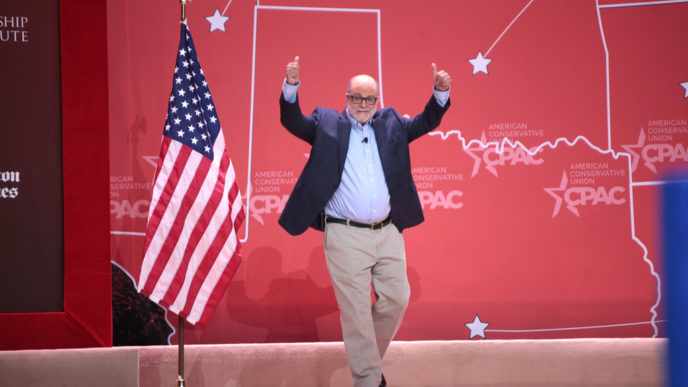
Levin: ‘Will Trump Be Nixon or Reagan?’

“I have a serious question,” said Mark Levin on his radio program Tuesday night. “Will Trump be more Nixon or Reagan?” His question focused on the policy positions of the two former Republican presidents.

Some of Trump’s recent comments should have conservatives wondering — perhaps not quite worrying — but wondering. The new president-elect has walked back or been silent on many major campaign promises, including the building of a border wall, cancelling the Paris climate agreement, and prosecuting Hillary Clinton.

“Of course, we are told to ignore this,” Levin said. “I want [Trump] to succeed, but I want him to do the right thing.”

Listen to the full clip below:

Now, before the inauguration, is the time to hold Trump to his word and pressure him towards conservative policies. Once he is president it will be very difficult to influence him. So, why are so many in conservative media ignoring Trump’s softer rhetoric? (For more from the author of “Levin: ‘Will Trump Be Nixon or Reagan?'” please click HERE)

Follow Joe Miller on Twitter HERE and Facebook HERE.

Think Common Core Is Bad? New Standards Crank the Creep-Factor up to Eleven

The battle over who will direct the hearts and minds of children is intensifying. Within the dangerous labyrinth of Common Core standards, testing, and data-mining is the even more concerning ramp-up of Social Emotional Learning (SEL). Parents and teachers who believe in genuine education rather than pseudo-psychological evaluation are facing off against bipartisan big government and its affiliated corporations and foundations.

This summer, the Collaborative for Academic, Social and Emotional Learning (CASEL) announced it had chosen eight states to collaborate on creating K-12 SEL standards. All K-12 students would be measured on five “noncognitive” factors: self-awareness, self-management, social awareness, relationship skills, and responsible decision-making, which includes ethical decision-making. As we’ve written, the result is that overworked, untrained teachers essentially become psychotherapists to their classrooms of patients. Other problems we’ve warned about include the subjectivity of the standards and assessments, indoctrination, danger to freedom of conscience, data-mining, and inadequate security of this sensitive data that resides for eternity in longitudinal databases.

Less than two months later, two CASEL states (Tennessee and Georgia) have already withdrawn from the initiative. Parents have begun to realize the dangers of SEL and to challenge their schools’ robotic march toward psychological manipulation of children. Interestingly, CASEL has removed the list of other states involved (California, Massachusetts, Minnesota, Nevada, Pennsylvania, and Washington) from its altered website about the project. Either it’s embarrassed at losing 25% of its cohort or is trying to hide from further parental opposition, or both.

Undeterred, CASEL presses forward. The group joined the liberal Aspen Institute’s new National Commission on Social, Emotional, and Academic Development, led by CASEL board member Linda Darling-Hammond (the radical education professor whom terrorist Bill Ayers recommended to be Obama’s Secretary of Education). This commission is funded by the same gallery of rogues — including the ubiquitous Bill & Melinda Gates Foundation — that have funded the pro-Common Core, pro-progressive education schemes of recent history.

The American Institutes for Research (AIR), publisher of many state Common Core tests and key SEL proponent, is also represented on the commission. AIR is also heavily involved in promoting the controversial LGBT agenda.

Parents should know about the agendas of CASEL and some of these important partnerships involved in the SEL effort.

CASEL has a definite ideological tilt. It’s funded partly by the federal government’s Institute for Education Sciences — the same agency that wants to assess mindsets in the National Assessment of Educational Progress and to have social emotional research become a federal mandate — and partly by a range of liberal foundations. These foundations bemoan the effect of climate change on “health and equity” (Robert Wood Johnson); push Buddhist “mindfulness” techniques (1440); and seek to use SEL to promote social-justice theories and transenderism (NoVo).

How might CASEL use SEL to advance its partners’ agendas in areas such as healthcare, climate regulation, and sexual politics? This Cleveland eighth-grade standard referenced on the CASEL website creates gender confusion by asking students to “[i]dentify what you like about yourself, including things that might be considered atypical for your gender.” Sample lessons offered by a CASEL partner called Morningside Center for Teaching Social Responsibility teach students the perils of climate change and fracking and encourage students to “take action toward transgender equity.” Thus does CASEL’s SEL accomplish its partners’ desires to change the world.

The criteria for SEL are so subjective that ideologues can twist them into almost anything. Suppose SEL curricula and guidelines adopted the argument of some psychiatrists that “extreme racism” and “extreme homophobia” should be classified as mental disorders. Could students then be “diagnosed” for those disorders, and perhaps treated with dangerous antipsychotics, as California prisoners have been? Already children have been screened without consent and forcibly treated with these drugs as a result of school-related mental-health programs. How far will this go?

At the very least, parents might object if SEL is used to turn their children into worker bees for the global economy. Former Michigan Governor John Engler, now chairman of the Business Roundtable (BRT), co-chairs the National SEL Commission. BRT has long promoted Common Core, SEL skills development, and treating children as widgets in the labor-supply chain. In fact, BRT’s education and workforce committee chairman was Exxon CEO Rex Tillerson, who called American students “defective products” if not taught by Common Core, and whose corporation is a major funder of the data-mining, including SEL data, of the Data Quality Campaign. (We’ve provided an abundance of evidence of the coordinated effort by these business, government, and foundation entities to assess, record, and analyze personal characteristics of children.) When Hillary Clinton and Marc Tucker’s Goals 2000 and School-to-Work first made SEL part of the federal education lexicon for workforce-development, BRT was cheering them on.

SEL is the embodiment of what government schools should not be doing to children. Parents and other citizens must stand against this tyranny of the mind by vigorously opposing these programs, refusing to elect leaders that support them, and demanding that legislators defund them. (For more from the author of “Think Common Core Is Bad? New Standards Crank the Creep-Factor up to Eleven” please click HERE)

Follow Joe Miller on Twitter HERE and Facebook HERE.
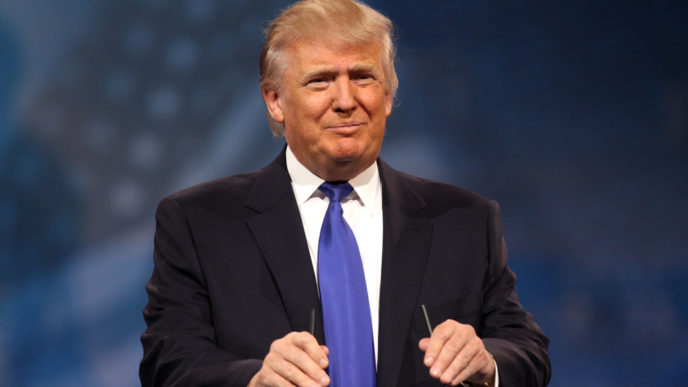
Clinton Critics Voice Disappointment After Trump Vows to Drop Investigation

President-elect Donald Trump asserted Tuesday his administration would not further investigate his vanquished opponent Hillary Clinton.

“I don’t want to hurt the Clintons,” Trump said in a wide-ranging interview with The New York Times.

The news came after a rough campaign where Clinton faced an FBI investigation into classified information sent and received on her private email server.

FBI Director James Comey announced in July he was not recommending a prosecution. However, 11 days before the election, he announced he was reopening the probe, only to close it two days before Election Day.

The FBI is reportedly also investigating potential ties between donors to the Clinton Foundation and actions taken by Clinton when she was the secretary of state.

“It was a premature decision [not to continue investigating Clinton] because we don’t know what evidence on the email server or Clinton Foundation will emerge,” said Peter Flaherty, president of the National Legal and Policy Center, a conservative watchdog group, told The Daily Signal.

“It shouldn’t be the call of the White House anyway, but should be left up to the new attorney general—and IRS commissioner—whether to investigate,” Flaherty continued, noting the IRS should look into the nonprofit status of the Clinton Foundation. “Prosecuting Hillary might seem like piling on from a political sense, but if she broke the law, this is a decision that should be left to law enforcement.”

Trump’s comments to The New York Times followed an interview earlier Tuesday with Trump campaign manager Kellyanne Conway in which she expressed a similar view. Trump said his administration would not pursue further investigation into the email server or the Clinton Foundation.

Trump further told the Times, “we’ll have people that do things,” which the newspaper said could mean the FBI, but Trump was clear he would not push the investigation.

Following her defeat, The Daily Signal reported that Clinton faced at least four legal probes. Regardless of Trump’s decision, she could still face scrutiny from Republican-controlled committees in the House and Senate, as well as a Federal Election Commission investigation of her presidential campaign.

During the second presidential debate, Trump told Clinton, “If I win, I am going to instruct my attorney general to get a special prosecutor to look into your situation.”

Judicial Watch President Tom Fitton expressed disappointment in Trump’s decision.

“Donald Trump must commit his administration to a serious, independent investigation of the very serious Clinton national security, email, and pay-to-play scandals,” Fitton said in a statement.

“If Mr. Trump’s appointees continue the Obama administration’s politicized spiking of a criminal investigation of Hillary Clinton, it would be a betrayal of his promise to the American people to ‘drain the swamp’ of out-of-control corruption in Washington, D.C.,” Fitton continued. “President-elect Trump should focus on healing the broken justice system, affirm the rule of law, and appoint a special prosecutor to investigate the Clinton scandals.”

The matter muddies the waters beyond what the FBI might already be investigating about Clinton, said Ilya Shapiro, senior fellow of constitutional studies at the Cato Institute, a libertarian think tank.

“It’s a little disturbing for a president to say, ‘I’m showing mercy and the fate of my political opponent is in my power,’” Shapiro told The Daily Signal. “It’s not his place to decide which political enemies to go after or not go after. The FBI and the Department of Justice should go forward without political interference.”

Shapiro added this could be politically costly.

“I think more of his supporters voted against Clinton than for him, so it would have been better to stay silent rather than act like a benevolent leader who holds the fate of his opponent at his whim,” Shapiro added.

Conway, Trump’s campaign manager and current adviser in the transition, presented the case for turning the page during an interview on MSNBC’s “Morning Joe” on Tuesday.

“I think Hillary Clinton still has to face the fact that a majority of Americans don’t find her to be honest or trustworthy,” Conway said. “If Donald Trump can help her heal, then perhaps that’s a good thing to do.”

Conway added, “I think he’s thinking of many different things as he prepares to become the president of the United States, and things that sound like the campaign are not among them.”

Trump foreshadowed that he might not pursue a special prosecutor during an interview with CBS News’ “60 Minutes” after the election.

From a political standpoint, Trump’s decision could be mixed, said Gary Rose, chairman of the political science department at Sacred Heart University.

“This does make him more statesmanlike because it probably is for the good of the country to move on, even if his base will not be all that happy,” Rose told The Daily Signal. “It does seem to turn the page and provide a way to say ‘I’m a statesman.’ But, if a crime was committed, perhaps that wasn’t his call. A line might have been crossed.” (For more from the author of “Clinton Critics Voice Disappointment After Trump Vows to Drop Investigation” please click HERE)

Follow Joe Miller on Twitter HERE and Facebook HERE.
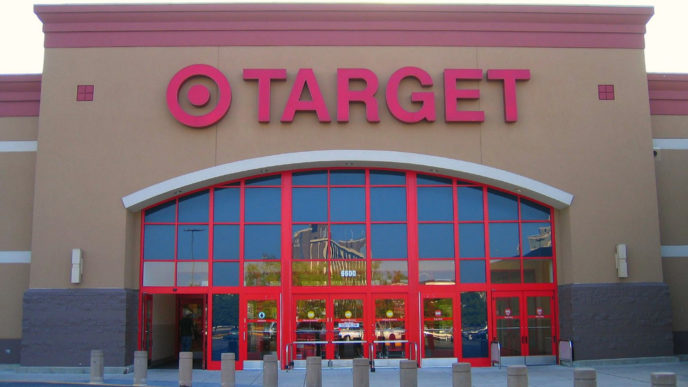
Conservative Group Launches Boycott of Target Over Bathroom Policies

A conservative watchdog group has started a campaign to boycott Target over its bathroom policies.

In April, Target announced that customers and employees at its locations would be allowed to “use the restroom or fitting room facility that corresponds with their gender identity.”

At the time, the American Family Association launched a petition to boycott the company for the policy, which garnered over 1 million signatures.

Now, watchdog group 2ndVote has launched the #AnywhereButTARGET hashtag and website to encourage customers to do their Christmas shopping elsewhere.

The stated purpose of the boycott is to “make Target understand that there are consequences for supporting a radical movement that is determined to redefine marriage, gender, and, ultimately, the First Amendment.”

According to the group’s press release:

2ndVote is calling on conservative consumers to engage the country’s second-largest retailer on its company-wide policy that allows and encourages individuals to choose restroom and changing room facilities based on gender identity rather than biological sex. Immediate pushback from conservatives forced Target to spend $20 million to add gender neutral bathrooms to its stores shortly after announcing the policy earlier this year.

Following the American Family Association boycott, Target announced it would spend $20 million to install private, unisex restrooms in its stores.

“When a company as large and well-known as Target chooses to insert itself directly into such a radical movement that seeks to ultimately destroy religious liberty and completely goes against our conservative values, it’s our role as an organization to give conservatives a way to communicate directly with the company,” 2ndVote Executive Director Lance Wray said in a statement.

According to its website, 2ndVote is a group that seeks to “expose the corporate influence on major policy decisions and turn the tide on the attacks on conservative values and principles.”

Boycotts of companies for the political views of their owners has become a trend in recent years, with supporters of same-sex marriage boycotting Chick–fil–A in 2012, and supporters of mandatory contraception coverage boycotting Hobby Lobby in 2014. (For more from the author of “Conservative Group Launches Boycott of Target Over Bathroom Policies” please click HERE)

Follow Joe Miller on Twitter HERE and Facebook HERE.
Federal Judge Blocks Implementation of Controversial Overtime Rule

A federal judge blocked implementation of a controversial rule addressing overtime pay from taking effect next week, a rule that had businesses, nonprofits, and higher education institutions bracing for the impacts of the measure.

The Department of Labor’s rule was supposed to take effect Dec. 1, and under the new measure, any employee making up to $47,476 each year would’ve been eligible for overtime pay.

The Obama administration finalized the rule in May, and the federal government’s announcement sent many companies and nonprofits scrambling to figure out how to comply with the law while also protecting both their businesses and employees.

“The more I learned, the more shocked I became that a rule like this would pass with so little input from those who were going to be impacted by it,” Albert Macre, a small business owner in Steubenville, Ohio, told The Daily Signal. “It’s the law of unintended consequences.”

In anticipation of Dec. 1, some businesses decided to reclassify workers who were previously salaried to hourly, while others gave raises to employees who were close to the $47,476 threshold, exempting them from the new rule.

Macre himself runs several small businesses, and the new overtime rule will impact one, Payroll+ Services, which opened in 1995 and offers payroll processing services.

“I thought it was a typo,” Macre said of the new rule. “I know that there are some pretty bold unilateral moves that have occurred in the executive branch in the last few years, but that just seemed like a big one—a complete doubling of the threshold and the number of people involved.”

Macre’s business fluctuates throughout the year, so his employees typically work less than 40 hours a week for approximately eight months out of the year, but work overtime during the remaining four months of the year when they become busier.

Three of Macre’s employees at Payroll+ Services qualified for overtime under the Department of Labor’s new rule. To make sure that his workers’ pay remained consistent throughout the year, Macre decided to implement a system of salary advances that will be recovered during the overtime months.

Macre toyed with the idea of changing his employees from salaried to hourly, but he ultimately decided it would’ve hurt his workers.

Compared to other new policies like Obamacare, Macre believes the overtime rule was to be ushered in too quickly.

“Here’s one they just jammed down our throats and thought we were just going to be able to work miracles and find this money magically,” he said. “Any time you do too much too soon it’s crazy.”

And the new rule wasn’t going to only impact Macre’s employees’ pay, but also the benefits they receive.

Macre’s business previously covered all of its employee’s health care costs. But now, he’s asking his workers to pay for a portion of their health insurance.

“Essentially what we’re going to give with one hand in terms of additional compensation will be taken away by having the employees be responsible for some of their own benefits,” he said.

Macre, a member of the National Federation of Independent Business, testified on behalf of the organization before the House Committee on Small Business in June.

He’s hopeful that under a new president the rule will either be rolled back or policymakers will come to a “new amicable solution.”

‘Devastating Impacts’

The Department of Labor first announced its proposed rule regarding overtime pay in July 2015, which revised the Fair Labor Standards Act’s overtime regulations.

The current salary threshold for overtime pay is $23,660, and that salary level was last updated in 2004.

Under the Obama administration’s originally proposed rule, the threshold for overtime pay would’ve risen to $50,440—more than double the salary ceiling set more than 10 years ago. But the rule was revised and the salary was lowered to $47,476.

According to the Congressional Budget Office, 3.9 million additional workers would’ve become eligible for overtime under the new rule. Of those, 900,000 “occasionally or regularly” work overtime and would’ve earned more or worked less because of the proposal, the agency found.

In response to the proposal, nonprofits, colleges, small and large business owners, and workers submitted close to 300,000 comments to the Department of Labor.

The proposal found organizations like Habitat for Humanity on the same side as large companies like Wal-Mart, which decided to raise minimum salaries for its entry-level managers from $45,000 to $48,500.

While businesses and nonprofits had been bracing for the impact of the overtime rule, congressional Republicans attempted to provide companies with relief.

Sen. James Lankford, R-Okla., introduced legislation in September that would further delay implementation of the overtime rule to June 1.

The bill stalled in the Senate, but a companion bill introduced by Rep. Tim Walberg, R-Mich., passed the House, 246-177, in September.

“This federal overtime rule is devastating for small businesses, colleges, and nonprofits all across America, but particularly in states with a low cost of living,” Lankford said in a statement to The Daily Signal.

“The economic realities and regional cost-of-living differences that exist throughout the country were completely ignored in favor of yet another one-size-fits-all approach taken by the Obama Department of Labor,” he continued.

A second bill introduced in the Senate and House would’ve stretched out implementation of the salary increase over five years.

Making Adjustments

Though the new overtime rule was set to take effect in just over a week, those opposed to the rule closely watched the courts for further guidance on what will happen with the regulation.

In September, 21 states, the majority led by Republican governors, filed a lawsuit against the federal government in an attempt to block the rule. The U.S. Chamber of Commerce and other business groups filed a second lawsuit the same day.

In their lawsuit, the states argued the new rule violates the 10th Amendment and stressed that under the proposal, state budgets will be damaged and services and programs cut.

“Enforcing [Fair Labor Standards Act] and the new overtime rule against the states infringes upon state sovereignty and federalism by dictating the wages that states must pay to those whom they employ in order to carry out their governmental functions, what hours those persons will work, and what compensation will be provided where these employees may be called upon to work overtime,” the lawsuit states.

A federal judge issued an emergency injunction against the rule Tuesday, blocking it from taking effect.

In addition to action from the courts, the Trump administration could also roll back the overtime rule.

Trump often spoke on the campaign trail about repealing many regulations implemented by President Barack Obama.

Already the president-elect and congressional Republicans are looking to eliminate more than 140 regulations after Trump takes office on Jan. 20, and the president-elect said in August he would roll back the overtime rule.

But now that businesses, nonprofits, and colleges have figured out how they’ll comply with the rule, some worry rolling back the proposal won’t be that easy.

“What if it goes three to six months or a year [after implementation] and you’ve already made your changes, your employees have already gotten used to it? You’ve given raises, adjusted salaries, hired part-time workers, and you’ve sort of learned to live with it?” Mike LeFever, president of South Carolina Independent Colleges and Universities, Inc., told The Daily Signal.

“From a practical point of view, can you just go back to the way things were?” he continued. “You just don’t do that.”

LeFever’s organization represents 20 private colleges and universities in the Palmetto State, and he said he initially expected his member institutions to either switch workers who made significantly less than $47,476 to hourly or give those who made close to $47,476 raises so they’re exempt from receiving overtime pay.

Some of the colleges and universities did end up boosting the pay of those who were close to the new threshold so they would’ve been exempt, LeFever said. But others have decided to hire additional part-time workers to take over some of the responsibilities of their full-time workers to avoid paying those employees overtime.

This approach was taken mainly for those working in student affairs positions, which may require weekend work if there is an event happening on campus.

Initially, LeFever was concerned that the new overtime rule could eventually lead to a rise in tuition rates if payroll went up significantly.

But he said the colleges and universities he works with might instead make cuts elsewhere, such as departmental budgets or in future raises.

“It’s not the best of arrangements,” LeFever said, “but everybody has to make adjustments to comply with the law.” (For more from the author of “Federal Judge Blocks Implementation of Controversial Overtime Rule” please click HERE)

Follow Joe Miller on Twitter HERE and Facebook HERE.
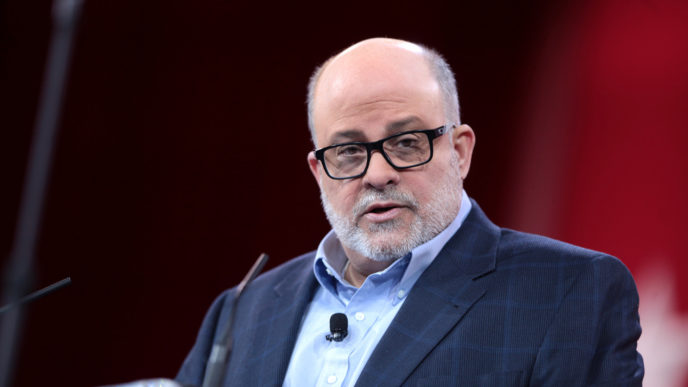
Mark Levin Exposes Potential DNC Chief’s Ties to Muslim Brotherhood

Opening the week on the attack, Conservative Review Editor-in-Chief Mark Levin sounded off on the Sen. Chuck Schumer, D-N.Y. (F, 2%)-endorsed frontrunner to be the next chairman of the Democratic National Committee, Rep. Keith Ellison, D-Minn. (F, 28%).

“This guy’s a hater, he is a radical leftist … and he has connections to very dangerous organizations.” Levin said. “And Chuck Schumer supports him!”

Rep. Ellison’s ties to the Muslim Brotherhood are disturbing. Almost as disturbing as Democratic leadership pushing Ellison to be the public face of the party as DNC chair despite those ties to a terrorist group. And yet still more disturbing is the mainstream media’s complete silence on this subject.

“Let me ask you a question,” Levin said. “Have you heard about this much NBC or ABC or CBS? Or CNN or MSLSD? Has this been headlined everywhere, like it should be?” (For more from the author of “Mark Levin Exposes Potential DNC Chief’s Ties to Muslim Brotherhood” please click HERE)

Follow Joe Miller on Twitter HERE and Facebook HERE.
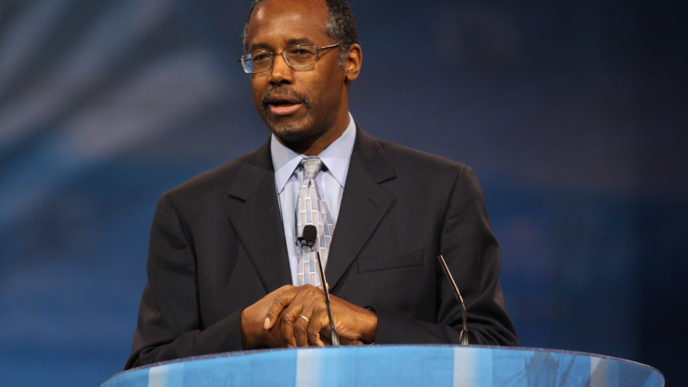
Carson Says He Won’t Rule out Cabinet Job If Trump Offers

If President-elect Donald Trump calls, Ben Carson isn’t ready to rule out accepting a job in Trump’s Cabinet.

Carson, who supported Trump’s candidacy after dropping his own bid for the Republican presidential nomination, had said last week he is not interested in a spot in the new presidential administration.

Media reports that came out before Carson said he would not be part of the Cabinet suggested Carson may be offered the job of Secretary of Education, and had also been frequently mentioned as a potential pick for Secretary of Health and Human Services

On Sunday, Carson appeared on Fox News’s Fox Report Special and offered a different version of his intentions.

“Basically, I’ve said my preference is to be outside and to act as an adviser, but if after going through the process they all conclude it would be much better to have me in the Cabinet, I would have to give that very serious consideration,” Carson said. “It’s just not my preference.”

The retired neurosurgeon said his healthcare expertise gives him a unique perspective.

“… there is no question I have very strong opinions about healthcare and how it should be returned to the private sector, and you — the patients and the physicians — should have a quality experience, not be forced into something,” Cason said.

During his GOP campaign, Carson often spoke about issues related to the needs of urban youth

“I also feel very strongly about education,” Carson said Sunday. “I mean, you educate people, and you give them the keys to freedom. It doesn’t matter where they came from or what their background is, they write their own ticket.”

Carson suggested last week that he would assist Trump without a specific Cabinet role.

“The way I’m leaning is to work from the outside and not from the inside,” Carson told The Washington Post. “I want to have the freedom to work on many issues and not be pigeonholed into one particular area.”

“I’ve said that if it came to a point where he absolutely needs me, I’d reconsider. But I don’t think that’s the situation with these positions,” he added. “My view is that if some people and the media are going to hate him, then he’s going to need allies on the outside to be there, to be there to move the country forward. I don’t care about a position.”

Also last week, Armstrong Williams, Carson’s business manager, said Carson did not have the management skills needed to run a federal department.

“Dr. Carson feels he has no government experience, he’s never run a federal agency. The last thing he would want to do was take a position that could cripple the presidency,” Williams said then.

In a guest column on WND, Williams noted that the issue was not what Carson lacks, but what he has.

“Part of what makes him so unique is his vision for what this country can achieve,” Williams wrote, noting that those who hold Cabinet jobs are managers, not visionaries.

“I have no doubt that Dr. Carson would have met and exceeded any challenge set before him and done a fantastic job,” he added. “However, it’s important to keep in mind that you can hire management, but not vision. It’s a unique attribute that people either possess or not.” (For more from the author of “Carson Says He Won’t Rule out Cabinet Job If Trump Offers” please click HERE)

Follow Joe Miller on Twitter HERE and Facebook HERE.
Markets Rise to New Records — Expert Says Trump Cabinet Picks Might Send Them ‘Through the Roof’

Four days before President-elect Donald Trump was elected to the White House, there was one thing most of the economic experts agreed upon: If Trump won, the markets would lose.

Pre-election forecasts included one by Citigroup of a 5 percent drop in the Standard & Poor’s 500. Barclay’s was estimating a 13 percent drop. CMC Markets in Singapore projected the economic dismay would top that of Brexit, which led to a 5.3 percent decline in the S&P index.

As with a lot of other pre-election predictions, they got it wrong.

On Monday, for the first time in over a year, all three of the major American stock indices closed at record highs.

The Dow Jones industrial average went up 88 points, the NASDAQ rose 47 points and the S&P 500 climbed 16 points.

“So far, stock markets are betting that Trump’s fiscal polices, if implemented, would be bullish for stocks that have been waffling up until recently,” wrote Mark DeCambre on MarketWatch.

“The thinking is that a plan to increase infrastructure spending and cut corporate and personal income taxes will boost growth prospects, which is bullish for stocks,” he wrote.

Even the doom-and-gloom forecasters were coming around.

” … [P]resident-elect Trump has already left a significant imprint on financial markets. In contrast to many predictions before the election — including our own — and unlike the aftermath of the Brexit vote in the UK, the surprising outcome has generally lifted risky asset prices as well as nominal interest rates,” said a Goldman Sachs market letter cited by MarketWatch.

It may get even wilder.

“A name-brand Wall Street friendly Treasury secretary on top of tabbing [Mitt] Romney for state would send this market through the roof, that is if there even is a roof,” predicted Jim Cramer of CNBC, noting that the meeting between Trump and one of his fiercest foes in the GOP was a powerful signal that Trump could exceed expectations as president.

Wall Street investment banker Steve Mnuchin, who was a part of Trump’s campaign, and Rep. Jen, Hensarling, R-Texas, are considered two of the top candidates for the Treasury job, according to MarketWatch. (For more from the author of “Markets Rise to New Records — Expert Says Trump Cabinet Picks Might Send Them ‘Through the Roof'” please click HERE)

Follow Joe Miller on Twitter HERE and Facebook HERE.

Trump’s Pro-Second Amendment Platform Could End Gun Sales Boom

President-elect Donald Trump is expected to push to relax gun laws when he takes office, but significant changes in the firearms industry began as soon as he was elected – and some put the law of unintended consequences squarely in the cross hairs.

For instance, while Trump’s unapologetic pro-Second Amendment stance may be good for gun owners, it has already dealt a blow to manufacturers, who enjoyed record sales throughout President Obama’s eight years in office. Stocks in companies like Smith & Wesson and Sturm, Ruger & Co. plunged on Nov. 9, and experts say it is because Trump’s election erased fears that guns would become harder to get.

“A lot of people were buying guns simply because they were worried Hillary Clinton’s regulations would make it more costly and more difficult to buy guns, and people are not going to feel quite the need to go out and buy guns now,” Crime Prevention Research Center President John Lott told FoxNews.com. “I think the stock market is a pretty good predictor of what’s going to happen, and the fact that you see drops in stock prices by almost 20 percentage points –I think that’s pretty significant.”

While the government does not publish an official number of gun sales, background checks, a gauge of how many people try to buy guns, skyrocketed under President Obama. In 2008, 12.71 million background checks were conducted, a number on pace to double this year, to set an all-time record. (Read more from “Trump’s Pro-Second Amendment Platform Could End Gun Sales Boom” HERE)

Follow Joe Miller on Twitter HERE and Facebook HERE.