EPA Makes an About-Face on Fracking Report: Science or Politics?

Gordon Tomb pays about $40 per month to heat his home in central Pennsylvania. And he wants to keep it that way.

“I’ve lived in Pennsylvania for more than 60 years and have never paid so little for my home heating,” Tomb, a senior fellow with the free market Commonwealth Foundation, said in an interview.

He credits his low heating bills to the boom in natural gas production brought on by hydraulic fracturing (“fracking”), which enables energy companies to tap into the state’s gas-rich Marcellus Shale formation.

“The natural gas industry has been the brightest spot in the Pennsylvania economy for the past decade and it’s likely to be for a long time,” Tomb said “It’s contributed billions to property owners in royalties and leases alone. There are hundreds of millions of dollars in tax revenues and in wages by the economic activity of hundreds of thousands of jobs.”

In 2009, a handful of Dimock, Pennsylvania, homeowners sued a Houston-based company, alleging their drinking water was tainted by fracking.

The Pennsylvania complaint and others like it from across the country prompted a five-year, $29 million Environmental Protection Agency study, which, according to a draft report released in June 2015, “did not find evidence that these mechanisms have led to widespread, systemic impacts on drinking water resources in the United States.”

This was a relief to the oil and gas industry, given that fracking currently accounts for half of the nation’s crude oil production and two-thirds of the natural gas production, yet has also been controversial.

But something happened between last year and last week to make the EPA change its tune.

In its final report released last week, “Hydraulic Fracturing for Oil and Gas: Impacts from the Hydraulic Fracturing Water Cycle on Drinking Water Resources in the United States,” the EPA said fracking can affect drinking water resources “under some circumstances.”

But it cited no cases in which such contamination was confirmed. Instead, the EPA concluded that there is a paucity of data on which to base a conclusion, and in the instances where data is available, there are too many uncertainties to conclude anything with confidence.

“Because of the significant data gaps and uncertainties in the available data, it was not possible to fully characterize the severity of impacts, nor was it possible to calculate or estimate the national frequency of impacts on drinking water resources from activities in the hydraulic fracturing water cycle,” the study says. “We were, however, able to estimate impact frequencies in some, limited cases (i.e., spills of hydraulic fracturing fluids or produced water and mechanical integrity failures).”

On that thin reed, environmentalists are taking a victory lap. But what changed?

It wasn’t the science, according to Jeff Stier, senior fellow at the National Center for Public Policy Research, but politics.

“The EPA already said in its draft report that there was no systemic effect on the water supplies from fracking. Nothing in the underlying science of the report was changed, it’s simply a change in their framing of it,” Stier said. “There’s been a concerted political campaign to apply pressure to the EPA. Certainly the report as it was written in draft form would have taken away any leg that activists had to stand on.”

Specifically, Stier says, certain members of Congress, environmental activists, and the EPA’s independent researchers pushed for the scholarly flip-flop.

The draft report, and its fracking-favorable findings, remained status quo for more than a year.

Then in August of this year, the agency’s Science Advisory Board sent a letter to EPA Administrator Gina McCarthy. The board complained in the 180-page letter that the statement about “widespread, systemic impacts” was not supported and needed revision. The board also advised the EPA add specific research on places with a track record of reported problems—including Dimock, Pennsylvania.

On Oct. 20, McCarthy got a scathing follow-up letter signed by 51 members of Congress. The note blasted not only the 2015 draft report, but the EPA’s public handling of the report, and urged the EPA to either revise the “widespread, systemic impacts” statement, or delete it.

The EPA opted for the delete button, offering this explanation on its website:

After receiving comments from the [Science Advisory Board], EPA scientists concluded that the sentence could not be quantitatively supported. Contrary to what the sentence implied, uncertainties prevent EPA from estimating the national frequency of impacts on drinking water resources from activities in the hydraulic fracturing water cycle. Additionally, EPA scientists and the [Science Advisory Board], came to the conclusions that the sentence did not clearly communicate the findings of the report.

‘Hanging on by a thread’

U.S. Rep. Matthew Cartwright, D-Pa., was among those who pressed the EPA to change its conclusion. He said that he has been at the forefront of federal efforts to crack down on fracking to protect communities and environment in which fracking occurs, including his home state.

“I am pleased that the EPA took seriously the issues raised by the Scientific Advisory Board, and revised its report accordingly,” he said. “My priority has always been to see that the fracking industry operates safely and responsibly, and I have repeatedly introduced legislation aimed at encouraging that.”

Tomb, however, is wary of any regulations coming from Washington to a state that’s well-schooled in natural resources and well-equipped with fracking regulations.

“I see nothing good about additional federal regulations in this area,” he said. “The first oil well was drilled in Pennsylvania in the mid-1800s. So this state has been dealing with this industry going on 200 years. And in my lifetime, it’s done very well.”

Stier says the push by the congressmen and the review board is part of a much broader “keep it in the ground” movement.

“The big picture opposition to fracking has nothing to do with drinking water. It’s opposition to humans taking energy out of the earth,” Stier explained. “These opponents realize they would not be able to win a political argument in the court of public opinion considering they don’t want us taking energy out of the ground. So they had to argue that this threatened our drinking water because that’s a way to get everyone to agree because we all want clean drinking water.”

Swapping out the previous conclusion is, according to Stier, a last leg for the anti-frackers on the eve of the Trump administration. “They’re hanging on by a thread to sow doubt about the safety of fracking. But I don’t think it’s a very strong leg to stand on because it’s simply a political document now.”

Indeed, a hostile letter-writing campaign will likely not have the same effect on Oklahoma Attorney General Scott Pruitt—President-elect Donald Trump’s pick to replace McCarthy at the EPA. Pruitt has been a frequent and effective critic of EPA overreach, and took a leading role in efforts to put the Obama administration’s Clean Power Plan on hold.

“From what I’ve seen so far from the Trump administration, they don’t care about idiotic claims by people looking to advance their own skewed view of how the world should be, who want to meddle in everybody’s lives and everybody’s business,” Tomb added. “Most people want to live their lives, raise their families—all that can be done and has been done, while protecting the environment.” (For more from the author of “EPA Makes an About-Face on Fracking Report: Science or Politics?” please click HERE)

Follow Joe Miller on Twitter HERE and Facebook HERE.

Georgia Student Sues After His Public School Censored Him From Sharing His Faith on Campus

A student in Georgia has sued his school after he claims the public college prohibited him from sharing his Christian faith on campus.

Lawyers for Georgia Gwinnett College student Chike Uzuegbunam filed a lawsuit against the school on Monday.

Uzuegbunam “believes it is his duty to inform others” of his evangelical Christian beliefs and “for their own benefit, that they have sinned and need salvation through Jesus Christ,” the lawsuit says.

“Today’s college students will be tomorrow’s legislators, judges, commissioners, and voters,” Casey Mattox, senior counsel with Alliance Defending Freedom, said in a statement.“That’s why it’s so important that public universities model the First Amendment values they are supposed to be teaching to students, and why it should disturb everyone that [Georgia Gwinnett College] and many other colleges are communicating to a generation that the Constitution doesn’t matter.”

Alliance Defending Freedom, a Christian nonprofit legal organization representing Uzuegbunam, says the university cannot censor Uzuegbunam because it would be a violation of his First Amendment rights.

“The First Amendment guarantees every student’s freedom of speech and religion,” Travis Barham, Alliance Defending Freedom legal counsel, said in a statement. “Every public school—and especially a state college that is supposed to be the ‘marketplace of ideas’—has the duty to protect and promote those freedoms.”

The student says officials at his college restricted his ability to share his faith with other students, limiting him to free speech in a small zone and requested he ask permission in advance to use the space.

The lawsuit claims the college “burdens his free speech because he is prohibited from saying anything that might offend, disturb, or discomfort anyone who happens to hear him lest he be punished for ‘disorderly conduct.’”

All students must submit a free speech zone request three days prior to using the two small speech zones on campus, the lawsuit says. The college has a “Freedom of Expression Policy” that requires students to submit a free speech area request form, along with all publicity materials, for all activities in the designated free speech area.

“Georgia Gwinnett College (GGC) is committed to providing a forum for free and open expression of divergent points of view by students, student organizations, faculty, staff, and visitors,” the college’s student handbook says. “GGC also recognizes its responsibility to provide a secure learning environment which allows members of the community to express their views in ways which do not disrupt the operation of the college.”

The Freedom of Expression Policy says:

Reasonable limitations may be placed on time, place, and manner of speeches, gatherings, distribution of written materials, and marches in order to serve the interests of health and safety, prevent disruption of the educational process, and protect against the invasion of the rights of others as deemed necessary by Georgia Gwinnett College.

The college defines the free speech zones as “the concrete area/walkway between Student Housing and the Student Center or the concrete in front of the Food Court area, Building A.”

The areas are “generally available from 11:00 a.m. to 1:00 p.m. and 5:30 p.m. to 7:30 p.m., Monday through Thursday, and 11:00 a.m. to 1:00 p.m. on Friday,” the handbook says.

“On occasion upon written request, other areas and other times may be authorized, and the college reserves the right to modify the free speech areas based on the operational needs of the institution,” the policy adds.

Alliance Defending Freedom calls the zones “ridiculously” small and says they take up less than 0.0015 percent of the campus.

The school stopped the student named in the lawsuit from handing out religious literature and talking to students about his religion this past summer even after he followed the protocol set by the college, Alliance Defending Freedom claims.

The student claims that in August, he was allegedly following school rules while “preaching the love of Christ.” Campus police stopped him after about 20 minutes because of “some calls” complaining about him, according to the lawsuit.

“If students want to speak—whether through oral or written communication—anywhere else on campus, then they must obtain a permit from college officials,” the lawsuit says. “Thus, students may not speak spontaneously anywhere on campus. If students violate this policy, they violate the college’s Student Code of Conduct and expose themselves to a variety of sanctions, including expulsion.”

A spokeswoman for the college told The Daily Signal that Georgia Gwinnett College is unable to comment on the lawsuit.

“Officials at Georgia Gwinnett College were not notified of the lawsuit and cannot comment on pending litigation,” the spokeswoman told The Daily Signal in an email.

“When Mr. Uzuegbunam tried to share his religious views in one of the speech zones after reserving it for this purpose, defendants required him to stop because his speech had generated complaints [and] informed him that his speech constituted ‘disorderly conduct’ because it had generated complaints,” the lawsuit goes on to say.

The lawsuit requests that the school suspend its policy on free speech zones. (For more from the author of “Georgia Student Sues After His Public School Censored Him From Sharing His Faith on Campus” please click HERE)

Follow Joe Miller on Twitter HERE and Facebook HERE.

3 Ways Politicians Play Politics With Public Employee Pensions

Pensions are a huge part of public employees’ compensation, often providing a quarter to a third of their total compensation. A new report from the American Legislative Exchange Council shows how politicians play politics with public pensions, threatening public employees and taxpayers alike.

State and local governments across the U.S. hold about $3.8 trillion in public employee pension assets. Unfortunately, the politicians and pension officials who manage these assets often sacrifice higher returns for personal and political gain.

Pension plan officials are supposed to look out for the best interests of pension beneficiaries, but the American Legislative Exchange Council report, “Keeping the Promise: Getting Politics Out of Pensions,” tells a different story:

Rather than investing to earn the best return for workers, [lawmakers and pension plan officials] use pension funds in a misguided attempt to boost their local economies, provide kickbacks to their political supporters, reward industries they like, punish those they don’t, and bully corporations into silence and behaving as they see fit.

The report shows three ways that pension officials play politics with public worker pensions:

1. Economically targeted investments. These are a way for public pension plans to buoy local projects at the cost of receiving significantly lower returns. These subpar investments strip pensions of billions of dollars in returns. Alabama is the biggest offender, with over 16 percent of its pension assets invested in them.

One particularly egregious example is Alabama’s pension fund investment in the troubled oil repair and shipbuilding firm Signal International. Alabama invested $21 million and later loaned $73 million to Signal (despite three years of it providing 11 percent losses).

Shortly thereafter, Signal was forced to pay $21 million to settle what was called “one of the largest cases of labor trafficking in modern times.” Signal later entered bankruptcy and was purchased by one of Alabama’s pension funds.

2. Political kickbacks. These allow private individuals and companies to buy access to public pension investments by making political contributions to certain local politicians, and by lobbying pension funds to invest in them. Investments based on politics instead of performance costs the average pension fund over $200 million a year.

The California Public Employees’ Retirement System, known as CalPERS, suffered massive losses from political investments, largely at the helm of board member and union leader Charles Valdes.

Despite having no investment experience and twice filing for personal bankruptcy, Valdes spent 25 years as a CalPERS board member where he added significantly to pension deficits by granting investment contracts to political donors and engaging in suspect behavior with other board members.

During his 13 years as the investment committee chair, CalPERS experienced one of the worst investment performances of any public pension plan in the nation.

3. Political crusades. These are a way for politicians and pension officials to use pension investments to advance political views or causes. The most common example of late is pension funds divesting from energy companies.

Since divestment is based on political agendas instead of returns, it should come as no surprise that it results in significantly lower returns. A hypothetical portfolio showed divestment from energy products resulted in a 23 percent loss over five years, compared to no divestment.

There are also significant administrative and frictional costs (the impact of selling large quantities at once). Administrative costs for large college endowments were 12 times higher than socially conscious funds, and frictional costs were estimated to reduce the value of a fund by 2 to 12 percent over 20 years.

Moreover, political crusades have extended from certain sectors of the economy to personal objections.

For example, the American Federation of Teachers union has used its influence over an estimated $1 trillion in pension assets to “blacklist” about three dozen individual hedge fund managers who donated to causes and organizations that the union doesn’t like. Consequently, pension funds in at least seven states divested their pensions from these hedge fund managers to some degree.

One of the main reasons state and local pensions can get away with politically motivated pension fund management is that they lack adequate regulations and enforcement. State and local pensions are not subject to the federal Employee Retirement Income Security Act of 1974, but rather are regulated by states themselves.

The easiest way for states to eliminate the negative influence of politics in pensions is to shift to defined contribution plans. This would require governments to pay their workers’ retirement benefits immediately and would prevent politicians from having any role in workers’ personal investment decisions. Moreover, taxpayers would no longer be on the hook for unfunded promises.

Short of a complete shift to defined contribution plans, however, states need to strengthen fiduciary responsibilities to ensure pension officials are acting in the exclusive interests of participants, require greater oversight and transparency of public pension operations, and diversify pension boards.

State and local governments have already promised an estimated $5.6 trillion in pension benefits that they can’t afford to pay. Governments cannot afford to continue sacrificing valuable investment returns for the sake of short-term political and personal gains. (For more from the author of “3 Ways Politicians Play Politics With Public Employee Pensions” please click HERE)

Follow Joe Miller on Twitter HERE and Facebook HERE.

Weiner Delivered Clinton’s October Surprise, Not the FBI

Bill Clinton says that FBI Director James Comey cost his wife the 2016 election.

Has he met Anthony Weiner?

Weiner, after all, is the reason why FBI Director Comey went to Congress in October, notifying lawmakers that investigators had discovered emails on Weiner’s computer that could be related to its investigation of Clinton’s off-the-books email arrangement while she served as secretary of state.

Had Weiner, married to top Clinton aide Huma Abedin, not sent sexually explicit text messages to a minor, the FBI would have never had a reason to seize his laptop in the first place. There would have never been any “October surprise.”

It’s not as if this is the first time Weiner has gotten, literally, caught with his pants down, either. He resigned from Congress in 2011 after he was caught posting a lewd image on Twitter. Then in 2013, during his failed New York City mayoral bid, the Hollywood gossip site TMZ posted explicit messages he sent to women in 2012 under the alias “Carlos Danger.” Then, he exchanged more messages with a minor in 2016, which elevated his scandalous behavior to a felony level.

So, how is Comey to blame exactly? Clinton wasn’t “schlonged” by the FBI, as Trump may say. She was “Weinered.”

Yet, the Clintonistas are far more outraged at the man who investigated disgusting sexually deviant behavior toward a young woman than the man who actually conducted the disgusting sexually deviant behavior toward a young women.

Hm. Sounds … familiar.

Some things never do change. Definitely not the Clintons. (For more from the author of “Weiner Delivered Clinton’s October Surprise, Not the FBI” please click HERE)

Follow Joe Miller on Twitter HERE and Facebook HERE.

Calm Down, Lefties: YouTube Star’s Delta Air ‘Discrimination’ Claim Could Very Well Be #Fakenews

The internet is ablaze with a story of alleged racial discrimination on a Delta Air flight Wednesday morning. But before anyone jumps to conclusions, we need to wait for all the facts.

Adam Saleh, a 22-year-old YouTube personality posted a video to Twitter in which he claimed Delta Airlines kicked him off his flight before departure for “speaking Arabic.”

The Guardian reports that Saleh was on board a flight from London to New York with his friend (and fellow YouTube personality) Slim Albaher, when both young men were escorted off the plane. Saleh alleges that fellow passengers became “uncomfortable” from his Arabic and alerted flight attendants.

Saleh posted video of the aftermath to his social media accounts, and the story has since gone viral.

According to the Guardian, in later videos Saleh claimed that flight attendants told him and his companion they were “too loud,” and asked them to speak outside the plane.

“All the racist people in there, they were like ‘we feel uncomfortable’ but because there were like 20 of those racist people, the captain came and he kicked us out,” he said. “I’m not letting this slide … They were screaming at us like we were terrorists.”

Liberal websites immediately pounced on the story before the flight even landed in the United States.

The Huffington Post U.K. neglected to use the word “allegedly” in their headline: “YouTuber Adam Saleh ‘Kicked Off Delta Airlines Flight For Speaking Arabic.’”

The Guardian, of course, is also taking Saleh at his word: “YouTube star kicked off Delta Airlines flight ‘for speaking Arabic’”

The Council on American-Islamic Relations has already put the story on “Islamaphobia Watch.”

#BoycottDelta was launched in no time by Saleh to spread the word. –

Outlets that run with Saleh’s story before the entirety of the incident and facts are known open themselves up to “fake news” accusations.

We simply do not know all the facts yet. Adam Saleh claims he was the victim of racial/religious discrimination but the video he posted offers no evidence of such.

Now, this man could very well have been the victim of discrimination. Or, this self-described “professional idiot” (who produced a hoax video about racial discrimination in 2014 and posts several prank videos to his YouTube channel) could be outright deceiving the public.

Saleh has a history of trolling people on airplanes.

However, security cameras revealed his video to be fake and a spokesperson from the airline condemned his “publicity stunt.” Are these accusations against Delta Air and the flight’s passengers another stunt? We don’t know.

In a statement, Delta said: “Two customers were removed from this flight and later rebooked after a disturbance in the cabin resulted in more than 20 customers expressing their discomfort. We’re conducting a full review to understand what transpired. We are taking allegations of discrimination very seriously; our culture requires treating others with respect.”

So an investigation into the matter is underway. Again, the story could very well be true. But until a proper review of the evidence is conducted, the media should refrain from pronouncing judgement and any conclusions. After all, can they really afford to lose any more credibility than they already have? (For more from the author of “Calm Down, Lefties: YouTube Star’s Delta Air ‘Discrimination’ Claim Could Very Well Be #Fakenews” please click HERE)

Follow Joe Miller on Twitter HERE and Facebook HERE.

Shapiro: Obama Tries to Define Away Reality, but Reality Wins

Last Friday, President Obama gave his last press conference as commander in chief. Undeterred by his would-be successor’s devastating loss to Donald Trump in the presidential election, unswayed by Republicans’ complete domination of Congress, state legislatures and governor mansions, he maintained his cool and collected self-aggrandizement. Why not? According to Obama, Obama has been a major success.

Perhaps the most hilarious moment of delusion came when he talked about terrorism. “Over the past eight years, no foreign terrorist organization has successfully executed an attack on our homeland that was directed from overseas,” Obama stated. He then continued, saying no attack has been executed “in a rainstorm with the attacker driving a tractor with one hand, drinking a Miller High Life with the other and wearing a clown nose.”

To be fair, Obama didn’t add those final qualifiers. But he might as well have. In order to define away the problem of terrorism that has grown dramatically worldwide on his watch, he simply spoke of terrorism as a problem of organized groups within defined territories. That’s not how modern terrorism works. Terrorist groups can recruit without formal structures and can operate as independent cells within various countries.

Just three days after Obama’s statements, an alleged jihadi plowed a truck into a Christmas market in Berlin; the same day, a Turkish terrorist murdered the Russian ambassador to Turkey. These latest attacks aren’t outliers. In the past several years, we’ve seen terrorist attacks in Turkey, Germany, Belgium, Great Britain, Canada and Australia.

This sort of terrorism isn’t relegated to foreign countries, of course. Here is an incomplete complete list of radical Islam-related terror attacks and attempts on American soil under Obama: shootings of American military recruiters in Little Rock, Arkansas; the massacre at Fort Hood; the Boston Marathon bombing; an attempted bombing of the airport in Wichita, Kansas; hatchet attacks on New York City police officers; attempted shootings at the “Draw Muhammad” event in Garland, Texas; the attacks on military recruiters in Chattanooga, Tennessee; the massacre at the San Bernardino Inland Regional Center; the Orlando nightclub shooting; the New York and New Jersey bombings; and the Ohio State University car attack.

Obama still thinks he can cover his abysmal record with closely drawn definitions of terrorism. It’s the equivalent of President Bill Clinton saying he’s been faithful to his wife except for certain areas, like sex. It’s technically true so far as it goes, but it doesn’t go very far.

Americans know that, and they reacted to Obama’s consistent lying-by-omission by electing Trump, a man who needs little evidence to jump to conclusions. Obama is so careful to avoid spotting fact patterns that he simply omits inconvenient data points. Trump is so eager to spot fact patterns that he simply includes convenient non-data points. But Americans would rather have Trump’s jump-to-conclusions mentality than Obama’s avoid-conclusions-at-all-cost mentality — Trump’s mentality may lead to mistakes, but those mistakes are less likely to cost Western lives.

So Obama can hawk his faux sophistication on terrorism as much as he wants. If Democrats want to ensure that Republicans continue to win elections, they ought to follow his lead. (For more from the author of “Shapiro: Obama Tries to Define Away Reality, but Reality Wins” please click HERE)

Follow Joe Miller on Twitter HERE and Facebook HERE.

How Sen. Lee Forced McConnell’s Hand on Repealing Obamacare

House Speaker Paul Ryan, R-Wisc. (F, 51%) and Republican Majority Leader Mitch McConnell, R-Ky. (F, 40%) have garnered plaudits recently for their strong stance on repealing Obamacare.

As voters await the repeal vote they’ve long been promised, it’s worth reflecting on how Republicans have finally gotten to this point.

It was Senator Lee who, in July of 2015, forced the repeal issue in the Senate — despite severe and unwarranted opposition from his own party’s leadership. And it is because he did so that Republicans are now poised to repeal this unwanted, unaffordable and unworkable law.

During a little-noticed floor fight over a transportation bill in the summer of 2015, Sen. Lee found a procedural loophole that would have allowed Senate Republicans to take a meaningful vote on Obamacare repeal. (By “meaningful,” I mean a vote requiring only a 51-vote majority to pass, not the 60-vote threshold more frequently employed in the Senate.) Lee entered the repeal vote, via an amendment to the transportation bill. And in doing so, he turned the Senate Republican conference on its head.

Despite campaigning on the pledge to repeal Obamacare “root and branch,” McConnell actually had no intention of allowing Lee to go ahead with a repeal vote.

Rather, he took a leaked email from a Lee staffer (full disclosure, that staffer was me) discussing the repeal vote, and used it as a tool to bludgeon Lee in front of his colleagues — not once, but twice — claiming that Lee was using this opportunity only to “divide the party.”

Dividing the party over repeal of Obamacare? The one campaign pledge that they all had in common?

As Ben Domenech later wrote in The Federalist, McConnell’s “bizarre and childish tantrum” over an Obamacare repeal vote raised the question — did McConnell have the yips?.

But rather than respond in kind, Sen. Lee chose to be the statesman. He withstood the unwarranted scorn of his colleagues and the scathing rebuke from McConnell, and offered to withdraw the amendment — but for something in return. Rather than repeal Obamacare then, he agreed to withdraw the amendment for a promise to repeal Obamacare via the reconciliation process later in the year — a more potent and powerful opportunity to issue a first strike at the law.

That promise, extracted by Lee from McConnell, formed the basis of the repeal effort, and is the reason McConnell and Ryan can so confidently line up the process in January.

How?

As a result of Lee’s efforts, Republicans passed a reconciliation bill last year that repealed Obamacare. Though it was subsequently vetoed by President Obama, that effort was the single step which proved that Senate Republicans can pass repeal, over all procedural and policy objections. That effort forms the baseline for what Republicans are about to tackle in January. Without Sen. Lee’s courageous stand, they’d be starting from scratch. As a direct result of his efforts, they are instead starting with the wind at their backs.

Some might say that end counts more than the means — so, since Republicans are going to repeal Obamacare in January, it doesn’t matter how they got there. To them I would reply: Until Lee forced repeal to be included in last year’s reconciliation, it was clear that Senate leadership would make no effort to offer a meaningful vote. Rather, up until that point, they continued to hide behind show votes at a 60-vote threshold — the kind where members can vote for something, confidently knowing it will never get the 60 votes to pass.

Lee’s actions forced the Senate majority to put its money where its mouth was. No more could they talk a big game while hiding behind show votes; they would actually have to cast a meaningful vote in the direction of full repeal. Without Lee, Senate Republicans would never have fulfilled the promises they made to the voters who elected them.

After spending nearly a decade as a staffer in Congress, I can confidently say there are very few politicians courageous enough to stare down Senate leadership and the ire of their colleagues without blinking. Sen. Lee did just that.

In Washington, holding yourself and others accountable to campaign promises can be a thankless task. Amid all the celebration and self-congratulation that will accompany the first repeal vote in January, Sen. Mike Lee deserves considerable gratitude as the unsung hero of the repeal effort. (For more from the author of “How Sen. Lee Forced McConnell’s Hand on Repealing Obamacare” please click HERE)

Follow Joe Miller on Twitter HERE and Facebook HERE.
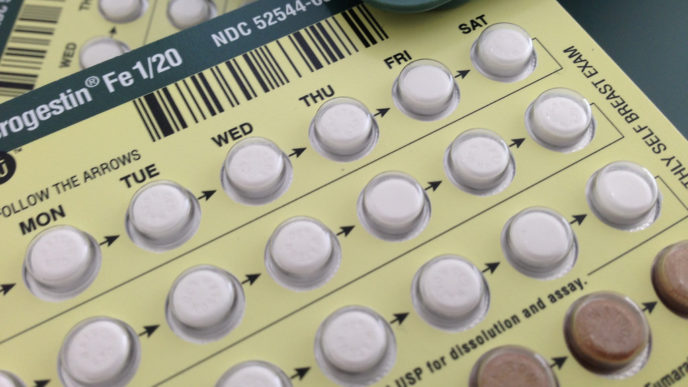
Catholic Woman Fights Back Against Health Center for Firing Her for Not Teaching Contraception

A Catholic health educator has filed a complaint with the federal government accusing a Houston health center of violating her religious freedom. Alexia Palma claims that Legacy Community Health, an inner city clinic in Houston, fired her for refusing to teach contraception.

According to a complaint filed with the U.S. Equal Employment Opportunity Commission by First Liberty on December 21, Palma had negotiated an agreement with her superiors to show a video to low-income area students rather than provide her endorsement by teaching how to use contraceptives. Approximately 18 months later, in June 2016, new management required Palma to teach about contraception use.

According to the complaint, Palma reminded the Vice President of the Public Health Department, Amy Leonard, of the agreement. She noted that teaching contraception took up less than two percent of her job. She also said another educator had volunteered to teach that portion of the program.

However, according to e-mails and verbal conversations cited in the complaint, Palma was ordered to “put aside” her “personal beliefs.” The company refused to let her show the video or to let other teachers take the class, though several had volunteered. When she refused, she was fired, after one of her superiors disparaged her Catholic beliefs about contraception.

A spokesperson for Legacy disputed Palma’s claims in a statement provided to The Stream and other press outlets.

“Legacy’s mission is to serve the health care needs of our community, regardless of a patient’s ability to pay and without judgment,” said Senior Director of Communications Kevin Nix. “We also respect and value diversity in our staff, which extends to matters of faith. We dispute the allegations made in the EEOC filing by Karen Palma and are reviewing her personnel file.”

Legacy provides the full range of contraceptives, but according to Nix in an e-mail to The Stream, “does not provide abortions.” Women are referred to Planned Parenthood, which according to Palma’s complaint partnered with Legacy for a class on contraceptives.

Her Faith Came First

“Since I grew up in an unstable home, the only real home I’ve ever had is the church,” Palma told The Stream. “It helped me learn the God created me with a purpose and that he loves me. I will always put Him first. How could I do anything less?”

Palma’s attorney, First Liberty senior counsel Jeremy Dys, told The Stream that Legacy Community acted both illegally and irrationally. “When a good employee asks for her employer to accommodate her religious beliefs at work, that employer shouldn’t fire her. They should follow the law and accommodate her.”

Dys called Legacy Community Health’s action “a violation of federal law” and “blatant religious discrimination.”

“Working at this job, where I could serve those in my community, didn’t feel like a job,” Palma said, according to First Liberty’s site. “It felt like I was working in ministry helping those in need. I felt like I was making a difference in this world and serving Christ at the same time.”

Explaining why she was willing to lose her job rather than teach contraception, she said, “I really loved my job and my patients, but I couldn’t do what the company was asking. Through my difficult childhood of abuse and abandonment, God has always been faithful to me, so I must be faithful to him. My faith comes first.” (For more from the author of “Catholic Woman Fights Back Against Health Center for Firing Her for Not Teaching Contraception” please click HERE)

Follow Joe Miller on Twitter HERE and Facebook HERE.

My 2017 Resolutions for Minorities and Women

MTV has raised hackles across America with its new video that features Millennials engaged in social justice shaming of men whose ancestors came from Europe. Here’s that network’s contribution to the culture: 2017 Resolutions for White Guys.

In the spirit of the season, I’d like to offer my own proposed resolutions, aimed at Black Guys, Asian Women, Latino Teens, and Jewish Seniors. Oh yeah, and Native American Transsexuals (can’t leave them out). Because, as MTV’s video points out, “there’s a few things [I] think you could do a little bit better in 2017.” In fact, I have taken extensive notes on how each of these groups could improve their collective behavior and make America a nicer place to live, so here goes. …

Shut up. What are you, crazy?

Oh wait. Something tells me I won’t get away with that. But why not, exactly? Are we saying that all of the people in each of those groups I mentioned are perfect? That they couldn’t do just a little bit better, if they tried? Particularly when it comes to —

No wait, I can’t even say that. Which is really weird, I think. Because it’s perfectly acceptable for members of other groups to go off on what’s wrong with my group of people — not that I really think of myself first as a white man, come to think of it. But if they insist, I guess I could go ahead and do that. I could find a group of other white men, and together we could celebrate the whiteness and maleness of our culture, and insist that white male interests be respected and celebrated. …

No, on second thought, such a group wouldn’t be tolerated. It would end up on watchlists and get banned from college campuses, probably ruin my career if I got outed. In fact, I’ve learned that important authors such as Shakespeare — a white guy, by the way — are getting their pictures torn down at colleges, just because of their sex and the color of their skin. Again, that’s really odd to me, because that sounds a lot like the dictionary definitions of “racist” and “sexist.”

If Only Morality Had Some Kind of Rules …

It’s so hard, nowadays, to navigate ethical questions. It would help if there were something solid we could grab onto, like that thing … what was it …? It was a thing which some dead white guys a long time ago in Greece called … a “principle.” Yeah, that’s it! A “principle” which applied to every human being, regardless of his or her sex chromosomes, skin color, language or religion. If you had one of those things (think of it as a mental measuring tape) then you could make decisions about how to treat people, whether or not you knew their ethnic background — or even their sex, because that’s getting confusing nowadays, what with men wearing makeup in Vogue magazine and white women kinking their hair up so they can lead chapters of the NAACP.

Is that okay, by the way? Because I know it’s okay for men to identify as women, and vice-a-versa. But it’s not okay for a white guy to identify as a black guy, even though the physical differences between the ethnic groups are trivial, while the difference between men and women is what makes our species’ physical existence possible.

When the President Muslimsplains … is that okay?

I wish all of this were simpler, that somebody could explain to me clearly how we’re supposed to know what’s offensive and what’s acceptable. I mean, look at religion. We have a president who’s not a Muslim telling us what Islam does and doesn’t teach — and a bunch of Muslims all around the world, including clergy and professors, who say the exact opposite. And act on it, almost every day. But we’re supposed to listen to the president (who’s not a Muslim) and believe what he tells us. If we believe what the Muslims are saying and doing, then that makes us racist. Which is weird, because I thought Islam was a religion, not a race. But again, I’m not an expert, and I’m not even sure I’m allowed to talk about this at all. Because I’m just some white guy. And the president isn’t.

Maybe — and it’s just a theory, and if this offends I apologize, and please don’t tell my employer — there is an unspoken rule, which we’re just supposed to know about, but not discuss. Not a principle really, but more like an unwritten law. Yeah, I think I can suss it out based on that MTV video, plus all the news reports I’m reading from college campuses. I think it goes like this:

It is okay today to make fun of white people for being white, and men for being men, because back in the past white people were richer and more powerful than other people — especially in the countries which the white people had founded. Not so much in countries where people of other ethnic groups were completely in control, and ruling over smaller ethnic groups whenever they could. But that doesn’t count, because they weren’t white.

And the men dominated those countries, because they always dominate countries wherever they go, which is terrible and not at all something that just naturally happens. It must be part of a secret conspiracy that goes through every culture and all of recorded history, which was so effective that it erased all the evidence.

So because in some places other people a long time ago who were white and male were better off than the people who weren’t, it’s okay today to make fun of white men, to list their negative stereotypes and tell them to straighten them out. In fact, it’s so acceptable it’s even funny. So laugh at it, especially if you’re a white man, and maybe they’ll leave you alone.

But probably not. (For more from the author of “My 2017 Resolutions for Minorities and Women” please click HERE)

Follow Joe Miller on Twitter HERE and Facebook HERE.

Sorry, Michelle, but I Won’t Be Riding Your Hopeless Train Into the Future

Thanks for the reminder, Michelle.

Your dramatic woe-fest with Oprah the other day is a very timely lesson on the value and necessity of hope. More importantly, it should make us stop and reconsider the source from whence comes our hope. You seem convinced that hope flew into town on your husband’s wings in 2008, and has spent the last eight years floating gracefully around the country, spreading its glow and relief on all the loyal souls below. Now that Barack Obama’s reign is at an end and the appointed replacement has failed to ascend to the throne, you are equally convinced that all hope is gone, since it will have to depart with your husband when he takes his leave of 1600 Pennsylvania Avenue.

Your crestfallen face and the earnestness in your voice clearly communicate your sense of despair and fear for the future. What do we have now, after all, if we no longer have hope?

No doubt there are millions of Americans right now who will climb on board your hopeless train and ride it with you and Barack, wailing all the way. I wish you well, but I won’t be joining you.

Examining Our Hope

You’ve given all of us a real opportunity to examine our hope, the source of our hope, and where we are perhaps grasping at false hopes, or grasping at hope from the wrong places. What better time than right now to take stock of such important inventory, as we celebrate the very birth of Hope into a dark and desperate world.

I’ll lead off — if the worst had happened in November, and we were set to inaugurate Hillary Clinton as the next President, I have no problem admitting I would be troubled, profoundly disappointed, and gravely concerned for the future of the nation. I remain firmly convinced that Hillary Clinton was a disaster of epic proportion for our country and the world, and we have inexplicably, mercifully been spared her horrible reign. Deo Gratias.

That said, shame on me if I ever proceed into life with the sort of doom and gloom that oozed forth from your mouth during that interview with Oprah. Shame on me if I ever believe that my hope or the lack thereof rests with any political leader, or any government.

To quote the popular hymn, my hope is built on nothing less than Jesus’ blood and righteousness. Nothing less. If it is built on anything less, then my disappointment is guaranteed.

It’s natural for us to feel a sense of hope when a promising leader takes the helm, and good changes are on the horizon, and the times seem poised to take an upswing. There’s nothing wrong with that. By the same token, it’s understandable that we feel distress, sadness, even alarm when a terrible leader takes control and we look down the road to the trouble quickly approaching. Good leaders bring with them a renewed optimism, energy and security; bad rulers take all that away and leave us feeling fearful and powerless.

Obviously you and many people around the country have decided that President-elect Trump belongs in that latter category, and thus you are angry, downcast and without hope. I’m sorry you feel that way, but the truth is, many of us have spent eight years now waiting for this January 20th when your husband will finally leave office. Not a moment too soon!

What Hope Is and Is Not

You see, hope doesn’t drag Catholic nuns who serve the poor to court to force them to pay for other women’s contraception against their religious beliefs. Hope doesn’t tell young girls it’s just too bad if they’re uncomfortable sharing the bathroom and locker room with boys. Hope doesn’t stoke the fires of antagonism toward law enforcement and fan the flames of racial division, and hope sure doesn’t go around slyly talking about the “freedom of worship” rather than the freedom of religion and expect no one to notice or object.

Most of all, hope does not promote and celebrate unrestricted abortion the way that you and your husband have. Hope does not pour obscene millions of dollars down the macabre hole that is Planned Parenthood and label everyone who objects as an “extremist.”

If you suspect that I’m now placing my hopes in Trump’s administration and presidency, then let me say, not quite. I am optimistic that Donald Trump will govern in a very different way than your husband (which is to say, I’m optimistic he will actually govern, rather than hand down mandates from on-high). I am optimistic that he will put good, qualified people in positions where needed course corrections can take place, and perhaps we can yet stop our nation from becoming a godless, tyrannical, socialist state. (Talk about hopeless!)

I am optimistic that our freedoms will be appropriately understood and protected once again. I’m optimistic that we can make real progress toward rebuilding a culture of Life again in America, and that we can begin to repair the family unit. I’m optimistic that our military can be restored to what it should be, and the absurd and dangerous social experimentation will cease. I’m optimistic that more and more people will come to their senses, find their courage, and reject the lunacy and depravity of the new sexual and gender revolution in America before generations of our children are unspeakably damaged by it.

I am enormously relieved, it’s true. At least we have a chance now.

But my hope? That is somewhere else entirely, placed in Someone else. My hope lies in the straw in Bethlehem. My hope hangs on the Cross at Calvary. My hope abides in an empty tomb.

Neither your husband, nor Donald Trump, nor any other politician or public figure can take away my hope. There is no mortal man or woman upon whom hope rises or falls. Our hope as a nation depends entirely on one thing only: whether or not we will turn back to God with humble hearts and hear Him and obey Him. If we do, then our hearts will never be without hope, whatever comes.

Cheer up, Michelle. The real Messiah still sits on His throne, and all is well. (For more from the author of “Sorry, Michelle, but I Won’t Be Riding Your Hopeless Train Into the Future” please click HERE)

Follow Joe Miller on Twitter HERE and Facebook HERE.