Trump’s First 100 Days: What Blacks Should Hope For

In late October of this year, then candidate Trump gave a speech in Gettysburg, Pennsylvania, in which he outlined his plan for his first 100 days in office. It included three major areas of focus: cleaning up corruption in Washington, job creation and what many called a “law and order” agenda. The speech was reported on and then largely forgotten.

So what should black Americans be looking for in the first 100 days of a Trump presidency? I believe we should press for three major priorities, which are very compatible with what Trump has already put forth: a growing economy that creates jobs, education choice for all families, and criminal justice reform.

Growing Economy

It is absolutely vital that we look for jobs to be created by a growing economy, not just by insisting that individual corporations keep jobs in America or by diverting tax payer money into massive infrastructure spending. A potential problem with these strategies is that the initial boost from the jobs created or “saved” is quite modest while the long term drain on the productive part of the economy is large.

I believe that Mr. Trump will not repeat President Obama’s mistake in this arena. We all understand that spending $1 million to create five jobs that pay $50,000 is not a good deal. But somehow the “cost-per-job” factor gets lost as the numbers get larger. In fact in May 2012, the Congressional Budget Office estimated that Obama’s stimulus package — a job creation strategy similar to the current infrastructure spending proposal — may have cost up to $4.1 million per job.

Much more promising for overall economic health is the regulatory reform that Trump has also expressed support for. Regulations — including many associated with the Affordable Care Act — create huge barriers both to beginning new businesses and expanding existing ones. Over the past several years, thousands of new rules have been placed on businesses, hampering growth and costing (according to a Competitive Enterprise Institute estimate) nearly $2 trillion a year. Removing these would boost both productivity and employment.

Education Choice

Black Americans should also watch Trump’s first 100 days for a commitment to school choice. The selection of Betsy DeVos — a longtime school choice advocate — for Secretary of Education is an encouraging one, who opponents wasted no time criticizing. Critics typically recycle two tired arguments against allowing poorer parents the right to choose where their children are educated. The first is that school choice pulls money away from public schools. It does not. This accusation is at odds with actual public data that demonstrates per-pupil spending in public schools increases after school choice programs are implemented. (For example, per-pupil spending in Milwaukee public schools rose 58 percent in the years following the implementation of its voucher program.)

The second criticism is that most children will attend public schools, so all attention and energy must be focused on improving those schools. This argument ignores the fact that sometimes competition is the best incentive to make difficult reforms such as firing ineffective teachers and offering effective teachers the administrative support they need to do their jobs. During the campaign, Trump expressed support for vouchers and charter schools that provide life-changing alternatives for many black students trapped in chaotic, failing schools. African Americans should also encourage Trump to make good on his promises by taking concrete action.

Criminal Justice Reform

Although much of the press interpreted the selection of Jeff Sessions as Attorney General to be the death of any meaningful criminal justice reform, I think this is the best opportunity for President-elect Trump to shock some of his most vocal critics. The 115th Congress could easily choose to pass a version of the sentencing reform bill, which enjoyed widespread bipartisan support, but died in the Senate this year. If President Trump chose to sign it into law, it would send a powerful message that his administration can rise above petty politics and reduce the number of non-violent offenders in our already over-crowded prisons.

Although some see sentencing reform as opposed to Trump’s law and order platform, it actually enables law enforcement to focus on violent criminals, keeping everyone safer in the long run. While there are many complex challenges facing the country, progress in these three areas will go a long way toward improving the lives of blacks and ultimately all Americans. I am praying that Mr. Trump will continue to see the big picture and boldly take steps to help and heal the land. (For more from the author of “Trump’s First 100 Days: What Blacks Should Hope For” please click HERE)

Follow Joe Miller on Twitter HERE and Facebook HERE.
Standing up to Political Bullying Is What Voters Want

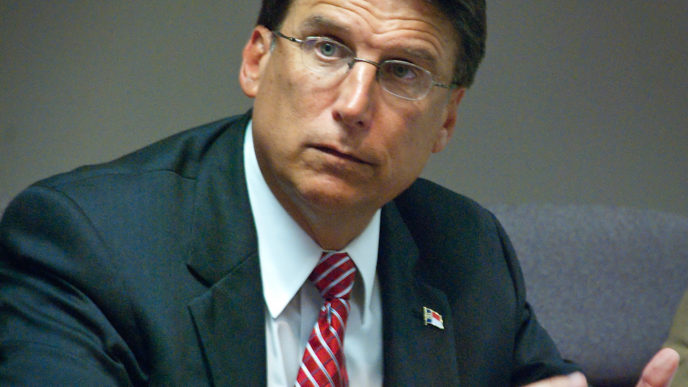
After a month of counting absentee and provisional ballots, exploring voter fraud, and recounting 90,000+ ballots in one of the progressive strongholds of the state that were turned in at 11:30 p.m. on election night, North Carolina Governor Pat McCrory conceded that he lost his re-election on Dec. 5.

McCrory lost his re-election by only 10,277 out of 4.7 million votes, or two-tenths of 1 percent. However, repeal of the H.B. 2 “bathroom bill” is not the lesson to be learned from the election.

The governor’s race in North Carolina had barely concluded before the Human Rights Campaign and other LGBT groups began taking credit for having unseated the one-term governor over his refusal to back down to their bullying.

The Human Rights Campaign engaged in an eight-month smear campaign against the state of North Carolina—with McCrory as the primary target—over the passage of North Carolina’s privacy law, which blocked a Charlotte city ordinance that would have allowed men into women’s bathrooms, showers, locker rooms, and other intimate facilities.

The Human Rights Campaign points to highly suspect internal polling as proof that this issue was his downfall, but the facts bear out a different conclusion. McCrory’s strong stance for privacy and safety and ensuring that local laws do not impose financial and legal liability on businesses actually helped him in his re-election bid, rather than hurting him.

So how does a governor who has presided over a massive economic comeback lose his re-election bid?

The most compelling evidence that the privacy law was not a deciding factor in the governor’s race is the fact that Lt. Gov. Dan Forest (who had championed the law) and the Republican majorities in the General Assembly (who crafted and passed the law) ended up winning re-election overwhelmingly.

Forest won 51.8 percent to 45.3 percent, a higher winning margin than President-elect Donald Trump, Sen. Richard Burr, or the Democrats who won the governor and attorney general races received. In fact, Forest brought in more total votes than either Trump or Gov.-elect Roy Cooper.

Republican state legislators, who had veto-proof majorities in both the House and Senate, retained those veto-proof majorities in both chambers, actually picking up a seat in the Senate and retaining the same number of seats in the House.

Rep. Dan Bishop, who championed the privacy law in the House, was elected to the Senate by almost 14 percentage points. If H.B. 2 were really a factor, it would have been a factor in these races as well as the governor’s race.

The truth is that voters in North Carolina were enthusiastic about re-electing those who preserved dignity, privacy, and safety by standing strong even in the face of bullying and extortion from the media, Fortune 500 companies, the NBA, and the NCAA.

The most measurable reason for McCrory’s downfall can be attributed to his refusal to scrap a toll road as the means for expansion of an interstate highway used heavily by commuters north of Charlotte.

The dispute arose over three years ago and peaked a year before the election, when four Republican state lawmakers called for the governor to kill the I-77 toll lanes and start over.

A Republican grassroots group threatened not to vote for McCrory in his re-election bid unless he scrapped the toll construction—and sure enough, those voters made good on their promise. Planned Parenthood was even caught red-handed posing as an anti-I-77 toll group.

A post-election comparison of votes from this highly Republican part of the state reveals that McCrory received 33,775 fewer votes in 2016 in these areas of the state than he did in 2012—enough to cost him the election.

To add further support to this argument, Republican Rep. John Bradford lives in the middle of this I-77 toll corridor, and he won his re-election race handily (56.5 percent to 43.5 percent), despite the fact that his opponent ran solely on her opposition to H.B. 2. Bradford won by a larger margin in 2016 than he did in 2012, another indicator that H.B. 2 was not what influenced his race or the governor’s race.

The toll road wasn’t McCrory’s only problem, unfortunately. For over three years leading up to the passage of North Carolina’s privacy law, McCrory was trailing in public opinion polls. In fact, in the 16 polls taken before the privacy law was passed, McCrory was trailing in nine of them.

Social conservatives were not enthusiastic about McCrory before H.B. 2 because of his veto of a previous religious liberty bill, his opposition to passing a Religious Freedom Restoration Act, and his threatened veto of a pro-life bill. McCrory himself admitted that he is not known for his support for social issues.

Only in the summer of this year did McCrory earn higher marks in the polls than his opponent, Cooper. It was then that the Republican base began to realize McCrory was standing strong on restroom and locker room privacy and safety, indicating that his handling of H.B. 2 and his determination not to give in to bullying, threats, and misrepresentations on the issue actually helped him gain ground with voters.

In addition, his handling of relief efforts for the destruction caused by Hurricane Matthew gave him a bump in public opinion polls right before the election.

Even the left-leaning group Public Policy Polling admits that McCrory’s approval right before the election (and post-H.B. 2) was the highest it’s been in over three years: “We’d found Pat McCrory with a negative approval rating every single month since July 2013 until now—45 percent of voters give him good marks to 43 percent who disapprove.”

The logical conclusion is that the negative trend for McCrory started long before North Carolina ever passed its privacy law, and his surprisingly strong stand in favor of H.B. 2 helped him gain enough support to run almost even with Cooper on Election Day.

But rising public opinion alone was not enough to help McCrory win, especially when he was being outspent by his opponent by almost $8 million.

Cooper raised $21.6 million to McCrory’s $13.75 million. That type of disparity between the candidates’ campaign budgets was destined to put McCrory at a disadvantage.

Republican insiders said that McCrory had not built his fundraising base outside of Charlotte, and that he was ill-prepared as a result. When money drives elections, not having it is critical.

The most damaging assault on McCrory’s re-election bid came from the “Blueprint for North Carolina” effort led by progressive groups to retake the state. They crafted a plan that directed their members to “eviscerate, mitigate, litigate, cogitate, and agitate,” and politically wound the state’s leadership, well before H.B. 2 became an issue.

One thing is for sure: Any claims that McCrory lost re-election because of North Carolina’s privacy law must be taken with a big grain of salt. The truth is that all politics is local, and McCrory’s refusal to act on conservative priorities such as the I-77 toll road and a larger progressive plan to target and take down the governor are to blame.

If anything, H.B. 2 helped the governor shore up the millions of North Carolinians who were skeptical about his commitment to religious freedom and conservative causes.

Although he narrowly lost the closest governor’s race in recent history, McCrory was right to stand on principle and not give in to the left’s bullying and attacks.

He may be leaving office, but North Carolina’s families and businesses will benefit from his bold stand for dignity, privacy, and safety, as well as his economic reforms, for years to come. (For more from the author of “Standing up to Political Bullying Is What Voters Want” please click HERE)

Follow Joe Miller on Twitter HERE and Facebook HERE.

Fearing Late Action by Obama, Republicans Consider Curbing Presidential Power to Declare National Monuments

President Barack Obama is using his executive power to issue a broad swath of environmental protections during his last weeks in office, guarding himself against a successor who has vowed to roll back parts of that agenda.

As part of this effort, Obama has made historic use of a 110-year-old law signed by Theodore Roosevelt that gives a president unilateral authority to designate national monuments on land already owned by the federal government.

Some Republicans in Congress have long accused Obama of abusing the law—the 1906 Antiquities Act.

“What was created 110 years ago for the purpose of giving the president power to protect some of our natural resources and archeological treasures from imminent destruction has lost its meaning over time,” said Sen. Mike Lee, R-Utah, in an interview with The Daily Signal. “The envelope has been pushed to the point where there’s nothing left of it.”

Worried that Obama will aggressively act on his way out the door, opponents like Lee are now gearing up for a protracted fight to amend or repeal the law, and are even vowing to work with the incoming Donald Trump administration to overturn monuments already named by Obama.

They are paying special attention to Obama’s next rumored target for a national monument designation, a site known as Bears Ears in southeastern Utah, a 1.9 million-acre retreat of mesas and canyons revered by Native Americans who live by it.

“It will kick off a huge flurry of legislative activity should the president take this unfortunate step,” said Lee, who notes he and nearly every elected state and federal official in Utah opposes Obama acting alone to make Bears Ears a national monument. “He [Obama] doesn’t want to be the guy who tarnishes his legacy of reaching out to populations who have been marginalized in the past [Native Americans]—in many instances by the government itself—by further marginalizing them. If he does act, he is asking for a strong response, and this is what that will bring.”

Battle for Bears Ears

Lee and other opponents have been bracing for Obama to name Bears Ears a national monument, and this week he and other Utah political leaders and several state and local elected officials rallied at the Capitol in Salt Lake City, demanding that the president not act.

Five tribal nations have joined to ask Obama to designate Bears Ears a national monument, arguing that this is the way to best protect the site from looting, mining, and drilling.

The site is not reservation land — it is owned by the federal government and managed by the Bureau of Land Management, U.S. Forest Service, and National Park Service. But local Native Americans depend on it for sustenance, religious activity, and cultural tradition.

The tribal coalition of Navajos, Zunis, Hopis, Utes, and Ute Mountain Utes is proposing to jointly manage the land with the government.

Elected officials who serve the state say the Obama administration’s consideration of Bears Ears as a national monument shares characteristics with the president’s recent use of the Antiquities Act in that there is significant local opposition to unilateral action.

They argue that the coalition of tribes supporting the monument do not reflect the local sentiment of Native Americans, because the group is supported by major conservation groups and nature advocates.

Powerful Republicans in Congress representing the area—including Reps. Rob Bishop, who chairs the House Natural Resources Committee, and Jason Chaffetz, who chairs the House Oversight and Government Reform Committee—have introduced legislation that would protect a portion of Bears Ears while opening other parts of the state to development.

The massive public lands bill—called the Utah Public Lands Initiative—includes a provision that would conserve less of Bears Ears—1.4 million acres instead of 1.9 million acres—and also would allow energy development in certain areas.

The measure, which has not received a floor vote in the House, is opposed by environmental groups and the tribal coalition, who say it does not significantly protect natural resources.

“At the end of the day, we stayed at the table as long as anybody working with Congress and county commissioners trying to come up with a protection mechanism for this landscape,” said Barb Pahl, the senior vice president of field services at the National Trust for Historic Preservation, in an interview with The Daily Signal. “There’s an agreement that we need to protect it, but Congress hasn’t acted. We don’t think their bill provides the protection this amazing region deserves, so it’s time for the president to act.”

‘Right the Wrongs’

Naming a national monument through the Antiquities Act has historically received bipartisan support.

Eight Democratic presidents and eight Republicans have used the law in some form, according to the Wilderness Society, designating a combined 152 national monuments.

Yet Bishop and Lee argue some of Obama’s designations have been overly ambitious, and influenced by persistent advocacy from outside groups.

Only Franklin D. Roosevelt has used the Antiquities Act authority more often.

USA Today reported that over the last five years, Obama has designated national monuments for reasons that go beyond conservation. He’s recognized sites important to Latinos, labor unions, African-Americans, Japanese-Americans, and women.

“There are some special-interest groups that think they are empowered because of this act,” Bishop told The Daily Signal in an interview. “That is why the Antiquities Act needs to be reformed.”

If Obama makes Bears Ears a national monument, Bishop says he can use several tools to retaliate. He says he will “immediately” draft legislation to rescind the monument designation, reintroduce the Utah Public Lands Initiative, and aim to block funding through the appropriations process.

All of those moves would likely struggle to advance in a divided Congress, Bishop acknowledges.

To guard against that possibility, Bishop told The Daily Signal that he’s personally lobbied the Trump administration for the president-elect to act alone to overturn Obama’s potential monument designation of Bears Ears.

“If Obama and [Bill] Clinton can abuse this act so badly, I would tell Trump to give himself the ability to change that and right the wrongs that have been done,” Bishop said.

A president has never before rescinded a previous monument designation, although in a few instances, presidents have shrunk the boundaries of a previous president’s proclamations.

The Antiquities Act does not explicitly say whether a president can overturn or change a monument designation, and the concept has not been tested in court.

Bishop and Lee are confident such an action would pass legal muster.

“We are very confident that a subsequent president could at the minimum redraw the boundaries of a previously designated monument,” Lee said. “There is also a thought that what one president can create, another president can extinguish under the Antiquities Act.”

Pahl of the National Trust for Historic Preservation counters that politicians would be making a mistake by upending more than a hundred years of tradition.

“Some of our most beloved national park units and places began life as national monuments designated under the Antiquities Act,” said Pahl, who referenced the Grand Canyon as an example. “Maybe at the moment some of these decisions have seemed like mistakes, but if you look over the course of time, the American people are grateful for these protections, and to all of a sudden pull the plug from them would be wildly unpopular.”

Bishop says his resistance is about process, not substance, and that there are more holistic ways to protect vulnerable federal land.

“We will do everything that has to be done to make sure a monument at Bears Ears is not done through the Antiquities Act, but through legislation, so the people have a say on what they want to do,” he said. (For more from the author of “Fearing Late Action by Obama, Republicans Consider Curbing Presidential Power to Declare National Monuments” please click HERE)

Follow Joe Miller on Twitter HERE and Facebook HERE.

Campus Disinvitations Hit Record Number in 2016, Report Says

The number of speakers who faced opposition or disinvitation this year reached a record high, according to a report from the Foundation for Individual Rights in Education.

FIRE, which has been tracking the number of incidents involving campus speakers since 2000, found that in 2016, at least 42 separate incidents occurred—double the number that occurred in 2015. That represents a 24 percent increase in the number of incidents compared to 2013, the last record-setting year. In 2013, there were 34 incidents.

Eleven of the 42 incidents pertained to a single speaker: Breitbart’s Milo Yiannopoulos. Yiannopoulos has been the target of protests and has had to cancel some talks due to security concerns. Other conservative speakers, such as The Daily Wire’s Ben Shapiro, also faced dangerous protests.

FIRE noted that commencement speakers used to make up the bulk of incidents. This year, former House Speaker John Boehner and Vice President Joe Biden each faced backlash at the University of Notre Dame. Former Secretary of State Madeleine Albright ran into trouble at Scripps College.

One of the highest-profile disinvitations in 2016 was journalist Jason Riley, who was disinvited from Virginia Tech. But the oddest disinvitation was John Derbyshire, who was disinvited by Williams College President Adam Falk due to fears his speech would be offensive to black students.

Ironically, Derbyshire was invited by a black student, Zach Wood, who heads up the “Uncomfortable Learning” series that brings controversial speakers to campus.

Ari Cohn, FIRE’s director of the Individual Rights Defense Program, posted a statement to the website about this year’s disinvitations.

“The resurgence of disinvitation attempts following a year of decline in their prevalence is a disturbing development,” he wrote.

“The increasing unwillingness to allow anyone on campus to hear ideas with which one disagrees poses a grave risk to students’ intellectual development. Rather than seeking to banish controversial or offensive ideas from campus, students would be far better off if they confronted, grappled with, and rigorously debated the views that they find disagreeable.”

Right-leaning speakers made up the majority of disinvitations and incidents, with 35 of the incidents caused by left-leaning students. The activity follows a recent pattern of leftist students calling for “safe spaces” and “trigger warnings” while attempting to shut down anyone they disagree with by calling them racists or sexists. (For more from the author of “Campus Disinvitations Hit Record Number in 2016, Report Says” please click HERE)

Follow Joe Miller on Twitter HERE and Facebook HERE.

Terror Attack in Germany Puts Spotlight on Refugee Policy

Before this year, Germany was not used to Islamist terrorists striking on its home soil. A lot has changed since.

The terror threat that haunts Germany seemingly culminated—at least for 2016—in the outrage that occurred in Berlin this week. At present, 12 are dead and dozens more were injured in a truck attack that mirrored the one that took place in Nice, France, this past summer.

It comes as no surprise that the Islamic State, also known as ISIS, has claimed credit for the attack in Berlin, although the actual perpetrator is yet to be arrested.

Intelligence services clearly had an idea that something like this was possibly coming. A State Department travel alert from November warned of a “heightened risk of terrorist attacks throughout Europe, particularly during the holiday season.”

The travel alert went on to say, “U.S. citizens should exercise caution at holiday festivals, events, and outdoor markets.” It stated that “credible information” indicated that ISIS or al-Qaeda could be likely perpetrators of an attack.

Such target-rich environments appeal to terrorist groups aiming to cause death and carnage during the holiday season. Even before the plot targeting Berlin, a 12-year-old boy radicalized by an ISIS operative tried to blow up a Christmas market in Ludwigshafen on Nov. 26. Fortunately, his bomb failed to detonate.

On the same day, arrests were made in Strasbourg and Marseille, which disrupted an ISIS plot targeting a Christmas market in Champs-Elysees, Paris.

Yet the threat does not begin and end with ISIS. Those trained by al-Qaeda have also planned to attack a Christmas market in Strasbourg. That plot was disrupted in December 2000 and four Algerians were subsequently jailed for between 10 and 12 years.

Al-Qaeda has also launched terrorist attacks on aviation during the holiday season—in 2001, via shoe bomber Richard Reid, and in 2009, via underwear bomber Umar Farouk Abdulmutallab.

With the Berlin assailant still on the loose (at the time of this writing), German authorities will be working with counterterrorism partners domestically and internationally to try and stop another attack from taking place. In the short-term, this involves finding whoever was responsible, what networks they were connected to, and any ties to foreign terrorist groups.

It may be that there were ties to terrorists based in Germany. For example, it is worth remembering that “Charfeddine T”—a 24-year-old Tunisian—was arrested just days ago on the suspicion that an attack was being planned in Berlin. Whether there are any ties is unknown, although the timing is worth noting.

Presumably, whoever carried out the attack will be caught relatively quickly. Even so, there is much to reflect on for Chancellor Angela Merkel and for German society generally.

This is the fourth terrorist attack that has taken place there this year, and there have been a host of other attempted attacks thwarted. Several of these plots have been planned by refugees recently settled into the country.

Clearly the vast majority of the 1 million-plus refugees to have entered Germany are not terrorists. Yet the numbers that Germany took in were so large that even a small minority has led to a very big issue.

So, the problem is clear. Whether the German political class has adequate solutions, much less so. (For more from the author of “Terror Attack in Germany Puts Spotlight on Refugee Policy” please click HERE)

Follow Joe Miller on Twitter HERE and Facebook HERE.

Could Murder of Russian Ambassador Lead to a Reassessment of Turkey’s Role in NATO?

Imagine if the U.S. Ambassador to Mexico were publicly executed in Mexico City by a Mexican government security guard who shouted slogans about “justice” for illegal immigrants. And if then we found out that the guard had a track record of involvement in radical nationalism. How would the U.S. government respond to that? What would ordinary Americans demand that we do?

Expect the Russian government to be similarly aggressive in responding to the blatant, vicious murder of Andrei Karlov, its Ambassador to Turkey — who was gunned down on camera while visiting an art gallery by Turkish riot policeman Mevlut Mert Altintas. Russian president Vladimir Putin has called for Russian security services to be involved in Turkey’s investigation of the murder, which was caught on camera (WARNING: graphic footage):

Revenge for Those “Moderate Rebels” in Syria

The murderer claimed that his attack was revenge against Russia, which has helped Syria’s dictatorial government defeat al Qaeda-allied Islamist rebels in Aleppo, preserving that country’s secular regime and the safety of religious minorities in Syria, including a million Christians. Turkey has been one of the prime sponsors of the Islamist militias in Syria, which have executed Christians, ISIS-style, in regions which they seized. Those jihadists also benefited from U.S. aid, advocated by the likes of John McCain and Lindsey Graham for “moderate rebels” who turned out not quite to exist.

If a confrontation were to develop between the governments, whose side will America take? The media-vilified Russian government or the Islamist regime in Turkey? By treaty, we are actually committed to defend Turkey, because it is still a member of NATO. No doubt Erdogan’s rogue regime feels empowered by that legacy of the Cold War. It will also count on the reflexive hostility to Russia by those who see that country as our inveterate enemy, whatever its regime. But it’s time to reconsider those impulses, and a Trump administration seems likely to ponder long and hard whether Russia is our enemy or Turkey our friend.

Who is Invading Europe: Russia or Turkey?

Before Russia shook off its Communist regime, Turkey was a solid U.S. ally, with a secular government that did a reasonable job of protecting the rights of Christian and other minorities — the tragic remnants of Byzantine Christianity after centuries of ethnic cleansing and grinding Islamic rule under the Ottomans. That Muslim empire lorded it over the citizens of Hungary, Romania, Greece, Bulgaria and Serbia for centuries. Features of Ottoman rule included the regular kidnapping of thousands of Christian infants, to be raised as Muslim soldiers.

Secular Turkey could protect its minorities, serve as a U.S. ally, and advance toward modernization as long as it was a military regime, which enforced its non-Islamic constitution by refusing to hold elections. Once Turkey, under misguided American pressure to democratize, began its transition to mass elections during the late 1990s, the voice of Islamist radicals began to drown out all the others.

Springtime for Islamists

Now the country is ruled by the increasingly autocratic Recep Tayyip Erdogan, who has jailed hundreds of journalists in the wake of a dubious coup attempt in July. Erdogan has made it clear that he is nostalgic for Turkey’s old imperial, Islamist past: He is dressing his palace guards in old Ottoman uniforms, revising history books to glorify the country’s Islamist past, and cracking down on the religious rights of Christians.

Turkey aided and abetted the mass colonization of Europe by Syrian “refugees,” who under international law should have remained there, as the “first safe country” they could reach. Instead, Turkey helped them to enter Greece and other countries, from which they could travel to Germany, Sweden, and other lands with generous welfare systems. The resulting wave of immigrant crimes and terrorist attacks is disrupting politics all across the European Union.

Instead of mitigating the flow, Turkish president Erdogan is using the fear of more refugees as a stick in negotiations with the EU, demanding that it continue moves to admit Turkey to the EU, and grant visa-free travel for the whole population of Turkey throughout the whole European Union — or else face a new influx of 1-2 million more colonists, who he threatens to ship into a supine Europe unwilling to defend its southern borders.

NATO was created to deter a Russian invasion. It succeeded. What a hideous irony it would be if NATO were used to protect a regime that is invading Europe with a far more intractable enemy: Muslims who oppressed and terrorized large parts of Europe for 400 years. (For more from the author of “Could Murder of Russian Ambassador Lead to a Reassessment of Turkey’s Role in NATO?” please click HERE)

Follow Joe Miller on Twitter HERE and Facebook HERE.

DNC Hopeful Keith Ellison to Rub Elbows with Radicals at Islamic Confab

Rep. Keith Ellison, D-Minn. (F, 26%), the frontrunner to become the next chair of the Democratic National Committee, is set to speak at an event next week that is being described as a “rogue’s gallery of the Islamist world.” He will be joined by a plethora of speakers who have espoused dangerous views and engaged directly with jihadist organizations.

The Muslim American Society (MAS) and Islamic Circle of North America (ICNA) are co-hosting the “American Muslims Islamic Duties and Civic Obligations” convention in Chicago next week. And Ellison is scheduled to be a featured guest speaker Tuesday night.

Federal prosecutors have described MAS — which paid for Ellison’s hajj to Mecca — as an “overt arm” of the Muslim Brotherhood. ICNA, for its part, advocates for a global Islamic caliphate ruled by sharia law.

On his own, the Minnesota congressman has a history of menacing commentary and associations, most evident by his attendance at gatherings of fringe Islamic groups. Moreover, Rep. Ellison has likened the 9/11 attacks to a false-flag event, and once compared George W. Bush to Adolf Hitler.

But enough about Ellison for now. Take a look at the company he keeps. Many of the speakers who will share the MAS-ICNA podium with him consist of a who’s who of radicals.

Kyle Shideler, director of the Threat Information Office at the Center for Security Policy, told Conservative Review that Ellison will be accompanied by a “treasure trove of bad guys.”

There’s Siraj Wahhaj, who was named an unindicted co-conspirator in the trial of the 1993 World Trade Center bombing. Wahhaj has advocated for the establishment of an Islamic state inside the United States.

Also at the event will be Nihad Awad, founder and director of the Muslim Brotherhood-founded Council on American Islamic Relations. Awad has declared that he is “in support of the Hamas movement,” a U.S.-designated terrorist organization that rules the Gaza Strip.

Additionally on the speakers list is Mohammad Qatanani, an imam from New Jersey with suspected Hamas ties and who federal officials have continually sought to deport.

There is Mohammed Ratib Al-Nabulsi, a Syrian sheikh who once declared that “all the Jewish people are combatants,” and, as such, justifiable targets for suicide bombings. He’s also called for the death penalty for homosexuals.

Jamal Badawi, a founding member of MAS and a former Muslim Brotherhood official, is listed as a speaker. At a 2006 conference, he declared that Islamic suicide bombers were “freedom fighters” against oppression.

Linda Sarsour, a supporter of the terror-tied BDS movement against the Jewish state of Israel, will also deliver remarks.

Imam Suhaib Webb of the Islamic Society of Boston will also be in attendance. Webb, once a close friend of deceased al Qaeda mastermind Anwar al-Awlaki, presides over a congregation that has drawn over a dozen suspected or convicted terrorists

Then there’s Mazen Mokhtar, who was identified in a July 2004 affidavit as someone who solicited financing for the Taliban and Chechen mujahideen. The indictment against him, however, was later dismissed and he is now the director of the MAS New Jersey chapter.

Khalil Meek, once a spokesman for the Holy Land Foundation — a now-defunct group that was named an unindicted co-conspirator in the largest terror financing case in American history — will also speak at the conference.

“The fact is, Rep. Keith Ellison will be attending an event with a veritable rogue’s gallery of the Islamist world,” the Center for Security Policy’s Kyle Shideler told CR. “MAS-ICNA is proudly advertising speakers who have endorsed suicide bombings, called homosexuality a ‘repugnant disease,’ multiple unindicted co-conspirators for terrorism cases, and an imam the DHS is actively attempting to deport for Hamas ties.”

Steven Emerson, founder of the Investigative Project on Terrorism, told Conservative Review:

“Both MAS and ICNA are radical Islamist groups which were derived from the Muslim Brotherhood. For years, both groups have openly issued incendiary statements defending terrorist groups, have had officials from their groups openly linked to terrorist groups, and year after year featured openly radical Islamic fundamentalists as the primary speakers at their conferences.”

By appearing at the Islamic supremacist MAS-ICNA conference, Rep. Keith Ellison does no favors for his campaign to mainstream his candidacy to the Democratic Party at large. (For more from the author of “DNC Hopeful Keith Ellison to Rub Elbows with Radicals at Islamic Confab” please click HERE)

Follow Joe Miller on Twitter HERE and Facebook HERE.

6th Circuit: Transgenderism Is Settled Law!

How could you take the most irrevocable law of nature — a man being a man and a woman being a woman — and twist it so the exact opposite becomes settled law? Leave it to the courts.

A constitutional right to force transgenderism on the states

In September, a federal district judge ordered Highland Local School District, a school district outside of Akron, Ohio, to treat a boy “as the girl she is” for all official school business. One cannot possibly conjure up a more radical manifestation of judicial tyranny than forcing school districts to violate the most immutable laws of nature. In any other generation, a judge like this would be impeached, the states would ignore the ruling, and Congress would immediately use Art. III Sec. 2 of the Constitution to remove such cases from the jurisdiction of federal court. Unfortunately, none of that happened and nobody in politics even knows or cares about this case.

Instead, plaintiffs were left with no choice but to appeal to the Sixth Circuit for a stay on the district judge’s ruling. Yet, late last week, in a 2-1 decision, the appeals court denied the request. Worse, they tipped their hand on the merits of the case, asserting the notion that “sex stereotyping based on a person’s gender non-conforming behavior is impermissible discrimination” is, in fact, settled law. Referring to the boy as “Jane Doe,” the court’s majority opined that the status quo in this case is transgenderism and that the plaintiffs didn’t even raise “serious questions on the merits.”

First, to the extent we should even engage in a debate with such metal illness and judicial lawlessness, the court’s argument that maintaining separate bathrooms for the sexes is discriminatory, is in itself, internally contradictory. As Ed Whelan explains:

The panel majority fails to recognize the elementary reality that a policy that requires a boy who identifies as female use the boys’ restroom does not involve sex stereotyping at all. On the contrary, that policy treats boys as boys, irrespective whether they engage in gender-conforming behavior. Likewise, that policy does not discriminate on the basis of gender identity: boys can’t use the girls’ restroom, whether or not they identify as female.

More foundationally, how have we stooped to a point in judicial supremacy that the court can not only rewrite legislation, constitutions, history, and traditions, but can alter the most immutable laws of nature and coerce their social transformation agenda on the states and the other branches of government? What’s worse, this comes from the Sixth Circuit, which is supposedly one of the “better circuits” with more Republican appointees. Yet, this decision comes on the heels of some other bad opinions from that circuit, such as the one in the Michigan recount and Ohio’s effort to clean its voter rolls.

Are we as a society going to continue peddling this myth of judicial supremacy even to the point which we allow them to declare the exact opposite of laws of nature as settled law?

Republicans cannot run away from the cultural Marxists on this issue. Within the next two months the Supreme Court will likely render a decision on transgenderism in Grimm v. Gloucester County School Board. Given that we already know where Anthony Kennedy stands on this issue, Grimm will serve as the transgender-version of Obergefell and have far-reaching and disruptive consequences for our society, culture, system of government, and religious freedom.

It’s time for the other branches to get in the constitutional arena?

The solution to this problem is very simple.

As a first step, Congress should pass and Trump should sign into law a judicial reform bill, removing from the federal judiciary jurisdiction to adjudicate any case forcing states or local school districts to redefine sexuality. It’s sad that we’ve reached a point when we even recognize that courts would have jurisdiction in the first place, but this step is unfortunately necessary. This move would redirect any litigation to state courts, whose judges are elected in most states. According to a recent analysis conducted by a sexual identity legal group, state courts that are elected are much less likely to issue rulings tendentious to its movement.

However, in order to act immediately and get around the legislative grind and the filibuster, Congress and the Department of Justice (under the helm of Jeff Sessions) must work to immediately block implementation and enforcement of judicial transgenderism.

The very source from which liberals draw upon to promote a powerful judiciary is also a repudiation of the notion that the courts have exclusive and final jurisdiction over constitutional interpretation. In fact, an honest understanding of judicial review requires that members of the other branches of government also act on their conscience to properly interpret the Constitution as it relates to the interaction of the particular issue with their powers.

The Truth About Marbury v. Madison

To begin with, the notion that a federal court could grant standing to a plaintiff to directly overturn a state or federal law on a broadly political/social issue, based on constitutional interpretation, is very dubious. Everyone agrees that the main job, if not the exclusive job of the federal courts, is to interpret the application of the statute, not to serve as a veto. That power was given to a governor or president.

The legal profession draws upon Chief Justice John Marshall’s opinion in Marbury v. Madison as the foundation for judicial supremacy and the power to veto statutes. Using Marbury, which did not involve a social issue of broad political consequence, as a source for judicial tyranny, is tenuous from the get-go. The opinion in which Marshall established judicial review was merely non-binding dicta because he already ruled that plaintiffs lacked standing to even consider the case. Moreover, he clearly misread the role of Congress and the court’s scope of original jurisdiction and should have recused himself because he was directly involved in the outcome of the case.

Putting Marshall’s political motivations aside, Marbury is actually a refutation of judicial supremacy, especially as it relates to those who interpret the Constitution as a living and breathing document. All Marshall meant by declaring that “it is emphatically the province and duty of the Judicial Department to say what the law is” was that, although the main job of the court is to interpret the statute, the Constitution is ultimately the supreme law of the land. Given that every judge swears an oath to uphold the ultimate law of the land — the Constitution — the court has a duty to grant relief to a plaintiff with legitimate standing against a law that manifestly violates the plain meaning of the Constitution as it was adopted. His main rationale was that for a judge to rule in an individual case against the Constitution, it would violate his oath of office.

Freeze frame: for that very reason, it is a violation of the oath of office for any member of the legislative branch, the executive, or the state governments to exercise their powers in contravention to the Constitution as they understand it because they take the same oath to defend the same Constitution as judges do.

Marshall never intended for the courts to be the sole and final arbiter of constitutional interpretation. He meant that even the courts, the weakest branch — that is unelected and wields “neither force nor will” over public policy — has a responsibility to uphold the Constitution because its members also swore an oath to do so. How much more so the executive branch with the power to enforce the laws and Congress with the powers to legislative and appropriate funds must work to uphold the Constitution as they understand it.

Now let’s returns to the contemporary courts whose members offer not a scintilla of original constitutional interpretation and blatantly seek social transformation on broadly political issues. Does anyone think for a moment that Marshall would have said to follow such nonsense?

Accordingly, in the case of transgenderism, here is what the other two branches can do. The courts were deliberately denied any mechanism to enforce or fund their decisions, which in itself should prove conclusively that they were not intended to have the final say on political issues. When the Supreme Court inevitably rules in Grimm in favor of mandating transgenderism on school districts, Attorney General Jeff Sessions should immediately write an opinion for the executive branch of government (on behalf of the president) saying that his version of the Fourteenth Amendment (and Title IX) actually doesn’t mention anything about a boy thinking he’s a girl. As such, for the purposes of executive powers, they will not enforce this decision. Therefore, if the ACLU sues a principle or school superintendent for not allowing a boy in a girl’s bathroom and they get a lower court to apply Grimm as precedent and issue a bench warrant to arrest that individual, Sessions can refuse to send out the U.S. Marshals to execute the warrant. This is how we avoid Kim Davis situations.

Likewise, members of the House and Senate Judiciary committees should write their own opinions stating that for the purposes of the legislative branch of government, their oath of office dictates that they must defund any federal action taken against a school board on account of the transgender agenda.

Similarly, state executive officers can then say that for their purposes of applying the Constitution, they will not send out state troopers to execute the warrant.

Perforce, the courts can “apply” the Constitution in the most dyslexic way imaginable to their hearts content as it relates to their job of adjudicating individual cases and controversies. But their ruling will be mere “judgment” and will have “neither force nor will” on public policy.

The point is just like there is judicial review, there is also executive review and legislative review (as well as state review). And those branches have a lot more force and will behind their “review” of the Constitution. Thus, the judiciary is not supreme in our system; the Constitution is supreme. And all the branches have a responsibility to uphold it. The entire reason why Marshall said courts can also get in on the business of constitutional interpretation is because if they were to ignore the Constitution as written and just focus on applying a patently unconstitutional law, it “would subvert the very foundation of all written constitutions.” By the same token if we allow only the courts to interpret the Constitution — to the point that they now mandate transgenderism on the states — what is the purpose of a written Constitution?

It’s time we finally right the ship on judicial supremacy. There is no better place to start than with their most egregious contortion of natural law. (For more from the author of “6th Circuit: Transgenderism Is Settled Law!” please click HERE)

Follow Joe Miller on Twitter HERE and Facebook HERE.
Newsweek Editor Admits He Faked News on Fox

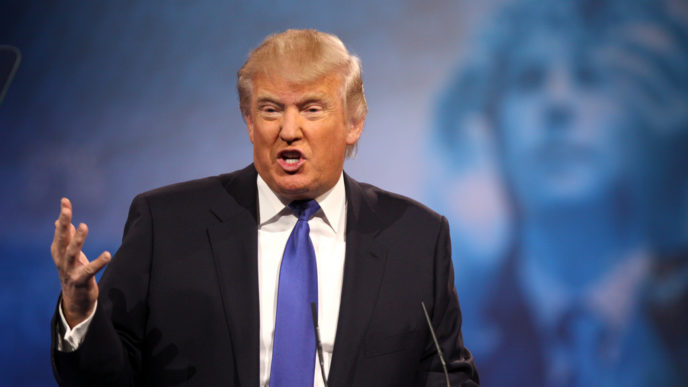
Newsweek reporter Kurt Eichenwald said Tuesday that his baseless claim that President-elect Donald Trump was once institutionalized in a mental hospital was actually part of a series of jokes and intended to be a “signal to a source” to talk to him.

Eichenwald’s explanation came Tuesday on “Good Morning America,” as host George Stephanopoulos asked him about the September tweet in which he said, without evidence, he believed “Trump was institutionalized in a mental hospital for a nervous breakdown in 1990.”

“Any regrets about that?” Stephanopoulos asked.

“There’s a long story behind it,” Eichenwald said after some brief laughter. “When you go through the full lead-up to that tweet — there was a reporting purpose for that tweet going out, which is more than you are going to want to hear about.

“I was making fun of Fox News and the rest, who were doing ‘Hillary has seizures,’ ‘Hillary has multiple sclerosis,’ ‘Hillary has Parkinson’s,’ you know, let’s go to Dr. Oz,” he continued, referring to a point in the election during which the two major-party presidential nominees’ health was under the microscope. (Read more from “Newsweek Editor Admits He Faked News on Fox” HERE)

Follow Joe Miller on Twitter HERE and Facebook HERE.

NYT Hacks, Electoral College Edition: Hey, Let’s Blame EVERYTHING on Slavery

Modern leftists have a habit of blaming things they don’t like on slavery — like Harry Reid, D-Nev. (F, 2%) with opponents of Obamacare. Today’s lesson in “but slavery” is The New York Times on the Electoral College. The Times Editorial Board echoes the 2016 leftist narrative that the Electoral College was created to give “slave states” more power.

The notion is plainly not true, nor supported by the historical record. The Electoral College was designed to give smaller states, slave or not, a more equal say in the selection of the executive branch. It is a guardian against mob rule by pure democracy. It has worked well — remarkably so this year.

Here’s what the Times Editorial Board had to say:

The Electoral College, which is written into the Constitution, is more than just a vestige of the founding era; it is a living symbol of America’s original sin. When slavery was the law of the land, a direct popular vote would have disadvantaged the Southern states, with their large disenfranchised populations. Counting those men and women as three-fifths of a white person, as the Constitution originally did, gave the slave states more electoral votes.

There is so much wrong with this statement. It is hard to know where to begin. The first fact, ignored by the Times, is the vast majority of states were slave states at the time of the Constitution. Only five of the thirteen states — Vermont did not join the Union until 1791 — had fully or partially abolished slavery by law at the time of the Constitutional Convention. Those states were Connecticut, Massachusetts, New Hampshire, Pennsylvania, and Rhode Island. Of those states, only Massachusetts had abolished slavery completely. The other four enacted laws gradually abolishing slavery, and there were chattel slaves in those states until the 1800s.

Contrary to what the Times would have you believe, only one of the 13 states present at the Constitutional Convention was a true “free state.”

The abhorrent 3/5 provision had more to do with apportioning seats in the House of Representatives than the Electoral College.

The proposal for apportionment for the determination of each state’s number of seats in the House of Representatives became an issue when the Constitution was being drafted in 1787. Aside from being a complex system and method for calculating the population through the census and then establishing a number of seats for representation, the issue as to who was eligible to be counted for the population was a topic of controversy. However, it is no surprise that this agreement is known as the Three-Fifths Compromise, for the Constitution itself was born out of compromise between the Framers of the Constitution.

This fact doesn’t fit the leftist narrative stating, “Everything that is bad in the United States is because of slavery.” Which, of course, is a lazy argument. The Times Editorial Board further explains what they really want, which is the National Popular Vote initiative. By calling the Electoral College racist, they think they can get their way. How did that work for them this election?

Unfortunately for the Times, the real reason the Electoral College exists is the exact problem they have with it. The Electoral College was a solution to stop the country from devolving into a mobocracy. The founders studied history and realized that previous pure democracies descended into majority mob rule. That’s why the Electoral College is there. It was to give smaller states (remember all of the states but Massachusetts were slave states at the time) a more equal say in the government. It is the same reason why there is a U.S. Senate and not a unicameral legislature found in many Westminster parliamentary systems.

The Times asks:

Conservative opponents of a direct vote say it would give an unfair edge to large, heavily Democratic cities and states. But why should the votes of Americans in California or New York count for less than those in Idaho or Texas?

The answer is because we are a federal republic of semi-sovereign independent states. The federal government was never meant to supplant the state government as a primary governing body. It was envisioned to provide for the common defense and ease interstate commerce. It was, by and large, a mutual defense and free trade pact. People in different states, while all American, have different values. The Electoral College and the Senate ensure those values have a seat at the federal table.

In effect, the Electoral College is the furthest thing from racism. It is a most elegant solution for representing the rights of the minority. (For more from the author of “NYT Hacks, Electoral College Edition: Hey, Let’s Blame EVERYTHING on Slavery” please click HERE)

Follow Joe Miller on Twitter HERE and Facebook HERE.