
Movies With a Message: Top Faith-Based Films of 2016

2016 brought us an abundance of inspirational and faith-based movies. Not only overtly Christian movies, but also movies boasting main characters with strong faith. As we kick back this extended New Year’s weekend it seems a good time to recall some of the best from the silver screen for the year that helped pushed faith to the forefront of cinematic conversation.

If you haven’t seen them yet, here are some of 2016’s faith-based movies worth a watch:

Hacksaw Ridge — R (for graphic scenes of war violence)

This film is based on the true story of a soldier who goes to war with Company B in World War II without a weapon. Pvt. Desmond Doss was drafted in 1942, but because of his faith, he refused to kill anyone or carry a weapon. He spent his time at war as a medic rescuing injured soldiers, at risk of great harm to himself. Called a “conscientious objector,” Doss said his mental image of Christ kept him from harming soldiers. “I pictured Christ saving lives — I want to be like Christ who’s saving life instead of [taking] life.”

Doss spent much time in prayer and reading his Bible. At one point, his Bible reading and prayer delayed an assault on the enemy. His colleague said when he finally finished and the assault began, it was as if Doss said, “I’ve got permission from God.” By nightfall, Company B held Hacksaw Ridge and thanks to Doss’ efforts, 75 men were rescued. Doss later said that, “The Bible was my main source of strength all during the war and in the service — and then when I lost it I was lost. … I thank God He enabled me to do what I did to save lives.”

Director Mel Gibson underscored the power of prayer in Doss’ success. “What he did was supernatural. And he only did it through faith — that’s all. He was armed only with his faith. … This man existed, he was a man of faith and conviction, never fired a bullet [and ] got the Medal of Honor for extraordinary feats that he could only have achieved through the power of God.”

Risen — PG-13

The movie Risen, written by Paul Aiello and directed by Kevin Reynolds, is the story of Christ’s death and resurrection told from the perspective of a Roman military tribune who was present for the crucifixion. This beautifully written film documents the journey of Clavius — the Roman tribune, and follows his quest for truth about Yeshua, the Christ.

For Clavius, the discovery that Yeshua (Jesus) — a man whom he knew to be dead — was alive comes as an overwhelming shock. This discovery leads the tribune to begin a cross-country journey to follow Yeshua’s disciples, if only to find out more about him.

The beauty of Risen is in the genuinely felt love of Yeshua for others, and in particular, His disciples. The precious love story of Yeshua and his disciples was very tender and meaningful. The excitement of the disciples upon seeing Yeshua tells a believable story of mutual philos: love between friends and brothers as observed by Clavius.

Risen tells the story of Yeshua’s crucifixion and the resurrection with poise and grace, accuracy and even a little humor. For those who know and love the story, this film is one you won’t want to miss.

Miracles From Heaven — PG

Miracles From Heaven tells the true story of Annabel Beam, a 10-year-old girl with incurable digestive disorders. The movie follows the Beam family throughout their struggle to find a cure for their daughter, praying for a miracle, yet feeling that God is nowhere near. However, when Annabel has what should have been a catastrophic freak accident at home, the Beams learn that God works in miraculous ways all around them. “God is real and God is faithful,” says Annabel’s father Kevin, “and He’s there even if you don’t see Him.”

God’s Not Dead 2 — PG

The sequel to Pure Flix’s 2014 God’s Not Dead highlights difficulties that Christians have in sharing the reason for their hope and faith. Starring Melissa Joan Hart, God’s Not Dead 2 is the story of a high school teacher, Grace, who reaches out to help a hurting teenager by sharing her faith, only to be told that she is not allowed to talk about God in school and to do so has jeopardized her job. A court case ensues, leading Grace to lean on her faith in God more than ever as she faces the loss of her beloved career and ability to witness to others.

Woodlawn — PG

What would a top movies list be without an inspiring sports movie? Woodlawn is yet another true story of miraculous events. These took place in Birmingham, Alabama in 1973, when 40 members of a high school football team gave their lives to Christ. The collective decision is even more astounding given the backdrop of a recently-desegregated high school where students and townspeople are filled with frustration and anger. Actor Sean Astin (Hank) heads the cast for this captivating faith-based film — another inspirational movie for the star of the football classic Rudy.

Hank points the way to hope and forgiveness based on his own experience of hope and love at a Christian revival. Following the team’s conversion, things begin to change in a big way around Woodlawn. Hank tells the players the changes occur not because of what they’ve done: “This is what happens when God shows up.”

Top Films of 2016, and a Sneak Peak at 2017

Box Office Mojo lists 2016’s top 10 “Christian” movies (by gross sales), defined as “movies produced by Christians that promote or embody their religions.”

Miracles From Heaven

Risen

God’s Not Dead 2

The Young Messiah

Hillsong: Let Hope Rise

I’m Not Ashamed

Greater

Priceless

The Insanity of God

Believe

Looking ahead, 2017 seems to be shaping up nicely as well for films offering a faith-based message or main character — starting right out of the gate with heavyweight director Martin Scorsese and his long-awaited passion project Silence. Based on a 1966 book by Japanese author Shūsaku Endō, Silence tells the fictional story of Jesuit priests in 17th Century Japan who endure persecution as they attempt to share their faith. The official release date for the U.S. is January 6, so be on the lookout for The Stream’s upcoming review.

And coming March 3, The Shack, based on the emotional best-seller about a grieving man who receives a mysterious, personal invitation to meet with God. (For more from the author of “Movies With a Message: Top Faith-Based Films of 2016” please click HERE)

Follow Joe Miller on Twitter HERE and Facebook HERE.
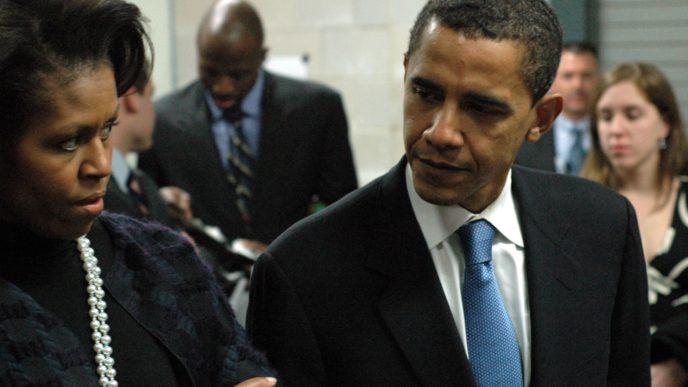
Obama’s Land Grab Will Not Stand. I Will Fight It.

When I questioned Interior Secretary Sally Jewell at her confirmation hearing, she promised me President Barack Obama would not designate a national monument unless there was widespread support from the local population.

Unfortunately, Obama ignored that promise and designated a monument in San Juan County yesterday.

But this is no time despair. This is a time to double our efforts and make San Juan County great again.

I pledge to you today that I will do everything I can to work with Congress and the incoming Trump administration to undo this monument designation.

But I am not going to stop there. I am then going to do what I can to repeal the Antiquities Act so that future President Obamas can not do this to rural communities ever again.

But I am not going to stop there. I am then going to continue our fight to return power back to the American people. Everyone suffers when we allow power to accumulate in the hands of the few.

This is not the end. This is just the beginning. We will fight this battle together, and we will win. (For more from the author of “Obama’s Land Grab Will Not Stand. I Will Fight It.” please click HERE)

Follow Joe Miller on Twitter HERE and Facebook HERE.
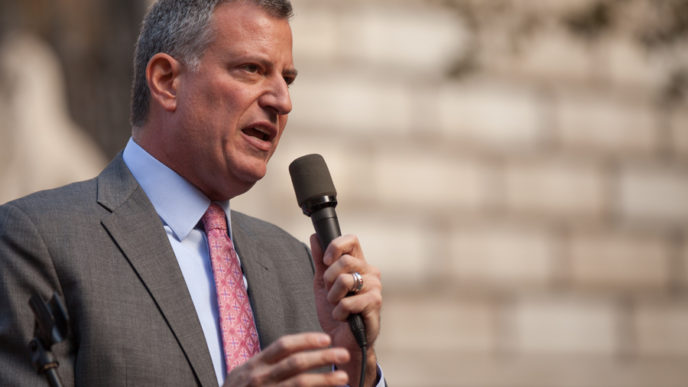
State Lawmakers Seek to Stop New York City From Destroying ID Records

A judge is expected to rule soon on whether New York City can destroy records associated with an identification program commonly used by illegal immigrants who lack Social Security cards or driver’s licenses.

Earlier this month, Ron Castorina Jr. and Nicole Malliotakis, Republican members of the New York State Assembly from Long Island, filed a lawsuit contesting a provision of the identification program that says the city as of Dec. 31 can destroy records, including the personal information of applicants.

City Council member Carlos Menchaca, a Democrat representing Brooklyn, co-sponsored legislation creating the city’s identification program nearly two years ago. Menchaca said the measure calling for destroying data was intended to protect illegal immigrant applicants in case a future Republican president tried to access their personal information for immigration enforcement.

Menchaca told the New York Post the clause was included “in case a Tea Party Republican comes into office and says, ‘We want all of the data from all of the municipal ID programs in the country,’ we’re going to take the data.”

Since Donald Trump’s election as president, immigration advocacy groups and the city’s Democratic leadership have expressed concern that the new administration could try to pursue information from the ID program to fulfill its goal to increase deportations.

“The fear is that the Trump administration has made a lot of threats [about] deporting immigrants and they could use this data against immigrant communities,” Thanu Yakupitiyage, senior communications manager of the New York Immigration Coalition, a group that promotes policies that benefit immigrants, said in an interview with The Daily Signal.

Castorina and Malliotakis, in interviews with The Daily Signal, said security issues drive their concern about the prospect that the city will destroy documents associated with the identification program, known as IDNYC.

“Our lawsuit has nothing to do with immigration,” said Malliotakis, who is a daughter of Cuban and Greek immigrants.

Castorina and Malliotakis, the only two Republican members of the New York State Assembly who represent the city, did not vote on the IDNYC program because the City Council created it.

But the two lawmakers represent 300,000 New York City constituents between them, and they said they followed the program’s implementation closely. They became alarmed in September when New York state’s banking superintendent issued a directive encouraging all state-licensed banks and credit unions to accept identification administered through IDNYC.

Malliotakis said she worries that someone with “nefarious intent” could use the municipal identification, which is easy to qualify for, to open a bank account to “finance terror or engage in fraud.”

If the city destroys records associated with the program, she says, it would make it more difficult for law enforcement to investigate potential criminal cases.

“This lawsuit is about the safety and security of the people of New York City and our nation, and maintaining transparency and the rule of law in government,” Malliotakis told The Daily Signal. “That’s what it’s about. Everything else is a side issue that is not directly related to why we are seeking to preserve the documents.”

Earlier this month, in the first arguments of the lawsuit, Justice Philip G. Minardo of State Supreme Court on Staten Island delayed the impending Dec. 31 destruction of documents until a full hearing is convened in the first week of January.

Minardo requested that Mayor Bill de Blasio or City Council Speaker Melissa Mark-Viverito—both Democrats—be present at the hearing.

“I don’t want to order the mayor or the council speaker to be here, but it would be helpful,” Minardo said, issuing an unusual request that reflects the weight of the challenge before him.

In January 2015, New York City introduced IDNYC as the country’s largest municipal identification program to help those who struggle to obtain government-issued identification, including illegal immigrants, the homeless, and victims of domestic violence.

Applicants must provide their name, address, and proof that they live in the city’s five boroughs, among other personal data.

The program does not ask applicants to reveal immigration status.

“IDNYC was advertised to New Yorkers as a badge of being a New Yorker, that you could get it regardless of immigration status,” Yakupitiyage, of the immigration coalition, said. “We were told this card is safe and the program ensures confidentiality.”

To obtain a card, an applicant can use a valid foreign passport or consular identification, along with a utility bill that verifies a city address. An expired foreign passport is acceptable for up to three years, in some cases.

Proof of residency in a homeless shelter for 15 days also can be a form of identification.

The New York Police Department accepts the municipal cards as a means of identification. They also can be used to enter public schools and libraries, and to get free admission to the city’s zoos and museums.

Roughly 1 million people have applied for the IDs. It’s unknown how many beneficiaries are immigrants living in the city illegally.

The law that created the program states that the city would keep records for two years of the documents applicants used to apply, and make them available only through a judicial subpoena.

Malliotakis said only seven cardholders have had their records requested through a subpoena.

The New York Times reported that 92 applications for IDs have been flagged as highly likely to be fraudulent, and the city has denied 7,130 applications because of insufficient proof of identity.

Castorina and Malliotakis say applicants’ records should be kept for the five years that an IDNYC card is valid, and that data should be made accessible under the state’s freedom of information law.

Lawyers for the city argue that law does not cover the release of private data, such as the personal information used to obtain one of the city ID cards.

Before pursuing the lawsuit, Castorina and Malliotakis filed a freedom of information request in November to get the records for all IDNYC beneficiaries. The city denied the request.

“We were not looking to engage in litigation,” Castorina told The Daily Signal.

Castorina says he supports the IDNYC program, and contends that it “fulfills a worthy purpose” by giving opportunities to vulnerable people, including illegal immigrants.

In the interview with The Daily Signal, he acknowledged, unprompted, that he backs providing a path to citizenship for immigrants now living in the country illegally.

Yet, through the litigation process, Castorina says, he has grown frustrated with New York City’s Democratic leaders, including de Blasio and Mark-Viverito. He accuses them of politicizing the municipal identification program and its clause allowing for destruction of data.

“To say this is the list that the federal government wants and will use to deport people is just complete political hyperbole,” Castorina told The Daily Signal, adding:

This is just politicizing the unfortunate situation of undocumented people, and it’s being done at their expense by instilling fear in their hearts and minds. And it’s also creating the prospect of a major security risk.

(For more from the author of “State Lawmakers Seek to Stop New York City From Destroying ID Records” please click HERE)

Follow Joe Miller on Twitter HERE and Facebook HERE.

Remembering George Washington’s New Year’s Victory Over the British at Princeton

What began as a retreat from battle-hardened, bayonet-wielding British soldiers 240 years ago, Gen. George Washington reorganized into a counterattack after arriving with well-armed reinforcements in a place known as Maxwell’s Field.

This battleground in Princeton, New Jersey, is where the U.S. War of Independence reached a critical turning point.

“Parade with us, my brave fellows!” Washington is said to have called out to his troops, “and we will have them directly.”

A tall and imposing figure even by today’s standards, Washington was “an easy mark for any British soldier” while mounted on his white horse, historian David Hackett Fischer recounts in his book “Washington’s Crossing.”

But the British didn’t hit Washington. He rallied two broken brigades back into offensive positions, where they concentrated musket fire on British soldiers and forced them to clear the field.

The end result was a major victory for the Continental Army on Jan. 3, 1777, that would reignite the American Revolution. Historical records show that Washington’s maneuvers on Maxwell’s Field turned the tide of the battle at a moment when the British appeared to have the upper hand.

Here in the 21st century, another critical date has come to pass in the history of Maxwell’s Field.

The Institute for Advanced Study, an independent postdoctoral research center, and the Civil War Trust, a nonprofit based in Washington, D.C., devoted to the preservation of America’s battlefields, issued a joint press release Dec. 12 that came as a relief to historians and conservationists.

The Institute for Advanced Study, founded in 1930 and located in close proximity to the Princeton Battlefield State Park, announced it has agreed to downsize and reconfigure a proposed housing project for faculty. Local historians had said the faculty residences would have intruded upon that part of the battlefield where Washington arrived on horseback.

While the Civil War Trust primarily focuses on the protection of Civil War battlefields, it also works to preserve battlefields associated with the Revolutionary War and the War of 1812 through what it calls the Campaign 1776 initiative.

Under the agreement, the Civil War Trust will pay $4 million to purchase almost 15 acres of land from the Institute for Advanced Study. The acquisition includes about two-thirds of Maxwell’s Field and another 1.12-acre tract where part of the battle was fought.

The Civil War Trust said it plans to transfer the land to the state of New Jersey so it can be added to the Princeton Battlefield Park.

The Princeton Battlefield Society, a nonprofit group founded in 1970 for the purpose of preserving the battlefield, had sought to halt the housing project by filing a federal lawsuit against the Institute for Advanced Study under the Clean Water Act.

In response to the compromise, though, the historic preservation group issued a statement announcing it will suspend litigation pending the outcome of the agreement, which must be approved by the Princeton Planning Board and the Delaware and Raritan Canal Commission.

The sale of the property is scheduled to close at the end of June 2017.

“We didn’t know how our litigation would have turned out,” Jerry Hurwitz, president of the Princeton Battlefield Society, said in an interview with The Daily Signal, adding:

While we would have preferred to see more of Maxwell’s Field preserved, it’s also possible we could have lost everything, which is why we are pleased with the agreement. This is the site where Washington’s leadership was so critically important. He actually rode out ahead of his own troops and was only about 30 paces from the British lines. It’s unusual for a general to do this.

The Battle of Princeton marked the culmination of the “10 Crucial Days” that began with what became known as Washington’s crossing of the Delaware River on Christmas night 1776, continued with the two battles of Trenton, and ended at Princeton.

Alexander Hamilton, who served as an artillery commander in the Continental Army under Washington, forced the British to surrender after firing cannon balls on Nassau Hall on the grounds of Princeton University, where the remaining British soldiers had taken refuge.

“What stands out from Princeton is the personal role George Washington played in turning the tide of a battle that could have easily been lost,” Hurwitz told The Daily Signal, explaining:

The first phase of the battle actually went very badly for the Continentals. The British had bayonets, but the Continental soldiers involved in the first phase of the battle did not. They were badly routed and were in retreat. But Washington arrived, took charge, reformed the American brigades, and turned them around to face the British with reinforcements. It was in this second phase that the battle was won.

The major fighting took place in and around an apple orchard that was part of a farm that sits on an elevated plane. This is where Brig. Gen. Hugh Mercer and his Continental soldiers clashed with the British army under the command of Lt. Col. Charles Mawhood.

On the American side, Mercer had about 120 soldiers from his brigade racing toward the orchard when the battle started, while Mawhood had about 450 men, according to records cited in “Washington’s Crossing.” However, more troops kept arriving on both sides as the battle raged.

Mercer had an additional 200 men from his brigade positioned a few hundred yards behind his 120 soldiers charging into the orchard. By the time the Pennsylvania militia, the Delaware Light Infantry, the Philadelphia Red Feather Company, and American marines arrived to reinforce Mercer’s brigade, Fischer estimates the Americans had about 1,500 troops, about three times the size of Mawhood’s forces.

Mercer died after the battle from multiple bayonet wounds inflicted by British soldiers who thought they had captured Washington. He was left for dead near a white oak tree that became known as the Mercer Oak, according to historical accounts.

Soldiers carried Mercer to a nearby house, where he was treated by Benjamin Rush, a surgeon in the Continental Army who had signed the Declaration of Independence.

In 1772, Thomas Clarke, a Quaker farmer, had purchased 200 acres from his brother, William Clarke. He replaced the house on the property with a two-and-a-half-story Georgian home that still stands.

What became known as the Thomas Clarke House was used as a hospital for both sides after the battle. Despite Rush’s efforts, Mercer died there nine days after the American victory at Princeton.

The original Mercer Oak lost a large branch after it was struck by lightning in 1973; strong winds in 2000 damaged it further. A young tree now grows in its place.

“The oak tree and its descendent are fixed points, so we know where Gen. Mercer had been wounded and how he died and where this happened,” Freeman Dyson, a retired professor of physics with the Institute for Advanced Study, said in an interview with The Daily Signal. “But the rest of the battle really took place all across town and across the countryside. The real battlefield includes the town of Princeton.”

The Daily Signal met with Dyson at his Princeton office before release of the joint statement announcing the compromise over housing plans. Dyson said he intends to live in the new housing, which he describes as “badly needed.”

The Institute for Advanced Study originally proposed to build seven single-family homes, but is moving forward with an alternative plan for eight townhouses in addition to the existing faculty housing.

“The institute has already very generously donated land that has been used for historical preservation,” Dyson said, adding:

There’s just no merit to what the institute’s critics have been saying. The idea that the Battlefield Park should exactly correspond with where all the fighting took place is absurd. You would have to demolish the whole town of Princeton, and you would have to demolish the building we are sitting in right now.

The Daily Signal asked the Institute for Advanced Study to comment on the dispute over the housing project and the recent compromise. The institute referred The Daily Signal to its online material, which includes a detailed overview of the new housing plans and its contributions to the Princeton Battlefield State Park.

In the online material, the institute also discusses where it differs with the Princeton Battlefield Society over some of the claims made by the preservation group about “key engagements” of the American and British troops and where they took place.

There is no dispute, however, over the significance and the importance of the battle itself.

“Washington certainly had some kind of military genius for knowing the right place and the right time to attack,” Dyson said. “This was the first straight-up victory over the British, and this is what everyone who had been sitting on the fence had been waiting for, and it also got the attention of people in Europe.”

The first Battle of Trenton following the Continental Army’s stealth crossing of the Delaware—in a snowstorm Christmas night 1776—had been a victory over the Hessians hired by the British, not over British troops themselves.

The Second Battle of Trenton, also known as the Battle of Assunpink Creek, was fought Jan. 2, 1777. It involved American delaying actions that prevented the British from reaching Trenton until nearly nightfall.

Washington slipped behind enemy lines that night and attacked the British in Princeton the next day.

“Trenton was man versus weather, which helped to give Washington the element of surprise over the Hessians,” the preservation group’s Hurwitz said. “But Princeton was man versus man, and it was the Battle of Princeton that saved the American Revolution since it was the first real victory over the British.”

Events commemorating the battles of Trenton are planned for Patriots Week, ending New Year’s Eve. The Princeton Battlefield Society partnered with the Historical Society of Princeton and the Morven Museum & Garden for a series of “living history” events commemorating the 240th anniversary of the Battle of Princeton.

Washington’s earlier crossing of the Delaware is “solidified in the national psyche,” Roger S. Williams, secretary of the Princeton Battlefield Society, told The Daily Signal.

But the Battle of Princeton, Williams said, proved to be the “pivotal battle that ended the 10 Crucial Days campaign and culminated in the British decision to end their occupation of New Jersey.”

“So the crossing of Washington’s army … was indeed a remarkable tactical achievement, but it was only one part of the story of the 10 Crucial Days,” he said, adding:

Princeton did not begin, or end, the way Washington and his commanders had intended. However, without that victory, the capture of the Hessians at Trenton and the Battle of Assunpink Creek would have all been for naught.

(For more from the author of “Remembering George Washington’s New Year’s Victory Over the British at Princeton” please click HERE)

Follow Joe Miller on Twitter HERE and Facebook HERE.

The Healing Power of Fly Fishing for Combat Veterans

On 112 acres off Springhill Road in Belgrade, Montana, sits a six-bedroom, 10,000-square-foot home called Quiet Waters Ranch.

The ranch belongs to the Warriors and Quiet Waters Foundation, a nonprofit located 10 miles south in Bozeman that teaches combat veterans of Iraq and Afghanistan how to fly fish in the place that’s considered the sport’s mecca.

Roughly 10 times each year, a half dozen veterans spend six days in Bozeman learning fly fishing.

They arrive on a Monday and are outfitted with the essentials—fly rods, waders, boots, shirts, jackets, and other fishing gear—all of which the warriors can keep.

By Friday, the fifth day, participating veterans have spent three solid days fishing Montana’s ponds and streams.

On the fifth night, before the warriors pack up their new equipment and depart, they gather with Warrior and Quiet Waters volunteers at Quiet Waters Ranch for one final meal, the “Sayonara Dinner.”

And it’s there or in follow-up correspondence where the veterans really open up, Faye Nelson, the organization’s executive director, recalls.

They open up about the impact that six days spent fly fishing in Montana has had on them.

“What this trip did for me is beyond words,” retired Army Sgt. Scott Riddle wrote in a letter read at a farewell dinner in 2011, adding:

It was pretty overwhelming for me to come back from theater on a stretcher badly broken, both physically and mentally. I wondered what was left of the life that I had before I went, but I still remember my drive to answer the call, and I was willing to sacrifice it all because this is what Americans do.

What this trip did for me was to restore my faith that great Americans like the people of Bozeman, Montana, are worth defending, even if it means not getting to come home. This awesome community and this great organization didn’t just teach me fly fishing—they gave me the gift of peace.

Some warriors, Nelson says, talk about the suicide notes they’ve written, picked up, and ripped to pieces. Others have talked about returning home only to sell the gun they contemplated using every day.

“Those are the extremes,” she says.

But other combat veterans talk about how they’ve used fly fishing to connect with their children or spouses, or have decided to make it their new family activity, foregoing video games for time out in nature.

“Fly fishing and the act of fly fishing is very methodical and rhythmic, and it’s often compared to golf in … how rewarding and frustrating it can be at the same time in terms of getting it just right,” Nelson tells The Daily Signal:

That rhythm and the actual act of casting can be really helpful to someone who has traumatic brain injury or PTSD [post-traumatic stress disorder] because their mind can wander or get overly anxious at any time. It’s a calming activity.

Ingredients for Success

The idea for Warriors and Quiet Waters can be traced back to the merging of ideas from the program’s co-founders: John Baden, founder of the Foundation for Research on Economics and the Environment; Volney Steele, a retired military doctor; and Eric Hastings, a retired Marine Corps colonel.

Baden and Steele’s roles began in December 2006, when the two men began a conversation at their gym while both were on treadmills, Baden tells The Daily Signal.

Steele told Baden of his idea to design outdoor activities in Montana specifically for veterans who were wounded while serving in Iraq and Afghanistan.

Steele wanted to mirror those services after the ones offered by Eagle Mount, a Bozeman-based organization founded in 1982 that offered outdoor activities—skiing, fishing, kayaking, and more—to people with disabilities and children with cancer.

The two specifically wanted to help those who returned home from war with psychological or physical injuries, the goal being to use the great outdoors and all that Bozeman has to offer.

“We have all the ingredients for success: superb fishing, exceptional air service, an army of top fishers, excellent fishing shops, and a strong tradition of helping others,” Baden wrote that December 10 years ago on the website for his Foundation for Research on Economics and the Environment.

This new organization wouldn’t rely on federal money to succeed, Baden wrote, since such funding sources often come with strings attached—usually in the form of complying with costly regulations and other requirements—and could “corrupt or distort the mission.”

The only thing missing, Baden tells The Daily Signal, was what he calls a “social entrepreneur.”

That’s where Hastings came in.

Psalm 23

The retired colonel served in the Vietnam War and recalled, during flight missions, tracing “meandering ribbons that cut through the jungle,” according to the Warriors and Quiet Waters website.

Those ribbons reminded Hastings of the trout streams of his home in Montana.

When the veteran returned to the state after serving more than three decades in the Marines, he went back to fly fishing.

“He realized how special the act of fly fishing was in terms of being able to focus his mind and really find some hope and serenity in both the activity of casting as well as being out in the outdoors around here,” Nelson says.

Hastings and his wife had two sons in the military, and they were concerned about the growing number of veterans returning home with both seen and unseen injuries, especially when compared to those returning from past conflicts, she says.

So Hastings approached the Naval Medical Center in San Diego and asked to be allowed to take some patients fly fishing.

The hospital obliged.

In 2007, Hastings, Steele, Baden, and other volunteers hosted 14 veterans for a fly-fishing trip in Bozeman.

During the course of the trip, the veterans were housed in rented vacation homes and given fishing gear, instruction from professional guides, and home-cooked meals.

And so Warriors and Quiet Waters—the name conceived from Psalm 23: “He leads me beside quiet waters. He restores my soul.”—was born.

“Our experiences have shown that most separating from military service are experiencing feelings of isolation and that loss of purpose, that loss of a mission,” Nelson says. “Our goals are to decrease those feelings of isolation by fostering camaraderie and providing a new network of support, and also to help them find that greater sense of purpose.”

Relating to the Military Experience

In the years after Sept. 11, organizations aimed at helping veterans returning from the wars in Iraq and Afghanistan began sprouting up.

Their missions run the gamut, from Team Red, White and Blue, which focuses on connecting veterans to their local communities through physical fitness, to Mission Continues, which focuses on connecting veterans to community service projects.

Indeed, Warriors and Quiet Waters isn’t the only organization that aims to help veterans adapt to life at home through participation in outdoor activities.

But research suggests that outdoor activities like fly fishing, which Warriors and Quiet Waters focuses on, can improve veterans’ mental health.

In 2013, the Sierra Club Military Families and Veterans Initiative and researchers from the University of Michigan conducted a study examining the effects that group- and nature-based recreational programs such as fly fishing, whitewater rafting, and backpacking have on veterans.

Participating veterans were surveyed one week before, one week after, and one month after participating in one of 12 different programs lasting four to seven days. None of the programs included structured therapy.

According to the study, those surveyed one week after their outdoor experience reported gains in psychological well-being, social functioning, and life outlook.

“The types of activities they’re doing are in many ways not that dissimilar from aspects of the military experience,” Jason Duvall, a postdoctoral researcher at the University of Michigan and author of the study, tells The Daily Signal. “You’re creating an experience that resonates strongly with where veterans are at and aspects of the military experience that many found to be valuable and rewarding.”

So far, extensive research has looked at outdoor recreation and contact with nature, but little research exists on how those experiences can affect veterans specifically.

The research by Duvall and co-author Rachel Kaplan indicates that the gains veterans reported one week after their outdoor experiences were, in part, related to the positive effect the natural environment can have on one’s emotional state.

But Duvall also attributes the positive results to the programs’ participants:

If you think about where veterans are going to be coming from, they’re going to be in situations where other people don’t have the same kinds of experiences as them. The mental models that they have are not shared with other people they’re going to come into contact with. That’s going to leave them feeling a little detached and misunderstood. Being able to get into a group of other veterans, all of a sudden you have a group where they share the same perspective and mental models.

‘A Ripple Effect’

In 2016, Warriors and Quiet Waters hosted 10 fishing outings, held April through October.

Warriors can participate in one of three “experiences”—a solo fishing, alumni fishing, or couples fishing. Each spans six days, with three full days spent out on the water fly fishing.

The alumni fishing experience pairs first-time participants with previous participants, who are encouraged to mentor new attendees.

“It really helps people open up and confide in one another, and trust and know that there’s not only the military experience but the combat experience,” Nelson says. “It really deepens the bonds within the group.”

The couples experience is designed for warriors who have participated in solo fishing and return with their spouses.

“To us, it’s important to (a) recognize their service, since so many of them are the primary caregivers to warriors dealing with seen and unseen injuries, and (b) to really better the family,” Nelson says. “We want to have a ripple effect to marriages and children.”

During each outing, Warriors and Quiet Waters hosts six veterans—or six couples—at a time. Participating veterans may be from any branch of the military, but must have seen combat in Operation Iraqi Freedom, Operation Enduring Freedom, or Operation New Dawn. Some arriving warriors have visible injuries, while others may struggle with wounds that can’t be seen by the naked eye.

‘Home Environment’

Next year, Warriors and Quiet Waters will celebrate its 10-year anniversary.

In nearly a decade, the organization has served more than 336 combat veterans and 89 spouses, many of whom have returned, with the help of nearly 1,000 volunteers.

In 2016 alone, the organization served more than 70 combat veterans and 12 spouses or caregivers.

During past fishing experiences, warriors lodged at rented vacation homes in the Bozeman-area. But in May 2015, Warriors and Quiet Waters purchased a $3 million property that ultimately would become Quiet Waters Ranch.

Volunteer “moms” make breakfast and dinner from scratch.

“We really want them to feel like they’re in a home environment, not a rehabilitation facility or institution,” Nelson says.

In 2017, Nelson says, she hopes Warriors and Quiet Waters will expand its programming to include professional development and entrepreneurship classes, or offer help with finances or relationship-building.

But fly fishing will always be a component of what Warriors and Quiet Waters does.

“We are all responsible for going to war and letting our Congress put us in those situations,” Nelson says, “so we’re all responsible for taking care of the people that stepped up to the plate.” (For more from the author of “The Healing Power of Fly Fishing for Combat Veterans” please click HERE)

Follow Joe Miller on Twitter HERE and Facebook HERE.

15,479 Syrian Refugees Have Been Admitted This Year – 98.8% Are Muslims

In its last full month in office, the Obama administration has admitted 1,307 more Syrian refugees – pushing the 2016 calendar year total to 15,479, a 606.1 percent increase from the numbers resettled in the U.S. in 2015.

Of the 15,479 Syrian refugees admitted by the end of Thursday:

–15,302 (98.8 percent) are Muslims – 15,134 Sunnis, 29 Shi’a, and 139 other Muslims

–125 (0.8 percent) are Christians – 32 Catholics, 32 Orthodox, five Protestants, four Jehovah’s Witnesses, and 52 refugees described only as “Christian” in State Department Refugee Processing Center data

–43(0.27 percent) are Yazidis

(Read more from “15,479 Syrian Refugees Have Been Admitted This Year – 98.8% Are Muslims” HERE)

Follow Joe Miller on Twitter HERE and Facebook HERE.