
It Is Outrageous for the Government to Force Christians to Violate Their Faith

The more you see something shocking, the less shocking it appears, and the more something outrageous happens, the less outrageous it seems to be. That is how a culture becomes desensitized, and that is how the abnormal becomes normalized. But when it comes to the government’s attack on our religious freedoms, it is our sacred duty to remain shocked and outraged. Such things cannot continue to happen in America if we are to be the land of the free and the home of the brave.

According to the Washington Supreme Court, when Christian florist Barronelle Stutzman declined to do the floral arrangements for a same-sex “wedding,” she violated the state’s anti-discrimination laws, since she allegedly discriminated based on her customer’s sexual orientation by refusing to participate in his “wedding ceremony.”

Attorney David French is correct in emphasizing how this ruling should affect us (he penned these words shortly after the verdict was announced): “If you care about the Bill of Rights, the rights of conscience, or even the English language, there’s a chance that this morning you felt a disturbance in the Force — as if the Founders cried out in rage and were suddenly silenced.”

As French clearly explains,

She was not discriminating on the basis of sexual orientation. She was making a decision not to help celebrate an action, a form of expression. She would no more celebrate a gay wedding than she would any form of immorality, gay or straight. To dispense with her argument, the court did what numerous progressive courts have done: It rewrote the law. It rejected what it called the “status/conduct” distinction, and essentially interpreted the word “orientation” to also mean “action.”

In a million lifetimes, the Founders could never have countenanced such an outrage. In fact, I doubt that the leading pioneer gay activists could have countenanced something this extreme when they launched their movement less than 50 years ago.

It is imperative, then, that we not lose our sense of shock and outrage just because things like this are becoming increasingly common. For the sake of our kids and our grandkids — not to mention for the sake of our contemporaries — we cannot become desensitized.

What the court has said in Washington echoes what other courts have said around the country: Regardless of your religious or moral convictions, you must participate in gay “weddings” if your business provides any service related to such events. Otherwise, you are guilty of discrimination. (This, of course, is just the tip of the iceberg. There are many other examples of the government or corporations or schools punishing Christians for their faith.)

What this means is that a gay couple could go into a bakery in Williamsburg, Brooklyn, home to tens of thousands of ultra-Orthodox Jews who primarily live and do business among themselves, that couple could ask the devout Jewish baker to bake a cake for their “wedding,” and that baker could be put of business if he refused to comply. (Stop for a moment and try to imagine this scenario in your mind. It really is unthinkable.)

Or that same gay couple could go into a bakery in the most religious part of Dearborn, Michigan, home to tens of thousands of Muslims, some of them very religious, and a Muslim baker could be put of business for declining to participate in their “wedding.” How could this be?

Are religious Jewish photographers required to shoot Christian weddings under penalty of law? Of course not.

Are devout Muslim photographers required to shoot Hindu weddings under penalty of law? Obviously not.

Why then are Christian bakers and florists and photographers required to provide their services for gay weddings under penalty of law?

To say it again: This is an absolute outrage, and to shrug our shoulders with indifference is to insult Jesus, to insult our Founders and to insult our brothers and sisters in the faith.

What if a Christian woman went into the store of an Orthodox Jewish woodworker, asking that craftsman to make a crucifix for her to wear around her neck, then taking him to court when he explained that, as a religious Jew, he could not take her order, since that would be sacrilegious for him. Would the courts really rule for the Christian woman and claim that the Orthodox Jewish craftsman was guilty of discrimination based on religion? To do so would send shockwaves through the Jewish community nationwide, and rightly so.

What if this same Christian woman went into the store of a religious Muslim printer, asking him to print flyers declaring, “The Koran is wrong. Jesus really is the Son of God”?

When she took him to court for declining her business, would the courts really rule on her behalf and claim that the religious Muslim printer was guilty of discrimination based on religion? To do so would send shockwaves through the Muslim community nationwide, and rightly so.

The Washington ruling is no less outrageous and should send shockwaves through the Christian community nationwide.

What the courts have effectively done is to elevate sexual orientation to the most privileged status — trumping freedoms of speech and religion and conscience — and to rule that, businesses must not only serve gays and lesbians but also must participate in their lifestyle celebrations, with severe penalties for failure to comply.

Remarkably, when a gay baker declined to make a cake with a biblical verse against homosexuality and the case was taken to court, the court ruled in favor of the baker and against the Christian. How can this possibly be?

I wrote on Thursday that Christian leaders must not be silent about the Washington ruling, calling for specific points of action.

Today, I’m saying something even more basic: If you are a person of faith and conscience, you must not lose your outrage. (For more from the author of “It Is Outrageous for the Government to Force Christians to Violate Their Faith” please click HERE)

Follow Joe Miller on Twitter HERE and Facebook HERE.
The Trump Administration Must Tame the Federal Bureaucracy

In business, whether oil or wheat, Coke or Pepsi, sportswear or auto parts, all firms are known for a relative handful of things. In contrast, the federal government has so many “products” that there’s not a soul in the country who has a grasp on all of them.

Too Much to Keep Track Of

There are 15 Cabinet departments. One of them, the U.S. Department of Health and Human Services HHS, has 11 “operating divisions.” Doesn’t sound too overwhelming, does it? Eleven is manageable, right?

Let’s pick one of these divisions that most of us value: The Centers for Disease Control and Prevention. Within the CDC are the following: Eleven national “Centers” (for example, the National Center for Emerging and Zoonotic Infectious Diseases), “Offices” for Infectious Diseases, Noncommunicable Diseases, Injury and Environmental Health, Public Health Preparedness and Response, and Public Health Scientific Services, and one for State, Tribal, Local and Territorial Support. This last is distinct from the HHS Indian Health Service, which itself has seven offices aside from the office of the director.

Then, of course, there is another prestigious and valuable division of HHS, the National Institutes of Health, composed of 27 distinct institutes and centers that perform research on all manner of diseases, health conditions, and potential treatments.

HHS has a proposed 2017 budget of $1.145 trillion. Were the Department a country, it would be one of the largest, in terms of net worth, in the world.

There is also the maddening fact that there are multiple federal agencies, bureaus, etc. doing exactly the same thing. In a series of reports beginning in 2011, the General Accountability Office has found hundreds of “areas where federal programs or activities are fragmented, overlapping, or duplicative.” While Congress and the Executive Branch have taken productive action in many of the departments reviewed by the GAO, much more remains to be done.

Yet the GAO analyses, important as they are, do not go far enough.

Why does the U.S. Department of Agriculture have a “Rural Housing Service” distinct from the U.S. Department of Housing and Urban Development?

Why is there a Bureau of Economic Analysis in the Department of Commerce, a Division of Research and Statistics within the Federal Reserve System, and an Office of Economic Policy in the Treasury Department? All likely do fine research and analysis, but do they coordinate or integrate their work with one another?

Since all 50 states have departments of education, what’s the point of a U.S. Department of Education? Are states that incompetent or uncaring about their children that they need some unique, otherwise unavailable wisdom that only Washington can provide? Are they so inept that the state education secretaries cannot develop whatever coordination they might need outside the finger-wagging authority of the federal government?

When Loyalty Becomes Territoriality

My purpose is not to disparage the serious work being done in the complex of “corporations” consolidated under the banner of Uncle Sam. Rather, it is to point to an undeniable reality: organizations of this size and expense cannot possibly be monitored and held accountable by either Congress or the public.

The great majority of those working in the federal bureaucracy are diligent and serious professionals. Like any firm, private or public, for-profit or not-for-profit, government has its share of slackers and paycheck-cashers who take advantage of the dedicated efforts of their colleagues.

However, the vast scale of the federal government prohibits public understanding. Of course, not everyone needs to understand what the National Institute of Standards and Technology or the Small Business Administration’s Emerging Leaders Initiative do.

At the same time, federal programs of any size take on lives of their own. Self-preservation becomes their highest priority. Their common cry becomes, “We’ve been in existence for more than seven decades — how can you possibly think of streamlining us or consolidating our work with another office?!” Loyalty becomes territoriality. Employment becomes entitlement. Pride of authorship becomes defense of territory.

Still, this should not deter a focused, dedicated Chief Executive from moving ahead with his priorities. Ronald Reagan did this. He wanted to defeat Soviet communism, let the engine of the American economy run at top speed, restore America’s military and constrain and, where possible, shrink the size and expense of the federal government. He mostly succeeded in the first three of these and, as to the last two, at least convinced a majority of Americans that Uncle Sam needed a diet.

Divisive Leadership: Not Popular, But Necessary

We’re more divided now than we were in 1981, and even more in need of decisive leadership. Such leadership must be based as much on persuasion as on vision, clear and consistent explanation as well as prudent action.

Persuading and inspiring are more difficult when there are so many competing needs and wants from so many quarters. I once worked for a senior political leader who in his daily speeches hither and yon would talk about the importance of a given audience’s need and interests and assure them he was “passionate” about their issues. Their work, he would say regularly, was a priority for him.

I think he meant what he said when he said it. But if everything is a priority, nothing is. And in the United States today, so many people want so many different things. Now, and without cost, and without government’s intrusions.

These are among the challenges facing our new Chief Executive, a man whose professional life has been composed of potent, even dynamic business leadership. As he contemplates how to foster long-term, non-inflationary growth, thinking about how to streamline, improve, reduce the spending of and bring greater coherence to the federal government must be part of his overall plan. (For more from the author of “The Trump Administration Must Tame the Federal Bureaucracy” please click HERE)

Follow Joe Miller on Twitter HERE and Facebook HERE.

Decline of Unions Under Right-To-Work Laws Levels Playing Field for Trump

Donald Trump prevailed where other Republican presidential candidates failed in Midwestern states in part because of new right-to-work laws that have diminished the power and influence of the teachers’ unions, according to labor policy analysts.

Final election results have Trump narrowly winning Wisconsin’s 10 electoral votes by a margin of 47.9 to 46.9 percent over Hillary Clinton, the Democratic candidate. Trump had 1,409,467 votes to Clinton’s 1,382,210.

In Michigan, the margins were even closer with Trump winning that state’s 16 electoral votes with 47.6 percent against Clinton who had 47.3 percent of the vote. Trump had 2,279,805 votes to Clinton’s 2,268,193.

“Did the labor reforms enacted in Wisconsin and neighboring Michigan help Donald Trump win those states?” Matt Patterson, executive director of the Center for Worker Freedom, said in an email to The Daily Signal. “No question in my mind. Hard to fight when your bazooka’s been replaced by a squirt gun.”

Two teachers’ unions, the Wisconsin Education Association Council and the Michigan Education Association, both experienced a significant drop in membership since those states passed right-to-work legislation. Such laws prohibit employers from entering into agreements that make union membership and payment of union dues a condition of employment.

Wisconsin became a right-to-work state in 2015, Michigan in 2013. Since then, government figures show, the teachers’ unions in both states have lost thousands of dues-paying members.

The drop has been particularly precipitous in Wisconsin, where in 2011 Gov. Scott Walker signed legislation that reformed the state’s collective bargaining process. In fact, the Wisconsin Education Association Council has lost about 60 percent of its members since Walker’s reforms were implemented, an analysis of public records by the Education Intelligence Agency shows.

Under Act 10, also known as the Wisconsin Budget Repair Bill, most of Wisconsin’s government workers, including public school teachers, are now required to contribute more for their pension and health care benefits.

Act 10 also limits collective bargaining to wage negotiations, requires annual union recertification, ends the automatic deduction of union dues, and allows for public sector employees to decide whether they want to join a union and pay dues.

Wisconsin’s right-to-work law gives private sector employees the same right to decline union membership and payment of dues.

Diminished Union Clout

The Wisconsin Education Association Council had about 100,000 members before Act 10 passed; the latest figures show the union with 36,074. The decline reflects what has happened nationwide, the MacIver Institute for Public Policy, a free-market think tank in Wisconsin, reported.

The Wisconsin and Michigan unions are both affiliates of the National Education Association, the nation’s largest union for workers in public schools.

The 3 million-strong NEA lost more than 300,000 members in affiliated state teachers’ unions from 2010 to 2015, according to the analysis by the Education Intelligence Agency cited by the MacIver Institute. That’s a membership decrease of 10 percent.

So what is the political fallout?

“There’s no doubt that with the decline in union membership here in Wisconsin, the political clout of the union bosses and their ability to automatically turn out members for Democrats has declined dramatically,” Brett Healy, president of the MacIver Institute, told The Daily Signal, adding:

When we look at the decline in union membership and compare it to the recent political fortunes of the Democratic Party, you can clearly see that when people are given the ability to choose whether or not they want to join a union we are seeing less people voting for Democrats.

After the Wisconsin Education Association Council’s loss of tens of thousands of paying members, it has become evident that the teachers’ union’s ability to influence the outcomes of elections and public policy decisions has waned in the past few years, Healy added.

“The Wisconsin Education Association [Council] was the single biggest political player in the capital, but after the passage of Act 10 and right-to-work, their membership, which is where they derive their political power, has declined,” he said. “A majority of teachers in Wisconsin have decided that their money is better spent in other ways rather than turning it over to union bosses.”

Trump’s Union Vote

Act 10 has been transformative not just politically, but financially.

A MacIver Institute analysis of the legislation’s budgetary impact found that it saved Wisconsin taxpayers more than $5 billion. Most of these savings were generated by requiring government employees to contribute more for their retirement, according to the analysis.

“Gov. Walker and the Republican legislature not only saved Wisconsinites an incomprehensible amount of money but they also fundamentally changed government in Wisconsin forever,” Healy said a year ago.

Trump benefited politically from right-to-work changes in Michigan just as he did in Wisconsin.

But the billionaire developer’s personal appeal with blue-collar union workers gave him an advantage other Republican candidates have not had recently, Vinnie Vernuccio, director of labor policy at the Mackinac Center, a free-market think tank in Michigan, said in an interview.

“The Michigan teachers’ unions, which have led the charge politically in the state, have been weakened in recent years and that certainly helped Trump,” Vernuccio said. “But don’t underestimate the union vote for Trump in key swing states. Exit polls show he did surprisingly well.”

Among union households (where at least one person is a union member), Trump’s margins improved significantly over those of Mitt Romney, the former Massachusetts governor who was the Republican presidential nominee in 2012.

When Michigan passed its right-to-work law in 2013, the Michigan Education Association had 113,147 members, the Mackinac Center reported. By 2016, the union had 90,609 members, a decline of about 20 percent.

‘Knocked Silly’

The Daily Signal sought comment from both the Wisconsin Education Association Council and the Michigan Education Association on the right-to-work laws in their states and the impact on their membership rolls and political activism. Neither union responded.

“Unions have been knocked silly in Wisconsin, thanks to the one-two punch of Act 10 and right to work,” Patterson, of the Center for Worker Freedom, a Washington-based nonprofit affiliated with Americans for Tax Reform, told The Daily Signal:

Give people the chance to leave their union, it turns out, and lo and behold there’s a stampede for the door. And these fleeing workers take their money with them, money that unions can no longer use to buy politicians.

John Mozena, vice president of marketing and communications for the Mackinac Center, said in an email that he sees a growing separation between rank-and-file union members and union leaders that worked to Trump’s advantage:

In labor strongholds like Michigan, Wisconsin, Indiana, West Virginia and Missouri, union leaders have failed to turn out enough voters to create notable electoral consequences for politicians who introduced, supported, or voted for right to work or other worker freedom legislation.

That’s in part because union members have largely come to realize that these laws don’t actually hurt them or their unions. In fact, [the laws] give them as individuals more options than they had before.

Many union members also are voting against candidates that receive the lion’s share of their leaders’ support.

The contrast was most stark in the 2016 election, where almost all union leaders endorsed and used their members’ money to support Clinton. Yet in key states like Ohio, almost half of union members voted for Trump.

The only states to register significant increases in active membership in NEA-affiliated teachers’ unions over five years, according to the Education Intelligence Agency analysis, are Delaware (5 percent), Vermont (8 percent), Montana (16 percent), and North Dakota (19 percent).

Clinton won Delaware and Vermont, but Trump won Montana and North Dakota.

‘Unfortunate Situation’

After spending several months combing through the U.S. Department of Labor’s LM-2 financial disclosure forms, researchers with the Center for Union Facts found that unions directed about $530 million in membership dues to the Democratic Party and to left-leaning special interest groups from 2012 to 2015.

The Center for Union Facts is a Washington-based nonprofit that advocates transparency and accountability on the part of organized labor. Every labor organization that falls under the Labor-Management Reporting and Disclosure Act must file an LM-2.

Recipients of union donations identified by the Center for Union Facts include Planned Parenthood and the Democratic Governors Association. These donations fall within labor’s political advocacy budgets, which are funded by dues and “disguised as worker advocacy related to collective bargaining—separate from direct campaign contributions,” the center said in a release.

“I do believe a very unfortunate situation has developed where the unions are more focused on politics than they are on collective bargaining or workplace issues,” Richard Berman, the center’s executive director, said in an interview with The Daily Signal.

Since surveys show that about 40 percent of union households vote Republican, this means the dues of a substantial number of union members are directed toward political causes they do not support, Berman said.

But he said he sees a strong potential for the growing right-to-work movement to level the political playing field in future election cycles, as it did in 2016.

In the meantime, Berman said, the new chairman of the National Labor Relations Board should use the board’s regulatory powers “to provide enough transparency in the area of labor finances” to inform union members of leadership’s activities. (For more from the author of “Decline of Unions Under Right-To-Work Laws Levels Playing Field for Trump” please click HERE)

Follow Joe Miller on Twitter HERE and Facebook HERE.
Underreported: How Gun Silencers Became a Health Issue

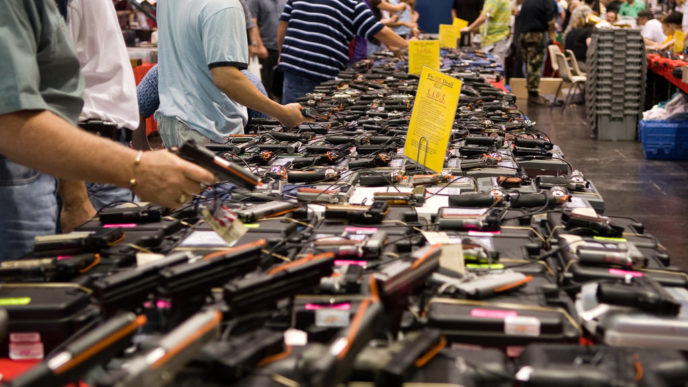
Most people only know about silencers from what they see in the movies—a stealthy gun accessory that helps criminals more easily kill by suppressing the sound of the gunshot. But silencers, some say, is a misleading way to describe these firearm accessories. Why? Because they don’t actually silence the sound of a gunshot.

In a brand new video series, “Underreported,” The Daily Signal digs into the controversy surrounding silencers—or “suppressors,” as gun advocates prefer to call them. We explore why firearm suppressors are so heavily regulated; speak with Sen. Mike Crapo, a Republican from Idaho who’s leading the charge to lift these regulations; and head to the National Rifle Association to see how they actually work.

Watch the video and share your feedback about whether Congress should take on this issue on The Daily Signal’s Facebook page. (For more from the author of “Underreported: How Gun Silencers Became a Health Issue” please click HERE)

Follow Joe Miller on Twitter HERE and Facebook HERE.
The Pro-Life Legacy of Norma McCorvey, the ‘Roe’ of Roe v. Wade

Jane Roe did not live out her life by the script.

As the “Roe” of the 1973 Supreme Court decision legalizing abortion, she would have been expected to be a staunch pro-choice advocate for the rest of her life.

She wasn’t.

Roe, whose real name was Norma McCorvey, died Saturday in Texas of a heart ailment. She was 69.

In an ad from 2008, as the Catholic News Agency noted, McCorvey detailed her change of views on abortion after she became a Christian in the mid-1990s.

“Upon knowing God, I realized that my case, which legalized abortion on demand, was the biggest mistake of my life,” she said.

“You see, abortion has eliminated 50 million innocent babies in the U.S. alone since 1973. Abortion scars an untold number of post-abortive mothers and fathers and families, too.”

It wasn’t the first time she’d spoken about her pro-life perspective.

“I believe that I was used and abused by the court system in America,” McCorvey said in testimony in 2005 before a subcommittee of the Senate Judiciary Committee. “Instead of helping women in Roe v. Wade, I brought destruction to me and millions of women throughout the nation.”

She detailed her journey over the years from abortion advocate to pro-life activist in that testimony, in which she mentioned the baby she ultimately chose not to abort:

I am glad today that that child is alive and that I did not elect to abort. I was actually silent about my role in abortion for many years and did not speak out at all. Then, in the 1980s, in order to justify my own conduct, with many conflicting emotions, I did come forward publicly to support Roe v. Wade. …

Then around 1992, I began to work in abortion clinics. Like most Americans, including many of you senators, I had no actual experience with abortion until that point. When I began to work in the abortion clinics, I became even more emotionally confused and conflicted between what my conscience knew to be evil, and what the judges, my mind and my need for money were telling me was OK. I saw women crying in the recovery rooms. If abortion is so right, why were the women crying?

Even Sen. Hillary Clinton on January 25, 2005 was reported by The New York Times to finally admit ‘that abortion is a sad, even tragic choice for many, many women.’ Actually it is a tragic choice for every child that is killed and every woman and man who participates in killing their own child, whether they know it at the time or not. Many women will be in denial and even pro-choice for years like I was.

But participating in the murder of your own child will eat away at your conscience forever if you do not take steps to cleanse your conscience, which I will discuss later.

I saw the baby parts, which are a horrible sight to see, but I urge everyone who supports abortion to look at the bodies to face the truth of what they support. I saw filthy conditions in abortion clinics even when ‘Roe’ was supposed to clean up ‘back alley’ abortions. I saw the low regard for women from abortion doctors.

My conscience was bothering me more and more, causing me to drink more and more and more. If you are trapped in wrongdoing then all you can do is justify and defend your actions, but the pain gets worse and worse, so I drank a lot to kill the pain.

Finally, in 1995, a pro-life organization moved its offices right next door to the abortion clinic where I was working. I acted hatefully towards those people. But those people acted lovingly to me most of the time. One man did angrily accuse me at one point of being responsible for killing 40 million babies, but he later came to me and apologized for his words and said they were not motivated by love. The answer to the abortion problem is forgiveness, repentance, and love.

McCorvey was, to understate it, an unlikely pro-life activist.

But her own conversion on abortion gives hope that other Americans will follow in her footsteps. (For more from the author of “The Pro-Life Legacy of Norma McCorvey, the ‘Roe’ of Roe v. Wade” please click HERE)

Follow Joe Miller on Twitter HERE and Facebook HERE.

How Illegal Immigration Harms Black Americans, According to Civil Rights Commissioner

As the Trump administration gets ready to tackle illegal immigration, a member of the U.S. Civil Rights Commission noted the impact on the black community that he believes is too often ignored.

“Black males are more likely to experience competition from illegal immigrants,” Commissioner Peter Kirsanow told The Daily Signal.

Kirsanow, an attorney in Cleveland and former member of the National Labor Relations Board, said illegal immigration is both a short-term and long-term problem for young black males.

“What happens is you eliminate the rungs on the ladder because a sizable number of black men don’t have access to entry-level jobs,” Kirsanow said. “It is not just the competition and the unemployment of blacks. It also depresses the wage levels.”

A U.S. Civil Rights Commission study in 2010 determined immigration had a disproportionate impact on black Americans, but the study didn’t distinguish illegal immigration from legal. The findings came through various field hearings with experts.

“About six in 10 adult black males have a high school diploma or less, and black men are disproportionately employed in the low-skilled labor market, where they are more likely to be in labor competition with immigrants,” the commission report says.

The report continues:

Illegal immigration to the United States in recent decades has tended to depress both wages and employment rates for low-skilled American citizens, a disproportionate number of whom are black men. Expert economic opinions concerning the negative effects range from modest to significant. Those panelists that found modest effects overall nonetheless found significant effects in industry sectors such as meatpacking and construction.

A 2012 Census Bureau report found more than half of American-born blacks did not continue their education beyond high school, while the rate was even higher for foreign-born Hispanics.

Kirsanow noted that the Bureau of Labor Statistics found that the labor force participation rate for people with less than a high school diploma is 46 percent, which he argues means there is no shortage of low-skilled workers in the United States. The labor force participation rate for those with a college degree is 73.8 percent.

The NAACP, the nation’s leading black civil rights group, did not respond to The Daily Signal for this story. However, the organization has supported immigration reform that would provide legal status to illegal immigrants.

Moreover, an NAACP action alert cited research that increased immigration was actually helpful to the black community. After the Senate passed a 2013 amnesty bill, the group’s statement said:

Comprehensive immigration reform must focus on the basic American principles of preserving family unity, opposing wasteful spending, and protecting and promoting human and civil rights, human dignity, and fairness. It must also be very aware of the economic impact any new policies will have on the American people: that is why the NAACP was pleased to learn of studies which have found that more often than not, Latino immigrants and African-Americans fill complementary roles in the labor market. The study, by the Immigration Policy Center released in June of this year concludes that in metropolitan statistical areas, the increase of the Latino immigrant experience significantly raises wages, lowers unemployment, and elevates job creation for African-Americans.

The Immigration Policy Center is a research arm of the American Immigration Council, an immigrants’ rights advocacy group.

The Congressional Black Caucus also did not respond to inquiries from The Daily Signal. However, the group of African-American House members, all Democrats, has previously supported comprehensive immigration reform proposals, stating on its website:

Members of the Congressional Black Caucus unanimously support Comprehensive Immigration Reform legislation that provides a path to citizenship for millions of immigrants currently living in America and particularly for the more than 3 million immigrants of African descent.

Kirsanow contends that certain politicians and advocacy groups are more concerned with advancing the Democratic Party.

“Some people are putting party preference over the needs of their constituents,” he said. “The [Congressional Black Caucus] styles themselves as protecting and enhancing the interest of black Americans. The problem is that black workers are being ignored. So, there is another agenda at work.” (For more from the author of “How Illegal Immigration Harms Black Americans, According to Civil Rights Commissioner” please click HERE)

Follow Joe Miller on Twitter HERE and Facebook HERE.
‘I Love Kids’: Did Trump Just Cave on Amnesty?

Speaking to the media at Thursday’s press conference, President Donald Trump made some comments about Obama’s Deferred Action for Childhood Arrivals (DACA) policy that completely contradict the hard-on-illegal-immigration message that helped win him the election.

When asked what would become of DACA (which grants amnesty to illegal immigrants who entered the country as minors) under his administration, Trump said that this is a “very, very difficult subject” for him, adding that he wants to “deal with DACA with heart.”

“I love kids,” he said. “I have kids and grandkids. And I find it very, very hard doing what the law says exactly to do.”

Trump went on to clarify that he wasn’t “talking about new laws,” but the “existing” immigration laws established by Congress.

This will undoubtedly come as (very, very bad) news to Americans who voted for Trump with the hope that he would fight to end amnesty-granting programs like DACA.

Just last month, Trump vowed to “end” DACA as one of his first actions as president.

If this all sounds familiar, it’s because Trump has made worrisome statements regarding illegal immigration in the past. Back in August, he suggested that non-violent illegal immigrants should have able to “pay back-taxes” in lieu of facing deportation. And if that sounds familiar, it’s because it is the same amnesty policy established in the notorious Gang of Eight bill. Further, Trump’s former campaign rival, Jeb Bush, was hotly criticized by conservatives for adopting the very position the president is now asserting.

The Trump administration has yet to officially comment on what will ultimately become of DACA. But if Thursday’s press conference was any indication, Pres. Trump is going to have some serious explaining to do. (For more from the author of “‘I Love Kids’: Did Trump Just Cave on Amnesty?” please click HERE)

Follow Joe Miller on Twitter HERE and Facebook HERE.

Here’s Why State Election Officials Think Voter Fraud Is a Serious Problem

Before he was the chief election officer for his state, Wayne Williams was the El Paso County, Colorado, clerk and saw firsthand how even a small amount of voter fraud can thwart the public will.

“As clerk, I saw two school board races decided by a single vote,” Williams told The Daily Signal. “I oversaw a municipal tax question that failed on a tie vote. So, yes, a single vote can make a difference. If someone is saying, well, it doesn’t happen a lot so it doesn’t matter, they’re just wrong, because it can make a difference. Even a single instance of an illegal vote causes an undermining in the confidence and diminishes turnout.”

Williams, now the Colorado secretary of state, was in the District of Columbia, for the winter meeting of the National Association of Secretaries of State, which included a panel on election integrity.

The panel discussed the pending voter fraud commission that President Donald Trump has said he would appoint, to be headed by Vice President Mike Pence.

Trump has alleged that 3 million to 5 million illegal votes could have been cast in the November 2016 election, which he previously said might have cost him the popular vote against Hillary Clinton. In his pre-Super Bowl interview with Fox News host Bill O’Reilly, Trump said he would appoint Pence to head the probe.

Trump administration officials have cited an Old Dominion University study about noncitizens voting, and a Pew Research Center study that found millions of people listed on voter rolls across the country are listed in the wrong address, live in a different state, or in some cases are dead.

Williams, a Republican, thinks state and local election officials will play a major role in assisting in the probe.

“I welcome a process that’s designed to look at how we make the system better,” Williams said. “That’s true as a clerk, as secretary. I believe we ought to have that dialogue and explore ways we can clean up the process.”

Even as several speakers at the conference said that voter fraud doesn’t happen on a massive scale, Williams stressed that’s no reason to ignore it.

“Voter fraud is like bank robbery. It doesn’t happen most of the time, but it’s absolutely critical to take precautions against it,” Williams told The Daily Signal. “So, even though someone doesn’t rob a bank every day, they don’t put the money out in a pile and say, ‘Just take however much you like.’ It’s the same sense for we as elections officials. Most people who are voting accurately. They are eligible. But we have to have processes in place to protect against it. I know most people vote appropriately, but they need to have confidence their vote counts.”

During a panel on election integrity, Miles Rapoport, a senior fellow at the Kennedy School of Government at Harvard University, warned secretaries of state to be ready to answer questions from the Trump administration.

“We don’t know what will happen, but it’s entirely possible there will be a major commission on the subject of voter fraud,” Rapoport, a former head of liberal groups such as Demos and Common Cause, told the assembled secretaries.

Jesse Richman, a political science professor at Old Dominion University, did research extrapolating on a previous study that found 800,000 people may have voted in the 2016 presidential election. That’s significant, though well short of Trump’s alleged 3 million to 5 million illegal votes.

Because voter fraud is such a volatile issue, Richman said the commission must be transparent.

“Any result they find of significant or substantial levels of fraud will almost certainly be attacked,” Richman told The Daily Signal after speaking at a Judicial Watch forum on voter fraud.

Richman continued:

I think they should use the full range of data the federal government already has, as well as soliciting cooperation and collaboration with states, to try to address various aspects of election integrity and try to get a sense of magnitudes because magnitudes are really important. If we are trying to get a sense of a few thousand illegal votes cast by noncitizens across the country, that’s still potentially politically significant in a close race, but it’s not as big a problem as if we are talking about 100,000 or 200,000 or more. So I think it is important to get a sense of magnitude because stopping voter fraud is very costly and we want to figure out the least costly ways in terms of various kinds of cost to go about addressing the challenges.

The nation’s secretaries of state reached out to the administration, but haven’t received any response on details of the commission probe, said Connecticut Secretary of State Denise Merrill, chairwoman of the National Association of Secretaries of State.

“We have very little indication of exactly what they’re going to be doing thus far. I gather it will focus perhaps on lists, the accuracy of lists, the integrity of the eligibility of voters. It’s kind of hard to tell where they are going at this point,” Merrill, a Democrat, told The Daily Signal. (For more from the author of “Here’s Why State Election Officials Think Voter Fraud Is a Serious Problem” please click HERE)

Follow Joe Miller on Twitter HERE and Facebook HERE.

President Trump: Be a Leader and Fight (for Religious Freedom)

When I learned that President Trump had apparently changed his mind on protecting religious business owners and schools from government harassment and legal persecution, I’ll admit that I was angry. As Maggie Gallagher explained, with a stroke of his pen, Trump could reverse executive orders and policies made by Barack Obama, who knew that there weren’t the votes in Congress to add “sexual orientation” or “gender identity” to the Civil Rights Act of 1964.

So Obama declared that the federal government would henceforth play make believe, and act as if religious objections to homosexuality, and rational insistence that there are just two human sexes, were covered in the original law. (Which was passed back when sodomy was still in crime in most of those legislators’ states, when what happens in “sex change” operations was still called “castration.”) I guess Obama had seen the Supreme Court cram contemporary mores between the lines of the Constitution often enough, that he wanted to get in on the act when it came to federal law. This legal hijacking law is so blatant, you almost have to admire Obama’s chutzpah. It’s as if he dressed up Rev. Martin Luther King in drag like Tyler Perry, and got away with it.

Rumors suggest that it was Trump’s daughter Ivanka and son in law Jared Kushner who convinced him to go back on his promise to conservative Christians. I wondered why orthodox Jews would favor distortions of the law that could harm their co-religionists — who also follow the Hebrew Bible on this point. Then I remembered all those Biden-sniffing Jesuits at Georgetown, and felt a sickly kind of peace. “Everyone is insane,” I reflected.

Was Ivanka worried about all the “fabulous”parties she would be disinvited from back in Manhattan, if her father stuck up for Christians? She needn’t worry. Those hostesses are already furious at her, afraid that her father will deport their illegal nannies. What the Trumps need to realize is that they will be treated as pariahs for simple, sane policies like enforcing our country’s borders and laws. They might as well go ahead and protect religious freedom too.

Let me try to break it down another way.

Dear Mr. President:

Evangelical Christians, the people whom you promised to look out for until you were talked you out of it, make up 20 percent of voters, and 50 percent of voters in Republican primaries. In November, 80 percent of them voted for you.

Coming from New York City, you might not realize this, but gays make up a whole 2 percent of the electorate. For all you did to win them over, with Peter Thiel’s speech at the Convention and your waving the rainbow flag, what percentage of that 2 percent do you think voted for you — or would vote for you in four years in the blue states where most of them live? Sure they have a lot of money. Do you think they were contributing it to you?

Now maybe you’re worried not about gay voters per se, but straight voters who watched Will & Grace for long enough that now they have pro-gay attitudes. There are a lot of people like that, especially women. How many of them do you think want to persecute Christian florists and bakers, close down wedding chapels and Catholic schools? Not many. You could sell that pro-religious freedom executive order as standing up for the little guy against tort-hungry lawyers using big government to persecute religious Americans — because that is, in fact, exactly what it is.

But these are heady arguments. So let me reach for the heartstrings. I will pull out the big guns here, and explain why you should sign the executive order protecting religious Americans using a Frank Sinatra song:

Trump, be a leader and fight,
Trump, be a leader and fight.
Trump if you’ve ever been a leader to begin with
Trump, be a leader and fight!

Trump let Christians see
What a straight shooter you can be.
I know how you treated your creditors in the 80s.
Trump shoot straight with me.

A leader never scams his voters.
It isn’t fair, it isn’t nice.
A leader doesn’t fawn on the snowflakes and snobs.
Or blow on his enemies’ dice.

Let’s keep the Party far-right,
And ruin Meryl Streep’s night.
Stick with the Deplorables who put you in the White House
Trump be a leader, and fight!

Sincerely,

The Christian Voters of America Who Nominated & Elected You

(For more from the author of “President Trump: Be a Leader and Fight (for Religious Freedom)” please click HERE)

Follow Joe Miller on Twitter HERE and Facebook HERE.
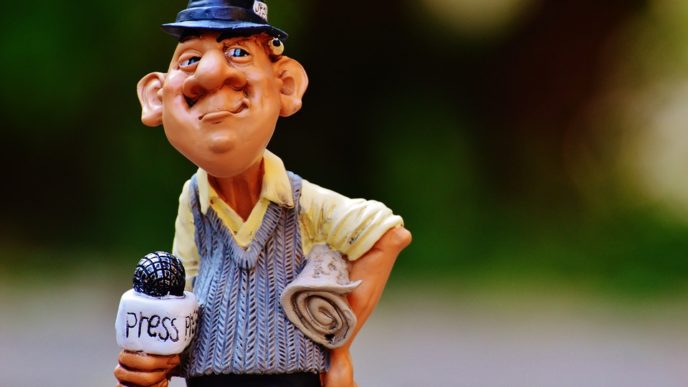
Trump Bashing the Media Channels America’s Disgust With Its Own Elites

President Trump’s latest news conference was at once a lot of fun, and kind of frustrating. My initial reaction was telling. I couldn’t help thinking, “Gosh I wish Ted Cruz were the man behind that microphone. He would deliver devastating answers, dismantle the reporters’ logic, cite chapter and verse of their actual news stories illustrating their leftist bias, and finish the event with a thin, victorious smile — having proved in meticulous detail that he was the smartest and best-prepared man in the room.”

Instead, Trump spoke in sweeping terms, dismissing the press corps as biased. He taunted, mocked, and all but jeered at the cream of the Washington press corps. He spoke in the way that he seems to have picked up from dealing with construction workers over decades in the building trade — bluntly and emotionally, with large dollops of chest-thumping. In pop culture terms, Trump sounded like a Robert De Niro character, confronting a room full of Jude Laws and Kelsey Grammars.

Trump Understands Why We’re Frustrated

But wasn’t that a reason Trump won the nomination, and Ted Cruz didn’t? The conservative who played the game of our country’s Progressive elites by their own rules at their best schools and beat them every time on the facts, the logic, and history … didn’t win over the voters. The guy whose politics were all over the map, who was driven by a simple, gut love of the concrete reality of America, was able to turn all those blue states red. He connected with blue collar workers, frustrated family men and women, and worried patriots, because he naturally spoke their language.

Too many conservatives whose policies and ideals really would benefit the country and protect the common man speak just like our toxic elites — who view national borders as tedious nuisances to vacation travel and millions of their fellow Americans as “deplorable.” That’s the reason my mailman dad would angrily switch off National Public Radio in our apartment — even when a (rare) conservative was speaking, or an announcer was just giving straight news. “Turn off those liberal fairies,” he would say, annoyed by their accents and diction. Come to think of it, he was probably irritated by mine. Think of Martin Crane rolling his eyes when Frasier and Niles start nattering about French cheeses.

What’s Really Deplorable is the Economy

The disconnect between our preening, self-congratulatory elites and harried, struggling Americans is real and based on more than cultural resentment, as a recent fact-packed story in Commentary reveals. Go read for yourself conservative scholar Nicholas Eberstadt’s alarming analysis of the economic indicators too often ignored by economists. What he concludes is that Trump’s populism is driven not by ethnic resentment, cultural backlash, or ideology — but the concrete reality that our economic and political systems have been optimized to benefit a narrow class of highly educated people with a homogeneous, narrow set of “acceptable” cultural, political, and religious views.

For proof of that fact, remember what Trump strategist Steve Bannon said at the Vatican in 2014 about the immoral 2008 bailout of reckless bankers’ gambling on shady mortgage investments. When ordinary taxpaying workers go to Vegas and clean out their savings, or get hooked on Vicodin after an injury, there isn’t some massive federal program that will make them whole again. There’s no golden parachute. But there are, as Eberstadt points out, just enough forms of government support (i.e., disability benefits) to keep people barely surviving. And in our staggering jobs market, that’s a temptation to which far too many once hard-working Americans are succumbing.

Learning to Talk Trump

Rather than dryly repeat them, let me sum up Eberstadt’s conclusions in terms that my dad would have gotten, and offer the kind of response that he and millions of Trump voters likely would have.

Rich investors are doing better than ever, but ordinary people are struggling to live as well as their parents did.

Unemployment is down, but that is only true because that number doesn’t count the tens of millions who have given up looking for jobs. (But we keep on importing a million unskilled workers every year — so the snooty people whose jobs are safe can feel good about themselves, and have lots of ethnic restaurants to choose from.)

Economic growth has slowed, and its benefits have narrowed to those social classes best at lobbying for their interests or shaping our institutions to protect themselves. (Yeah, the rich get richer, and the snobs rig the system. What else is new?)

What’s valuable about Eberstadt’s essay is that it repeats in sober prose and alarming fact the grim truths that Donald Trump talks about in fiery Tweets and angry exchanges with cosseted reporters. There’s a very good reason that millions of people saw the need to “Make America Great Again,” and it had nothing to do with preserving “white cis-gendered heterosexual privilege.”

Whether Trump and his team can overcome the massive institutional resistance to his proposals, and craft policies that actually change things, only time will tell. We don’t know if he has the answers. But at least he could hear the questions. (For more from the author of “Trump Bashing the Media Channels America’s Disgust With Its Own Elites” please click HERE)

Follow Joe Miller on Twitter HERE and Facebook HERE.