When the main stream media rely on anonymous sources, friendly relationships with current and former government officials, and recycling previously reported stories to promote an agenda, readers are right to suspect a set up.
We expect less from outlets like the Gateway Pundit, who rely on hyper-sensationalized headlines and slanted, even made-up, stories to generate clicks to their websites. The public demands, and serious consumers of news expect, a higher standard from established newspapers and cable news operations.
Instead, we get stories that are so selective, and so coordinated, as to constitute a subtler form of fake news. At the moment, the media have latched on to anything remotely related to Russia to tarnish the Trump administration, especially in the wake of retired Lt. Gen. Michael Flynn’s resignation as National Security Adviser.
The flood of weakly-related and even unsupported Russia stories smacks of a partisan effort to destroy the Trump administration, not an objective search for truth.
For example, CNN is still recycling reports about the evidence-starved Russian “dossier” that had been examined by the intelligence community and the press for months before Buzzfeed dumped them on its website in early January. The New York Times and CNN took Buzzfeed to task for publishing the unverified reports; but they are still being cited.
Another example is this breathless reporting of Russian cruise missiles.
The New York Times and Washington Post, along with CNN have all written similar stories about the Russian deployment of the ground-launched cruise missile known as the SSC-8, which is a violation of the Intermediate-Range Nuclear Forces Treaty. The INF treaty was signed in 1987 by President Reagan and Mikhail Gorbachev of the former USSR. It bans ground-launched cruise missiles with a range between 300 and 3400 miles.
The Russians first tested the SSC-8 in 2008. President Obama’s administration declared Russia in violation of the INF treaty in 2014. Do you have any memory of that? Probably not. But suddenly, this is a front-burner issue, because it provides yet another chance to connect Russia with Donald Trump.
A third example is the Russian spy ship sighted off the U.S. eastern seaboard. How is this news? The Russians have for years deployed spy ships to America’s Atlantic coast and the Caribbean. It’s only top news because … well, you know why.
In reality, there is no “crisis” with Russia that didn’t exist before the Trump administration. There are no “new” facts relating to U.S.-Russian relations since Trump took office.
Flynn’s downfall was hurried along by leaks of highly classified information within the Trump administration of telephone intercept transcripts of a call between Flynn and the Russian ambassador. Yes, the call took place, but it now appears the details discussed on the call were innocuous. But again, the use of anonymous sources, who may have an axe to grind with Trump, and the selective reporting of details, is at best editorializing, not fair reporting.
Bloomberg reported Tuesday that there’s evidence of a pattern in the media reports:
Representative Devin Nunes, the Republican chairman of the House Permanent Select Committee on Intelligence, told me Monday that he saw the leaks about Flynn’s conversations with Kislyak as part of a pattern. “There does appear to be a well orchestrated effort to attack Flynn and others in the administration,” he said. “From the leaking of phone calls between the president and foreign leaders to what appears to be high-level FISA Court information, to the leaking of American citizens being denied security clearances, it looks like a pattern.”
This confluence of government leaks, anonymous sources, hyper-sensational headlines, and unsupported stories does nothing to contradict Trump’s accusations that the media is engaged in reporting “fake news.” If the media don’t want the Trump administration to treat them as the opposition, then they need to quit playing the role of opposition so blatantly. (For more from the author of “The Mainstream Media Treatment of Trump and Russia Smacks of Fake News” please click HERE)
https://joemiller.us/wp-content/uploads/Note-Study-People-Memo-Hand-Writing-Author-Pen-325321.jpg640960Joe Millerhttps://joemiller.us/wp-content/uploads/logotext.pngJoe Miller2017-02-16 20:32:572017-02-16 20:32:57The Mainstream Media Treatment of Trump and Russia Smacks of Fake News
Washington is abuzz with the saga of former national security adviser Michael Flynn’s resignation, the Russia connection, and the melodrama of who knew what, when and what they did about it.
There are, to be sure, myriad aspects of this story that will consume the media, the Hill, civil society and the like for a while.
We want to highlight one — and only one — serious aspect of this story that has been underreported: the unauthorized (and criminal) leaks of highly classified information to the media by a person or persons in the government.
We will not weigh in on the panoply of issues related but not limited to the role of the White House counsel and his discussions with then-acting Attorney General Sally Yates, Russian hacking of the Democratic National Committee, the communications that Trump campaign operatives may have had with Russians before the election, or the proper role of Congress or the press going forward.
It goes without saying that Flynn had a duty to be honest with Vice President Mike Pence about what he discussed with the Russian ambassador, and whether the issue of U.S. sanctions against Russia was any part of those conversations.
Regardless of whether you think President Donald Trump should have asked for Flynn’s resignation, the president had the right to ask him to resign. But not telling the truth to the vice president is not a crime under these circumstances.
Flynn had a legal duty to tell the truth to FBI agents, who apparently questioned him about the calls. Failure to tell the truth to the FBI could have negative legal consequences for Flynn, depending on what he said and the exact questions asked.
With respect to the leaks, what we have so far are allegations from anonymous government sources about what was supposedly said in the conversation between Flynn and the Russian ambassador. The transcript is not public yet, so we don’t really know the content, context or circumstances of the conversations.
Perhaps these sources who refuse to go on the record are being 100 percent accurate about what was said — but without the actual transcript, we don’t really know.
Just as we assume that foreign governments, even allies, monitor the calls of U.S. ambassadors (and other U.S. personnel) stationed overseas, ambassadors (and other embassy personnel) from other countries stationed in Washington, D.C., have good reason to believe that the U.S. monitors the communications of foreign embassies and consulates.
It is one thing to assume it is happening, but not know for sure. It is entirely another thing to illegally disclose the fact that we have been recording the calls of the Russian ambassador and other top Russian personnel.
Now they know.
Exposing US Secrets for Political Purposes
Alerting the Russians about our lawful surveillance of them — during an ongoing investigation — for the purpose of knee-capping Flynn is inexcusable. As New York Times Pulitzer Prize-winning author Charlie Savage wrote in his book, Power Wars: Inside Obama’s Post 9/11 Presidency, “There have always been unauthorized disclosures of information to the news media. It’s how Washington works and has always worked.”
But compared to the nine major leak cases highlighted in Savage’s book (Leibowitz, Drake, Manning, Kim, Sterling, Kiriakou, Snowden, Sachtleben and Petraeus), where none of the leakers disclosed classified information for the purpose of targeting one senior government official, these leaks were designed to do exactly that.
Savage opposes the criminalization of unauthorized disclosures because they are a “counterforce against overclassification.” But he also admits that “there can be bad leaks, the disclosure of information whose publication impose social costs that outweigh its social benefits.”
Ask yourself this: Was it better to keep the Russians guessing about what we had on them during the government’s investigation, or was it more important to let them know what we were doing, and how we were doing it, in order to embarrass Flynn?
What we can say with some confidence is that the motivations behind these leaks seem to be purely political and were specifically aimed at bringing down Flynn.
In doing so, the leakers were willing to compromise the national security of the nation by telling the media that we were successfully listening to the phone calls of the Russian ambassador to the United States, and other Russians, in connection with Russian hacking of the Democratic National Committee.
Could Flynn Be Prosecuted?
Some have suggested Flynn may have violated the Logan Act — the 1799 act that was designed to prevent private citizens from specifically engaging in “any correspondence or intercourse with any foreign government or any officer or agent thereof, with intent to influence the measures or conduct of any foreign government … in relation to any disputes or controversies with the United States.”
No one has ever been prosecuted under that act (18 U.S.C. §953), which has been roundly (and rightly) criticized by distinguished legal scholars from the left and the right as a content-based restriction on First Amendment rights under the U.S. Constitution.
Keep in mind that this law was passed just a year after the Alien and Sedition Acts.
The Sedition Act of 1798 is probably one of the worst violations of the First Amendment ever passed by Congress. The Logan Act follows pretty closely behind the Sedition Act in its basic abrogation of First Amendment rights and has never been used against the many Americans who may have technically violated it.
A 2015 Congressional Research Service report details the problems with the act, although it neglects to mention the specific intent requirement in its analysis.
Again, we don’t really know what Flynn said to the Russians as a private citizen, but whatever it was — regardless of whether one thinks it was prudent to do so or not — there is almost zero probability of a successful prosecution under the Logan Act, given its constitutional infirmities.
As Susan Hennessey and Helen Murillo detail in a blog post on lawfareblog.com, the administration has a host of criminal statutes to use against the leakers, including the Espionage Act of 1917, codified at 18 U.S. C. § 793, which prohibits the improper accessing, handling or transmitting of “information respecting the national defense” with the intent of injuring the United States or aiding a foreign nation.
Another related statute, 18 U.S.C. § 798, prohibits the disclosure of classified information, including information “concerning the communication intelligence activities of the United States or any foreign government.”
As Hennessey and Murillo also note, government employees in sensitive posts are required to sign nondisclosure agreements, a violation of which can expose the leakers to legal action.
No doubt, there are various aspects of this saga that can and will be investigated by the media and the Congress. But the deliberate, orchestrated and criminal leaks in this case must be investigated. And the leakers must be held to account. (For more from the author of “The Real Crime in the Michael Flynn Saga” please click HERE)
https://joemiller.us/wp-content/uploads/30020745053_a7df97d691_b.jpg6831024Joe Millerhttps://joemiller.us/wp-content/uploads/logotext.pngJoe Miller2017-02-16 20:28:402017-02-16 20:28:40The Real Crime in the Michael Flynn Saga
The Trump administration stated that it wants to eradicate ISIS and protect persecuted Christians in the Middle East. If it’s to have any real hope of accomplishing these crucial goals, the president and his team need to work with America’s allies who are already succeeding on the ground: the Federation of Northern Syria, which coordinates efforts of Kurdish, Arab, Syriac Christian and other resistance groups.
The Syriac-Assyrian Christian co-president of the Federation is appealing to the Trump administration to send support to the brave Christian fighters in Syria — whom President Obama refused to help. The Syriac-Assyrian Christian forces there are fighting bravely, but in desperate need of military and humanitarian aid, as can be seen in the new video below, which was provided as an exclusive to The Stream. Supporters of Syrian Christians hope Christians in the U.S., and this new Administration, will support them in ending ISIS and bringing freedom to the Middle East.
Fake News and Turkish Propaganda Target Syrian Christians
One big obstacle to this goal is “fake news” and propaganda, circulated by those who support (knowingly or not) the intolerant policies of Turkey’s autocratic, Islamist government — which will do almost anything to prevent the long-stateless Kurdish people from obtaining real autonomy. The Turks fear that any progress for Kurds in Iraq or Syria will stir up the millions of Kurds whom Turkey represses within its borders. Yet the Kurds have proved one of the few forces on the ground willing to protect Syriac Christians, Yazidis, and other oppressed minorities, as I learned from my experience in and with the area and have reported here at The Stream. In fact, the Kurds have formed a self-governing region (the Federation of Northern Syria) which grants Christians, women, and Yazidis real political participation—which they lack elsewhere in the region.
The Nation Swallows the Turkish Government Line
According to a highly misleading article in the leftist magazine The Nation, the Federation is little more than a fig leaf for the Kurdish militia, the YPG — which it alleges has been driving away the Arab population as well as dissident Kurds and others on a massive scale. According to the same article, the YPG is actually controlled by Iran and has a hidden agreement with both the Assad regime and ISIS. As evidence for this elaborate conspiracy theory, the article cites many anonymous sources. The reporter did some ‘fact finding’ of his own, but seems to have only traveled to Turkey and Iraqi Kurdistan (KRG), which is controlled de facto by Turkey and its allies.
One interesting accusation he makes is that that the YPG allowed ISIS to take the whole region around Kobane, and only put up a token defense in the city center, in order to make sure that the fighting cleansed the area of Arabs. By this reporter’s account, the YPG is a masterful, diabolically cunning organization, which can predict and precisely control the outcomes of a shifting, chaotic battlefield — something that any military officer would know is quite impossible.
The use of evidence by the article in The Nation is interesting in its own right. It is widely known that it is not possible to do independent research among refugees in Turkey. Free journalism does not exist in Turkey anymore; just ask the hundreds of journalists languishing in prison for “thought crimes.” Turkey is furthermore a self-declared enemy of the YPG, and is the only country that has declared the YPG a terrorist organization. This means that anyone doing research in Turkey among refugees related to the YPG will be strictly monitored. Turkey’s secret police will send ‘witnesses’ to the reporter and manipulate his research. Finding ‘people who fled the YPG’ in Turkey is a strange thing in its own right, since Turkey blocked the border with the Federation and regularly kills those who try to cross.
Erasing the Syrian Christians Who Fight for Freedom
The Nation article contradicts the facts on the ground. The author suggests that the Kurdish YPG acts as the only fighting force in the Federation of Northern Syria (North-East Syria). This is simply untrue. I myself have been in Syria at the bases of both the Syriac-Assyrian forces and the Arab forces who cooperate with the YPG in the larger structure of the Syrian Democratic Forces. They are not in this for the show, as this video demonstrates very clearly:
The idea that the Arabs themselves would support Kurdification by driving Arabs out of the area is obvious nonsense. The multi-ethnic reality of the Syrian Democratic Forces is intentionally omitted from The Nation piece because it makes nonsense of the author’s premise. Would Arabs, Kurds and Syriac Christians drive away their own families and peoples? It would mean a constant war inside these areas, which is clearly not happening. The reverse is true: these peoples work together in governance and defense in a unique multi-ethnic alliance.
The key report on which the reporter relies, from the Syrian Network for Human Rights and Amnesty International, repeats the same false storyline: Kurds driving Arabs away. But independent journalists have debunked this charge, including its principal accusation — the so-called “Hajjia massacre.” This independent research also showed how unreliable are Syrian sources who work under the control of Turkish media minders. After probing questions, Amnesty International admitted that it spent far less time on research than stated and already retracted its ‘ethnic cleansing’ claim. Other independent research has demonstrated how such propaganda is manufactured and used by Turkey and its allies. Finally, if the Federation drives away Arabs, why would Arabs from Iraq flee to the Federation and be taken in there and cared for as refugees?
The One Piece of Syria Where Christians and Women are Free
My own experience of the last three years proved to me that the caricature of the Federation as a one-party, tribal state is simply untrue. I have been cooperating with a Syriac-Assyrian party there and met with the representatives of several other parties who are active in the area. The reality that I witnessed in the area is that Kurds, Arabs and Syriac-Assyrian Christians, men and women, cooperate in governing The Federation and defending it with its Syrian Democratic Forces.
Why are people leaving the Federation? The real reason for the vast majority of departures is mentioned in The Nation story itself: the crippling economic blockade imposed by Turkey and the KRG. I remember sitting down with a priest there whose only complaint was that people were leaving due to economic deprivation. The reason that Turkey and the KRG maintain this blockade is simple: they do not want multi-ethnic cooperation, democracy and especially freedom to come to the Middle East. The culture of domination and oppression serves them well and they do not want to see deep, bottom-up change that leads to freedom and real human rights. They do not favor freedom of religion, or women working freely as legal equals of men — two realities inside the Federation of Northern Syria, but in few other places in the Middle East.
This is why the accusations that the Federation of Northern Syria is actually driven by Iran, supports the Assad regime and cooperates with ISIS (all at the same time!) are so clearly ‘fake-facts.’ Ask yourself some skeptical questions:
Why would Iran support freedom of religion and freedom for women?
How can Iran support the YPG and fight against its sister-organization PJAK at the same time?
Why would ISIS cooperate with its most effective enemy?
If the Assad regime cooperates with the Federation, why did it bomb the Federation’s forces in Hassakeh until the Russians and U.S. pressured it to stop?
Why are pro-Assad agitators so angry at me when we disseminate information on the Federation of Northern Syria to interested Christians in Europe?
All these forces — Assad, ISIS, Iran, and Turkey — are united on just one point: opposing the growth of home-grown Western-style freedom in the Middle East. But it is only the emergence of such freedom that can save the region from its grim cycle of war, oppression and terrorism.
The Trump Administration Can Save Syria’s Christians
This is why the US needs to act now and act fast. With the Obama administration’s approval, Turkey has moved into Syria with forces who chant anti-American slogans, and boast of driving all Christians out of Syria. Now Turkey wants to attack the Federation with this army, just at the moment when the SDF is surrounding Raqqa, the capital of ISIS. Christian-hating Turkish forces want to destroy the Kurds and Syriac-Assyrian Christians in northern Syria under the pretext of attacking ISIS. On February 13, the Institute for the Study of War issued an urgent warning that Turkey threatens to halt U.S. anti-ISIS operations in Syria.
The Trump administration should see through Turkey’s screen of propaganda that its real allies in the region are the freedom-loving Kurds, Syriacs, Arabs and Yazidis who work and fight together as brothers — in a region too often splintered along tribal and religious lines. (For more from the author of “Obama Abandoned Syria’s Christians. Now Trump Can Save Them.” please click HERE)
https://joemiller.us/wp-content/uploads/20641737384_bd211ba23b_b.jpg7311024Joe Millerhttps://joemiller.us/wp-content/uploads/logotext.pngJoe Miller2017-02-16 16:42:122017-02-16 16:42:12Obama Abandoned Syria’s Christians. Now Trump Can Save Them.
House Republican leaders mapped out their proposal for how Obamacare will be repealed and replaced in a closed-door meeting Thursday, outlining plans for Medicaid reforms and refundable tax credits for Americans.
Joined briefly by newly confirmed Health and Human Services Secretary Tom Price, House Speaker Paul Ryan, Ways and Means Committee Chairman Kevin Brady, and Energy and Commerce Committee Chairman Greg Walden presented the details to members.
The plan comes amid mounting frustration from the chamber’s conservative wing, who want to see their leaders move faster on repealing Obamacare and decided to coalesce around their own replacement plan Wednesday after discussions over potential changes to the health care system slowed.
GOP lawmakers said repeatedly they would unwind Obamacare—a promise repeated by President Donald Trump on the campaign trail—but the conference has yet to come together on which parts of the law would be repealed and how.
And members are likely to face questions on Obamacare’s future from constituents on both sides of the aisle when they head home for the Presidents Day recess.
Ryan told reporters on Thursday that upon returning to Washington at the end of the month, lawmakers would introduce the repeal and replace legislation.
However, he noted that GOP lawmakers are waiting on cost estimates from the Congressional Budget Office and Joint Committee on Taxation
“What we’re proposing is a patient-centered system where the patient designs their plan. The patient gets to decide what they want to do,” Ryan said. “The nucleus is the patient and her doctor versus the nucleus of the system being the government in Obamacare’s sake.”
According to a copy of the presentation leaders gave to Republicans that was obtained by The Daily Signal, the plan calls for Congress to pass legislation that repeals Obamacare’s taxes, individual and employer mandates, and subsidies. It also stresses that the Medicaid expansion, which loosened program eligibility requirements, would also be changed.
Then, it maps out four key components of a replacement: modernize Medicaid, use State Innovation Grants, expand health savings accounts, and provide portable, monthly tax credits.
Specifically, Americans purchasing coverage on the individual market would receive an advanceable, refundable tax credit based on age.
The plan also expands the use of health savings accounts, a policy that is the hallmark of nearly every proposal Republicans have presented over the last six years.
Brady and Walden’s replacement plan calls for an increase in the maximum contribution Americans can make to their health savings accounts. Currently, individuals can contribute $3,400 each year to a health savings account, but the Republicans’ plan would raise that limit to $6,500.
Republicans are generally in agreement on the expansion of health savings accounts and even on providing Americans some form of financial assistance, but GOP members are more divided on how to handle changes to Medicaid.
Thirty-one states and the District of Columbia expanded Medicaid, and had 100 percent of Medicaid costs for those who are newly eligible covered by the federal government from 2014 to 2016. Now, GOP senators representing some of those states have pushed for the expansion to remain in place.
The plan put forth by House Republican leaders would pare down the match rates for the expanded Medicaid population over time, but allow states to continue enrolling new beneficiaries under the expansion’s eligibility. Republicans then propose changing it to either a per-capita allotment or block grant program.
The proposal provides a transition period, though not defined, for states that did expand Medicaid.
To ease the concerns of leaders from expansion states, Ryan said Walden and Sen. Orrin Hatch, a Republican from Utah who chairs the Senate Finance Committee, have been working with Republican governors to discuss potential changes to the program.
The last item in the GOP’s replacement plan calls for the creation of high-risk pools, which would be funded by federal dollars allocated to the states and can be used to help those with pre-existing conditions.
Republicans plan to repeal Obamacare using a budget tool called reconciliation, which fast-tracks legislation in the Senate and allows it to pass with 51 votes.
Their plan is to start with a repeal bill that passed both chambers in 2015, but was ultimately vetoed by President Barack Obama.
GOP leaders are planning to build on the 2015 bill by including parts of Obamacare’s replacement.
Late last month, Ryan mapped out a timeline for Obamacare’s repeal, telling GOP colleagues the House would dismantle the bill in March or April.
But House conservatives are becoming frustrated with the speed leaders are moving and want to see action before then.
On Monday, the approximately 40 members of the conservative House Freedom Caucus voted unanimously to back the 2015 Obamacare repeal bill, and on Wednesday, they endorsed an Obamacare replacement plan released by Sen. Rand Paul. (For more from the author of “GOP Leaders Release Details of Plan to Replace Obamacare” please click HERE)
https://joemiller.us/wp-content/uploads/12987403285_f63351241c_b-1.jpg6831024Joe Millerhttps://joemiller.us/wp-content/uploads/logotext.pngJoe Miller2017-02-16 16:35:182017-02-16 16:35:18GOP Leaders Release Details of Plan to Replace Obamacare
President Donald Trump’s first weeks as commander in chief have been challenged by upheaval within his National Security Council, the White House group tasked with coordinating and implementing foreign policy and counterterrorism strategy.
The resignation of Michael Flynn as national security adviser—head of the National Security Council—comes at a time when acute foreign policy decisions await the new administration.
As Trump seeks to recover, former NSC officials say it’s important that the White House quickly establish a functional council that can spearhead the president’s agenda.
“We have never seen anything like this,” said Kenneth Pollack, a foreign policy fellow at the Brookings Institution who has served twice on the NSC staff.
“We certainly have seen national security advisers leave basically after the first year of an administration, but never after less than a month,” Pollack said in an interview with The Daily Signal, adding:
Flynn was the one guy on foreign affairs who has been joined at the hip with Trump from the beginning. Now he’s out. No one knows what comes next. To get the policy, you have to get the person in place. Until that happens, the rest of the world to a certain extent has to wait.
Flynn’s tenure lasted only 24 days before the retired Army lieutenant general resigned after admitting he had misled the vice president and other White House officials about the contents of a phone call with the Russian ambassador to the U.S.
Pollack said new administrations sometimes experience early “stumbles” in trying to define and organize their National Security Council, an entity made up mostly of career civil servants representing different government agencies.
The NSC, originally created in 1947, has quadrupled in size over the past two decades, and doubled under President Barack Obama.
Obama replaced his first national security adviser, James Jones, after concluding the retired Marine general was a bad match to lead the NSC in the direction the president wanted to take it.
“The NSC is the president’s personal staff on foreign policy,” Pollack told The Daily Signal. “The national security adviser is supposed to be the president’s closest adviser on foreign policy. There needs to be an incredibly tight relationship with the president. The national security adviser need to know what the president wants, how to get things done for him, how to represent his views, and make sure everyone is doing what the president wants.”
“What we’ve consistently seen is the NSC stumbles around for the first months of every administration and eventually figures it out and moves forward,” Pollack added.
‘Destructive,’ but Normal
Flynn’s earliest days were marked with tension, and change.
He sought to reform the council—aiming to cut its size roughly in half from more than 400—and installing staff he knew from his military days and when he was director of the Defense Intelligence Agency.
Members of both parties on Capitol Hill have expressed concerns that the NSC got too big under the Bush and Obama administrations, and became overly operational and involved with details meant to be reserved to Cabinet agencies.
In addition, the White House elevated Steve Bannon, Trump’s chief political strategist, to the NSC’s exclusive principals committee, meaning he could attend regular meetings normally consisting of members of the military and intelligence communities.
Some of these changes may have made holdover staff members uncomfortable.
A senior Trump administration official told The Daily Signal that many NSC staff members—career government civil servants—who did not want to work for Trump returned to their regular agencies.
The official said that about 80 percent of an administration’s NSC usually is staffed by career government civil servants — known in government lingo as “detailees.”
The rest are direct hires—political appointees—who usually depart the agency when the administration changes.
About 15 percent of the NSC staff remains unfilled, the official said, adding that he expects the next national security adviser to maintain Flynn’s goal of staffing the council with a head count somewhere in the 200s.
None of Flynn’s direct hires have left the NSC yet despite his departure, the official said, including K.T. McFarland, the deputy national security adviser.
The official also disputed criticisms that Flynn was leaning on military hands to staff the NSC. He said only one of six deputies chosen by Flynn has a military background—David Cattler, a former Defense Intelligence Agency official tapped to oversee regional affairs.
The official, who insisted on anonymity to speak freely, disputed accounts of turmoil:
On the one hand, yes, what happened with Flynn is destructive and it’s never happened before this early in an administration. On the other hand, the NSC is doing what it’s supposed to do, holding committee meetings, preparing for phone calls and meetings with foreign leaders. The NSC is very active, so it’s unfair to say it’s in turmoil, aside from the destructive nature of the leadership change so early.
Containing Leaks
Trump’s first month—and Flynn’s brief tenure—also has been marked by a proliferation of leaks that some Republicans consider to be actions carried out by disgruntled career government employees aiming to undermine a president they don’t like. Democrats see the leaks as acts of public service meant to reveal potentially inappropriate behavior.
Drafts of executive orders, including ones Trump hasn’t issued yet, have circulated around Washington. Transcriptions of Trump’s conversations with foreign leaders have been published in news reports.
And numerous stories about Trump campaign officials’ conversations and potential connections with Russian officials—including a Washington Post story documenting Flynn’s call with the Russian ambassador—have been written based on leaks from intelligence and law enforcement sources.
The senior Trump administration official said the White House is unsure of the source of the leaks, and he stressed that it’s not unusual for government bureaucrats left over from the prior administration to publicly disclose displeasure with the new president’s policies and team.
He said the White House has “changed its internal procedures” to prevent leaks, although he would not detail what that means. He insisted the White House would not seek to investigate the sources of leaks, and vowed that Trump would not punish them.
But Trump, speaking Thursday with House Republicans, seemed to contradict that, according to pool reports, telling lawmakers: “We’re going to find the leakers and they’re going to pay a big price.”
He blamed “illegal classified leaking” for Flynn’s downfall.
Legal experts say it would be illegal for the president to target employees who are protected by civil service law, as opposed to political appointees.
And former national security officials say it’s not unusual for presidents to express anger with leakers.
Obama prosecuted more whistleblowers than all of his predecessors combined.
“Leaks are a big problem for every administration,” said David Shedd, a Heritage Foundation visiting fellow who held intelligence policy positions at the NSC under President George W. Bush. “There is a particularly strong anti-Trump sentiment in the bureaucracy, so I expect that there is a greater propensity to leak.”
“That said,” added Shedd, also a former deputy director of the Defense Intelligence Agency under Obama, “leaks generally are intended to generate support or undermine support for policy positions.”
James Jeffrey, an assistant to the president and deputy national security adviser in the George W. Bush administration, said the best way to subdue a culture of leaks is for the president to create a disciplined, coherent NSC process that allows for dissenters to express concerns internally, minimizing the incentives for leaks.
Jeffrey said Trump should select an “honest broker” to replace Flynn to lead the NSC, which he said is supposed to be a management center that gathers views from across multiple agencies and then implements the decided policy.
“When you have a functioning NSC where the process is good and all ideas are vetted, even if there’s disagreement on the policy decision, you won’t get leaking,” Jeffrey told The Daily Signal. “Leaking tends to be a cry for help within the bureaucracy.”
‘Imperative’ Mission
Whoever replaces Flynn will have to organize policy in key areas, including developing a response to North Korea’s recent missile launch, implementing a strategy to defeat ISIS, and deciding how to approach the U.S. relationship with Russia.
Flynn had perhaps the strongest views of Trump’s foreign policy team on Russia, viewing that country as a possible partner to fight Islamic terrorism, and experts say it’s especially important to know how the next national security adviser envisions U.S. relations with the longtime adversary.
“There is a case for trying to reorient relations with Russia irrespective of who is national security adviser,” Michael O’Hanlon, director of research for the foreign policy program at the Brookings Institution, said in an email to The Daily Signal, adding:
Plus, Secretary of State Rex Tillerson and Trump still favor some kind of rethinking. The question is, how do we do that in substantive terms. This is an example of where the NSC, and the national security adviser, can avoid getting bogged down in detail or micromanagement, encourage creative thinking and constructive, ideology-free debate on big issues of the day.
The task ahead for Trump is formidable — and important.
“Settling the turmoil that currently appears to exist in the NSC is imperative to ensuring national security policy gets on track,” Heritage’s Shedd said. (For more from the author of “After Michael Flynn’s Departure, How Trump Can Stabilize National Security Council, Avoid Leaks” please click HERE)
https://joemiller.us/wp-content/uploads/32254432500_b210a643fa_b.jpg7751024Joe Millerhttps://joemiller.us/wp-content/uploads/logotext.pngJoe Miller2017-02-16 16:31:062017-02-17 00:00:11After Michael Flynn’s Departure, How Trump Can Stabilize National Security Council, Avoid Leaks
President Donald Trump went toe-to-toe with the media at the White House news conference Thursday, using terms such as “fake news” and “failing” to describe many of the recent stories about his administration.
“I turn on the TV, open the newspapers, and I see stories of chaos, chaos,” Trump said. “Yet it is the exact opposite. This administration is running like a fine-tuned machine, despite the fact that I can’t get my Cabinet approved.”
He also said, “In other words, the media’s trying to attack our administration because they know we are following through on pledges that we made and they’re not happy about it for whatever reason.”
During the press conference, CNN’s Jim Acosta asked, “Aren’t you concerned, sir, that you are undermining the people’s faith in the First Amendment, freedom of the press, the press in this country, when you call stories you don’t like ‘fake news?’”
Trump said, “I’m changing it from fake news, though. Very fake news.”
Trump continued:
It’s so important to the public to get an honest press. The press—the public doesn’t believe you people anymore. Now, maybe I had something to do with that. I don’t know. But they don’t believe you.
Trump said, “I mean, you have a lower approval rate than Congress. I think that’s right.”
Trump singled out CNN more than any other news outlet, saying, “I mean, I watch CNN, it’s so much anger and hatred and just the hatred.”
Acosta later said, “Just for the record, we don’t hate you. I don’t hate you.”
Trump responded, “Ask [CNN President] Jeff Zucker how he got his job. OK?”
Major media figures, such as NBC’s Chuck Todd, expressed alarm at Trump’s comments.
This not a laughing matter. I'm sorry, delegitimizing the press is unAmerican
However, Jeff Mason, the president of the White House Correspondents’ Association who covers the president for Reuters, had a more reserved view.
Reporters need a chance to ask questions, and @realDonaldTrump gave them that. The public can decide if it is happy with the answers & tone. https://t.co/URKpxMlkfj
Brent Bozell, president of the Media Research Center, a conservative media watchdog group, who has in the past been a critic of Trump, said some aspects of the press conference amused him.
The president was smart to hold a full press conference today after all the panic about the liberal media getting to ask liberal questions.
This marks the third press conference for Trump this week, after holding two prior press conferences with foreign leaders.
Regarding the story about Trump’s recent firing of national security adviser Michael Flynn and his communication with a Russian ambassador, Trump said: “The leaks are absolutely real. The news is fake because so much of the news is fake.”
Trump went on to denounce coverage about his campaign aides communicating with Russians.
“The failing New York Times wrote a big, long front-page story yesterday and it was very much discredited, as you know,” Trump said. “It was—it’s a joke, and the people mentioned in the story, I notice they were on television today saying they never even spoke to Russia. They weren’t even a part, really—I mean, they were such a minor part. They—I hadn’t spoken to them.”
He later talked about a Wall Street Journal story that said intelligence officials didn’t trust the president.
“And just while you’re at it, because you mentioned this, Wall Street Journal did a story today that was almost as disgraceful as the failing New York Times’ story yesterday.”
Trump said he’s actually having fun speaking to the press:
I’m actually having a very good time, OK? … I won with news conferences and probably speeches. I certainly didn’t win by people listening to you people. That’s for sure. But I’m having a good time. Tomorrow, they will say, ‘Donald Trump rants and raves at the press.’ I’m not ranting and raving. I’m just telling you. You know, you’re dishonest people. But I’m not ranting and raving. I love this. I’m having a good time doing it.
(For more from the author of “Trump Blasts ‘Fake News’ and ‘Failing’ Media Outlets” please click HERE)
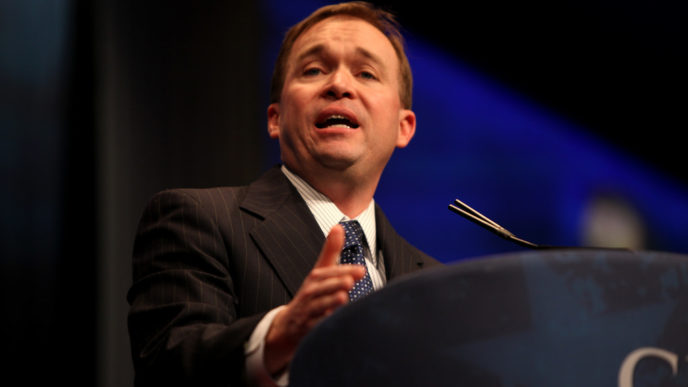
The Senate voted 51-49 Thursday to confirm Rep. Mick Mulvaney, R-S.C., who will be tasked with addressing the nation’s $20 trillion in national debt, as director of the Office of Management and Budget.
Mulvaney, a Republican representing South Carolina’s 5th Congressional District in the House since 2011, will be responsible for directing the budget process and reforming entitlement policy at the Office of Management and Budget.
Romina Boccia, deputy director of the Thomas A. Roe Institute for Economic Policy Studies at The Heritage Foundation, told The Daily Signal in an email that Mulvaney has a proven track record of conservative leadership.
“With the national debt soon to exceed $20 trillion as spending on health care, old-age entitlements, and net interest is projected to grow steeply, driving our debt to ever greater heights, it’s extremely encouraging to see a fiscal conservative with a conservative track record, such as Mick Mulvaney, confirmed as director of the White House budget office,” Boccia said.
Rep. Mark Meadows, chairman of the House Freedom Caucus, said Mulvaney will serve President Donald Trump’s administration well.
“The House’s loss is President Trump’s gain,” the North Carolina Republican said in a statement. “In my time serving in Congress, Mick Mulvaney is truly one of the sharpest minds and most principled men I have come to know. His passion for his work and his relentless commitment to fiscal responsibility will make him a tremendous OMB director.”
Sen. John McCain, R-Ariz., voted against Mulvaney’s confirmation, citing concerns that Mulvaney would support cuts to military funding.
I'm opposing Rep. Mulvaney's nomination to be OMB Director because I support @POTUS's commitment to the military https://t.co/PI5sHQWSDg
House Budget Committee Chairman Rep. Diane Black, R-Tenn., said Mulvaney is a “tireless advocate” for a responsible budget.
“Mick Mulvaney has been a tireless advocate for a sustainable budget that reduces the national debt,” Black said in a statement. “ … I am confident he will be a great partner in the White House as we work toward a balanced budget.”
Mulvaney has been a leader of the conservative movement in Congress.
He is one of the founding members of the House Freedom Caucus, a group of members in the House who “support open, accountable, and limited government; the Constitution and the rule of law; and policies that promote the liberty, safety and prosperity of all Americans.”
Before representing South Carolina in the House, Mulvaney served in the South Carolina state Senate.
In Congress, Mulvaney served on the House Committee on Financial Services and the Committee on Oversight and Government Reform.
Boccia said she is confident that Mulvaney will work to reform entitlement programs and address government spending.
“I am hopeful he’ll be able to move the needle in the right direction on entitlement reforms, tackling the nation’s out-of-control spending and debt problem head on, to secure opportunity and prosperity for current and future generations,” she said. (For more from the author of “Senate Confirms Mick Mulvaney as OMB Director” please click HERE)
“Pizzagate” is a familiar pop culture buzzword and everyone probably knows what it means or that it is affiliated with sexual abuse of children, especially in Washington, DC. However, there has been breaking news about world-wide arrests regarding pedophilia, but the U.S. media and television—other than CBS journalist Ben Swann in Atlanta, Georgia—have not investigated the problem to expose it and its perpetrators.
In Canada, a recent Project Spade press conference took place, which you can listen to here.
The U.S. Postal Service was represented at the Toronto press conference. How come the U.S. press has not covered that international event? Some children as young as five years old were involved. What a scourge upon society! By the way, have you heard the rumblings that some want to have pedophilia made legal? What is wrong with society?
How high up the professional ladders do these sick activities go; who will be exposed and how soon—barring none at any level of involvement, including the swamp in Washington, DC, which has been alleged to be crawling with pedophiles in all levels of government. Why isn’t the U.S. media investigating and reporting on it? What say you Washington Post?
Here’s coverage of a California pedophilia bust, which ought to make people wonder why it wasn’t national front page news plus a short clip on the DA’s press conference on sexual exploitation arrests across southern California.
Lastly, a huge pedophilia-sex operation was exposed in Norway. Did you hear anything about that on the nightly news? Here’s some of the information that surfaced:
Norwegian police have filed charges against 51 people suspected of various kinds of abuse of children including babies. Even the future abuse of yet unborn children was discussed in the country’s largest ever pedophile ring. [CJF emphasis added]
Truly one of the sick, sad and pathetic parts about pedophilia is those who are educated and should know better.
Several perpetrators were obviously familiar to their immediate environments. Family and friends reacted with shock when they were arrested. Perpetrators come from all walks of life, many of them have a higher education, possess high IT skills and have used encryption to hide their tracks,” prosecutor Janne Ringset Heltne told NRK. [CJF emphasis added]
Abuse of children at any level, in any form/format, including vaccines neurotoxic ingredients, has to stop, and all responsible government agencies must be made to deal with it whether they like it or not, or want to or not, since, apparently, many at the top may be involved. (For more from the author of “Global PEDOPHILIA Rings Exposed and Arrested — Where’s U.S. Press Coverage?” please click HERE)
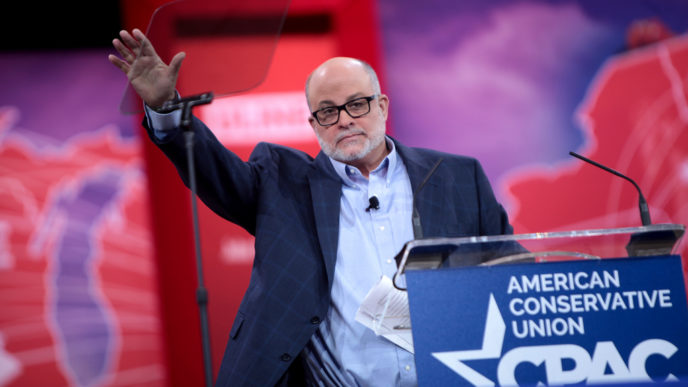
In an effort to help the Trump White House and “feckless” Republicans running for cover from the post-Flynn fallout, Mark Levin asked the real question about the recent intelligence leaks that led to National Secuirty Advisor Michael Flynn’s departure: “What did Barack Obama know and when did he know it?”
“Where did the orders come from to intercept these phone calls? To record these phone calls?” Levin asked on his radio show Wednesday night. And, most-importantly, “Who knew about it?”
Listen:
“It is not that simple to get authorization from the FISA court … particularly when it comes to private citizens,” Levin said, recalling his experience in Reagan’s Department of Justice. “So the question is how many of these phone calls were intercepted and recorded by the Obama administration.”
“This, ladies and gentlemen, is the real scandal,” Levin concluded. “Because even the NYT has to admit that there is no evidence” Michael Flynn broke the law by communicating with his Russian counterparts.
It’s also important to know, Levin added, how many other members of the Trump team had their communications intercepted by the Obama administration.
“I don’t believe this intercept was a one-off,” he said. “I suspect there have been a lot more intercepts and I don’t believe that he is the only one.” (For more from the author of “Levin Unpacks the Real Scandal Behind Michael Flynn’s Resignation” please click HERE)
https://joemiller.us/wp-content/uploads/16503213739_a1ce011900_b.jpg6831024Joe Millerhttps://joemiller.us/wp-content/uploads/logotext.pngJoe Miller2017-02-15 22:48:152017-02-19 07:40:48Levin Unpacks the Real Scandal Behind Michael Flynn’s Resignation
With Supreme Court decisions erroneously regarded as the supreme law of the land instead of the Constitution, everyone on the Right is clamoring to ensure that Trump makes the best Supreme Court pick(s) possible. But given that well under one percent of all federal civil and criminal cases make it to the Supreme Court, decisions coming out of the 13 federal courts of appeals ostensibly (and again, erroneously) serve as “the law of the land” for many critical social and political issues, as we so painfully witnessed with last week’s “9th Circus” ruling.
That is why it is at least as an important to fill the federal circuits with originalists as it is for the Supreme Court. However, if Trump is going to leave his mark on the judiciary, that would require taking bold measures to overturn established traditions so that each appeals court nominee would be more in the mold of Clarence Thomas than even a Neil Gorsuch, much less a John Roberts or Anthony Kennedy.
Why the U.S. Court of Appeals is so vital
For those paying attention to how a mere district judge in one bad circuit can violate the national sovereignty, you need no tutorial on the importance of the lower courts.
In 2015, 54,244 cases were filed in the 12 regional courts of appeals (not including the specialized appeals court for the Federal Circuit) out of a total of 361,689 that began at the district level. At the same time, only about 80 cases were granted full review by the Supreme Court. In other words, the federal courts of appeals are ostensibly the court of last resort for most federal cases. And given that the Left has successfully redefined the Constitution, almost every political issue has become a federal case.
Even though many of the major cases broadly affecting public policy are granted review by the high court, many languish in the lower courts for years and never make it to the Supreme Court. Moreover, the Supreme Court is clearly influenced by the jurisprudential momentum of the lower courts. Given that most of the circuits are full of post-constitutionalists who make Anthony Kennedy look like James Madison, it creates a peer pressure in the legal community to move away from the Constitution as written.
Remember, gay marriage didn’t happen in a vacuum with the Obergefell case. Almost every district court and all but one of the circuits redefined marriage in one of the most anti-constitutional opinions of all time. We are witnessing a similar trend with lower courts chipping away at the “plenary power doctrine” on immigration in recent years.
Furthermore, justices will rarely take up a case expeditiously when there is no split decision among at least two circuit courts. Given that the lower courts are in such bad shape — with such a dearth of originalists — conservatives can rarely win in even one circuit on such bedrock issues as voter ID, religious conscience, and an array of immigration issues. The lower courts tee up the contours and the dynamics of the cases that reach the high court. Therefore, if we fail to change the personnel and the procedures of the lower courts, another two solid originalists on the Supreme Court (assuming one of the liberals dies or resigns from office) would have only a limited effect.
Keep in mind that most of the major cases of consequence pending before the Supreme Court have been appealed by conservatives because of bad lower court decisions. The tyranny begins and usually ends in the circuits. Given that Republicans have control of the federal government and most state governments, we will only be playing defense in the lower courts because that is where the Left will plant their flag, even more so than during the Obama era.
Where the circuits stand: An anti-constitutional circus
It’s not just the 9th Circus.
You could probably count on your fingers the number of true originalists (à la Clarence Thomas) on the circuit courts. While it’s arduous to game out the “ideology” of each judge and circuit, here is my preliminary attempt at an overview of the circuits.
First, we will begin with this infographic detailing the number of Republican appointees and Democrat appointees by circuit among active judges (not including semi-retired “senior judges”). The graphic also shows the strong influence of Obama’s eight years on the appeals courts and the immediate vacancies that can be filled by Trump.
A few observations stand out.
1. Among active judges, Democrats now have an outright majority on nine of the 13 circuits.
And as we will explain in a moment, the courts are in worse shape than this topline number would suggest because almost every Democrat-appointee is a post-constitutionalist while only half the GOP-appointees are conservatives and only relatively small number are true originalists. Just consider how two GOP-appointed judges were already involved in the immigration ruling, one of the most radical and harmful decisions of all-time.
2. There are 20 vacancies that Trump can and should fill immediately.
But Obama’s presidency was so strategic that it will take a long time to swing back a single circuit. Only 10 of those 20 are Democrat vacancies that would tilt the balance of a seat and most are not in circuits that will fundamentally alter the balance of most three-judge panels.
3. The all-important D.C. Circuit is now 7-4 majority Democrat appointees, with four judges appointed by Obama alone.
The D.C. Circuit is the second most influential court in the land on constitutional issues. Worse, while there are some solid senior judges, Janice Rogers Brown is the only real originalist left among the active judges, with Brett Kavanaugh a mostly reliable conservative. The D.C. Circuit is going to be a dumpster fire for the indefinite future. Moreover, if you drill down into the district level, the District Court for the District of Columbia has an 11-0 Democrat majority among active judges!
By the middle of the year, when all the current vacancies take effect, there will be 90 Democrat appointees, 69 GOP appointees, and 20 vacancies among active seats on the appeals courts. However, the circuit courts are really in much worse shape than even the top line numbers would suggest.
Remember, almost all of the cases in the appeals courts are decided by a randomly selected three-judge panel, which also includes the senior judges (although their caseload is reduced in varying degrees). While it is possible to request a full en banc review of a case by the full circuit, those reviews are relatively rare in most circuits. Due to the clear Democrat majority on nine of the circuits and the lack of originalists on most of those panels, the legal Left is almost always assured a favorable panel for whatever they are looking to do: redefine marriage, infringe upon religious liberty, throw out abortion regulations, block photo ID, etc.
On the other hand, we’d be lucky to find 15 originalists on the appeals courts who are every bit as conservative as the 90 Democrat appointees — and a number of Republican appointees — are liberal.
Now let’s take a look at the four circuits where there is a supposed GOP majority:
7th Circuit
This is the easiest one to game out. The 6-3 GOP majority is extremely deceiving. This circuit is home to the infamous Richard Posner, a Reagan appointee who quite literally believes that the Constitution as adopted is outdated and should be disregarded. He wrote the 7th Circuit’s tyrannical gay marriage opinion, among many other bad decisions.
Only two of the nine active judges can be considered reliable originalists across the board: Michael Kanne and Dianne Sykes. While many conservative legal theorists have respected Frank Easterbrook for many years, he has shown that he doesn’t believe in an individual right to bear arms. The rest of the Republican appointees range from progressive to unreliable. Thus liberals can pretty much rely on a favorable three-judge panel for almost anything they want.
6th Circuit
The 9-5 majority of GOP appointees is very misleading if one thinks this is an originalist-dominated circuit.
First, Judge Helene White, although appointed by Bush, is really a liberal Democrat who was selected by Michigan’s two Democrat senators as part of a deal. Jeffrey Sutton, another W appointee, wrote the court’s opinion upholding Obamacare. Out of the seven remaining GOP appointees, only Alice Batchelder could be counted among the most reliable originalists with a few others leaning conservative, such as Raymond Kethledge. Another conservative, Danny Boggs, just retired, so at best his vacancy will be a wash.
Thus, between the liberal active judges and a number of other liberal senior judges in this circuit, it’s hit or miss for conservatives in terms of getting a reliable three-judge panel. In fact, the far Left recently got a three-judge panel to say that transgenderism is settled law and helped promote Jill Stein’s crazy recount in Michigan!
5th and 8th Circuits
The only two circuits that could remotely be considered conservative are the 5th and 8th circuits. However, even the fifth is not as good as its numbers would suggest. The panel certainly has its share of solid judges, with Edith Jones, Priscilla Owen, Jennifer Elrod, and Jerry Smith. But last year, conservatives couldn’t even get voter ID past the full panel because a few GOP appointees joined with the Left.
The 8th Circuit is probably the best panel in the country. However, that makes the three vacancies on the court somewhat moot because they’d be better served on other courts.
The balance of power will not shift very soon
As you can see, although there is much hype surrounding the more than 100 vacancies on the court, they will not swing the balance in terms of the circuits. Only 20 of the vacancies are on appeals courts, of which only 10 are Democrat seats, and many of them are on circuits that are irremediably broken or on the 8th Circuit, which is already good.
Moreover, the prognosis for the future is grim. Many Democrat judges will view Trump as anathema that they will not retire under his watch. A quick glance at the vacancy list shows that all five of the circuit court judges who retired since Trump won the election were Republican, as were most of the district court retirees. Thus the trend is not indicative of a host of opportunities to flip the balance of the circuits. Which is one more reason why we need wholesale judicial reform in addition to filling vacancies.
Trump must act soon to fill vacancies and demand originalists in the mold of Thomas
Nonetheless, it is important that Trump not wait the traditional six months or so to start the process of filling lower court vacancies. While I don’t believe it will fundamentally alter the balance of the courts, the better judges who are in the circuits make it more likely we will get lucky and have a decent three-judge panel for random, important cases.
However, if Trump is to make his appointments meaningful, he would have to depart from longstanding tradition that gives home state senators major input on nominees and allows them to potentially scuttle the nomination.
One of the reasons why we have many liberal judges from Republican presidents — such as Judge Robart, a W appointee — is because Democrat senators can “blue slip” any nominee from their state they dislike. Under Senate tradition, the Judiciary Committee will refuse to hold a hearing on any nominee that is officially opposed by the home state senators. This is why it’s so hard to get even a marginally conservative judge approved from blue states, much less someone in the mold of Clarence Thomas.
Even in red states with two GOP senators, the judicial nominees often reflect a legal mirror image of their political views, which are moderate at best. And in states with senators from opposing parties, Republicans have often cut deals to approve only those nominees who are acceptable to their home state Democrat senator.
The problem of home state RINOS and Democrats is further exacerbated by the fact that tradition tends to bind the president to maintaining state continuity in seats within a circuit court. According to CRS, just 13 percent of circuit court appointments since the Kennedy administration have changed state representation from the vacant seat. And it is downright mandated by law that every state has at least one judge on the given circuit court and that every nominee must at least reside within the circuit at the time of the appointment.
Consequently, if a president wants to fill a vacant seat from a state with a Democrat senator, he would be constrained by tradition from filling it with someone from a state with two Republicans, thereby avoiding a blue slip problem.
To begin with, it’s so hard to find Clarence Thomases in this profession. The limitation of state allocation rules and blue slip obstruction are killers. This is why despite swearing every time we will do a better job “appointing better judges,” we wind up with more Kennedys and Roberts on the lower courts. It’s also why outside of the geographical areas of the fifth and eighth circuits, it’s hard to appoint a string of reliable conservatives. There are three vacancies from the 3rd Circuit, for example, but it will be very hard to fill them with originalists given the geographical problem.
As such, Trump would have to expend as much political capital trying to “appoint better judges” in a meaningful way as he would by pursuing judicial reform. Yet the latter would actually solve the problem in the long run.
It’s quite evident that we still need judicial reform, but in the meantime Trump would be wise to fill the vacancies aggressively on circuit courts and make it clear to Senate Republicans that they are to promote originalists with the same gusto that Obama used to confirm anti-constitutionalists. (For more from the author of “‘Circuits’ or ‘Circuses’? Here’s Why We Desperately Need Judicial Reform at the Circuit Court Level” please click HERE)
https://joemiller.us/wp-content/uploads/judge-gavel-1461966217cii.jpg12801920Joe Millerhttps://joemiller.us/wp-content/uploads/logotext.pngJoe Miller2017-02-15 22:45:482017-02-15 22:45:41‘Circuits’ or ‘Circuses’? Here’s Why We Desperately Need Judicial Reform at the Circuit Court Level