Trump Administration Slaps Sanctions on Iran for Missile Test and Other Provocations

The Trump administration followed through on Friday with a new round of sanctions on Iran, two days after National Security Advisor Michael Flynn announced that it was “officially putting Iran on notice” for a missile test and its hostile regional policies.

The sanctions were targeted at 13 individuals and 12 entities for their support for Iran’s ballistic missile program or for the Islamic Revolutionary Guard Corps Quds Force, which has been designated under an executive order for providing material support to various terrorist groups, including Hezbollah and Hamas.

Those targeted under the sanctions cannot access the U.S. financial system or deal with U.S. companies. They also are subject to secondary sanctions, which would prohibit foreign companies and individuals from dealing with them or risk being blacklisted by the United States.

An anonymous senior U.S. official said Friday’s sanctions were an “initial step” in responding to Iran’s provocative behavior and would be followed by more steps if Iran continues on that path.

Iran’s Jan. 29 missile launch, which reportedly was tracked by at least one U.S. satellite, ended in an explosion after the missile travelled 630 miles, an apparent failure.

Some reports cited U.S. officials suggesting it was a Khoramshahr missile, which has yet to be displayed in public.

The German newspaper Die Welt cited intelligence sources who claimed that Iran also tested a nuclear-capable Sumar cruise missile that same day.

U.S. officials also charge that Iran has armed and assisted the Houthi rebel movement in Yemen, which reportedly launched a Jan. 30 attack by suicide bombers on a small boat that killed at least two sailors on a Saudi warship patrolling the Red Sea off Yemen’s coast.

Last October, a U.S. Navy destroyer, the USS Mason, was unsuccessfully targeted by two anti-shipping missiles launched from Yemen, which prompted the U.S. Navy to launch cruise missiles to destroy Houthi missile launch sites along the coast.

Friday’s sanctions announcement is the first concrete response by the Trump administration, pushing back against Iran’s latest provocations.

The Obama administration preferred to ignore Iranian missile tests and its malign regional activities because it sought to preserve the flawed nuclear agreement, which it considered a positive legacy. This only emboldened Iran.

President Donald Trump warned in a tweet on Friday:

Javad Zarif, Iran’s foreign minister, responded on twitter that Tehran is “unmoved by threats” and will not stop its missile program.

Iran and the United States appear to be on a collision course, with more sanctions and perhaps military clashes on the horizon. (For more from the author of “Trump Administration Slaps Sanctions on Iran for Missile Test and Other Provocations” please click HERE)

Follow Joe Miller on Twitter HERE and Facebook HERE.

Starbucks Gets Scalded in Backlash After CEO Criticizes Trump’s Travel Ban EO

Starbucks CEO Howard Schultz is harming shareholders by damaging the brand he globalized by criticizing President Trump’s executive order on Syrian refugees and travel bans.

Schultz wrote to Starbucks employees on Sunday, January 29, following Trump’s announcement on the previous Friday. The coffee chain CEO issued a broad-based attack against Trump.

The company’s share price has dropped lower (about four percent) following a disappointing earnings announcement and sank deeper (about 3.7 percent) following Schultz’s letter to employees that slammed Trump’s policies.

Schultz’s action serves as a warning to investors that they need to be aware of the CEO’s personal politics and whether the chief executive will create an unnecessary controversy by expressing those views.

Judging by the timing, Schultz let his progressive heart guide a hasty, emotional reaction, ignoring the predictable response by Trump supporters.

His letter said the American Dream is “being called into question” and claimed he was hearing from employees “that the civility and human rights we have all taken for granted for so long are under attack.”

Unleashing his frustration over the new president, Schultz discussed company actions challenging policies that are near and dear to Trump’s supporters.

Schultz expressed actions he is taking to support the Deferred Action for Childhood Arrivals program and mentioned Starbucks employees are “Dreamers.”

He touted the company’s history of hiring refugees and said Starbucks would be “doubling down” on this effort with “plans to hire 10,000 of them over five years in the 75 countries around the world where Starbucks does business.” As part of this effort in the U.S., he wants to employ refugees that support our armed forces.

Under the heading of “Building Bridges, Not Walls, With Mexico,” Schultz discussed the company’s investment in the country, adding the company would support Mexicans affected by trade and restrictions on immigration.

Finally, Schultz said eligible employees would have access to a company health care plan if the Affordable Care Act is repealed.

The response to Schultz’s letter was prompt and brutal on social media with posts calling for a boycott.

Facebook posts slammed Starbucks for its intention to hire refugees over American workers and U.S veterans.

Twitter rocked the company as well. Fortune reported #BoycottStarbucks was the top trending topic on Twitter the day after the Schultz letter.

Social media also distributed derogatory cartoons including a Starbucks store rebranded as “ShariaBucks” with a banner “Now Hiring: Muslim Refugees.”

Starbucks responded to the social media onslaught by emphasizing the company has a policy that encourages hiring veterans and active duty spouses.

Despite the company’s effort to respond to critics, its brand is damaged. The social media blitz and news stories labeled Starbucks as putting refugees before veterans.

Starbucks shareholders are paying the price because of Schultz’s inexcusable self-inflicted wound.

You don’t need to have a Ph.D. in political science to realize political passions are running extremely high, and no good can come from taking a position that conflicts with “America first.”

Like many on the Left, Schultz failed to recognize the mood of the country and the political land mines for not thinking about the consequences of his actions.

Schultz’s fumble exposes a management liability at progressive companies. While Starbucks touts diversity as a core value, the celebration of differences doesn’t apply to political thought. In many companies, conservatives are either absent or treated like social pariahs.

Starbucks is especially vulnerable to consumer backlash. First, Schultz previously used his company as his personal political soapbox. He has commented on race and told gun owners not to carry in their stores.

He also told a shareholder to sell his shares because the individual thought Starbucks’ support of a gay marriage referendum in Washington was bad for business.

Unlike Silicon Valley companies that expressed opposition to Trump’s executive order, Starbucks is a consumer product company with viable competing coffee alternatives on almost every corner.

Other progressive CEOs with vulnerable consumer brands have exercised restraint and not exposed their companies to backlash from Trump supporters.

After making a critical comment about Trump following the election, PepsiCo CEO Indra Nooyi — a Hillary Clinton supporter — quickly recovered. She joined the president’s group of business leaders, the Strategic and Policy Forum.

Similarly, Disney CEO Bob Iger, a long-time backer of Hillary Clinton, also joined Trump’s business group.

Nooyi and Iger’s decision to join the Trump Train is recognition that they are putting shareholders before their personal politics.

Starbucks shareholders wish Schultz would do the same. (For more from the author of “Starbucks Gets Scalded in Backlash After CEO Criticizes Trump’s Travel Ban EO” please click HERE)

Follow Joe Miller on Twitter HERE and Facebook HERE.

Look Out! New Border Tax Will Increase Your Cost of Living

Tax reform is one of the most important things the Trump administration might achieve. High on the new president’s list of priorities, the reduction of tax rates for corporations and individuals would be a tremendous boost for our economy, not to mention the purely moral aspect of allowing people to keep more of the money they’ve earned. However, there is one little-understood aspect of the proposed tax reform package that should have all Americans worried: the benignly named “border adjustment tax.”

This new tax is being floated as a way to raise revenue to cover the cost of the border wall, as well as to make up for other decreases in the corporate tax rate, and also as a way to incentivize exports and punish imports. Many people still mistakenly believe that importing goods and services is somehow bad while exporting them is good. This misunderstanding of trade policies is going to hurt American consumers considerably.

Here’s how the tax works. Proposed by Kevin Brady, R-Texas (F, 51%) and Paul Ryan, R-Wisc. (F, 52%), the border adjustment tax would disallow the deduction of business expenses incurred in other countries from a company’s taxable income. Currently, if a company buys inventory overseas and sells it domestically, it only gets taxed on the profits, not the entire revenue. This is the same for domestic companies that do all their business in the United States, and it’s easy to see why. If you purchase $100,000 of equipment to produce goods that only sell $110,000, it makes no sense to tax the whole $110,000, as doing so would make an otherwise profitable enterprise too expensive to sustain. Taxing only the profits allows companies with a large volume of sales but a narrow profit margin to continue to operate successfully.

Eliminating this system for imported goods means that many imports will simply not be worth the money. That means fewer available options for you and me. Those bananas grown in Costa Rica may disappear from supermarket shelves, forcing us to subsist on less exotic, homegrown produce. Turnips maybe. Yuck. Other imports will still be profitable, but only at increased prices, so once again, the American consumer is harmed by the tax.

The other piece of the border adjustment tax, designed to encourage exports, allows exporting companies to deduct business expenses, but exempts revenue earned abroad from taxation entirely. Thus, the company in the example above would be able to reduce its taxable income by the $100,00 in expenses, while not being taxed at all on the $110,000 in revenue. This means that, from the IRS’s perspective, the company will look like it lost $100,000, and can use that claim to qualify for tax refunds. In other words, it would be possible for a profitable exporter to get checks from the government, as if they were on the brink of bankruptcy.

Now, this is hardly fair, but perhaps the more important point is the incentive effect it will have on business. Notice that in the cases of both the exporter and the importer companies are punished for selling to Americans. Under such a tax structure, no company, whether it be located in the United States or elsewhere, will want to sell its products to American consumers if it can find buyers elsewhere. The tax advantages of selling to foreigners will simply be too great. This is not to say that no one will sell to Americans, it’s just that they will need an added incentive to do so, an incentive most likely to found in the form of higher prices.

So, let’s review, The border adjustment tax will remove some imports from the market, giving us fewer choices about what to buy, for the rest, it will raise the prices we pay. The tax also unfairly rewards those who sell their wares abroad, giving them no reason to want American customers unless they can charge higher prices as well. Americans get it both coming and going.

For a populist administration that claims to care about the plight of the working man, pushing a tax plan that will substantially increase his cost of living seems an odd choice.

Then again, no one ever said politics was rational. (For more from the author of “Look Out! New Border Tax Will Increase Your Cost of Living” please click HERE)

Follow Joe Miller on Twitter HERE and Facebook HERE.

They Lied All Along: Republicans Plan to ‘Repair’ Not Repeal Obamacare

Is it possible to repair a house on fire without extinguishing the raging inferno in it?

Republicans think we are stupid enough to believe so.

First they promised to repeal Obamacare “root and branch.” Then they promised to “repeal and replace” without explaining its meaning — other than to legitimize the premise of Obamacare as a partial force for good. Now, they are on to “repair.”

The Hill has the relevant quotes from two of the most important committee chairmen (Senator Walden, R-Ore. (F, 36%) and Senator Alexander, R-Tenn. (F, 15%)) drafting the repeal bill … which will not repeal Obamacare:

“I’m trying to be accurate on this that there are some of these provisions in the law that probably will stay, or we may modify them, but we’re going to fix things, we’re going to repair things,” House Energy and Commerce Committee Chairman Greg Walden (R-Ore.), a key player on healthcare, told reporters Tuesday.

“There are things we can build on and repair, there are things we can completely repeal,” he said.

Senate Health Committee Chairman Lamar Alexander (R-Tenn.) is sounding a similar note. […]

“I think it is more accurate to say repair ObamaCare because, for example, in the reconciliation procedure that we have in the Senate, we can’t repeal all of ObamaCare,” Alexander said. “ObamaCare wasn’t passed by reconciliation, it can’t be repealed by reconciliation. So we can repair the individual market, which is a good place to start.”

As we noted before, every word of this premise is false because the price-hiking coverage regulations are inextricably linked to the subsidies, as noted by the courts and CBO. Therefore, the regulations can be repealed through budget reconciliation. Moreover, the Senate parliamentarian doesn’t have the final say on addressing Senate precedent.

However, there is a more important point to bring out from this story. These people lied to all of us. They told a bald-faced lie. Absolutely nothing changed structurally about Obamacare from the time they made these promises during the past three elections until now. If anything, premiums went up even more than expected and there are even fewer insurers than previously predicted, making the case for repeal an easier political sell.

Likewise, nothing changed procedurally from the time they promised to use budget reconciliation to repeal at least most of the main elements of the law. Republicans always knew that they would need to get rid of the actuarially crippling regulations, which would then unfreeze the insurance market, lower costs, bring back choice and competition, and engender much less of a need for subsidies. All the while, everyone always planned to maintain the subsidies and Medicaid expansion for a one to two-year transition period while other free market health care and health insurance reforms were put in place.

Yet, Republicans, particularly those in the Senate, never had any intention of repealing it because they don’t believe or understand free markets, are owned by the big pharma/big government complex, and have no desire or ability to articulate a winning issue to the public without shooting themselves in the foot.

This day was predicted long ago

In 2012 and 2014, conservatives worked against Mitch McConnell, R-Ky. (F, 40%) and his sitting RINO Senators (such as Thad Cochran, R-Miss. (F, 22%), Pat Roberts, R-Kan. (F, 51%) Lisa Murkowski, R-Ala. (F, 20%) and Lamar Alexander, R-Tenn. (F, 15%)) and his chosen challengers in open seats (such as Sens. Tillis, R-N.C. (F, 35%) and Cassidy, R-La. (F, 47%)). Voters were warned that they had no intention of repealing Obamacare. Conservatives cautioned that if Ted Cruz’s, R-Texas (A, 97%) plan to defund Obamacare at its inception was not followed, the law would never be repealed. That if we failed to build a Senate majority upon a solid foundation and stronger leadership, Obamacare would never be repealed even if we were so fortunate to control all three branches. [See my op-ed at Fox News Opinion on October 25, 2013, “Building a GOP Majority on Quicksand”]

Groups like Senate Conservatives Fund were maligned as pursuing “purity for profit” and undermining the creation of a GOP majority that would truly repeal Obamacare. Establishment voices accused the grassroots activists of needlessly creating a civil war over disagreements on strategy. Yet, we knew all along it was a disagreement over beliefs and courage, not strategy. Unfortunately, the establishment used their superior funding (from groups like the Chamber of Commerce that wanted to keep Obamacare all along) to run on repealing the law “root and branch,” as McConnell famously said. Now, some of these very senators are leading the charge to repair the law, which is not feasible.

Trump must intervene

Obviously, President Trump is having a busy week with his immigration policies and the Supreme Court pick, among many other issues. He can’t address everything in the first month of his presidency. But there is no way to ignore Obamacare. Unless it is FULLY repealed, within a few years no middle-income American will be able to live in freedom and dignity without permanent government support and intervention in healthcare. We will have no freedom in one sixth of our economy. Moreover, the crushing job loss, debt, and diminished wages from the Obamacare regulations are weighing down the economy and will undermine the president’s ability to grow the economy with some of his other plans. It will limit his ability to secure a legacy as a jobs president.

The plan forward

Trump should dispatch Vice President Pence to work with the House Freedom Caucus as well as Speaker Paul Ryan, R-Wisc. (F, 52%) and ensure that the House passes the full repeal bill — along with the regulations. They should make it clear that there are no excuses for the Senate to not overrule the parliamentarian, but at the same time they should not wait around for the lords of the Senate to do the right thing. The reconciliation bill should be structured as follows:

An 18-month transition for retaining the subsidies and the Medicaid expansion. However, immediately freeze both programs from new registrations.

Repeal Obamacare’s taxes immediately and the regulations by mid-year so that insurance companies can have certainty to offer cheaper, competitive plans in 2018

On the administrative end, have Tom Price, R-Ga. (D, 62%) get rid of any cost-sharing subsidies and risk corridor bailouts for insurance companies. This will force them to utilize the lifting of regulations to lower prices and actually compete for business rather than relying on subsidies.

Meanwhile, individual states should work on reducing their own onerous health care and health insurance regulations in order to maximize the market effect of reducing federal insurance regulations.

At that point, Trump should relentlessly use his bully pulpit to name and shame the Senate into fulfilling their promise. It can be done if we actually got the momentum rolling in the House. As Reps. Mark Meadows, R-N.C. (A 94%) and Jim Jordan, R-Ohio (A, 96%) said in a statement today, “We committed to the American people to repeal every tax, every mandate, the regulations, and to defund Planned Parenthood. That’s what the American people expect us to do — and they expect us to do it quickly.”

In the meantime, conservatives should put the pressure on the Senate by launching a new round of primaries. Members like Jeff Flake, R-Ariz. (F, 50%), Bob Corker, R-Tenn. (F, 45%), Roger Wicker, R-Miss. (F, 28%), and Orrin Hatch, R-Utah (F, 33%) could be prime targets in states won by Trump.

As Bobby Jindal said, “Republicans who want to retreat from repeal to repair should be replaced.” (For more from the author of “They Lied All Along: Republicans Plan to ‘Repair’ Not Repeal Obamacare” please click HERE)

Follow Joe Miller on Twitter HERE and Facebook HERE.

Will Trump Defy Pressure to Betray Promises on Religious Liberty?

The anticipation behind a Pres. Trump executive order protecting religious liberty within the federal government would appear to be all for naught, according to a recent report, leaving social conservative concerns out in the cold.

As Politico’s Annie Karni reported Friday:

Jared Kushner and Ivanka Trump helped lead the charge to scuttle a draft executive order that would have overturned Obama-era enforcements of LGBT rights in the workplace, multiple sources with knowledge of the situation told POLITICO.

A draft executive order on LGBT rights — which outlines how to roll back former president Barack Obama’s protections and expand legal exemptions based on religious beliefs has been circulating among journalists and worried progressive groups this week.

Put simply, the draft executive order is balanced, solid, commonsense, and worthy of immediate signage. Others in the White House, however, see things differently.

“There are some in Trump’s family that have some views on these things,” a source close to the discussions told Karni. “That’s where the decision is ultimately being made.”

If true, this is horrible news for the voters who helped bring Trump across the November finish line on his promises to protect religious liberty (among other social conservative concerns). In fact, such a blatant reversal would constitute nothing short of a betrayal of those coalitions.

“This president’s number one priority is demonstrating to the people that got him elected that he is doing the people’s business,” the Heritage Foundation’s James Carafano told Politico.

And Carafano’s right — the 2016 election was a referendum on Barack Obama and the Left’s criminalization of Christianity. And countless social conservatives were willing to look past a great many things of their GOP nominee in pursuit of those promises.

During his RNC acceptance speech in Cleveland, Donald Trump recognized that it was evangelicals who brought him to the ball. Right alongside the assuaging promises for a worthy successor to Antonin Scalia on the Supreme Court were irrefutable promises to protect human life and the consciences of private-sector businesses to service ideas that violated their deeply held convictions rooted in our history and tradition.

The people elected a president who promised to 1) protect their religious liberty, by signing the First Amendment Defense Act; 2) abolish the Johnson Amendment; and 3) ending the taxpayer funding of the abortion giant Planned Parenthood. Had those voters really wanted a continuation of Obama’s extreme anti-religious zealousness, they could have easily voted for Democratic nominee Hillary Clinton instead.

Overturning prima facie discrimination against anyone who doesn’t subscribe to the Left’s sexual identity agenda is more important than changing longstanding Johnson Amendment policy. And, in fact, administration officials promised conservatives this would be done. This is why conservatives backed off the legislative fight to overturn Obama’s discriminatory order in the national defense bill after the election.

While religious liberty opponents claim that because Trump made overtures to the sexual identity lobby during the campaign — and that this promise would contradict the other — is made on a patently false (albeit popular) assumption that rests on the gross mischaracterization that religious liberty protections are “anti-LGBT.”

Rather, as The Heritage Foundation’s Ryan Anderson explains at The Daily Signal: “Opponents to the executive order misrepresent the order by claiming it would repeal an Obama-era executive order elevating LGBT status to a protected class in federal contracts … Rather, it protects the religious liberty rights of all Americans in very tailored ways that address problems of today.”

The notion that barring government contracts with businesses that believe in authentic marriage or don’t have men use female bathrooms in their corporate offices is somehow “anti-” anything is absurd. Quite the contrary. Doing business with any contractor irrespective of their views is the default position. Barring those who don’t have transgender bathroom accommodations is itself discriminatory and sets a horrible precedent in the private sector. Let liberty work.

Pres. Trump would be the best ambassador for this message; it would fit right into his branding. He could sign this executive order and say, “Look, I’m a businessman and I want to get the job done. If you are a contractor who gets the job done, you’re hired. If not, you’re fired! I don’t care about what you do in your offices, and I have no plans to discriminate against any side of social debates in this country. In order to get government out of this debate, I’m repealing Obama’s discriminatory and ill-conceived order that has only further divided this country.”

Trump must also remember that by catering to the sexual identity boycott lobby, he will never win a single new vote and will only divide and demoralize his own base. The same individuals and powers behind the immigration-related protests and boycotts are behind the boycotts against religious institutions.

In the first few weeks of the Trump administration, there have been some soundly fulfilled promises worthy of applause from conservatives.

This, however, does not look like one of them.Some might just call anything they read in Politico “fake news.” But this is not just coming from Politico. Everyone knows that these liberal forces are in the White House and conservatives will not win these policy fights by remaining complacent. Conservatives must remember: We can’t be like liberals and hope for change. We must ensure of change. Trust, but verify™.

This is doubly true when it comes to social conservatives, who have essentially been relegated to the back of the bus in the Republican Party … even though their ideas are codified in the GOP platform that Trump praised.

This current situation could be very well be, as The Heritage Foundation’s James Carafano told Politico, the avoidance of an “unforced error” early in the administration. This could very well just be one piece of an “Art of the Deal” brand puzzle that will dazzle us all in due time.

But “hope,” warns Francis Bacon, “is a good breakfast, but … a bad supper.” (For more from the author of “Will Trump Defy Pressure to Betray Promises on Religious Liberty?” please click HERE)

Follow Joe Miller on Twitter HERE and Facebook HERE.

Four Major Takeaways From President Trump’s Nomination of Justice Gorsuch

Now that the dust has settled in the aftermath of the president’s nomination of Justice Neil Gorsuch and the battle lines are being drawn, here are four major takeaways.

1. Trump is Fulfilling Campaign Promises — Fast

First, more than any president in memory, Trump is acting swiftly on his campaign promises, and when he said to the American people the night of the Gorsuch announcement that “I am a man of my word,” you had to say to yourself, “Like him or not, he’s doing exactly what he said he would do.” This is incredibly significant.

In February 2016, in the heat of the Republican primaries, I wrote an article titled “Donald Trump, Vacillator-in-Chief,” starting with this: “If Donald Trump ends up being our next president, I will pray that he will be the greatest president we have ever had and I will fervently hope that I’m absolutely wrong about all of my concerns. Until then (or at least until we decide on the Republican nominee), I will sound the alarm and raise my voice as loudly and clearly as I can.

“Do not be duped by Donald Trump!”

Among other examples in the article, I stated that Trump “vacillated wildly when asked whether his sister (of pro-partial birth abortion fame) should be nominated as a Supreme Court justice including: yes; no; I was joking; I wasn’t joking; I have no idea what she believes. (This is a partial, very rough summary.) Then add to the mix that in 2000 he said there should be no abortion litmus test for federal judges.”

That he did the very thing he promised he would do — and quite swiftly at that, given the turmoil surrounding his first weeks in office — is something to commend.

I also pointed out that “During Thursday night’s debate, Leon Wolf tweeted this quote from Trump: ‘I have great respect for Justice Scalia,’ followed by, ‘Trump Less than 5 months ago … slammed Scalia for not supporting affirmative action.’”

As the campaign wore on, Trump’s positions became more and more consistent, to the point that he convinced me that he was serious about nominating a pro-life justice in the mold of Scalia.

So, let it sink in. Donald Trump is keeping his word. (And, as noted in the quote from my February article, I’m glad I was proven wrong. My hope now is that our president will weigh his words even more carefully so that what he promises to do is what he should do.)

2. The Great Divide Between Right and Left

Second, the ideological divide in our country between left and right has never been more stark. (The horrifically costly divisions during the time of the Civil War were along other lines.)

The conservative praise for Gorsuch is off the charts, and I could fill this entire article with links to quotes from well-placed individuals (like Senator Ted Cruz) to influential organizations (like the Family Research Council) to conservative websites (like the National Review Online) all praising Gorsuch as someone truly in the mold of Scalia, a real Constitutionalist, a worthy pro-life nominee.

The reaction against Gorsuch from the left has been at least as strident — if not far more — than the reaction from the right, and it can truly be called hysterical.

An op-ed headline on USA Today announced, “Time for outrageous obstruction against Gorsuch: Jason Sattler,” while Nancy Pelosi said at a CNN Townhall meeting, “If you breathe air, drink water, eat food, take medicine, or in any other way interact with the courts, this is a very bad decision,” labeling Gorsuch a “very hostile appointment.” Could you make yourself a little clearer, Ms. Minority Leader?

It is true that there is a history of hysterical reactions to Supreme Court picks in the past, but the reactions to Gorsuch are just the very sharp, quite obvious tip of the iceberg of massive social divide. Or did a former aide to President George W. Bush suggest the military overthrow of President Obama, as a former aide to Obama just did to Trump? Or did conservative entertainers call for a violent coup against the newly-installed President Obama, as Sarah Silverman just did to Trump? (And let’s not forget Madonna’s expressed desire to blow up the White House.)

The opposition to Gorsuch simply illustrates the intensity and depth of the chasm between right and left.

3. The Democratic Party Can Not Be Appeased

Third, there will be no appeasing the Democratic Party.

As much as Trump may want to be a team player (I do believe he’d like to be seen as someone who can bridge divides) and as much as he is a master negotiator, there will be no appeasing the current Democrat leadership, which is simply dead-set against him.

Forget about common political courtesies.

Forget about building a consensus.

Right now, there’s as much chance as that happening with the Democrats as there is of Cecile Richards of Planned Parenthood being nominated pro-life champion of the year.

Of course, Trump’s style of campaigning and leadership has certainly contributed to the conflict, but the Democratic response to Trump’s pick so far — namely, oppose him at all costs, and use every tactic in the book to do it — should be a strong reminder to Trump that a friendly, let’s meet in the middle attitude will be totally counterproductive right now.

The simple fact that some of the same Democrats who voted for Gorsuch in 2006 are now firmly pledged to vote against him says it all.

4. Pray for the Supreme Court

Fourth, believers who pray regularly for our president should also pray for the members of the Supreme Court, especially for Gorsuch should he be appointed, as seems highly likely.

I say that because nothing can be taken for granted with our justices, and hardly anyone would have imagined that Justice Kennedy, appointed by Ronald Reagan, would one day be the swing vote in redefining marriage (really now, who would have imagined during Reagan’s presidency that the Supreme Court would one day sanction homosexual “marriage”?), nor would many have guessed that Chief Justice Roberts, appointed by George W. Bush, would have been the swing vote in favor of Obamacare.

It is true that neither Kennedy nor Roberts have the pedigree of Gorsuch, but the significant failings of these two justices should put a cautionary damper on our enthusiasm, at the least, reminding us to pray for Justice Gorsuch to judge righteously if appointed.

The late Justice Scalia famously wrote that “A system of government that makes the People subordinate to a committee of nine unelected lawyers does not deserve to be called a democracy.”

Unfortunately, that is the system of government which we currently have, and with Neil Gorsuch having the real potential to serve our nation well past the year of 2050, an investment of prayer on his behalf makes good sense.

And while we’re at it, we should pray for God’s mercy on our land. If ever we needed it, it is now. (If I sound like a broken record here, it is quite intentional. America needs the mercy of God!) (For more from the author of “Four Major Takeaways From President Trump’s Nomination of Justice Gorsuch” please click HERE)

Follow Joe Miller on Twitter HERE and Facebook HERE.

President Trump Should Speak at Berkeley

If you are not chilled to the bone by the riots that college administrators and campus police allowed to erupt at the University of California at Berkeley on February 1, in response to the campus appearance of a single, mildly provocative conservative speaker, Milo Yiannopoulos, it is your civic duty to watch the videos below.

The power-addicted left has reacted to losing a single presidential election like a big, angry junkie thrashing and clawing for a fix. This national tantrum points up for all Americans just what a cyanide-soaked, exploding plutonium-anthrax bullet we dodged in Hillary Clinton. (NOTE: Raw footage and rough language.)

Progressive elites had soaked in the high-handed, lawless arrogance of Barack Obama, who swept in like a messiah and ruled like an absolute monarch — flouting Congress, falsifying the plain meaning of laws, and abusing executive authority with Nixonian abandon. The same elites had assumed that they would get to finish stuffing the U.S. Supreme Court with leftist judicial activists, and crown it once and for all as a permanent, sitting Constitutional convention. No conservative or Christian voters anywhere in America would really have any voice left after that.

The Left Has Abandoned Persuasion

And that’s the whole point: We’re not supposed to. Our views are illegitimate and evil, and don’t deserve the protection of law from violence and intimidation. It is up to the conscience of any given leftist to decide whether or not the views of a fellow citizen deserve to be tolerated. If they deem you too “offensive,” it’s fine to use force in shutting them down:

Government force, like California trying to yank routine federal funding to close or de-Christianize schools that followed the Bible on sexual ethics;

Corporate force, like Marquette University and Providence College acting to remove or harass conservative professors for expressing their views, or DePaul University banning conservative speakers;

Mob violence, which the “Antifa” thugs used at Berkeley to silence Milo;

Individual assault, like a punch in the face or a spray of pepper gas aimed at someone whose views are simply “offensive.”

That’s the left’s mode of operating these days: Not just defeating opponents, but stigmatizing, silencing and finally destroying its “enemies.” From Christian bakers and florists to highly accomplished executives like Brendan Eich of Mozilla and TV hosts like the Gaines family; from the Little Sisters of the Poor to wealthy philanthropist Betsy DeVos; no one is too small to escape being targeted, too innocent or eminent to avoid getting battered and smeared.

I’ll Defend to the Death Your Right to Say It

Now some of the views to which leftists object really might be offensive or wrong. We have no sympathy with a white separatist like Richard Spencer — except insofar as he is an American citizen speaking lawfully and civilly about political issues as our Constitution absolutely guarantees him the right to do — without getting sucker-punched by some passing coward.

If leftists decide that his views, or Milo’s campy provocations, or Christina Hoff Sommers’ thoughtful criticisms of feminism, are so dangerous and contemptible that they may use violence to silence them … let’s pause to ask: On that principle, what should pro-lifers do to abortionists?

We know that these people are directly killing Americans by the millions. To avoid civil war, we agree to proceed against these mass murderers within the law. Would the Left like us to abandon that policy? Have they forgotten which side in America’s culture wars joins the army, staffs the police, and treasures its right to keep and bear arms?

The fact that we have to even raise such an appalling prospect points up how hazardous the Left’s lawless use of force has become. Drunk on the self-righteousness of political views that they have never heard challenged — thanks to the tyrants or cowards who run their universities — young leftists are speaking and acting like Spanish anarchists in the early 1930s, whose mob violence and rejection of a democratic election sparked the Spanish Civil War. They might pause to reflect how that war turned out. (There’s a bumper sticker in that: “Act like a Spanish anarchist — expect an American Franco.”)

Time to Reinforce Fort Sumter

We cannot let things in America keep spiraling downward in that direction. We must insist on the perfect legitimacy of the outcome of our elections, and the absolute enforcement of Constitutional rights. Thugs cannot be allowed to shout down speakers at universities, or burn the streets of our cities. School administrators may not enable violent mobs that silence civic speech. State governors and city mayors may not rebel against federal immigration law and collude in flouting it.

Each of these actions is a direct attack on the sovereignty of our government, and hence on every voter and citizen — just as surely as the “massive resistance” employed by Southern segregationists was in the 50s and 60s. It took the force of the federal government to defend the Constitutional rights of black Americans then. Those same rights demand a similar use of force today.

President Trump is right to threaten the cutoff of federal funds to universities that let hecklers veto or mobs attack American citizens lawfully practicing free speech. But he should go further. He should announce a presidential address, as soon as possible, at the University of California-Berkeley. He should inform the governor of California that the National Guard must cooperate with the Secret Service in guaranteeing order, and the right of the President to speak and citizens to listen.

Whatever use of legitimate force it takes to repress mob violence at Berkeley during that speech, the mob cannot prevail. President Trump should make it clear that anywhere in America where free speech is violently attacked as it was in Berkeley, he will make it his business to visit and insist that our Constitution is still in force.

He must act quickly and firmly, as Ronald Reagan did against campus terrorists back in the 1960s. Expect Americans of good will to unify behind him — and the enemies of freedom to learn their limits. It is the job of the president at times like these to say, as President Lincoln once had to say to a previous generation of thuggish Democrats afraid of losing power: “Thus far, and no further.” (For more from the author of “President Trump Should Speak at Berkeley” please click HERE)

Follow Joe Miller on Twitter HERE and Facebook HERE.

The Four Chaplains Who Went Down With the Ship

Had the men obeyed the captain’s order, more would have survived that night.

On February 2, 1943, 902 servicemen, merchant seamen and civilian workers sailed on the United States Army Transport (USAT) Dorchester from New York on their way to Greenland. Most were 18 and 19-years-old. A Coast Guard cutter picked up sonar evidence of a German U-boat below. The captain ordered that the men sleep in their clothes and life jackets.

Many of the men chose to sleep without the life jackets or day clothes as ordered, perhaps because they were uncomfortable. At 12:55 a.m. on February 3, 1943, a U-boat torpedoed the Dorchester, knocking out its electrical system. In the chaos, men ran for their lives, some of them still in their underwear, leaving behind warm clothing in the near-freezing temperatures.

One man, while trying to retrieve his gloves, was stopped by one of the ship’s four chaplains, Rabbi Alexander Goode. “Never mind,” Rabbi Goode said, “I have two pairs.” Later, he realized that Rabbi Goode did not have another pair of gloves and that he’d decided to stay with the Dorchester as she sank.

The Chaplains On the Sinking Ship

The chaplains — Rabbi Goode, Methodist minister George Fox, Catholic priest John Washington, and Dutch Reformed pastor Clark Poling — were new to their jobs and were being taken to their assignment. They walked around the evening before the disaster, reminding men to sleep in their clothes and life jackets. They handed out crackers and comforted those who were seasick.

The four decided to hold a variety show to ease the tension. The men put on a musical review featuring the chaplains, all of whom could sing very well and loved to perform. Later, when most of the sailers were asleep, the torpedo hit.

The chaplains ran to the deck. One opened a storage locker on the ship’s deck and the four began distributing life jackets. They comforted the men on the ship, offered encouragement for the living and prayed for the dying. Survivors later reported hearing prayers in Hebrew, Latin and English.

When the life jackets ran out, the four gave their own jackets to the men. “It was the finest thing I have seen or hope to see this side of heaven,” said John Ladd, a survivor. After helping men into lifeboats, the chaplains linked arms, braced themselves against the listing deck and, as they sang hymns, went down with the ship.

One survivor, Grady Clark, said, “As I swam away from the ship, I looked back. The flares had lighted everything. The bow came up high and she slid under. The last thing I saw, the four chaplains were up there praying for the safety of the men. They had done everything they could. I did not see them again. They themselves did not have a chance without their life jackets.”

That cold, winter night 672 men perished by the torpedo and in the freezing water. The 230 survivors had been plucked out of the sea by two of the three Coast Guard cutters.

A Light in the World’s Darkness

Almost two years later, the four chaplains were posthumously awarded the Purple Heart and the Distinguished Service Cross for their selfless service and ultimate sacrifice that night.

President Harry S. Truman honored the chaplains on February 3, 1951, when he dedicated The Chapel of the Four Chaplains, now located in the Philadelphia, Pennsylvania Navy yard. Congress couldn’t give them the Medal of Honor because it could only be given for acts of heroism under fire. Their acts of heroism took place after the torpedo. Congress decided to bestow a special medal on the chaplains.

On January 18, 1961, President Eisenhower awarded them “The Four Chaplains Medal.” In 1988, Congress established February 3 as an annual “Four Chaplains Day.”

On that dark and cold night, in the middle of a horrifyingly tragic event, four chaplains of different faiths and denominations stood in unity as a model of John 15:13: Greater love has no man than this, that a man lay down his life for his friends.

They showed love to the men on the Dorchester, and gave their lives so that others could live. May we be as bold if the moment comes when we are called to lay our lives down for others and show the love of Christ that will resonate for generations. (For more from the author of “The Four Chaplains Who Went Down With the Ship” please click HERE)

Follow Joe Miller on Twitter HERE and Facebook HERE.

Truly Christian and Truly American Can Both Be True

I see a lot of journalists shocked that roughly a third of Americans believe that Christianity is a key to being “truly American,” according to a recent Pew poll. Compared to, say, Sweden, that’s a huge number.

Liberals don’t like to think that what makes someone “American” looks very much like what makes someone Christian.

Were you to look at the whole of a people and their history of giving, fighting for freedom and liberty around the world, accepting all comers who share those values (and many who don’t), governed under a principle of natural law derived from our Creator, you would see a Biblical template beneath it.

You would also see the people of the United States of America fitting that template. People who look through a purely political lens see Christianity as something to hide behind, masking motives like racism and xenophobia. Liberals have so rewritten history to fit their own narrative and philosophy that they can’t see a connection that expresses itself so naturally from many Americans who aren’t hung up on race identity politics.

I don’t think the people who answered the Pew survey were thinking, “Americans must be church-attending, white, Protestants.” I think they were thinking “what values make us American?”

The obvious things that tie people to a nationality — common language, customs and traditions — are shared by many countries (except, it seems, Sweden). Faith is where most countries differ on national identity. Greeks maintain the strongest ties to religion, and given the Greek Orthodox Church, that makes sense. Third on the list is the U.S., by far the largest, most pluralistic nation to tie faith closely to national identity.

But why? This is where the great philosophical divide, along with differing views of American history, is exposed.

Julie Zauzmer at the Washington Post suggested it might be related to political ideology and the particular brand of Christianity with which Americans associate.

One’s own religion also strongly affected the answers: Pew found that 57 percent of white evangelical Protestants thought it was very important to be Christian in order to be American, while 29 percent of white mainline Protestants, 27 percent of Catholics and just 9 percent of people unaffiliated with a faith felt the same way.

Kathryn Casteel at FiveThirtyEight posited that the attitudes regarding what makes one feel “American” strongly correlates with one’s support for, or opposition to, President Donald Trump.

There was also a partisan divide: Around 43 percent of Republicans surveyed by Pew felt that Christianity was an important part of being an American, versus 29 percent of Democrats and 26 percent of independents. Exit polls show Trump won 80 percent of white born-again and evangelical Christian voters and smaller majorities among all other denominations of Christianity.

Is a Christian-based view of America a racist view? Is it related to being a white, Anglo-Saxon, Protestant (WASP)?

Certainly a poll could be interpreted that way based on who answered which way. But Democrats, African Americans and Hispanic Americans believed that “sharing American customs and traditions were very important, and 70 percent of all Americans believed that speaking English was very important to national identity.

I submit that it’s not racist, nor is it ignorant to believe that Christianity is inimitably tied to Americanism.

American government is founded on the principle of natural law, which is derived from God as the creator and father of all moral law. Our rights in pluralistic America do not derive from the heredity of monarchs, or the consent of the State, or the majority opinion of its citizens. Our rights are inherent and granted by God.

Engraved on the Statue of Liberty, poet Emma Lazarus wrote “Here at our sea-washed, sunset gates shall stand a mighty woman with a torch, whose flame is the imprisoned lightning, and her name Mother of Exiles.” Some have cited these words as proof that those who seek to protect America are either not Christian, or those who claim Christianity cannot also claim America.

They have it wrong. Truly, they have it backwards.

It’s not that to be truly American, one must first be a Christian. It’s that if one is truly American, and understands true Christianity, looking in the mirror of “American” you find “Christian.” It’s not because of who we call ourselves, it’s because of what we do, what we believe and how we act toward others.

America truly is a Christian nation, because those who understand both correctly realize that one could not exist without the other. (For more from the author of “Truly Christian and Truly American Can Both Be True” please click HERE)

Follow Joe Miller on Twitter HERE and Facebook HERE.

One Way Neil Gorsuch Will Carry Scalia’s Legacy on the Supreme Court

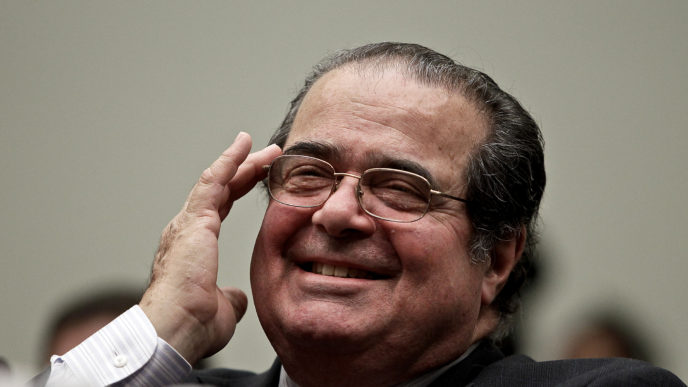
President Donald Trump’s pick for the Supreme Court—Neil M. Gorsuch—is a terrific choice to succeed the late Justice Antonin Scalia.

Heritage Foundation legal scholars and others have noted a number of similarities between the two great judges, and one of them is their sensitivity to issues of overcriminalization.

If confirmed to the bench, Gorsuch would carry on Scalia’s legacy of respect for the rule of law and his keen awareness of how federal criminal law has been misused to punish Americans for minor mistakes that don’t warrant federal prosecution.

Here is some direct evidence.

Undersized Fish, Oversized Federal Criminal Code

Most fishermen can spin a yarn, but in 2007, Florida fisherman John Yates probably never imagined that tossing undersized fish overboard to avoid a citation would bring him before the United States Supreme Court.

Much less, he never expected he would be fighting a maximum 20-year federal prison sentence for allegedly violating the Sarbanes-Oxley Act.

Congress enacted that statute after the Enron fiasco to prevent auditors from destroying corporate records that may contain evidence of crime, thereby obstructing federal investigations.

At oral argument, Scalia balked at the absurdity of Yates’ predicament. He made clear that twisting fairly trivial misconduct already banned by state law into a major federal felony offense is unwise, to say the least.

“This captain is throwing a fish overboard,” said Scalia. “He could have gotten 20 years … What kind of a mad prosecutor would try to send this guy up for 20 years?”

Scalia said that he would be cautious about “how much coverage I give to severe statutes” if prosecutors could stretch them beyond their breaking point.

Justice Elena Kagan wrote in her dissenting opinion that Yates’ case spotlights “overcriminalization and excessive punishment in the U. S. Code,” resulting from an excess of “bad law—too broad and undifferentiated, with too-high maximum penalties, which give prosecutors too much leverage and sentencers too much discretion.”

Kagan called the situation “not an outlier, but an emblem of a deeper pathology in the federal criminal code.”

Gorsuch and Scalia in Lockstep

In one of Scalia’s many pithy dissents—this one in Sykes v. United States (2011), ruling that Indiana’s felony vehicle flight offense counts toward the Armed Career Criminal Act’s sentencing scheme—he directly addressed the legislature’s role in overcriminalization:

We face a Congress that puts forth an ever-increasing volume of laws in general, and of criminal laws in particular. It should be no surprise that as the volume increases, so do the number of imprecise laws. And no surprise that our indulgence of imprecisions that violate the Constitution encourages imprecisions that violate the Constitution. Fuzzy, leave-the-details-to-be-sorted-out-by-the-courts legislation is attractive to the Congressman who wants credit for addressing a national problem but does not have the time (or perhaps the votes) to grapple with the nitty-gritty. In the field of criminal law, at least, it is time to call a halt.

Gorsuch matches not only Scalia’s respect for the principle that judges are not empowered to rewrite or repeal law as they see fit, but also Scalia’s aversion to ramping relatively minor state offenses into major federal prosecutions, or otherwise turning innocent conduct into a crime.

And Gorsuch matches Scalia’s wit, too, especially when it comes to issues of overcriminalization.

In a 2013 lecture titled “Law’s Irony,” published in the Harvard Journal of Law and Public Policy, Gorsuch wrote that today’s criminal justice system “bears its share of ironies.”

He noted that “today we have about 5,000 federal criminal statutes on the books, most of them added in the last few decades, and the spigot keeps pouring, with literally hundreds of new statutory crimes inked every single year.”

And that does not “begin to count the thousands of additional regulatory crimes buried in the federal register,” said Gorsuch. “There are so many crimes cowled in the numbing fine print of those pages that scholars have given up counting and are now debating their number.”

He cited a few examples:

While then-Sen. Joe Biden, D-Del., “worried that we have assumed a tendency to federalize ‘everything that walks, talks, and moves,’” Gorsuch noted that “we should say ‘hoots’ too, because it’s now a federal crime to misuse the likeness of Woodsy the Owl … ”

“Businessmen who import lobster tails in plastic bags rather than cardboard boxes can be brought up on charges.”

“Mattress sellers who remove that little tag? Yes, they’re probably federal criminals too.”
Gorsuch summed up the problem: “Whether because of public choice problems or otherwise there appears to be a ratchet, relentlessly clicking away, always in the direction of more, never fewer, federal criminal laws.”

He asks, “What happens to individual freedom and equality when the criminal law comes to cover so many facets of daily life that prosecutors can almost choose their targets with impunity?”

Warnings From History

Digging into America’s common law history, Gorsuch explained that the “excesses of executive authority invited by too few written laws led to the rebellion against King John and the sealing of the Magna Carta, one of the great advances in the rule of law.”

Looking further into the history of criminal law, Gorsuch noted how “history bears warning that too much—and too much inaccessible—law can lead to executive excess as well. [The Roman emperor] Caligula sought to protect his authority by publishing the law in a hand so small and posted so high that no one could really be sure what was and wasn’t forbidden.”

The American framers were well aware of this history.

“[James] Madison warned that when laws become just a paper blizzard citizens are left unable to know ‘what the law is’ and to conform their conduct to it”—and Gorsuch warns today that either “too much or too little can impair liberty.”

Scalia’s forceful dissent in Sykes v. United States provides some insight into how today’s bloated federal criminal code imperils liberty. Heritage legal scholars and many others have written extensively on the pitfalls, perils, and paths away from overcriminalization.

But as Gorsuch continues in his lecture, “The fact is, the law can be a messy, human business.”

Like Scalia, however, Gorsuch would look to “careful application of the law’s existing premises,” rather than his view on what the law should be, to resolve contemporary social problems.

For that and many other reasons, Gorsuch and Scalia are of like minds.

Both demonstrated respect for the constitutional right to life and the death penalty as punishment for a capital offense, for example. Both are devoted textualists whose opinions reject legislating from the bench.

And Gorsuch would continue Scalia’s legacy on many issues of criminal law—including a sharp, conservative skepticism of the federal government’s ever-increasing expansion of criminal liability. (For more from the author of “One Way Neil Gorsuch Will Carry Scalia’s Legacy on the Supreme Court” please click HERE)

Follow Joe Miller on Twitter HERE and Facebook HERE.