‘Where’s Your Little Arm?’: Abortionists Can’t Hide Behind the ‘Clump of Cells’ Line Anymore

Planned Parenthood’s abortion providers know full and well they’re not removing just a “clump of cells.” That’s the clear verdict from two former clinic managers in new video interviews posted last week.

Sue Thayer and Marianne Anderon shared their first-hand experience of watching abortion providers for Planned Parenthood dismember then reassemble the so-called “products of conception” following the procedure, to make sure they “got everything.” The women spoke with Live Action about what they witnessed, and how Planned Parenthood knows they’re killing babies.

Thayer described what happened to babies after the abortion — a gruesome process of rinsing and sorting baby body parts. After putting the parts in a glass jar on a shelf under a light, “You kind of piece it back together and try to see if you got all the parts” she explained. She recalled standing over the aborted baby and asking, “Why are there three arms? …The gal training me said, ‘Twins, it was twins.’” When Thayer asked whether they told moms about twins, her trainer said, “No, it usually just upsets them.”

Following the sorting, the aborted babies were “flushed” down a sink into the city’s septic system, Thayer said. “I just remember standing there thinking, ‘All those babies are in the Des Moines sewer system.’”

Talking to the Baby Parts

It is clear, when looking at the so-called “products of conception” after an abortion, that it is a human baby with arms, legs, a head and other recognizable parts — not a clump of cells. Nurse Marianne Anderson said she witnessed abortionists talking to the baby body parts and excitedly putting pieces of the baby back together like a jigsaw puzzle.

“There was one doctor that would sit there and he would sometimes talk to this,” said Anderson. “I’ll never forget him saying, ‘Now, where’s your little arm? I didn’t see your — I’m missing this arm,’ and he would sift through it trying to find the pieces. And then I remember him saying, ‘Oh there you are, now where’s the head?’”

Another abortionist asked for a special light to illuminate the body pieces, Anderson recalled, and he seemed particularly excited when he was able to put the baby back together. “He really seemed to get into it,” she said. “I’ll never forget the first day he was there. He goes, ‘Look at this! This is so cool!’” He would describe how he could see blood vessels and other intricate body parts.

Masking the Truth to Mothers

The line about the pregnancy being a “clump of cells” is a way for Planned Parenthood to mask the truth to the mother, much in the same way that preventing the mother from viewing the ultrasound prior to the abortion is a way to keep her from seeing life in her womb, said Abby Johnson, former executive director for a Planned Parenthood clinic.

Johnson told Mike Huckabee in an interview how she assisted an ultrasound-guided abortion and saw the profile of a baby — face, arms, legs, tummy — and recognized life. The baby tried to get away from the doctor’s probe — fighting for its life — before it crumbled in front of her eyes. She dropped the ultrasound probe in shock. It was the last abortion she attended and she quit shortly thereafter. “I can’t help but believe if [moms] saw that they might be running out of those clinics,” said Huckabee.

From false euphemisms to turning an ultrasound away from the mother (or fighting legislation requiring one prior to an abortion), Planned Parenthood goes to great lengths to keep women in the dark on what really happens during an abortion. But it’s clear they know exactly what they are doing — and it isn’t scraping cells.

See the Live Action interviews below:

(For more from the author of “‘Where’s Your Little Arm?’: Abortionists Can’t Hide Behind the ‘Clump of Cells’ Line Anymore” please click HERE)

Follow Joe Miller on Twitter HERE and Facebook HERE.

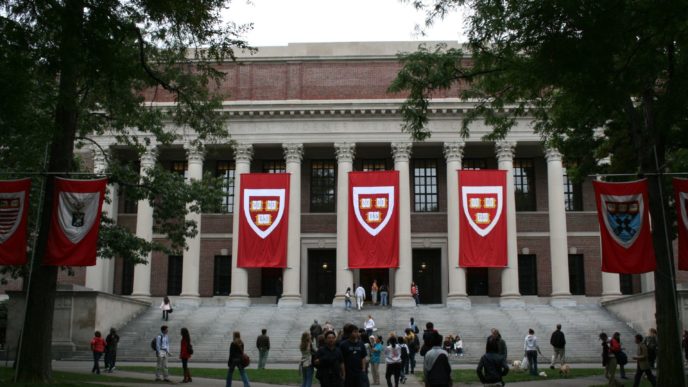
Harvard Tries to Shield Students From Conservative News Sites They Label ‘Fake’ or ‘Biased’

For a prestigious ivy-league school with Christian roots, Harvard is shrugging off its original identity as quickly as its motto changed from “Truth for Christ and Church” (Veritas pro Christo et Ecclesia) to just “Truth” (Veritas). But even that’s in question these days.

The Harvard Library recently posted a list of ways to avoid “Fake News, Misinformation, and Propaganda” and attached a list of suspect websites, but there’s just one problem: some of the news sites they reference are conservative — many of them are quite reputable, which leads some to speculate that Harvard wants to keep students liberal.

In addition to common-sense warnings, such as keeping an eye out for sloppy or unprofessional design, the library suggests that, if you are in doubt about whether a news site is real or fake, “Ask a Librarian.” As helpful as that may sound, librarians are not news analysts. Their job is to help students locate information — not discern good from bad or even fake from real.

Thomas Lifson, Harvard alum, faculty member and officer had this to say:

I am sorry, but this is dangerous nonsense. I was grateful for the help that the staffs of several Harvard libraries (there are dozens of libraries at Harvard) gave me in my years there. They knew what their collections contained and how to get a hold of even the most obscure items. But they always knew they were in a service role, not in the role of determining what sources I should rely on. That was my job!

Lifson went on to say that it’s just one more example of liberal activists trying to keep young minds from being exposed to anything but the liberal agenda. The youth of Harvard are not to be trusted to make up their minds about what is accurate news reporting, he said. “Harvard librarians … find certain viewpoints dangerous, and want to make sure that youngsters are warned away from viewpoints dissenting from liberal orthodoxy.”

The full list contains 916 websites, including reputable sites like Breakpoint.org, Breitbart.org, Christianpost.com, Lifesitenews.com, the Blaze.com and many others. It does not contain liberal news sites. (For more from the author of “Harvard Tries to Shield Students From Conservative News Sites They Label ‘Fake’ or ‘Biased'” please click HERE)

Follow Joe Miller on Twitter HERE and Facebook HERE.

Personhood Rights for Needy Chimps but Not Baby Humans

Isn’t it ironic that the very people who would oppose the pro-life, Personhood Bill, which provides “that human life shall be deemed to begin with fertilization,” are the same ones who would advocate for the “personhood” rights of animals?

I was reminded of this today while reading a column in the Daily Mail that announced that animal rights lawyer Steve Wise “will argue chimpanzees should have personhood rights in front of Manhattan appellate division of New York’s Supreme Court.”

According to Wise, “A ‘person’ is the law’s way of saying that entity has the capacity for rights. A ‘thing,’ which chimpanzees are now, don’t have capacity for any kind of rights. To treat them as things destroys them.”

Now, I don’t know anything about Wise or the advocacy group he founded (it’s called the Nonhuman Rights Project), but if my past experience is correct here, Wise would not likely be a supporter of the Republican-sponsored Personhood Bill, since, as a general rule, the more staunchly someone supports animal rights, the more likely they are to be pro-abortion.

Compassion for Furry Creatures

How can this be? And how is it that people who are so moved to compassion when it comes to our furry friends can be so hard-hearted when it comes to their tiny, precious, still-in-the-womb, fellow-humans? And why is this often the case with radical environmentalists as well? Why are tree-huggers so often baby-aborters? (In the words of Kirk Walden’s October 14, 2016, op-ed piece on LifeSite News, “Radical Environmentalists: Save the Earth, Abort Babies.”)

Writing for the Chronicle of Higher Education on March 13, 2016, Sherry F. Colb and Michael C. Dorf, both law professors asked, “How can someone who condemns animal farming, hunting, and experimentation favor a right to abortion?”

Conversely, they wondered how pro-lifers could “eat and use the flesh, skin, and secretions of feeling creatures like cows, pigs, and chickens whose lives were filled with unspeakable suffering, ended only by horrific deaths?”

For Colb and Dorf, abortion is justified while meat-eating is not, because the baby in the womb is not sentient whereas animals are sentient, and anything that causes unnecessary pain for an animal is not justifiable. (Their article was released in conjunction with their book, Beating Hearts: Abortion and Animal Rights.)

Ligia De Jesus Castaldi responded to Colb and Dorf on November 29, 2016, noting that their book, “ends by applauding the extravagant proposal that domestic animals should be granted citizenship rights (with some limitations) and other animals be granted an alternative legal status, including territorial sovereignty for wild animals.”

And she notes that,

Ultimately, the authors do not make any new arguments for abortion rights, and they fail to make a logical or persuasive case for the compatibility of animal rights and abortion rights advocacy. What the book mostly does is expose the inherent contradictions of the pro-choice animal rights position. Sadly, the book also illustrates the extent to which abortion rights dogma can obscure human reason and harden the human heart to the point that the same person who feels empathy and sensitivity for animal suffering can utterly lack compassion for the lethal violence and excruciating pain that unborn children experience when their lives are ended in the womb.

Rejection of a Creator God

And what is the root cause of this confusion? It is, in short, the rejection of a Creator God, because of which human beings are not recognized as being created in His image — and therefore of intrinsic value, no matter how small or weak or handicapped or aged — and animals and the earth are not recognized as having been created by God for human beings.

Of course, one can worship the Creator and be pro-life as well as oppose animal cruelty and be an ardent environmentalist, since there is no contradiction between those positions. In fact, it makes sense that these positions would go hand in hand, since the principles of kindness, compassion, and good stewardship are some of the essential characteristics that define our God-given humanity. (By opposing animal cruelty and being an ardent environmentalist, however, I don’t mean embracing the extreme positions of those respective groups.)

But when God is left out of the picture, “compassion” can take the form of euthanizing a depressed adult or of terminating an unwanted pregnancy just as easily as it can take the form of opposing the consumption of meat or fighting against chopping down a tree. And since human beings are just another evolved species, just as a badly injured horse is put down, a handicapped fetus can be put down. Why not?

I asked on Twitter, “Can someone tell me why the most radical animal rights activists are often militantly pro-abortion?”

One of my Twitter followers named Royce responded, “I think that was probably a rhetorical question but the answer is clearly worshipping the Creature rather than the Creator.”

Precisely so.

A few decades ago, some representatives for the radical-left Greenpeace organization came through the neighborhood of one of my good Christian friends, asking him if he would like to donate money to have save the baby whales.

He replied that he was much more interested in saving the baby humans, and the Greenpeace rep turned away instantly and left in a huff.

Is anyone surprised? (For more from the author of “Personhood Rights for Needy Chimps but Not Baby Humans” please click HERE)

Follow Joe Miller on Twitter HERE and Facebook HERE.

Listen: President Trump Is Not Safe in the White House

In this episode, I address the disastrous security failure at the White House this weekend and what can be done to ensure it doesn’t happen again.

I also discuss the Trump budget and the reasons liberals, and interest groups, are fighting it.

(For more from the author of “Listen: President Trump Is Not Safe in the White House” please click HERE)

Follow Joe Miller on Twitter HERE and Facebook HERE.

Poland Confirms Minnesota Man as Nazi Commander

Poland will seek the arrest and extradition of a Minnesota man exposed by The Associated Press as a former commander in an SS-led unit that burned Polish villages and killed civilians in World War II, prosecutors said Monday.

Prosecutor Robert Janicki said evidence gathered over years of investigation into U.S. citizen Michael K. confirmed “100 percent” that he was a commander of a unit in the SS-led Ukrainian Self Defense Legion.

He did not release the last name in line with privacy laws but the AP has identified the man as 98-year-old Michael Karkoc, from Minneapolis. (Read more from “Poland Confirms Minnesota Man as Nazi Commander” HERE)

Follow Joe Miller on Twitter HERE and Facebook HERE.

Trump Meets With Obamacare ‘Victims’

On Monday, President Donald Trump met with Americans described by the White House as “victims” of Obamacare to hear their stories.

In what the administration called a “listening session,” Trump referred to the Affordable Care Act as the “very, very failed and failing Obamacare law” as he heard from citizens in the Roosevelt Room who have had negative experiences with the health care law, according to the White House press pool.

“We paid $8,000 for five months and were never able to use it,” Georgia woman Brittany Ivey told Trump.

Ivey, who said she left her full-time job in 2009 to focus on her children, claimed she had a family plan for four that went up by 102 percent. After she lost insurance that had been provided by her husband’s employer, Ivey said she looked for a new job with health care benefits but was unable to find employment that would have provided insurance.

According to Ivey, the family had to purchase Obamacare coverage, which resulted in the loss of their preferred doctors.

Louis Brown, a Virginia resident and a former Democratic National Committee staffer, said, “[People should be] at the center of our American health care system, not the government.”

Brown said that he worked for the DNC during the early stages of Obamacare, but added he quit the job due to his pro-life stance. He said he supported Trump in the presidential election.

Carrie Couey, a cattle rancher from Colorado, said that the health care costs associated with Obamacare affected her family so much that it put her food source at risk.

“We can’t afford our [ranching] equipment if we’re paying these rates year, after year, after year. Our food source is in jeopardy because of this health care law,” Couey said.

Elias Seife, a second-generation immigrant from Cuba living in Florida, said he had his individual plan canceled.

Seife mentioned his parents, who came to America from a communist society, as living testaments against Obamacare, saying, “They know what socialism is all about. I know what socialism is … and this whole system was meant to have one single provider.”

Robin Armstrong, a doctor from Texas, said many of his patients are not sufficiently insured under Obamacare, as they are affected by expensive premiums and deductibles.

Armstrong said he likes the new American Health Care Act, the Obamacare replacement proposed by House Republicans, saying, “I actually read the bill that’s been produced, that’s coming out of the House now and I really like a lot of the changes in it. I think this is going to correct a lot of issues that Obamacare has had.”

The president voiced his opposition to the media’s coverage of Obamacare, claiming that the press is attempting to cover up the health care law’s downfalls to make it “look so good.”

“First of all, it covers very few people and it’s imploding. And [2017] will be the worst year,” Trump said.

Trump attributed Obamacare’s favorable media coverage to nostalgia, claiming the law is similar to President Barack Obama in appearing better now than it actually is.

“It’s a little bit like President Obama. When he left, people liked him. When he was here, people didn’t like him so much. That’s the way life goes. That’s human nature,” he said.

Trump concluded his remarks by calling Obamacare a “horrible thing.” (For more from the author of “Trump Meets With Obamacare ‘Victims'” please click HERE)

Follow Joe Miller on Twitter HERE and Facebook HERE.

The Legal Questions Facing Trump’s New Travel Ban

With his revised temporary travel ban, President Donald Trump sought to resolve legal questions that caused a federal judge to halt the first version of the executive order.

Legal experts say the Trump administration succeeded in strengthening the legal case for the new order by applying travel restrictions to fewer people—exempting entire classes of individuals, including legal permanent residents—and providing a more detailed rationale for the policy.

However, Trump’s order, issued last Monday, remains vulnerable to challengers who argue the travel ban is an extension of a “Muslim ban” that the president promised during the campaign, and a violation of the First Amendment’s protection against religious discrimination.

“If this exact order had been issued by a different president without the context with which the order was issued, it’s a 100 percent certainty the order would be upheld in a court,” said Leon Fresco, the former head of the Department of Justice’s Office of Immigration Litigation, in an interview with The Daily Signal.

The new executive order bars entry to foreigners for 90 days from six terrorism-plagued, Muslim-majority countries who have never before entered America. It also suspends for 120 days resettlement to the U.S. of refugees from anywhere in the world. Syrian refugees are no longer subject to an indefinite ban, as they were in Trump’s first order.

The 90-day travel restriction applies to Iran, Syria, Somalia, Sudan, Yemen, and Libya, countries contained in Trump’s original order that the Obama administration and Congress had designated as posing risks of terrorism. Trump removed Iraq—a crucial counterterrorism partner—from that list in the new order.

Hawaii was the first state to sue over the new order, and a hearing in that case is scheduled for Wednesday. A federal judge in Maryland will also hear arguments on that day in a separate lawsuit over the ban.

Meanwhile, some of the states that helped block Trump’s original travel ban are already mounting challenges to the second one. Backed by several fellow Democratic attorneys general, Bob Ferguson of Washington asked the same federal district judge who issued a temporary restraining order on the original ban, James Robart, to extend that freeze and apply it to the updated restrictions.

With the new order set to take effect Thursday unless a court intervenes, The Daily Signal explores some of the legal questions surrounding the case.

Who Can Sue?

The new order sharply limits the types of people subject to the temporary travel ban.

Unlike the first order, the new one explicitly excludes lawful permanent residents of the U.S.

Others exempted from the travel restrictions include dual nationals of the six targeted countries who use a passport from another country not on the list, foreigners traveling for diplomatic purposes, and individuals who have already been granted asylum or refu­gee status.

In addition, the order contains a list of people who can be granted exemptions to the restrictions on a case-to-case basis, including when a “foreign national seeks to enter the United States to visit or reside with a close family member,” and instances where a foreigner previously admitted to the U.S.—such as college students or faculty—leaves the country and seeks to return.

“Who is left over?” writes Josh Blackman, a professor at the South Texas College of Law in Houston, in a recent blog post. “Aliens from these six nations who have never entered the United States, have no relatives in the United States, and have never received any travel document from the United States. The category of aliens who are actually excluded, and who would actually seek to visit the United States is likely small. No court has ever held that aliens that are seeking entry, who have zero connection to the United States, or its residents, have due process rights.”

Experts say because fewer people are affected by the new travel ban, it will be more difficult for challengers to the policy to find plaintiffs who have legal standing to sue.

“The best argument against the order is gone—that you are taking away people’s rights who had previously been admitted into the country without consideration of due process,” Fresco said. “That is gone now. Now you have the question of whether new people with no ties to the U.S. are permitted to enter here, and that has always been more tenuous legal ground to be on.”

Blackman speculates that those who assert a compelling interest to travel to the U.S. could try to sue. On his blog, he lists two such examples as a student in Syria who seeks to pursue a degree at the University of Washington, or an Iranian engineer who wants to work at Microsoft.

In a case out of Wisconsin, a man who fled Syria and was granted asylum in the U.S. sued so that the ban would not be applied to his wife and 3-year-old daughter, who are still in war-torn Aleppo and have asylum applications being processed. This past weekend, a federal judge in Wisconsin blocked enforcement of the policy against the Syrian man’s family.

“The court appreciates that there may be important differences between the original executive order, and the revised executive order—for example, the government points to a new waiver provision,” Judge William M. Conley wrote. “As the order applies to the plaintiff here, however, the court finds his claims have at least some chance of prevailing for the reasons articulated by other courts.”

Questions of Intent

Washington and Hawaii are claiming the new order, like the original version, is equivalent to a Muslim ban that Trump proposed in the campaign.

Opponents also point to statements by Trump’s advisers, including former New York Mayor Rudy Giuliani, who said Trump asked him how to implement a Muslim ban legally, and more recently, Stephen Miller, a senior White House adviser who said the revised order was meant to have “the same basic policy outcome” as the first.

The Trump administration rejects charges of religious intent, noting that most Muslim-majority countries were not included in the order. The new order contains no reference to religion, and removes a clause from the original version that would have granted preference to foreign travelers who belong to minority religious groups.

“Is it really possible that if the government says something once, it is prohibited in doing any policy moving forward on this subject?” Fresco said. “No one has won a case like that.”

However, Fresco and Blackman concede this argument is a powerful one, and they could envision at least one court that views Trump’s and his team’s previous comments as relevant to the new order, and tantamount to discriminating against Muslims.

“If a court believes this policy will forever be infected by the previous comments then there is absolutely nothing the government can do to ever eliminate that,” Blackman told The Daily Signal in an interview. “Then we are just wasting our time here and they will strike it down.”

Judging the Order’s Content

Legal experts say in the face of questions over religious intent, courts are more likely to view the order favorably if the government can prove why the policy is necessary.

The courts usually defer to the executive branch on issues of national security and immigration policy. Federal immigration law states that if the president finds “the entry of any aliens” would be “detrimental” to the country’s interests, he can impose restrictions.

But courts could impose stricter scrutiny over Trump’s order, considering the context under which he issued it.

“The question is, does the content of the order do enough to dispel a presumption that religious discrimination is the motive, or does it do things to confirm it?” said Richard Primus, a constitutional law professor at the University of Michigan, in an interview with The Daily Signal.

“The normal way a court answers that question is in part by asking is the content of the government action well tailored to the problem the government says it is trying to solve,” Primus added. “The less tailored it is, the more the decision-maker expects that the problem the defendant says they are trying to solve isn’t really what they are trying to solve.”

The Trump administration has argued the travel ban is necessary for national security reasons, and that the targeted countries are dangerous hotbeds of terrorism.

In making the case for the policy, the revised order contains a clause noting about 300 pending FBI counterterror investigations involve individuals who came to the U.S. as refugees, although it doesn’t specify how many came from the targeted countries.

Critics of Trump’s order counter that none of the recent terrorist attacks in the U.S.—from San Bernardino to Orlando—were perpetrated by anyone from the nations listed in the travel ban.

“The new executive order is certainly much more robust in explaining why the president thought he is justified in temporarily stopping immigration from those six countries,” said Stephen Yale-Loehr, an immigration law professor at Cornell Law School, in an interview with The Daily Signal.

“He can be criticized for why he picked those six countries, and not others, but the standard of review in most immigration cases is very low, sometimes even below a rational basis test,” Yale-Loehr added. “As long as the president has a bonafide, legitimate reason for whatever he does, the courts often say that’s good enough. In some cases, courts also have been deferential to presidents even when First Amendment issues have been raised.”

Blackman says the administration in its new order changes how it argues for the policy in a way that may make it tougher for courts to reject.

“The old order said we need a temporary pause because aliens from these countries will come to the U.S. and engage in acts of terror, when very few have actually done this,” Blackman said. “The new order makes a different point, which is we don’t have good diplomatic relations with these countries, and these countries are not providing accurate information of its citizens for the U.S. to bet on. That’s a very different point and a lot harder for the court to ignore.” (For more from the author of “The Legal Questions Facing Trump’s New Travel Ban” please click HERE)

Follow Joe Miller on Twitter HERE and Facebook HERE.

How San Francisco Is Letting Its Guard Down on Terrorism

Last week, the city of San Francisco announced that it is suspending its involvement in the Joint Terrorism Task Force—the primary mechanism for counterterrorism cooperation among law enforcement.

This task force has allowed the law enforcement community to stop terror plots such as the 2015 plot to attack a public venue in North Carolina with a rifle, the plot by a radicalized former member of the National Guard to attack military personnel in 2016, and most recently, a plot to blow up a train station in Missouri with pipe bombs at the beginning of this year.

A Joint Terrorism Task Force is made up of multiple law enforcement agencies, spanning local and federal organizations. Most formed after 9/11, and there are currently over 100 task forces based in cities across the United States that help coordinate investigations among law enforcement to ensure that terrorists are uncovered before they strike.

Communication between law enforcement agencies is vital to the fight against terrorism. With the decision to suspend its cooperation with the Joint Terrorism Task Force, the city of San Francisco has created an opportunity for information that is vital to potentially stopping terrorism to slip through the cracks.

Without an organized communication line open between law enforcement agencies, the danger becomes that investigations into suspected terror organizations will stall for lack of evidence that may in fact be held by another agency, or that investigations will not be opened at all.

When agencies are not fully communicating and sharing information, some pieces of information that would stand out to one law enforcement agency may be viewed as irrelevant or inconsequential by another agency that doesn’t have the same background information.

The suspension of San Francisco’s involvement in the Joint Terrorism Task Force does not mean that all information sharing between law enforcement agencies will come to a screeching halt. Agencies will still have the opportunity to work together, but without the same level of organization.

The problem is that this ad hoc arrangement requires far more effort to make sure all the various partners are on the same page, and it makes information sharing and cooperation vulnerable to mistakes, delays, and forgetfulness.

Law enforcement officers are busy enough with their day-to-day responsibilities keeping us safe. We shouldn’t be making their jobs harder.

The potential for mistakes makes San Francisco’s suspension of the Joint Terrorism Task Force an unwise decision that leaves its residents less safe. The best course of action for the city of San Francisco is to reinstate its cooperation with the task force as quickly as possible.

Of course, the relationship between Joint Terrorism Task Forces, the FBI, and local law enforcement isn’t perfect. While local law enforcement has increasingly done a better job sharing information with the FBI through tools like the Joint Terrorism Task Force, the FBI needs to continue to improve the information that it shares with state and local partners.

The priority of the law enforcement agencies is to protect the American people, and sharing information even without a Joint Terrorism Task Force is a vital part of ensuring the safety of American citizens. (For more from the author of “How San Francisco Is Letting Its Guard Down on Terrorism” please click HERE)

Follow Joe Miller on Twitter HERE and Facebook HERE.

Obamacare Replacement Bill Would Reduce Number Insured as Well as Deficits, CBO Says

The Obamacare replacement plan offered by House Republican leadership eventually would lower health insurance premiums and reduce federal budget deficits, although 24 million Americans no longer would have coverage, the Congressional Budget Office says.

In a report estimating the cost of the plan, released late Monday, the CBO projects the American Health Care Act would reduce budget deficits by $337 billion from 2017 to 2026.

About 14 million more Americans would not have health insurance if the House bill is enacted, compared with how many have it now under Obamacare, the report says. A total of 24 million more would be uninsured by 2026.

CBO’s “scoring” of the costs of the Obamacare replacement plan cleared it of one hurdle: Under the budget tool Republicans are using to pass the bill, called reconciliation, the legislation must save the government at least $2 billion over 10 years.

Under reconciliation, it takes only 51 votes for a bill to clear the Senate, rather than the 60 votes normally needed to end debate and proceed to a floor vote. Republicans have 52 seats in the Senate, and Democrats appear determined to defend former President Barack Obama’s signature legislative achievement.

By curbing the expansion of eligibility for Medicaid under Obamacare, the CBO report says, House Republicans’ plan–which so far has President Donald Trump’s backing–would decrease spending by $880 billion from 2017 to 2026:

[The] reduction would stem primarily from lower enrollment throughout the period, culminating in 14 million fewer Medicaid enrollees by 2026, a reduction of about 17 percent relative to the number under current law.

CBO notes that the drop in number of Americans covered would come in large part from removing Obamacare’s “individual mandate” that all Americans buy health insurance:

Most of that increase [in uninsured persons] would stem from repealing the penalties associated with the individual mandate. Some of those people would choose not to have insurance because they chose to be covered by insurance under current law only to avoid paying the penalties, and some people would forgo insurance in response to higher premiums.

By 2026, CBO estimates, approximately 52 million people would be uninsured, versus 28 million who would be without health insurance under Obamacare.

Insurance premiums in the individual market would increase by 15 percent to 20 percent in 2018 and 2019, the report says. The cause: The bill would eliminate penalties for not obtaining insurance, so more healthy people will choose not to buy it.

However, the report found that by 2026, premiums would be 10 percent lower than they currently are under Obamacare:

Under the legislation, insurers would be allowed to generally charge five times more for older enrollees than younger ones rather than three times more as under current law, substantially reducing premiums for young adults and substantially raising premiums for older people.

Under Obamacare, monthly premiums are expected to increase by an average of 25 percent from 2016 to 2017.

Addressing concerns that the Obamacare replacement plan would not cover as many Americans as Obamacare does, House Speaker Paul Ryan, R-Wis., said that is the price of not mandating coverage.

“The one thing I’m certain will happen is CBO will say, ‘Well, gosh. Not as many people will get coverage,’” Ryan said Sunday on CBS’ “Face the Nation.”

“You know why? Because this isn’t a government mandate,” Ryan said. “This is not the government that makes you buy what we say you should buy, and therefore the government thinks you’re all going to buy it.”

Without the mandate on individuals and employers, Ryan said, it is no surprise that some will lose coverage.

The Congressional Budget Office, part of the legislative branch, provides budget and economic information to Congress as its “scorekeeper” on spending and revenue.

As usual, CBO notes that its scores are cost estimates “intended to ensure that when the House and Senate consider legislation recommended by committees, members have information about the budgetary consequences of enacting that legislation that can be used to enforce budgetary rules or targets.”

In a graphic, The Wall Street Journal used the CBO numbers to show how the number of Americans without coverage would increase sharply under the Republican plan:

Health and Human Services Secretary Tom Price quickly took issue with the numbers, a CNN reporter tweeted.

Senate Minority Leader Chuck Schumer, D-N.Y., tweeted that the Republican plan would cause “serious harm” to Americans.

But Ryan praised the CBO report, saying it showed the GOP leadership’s plan would lower premiums and improve health care.

(For more from the author of “Obamacare Replacement Bill Would Reduce Number Insured as Well as Deficits, CBO Says” please click HERE)

Follow Joe Miller on Twitter HERE and Facebook HERE.
US Authorities Are Refusing to Reveal What Led to Death of Russian Ambassador to the UN

New York City officials, wishing not to be identified and only speaking under the condition of anonymity, revealed the Russian Ambassador to the United Nations (UN), Vitaly Churkin, suffered from a heart attack when he collapsed in his office last month in New York. An autopsy was performed, presumably a result of his diplomatic status, yet the underlying cause of the heart attack is being withheld.

Exactly what caused the ambassador’s death is known, but according to the Associated Press (AP), those who are in the know, aren’t allowed to say. “An autopsy was performed on Churkin last month, but the death required further study. The additional tests had been completed, but Julie Bolcer, a spokeswoman for the city’s medical examiner, said the city’s Law Department told the office not to release any further information ‘to comply with international law and protocol,’” writes the AP.

As The Free Thought Project reported earlier, Churkin was highly critical of his U.S. and U.K. counterparts who preferred escalation of the Syrian conflict over measures which would produce a peaceful resolution to the Middle East’s latest international conflict, which may serve as the stage to World War III. Churkin’s obituary, first reported by The Guardian, indicated the ambassador, “hated the moralising tone of his US, British and French counterparts on the UN security council who, he felt, were not only hypocritical but were playing to the global gallery and aiming to score rhetorical points instead of looking for compromises that could lead to the resolution of differences. This applied particularly to the war in Syria, about which western governments tabled resolutions.”

Churkin was one of 7 Russian diplomats identified by The Free Thought Project who’d died mysteriously since the presidential election of 2016. And while his official cause of death is a heart attack, the factors leading up to it are still shrouded in mystery. Were there any substances in his system which would have caused his death? Was he taking heart medications? Who would have wanted he and the other six diplomats dead? These questions and more remain unanswered, even as NYC officials, who wish to remain in the dark, are reassuring the Russian official’s death was not a result of foul play.

UN officials are running interference in an apparent attempt explain away whey they’re unable to release the cause of death. James Donovan, minister counselor for host country affairs for the U.S. mission to the United Nations, told the AP in a statement, “The United States insists on the dignified handling of the remains of our diplomatic personnel who pass away abroad (including in Russia) and works to prevent unnecessary disclosures regarding the circumstances of their deaths.” Nonetheless, more questions remain.

The U.S. State Department is also involved in keeping the details of Churkin’s death a closely guarded state secret. The federal agency, “asked the city in writing on Feb. 24 not to reveal the autopsy results because Churkin’s diplomatic immunity survives his death,” writes the AP.

Later on March 1, the State Department sent another letter to the city revealing Russian officials were very concerned with the proceedings of the autopsy and subsequent discussions with the media about Churkin’s medical history, something they should not have done. Even Donovan penned a letter to NYC Mayor Bill de Blasio’s office of International Affairs, expressing concern over the city’s discussions of Churkin’s medical history.

For those seeking fodder for conspiracy theories, it must be noted that Churkin was a member of the UN Security Council. It consists of “China, France, Russian Federation, the United Kingdom, and the United States, and ten non-permanent members elected for two-year terms,” according to the UN website. Discussions at the security council are often heated and contentious. Just two weeks before his death, Churkin made international headlines when he quoted from the US Constitution after being lambasted by a recently appointed member to the council, former South Carolina Governor Nikki Haley.

Haley passionately called for Russia to return Crimea to the Ukraine and promised, “Until Russia and the separatists it supports respect Ukraine’s sovereignty and territorial integrity, this crisis will continue.” After the meeting adjourned, Churkin told reporters, “In this regard, one cannot forget the remarkable historical words that are found in the constitution of the United States: ‘We the people’…The people of Crimea quite clearly expressed their will in a referendum.” Not shrinking away from cries for Russia to leave the Ukraine and return Crimea to the sovereign country, Churkin told reporters the UK should first return the Malvinas islands which are claimed by Argentina, Gibraltar claimed by the Spanish, and the “annexed part of Cyprus which you turned into a huge military base.” (For more from the author of “US Authorities Are Refusing to Reveal What Led to Death of Russian Ambassador to the UN” please click HERE)

Follow Joe Miller on Twitter HERE and Facebook HERE.