Massive Oil Discovery in Alaska Is Biggest Onshore Find in 30 Years

Some 1.2 billion barrels of oil have been discovered in Alaska, marking the biggest onshore discovery in the U.S. in three decades.

The massive find of conventional oil on state land could bring relief to budget pains in Alaska brought on by slumping production in the state and the crash in oil prices.

The new discovery was made in just the past few days in Alaska’s North Slope, which was previously viewed as an aging oil basin . . .

The discovery is 20 miles south of where the two companies have already found oil in a project known as Pikka. That northern project is already in early development and is 51% owned by Armstrong, which is the operator on both developments. (Read more from “Massive Oil Discovery in Alaska Is Biggest Onshore Find in 30 Years” HERE)

Follow Joe Miller on Twitter HERE and Facebook HERE.

Report: Iranian Sleeper Cells Operating in U.S.

American intelligence agencies have growing evidence that the Iranian-backed Hezbollah terrorist group maintains a network of sleeper cells in the United States, according to a new report.

Though Hezbollah has not conducted a major attack on U.S. soil, the group could decide to strike key American sites should U.S.-Iran relations deteriorate substantially, according to the Investigative Project on Terrorism.

“Preparations to combat Islamist terrorism broadly should strongly consider the nuanced and growing Hezbollah threat to U.S. national security,” the report concludes.

Hezbollah or “the Party of God” is based in southern Lebanon and has long served as Iran’s way of Islamizing a formerly Christian country while also stoking the Israeli-Palestinian conflict and periodically launching rockets into northern Israel.

But the organization has other enemies besides Israel and should not be viewed within the narrow scope of the Arab-Israel conflict. (Read more from “Report: Iranian Sleeper Cells Operating in U.S.” HERE)

Follow Joe Miller on Twitter HERE and Facebook HERE.

Trump-Supporting HS Students Protest Pro-Immigration Banner, Get Suspended

A quartet of students at a Grand Rapids, Michigan high school has been suspended after it staged a protest in front of a pro-immigration banner at school.

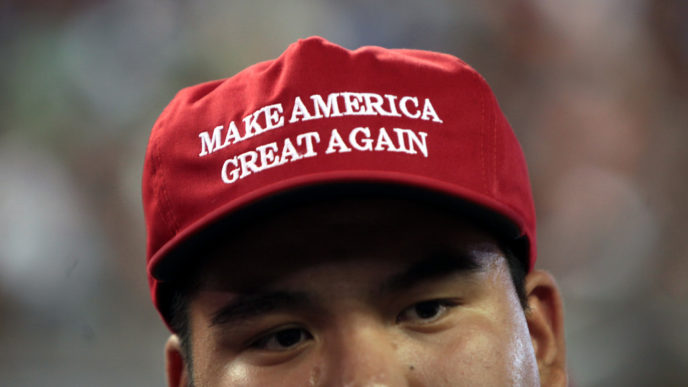
The Grand Rapids Christian High School students intended to hold up their own signs stating “Trump” and “Build the Wall” in front of the banner which read “Immigrants are a Blessing Not a Burden.”

WTSP reports video shows a teacher “rushing over to stop” them when she saw they intended to display their homemade flyers.

In the following report, the protesters do not appear to be belligerent after confronted by the teacher; indeed, the reporter points out that some students merely walking by didn’t even notice what was going on.

Nevertheless, as Superintendent Thomas DeJonge noted in a letter to parents, the student protesters were suspended “because of the disruption they caused and disrespect they demonstrated toward fellow students and staff.” (Read more from “Trump-Supporting HS Students Protest Pro-Immigration Banner, Get Suspended” HERE)

Follow Joe Miller on Twitter HERE and Facebook HERE.

Putin Spokesman: Russian Ambassador Also Met With Clinton Advisors

The spokesman for Russian President Vladimir Putin turned the tables Sunday by saying that the Russian ambassador to the U.S. also met with people connected to Hillary Clinton’s campaign, not just Trump advisers.

Dmitry Peskov, Putin’s spokesman, told CNN GPS host Fareed Zakaria that Russian ambassador Sergey Kislyak met with “people working in think tanks advising Hillary or advising people working for Hillary,” The Hill reports.

Peskov stressed that part of Kislyak’s job entails talking to officials and advisers on both sides of the aisle.

“Well, if you look at some people connected with Hillary Clinton during her campaign, you would probably see that he had lots of meetings of that kind,” Peskov said. “There are lots of specialists in politology, people working in think tanks advising Hillary or advising people working for Hillary.”

Yet, according to Peskov, none of these meetings constituted an attempt to influence the electoral process. (Read more from “Putin Spokesman: Russian Ambassador Also Met With Clinton Advisors” HERE)

Follow Joe Miller on Twitter HERE and Facebook HERE.

Palestinian Leader, President Trump to Hold First Phone Call

Palestinian President Mahmoud Abbas will speak Friday by telephone with U.S. President Donald Trump in the first contact between the two leaders since Trump took office in January.

Trump’s planned phone call to Abbas was revealed in a White House notice.

Abbas has spent many hours on the phone and in meetings with U.S. presidents and secretaries of state over the past decade but he has been unsuccessful when reaching out to Trump. His office did not comment ahead of the call. (Read more from “Palestinian Leader, President Trump to Hold First Phone Call” HERE)

Follow Joe Miller on Twitter HERE and Facebook HERE.

Which Flag Are These Gay Veterans Fighting For?

Organizers of Boston’s St. Patrick’s Day Parade “reversed course” and said “they would allow a group of gay veterans to march in this year’s parade,” according to a March 11 Associated Press report. “A lawyer for OutVets said late Friday that the group looked forward to ‘marching proudly’ and representing LGBTQ veterans.”

Controversy leading up to the decision to allow the group, OutVets, to march in the parade centered around whether they would be allowed to display the LGBT rainbow symbol. The fight was over their flag.

“Somehow Less”

Bryan Bishop, executive director of OutVets, reportedly said, “It infuriates me to look at the veterans that I know, gay and straight, who have served this country with valor and honor and distinction, and just because you’re a veteran who happens to be gay your service is somehow less than someone who is not of the LGBT community or someone who’s not gay.”

There are serious policy issues surrounding the wisdom of allowing gays and lesbians to serve in the U.S. military. Regardless of those discussions, the fact remains that gay and lesbian women have served in America’s armed forces for a very long time. Some of them actively hid their sexual preferences; some of them under later administrations weren’t asked and didn’t tell. Even more recently, some have been completely open about their sexuality.

Certainly there was nothing stopping gays and lesbians marching as veterans, and being honored as such. For Bishop, however, that would have been dishonoring. Their service would be “somehow less” if they weren’t allowed to represent themselves specifically as gay or lesbian veterans in a St. Patrick’s Day parade.

Two Websites, Two Messages

But veterans of what? It’s instructive to compare OutVets’ website with the website for the National Association for Black Veterans. The NABVETS website features the Stars and Stripes at the top. On the Outvets website there are stars and stripes, too, but divided; the stripes are rainbow strips hung vertically, and the stars are arranged separately.

There isn’t even the suggestion of the American flag in it.

Veterans of What?

And what does it mean to honor a veteran, anyway? For Bryan Bishop, gay and lesbian veterans are “somehow less” if they’re not allowed to march specifically as gay and lesbian veterans. The implication is that they would be less than fully honored if they had to march with straight veterans, that is, as simple veterans rather than as gay veterans.

Which leads me to wonder again, veterans of what? Which flag are they fighting for? Which one do they want to honor? (For more from the author of “Which Flag Are These Gay Veterans Fighting For?” please click HERE)

Follow Joe Miller on Twitter HERE and Facebook HERE.

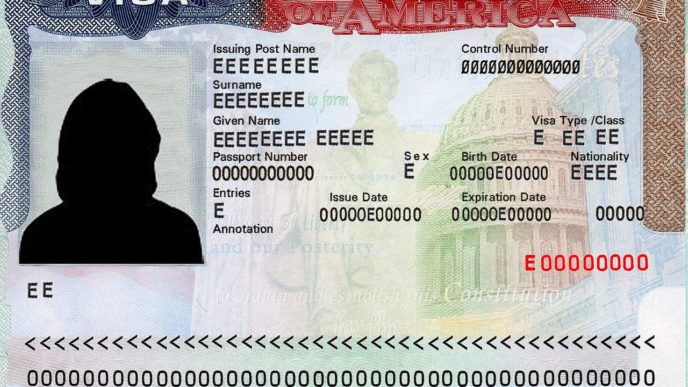
Trump Faces Challenge of Visa Overstays, the Largest Source of Illegal Immigration

As President Donald Trump focuses on border security in his initial actions to counter illegal immigration, a new report shows the unauthorized population increasingly is made up of those who first entered the U.S. legally.

In each year from 2007 to 2014, the report from the Center for Migration Studies finds, more people joined the illegal immigrant population by remaining in the U.S. after their temporary visitor permits expired than by sneaking across the Mexican border.

In 2014, about 4.5 million U.S. residents, or 42 percent of the population of roughly 11 million illegal immigrants, had overstayed their visas, the report says.

Overstays accounted for about two-thirds—66 percent—of those who ended up joining the illegal immigrant population in 2014.

“What’s happened is that popular conception has made it seem that illegal immigration means people coming from the southern border,” Robert Warren, a co-author of the report, said in an interview with The Daily Signal. “One of the reasons we put the report out is that illegal immigration is much more varied and we need to look at different policy options.”

Visa overstays—legal entrants to the U.S. who stay past their allotted time here—long have been the underreported component of illegal immigration.

A report by the Department of Homeland Security found that as of Jan. 4, 2016, a total of 416,500 of the 527,127 overstays in 2015 remained in the U.S. More have left the country since then, the government said.

The Trump administration has referred to visa overstays, but so far has concentrated on fulfilling the president’s campaign promise to build a wall across the southern border.

“There’s this assumption in the Trump administration that the southern border is out of control and people are flooding across it, but we have much better control of the border now than we did in previous decades,” Edward Alden, an immigration and visa policy expert at the Council on Foreign Relations, said in an interview with The Daily Signal. “Whereas this other problem of visa overstays is increasingly becoming out of control.”

‘Shining a Light’

Trump’s revised executive order temporarily banning travel from six terrorism-prone, Muslim-majority countries contains some language related to combating visa overstays.

The president calls for Homeland Security Secretary John Kelly to pursue “expedited completion” of a long-promised and delayed system to obtain biometric data—such as fingerprints, facial recognition images, and eye scans—on those leaving the country. Such a system would tell the government who has left the country, and how many who should have departed are still here.

In 2004, the 9/11 Commission recommended the Department of Homeland Security complete an entry and exit system “as soon as possible,” viewing it as an important national security tool because two of the hijackers on Sept. 11, 2001, had overstayed their visas.

Foreigners who apply to enter the U.S. on a visa are interviewed and photographed and have their fingerprints taken at a consulate overseas before arriving here. But collecting biometric data on those exiting the country is not as easy.

Plagued by financial and logistical challenges, the government has introduced various pilot projects at some airports and land borders, but has struggled to implement a biometric exit system on a large scale.

Trump’s executive order asks Kelly to provide ongoing reports on the progress of an entry-exit system, but it does not impose a concrete timetable for completion.

“For a long time, administrations didn’t take the visa overstay issue seriously,” Mark Krikorian, director of the Center for Immigration Studies, said in an interview with The Daily Signal. “Hopefully with the White House’s light shining on the issue, we will see more progress on the entry-exit system, but it’s the kind of thing that will take a while. It’s a process, not an event like the border wall is.”

The Center for Immigration Studies, which calls for tougher enforcement of immigration laws, supports construction of the wall.

Shift in Behavior

The report from the Center for Migration Studies, which opposes the border wall, concludes that the biggest reason for the shift since 2007 toward more visa overstays, and fewer border-crossers, is the significant drop in illegal arrivals from Mexico in that time frame.

Mexico is the leading country for both overstays and arrivals across the border, representing about 55 percent of the illegal immigrant population, the study says.

But U.S. border apprehensions of Mexicans has fallen sharply, from 809,000 in 2007 to just 230,000 in fiscal year 2014—a level not seen since 1971, according to the Pew Research Center.

Alden, of the Council on Foreign Relations, argues that the trend toward an increasing percent of visa overstays and fewer border apprehensions of Mexicans shows that the Trump administration should not focus on building a wall — especially at a cost estimated to be as high as $25 billion.

“It doesn’t make a lot of sense to be spending most of our money fortifying the part of the border under the best control and ignoring visa overstays, which is getting worse,” Alden said.

But Krikorian counters that the Trump administration can have multiple focuses. He says the deterrent force of a wall is important.

“It’s one thing to say we need more of an emphasis on tracking and prosecuting overstays, and it’s a very different thing to say we shouldn’t bother with the border anymore,” Krikorian said, adding:

Yes, it does cost a great deal of money, and yes, for me, it’s not job No. 1 in a policy sense. But in a broader political sense it sends an important signal that the government is actually serious about illegal immigration control.

Trump’s early clampdown and rhetoric on illegal immigration may be having an impact. Roughly 840 people a day were caught illegally entering the U.S. from Mexico last month, according to Customs and Border Protection, a drop of about 39 percent from January.

“If the wall doesn’t go beyond being a symbol, and it just becomes an excuse to avoid doing those other things—like stopping overstays—than we have a problem,” Krikorian said. “I don’t get that sense from this administration.”

Policy Options

Beyond finishing the biometric entry-exit system, experts say there are quicker ways the Trump administration can tackle visa overstays.

In new memos detailing Trump’s interior enforcement policies on immigration, the Department of Homeland Security says it will broaden the scope of those targeted for deportation. Besides convicted criminals, they will include those charged with a crime or accused of a chargeable offense.

Immigration and Customs Enforcement (ICE), an agency of the Homeland Security Department, already has a team dedicated to pursuing illegal immigrants who overstayed their visas. The Trump administration could use its new deportation priorities to expand the pool of overstays whom immigration officers go after.

“The technology for entry-exit is getting better, so I can understand it’s getting less unrealistic,” said David Inserra, an expert on homeland security at The Heritage Foundation. “But rather than build an expensive list generator telling you who hasn’t left the country, I would rather have more counterterrorism analysts, ICE agents, or any number of things. If you allow ICE agents to do their jobs in a more complete and robust manner, you will inevitably catch more overstays and will encourage less overstays because they see and know they will be removed.”

The government also can take simpler steps to deter visa overstays by emailing reminders to foreigners of their expected departure date, specifying the consequences of not leaving on time.

Many who overstay their visas don’t intend to settle in America, Alden said, and simply don’t know when they have to leave.

“The biometric entry-exit system has been the unreachable holy grail,” Alden said. “But it doesn’t really get at the real problem. The problem is not an identification problem. The question is how do we discourage the act of overstaying a visa in the first place.” (For more from the author of “Trump Faces Challenge of Visa Overstays, the Largest Source of Illegal Immigration” please click HERE)

Follow Joe Miller on Twitter HERE and Facebook HERE.

Suspect in House IT Security Probe Also Had Access to DNC Emails

Imran Awan — the lead suspect in a criminal probe into breaches of House of Representatives information security systems — possessed the password to an iPad used by then-Democratic National Committee Chairperson Debbie Wasserman Schultz when DNC emails were given to Wikileaks, the Daily Caller News Foundation Investigative Group has learned.

Wasserman Schultz resigned the DNC post in the wake of Wikileaks posting damaging internal emails, blaming the scandal on hacking by Russians.

Imran and his family members, all of whom worked as IT professionals for members of Congress, were banned from the House network Feb. 2, 2017, by the House Sergeant at Arms, but Wasserman Schultz has declined to fire him and circumvented the ban by having him “advise” her office.

Wikileaks emails show that although Imran was employed by her taxpayer-funded House office, the Florida Democrat’s world–and iPad–mixed DNC, House and campaign business, and that Imran was on call for, and on a first-name basis with, top DNC staff.

Garret Bonosky, deputy director of the DNC, wrote in a May 4, 2016 email: “Amy — I will call you shortly. I have to get this iPad thing figured out. Need to make sure I have her username and password.” (Read more from “Suspect in House IT Security Probe Also Had Access to DNC Emails” HERE)

Follow Joe Miller on Twitter HERE and Facebook HERE.

House GOP Obamacare Plan Faces Uphill Battle in Senate

The highly anticipated Obamacare replacement plan cleared the first of several hurdles in the House this week, where the House GOP’s proposal was the focus of intense scrutiny and opposition.

But as the bill makes it way through the lower chamber, the American Health Care Act could already be facing a long and difficult road ahead in the Senate.

There, Senate Majority Leader Mitch McConnell needs 51 Republicans to vote in favor of the Obamacare proposal.

But so far, support for the bill in the upper chamber already appears to be wavering.

Just hours after the House Ways and Means and Energy and Commerce committees released the text of the plan Monday evening, Sens. Rand Paul, R-Ky., and Mike Lee, R-Utah, criticized the bill.

“What’s been introduced in the House in the last 24 hours is not the Obamacare replacement plan, not the Obamacare repeal plan, we’ve been hoping for,” Lee said Tuesday. “This is instead a step in the wrong direction, and as much as anything, it’s a missed opportunity.”

Then, Sen. Tom Cotton, R-Ark., encouraged House Republicans to go back to the drawing board.

Sen. Ted Cruz, R-Texas, too, was skeptical about the bill’s fate in the upper chamber.

“The House bill as currently drafted, I don’t believe it will pass the Senate,” he told CNN after dining with President Donald Trump and first lady Melania Trump.

But Cruz didn’t rule out changes being made to the bill, and ones that could sway his fellow conservatives.

“We can fix it,” the Texas senator continued.

Cruz, Lee, and Paul, as well as Freedom Caucus members, have been urging Republican leaders to take up a bill crafted in 2015 that repealed large chunks of Obamacare.

The legislation, passed through reconciliation, eliminated the penalties associated with the individual and employer mandates, and repealed Obamacare’s tax credits, Medicaid expansion, and taxes. It also stripped Planned Parenthood of its federal funding.

The 2015 repeal bill cleared both the House and Senate, but President Barack Obama ultimately vetoed the bill.

Republicans are using reconciliation once more to fast-track the Obamacare replacement plan through the Senate, where it needs 51 votes to pass.

But the GOP holds 52 seats in the upper chamber, which leaves them with little wiggle room. If more than two senators oppose the proposal, the bill fails.

Already, Paul, who is the bill’s biggest critic, has said the replacement plan isn’t going anywhere in the Senate.

“Obamacare-lite: dead on arrival,” he told Fox News on Thursday night. “They might as well just start over.”

Though conservatives have been the most outspoken against the House GOP’s replacement plan, McConnell isn’t only facing complaints from the Senate’s right flank.

Moderate Republicans in the upper chamber have criticized the replacement proposal, too. But their concerns differ substantially from those of their conservative colleagues.

In an interview with Yahoo News, Sen. Susan Collins, R-Maine, said she agreed with Paul that the legislation was “dead on arrival” in the Senate.

“I do not think it would be well received,” Collins said.

The Maine Republican said she is concerned by estimates projecting 6 million to 10 million Americans could lose coverage under the plan, and also disagreed with the proposed changes to the Medicaid expansion.

Republicans are still waiting on cost and coverage estimates from the Congressional Budget Office, which are expected next week.

But Collins also noted that the legislation is a “work in progress.”

“I want us to slow down to take more time to be sure we get this right,” Collins said.

Like Collins, four other Senate Republicans, Rob Portman of Ohio, Shelley Moore Capito of West Virginia, Cory Gardner of Colorado, and Lisa Murkowski of Alaska, said they are worried about changes to Obamacare’s Medicaid expansion.

“While we support efforts to repeal and replace the Affordable Care Act and make structural reforms to the Medicaid program, we are concerned that the Feb. 10 draft proposal from the House of Representatives does not provide stability and certainty for individuals and families in Medicaid expansion or the necessary flexibility for states,” the senators said in a letter to McConnell on Monday, referencing an early draft of the replacement plan.

The current Obamacare proposal phases out the Medicaid expansion in 2020, but states can continue to enroll those who are newly eligible and receive the enhanced federal match rate—95 percent in 2017, with a decrease to 90 percent for 2020 and beyond—until then.

After 2020, states that continue to enroll new Medicaid beneficiaries would receive the traditional federal match rate, an average of 57 percent.

Meanwhile, at an event with Politico, McConnell said there was “a lot to like” about the House GOP’s Obamacare replacement plan, which he said presented an opportunity to reform Medicaid and fix the private health insurance market.

But the Senate majority leader also contended that opposing senators would be able to offer fixes to the plan once it arrives in the upper chamber.

“People will offer amendments, there are unlimited amendments, unlimited,” McConnell said. “Not everyone is going to like everything in the bill. That’s the way legislation is. I’ll say it again, it’s not like nobody is going to have a chance to change it.”

The House GOP’s Obamacare replacement plan passed the House Ways and Means and Energy and Commerce committees this week. It will head to the Budget Committee next week, which is charged with packaging the two pieces of legislation together.

Once that occurs, the proposal heads to the House floor for a vote. (For more from the author of “House GOP Obamacare Plan Faces Uphill Battle in Senate” please click HERE)

Follow Joe Miller on Twitter HERE and Facebook HERE.

The Radical Ties of the Imam Behind the Trump Immigration Lawsuit

The plaintiff listed in Hawaii’s lawsuit against President Trump’s executive order on immigration is a member of an organization that has several current and former leaders tied to terrorist activity.

Dr. Ismail Elshikh — the imam of the Muslim Association of Hawaii — is suing Trump in reaction to the second version of his immigration moratorium, which was signed on Monday. The order imposed a 90-day hold on foreign nationals from six terror-tied countries from entering the United States.

According to the Muslim Association of Hawaii website, Imam Elshikh is a member of the North American Imam Federation (NAIF), a fringe Islamic organization that has a board and current leadership stacked with radical Islamic connections.

Kyle Shideler, a terrorism expert and director of the Threat Information Office at the Center for Security Policy, tells CR that it’s concerning that Imam Elshikh is a part of NAIF.

“Given NAIF’s history it should come as no surprise that the end goal of this lawsuit is, ultimately, weakening American counter-terrorism or immigration security efforts,” Shideler said.

He added: “That a member of an organization whose leaders have included a convicted war criminal, an individual who defended donating money to a Hamas linked charity, and an unindicted co-conspirator in a terrorism bombing wants to tell the American people who they can admit for immigration should say a lot about why such an executive order is needed in the first place.”

Steven Emerson, the executive director of the Investigative Project on Terrorism, also voiced his concerns about Elshikh’s associations. He tells CR:

“NAIF is an extremely radical Islamist group whose leaders and members have defended some of the most violent terrorist groups in the world. Some members have been found to be actually linked to acts of Islamist terrorism. This is a group, some prosecutors have argued, whose incitement for violence could qualify their categorization as a providing material support for terrorism.”

Current NAIF board members include the former leader of an al-Qaeda-connected mosque and a radical preacher. Former leaders include a man convicted of leading an international death squad, and a prominent Islamist preacher who has praised Osama bin Laden.

Current NAIF leadership

Omar Shahin, a current board member of NAIF, is the former president of the Islamic Center of Tucson, a mosque that was once utilized as the “de-facto al-Qaeda headquarters in the United States,” according to the Investigative Project on Terrorism. As imam of the mosque, Shahin raised funds for the Holy Land Foundation, which was later shut down for funneling money to the terrorist group Hamas. He also held fundraisers for the Global Relief Foundation, which was later deemed by the U.S. Treasury Department to be connected to al-Qaeda and Osama bin Laden.

El Shikh received his PhD from the Graduate Theological Foundation Islamic Studies Department, which is headed by Shahin. The program was created in collaboration with the Islamic Society of North America (ISNA), an organization that was started as a Muslim Brotherhood front group.

Dr. Waleed Meneese, another NAIF board member, has explicitly called for fellow Muslims to kill Jews. “When the Children of Israel returned to cause corruption in the time of our Prophet Muhammad,” Meneese said in a recent sermon. “And they disbelieved him, God destroyed him at his hand. In any case, God Almighty has promised them destruction whenever they cause corruption,” he said of the Jewish people.

Meneese has also called for the killing of apostates from Islam, and for the treating of non-Muslims as second-class citizens.

Former NAIF leadership

Ashrafuzzaman Khan is the former president of NAIF and a current leader at the Muslim Brotherhood-connected Islamic Circle of North America (ICNA). In 2013, he was tried in a Bangladesh court as he was accused of drafting a kill list of intellectuals inside the country. He was charged with 11 counts of war crimes as the alleged leader of the Al-Badr death squad. In 2013, he and an accomplice were sentenced in absentia for the abduction and murder of 18 people, including nine university professors, six journalists, and three physicians.

Egyptian cleric Wagdi Ghoneim was the chairman of NAIF at the turn of the century. In 2005, he agreed to deportation to Qatar after U.S. authorities were concerned about his potential connections to terrorist organizations. Ghoneim has called Osama bin Laden a “martyred heroic mujahid” and is now closely tied to the Egyptian Muslim Brotherhood. He has been banned from entering several countries due to his radicalism.

Another former NAIF board member is Siraj Wahhaj, who was infamously listed as an unindicted co-conspirator in the 1993 World Trade Center bombings. Wahhaj testified in defense of the Blind Sheikh, Omar Abdel-Rahman, who served a life sentence for being the mastermind behind terrorist plots in the United States.

What else?

The North American Imam Federation is perhaps best known as the group that allegedly planned and staged the “flying imams” incident. After a 2006 NAIF conference, several imams connected to the group were booted from a domestic flight after exhibiting bizarre, threatening behavior, terrifying fellow passengers. NAIF and the Hamas-tied Council on American Islamic Relations (CAIR) showcased the incident as a prime example of America’s supposed problem with “Islamophobia.”

President Trump’s immigration moratorium, blocking non-citizens from coming into the U.S. from the six terror havens of Iran, Yemen, Somalia, Sudan, Syria, and Libya, will go into effect next week, barring a successful legal challenge by Elshikh and Hawaii or other actors.

(For more from the author of “The Radical Ties of the Imam Behind the Trump Immigration Lawsuit” please click HERE)

Follow Joe Miller on Twitter HERE and Facebook HERE.