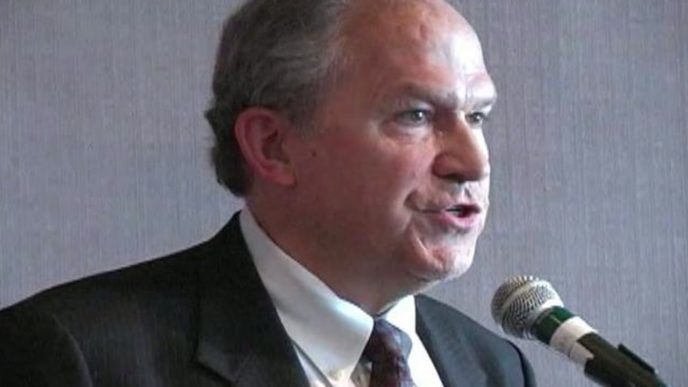
Alaska Legislature Refuses Governor’s Call to Confirm His Questionable Pick For Attorney General

Yesterday, the legislature refused Governor Walker’s call to joint session to act upon his appointment of the attorney general, among other appointees. The attorney general – Jahna Lindemuth – is one of his most controversial picks, and many legislators are uncertain that she should be confirmed. Some contend she needs more vetting before the legislature should act to confirm.

In the following open letter, Representative David Eastman confronted the Governor’s nominee, demanding that she clarify a number of troubling statements she made to the legislature during her first appearance there:

Dear Acting Attorney General Lindemuth,

Yesterday, after a lengthy confirmation process, Associate Justice Neil Gorsuch was sworn in as a Supreme Court Justice. The legislative confirmation process is a fundamental piece of our constitutional framework. It is through this process that the qualities, loyalties and competence of nominees are examined through a public process.

The Delegates to Alaska’s Constitutional Convention provided that Alaska’s Attorney General would be appointed by, and serve at the pleasure of, the governor. However, they also wisely determined that all such appointments would be subject to confirmation of the entire legislature, providing a formal check against any governor who would appoint to office an individual who was in any way unfit for that office. They also provided that, before entering office, the attorney general would take a solemn oath, declaring her loyalty to the Constitution of the State of Alaska over and above any felt loyalty to the individual who had appointed her to office.

On February 22nd, you appeared before us in the House Judiciary Committee for your first hearing in the legislative confirmation process. During that hearing the following exchanges took place (paraphrased in pertinent part below):

Question: How do you see your role as attorney general?

Answer: When it comes down to it, the buck stops here, as the top lawyer for the state, the attorney general is responsible for the legal decisions made (for example, taking a course of action, initiating litigation, or settling a big case).

Question: If one of the branches of government, the judiciary, is overstepping its bounds and is usurping the legislature’s authority by legislating from the bench, how do you see your role as an attorney general in that type of situation?

Answer: The Alaska Supreme Court is the constitutional interpreter of Alaska law as the final arbiter, and the department has to defer to it.

Question: The Alaska Supreme Court ruled that a fishery cannot be managed from the ballot box. Are you comfortable defending that position? Do you feel strong enough to engage in the Alaska Supreme Court’s decision?

Answer: If the Alaska Supreme Court has spoken on an issue of Alaska law, the Department of Law defers to the Alaska Supreme Court on that particular issue.

Question: If the governor were to violate state law, as attorney general, how would you approach the tension between your knowledge and understanding of what the law is, and a situation where the governor was violating the law?

Answer: Soft advice behind the scene is the best way to keep the administration on task and within the rule of law. I recently met an elected attorney general who was within the first two years of his tenure and he has already sued his governor four times. That is not a functional system, and possibly, that’s not the best way to address concerns.

Question: How would you deal with a situation where you think you have a winnable case for the people of Alaska, and the governor thinks differently? To whom is your obligation?

Answer: The governor is just one of my clients, although the governor is the top elected official and as such he does make the final policy call when policy calls are to be made.

At the close of your confirmation hearing in the house, I announced that I would be objecting to your confirmation at that time, but that it was my hope that you would take the next few weeks to consider the responses of members of the committee to the answers you provided, and provide additional information that might lead me to vote in favor of your confirmation.

It has now been seven weeks since you came before us for confirmation, and I have not received any further information with regard to the various concerns that were identified during your first confirmation hearing. As it stands today, the following concerns prevent me from voting to confirm you as Alaska’s Attorney General:

1) I am concerned that you are unable to distinguish your loyalty to the governor as a member of his cabinet, from your responsibilities to the constitution and to the public.

2) I am concerned that you may fail to provide effective legal representation to your client, the people of Alaska, when presented with a winnable case that comes in conflict with a governor’s political agenda.

3) I am concerned that you will be unable to defend the Constitution of the State of Alaska as attorney general.

As the chief law enforcement official in Alaska, and the legal advisor to the governor, our state relies heavily upon your ability and commitment, in keeping with your oath of office, to “support and defend” the Constitution of the State of Alaska. Your statutory duty to defend the constitution requires knowledge of the constitution and the ability to discriminate between interpretations of the constitution that are accurate and interpretations that are inaccurate. The possession of unquestioned loyalty to any interpretation promulgated by the Alaska Supreme Court is not an asset to a public official who may one day be required to provide legal advice to the governor as to how he should respond to an unconstitutional decision on the part of the court, especially at a time when courts across the country are expressing a willingness to entertain questions formerly reserved to the political branches. As attorney general, the decision to simply defer to the opinions of the court in all cases whatsoever, is at best a very tenuous position.

Youth in Alaska’s schools can readily tell you of decisions by the U.S. Supreme Court that deprived Americans of their rights under the Constitution. Dred Scott, Korematsu, Plessy and others are widely cited today as cases in which the Supreme Court got it wrong. Certainly our Alaska Supreme Court is no less fallible. Bess v. Ulmer represents a textbook case of an Alaska court overstepping its bounds and creating out of whole cloth a new, and hitherto unimagined, power of the court to veto constitutional amendments. Such innovations inevitably come at the expense of the other branches of government and ultimately at the expense of the people of Alaska. Alaskans cannot afford to have an attorney general today who will defer to continued innovations on the part of Alaska’s Supreme Court. For these reasons, I am unable to support your confirmation as Attorney General of the State of Alaska at this time.

Further, because of observations that I and other legislators have made throughout this confirmation process, I am currently working with colleagues to draft legislation making Attorney General for the State of Alaska an elective office, thereby ensuring that future attorneys general for the State of Alaska will be sufficiently independent to fight for Alaska’s interests and to be accountable to the public.

Sincerely,

David Eastman
State Representative

Caitlyn Jenner Is Not the ‘Former Stepmother’ of Kim Kardashian

If anything underscores the confusion of transgender activism, it is Kim Kardashian’s recent interview with Ellen DeGeneres about (Bruce) Caitlyn Jenner’s new book.

Kim spoke in a gracious, non-condemning way, and she made clear to Ellen that she only wanted the best for Caitlyn. That was not the problem. The problem lies with the words she used and how those words were reported.

As reported on Pink News, “Kim Kardashian hits out at ‘untruthful’ stepmother Caitlyn Jenner on Ellen.” Yes, “Kim Kardashian has lashed out her former stepmother Caitlyn Jenner.”

Well, here’s a breaking news alert. Bruce (or, Caitlyn) Jenner was not Kim Kardashian’s stepmother. Not ever. You can believe that Bruce Jenner is now a transwoman. You can decide to refer to him as “her.” You can even say that “Kim Kardashian’s former stepfather is now a transwoman named Caitlyn Jenner.” But don’t recreate the past and say that Bruce Jenner is Kim’s “former stepmother.”

Bruce was married to Kim’s mother, Kris, and Bruce was Kim’s stepfather. End of story, simple and clear. What is not simple and clear, however, is the way this must now be described. (I’ve italicized some of the words for emphasis.)

She Was my Stepdad

Kim said to Ellen, “I’ll always love her. That was my stepdad for so many years. She taught me about character growing up, and I just feel like I don’t respect the character she’s showing now.”

Yes, she was my stepdad.

Sigh.

What about Bruce’s biological children, Kendall and Kylie? What did Kim have to say about their relationship to Caitlyn?

“For Kendall and Kylie, that’s their dad,” Kim said.

Bingo! She hit the nail on the head. Bruce (Caitlyn) Jenner is the father (not mother) of Kendall and Kylie Jenner, and no matter who Bruce has become, he will not be their mother. Ever.

It Takes a Mother and a Father

This leads to a second breaking news alert. If Bruce Jenner fathers two girls named Kendall and Kylie, then has “sex-change” surgery and becomes a transwoman, he does not become Kendall and Kylie’s mother. They already have a mother, named Kris, and Bruce is their father, not their mother.

You see, fathers provide the seed and mothers provide the egg. And fathers don’t carry babies in their wombs and give birth to them. Mothers do. (Sorry for the advanced biology lesson, but it appears some people have forgotten this.)

That means that no matter how Bruce Jenner identifies today, he/she will never be Kendall and Kyle’s mother, nor do I believe that he/she would ever claim to be their mother.

But in the mad, mad world of extreme LGBT activism, Bruce Caitlyn Jenner is now the “former stepmother” of Kim Kardashian.

When will society wake up?

Modern Madness: A Ticking Time Bomb

In the book 50 Ways to Support Gay and Lesbian Equality, Noelle Howey spoke about her dad, who years earlier had sex-change surgery. Although Howey completely embraced her father’s new identity, there were some problems to overcome:

Names, like pronouns, were initially a challenge for us. The conundrum might have been solved by defaulting her title to ‘Mother,’ as most kids of transsexuals are inclined to do. Call us old-fashioned, but my father and I had little intention of altering the name of our relationship, regardless of peer pressure. I already had a mother, who was more than a bit proprietary about the title. Also, I had a father. She might have changed her gender, but that didn’t change who originally brought the sperm to the party.

And it’s the one who brings “the sperm to the party” who is the father.

No amount of activist pressure or semantic doublespeak or deconstruction of reality will alter this simple fact.

This is another reason why I still believe that LGBT activism will ultimately defeat itself. The cultural madness can only go so far before something snaps. (For more from the author of “Caitlyn Jenner Is Not the ‘Former Stepmother’ of Kim Kardashian” please click HERE)

Follow Joe Miller on Twitter HERE and Facebook HERE.

Trump’s Tax Plan Is Brilliant Politics and Even Better Economics

Donald Trump’s tax plan seems to mark a new chapter in his presidency, from floundering around with strange and sometimes scary policies (bombings, border closings, saber rattling) to focusing on what actually matters and what can actually make the difference for the American people and the American economy.

Under Trump’s plan, taxes on corporate profits go from 35% to 15%. They should be zero (like the Bahamas), but this is a good start. Taxes on capital gains go from 23.8% to 20%. Again, it should be zero (as with New Zealand), but it is a start. Rates for all individuals are lowered to three: 10%, 25%, and 35%. The standard deduction for individuals is doubled (politically brilliant). The estate tax and the alternative minimum tax is gone. Popular deductions for charitable giving and mortgage interest are preserved. The hare-brained idea of a “border adjustment tax” is toast.

All of this is wonderful, but the shining light of this plan is the dramatic reduction in taxes on corporate profits. The economics of this are based on a simple but profoundly true insight. Economic growth is the key to a good society. This is where good jobs come from. This is how technology improves. This is what gives everyone a brighter outlook on life. If you can imagine that your tomorrow will be more prosperous and flourishing than today, your life seems to be on track.

Tax Capital, Wreck Prosperity

Where does economic growth come from? For decades dating back perhaps a hundred-plus years, people imagined that it could come from government programs and policy manipulation. Surely there are some levers somewhere in the center of power that can cause this thing we call economic growth. We just need solid experts with power, resources, and intelligence to manage the system.

This turns out to be entirely wrong. It hasn’t worked. Since 2008, government has tried to mastermind an economic recovery. It has floundered. We are coming up on a full decade of this nonsense with economic growth barely crawling along. We are surviving, not thriving, and income growth, capital formation, and entrepreneurial opportunity restricted and punished at every turn.

The Trump tax plan is rooted in a much better idea. Economic growth must come from the private sector. It must come from investment in private capital. The owners of this capital who are doing well and earn profits should be allowed to keep them and invest them. This creates new job opportunities. It allows for more complex production strategies. It expands the division of labor.

The crucial institution here is capital. Sorry, anti-capitalists. It’s just true. Capital can be defined as the produced goods for production, not consumption. It is making things for the purpose of making other things. Think about it. Without capital, you can still have markets, creativity, hard work, enterprise. But so long as you have an absence of capital, you are forever floundering around just working to make and sell things for consumption. This is called living hand to mouth.

Without capital, and the private ownership of capital, and security over your property rights, you can’t have economic growth. You can’t have complex production. You can’t raise wages. You can’t live a better life. Every tax on capital, capital formation, capital accumulation, and business profit reduces the security of property rights over capital. This is a sure way to attack economic growth at its source.

And this is precisely what American policy has done. The rest of the world has been wising up about this, reducing taxes on capital for the last 15 years. But the US has languished in the mythology of the past, regarding capital not as a font of prosperity but rather a fund of stagnant resources to be pillaged by planners in government. It is not surprising that this strategy results in slow growth and even permanent recession.

What This Can Do for Growth

There is so much pent-up energy in this country. This tax cut will unleash it.

I have no regression to present to you but this much I can say out of experience and intuition. If this tax plan goes through, the entire class of entrepreneurs, investors, and merchants will receiving a loud signal: this country is safe for you to realize your dreams and make the dreams of others come true.

It wouldn’t surprise me to see GDP growth go from an anemic 1-2% to reach 4% and higher in one year. There is so much pent-up energy in this country. This tax cut will unleash it. And think what it means for the next recession or financial crisis. It prepares the entire country to weather such an event better than we otherwise would.

The beauty of unleashing the power of private capital is that the brilliant results will always be surprising. We don’t know what kind of experimentation in investment and business expansion this will create. This is the nature of a capitalist economy rooted in the freedom of enterprise. It defies our every expectation. No model can forecast with precision the range of results here. We only know that good things will come.

Now, of course, the opponents will talk of the deficit and the national debt. What about the lost revenue? The problem is that every revenue forecast is based on a static model. But an economy rooted in capital formation is not a static one. It is entirely possible that new profits and business expansion will produce even more revenue, even if it is taxed at a lower rate.

If you want to cut the deficit, there is only one way: cut spending. I see no evidence that either party wants to do this. Too bad. This should change. But it is both economically stupid and morally unsound to attempt to balance the budget on the backs of taxpayers. Letting people keep more of what they earn is the right thing to do, regardless of government’s fiscal problems.

In the meantime, these pious incantations of the word “deficit, deficit, deficit,” should be seen for what they are: excuses to continue to loot people of their just earnings.

The Politics of It

Already the opponents of this plan are kvetching in the predictable way. This is a tax cut for the rich! Well, yes, and that’s good. Rich capitalists — sorry for yet another hard truth — are society’s benefactors.

But you know why this line of attack isn’t going to work this time? Take a look at the standard deduction change. It is doubled. Not a single middle-class taxpayer is unaware of what this means. This is because they are profoundly aware of how the tax system works. If you take the standard deduction from $6,200 to $15,000, that means people are going to keep far more of their own money. There is not a single taxpayer in this country who will not welcome that.

This is why it strikes me as crazy for Democrats to inveigh against this plan. Doing so only cements their reputation as the party of pillage. Do they really want the United States to be outcompeted by every other nation in the OECD? What they should do is rally behind this, forgetting all the ridiculous pieties about the deficit and the rich and so on. Do they favor the interests of the American people are not?

It’s also fantastic politics to retain the deductions for charitable giving and mortgage interest. These are popular for a reason. They are two of the only ways that average people can save on their tax bill. It always pained me when the GOP would propose a “flat tax” that eliminated these provisions. People are very aware: taking away an existing tax break is a terrible foreshadowing of bad things to come. So this Trump plan dispenses with all that. Good.

As for compliance costs of the current system, the elimination of the Alternative Minimum Tax will do worlds of good.

What I love most about this plan is its real-world economic foundation. It embraces a truth that so many want to avoid. If you want jobs, rising wages, and economic growth, you have to stop the war on capital. You have to go the other way. You need to celebrate capital and allow rewards to flow to those who are driving forward economic progress.

It’s a simple but brilliant point. Finally, we’ve got a tax proposal that embraces it. (For more from the author of “Trump’s Tax Plan Is Brilliant Politics and Even Better Economics” please click HERE)

Follow Joe Miller on Twitter HERE and Facebook HERE.

25 Thoughts on Trump’s First 100 Days

God was able to create the universe in six days because He hadn’t yet created Democrats or the media.

Maxine Waters and other Democrats began calling for Trump’s impeachment before the inaugural parade made it down Pennsylvania Avenue. That’s right. Return him to a life with a supermodel wife, five great kids and a career building resorts in the most beautiful spots on earth.

Some Democrats refused to accept that Donald Trump was actually elected. That’s okay. I refuse to accept that I’m unable to dunk.

The reporter who falsely tweeted that Trump removed the Martin Luther King bust from the Oval Office on his first day did not apologize. What’s the old line from Love Story? “Good liberal intentions means never having to say you’re sorry.”

A study shows that 87 percent of Trump’s media coverage has been negative. The other 13% must own stock in Twitter.

You know the media’s attitude: “Why give him a honeymoon when he’s had three already?”

Trump had only been President a few hours before Madonna said she dreamed of blowing up the White House. If anyone knows about bombs, it’s the star of Swept Away.

Now Trump’s efforts to hold Sanctuary Cities is being blocked by a liberal judge in San Francisco. But I repeat myself.

Trump wants to stop giving some federal money to cities that openly refuse to enforce federal immigration law. Judge says no. Fine. Here’s an idea: Have the checks processed by the same people who process appointments at VA hospitals.

Barack Obama’s half-brother said the former President was born in Kenya. So? The Free Speech Movement was born at Berkeley. And we see how much that matters now.

Donald Trump is said to work 14 to 18 hours a day. He does know it’s a government job, right?

Trump has taken to inviting lawmakers over to the White House for bowling. Regardless of their score the Democrats expect participation trophies.

Meanwhile, @RealDonaldTrump is still tweeting — prematurely aging KellyAnne Conway 140 characters at a time.

Still, the president has cut down on the wild, over-the-top tweets. If we had a dollar for every time Ivanka yells, “Dad, put down the phone!” we’d have the wall paid for by Christmas.

Former National Security Advisor Susan Rice insisted she knew absolutely nothing about the unmasking of names of Trump associates. Then when it was proven otherwise she admitted she had done it, but claimed it was a routine part of her job. When that was proven false, she blamed it on an internet video.

Former State Department official and Hillary advisor Evelyn Farkas was seen on MSNBC explaining how she had desperately tried to get classified intelligence on Trump out to the public. The public was shocked. Somebody actually tuned in to see MSNBC?

Farkas later backpedaled. How fast did she backpedal? ESPN predicted she’d be the first cornerback picked in the NFL draft.

MSNBC’s Rachel Maddow got hold of a Donald Trump tax return. She trumpeted it like it was the lost Ark of the Covenant. The return showed … wait for it … that Trump paid a higher tax rate than Bernie Sanders. It was the biggest TV flop since Rosie O’Donnell’s return to The View.

Worries continue that Obama administration hold-overs are deliberately undermining Trump administration’s efforts. Just waiting for them to try replacing “Hail to the Chief” with “For the Love of Money.” Or “Back in the USSR.”

Why make Russia into a villain? Because China makes too much money for Hollywood, Iran would draw attention to the shameful Iran Deal, and putting focus on Islamic Extremists would force Democrats to admit there’s a problem with Islamic Extremism.

Congress is investigating the allegations that Russia meddled in the 2016 election. The story went from “hacked the election” to “interfered with the election” to “meddled with the election”? Next week it’ll be “dabbled in the election.” A month from now it’ll be “followed the election.” Liberals will still be shocked.

Hillary Clinton blamed her loss on misogyny, James Comey, WikiLeaks, the Russians and her staff. There must be no mirrors in her home. She is yet to “Blame It on the Boogie.”

President Trump has eliminated countless useless regulations, saving an estimated 18 billion dollars a year. When will he eliminate the regulation that says you have to wait 30 minutes after eating to get back in a pool? Or maybe that was my mother’s rule.

President Trump dropped a MOAB, the “Mother of All Bombs” on ISIS fighters in Afghanistan. The blast was so loud it could be heard in Pyongyang.

A New York Times columnist claims Trump has had the worst opening 100 days of any president ever. By his 100th day, William Henry Harrison had been dead two months.

What’s our final thought on Trump’s first 100 days? Grab the gallons of Red Bull. We’ve got 1,360 days to go. At least. (For more from the author of “25 Thoughts on Trump’s First 100 Days” please click HERE)

Follow Joe Miller on Twitter HERE and Facebook HERE.

Groups Urge Carson to Spike Gender Identity Rule for HUD Shelters

Citing safety for women, 40 leaders of groups across the country have signed a letter asking Housing and Urban Development Secretary Ben Carson to rescind and revise a gender identity rule adopted by the Obama administration for government shelters.

The rule, published in September 2016, allows all individuals to use HUD men’s and women’s shelters based on their gender identity, regardless of whether they were born male or female.

“Dear Mr. Secretary,” the letter to Carson reads, “We write to urge you to … protect the safety and privacy of women in need of shelter due to homelessness or violence.”

The writers add:

We are a diverse group of women and organizations allied in a common cause: mothers, feminists, women of faith, lesbian and bisexual women’s rights activists, and concerned neighbors, convened through the Hands Across the Aisle Coalition, to request your consideration for our sisters without stable housing.

The HUD-run shelters, services, and programs covered by the rule are for men and women who are homeless, or about to be so, and for women fleeing domestic violence.

The letter is the work of the Hands Across the Aisle Coalition, a group of conservative and liberal women who work to fight what they consider anti-woman positions promoted by the transgender movement.

The coalition planned to submit the letter to HUD on Monday.

The rule’s formal title is “Equal Access in Accordance with an Individual’s Gender Identity in Community Planning and Development Programs.”

The signers of the letter ask Carson to rescind and revise the regulation to reflect that “single-sex facilities should not be forced to permit clients of the opposite biological sex, that men who identify as women or nonbinary must be kept safe at men’s facilities, and that women who identify as men or nonbinary should be kept safe at women’s facilities.”

Nonbinary refers to a “combination of both male and female, or neither, or in between,” Ryan T. Anderson, a senior research fellow at The Heritage Foundation who writes on gender identity issues, told The Daily Signal in an email.

The Daily Signal’s Kelsey Harkness previously produced a video about the Hands Across the Aisle Coalition:

Kristen Bridgan-Brown, 42, a mother and a victim of rape and abuse from Tacoma, Washington, stayed at a shelter for women during her recovery.

She says this is a personal issue for her.

“A man’s presence would have been a complete deal breaker,” Bridgan-Brown said in a statement provided to The Daily Signal. “I would have left. In my mind, my known abuser would have been better to go back to, than someone who had the potential to hurt me that I didn’t know.”

During her time at the Family Renewal Shelter in Tacoma, Bridgan-Brown said, she shared restroom facilities, a kitchen, a living room, a dining room, and a laundry room with other women and their children. She said it was important that she shared those facilities with her own gender.

“Women from domestic violence relationships need a safe space away from men to regroup and process,” Bridgan-Brown told The Daily Signal. “It takes years to heal, but it’s the necessary start of a long journey.”

Autumn Leva, director of policy and communication for the Family Policy Alliance, an organization that seeks to protect religious freedom and family values, said the Trump administration must change the government rule.

“This rule defies common sense, defeats the very purpose of women-only shelters for victims of abuse, and threatens the safety and dignity of women in need of HUD facilities,” Leva said in a statement provided to The Daily Signal.

Over 1 million people are served each year in HUD’s housing program for the homeless, according to the agency.

CitizenGO, an organization that seeks to “defend and promote life, family, and liberty,” hosts a Hands Across the Aisle Coalition petition asking that Carson change the rule.

“For most of us, this isn’t even a hard issue,” Joseph Backholm, president of the Family Policy Institute of Washington, which promotes traditional family values and opposes the rule, said in an email to The Daily Signal, adding:

Those who find themselves in need of a women and children’s shelter are often escaping dangerous and abusive situations. I don’t have the nerve to tell them they don’t have the right to be concerned about sharing a room with a complete stranger who is a biological male and I don’t think the federal government should either.

The Human Rights Campaign, a major advocate for lesbian, gay, bisexual, and transgender Americans, and the Center for American Progress, a think tank that advances LGBT activists’ goals, did not respond to The Daily Signal’s requests for comments on the Obama administration’s gender identity rule for HUD shelters.

Dana Hodges, state director for Concerned Women for America of Texas, a conservative women’s advocacy organization, said the rule is counterproductive.

“The fact that [women] could be faced with sharing these facilities with men who seek to exploit these ‘gender-fluid’ guidelines as an opportunity to prey on these women is unthinkable and wholly unacceptable,” Hodges said.

Matt Sharp, senior counsel at Alliance Defending Freedom, told The Daily Signal that under HUD’s rulemaking process, officials could write a rule restoring the original language and ask for public comment before adopting it.

The rule potentially could be rescinded by Congress using the Congressional Review Act, Paul Larkin, a senior legal fellow at The Heritage Foundation, told The Daily Signal in an email. (For more from the author of “Groups Urge Carson to Spike Gender Identity Rule for HUD Shelters” please click HERE)

Follow Joe Miller on Twitter HERE and Facebook HERE.

Trump Opens Doors on Oil Exploration, but Deeper Reforms Still Needed

In another move to free up domestic energy supplies, President Donald Trump signed an executive order Friday aimed at lifting the Obama administration’s offshore drilling restrictions.

For decades, bad policies have blocked access to America’s abundance of domestic resources, yet America has still managed to be a global energy leader. Trump’s executive order, “Implementing an America-First Offshore Energy Strategy,” could unleash further success in the energy sector.

The economic potential sitting just off America’s coasts is enormous. The Outer Continental Shelf is awash with natural resources, containing an estimated 86 billion barrels of oil and 420 trillion cubic feet of natural gas.

Realizing that potential could create nearly a million American jobs, and the increased energy supplies that would result would put money back into the bank accounts of American families. It would also generate new prospects for investment and job creation, as cheap energy lowers the cost of business operations across all sectors, not just energy.

The federal government has placed various bans on offshore drilling for decades. Last November, the Obama administration’s Department of Interior finalized some of the most restrictive leasing programs to date.

The Interior Department’s final 2017-2022 Outer Continental Shelf Oil and Gas Leasing Program was best known for the areas it placed off limits, rather than what it made available to lease for energy exploration.

It excluded lease sales in the oil-rich Beaufort or Chukchi seas off the coasts of Alaska, as well as areas off the Atlantic and Pacific coasts. The Interior Department also restricted opportunities in the Gulf of Mexico and the Cook Inlet off south central Alaska.

Critics of Trump’s decision to free up leasing are making the same arguments they’ve made for years: “Oil prices are too low, so the decision won’t spur more oil exploration. Drilling offshore takes too long, so it’s not going to have any immediate impact.”

But those arguments ignore the biggest drivers of investment. Juliet Eilperin and Brady Dennis were spot on in writing for The Washington Post, “[L]ocal political considerations and the global energy market are likely to influence future exploration far more than an executive order in Washington.”

While Trump’s executive order will open more doors for exploration, it won’t automatically trigger an energy boom. That’s the way it should be.

Oil prices are long-term and, as history has shown, can increase rather quickly. Industry makes investment decisions looking decades into the future, not simply based on short-term projections.

Although it certainly is possible that low oil prices could prohibit offshore production, that’s a decision for the private sector to consider. Businesses are much better equipped and flexible to deal with changing economic circumstances than shortsighted politicians in Washington.

Another battle cry for of those who oppose offshore drilling is: Do we really want to risk another Deepwater Horizon spill?

The Deepwater Horizon spill of 2010, which caused environmental degradation in the Gulf of Mexico, was a rare and isolated incident, not a result of any systemic problem associated with offshore oil and gas operations.

That’s not to say flaws don’t exist in the current system or that improvements can’t be made.

In fact, after Deepwater Horizon, Congress examined the government-imposed offshore liability cap but never implemented any prudent solution.

Current law states that oil or gas companies do not have to pay more than $75 million in liability costs for accidents they cause—no matter how great the damages.

Additional fees can be paid out of a government-mandated trust fund (the Oil Spill Liability Trust Fund), which effectively socializes the risk of offshore oil and gas activities.

Congress should reform the Oil Spill Liability Trust Fund and remove the $75 million liability cap, replacing it with a new system that assesses the risks of offshore oil and gas operations and appropriately assigns those risks to industry operators.

A new approach would accurately assign risk to all offshore operations, including exploratory drilling, production, and tanker movements.

Such a system should also hold operators fully liable for their actions and guard against frivolous lawsuits. It should rely on market-based mechanisms and be built around private insurers and professional risk assessors.

Environmental activists aren’t the only ones opposed to Trump’s executive order. Some members of the tourism industry have also voiced concerns about expanded drilling off the Atlantic.

But the energy industry has worked in perfect harmony with other industries. Just look to the Gulf Coast. Every year, residents of the Gulf come to Morgan City, Louisiana, to celebrate the lifeblood of the region’s economy: seafood and oil.

Morgan City’s Shrimp and Petroleum Festival emphasizes “the unique way in which these two seemingly different industries work hand-in-hand culturally and environmentally in this area of the ‘Cajun Coast.’”

While the Deepwater Horizon spill affected all industries in the Gulf Coast, the majority of seafood and tourism companies supported the oil industry throughout the ordeal.

In fact, in many respects, the spill has strengthened the bond between the oil and seafood industry. Shrimpers and fishers were as vocal as anyone in lifting the offshore drilling ban after the spill.

Drilling off the Atlantic coasts could welcome the same symbiotic relationship, which already exists in the Gulf and in the state of Alaska.

Furthermore, states should collect more royalty revenue for offshore production.

Currently, states receive 50 percent of the revenues generated by onshore oil and natural gas production on federal lands, and Congress should apply this allocation offshore as well.

Drilling off states’ coasts and allowing them a larger share of the royalty revenue would encourage more state involvement in drilling decisions.

Offshore drilling would also promote state and local government participation in allocating funds, helping them to close their deficits, enabling coastal restoration and conservation, and shoring up funds for schools.

Trump’s executive order is a welcome step to increasing access to domestic resources, but the back-and-forth of banning resource exploration and then undoing it is a sign that wholesale reform is necessary.

The politicization of the leasing program and the static central planning process that has stifled a dynamic, constantly changing energy market points to the need for legislative action. It is time for a fundamental reconsideration of how the U.S. manages offshore resource development.

Congress should amend the Outer Continental Shelf Leasing Act and get rid of this antiquated, piecemeal leasing approach. (For more from the author of “Trump Opens Doors on Oil Exploration, but Deeper Reforms Still Needed” please click HERE)

Follow Joe Miller on Twitter HERE and Facebook HERE.

Congress Gives Itself Another Week to Craft Spending Bill

Hours before the federal government’s spending authority expired Friday at midnight, the Senate advanced a one-week continuing resolution by voice vote, putting spending on autopilot and avoiding a looming government shutdown.

The Senate action followed a 382-30 House vote to pass the one-week extension. Without the measure, the government would have run out of money as Friday turned to Saturday.

The makeshift spending agreement allows lawmakers in the House and Senate to negotiate until next Friday to come to a deal and pass a huge, omnibus spending bill to fund the government through the rest of fiscal year 2017, which ends Sept. 30.

“It really bothers me that we’re so late in getting this thing done,” Rep. Andy Biggs, R-Ariz., said of the 11th-hour spending resolution in an interview with The Daily Signal.

Rep. Andy Harris, R-Md., a member of the House Appropriations Committee, told The Daily Signal that the omnibus bill, expected to be introduced Monday, is progressing well.

“My understanding is that the omnibus bill is nearly complete, that … we may actually be able to combine all the separate appropriations bills into that omnibus bill, and that’s good news,” Harris said in an interview.

Votes on the omnibus spending bill are expected on Thursday.

Funding for President Donald Trump’s border wall is not included. Republican lawmakers in the House and Senate have said they prefer to put off a fight with Democrats over beginning to pay for the wall until the fall, rather than as part of funding the government for the rest of the current fiscal year.

“Full border wall funding can’t be there at this point,” Sen. James Lankford, R-Okla., a supporter of the wall, said in a recent interview with The Daily Signal. “It’s not designed, prototypes have not been created.”

Biggs said he is preparing an amendment to defund Planned Parenthood for inclusion in the omnibus spending bill. He said it mirrors Vice President Mike Pence’s amendment to defund Planned Parenthood that the House passed in 2011, when Pence was a Republican congressman from Indiana.

National defense must be a priority in the omnibus bill, Harris said.

“I look forward to a very lively discussion for the next year’s appropriations bills on the president’s plan to begin to prioritize funding within the nonmandatory side of the ledger and to re-emphasize defense of the nation and homeland security as a top priority,” Harris said.

House Minority Leader Nancy Pelosi, D-Calif., predicted controversy for the omnibus bill currently being discussed.

“There are probably still 70 poison pills in the bill that we can’t live with,” Pelosi said Wednesday on CNN.

“One party now controls the White House and both chambers of Congress,” Sen. Patrick Leahy, D-Vt., ranking member of the Appropriations Committee, said in a prepared statement about the one-week extension. “It is incumbent upon them to ensure that the government of the American people stays open and is fully funded.”

Biggs, however, sounded cautiously optimistic about what those crafting the omnibus will produce.

“I hope they produce something in writing soon because I don’t know how they expect people to vote on stuff they don’t have time to read,” the Arizona Republican said. (For more from the author of “Congress Gives Itself Another Week to Craft Spending Bill” please click HERE)

Follow Joe Miller on Twitter HERE and Facebook HERE.

White House Vows Funding for Border Wall, Just Not Now

Congress plans to pass a final spending bill to keep the government running beyond the next week, but without funding for a border wall. The White House, however, says it will demand money for President Donald Trump’s signature campaign issue in next year’s budget plan.

“The president is committed to having a physical border wall. That is not to be doubted,” Helen Aguirre Ferré, White House media affairs director, told The Daily Signal in an interview Friday, adding:

The funding didn’t have to be at this particular point in time, when we need a continuing resolution when it comes to the budget, but it’s definitely going to be presented by September, when we have to have the budget going forward. I don’t think anybody should doubt that this is something that is going to be pressed on.

The current fiscal year runs through Sept. 30. Congress has not added any funds for that budget year specifically for a wall along the Mexico-U.S. border.

Trump’s proposal for fiscal year 2018, which begins Oct. 1, includes a $1.5 billion down payment on the wall. Office of Management and Budget Director Mick Mulvaney said in March that another $2.8 billion likely would go into funding the wall the next fiscal year.

Senate Minority Leader Charles Schumer, D-N.Y., had threatened a government shutdown if any funding in the spending bill for the current fiscal year goes toward construction of a border wall.

On Friday, the House and Senate passed a measure that keeps the government running for another week while it works on a $1 trillion package to keep the government running through September. Otherwise, the money would have run out at midnight.

The House passed the measure by a vote of 382-30, while the Senate followed with a voice vote. The White House previously had dropped Trump’s demand that some funds for the wall be included in the final spending bill.

“Our biggest concern at this point in time is to do the No. 1 thing that the American public has put on our shoulders—and we signed up for the job, quite frankly—which is to govern. And that means that the government must remain open,” Ferré said.

When asked if the president was willing to risk a government shutdown with Schumer when talks resume in September, Ferré said:

We hope that everybody comes together to the table to really work to resolve our nation’s problems. That includes border security. The president is committed to the border wall. There will be funding for the border wall.

(For more from the author of “White House Vows Funding for Border Wall, Just Not Now” please click HERE)

Follow Joe Miller on Twitter HERE and Facebook HERE.

Let Slip the Hogs of War — Wild Pigs Thwart ISIS Ambush, Kill 3 Militants

Three Islamic State fighters were mauled to death by a pack of wild boar, reports U.K.’s The Times. Another 5 militants were also injured in the attack.

The men were said to be taking cover in a field as they set up an ambush for local tribesmen, local leaders said.

“It is likely their movement disturbed a herd of wild pigs, which inhabit the area as well as the nearby cornfields,” Sheikh Anwar al-Assi, a chief of the local Ubaid tribe and supervisor of anti-ISIS forces, told the Times. “The area is dense with reeds, which are good for hiding in.” (Read more from “Let Slip the Hogs of War — Wild Pigs Thwart ISIS Ambush, Kill 3 Militants” HERE)

Follow Joe Miller on Twitter HERE and Facebook HERE.

‘Professor’ Rand Paul?

Senator Rand Paul, R-KY., former presidential candidate, ophthalmologist, and conservatarian firebrand is fulfilling a dream – teaching English to college students.

Jackson Richman of Red Alert Politics reports “Professor Rand Paul” will teach a course titled “Dystopian Visions” during the fall 2017 semester at George Washington University. The course will focus on dystopian literature and what it can teach about the nature of too-powerful government.

Sen. Paul has previously discussed his desire to teach, saying “I think dystopian novels are a discussion of politics, and sort of what happens if you let a government accumulate too much power.”

The class will be an elective held bi-weekly at 8 AM.

“When Senator Paul’s office approached us about coming to campus to teach this course, we agreed that his unique voice as a sitting senator would provide an engaging backdrop for our students,” Ben Vinson, the dean of GWU’s Columbian College of Arts and Sciences, said. “Because of our connections and location in the heart of the nation’s capital, we will continue to welcome prominent contributors to the global dialogue to come to campus to engage our students.”

Eager students have maxed out the available seats in the class. It’s safe to say this will be one college campus where a conservative speaker is welcome. (For more from the author of “‘Professor’ Rand Paul?” please click HERE)

Follow Joe Miller on Twitter HERE and Facebook HERE.