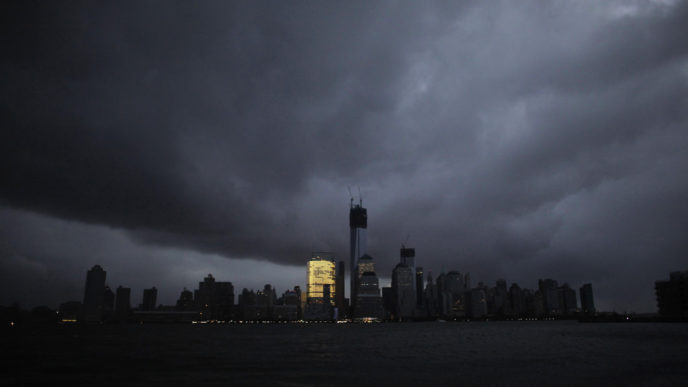
Protest All You Want, but Science Can’t Tell Trump How to Govern

[Yesterday], a group of concerned citizens participated in the March for Science, a gathering on the National Mall in Washington, DC, protesting the Trump Administration’s attitudes towards science, accompanied by the assertion that science should be a motivating factor in determining public policy.

The appeal to science is one of the progressive movement’s go-to tactics in the attempt to appear reasonable and unbiased. After all, science doesn’t have a political agenda, right? As Joe Friday said, it’s “just the facts, ma’am.” And since science is synonymous with learning, inquiry, and critical thought, the only people who would reject science must be ignorant, unintelligent, and superstitious.

The trouble with this line of reasoning is that it anthropomorphizes science into something that has opinions, conclusions, and recommendations. This not only fundamentally misunderstands the concept of science, but can lead down some pretty dangerous roads if we’re not careful.

First of all, let’s get straight what science is and is not. The word “science” is only a noun for grammatical convenience. In reality, science is not a “thing,” but a set of methods that, when applied appropriately, can answer certain questions about the world in which we live. Science is a process. It is not something you can “believe in,” and it cannot “say” anything. When you hear people claiming to believe in science or that science says the Earth is warming, they are misusing the term and projecting their own beliefs onto a set of abstract principles.

And while science is excellent at answering questions when applied properly, it can also be applied improperly, or used sloppily to give answers that don’t reflect reality. This is why it’s so ridiculous to assign conclusions to science. The conclusions are really those of certain fallible humans who have used certain techniques in an effort to answer questions. You can argue that their techniques were good or bad, but you can’t just declare an entire discipline in agreement on any questions of great import.

It’s all well and good to say that science should guide public policy, but what does that really mean? In one sense, this is basically the same as saying language should guide public policy. It’s so obvious as to be meaningless. Every road and bridge, every piece of military equipment, all telecommunications were designed and constructed using scientific principles. Without science, it would be impossible to have any public policy at all.

What these protestors really mean, of course, is that they want their particular conclusions on controversial topics to be the standard by which government operates, particularly when it relates to climate science. But even if we could all agree that climate change is caused by man and is something that will cause problems, science cannot tell us what to do about it. Decisions about tradeoffs between human welfare now and in the future, prioritizing some people over others, and central planning versus individual freedom are well outside the scope of the scientific method.

I cannot help but be reminded of our most scientifically minded president, Woodrow Wilson. The only president to hold a Ph.D., Wilson was eager to use science to guide the country forward, and this eagerness caused him to embrace some things that, in hindsight, were really, really bad ideas. The American eugenics movement, supported by Wilson, held that the nation could be improved by forcibly sterilizing the unfit, the criminals and the mentally disabled and allowing only the strongest to breed. Darwin’s theory of natural selection gave scientific credence to the idea that this was possible, and so-called enlightened men went along with it. Tens of thousands of Americans were forcibly sterilized before the horrors of World War II soured us on the idea.

The point of this story is not to say that global warming alarmism is akin to eugenics, but to point out that science cannot answer the moral questions, such as “Is it okay to rob people of their liberty for the good of the species?” That is the domain of philosophy. Personally, I would rather more energy be spent on ensuring that our president has a good philosophy of government than on flogging for science that can be misused and manipulated — and that ultimately can’t answer life’s most important questions. (For more from the author of “Protest All You Want, but Science Can’t Tell Trump How to Govern” please click HERE)

Follow Joe Miller on Twitter HERE and Facebook HERE.

The Firing of Bill O’Reilly

Fox News fired its most popular host, Bill O’Reilly, this week. The firing came after The New York Times reported details of more than $13 million paid to women who worked on or appeared on O’Reilly’s show. The women had accused O’Reilly of sexual harassment. O’Reilly at first “denied the claims have merit,” but Fox apparently concluded otherwise.

It must have been a difficult conclusion at which to arrive. O’Reilly has been a ratings and economic juggernaut for Fox. He attracts about 4 million viewers, and in 2015 the program generated about $178 million in advertising revenue.

I do not want to put O’Reilly on trial here, but it is fair to say that Fox would not have made this decision unless the evidence was compelling. A statement released by Fox read, in part, “After a thorough and careful review of the allegations, the Company and Bill O’Reilly have agreed that Bill O’Reilly will not be returning to the Fox News Channel.”

O’Reilly’s fans are attempting to paint him as a victim of a politically correct environment. Ed Martin, president of Eagle Forum, the organization founded by Phyllis Schlafly, wrote: “O’Reilly is a folk hero to the regular folks in America who know the truth.”

I have a different perspective. I commend Fox for making a courageous decision that will no doubt cost it millions of dollars in the short term. What is sad is that a man many people saw as an effective spokesman for their values has been rendered impotent because of his character.

This story is not a new one, of course. Moses, David, and Samson are just three of many powerfully gifted men whose character flaws kept them from being and doing all that God intended for them. More recently, Roger Ailes and Michael Flynn have likewise risen because of their competence and fallen because of their character. Young media celebrities such as Tomi Lahren and Milo Yiannopoulos have flamed out in spectacular fashion.

But National Review columnist David French has pointed out that the rises and falls of these conservative celebrities may be as much our fault as theirs. French writes that we have created a “toxic culture of conservative celebrity” in which we value not the character of our leaders, but rather their ability to inflict wounds on our political enemies. “Knifework, not character or integrity, is what we demand from our ideological gladiators,” French writes. “We’re paying the price.”

Lessons from the O’Reilly Episode

So what can we learn from the O’Reilly episode? Here are a few possible lessons:

First, we should demand character, not merely competence, from our political leaders and cultural spokesmen. Those who oppose conservative and Christian ideas will seize any opportunity to discredit the message by attacking the messenger. We should be careful about whom we look to as spokespeople.

Secondly, let’s remember that “conservative” does not always equal “Christian.” We live in an era in which the culture is trending away from Christian ideas and toward secularism. So conserving what came before often — not always, but often — means conserving Christian ideas. But when and where that is not the case, we should be careful to promote Christian ideals and not merely conservative ideology.

Thirdly, we should remember that the ends do not justify the means. The Christian worldview is true, but it is not merely true. It is also good and beautiful. If we resort to the ugly, the evil, and the banal in our public discourse and private lives, we undermine the truth of the story we want the world to hear.

Finally, let’s not depend so much on our media stars to do the heavy lifting of cultural change. Here at the Colson Center we talk often about “de-professionalizing” the work of the Gospel, including the work of cultural change. By that we mean that raising our kids means more than just sending them to the right youth group. And cultural engagement means more than following a media celebrity on Facebook or retweeting a clever meme.

I often speak to young people who are burning with enthusiasm to “make a difference” in the world. My counsel to them is usually “If you want to change the world, first make your bed.” We should remember that the best evidence for the transformative power of the Gospel is the testimony of our own transformed lives. Christians should live differently if we want our ideas to have credibility in the public square.

To conclude: I cannot say with certainty whether Bill O’Reilly is guilty or innocent of the sexual harassment charges, but the evidence we do have, and his spectacular fall from public favor, should lead to a teachable moment for the conservative movement and Christians in particular. We should take a good, long, hard look in the cultural mirror and remember Shakespeare’s words: “The fault . . . is not in our [media] stars, but in ourselves.” (For more from the author of “The Firing of Bill O’Reilly” please click HERE)

Follow Joe Miller on Twitter HERE and Facebook HERE.

March for Science a Dud

I am pleased to report the asinine March “for” “Science” has been a dud.

Organizers lit the fuse of what they thought was going to be an enormous stick of dynamite. Wait until you hear the boom, honey! But what they got was tiny pop from a damp ladyfinger.

Pop. No exclamation mark.

The Independent quoted some guy called Peter Lipke, who said, “I’m a science professor.” This prepped the reader, signalling some solid science was on its way. Lipke continued, “The current administration has shown complete disregard for facts and the truth.”

Now, scientifically, this is a dumb statement, because, of course, it is false. It’s not only false, it’s petulant fantasy. President Trump has only been in office a short while, and it’s not like he’s taken to television and said, “My fellow Americans. E equals M C-squared is inefficient. I propose to Make America Great Again with C-cubed.”

The most the perpetually “outraged” have on him is that his administration removed the global warming propaganda from the White House website. Big deal. Yet it was that “momentous” event that triggered the easily triggered into staging the March.

The insufferable and ever-smug Vox began its “explanation” of the March with a picture of a kid, maybe eight or so, holding the sign, “Climate change is real.”

As (ahem) I explained before, there isn’t anybody outside the walls of any medical institution that doesn’t believe that. So this poor young man could just as well held up a sign which read, “Ice is colder than steam.”

I bet he would have received a special award for that.

In the same Vox picture, a plain-looking woman is holding the sign, “Your global warming can’t melt this Snowflake.”

She’s right, you know. Given global-warming-of-doom has failed to materialize as predicted (over and over and over again), very few snowflakes are being melted.

Vox never disappoints. They checked the “fatuous” box by quoting a sociologist who “studies protest movements”, and she said — are you ready for more science? — “Protest is also an opportunity to create what we call ‘collective identity.’”

Who knew? I mean, who knew scientists were so smart?

That’s a real problem. The tasks and decisions ahead of us are far too important to be left to scientists. A scientist will tell you on Tuesday that “David Hume teaches us that ought cannot be derived from is,” meaning the moral and ethical consequences of any decision do not follow from any fact, such as what the temperature outside is.

But then on Thursday, this selfsame scientist will screech in your ear that “Climate change is real!” as if it is obvious what moral and ethical decisions we must make because of that fact.

Whether the scientist is right about Hume, her statement proves the real problem we’re facing is not one of science, but of philosophy (and religion). Science is tiddlywinks next to the metaphysical dilemmas gripping the West. But never mind. That subject is too much for us today.

Time magazine kindly supplied a video of high-pitched, ear-grating woo-wooing protesters (I still say the DOD was wrong to reject my proposal to weaponize the progressive protester voice). One guy held the sign, “Climate change cannot be undone by tweeting.” But it can be by holding up an idiotic sign?

A white lady, with what looked like tape across her mouth (it could have been a pacifier), held up the science sign, “White supremacists have melanin envy.” Dude, loosen the tape and have something to eat. Your synapses are running low on glucose.

In one of the satellite marches in Los Angeles, a good handful of people showed up, one carrying the sign, “Make wind, not warming.” Flatulence jokes in a science march? Where’s the respect?

In London, another sign: “Wake Up World! *Can’t eat money *Can’t drink oil. SCIENCE for a sustainable society.” This is true and scientific. But you can use money to buy oil and use it to farm lots and lots of food. And there is nothing more sustainable than well-fed people.

Australia. “I create knowledge. What’s your superpower?” Sarcasm.

Slate has a page devoted to March signs. They do not disappoint. One read, “Knowing Stuff is good. Seriously why do I even have to march for this geez.” Should I tell him or will you?

One (perhaps prescient) lady tweeted “#TheFutureisFemale” and showed the sign, “Women and the Earth have to tolerate a lot.” I wept in pity when I read that bit of science.

The Chicago Tribune tweeted the headline, “‘There is no Planet B!’ cried a 6-year-old girl during March for Science Chicago.” I cried too (the March has made me especially lachrymose), because this poor 6-year-old girl is wrong. Not only is there a planet B, but there is a C, D, … Why, there are nearly 4,000 other planets we know about!

Pagans were out in force. One lady held the sign, “I [heart] Biomimicry, Mother [earth] knows best.” In a freak coincidence, right next to her was another lady with the sign, “Mother knows best. Listen to her. #Biomimicry.”

These were the truest signs of the day. Nothing but mimicry as far as the eye could see. Everybody had exactly the same thoughts on everything. It’s science! (For more from the author of “March for Science a Dud” please click HERE)

Follow Joe Miller on Twitter HERE and Facebook HERE.

Are Our Universities Producing Spoiled Brats?

There are plenty of fine universities in America today where the students are challenged and stretched. But all too many schools are coddling their students rather than challenging them, thereby producing graduating classes filled with lots of spoiled brats.

How bad are things on some campuses?

Not only are schools offering coloring books and crayons during finals week to help students deal with stress.

Not only are schools providing safe-spaces where students can go to escape from the conflicts of the real world.

Not only are schools issuing guidelines for campus speech, replete with the latest trigger warnings to guard against microaggressions.

All that is absurd enough.

But schools are now responding to student tantrums: If you threaten to throw a fit, we will back down, post haste. We do not want to get you upset!

In the home, parents know how to deal children who throw tantrums. They don’t give in to the screaming and crying and foot stomping. They hold their ground and they remind their child that this is the way things are going to be, like it or not. And rather than rewarding their child’s tantrum, they discipline their child for such unhealthy behavior.

In contrast, many of our campus administrators haven’t learned how to respond to student tantrums — or even to the threat of a tantrum. We can’t upset our students! And if the threatened tantrum is coming from outside the school, rather than standing up to the few bullies, the university caves in — always, it seems, in the direction of political correctness.

Anarchy Now, Failure Later

What kind of example are these schools setting for their students? And how will their grads deal with the conflicts and problems and stresses of the real world.

Take, for example, the recent uproar at Berkeley over a planned speech by Ann Coulter. Just the threat of protests was enough to shut the event down, in light of which Stanley Kurtz observed that “America’s colleges continue their descent into low-grade anarchy.”

A legal letter from the Berkeley College Republicans and the Young America’s Foundation responding to Berkeley leadership hit the nail on the head (with some fitting sarcasm, to boot). “Thank you for conceding in your letter today that UC Berkeley chooses to limit speech as a direct result of the successful misconduct of ‘some of the same groups that previously engaged in local violent action,’” Harmeet K. Dhillon wrote. “In other words, all one has to do to silence conservative speakers at UC Berkeley, is to don a mask and become violent, or place anonymous phone calls to the administration threatening such violence.”

It’s that simple. Just throw the college version of a tantrum and the college version of your parents (the school’s faculty and administration) will quickly back down.

This reminds me of an old Andy Griffith episode about a spoiled kid who always got his way – that is, until Sheriff Griffith got involved. There’s a lesson here for the entitlement generation, which also suffers from of a lack of good parenting.

As I’ve shared before, a friend of mine in the business world told me that it’s more and more common for college and university grads to have trouble on their jobs. But it’s not because they lack intelligence or the necessary academic training. Instead, it’s because they can’t take correction, having been shielded from it during much of their upbringing and education. “You may be my boss, but you’re making me feel bad, which makes you a bad person, since I’m a good person and therefore a good employee.”

Put On Your Big Boy Pants

I may be exaggerating the sentiments, but not by much. After all, kids are being raised today in a “never-lose” environment, where everyone gets rewarded and scores are not kept in sports games. By the time they get to college, the mentality that the “world revolves around my feelings” is deeply entrenched within them. This is the fault of their upbringing as much as it is their own fault, and as things begin to implode on our campuses, it’s high time for change.

What’s really unfortunate is that there are so many fine young people on our campuses and there are plenty of schools producing fine grads. But this generation is getting tarred by the bad reputation of some of its loudest representatives, and it is for them — the bad apples — that I have a simple word of advice: Grow up.

In fact this word of advice applies to some educators as well. If we will act like adults, young people will follow our lead. (For more from the author of “Are Our Universities Producing Spoiled Brats?” please click HERE)

Follow Joe Miller on Twitter HERE and Facebook HERE.

Trump Restricts Immigration Program That Took This American’s Job

After years in private business, Kurt Ho had finally found a rewarding information technology job, working for a public hospital in Southern California, ensuring vital systems—such as fetal health monitors—were functioning properly.

In October, Ho learned his job at the University of California, San Francisco Medical Center was being outsourced to a company in India, called HCL Technologies.

Ho was told he could stay on the job, get paid for four more months, and earn a bonus if he trained his replacement. Ho’s dream job lasted less than three years.

“I was very surprised because this is a hospital—we are not talking about something you can easily outsource,” Ho, 58, told The Daily Signal in an interview, just a few weeks after his last day of work, Feb. 28. “This is very important work. You are talking about patients’ lives here. So I absolutely want my replacement to do well for the patients and their families, for the doctors—who depend on the service. That’s what we wish for.”

Ho, along with about 80 of his IT co-workers, lost his job as a result of loopholes in a high-skilled visa program—known as H-1B—that allows U.S. companies to fire Americans and replace them with cheaper, temporary workers.

For Ho, that unfortunate designation is not the worst part. Ho is in the prime of his career—competent and able, he says. Facing his 12-year-old daughter is another matter.

“I am trying to get her to go into the STEM program at school, to pursue science and technology like I did,” said Ho, a U.S. citizen who immigrated here from Malaysia in 1989. “But she looks at me and says, ‘They shipped your job to India.’ I am setting a bad example for her. She is discouraged. She says she is thinking about dancing now.”

According to CBS’ “60 Minutes,” which recently profiled another University of California, San Francisco Medical Center employee who lost his job, outsourcing the IT work could save $30 million for taxpayers over the next five years. The state-run university has a $5.9 billion annual budget.

Becoming a ‘Cheap Labor Program’

Experts say most companies use H-1B visas properly—to employ highly-skilled foreign guest workers in sectors Americans cannot fully serve. But stories of abuse, such as Ho’s, have inspired a bipartisan coalition in Congress, and the president, to push for reform.

On Tuesday, President Donald Trump signed an executive order that he said would make it harder for technology companies to replace American workers with cheap foreign labor.

“Right now, widespread abuse in our immigration system is allowing American workers of all backgrounds to be replaced by workers brought in from other countries to fill the same job for sometimes less pay,” Trump said during an appearance in Kenosha, Wisconsin, where he announced the new order. “This will stop.”

His executive order calls for an adjustment in how H-1B visas are distributed, but stops short of mandating specific policy changes. Trump directs government agencies to suggest changes “as soon as practicable” that would ensure the visas are awarded to “the most skilled and the highest-paid” applicants.

Currently, the H-1B program is capped at 85,000 visas distributed annually—with 65,000 general visas and 20,000 reserved for workers with a master’s degree or higher—but demand regularly exceeds supply. On Monday, U.S. Citizenship and Immigration Services announced it received 199,000 petitions this year for visas, which are distributed at random through a lottery. The visas last for three years, and can be renewed for three more years.

“The H-1B program is filling a need—there are critical skills we can get abroad that aren’t always available in the U.S.,” said David Kreutzer, a senior research fellow focused on labor and trade at The Heritage Foundation. “But we want the employers that have the greatest need for the rarest skill sets to be the ones to get these visas. The current lottery mechanism, where visas are allocated by random chance, does not do that.”

In another reform announced earlier this month, the Trump administration announced that U.S. Citizenship and Immigration Services will closely investigate employers with a high ratio of H-1B workers compared to American employees, and businesses that send visa holders to work off-site.

Experts interpret Trump’s measures against the H-1B program as explicitly targeting outsourcing companies that have come under the most scrutiny, and taken advantage of a loophole in the law that allows them to pay foreigners a minimum of $60,000.

Research compiled by Howard University associate professor Ron Hira shows that in 2014—the last year for which information is publicly available—all of the top 10 and 15 of the top 20 H-1B employers used the program principally to facilitate offshoring of jobs.

The top 13 outsourcing firms accounted for a third of all granted visas in 2014.

Indian outsourcing companies such as Infosys, Tata Consultancy Services, and Wipro receive most of the visas through the lottery system because they submit tens of thousands of applications to better their odds, Hira says.

“The intent of the program is a good one—to bring in the best and brightest to fill skills gaps, but the rules are so loosely written and loosely enforced that it’s basically gone off the rails, and it almost invites firms to come in and favor H-1B visa holders instead of the U.S. worker,” Hira, who studies the H-1B program, told The Daily Signal in an interview. “It’s highly profitable to replace a U.S. worker for a H-1B visa holder. It was never intended as a cheap labor program, but it’s become that.”

India’s leading technology trade group, the National Association of Software and Services Companies, says Indian companies are being unfairly targeted.

“We believe that the current campaign to discredit our sector is driven by persistent myths, such as the ideas that H-1B visa holders are ‘cheap labor’ and ‘train their replacements,’ neither of which is accurate,” the group said in a statement after Trump announced his executive order.

How H-1B Came to Be

The H-1B visa program came to life as part of an immigration reform package signed into law in 1990 by President George H.W. Bush. The law’s sponsors viewed it as a vehicle to attract top talent to America for “specialty occupations” such as science, technology, engineering, and math that face a shortage of capable U.S. workers.

Supporters of the program note that nearly every major high-tech company, including Apple, Google, and Facebook, rely on H-1B visas, and pay higher wages.

“Most companies use the H-1B very situationally,” said William Stock, president of the American Immigration Lawyers Association, in an interview with The Daily Signal. “They use it often because they don’t have another choice.”

The law, as it was originally written, was supposed to protect American workers.

It requires employers to pay foreign workers the area’s prevailing wage for the position, and to demonstrate that hiring foreigners would not “adversely affect” the working conditions of current employees in similar jobs.

An amended version of the law, enacted in 1998, included stronger protections, ordering companies that rely heavily on H-1B workers (more than 15 percent of their workforce) to promise not to replace American employees.

Yet, the amended law included a loophole. It allows H-1B reliant companies to be exempted from the requirements about protecting American jobs if they pay the foreign workers at least $60,000 a year, or hire a foreign worker with a master’s degree.

“The wage floor is way too low—the average IT worker in the U.S. makes way more than $60,000 per year,” said Hal Salzman, a labor force expert at Rutgers University, in an interview with The Daily Signal. “One simple reform to the program would be to take these tech companies at their word that there is a strong demand for high-skilled, world-class talent. Everyone would agree that the wage level for those jobs is at least $100,000, so you make that the salary floor, and for all practical purposes, the problem is solved.”

Stock contends that many companies who use the H-1B program are already paying above market wages, and requiring them to spend more could cause them to offshore more work permanently.

“Businesses want to make sure the wage test doesn’t become so onerous that it’s unrealistic,” Stock said. “Limitations on H-1Bs will drive more workers overseas. Sure, there is abuse within the program. That happens. We live in a fallen world. We have always said robust enforcement of labor standards that are already in place is the solution to those abuses.”

‘The Program at Its Best’

Bipartisan pressure to reform the H-1B visa program remains.

Experts say that Trump’s executive order will have limited practical impact, unless Congress steps in.

For example, changes in the number of visas awarded annually would need congressional approval.

Multiple bills have been introduced in Congress that would fundamentally change how visas are distributed, and who benefits from foreign work.

Rep. Ro Khanna, D-Calif., an Indian-American who represents Silicon Valley, has a personal stake in fixing the H-1B program.

Khanna, a freshman lawmaker, is one of the sponsors of a bill, called the H-1B and L-1 Visa Reform Act, that would eliminate the lottery system that rewards visas and replaces it with a “preference system.”

Under the legislation, which is also sponsored by Rep. Dave Brat, R-Va., of the conservative House Freedom Caucus, foreign students educated in the U.S. would get priority for visas. It would give special preference to those holding advanced degrees who would be paid a high wage and have valuable skills.

In addition, the proposal would not allow companies with more than 50 employees to hire more H-1B workers if 50 percent of their employees are already on H-1B and L-1s—another type of specialized work visa. Sens. Chuck Grassley, R-Iowa, and Dick Durbin, D-Ill., have introduced an identical bill.

“My sense is most Americans appreciate the contribution immigrants make to the workforce, they just don’t want the system gamed,” Khanna told The Daily Signal in an interview. “But under the H-1B program today, the beneficiaries are corporate interests. A lot of the H-1B workers are facing exploitation. The empathy is as much for them as the American workers who are getting the raw deal. The program at its best is for truly exceptional people to innovate and not as a way of underpaying foreign workers.”

Ho, the American who lost his job to a contracted Indian worker, said he too does not blame the H-1B visa holder.

“I am an immigrant myself; I would be the last person to bash immigrants,” Ho said. “The person who replaced me is taking advantage of an opportunity a broken system provides him.”

Last week, Ho landed another job, working for Robert Half International, a California-based information technology company.

“I have the skills, so getting work wasn’t an issue for me,” Ho said. “This is about taking a stand, not just for myself, but for my daughters, for my family, and for all Americans.” (For more from the author of “Trump Restricts Immigration Program That Took This American’s Job” please click HERE)

Follow Joe Miller on Twitter HERE and Facebook HERE.

11 Ways Trump Has Rolled Back Government Regulations in His First 100 Days

As President Donald Trump reaches his 100th day in the White House on April 29, he will have worked with Congress to rescind more regulations using the Congressional Review Act than any other president.

“We’re excited about what we’re doing so far. We’ve done more than that’s ever been done in the history of Congress with the CRA,” Rep. Doug Collins, R-Ga., told The Daily Signal in an interview, referring to the law called the Congressional Review Act.

The Congressional Review Act, the tool Trump and lawmakers are using, allows Congress to repeal executive branch regulations. Once the House and Senate pass a joint resolution disapproving of a particular regulation, the president signs the measure.

Passed in 1996 in concert with the Small Business Regulatory Enforcement Fairness Act and then-Speaker Newt Gingrich’s Contract with America reform agenda, the Congressional Review Act is what the Congressional Research Service calls “an oversight tool that Congress may use to overturn a rule issued by a federal agency.”

The law also prevents agencies from creating similar rules with similar language.

Until this year, the law had been used successfully only once—in 2001, when Congress and President George W. Bush rescinded a regulation regarding workplace injuries promulgated by the Occupational Safety and Health Administration during the Clinton administration.

Here’s a look at the 11 regulatory rollbacks Congress has passed and Trump has signed:

1. Regulations governing the coal mining industry (H.J. Res 41).

Mandated by President Barack Obama and finalized in 2016, these regulations “threatened to put domestic extraction companies and their employees at an unfair disadvantage,” White House press secretary Sean Spicer said.

The resolution, signed by Trump in February, repealed the rule and “could save American businesses as much as $600 million annually,” Spicer said.

2. Regulations defining streams in the coal industry (H.J. Res 38).

“Complying with the regulation would have put an unsustainable financial burden on small mines,” Spicer said.

The so-called Stream Protection Rule included “vague definitions of what classifies as a stream,” Nick Loris, a fellow in energy and environmental policy at The Heritage Foundation, told The Daily Signal in an email, and undoing it does away with ambiguities:

For many regulations promulgated by the Obama administration, they fundamentally disregarded the nature of the federal-state relationship when it comes to energy production and environmental protection.

The Stream Protection Rule … removed flexibility from mining steps and simply ignored that states have regulations in place to protect water quality. State and local environmental agencies’ specific knowledge of their region enables them to tailor regulations to promote economic activity while protecting the habitat and environment.

3. Regulations restricting firearms for disabled citizens (H.J. Res 40).

This rule, finalized during Obama’s last weeks in office, sought to “prevent some Americans with disabilities from purchasing or possessing firearms based on their decision to seek Social Security benefits,” Spicer said.

The repeal protects the Second Amendment rights of the disabled, Senate Judiciary Chairman Sen. Chuck Grassley, R-Iowa, said.

“Those rights will no longer be able to be revoked without a hearing and without due process. It will take more than the personal opinion of a bureaucrat,” Grassley said on the Senate floor.

But Rep. Mike Thompson, D-Calif., said the regulation didn’t cover “just people having a bad day,” adding:

These are not people simply suffering from depression or anxiety. These are people with a severe mental illness who can’t hold any kind of job or make any decisions about their affairs. So the law says very clearly they shouldn’t have a firearm.

4. A rule governing the government contracting process (H.J. Res. 37).

Undoing the regulation will cut costs to businesses and free federal contractors from “unnecessary and burdensome processes that would result in delays, and decreased competition for federal government contracts,” Spicer said.

5. A rule covering public lands (H.J. Res. 44).

The rule gave the federal government too much power “to administer public lands,” in the words of the official website of House Majority Leader Kevin McCarthy, R-Calif.

Sen. Mike Lee, R-Utah, told The Daily Signal in an interview that the Bureau of Land Management’s rule restricted the control that states and their citizens had, especially in the West.

“The Obama administration wanted to shift land policy from local governments with specific expertise to the federal government, basically shifting even more of the land management policy away from those affected by it,” Lee said.

“Repealing this harmful rule will go a long way toward empowering local stakeholders and ensuring that Arizona’s cattlemen, miners, and rural land users have a voice in the planning process,” Sen. Jeff Flake, R-Ariz., said in prepared remarks.

6. Reporting requirements regarding college teachers (H.J. Res. 58).

The rule mandated annual reporting by states “to measure the performance and quality of teacher preparation programs and tie them to program eligibility for participation in the Teacher Education Assistance for College and Higher Education grant program,” Spicer said.

Anne Ryland, a research assistant in education policy at The Heritage Foundation, told The Daily Signal in an email that the rule “gave the federal Department of Education power to evaluate teacher preparation programs at universities, and to link college students’ access to federal financial aid in the form of TEACH grants to the rating of the programs.”

“University programs,” Ryland added, “would be rated based on the effectiveness of their teaching graduates, with effectiveness determined by elementary and secondary students’ test scores and achievement gains.”

7. Regulations on state education programs (H.J. Res. 57).

Congress and Trump rescinded federal rules that “require states to have an accountability system based on multiple measures, including school quality or student success, to ensure that states and districts focus on improving outcomes and measuring student progress,” Spicer said.

The repeal is the first step in “a reconceptualization of Washington’s role in education,” Ryland said.

“These regulations were prime examples of federal micromanagement,” she said. “They were highly prescriptive and highly complex, serving only to put more power in the hands of bureaucrats and to distract schools and teachers from the work of educating students.”

8. Drug-testing requirements (H.J. Res 42).

Spicer said the regulation mandates an “arbitrarily narrow definition of occupations and constrains a state’s ability to conduct a drug-testing program in its unemployment insurance system.”

Four Republican governors—Scott Walker of Wisconsin, Greg Abbott of Texas, Gary Herbert of Utah, and Phil Bryant of Mississippi—wrote Rep. Kevin Brady, R-Texas, chairman of the House Ways and Means Committee, to ask that states be allowed to implement their own policies.

“We believe this rule should be replaced with a new rule that allows increased flexibility for states to implement … drug testing that best fits the needs of each state,” the governors said in the February letter.

9. Hunting regulations for wildlife preserves in Alaska (H.J. Res 69).

These regulations restricted Alaska’s ability “to manage hunting of predators on national wildlife refuges in Alaska,” Spicer said.

In a formal statement, Rep. Liz Cheney, R-Wyo., daughter of former Vice President Dick Cheney, called the rule “another example of the federal government’s determination these past eight years to destroy a state’s ability to manage their wildlife.”

10. Internet privacy rule (S.J.Res. 34).

Published during the final months of Obama’s presidency, the rule sought to force “new privacy standards on internet service providers, allowing bureaucrats in Washington to pick winners and losers in the industry,” Spicer said.

Flake, who sponsored the resolution of disapproval under the Congressional Review Act, said repeal helps keep consumers in charge of how they share their electronic information.

“My resolution is the first step toward restoring the [Federal Trade Commission’s] light-touch, consumer-friendly approach,” Flake said. “It will not change or lessen existing consumer privacy protections. It empowers consumers to make informed choices on if and how their data can be shared.”

11. Rule for logging workplace injuries (H.J. 83).

This rule from the Occupational Safety and Health Administration sought to squelch a more lenient one from the Labor Department. Spicer said the rule “disapproved” of a Labor regulation “extending the statute of limitation for claims against employers failing to maintain records of employee injuries.”

“This OSHA power grab was completely unlawful,” said Rep. Bradley Byrne, R-Ala., chairman of the House workforce protections subcommittee. “It would have done nothing to improve workplace safety while creating significant regulatory confusion for small businesses.”

Through extensive use of the Congressional Review Act, Collins said, Trump is establishing a “legacy” of deregulation.

“I think there’s really a legacy really to be had here,” the Republican congressman from Georgia said.

Congress, with backing from Trump, is making good on promises and saying, “We’re not going to allow our jurisdiction and our constitutional authority to be overrun by the executive branch,” Collins said.

Past administrations from both parties, he said, have not been so devoted to deregulation.

“There was a definite disconnect between the previous administration, and even previous Republican administrations, on doing things on their own and not going through the proper legislative process,” Collins said. (For more from the author of “11 Ways Trump Has Rolled Back Government Regulations in His First 100 Days” please click HERE)

Follow Joe Miller on Twitter HERE and Facebook HERE.

Trump, Sessions Target MS-13 Gang in Push Against Illegal Immigration

President Donald Trump’s administration has initiated an effort to target MS-13, an international criminal gang with El Salvador roots and a presence in many U.S. cities.

Trump, Attorney General Jeff Sessions, and Homeland Security Secretary John Kelly have all recently mentioned the gang by highlighting its dangers and explaining how they will combat the group.

In a Tuesday tweet, Trump blamed the Obama administration’s “weak illegal immigration policies” for MS-13’s increase in size and strength. He also noted that he plans to remove members of the gang “fast.”

In a Fox News interview with host Tucker Carlson this week, Sessions echoed Trump’s point by casting blame on MS-13’s growth on the previous administration, saying, “It’s no doubt that [the Obama administration] had an impact because so many of these [gang members] are illegally here without proper authority, and with a good, lawful border, they would not be here.”

He also said the gang has grown to 10,000 members in America.

Sessions said before a meeting with the Organized Crime Council—a coalition of 13 federal agencies:

Because of an open border and years of lax immigration enforcement, MS-13 has been sending both recruiters and members to regenerate gangs that previously had been decimated, and smuggling members across the border as unaccompanied minors … They are not content to simply ruin the lives of adults—MS-13 recruits in our high schools, our middle schools, and even our elementary schools.

To counter the illegal immigration problem, Sessions said the government will build a border wall and recruit more border agents.

“We can devastate this gang. We’re going after them. We are not going to allow them to take over a block, a corner of our communities and terrorize people with this violence,” Sessions said.

“[MS-13 gang members] are not geniuses … they are involved in the kind of activities that can be identified and they can be prosecuted,” he added.

Sessions also praised “Trump’s leadership,” to which he said contributed to this year’s 17-year low in illegal immigration, and claimed that the president is focused on putting a stop to “this lawlessness.”

Additionally, Sessions made a comment to those who wish to enter America legally: “What we want to say to the world is: Please come lawfully. Wait your turn, make your application, and it will be evaluated. And if you’re accepted, come. But don’t come illegally.”

“That’s what the American people have a right to expect their government to do. And in the process we can protect them from some of the violent criminals and terrorists that are coming in,” he said.

Kelly also came out to publicly condemn the gang, calling MS-13 a group “utterly without laws, conscience, or respect for human life.”

Hans von Spakovsky, a senior legal fellow for the Institute for Constitutional Government at The Heritage Foundation, said he views the Trump administration’s targeting of MS-13 as a focus on law and order that voters desire.

“This is the type of vigorous law enforcement the American people clearly voted for in November,” von Spakovsky said.

“Since most MS-13 gang members are illegal aliens, the administration’s reinvigoration of immigration enforcement will also help alleviate and destroy this problem that is endangering neighborhoods all over America,” he added. (For more from the author of “Trump, Sessions Target MS-13 Gang in Push Against Illegal Immigration” please click HERE)

Follow Joe Miller on Twitter HERE and Facebook HERE.

Supreme Court Rejects Challenge Over Merrick Garland Nomination, Shows Why ‘Emoluments’ Suit Against Trump Will Fail

On Monday morning, the U.S. Supreme Court declined to review the case of Michel v. McConnell, where the courts below rejected a citizen’s effort to sue senators for inaction on D.C. Circuit Chief Judge Merrick Garland’s nomination to the Supreme Court.

The lower courts’ opinions explain why another controversial dispute, Citizens for Responsibility and Ethics in Washington (CREW) v. Donald J. Trump, will also fail—with only days left until the government’s response is due in that case.

Disappointed with the process of the Senate’s refusal to hold a vote on Garland’s nomination to the Supreme Court, Steven S. Michel sued Sens. Mitch McConnell, R-Ky., and Chuck Grassley, R-Iowa, for allegedly violating his constitutional right “to elect his senators by depriving his home-state senators of a voice” in the nomination process.

A Political Issue

The U.S. Court of Appeals found, as did the district court below, that Michel “lacked standing to bring this action because he failed to demonstrate an injury in fact.” It found his “alleged injury—the diminution of the effectiveness of his votes for Senators—is ‘wholly abstract and widely dispersed.’”

As the district court wrote, Michel suffered only “the type of undifferentiated harm common to all citizens that is appropriate for redress in the political sphere,” not the courts. The Supreme Court appropriately denied Michel’s petition for review.

Lawyers with CREW face similar problems in their lawsuit, filed in January in the Southern District of New York, against President Donald Trump, because they also raise claims that do not touch their lives in any materially different way from any other citizen—except, perhaps, at the ballot box.

CREW argues that Trump violates the U.S. Constitution’s little-known Foreign Emoluments Clause whenever any of his businesses engage in any commercial transaction with any foreign state agent.

For several reasons related to its text and history, it is improbable that the clause—which was designed to keep ambassadors off of foreign states’ doles—is that broad. Nor is it so selective: Past presidents from George Washington to Barack Obama would likely have violated CREW’s far-reaching interpretation of that clause (explained here).

A ‘Silly’ Claim

As Michel v. McConnell clarifies once again, standing requires a plaintiff to show a specific and concrete injury—not a mere distaste for or disagreement with a politician. CREW claims, however, that Trump has injured the group because the costs it absorbed in suing him “diverted” resources it could have used to sue other politicians for ethics violations.

The injury CREW alleges is roughly equivalent to the “injury” that its complaint has imposed on the court and the Trump administration—which too must divert scarce governmental resources to respond to and hear the suit. Stanford Law School professor Michael McConnell told CNN, “The idea that a group has standing because it has to spend time on this more than other things is just so silly that I can’t believe they put it on paper.”

Well before Michel v. McConnell, the Supreme Court had “repeatedly held that such a ‘generalized grievance,’ no matter how sincere, is insufficient to confer standing.” And in Clapper v. Amnesty International USA (2013), Justice Samuel Alito wrote that plaintiffs “cannot manufacture standing merely by inflicting harm on themselves.”

The lawyers at CREW seek to avoid Michel’s fate by arguing that they are not suing as individuals, but as an organization. They base their argument on two cases: Havens Realty Corp. v. Coleman, a 1982 Supreme Court decision, and Ragin v. Harry Macklowe Real Estate Co., a 1993 opinion of the U.S. Court of Appeals for the 2nd Circuit.

Neither does the job.

Both cases arose under the Fair Housing Act of 1968, in which Congress sought to end racially segregated housing. The law authorized citizens to bring civil lawsuits and lowered ordinary standing requirements in order to more liberally enforce remedial policies.

In Havens Realty Corp., Justice William Brennan, writing the majority opinion, stated that “Congress intended standing under [the law]” to be lax, and “[w]ith this understanding,” found that a small nonprofit, Housing Opportunities Made Equal (HOME), had standing to sue the Havens Realty Corp. One of the latter’s employees denied housing to the former’s client on the basis of race, which compelled HOME employees “to devote significant resources to identify and counteract … racially discriminatory steering practices”—not to its ordinary “counseling and referral services.”

The very discrimination the law barred was hitting HOME’s bottom line, and HOME asked the court only to return “lost” funds and litigation expenses.

CREW’s lawyers, by contrast, argue that they cannot as robustly fulfill their mission to sue other politicians when they voluntarily pay to sue a politician. And unlike HOME’s humble request for sunk costs, CREW seeks broad declaratory and injunctive relief designed to transform novel and far-reaching constitutional theories into binding law.

In a concurring opinion, Justice Lewis Powell provided another reason why CREW’s reliance on Havens is misplaced. The district court had originally dismissed HOME’s lawsuit because the group lacked standing. And by the time their case reached the U.S. Supreme Court, Powell wrote, HOME had advanced only “meaningless averments concerning the disputed question of standing.”

That does not bode well for CREW.

Ragin likewise is of no help to CREW.

Like CREW’s case, Ragin was filed in federal court in the Southern District of New York. There, “individual plaintiffs [testified] that they were offended when they saw” housing advertisements featuring only white models, and filed suit under the same law.

The court saw “no significant difference between the statutorily recognized injury” in Havens and Ragin. In fact, it cited Havens for “the long-held principle that” the kind of injury the Supreme Court found absent in Michel v. McConnell “may exist solely by virtue of ‘statutes creating legal rights, the invasion of which creates standing.’”

Because CREW’s lawyers do not claim that Trump has violated their rights under the Fair Housing Act or any other statute that might grant them standing, it is unclear how these cases support them. The opposite may be true.

A Tidal Wave of Lawsuits

Powell’s concurrence in Havens notes “a high price” to the liberal pleading standard in that case “in terms of a severe imposition on already overburdened federal courts as well as unjustified expense to the litigants.”

If the courts were to change the well-settled standing rules in CREW’s favor, then any organization—and maybe even Michel—could get away with suing any politician or group of politicians because (1) the organization disagrees with them and (2) filing a lawsuit costs money.

If that were so, the judiciary would likely face a tidal wave of lawsuits and few federal policies would ever be implemented without first having to clear hurdles erected by some angry and litigious group or individual (although the Center for Consumer Freedom notes that CREW, for its part, almost exclusively sues Republican officials).

For these reasons, Robert Kelner, a partner at Covington & Burling, said that CREW’s standing claim “barely passes the laugh test,” and “[t]he courts will toss this one out.” Michel v. McConnell shores up that bet. As Powell stated in his Havens concurrence: “One can well understand the impatience of the District Court that dismissed the complaint.” (For more from the author of “Supreme Court Rejects Challenge Over Merrick Garland Nomination, Shows Why ‘Emoluments’ Suit Against Trump Will Fail” please click HERE)

Follow Joe Miller on Twitter HERE and Facebook HERE.

NYPD Boss Jailed for 28 Years in Elite Pedophile Ring Sting

It truly is disgusting to see how many pedophiles hold high positions in our society. And for too long, they have been doing more than just getting away with it, they have been abusing their positions of power to exploit even more children. Well, that’s about to change, and the Trump administration’s often-unreported crackdown against pedophile rings continues. Their latest capture is former NYPD department boss Alberto Randazzo.

In the following video, Right Wing News looks at the crimes committed by Randazzo, which includes persuading mothers to sexually abuse their children for his own sick viewing pleasure. This is horrifying, but compared to the elite pedophiles infesting DC, this guy is a small fry. How many more pedophiles are hiding in positions of power?

Your News Wire reports:

Alberto Randazzo, a former New York City Police Department boss, was sentenced to 28 years in prison for sexual exploitation of children and receipt of child pornography, as the Trump administration’s investigation into the elite pedophile ring that has infiltrated politics and law enforcement nationwide continues taking down high-profile perpetrators.

Randazzo was caught targeting mothers, persuading them to sexually abuse their children and send him pictures and videos of the acts. (Read more from “NYPD Boss Jailed for 28 Years in Elite Pedophile Ring Sting” HERE)

Follow Joe Miller on Twitter HERE and Facebook HERE.
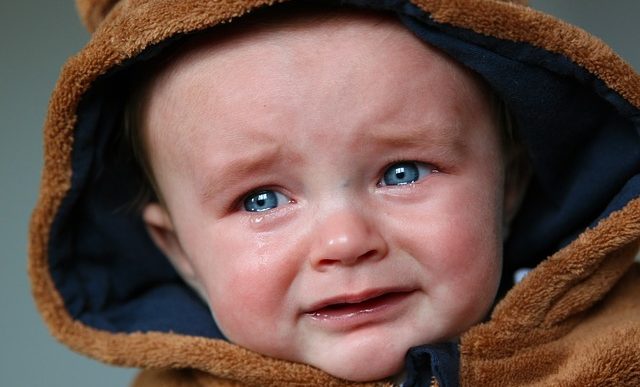
Cyber Attack Fears as MULTIPLE CITIES HIT With Simultaneous Power Grid Failures

The U.S. power grid appears to have been hit with multiple power outages affecting San Francisco, New York and Los Angeles.

Officials report that business, traffic and day-to-day life has come to a standstill in San Francisco, reportedly the worst hit of the three major cities currently experiencing outages.

Power companies in all three regions have yet to elaborate on the cause, though a fire at a substation was the original reason given by San Francisco officials.

A series of subsequent power outages in Los Angeles, San Francisco, and New York City left commuters stranded and traffic backed up on Friday morning. Although the outages occurred around the same time, there is as of yet no evidence that they were connected by anything more than coincidence.

The first outage occurred at around 7:20 a.m. in New York, when the power went down at the 7th Avenue and 53rd Street subway station, which sent a shockwave of significant delays out from the hub and into the rest of the subway system. By 11:30 a.m. the city’s MTA confirmed that generators were running again in the station, although the New York subways were set to run delayed into the afternoon.

Later in the morning, power outages were reported in Los Angeles International Airport, as well as in several other areas around the city.

Via : Inverse

The San Francisco Fire Department was responding to more than 100 calls for service in the Financial District and beyond, including 20 elevators with people stuck inside, but reported no immediate injuries. Everywhere, sirens blared as engines maneuvered along streets jammed with traffic.

Traffic lights were out at scores of intersections, and cars were backing up on downtown streets as drivers grew frustrated and honked at each other.

Via: SF Gate

The cause of the outage has not yet been made clear, though given the current geo-political climate it is not out of the question to suggest a cyber attack could be to blame. It has also been suggested that the current outages could be the result of a secretive nuclear/EMP drill by the federal government.

As we have previously reported, the entire national power grid has been mapped by adversaries of the United States and it is believed that sleep trojans or malware may exist within the computer systems that maintain the grid.

In a 2016 report it was noted that our entire way of life has been left vulnerable to saboteurs who could cause cascading blackouts across the United States for days or weeks at a time:

It isn’t just EMPs and natural disaster that poses a threat to the grid, but there is also the potential for attacks on individual power substations in the vast network of decentralized and largely unguarded power grid chain. A U.S. government study established that there would be “major, extended blackouts if more than three key substations were destroyed.”

Whether by criminals, looters, terrorists, gangs or pranksters, it would take very little to bring down the present system, and there is currently very little the system can do to protect against this wide open threat.

Whether the current outages are the result of a targeted infrastructure cyber attack or simply a coincidence, most Americans think the impossible can’t happen, as The Prepper’s Blueprint author Tess Pennington highlights, a grid-down scenario won’t just be a minor inconvenience if it goes on for more than a day or two:

Consider, for a moment, how drastically your life would change without the continuous flow of energy the grid delivers. While manageable during a short-term disaster, losing access to the following critical elements of our just-in-time society would wreak havoc on the system.

Challenges or shut downs of business commerce

Breakdown of our basic infrastructure: communications, mass transportation, supply chains

Inability to access money via atm machines

Payroll service interruptions

Interruptions in public facilities – schools, workplaces may close, and public gatherings.

Inability to have access to clean drinking water

Full report: When the Grid Goes Down, You Better Be Ready!

It is for this reason that we have long encouraged Americans to prepare for this potentially devastating scenario by considering emergency food reserves, clean water reserves and even home defense strategies in the event of a widespread outage.

The majority of Americans have about 3 days worth of food in their pantry.

Imagine for a moment what Day 4 might look like in any major city that goes dark.

This exclusive clip from American Blackout shows what an extended outage might look like:

Prepare for the worst, because this is one scenario you do not want to face. (For more from the author of “Cyber Attack Fears as MULTIPLE CITIES HIT With Simultaneous Power Grid Failures” please click HERE)

Follow Joe Miller on Twitter HERE and Facebook HERE.