School Sides With LGBT Group, Axes Chick-Fil-A

The P.C. police at a university in New York have successfully deprived their fellow students of access to a popular fried chicken chain, for all the reasons you’ve already heard before — this time at a college that is at least nominally Catholic.

According to the Fordham University student paper, The Fordham Observer, and further reported by The College Fix’s Rebecca Downs, the decision to decline a proposal to open a Chick-fil-A on campus came late last month after backlash from students at the Jesuit institution who smeared the corporation as anti-gay.

The student groups that were consulted in responding to the proposal were the United Student Government (USG), the Commuter Students Association (CSA), the Residence Hall Association (RHA) and the Rainbow Alliance [a student LGBT group].

The Rainbow Alliance was consulted in the decision-making process because of a controversy regarding Chick-Fil-A’s stance on LGBTQ issues that has been stirred up to varying degrees since 2012. That year, the family that owns the fast food chain made public statements against marriage equality, a stance backed up by several million dollars in donations they have made over the years to organizations working actively against same-sex marriage. When the chain opened their first location in New York in 2015, they faced protests on the issue.

Representatives from Chi[c]k-Fil-A offered to collaboratively run unspecified programming with the Rainbow Alliance in conjunction with the rollout of a venue on campus. Due to continued concerns regarding this issue, however, the Rainbow Alliance unanimously voted against the proposal. Several students independently reached out to USG to voice their concerns, according to then-USG president Leighton Magoon, Fordham College at Lincoln Center (FCLC) ’17.

“If they want to bring in Chick-Fil-A, they can bring in Chick-Fil-A,” Rainbow Alliance Co-President Renata Francesco told the paper. “But we’re not going to partner with an institution, a corporation that has so strongly supported other institutions that work to destabilize and demolish movements for queer equity.”

Yet this clear kowtow was not enough. Other students quoted in the story want the school to buy even further into their sexual and biological beliefs. The quote from Francesco’s counterpart, who doesn’t see this move as anything to celebrate, is also quite telling.

“This is something that I don’t want to congratulate Fordham for, like ‘Oh my [G]od, I’m so glad that you can see this. You’re such a good person,’” Rainbow Alliance co-president Roberta Munoz said. “I don’t want to pat them on the back. You can’t say ‘Oh you’re such a great ally’ when there’s still so many issues with our queer students. Like great, love it, but keep going.”

Indeed, the school’s administration, once having capitulated to the demands of the world, will received no applause for doing so, only more demands. There’s a lesson in that for all of us.

The message this sends to the public is pretty stark. A Jesuit school with one of the worst-ranked dining systems in the country and a dearth of outside vendors to supplement that system has decided to turn down a proposal from one of the most successful food chains in America, which has made a concerted effort to offer a slate of healthy options.

Certainly, the placement of a chicken joint on campus is far from a doctrinal issue and a school’s Catholicity is not measured by its food court, but the context of the decision sends a fairly clear message to students, applicants, and donors about whose message carries weight on campus, what will not be permitted on the grounds, and why.

But the bigger question here lies with the students who simply will not materially cooperate with people who have publicly disagreed with their politics.

What did these students demanding a chicken-sandwich-free campus and “trans-inclusive spaces” (think biological males in the ladies’ room) expect when they filled out an application and signed a tuition check to a Catholic school? Do they know what the Catholic Church actually believes about marriage?

The Catechism of the Catholic Church certainly isn’t a secret, and – despite the great deal of confusion sown by some Pope Francis’ public statements – the Church’s doctrines on marriage, the family, and the nature of man and woman (which align for the most with those espoused by Chick-fil-A’s oft-pilloried owning family) are as intrinsic and immutable today as they were two millennia ago.

Certainly, if these kids subscribe to the standard political wish list prescribed by the cadre class of this movement and refuse to partner with institutions who disagree with them, why in the world would they continue to prop up a Catholic institution by voluntarily attending it? When exactly do they stop?

It’s hard to tell if this inconsistency is humorous or just sad. It’s probably a mix of both.

However, given the school’s willingness to cave to a student group whose positions stand diametrically opposed to Church teaching, it’s not hard to see where these students’ clear confusion comes from. (For more from the author of “School Sides With LGBT Group, Axes Chick-Fil-A” please click HERE)

Follow Joe Miller on Twitter HERE and Facebook HERE.
New Vaccine Study Shows Unvaccinated Children Have Significantly Less Health Problems

In this video, Vin Armani explains the trade-off with vaccines. Like any pharmaceutical they have side effects. A brand new study on homeschoolers shows unvaccinated children have significantly less health problems as vaccinated children. Is the small chance that your child gets measles or mumps worth a lifetime of hay fever or asthma?

(For more from the author of “New Vaccine Study Shows Unvaccinated Children Have Significantly Less Health Problems” please click HERE)

Follow Joe Miller on Twitter HERE and Facebook HERE.

German Officers Raid Homes in Search of ISIS Members

German police raided homes in four states on Wednesday in connection with three people suspected of links to the Islamic State group, authorities said.

Apartments and other locations were searched in Berlin, Bavaria, Saxony and Saxony-Anhalt on Wednesday morning, federal prosecutors’ spokeswoman Frauke Koehler said in a statement.

Two suspects are accused of membership in a terrorist organization on allegations they belong to ISIS, while the third is suspected of supporting a terrorist organization. Two are also accused of weapons violations. (Read more from “German Officers Raid Homes in Search of ISIS Members” HERE)

Follow Joe Miller on Twitter HERE and Facebook HERE.
US May Send Patriot Missile to Lithuania Amid Moscow Threat

U.S. defense officials said a long-range Patriot missile battery may be deployed to the Baltic region later this year as part of a military exercise. The move, if finalized, would be temporary but signal staunch U.S. backing for Baltic nations concerned about the threat from Russia.

U.S. Defense Secretary Jim Mattis on Wednesday declined to confirm the specific deployment, but said, “We are here in a purely defensive stance. Everyone knows this is not an offensive capability. For anyone who says otherwise, I would just say I have too much respect for the Russian army to think that they actually believe there’s any offensive capability.”

At a news conference with Lithuania President Dalia Grybauskaite, Mattis said the U.S. “will deploy only defensive systems to make certain that sovereignty is respected. The specific systems that we bring are those that we determine necessary.” (Read more from “US May Send Patriot Missile to Lithuania Amid Moscow Threat” HERE)

Follow Joe Miller on Twitter HERE and Facebook HERE.
Comey Dismissal Memo Suggests Turf War Between DOJ, FBI

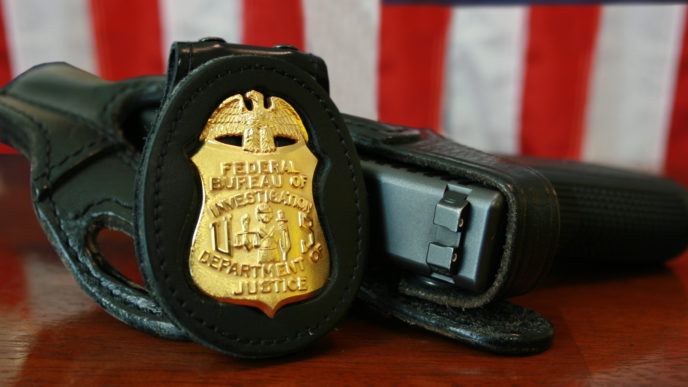
Deputy Attorney General Rod Rosenstein’s letter detailing the Department of Justice’s (DOJ) rationale for calling for the dismissal of former FBI Director James Comey is heavy on professional grievance.

The memo, submitted to President Donald Trump on Tuesday, strongly suggests that officials at the Justice Department felt Comey improperly assumed prerogatives that rightly belong to career prosecutors at DOJ, instigating a bureaucratic turf war that left department officials displeased.

The memo opens with Rosenstein’s conclusion that Comey’s press conference on July 5, 2016, where he announced he would not recommend criminal charges over Hillary Clinton’s use of a private email server, “usurped” the authority of his superiors at the Justice Department.

The Director was wrong to usurp the Attorney General’s authority on July 5, 2016, and announce his conclusion that the case should be closed without prosecution. It is not the function of the Director to make such an announcement. At most, the Director should have said the FBI had completed its investigation and presented its findings to federal prosecutors. The Director now defends his decision by asserting that he believed Attorney General Loretta Lynch had a conflict. But the FBI Director is never empowered to supplant federal prosecutors and assume command of the Justice Department.

The use of terms like “usurp” and “supplant” are both arresting and telling, as is Rosenstein’s assertion that Comey effectively “assumed command” of DOJ. This section of the memo argues Comey’s public statements stripped DOJ officials of prosecutorial discretion. In disclosing legal conclusions to the public, the former director foreclosed a number of options for department officials, leaving them little choice but to decline to pursue a case against Clinton. What’s more, the memo also states it was improper for Comey, whose role is restricted to finding facts, to reach any legal conclusions in the first place. (Read more from “Comey Dismissal Memo Suggests Turf War Between DOJ, FBI” HERE)

Follow Joe Miller on Twitter HERE and Facebook HERE.

Undercover Call Shows How Easy It Is to Get a Late-Term Abortion in This US State

A shocking undercover phone call has revealed just how easy it is to get a late-term abortion in New Mexico paid for by taxpayers.

Priests for Life and Abortion Free New Mexico released a recording the call. The groups wanted to determine what it would take to get a third-trimester abortion. They also wanted to know if Medicaid would pay for reasons other than the health of the mother, rape or incest.

The Call

Pro-life activist Tara Shaver called Southwestern Women’s Options, New Mexico posing as a mother who already had children and whose husband recently lost a job. Shaver made clear she was in her third trimester but didn’t want another child. The baby would be too expensive and be a strain on her marriage.

The clinic worker ran through a series of questions determining that neither the woman nor the child had health issues and the woman had prenatal care. Staver was then put on hold so the worker could consult with the abortionist.

After a few minutes, the clinic worker came back on the line and said the abortion could be performed. She then began describing the procedure. The abortion would take several days. The clinic worker explained that the fetus would be euthanized on the first day. The mother would then be dilated and induced. She was told that she’d still be going through labor and deliver a stillborn child.

The mother was also advised that she would need to be observed for a couple more days to recover.

Listen to the harrowing undercover phone call here:

What It Shows

Shaver said that the undercover call proves that late-term abortions are being performed even if the mother isn’t at risk. Late-term abortions are those after 20 weeks gestation. In New Mexico, late-term abortions are legal until 28 weeks. Babies can survive outside the womb as early as 23 weeks. “Our latest call dispels this myth with proof that in New Mexico late-term abortions are easy to come by.” She added that New Mexicans need to know the truth about what is happening in their state.

If that wasn’t bad enough, taxpayers can be made to foot the bill. In a separate call, Shaver told a clinic worker at Southwestern Women’s Options that she was 33 weeks along with a Down’s Syndrome baby. She was told that an abortion could be performed and that Medicaid would cover the charges.

Father Frank Pavone, a member of Priests for Life, said that most Americans do not support abortion on demand. He noted that every baby needed protection. But, “to educate our fellow citizens, let’s start with the most obvious and outrageous part of the story: Taxpayer-funded third-trimester abortions of healthy babies carried by healthy mothers.” (For more from the author of “Undercover Call Shows How Easy It Is to Get a Late-Term Abortion in This US State” please click HERE)

Follow Joe Miller on Twitter HERE and Facebook HERE.

What Donald Trump Could Teach Ellen DeGeneres About Diversity and Tolerance

OK. I admit it. The title of this article is meant to be catchy. But there’s an important truth I want to convey, which is simply this: tolerance and diversity are two-way streets.

While appearing on The Ellen Show, the Today Show’s Matt Lauer turned the tables and began to interview his host, asking her about her coming out as a lesbian, since this is the 20th anniversary.

He then asked her if she would have President Trump on her show, to which she replied, “No.”

Ellen explained, “Because I’m not going to change his mind. He’s against everything I stand for. We need to look at someone else who looks different than us, and believes in something that we don’t believe in and still accept them and still let them have their rights.”

And for that reason Ellen won’t have him on her show? Look at her reasoning again. She won’t have him on her program because “we need to look at someone else who looks different than us, and believes in something that we don’t believe in and still accept them and still let them have their rights.”

So, Ellen is refusing to sit across from someone who looks different than her and believes in something that she doesn’t believe because we need to be able to sit with those very people? Am I the only one who sees a glaring contradiction here?

Acceptance Through Nonacceptance?

Let’s parse Ellen’s words carefully, not to attack her but rather to probe how tolerant and inclusive our friends on the left really are.

First, she says, “I’m not going to change his mind.”

But is that the criterion for being a guest on her show? That you either agree with her or else must be willing to have your mind changed? How about healthy interaction with those with whom you differ? Isn’t that an important part of tolerance and diversity?

I recently took exception to an article written on the Huffington Post by a humanist journalist. So I wrote an article in response, after which I invited him to join me on my radio show. He joined me earlier this week, and we had a delightful one-hour discussion in the midst of our disagreements. How can discussions like this hurt? What if Ellen, who is obviously a master host, had a civil discussion with the president? Couldn’t we all benefit from that?

Second, Ellen said, “He’s against everything I stand for.”

Perhaps that’s true on several issues. But the president has hardly been an aggressive opponent of LGBT activism. He’s been strong on pro-life issues and has appointed men to his administration like Dr. Ben Carson and Jeff Sessions, both of whom oppose LGBT activism. But Trump has sought to present himself as a friend of the LGBT community, and it appears that Ivanka and Jared Kushner certainly push him in that direction.

I hoped that Trump would take a more conservative stand when it comes to LGBT activism. But it’s hard to understand how Trump is “against everything” Ellen stands for. If they spoke face to face before Ellen’s massive audience, maybe a few areas of agreement would emerge?

Third, how I can tell you that we should be able to sit and talk with those we differ with, only to turn around and say, “I won’t sit and talk with you because we differ”? (I once had a company refuse to work with me because they were “inclusive.” Come again?)

Fourth, Ellen says that when it comes to people who are different than us, we must “still accept them and still let them have their rights.”

Is this, then, Ellen’s way of accepting Trump, by saying she would not have him on her show? (I’m sure this is of no concern to the president, who hardly needs to find a way to get more TV exposure. I’m simply addressing the issue.)

Whose Rights Does Ellen Affirm?

When it comes to people having “rights,” we could obviously debate many aspects of LGBT rights. For example, does a biological male who identifies as a female have the “right” to use the ladies’ bathroom? But right now, President Trump is not campaigning to overturn the Supreme Court’s ruling on same-sex “marriage” (again, I would be glad if he did), so I’m still not sure whose “rights” he is opposing.

It would be odd if Ellen wasn’t thinking about LGBT issues at all in her statement, given the immediate context of the interview. The context was her coming out as a lesbian, then asking if she’d have Trump on her show. Perhaps she has caricatured the president even beyond his own caricatured personality?

And when it comes to rights, is Ellen willing to affirm the right of a photographer not to be forced to shoot a same-sex wedding ceremony because of deeply held, sacred beliefs? Do Christian conservatives and other people of faith have rights too?

A Good Host — But a Bad Move

This is the kind of discussion that I think Ellen really should have on her show. Why further demonize each other? And as bombastic and combative as Trump can be, he also seems to like sitting face to face with those who differ with him. After all, isn’t that a part of negotiating and deal-making?

There are many reasons why Ellen DeGeneres is so loved by so many Americans. She must have many fine qualities as a human being created in the image of God. The fact that she is so dismissive of the president of the United States that should we not welcome him on her show is a point against her, not for her. (For more from the author of “What Donald Trump Could Teach Ellen DeGeneres About Diversity and Tolerance” please click HERE)

Follow Joe Miller on Twitter HERE and Facebook HERE.

Yates, Clapper Refuse to Reveal Details on Trump Surveillance

Former NSA Director James Clapper and former acting Attorney General Sally Yates testified before a Senate Judiciary subcommittee this week about the unmasking of surveillance on Trump and his associates. It was part of a congressional investigation into whether Russia interfered in the election. Democrats claim the Trump campaign colluded with the Russians to influence the election.

The questioning focused heavily on Michael Flynn, Trump’s former National Security Advisor. Flynn was forced to resign after the unmasking revealed he had lied to the vice president about a conversation with the Russian ambassador.

Media coverage of the testimony is focusing on the fact that Trump did not act right away to remove Flynn. But that is only a small part of what was revealed. More importantly, Clapper and Yates did not provide any evidence of collusion with Russia. They also revealed more evidence of the surveillance of Trump’s team.

Unmasking

Senator Chuck Grassley (R-Iowa) asked several piercing questions. He asked the two if they reviewed classified documents where Trump or his associates had been “unmasked.” The identities of Americans taped talking to a foreign official are “masked,” unless a request to unmask them is approved.

Clapper and Yates both responded yes, but refused to provide details.

Grassley asked them if they had any evidence that Trump or his associates colluded with the Russians to interfere in the election. Clapper responded no. Yates refused to answer. She added, perhaps tellingly, “Just because I say I can’t answer it, you should not draw from that an assumption that that means that the answer is yes.”

Next, Grassley asked, “Did you request the unmasking of Trump, his associates or any members of Congress?” Clapper said yes, but would not disclose any details. Yates said no.

Grassley asked the pair if they know how details of Yates’ conversations were leaked to The Washington Post. They both denied being the source.

Should Michael Flynn Have Been Fired Earlier?

Yates testified that she warned Trump’s White House counsel Donald McGahn about Flynn almost three weeks before Flynn was forced to resign. He was “compromised by the Russians” and “could be blackmailed,” she said.

Surveillance recorded a conversation Flynn had with Russian Ambassador to the United States Sergei Kislyak on December 29 about recent U.S. sanctions against Russia. When Vice President Mike Pence asked Flynn about it, Flynn denied discussing the sanctions.

The lie, not the conversation, reportedly led to his resignation. Members of a presidential transition team frequently speak with foreign officials. Yates refused to name what of Flynn’s behavior she thought illegal.

Flynn didn’t resign until 18 days after Yates warned Trump. However, Reince Priebus, Trump’s Chief of Staff, explained on CBS’s Face the Nation in February that the White House legal department “said they didn’t see anything wrong with what was actually said.” When Yates told McGahn about Flynn, he told her that the White House was concerned that taking action might interfere with the FBI probe.

White House spokesman Sean Spicer said Flynn was forced to resign due to a “trust issue,” not a legal issue. The White House became aware of the lie on Friday, February 10. Flynn was asked to resign the next business day, on Monday, February 13.

Former President Barack Obama told Trump two days after the election not to hire Flynn. In 2014, Obama fired Flynn as head of the Defense Intelligence Agency. Flynn worked on Trump’s presidential campaign and had been considered as a running mate. Spicer dismissed the warning as “sour grapes” from a “sore loser.”

Was Surveillance Really Just Part of ‘Incidental Collection?’

When Yates was asked whether Flynn was unmasked due to “incidental collection,” she declined to answer. Nor would she reveal whether anyone had asked to unmask Flynn. She said answering the question would reveal classified information.

Members of Trump’s transition team were reportedly caught in surveillance of foreign officials. Trump maintains that he was subject to surveillance. The Obama administration insists it was routine surveillance of Russians, who happened to be speaking with Trump and his associates.

Sen. Rand Paul (R-Ky.) has asked the House Intelligence Committee to disclose whether the Obama administration conducted surveillance on him or other members of Congress. He said an anonymous source told him it occurred. Susan Rice, Obama’s national security advisor, was caught in a lie about unmasking Trump or his associates. At first she denied having any role in unmasking. After evidence emerged showing otherwise, she admitted she requested unmasking. She has refused to testify before Congress.

Republicans also questioned Yates about her refusal to enforce Trump’s travel ban. Yates was fired after refusing to enforce the ban. Judicial Watch is suing for Yates’ emails. (For more from the author of “Yates, Clapper Refuse to Reveal Details on Trump Surveillance” please click HERE)

Follow Joe Miller on Twitter HERE and Facebook HERE.
A 2016 Election Battleground State Is Investigating Potential Voter Fraud

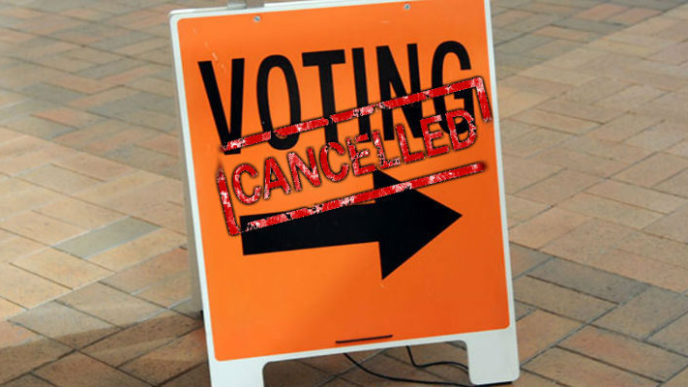
New Hampshire’s U.S. Senate race was decided by little more than 1,000 votes in November, while the spread between the top two presidential candidates was fewer than 3,000 votes.

While 458 potentially fraudulent votes aren’t enough to have changed the outcome of either race, the questionable votes prompted an investigation by the New Hampshire Attorney General’s Office and legislation to reform the state’s same-day voter registration.

“It’s not enough to change the result of the national level races, but it could impact state or local races that are often decided by just one vote,” New Hampshire Deputy Secretary of State David Scanlan told The Daily Signal.

Though New Hampshire is a small state, its House of Representatives has 400 members—the largest state legislative body in the United States.

While President Donald Trump and some other Republicans have said voter fraud occurred in last year’s elections, it wasn’t a conservative outlet that turned up inconsistencies in New Hampshire.

A public records request by New Hampshire Public Radio determined that 5,903 New Hampshire voters registered on Election Day using an out-of-state ID under the state’s same-day voter registration law.

To register to vote with an out-of-state ID, a person must show documented evidence of living in New Hampshire. In lieu of that, voters may sign a legal document affirming their address, under penalty of prosecution if they lie. For confirmation, election officials send a letter to that address after the election.

The New Hampshire Secretary of State’s Office sent out a total of 6,033 letters to people who voted in New Hampshire without proof of a domicile in the state (including but not limited to same-day registrants), according to a follow-up report by NH1 News Network.

Of those, 458 letters came back as undeliverable. This is the evidence of potential voter fraud. New Hampshire has 984,920 registered voters.

In a phone interview with The Daily Signal, Scanlan said that after the letters came back as undeliverable, the office sent the matter to the state Attorney General’s Office for investigation as required by law.

“Just because these were undeliverable doesn’t mean they were illegal votes. We’re seeking further investigation to find out,” Scanlan said.

No update is available, New Hampshire Assistant Attorney General Brian Buonamano told The Daily Signal, and the office continues to review the information.

Attorney General Joseph Foster and Secretary of State William Gardner both are Democrats.

The Republican-controlled state Senate passed a measure 14-9 on March 30 reforming the same-day voter registration system.

The legislation would require a same-day registrant to provide a document showing he or she lives or plans to live in New Hampshire for more than 30 days.

Documentation could include real estate contracts, leases, school enrollment forms, or utility service agreements. A false statement could lead to a fine of up to $5,000.

If passed, the bill would continue to allow people to vote without proof, but they would have to fill out an affidavit promising to provide proof within 10 days. This shifts some of the burden to the voter who lacked necessary ID, rather than local election officials who currently have to send the confirmation letter within 90 days of the election.

“The thrust of this bill does not change same-day voter registration,” state Sen. James Gray, R-Rochester, vice chairman of the Election Law and Internal Affairs Committee, told The Daily Signal. “This is about making sure folks who vote here do live here.”

Under the legislation, the local election supervisor would seek to verify a voter’s address. The official would first use available public documents. If the official is unable to verify the voter’s location, the official will remove the name from the voter rolls and send the matter for review by the Secretary of State’s Office.

Republicans control the state’s House of Representatives, and Gov. Chris Sununu also is a Republican, so the political climate favors the legislation. However, the bill faces opposition from national groups.

Amy Busefink, a national voter registration director for Project Vote, an organization opposing voter ID laws, wrote that the bill “will make registering to vote more difficult for students and low-income people.”

Busefink said the bill “proposes steep penalties and issues the threat of criminal investigations that can deter or intimidate voters—especially those who may not have physical proof of domicile because they recently moved—from registering and voting.”

The legislation clearly is needed given what’s known about New Hampshire elections, argued Logan Churchwell, spokesman for the Public Interest Legal Foundation, an organization that advocates stronger voter integrity measures.

“Those votes were cast and still count. That 458 [questionable votes] only reflects the addresses that were undeliverable, it doesn’t reflect the potential fake names that might have been provided,” Churchwell told The Daily Signal. “There could be more who gave a good address and name, it just wasn’t theirs. How many voters might have come from Massachusetts? We don’t know.” (For more from the author of “A 2016 Election Battleground State Is Investigating Potential Voter Fraud” please click HERE)

Follow Joe Miller on Twitter HERE and Facebook HERE.
Trump Considers Expansion of America’s Longest War. What That Means.

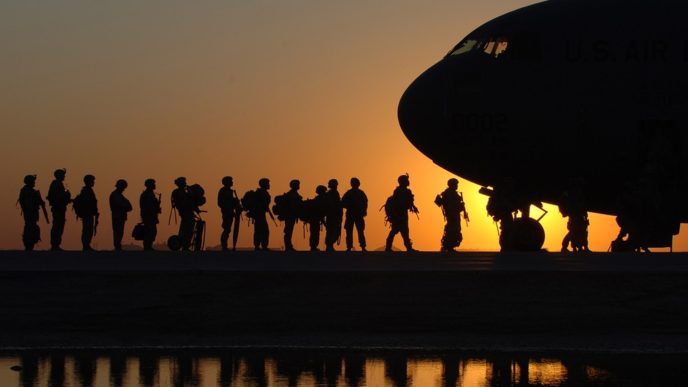
In an early test of his foreign policy, President Donald Trump is facing a decision on whether to contribute thousands of additional U.S. troops to America’s longest-running—and often overlooked—war.

As first reported by The Washington Post, Trump’s senior military and foreign policy advisers recommend that the president send 3,000 to 5,000 more troops to bolster an existing U.S. force of 8,400 in Afghanistan and help that country’s government gain momentum in a 15-year war against the Taliban, the Islamist insurgent group.

Experts who study the Afghanistan War say the plan is designed to break a stalemate in the fighting, and to pressure the resurgent Taliban to negotiate a peace agreement with the Afghan government.

These experts, in interviews with The Daily Signal, say the proposed strategy does not represent a dramatic U.S. escalation to a war in which America once committed 100,000 troops.

But they say if Trump were to approve the plan—he’s expected to make a decision before a May 25 NATO meeting in Brussels—it would challenge the president’s evolving foreign policy doctrine. That doctrine has trended toward a narrow counterterrorism-first approach rather than deep commitments to overseas conflicts.

“My best guess is [Trump’s advisers] are looking to at least stop the bleeding in Afghanistan at the moment,” Bill Roggio, who edits the Foundation for Defense of Democracies’ Long War Journal, said in an interview with The Daily Signal. “They are also doing what they think they can get away with and what is politically acceptable. There is not a lot of support in the American public, and among members of Congress, for a significantly deeper U.S. commitment to the Afghanistan War.”

Roggio said he did not think the additional troops would fundamentally change the situation in Afghanistan, where more than 2,000 U.S. troops have died and another 20,000 have been wounded.

“The Taliban have had momentum for several years now,” Roggio said. “They have weathered a full surge of U.S. forces. The Afghan security forces have not been able to hold the gains. So I don’t think an incremental increase in troops will affect the situation all that much.”

‘Rise From the Dead’

Yet Roggio and others say an extra U.S. presence could reverse declines in the security situation in Afghanistan.

President Barack Obama, who had pledged to end U.S. military involvement in Afghanistan, steadily reduced the American role, but did not completely pull out troops due to a number of security challenges.

The Taliban is gaining territory. Reuters reports the Islamist group controls 40 percent of the country, and that casualties for government forces reached record levels last year. In addition, the terrorist group al-Qaeda has established new footholds in Afghanistan, the country it used to plan the 9/11 attacks. And ISIS also has established a small presence in Afghanistan.

“Afghanistan is not the only place, and even the most important place at any given time [for U.S. interests],” Michael O’Hanlon, director of the foreign policy program at the Brookings Institution, said in an interview with The Daily Signal. “But as we have seen with the Taliban surge, and ISIS gaining a foothold there, it’s pretty clear this area has an ability to allow bad guys to rise from the dead. You want a sustained presence in Southeast Asia as the easternmost pillar in the counterterrorism capacity of the United States.”

‘Not a Surge’

Currently, American forces in Afghanistan have two primary missions: advising and training Afghan forces and conducting counterterrorism missions, including a recent raid that killed the leader of ISIS’ affiliate there, Abdul Hasib.

According to The New York Times, the new Trump administration plan would allow American advisers to assist a larger number of Afghan forces, and work closer to the front lines. Under the proposal, the U.S. would also not set a firm deadline for withdrawing troops, as Obama did.

“This is not a surge,” said James Jay Carafano, vice president for foreign and defense policy at The Heritage Foundation, who advised Trump’s transition team. “This is still going to be an Afghan-led thing.”

Carafano, a retired Army officer, added:

It’s not a dramatic expansion of the conflict where we go in there and say we will win once and for all. It’s about how we get to conditions on the ground that keep Afghanistan on a path to stability. That’s what’s driving the troop numbers.

Others say the Trump administration risks being stuck in a middle-ground position, with little realistic chance for new peace talks unless both sides make concessions.

The challenges for peace are exacerbated at a time when Afghanistan’s security leadership faces allegations of corruption, and the Taliban has shown little inclination to make concessions.

The Taliban also has been buffered by support from Iran and Russia, while Afghanistan’s neighbor, Pakistan, continues to provide a safe haven for militant groups.

Testifying before Congress in February, Army Gen. John W. Nicholson Jr., the top American commander in Afghanistan, called for a “holistic review” of policy toward and financial aid for Pakistan.

“It’s always been a close call on its merits, on whether it’s worth waging war in Afghanistan or not,” Stephen Biddle, a senior fellow for defense policy at the Council on Foreign Relations, said in an interview with The Daily Signal, adding:

You can still make a reasonable case for it and against it. I don’t think this is a hopeless situation. It’s not crazy to suppose we can get a compromise settlement. But that requires we get serious about this, which includes the Trump administration owning this process and expending political capital to build a constituency to support it.

Guarding Against ‘Catastrophic Events’

Rebecca Zimmerman, a policy researcher at RAND Corporation who focuses on Afghanistan, sought to downplay expectations for what an enhanced U.S. presence in the country could do.

She says U.S. support is most needed to prevent collapse of the Afghan government, which would make the country an ungoverned space to be exploited by extremist groups.

“The biggest threat to the U.S. is government collapse in Afghanistan,” Zimmerman told The Daily Signal. “If that happens, there is a likelihood of a multiparty civil war, and the countryside will be open to anyone who wants to plant a terrorist flag there. If we can support the Afghan forces to guard against catastrophic events that can fell the government, we would be using those troops effectively.”

With no near-term endgame, Roggio of the Foundation for Defense of Democracies says it’s fair to question whether the U.S. should continue to supply troops and funding — about $23 billion annually — to the Afghanistan War.

But he says walking away from Afghanistan would present immeasurable costs.

“It’s never wrong to question why we are still at war 15 years later,” Roggio said. “We should be asking hard questions about why we are sending service members to die. But it would be massive victory for jihadist groups across the world if the U.S. decided to pull out of Afghanistan.” (For more from the author of “Trump Considers Expansion of America’s Longest War. What That Means.” please click HERE)

Follow Joe Miller on Twitter HERE and Facebook HERE.