Our Public School System Isn’t Producing Education Equality

All across America, preparations are underway for high school graduation. It’s a glorious time, representing both a milestone and a gateway to adulthood.

But missing from this year’s ceremonies are more than one million kids who dropped out and will not be attending graduation day.

The future those high school dropouts face is chilling. They will have a much harder time getting a job and will earn much less than those who did graduate. They’re also more likely to commit a crime and more likely to be the victim of one.

In short, many of them face a life that will be so much more difficult—all because they could not or chose not to finish high school.

The consequences of this crisis are especially evident in my community. Today, more than half of all African-American students in many large U.S. cities don’t graduate from high school. Think about that.

And those kids aren’t just dropping out—they’re escaping.

According to the National Assessment of Educational Progress, schools that serve majority-minority communities have the worst performance, the highest crime rates, and the largest achievement gaps.

In cities like Detroit, more than nine in 10 black students can’t even read or do math at grade level.

It wasn’t supposed to be this way.

In 1954, the Supreme Court issued its landmark Brown v. Board of Education decision, ruling that school segregation is unconstitutional. “Massive Resistance” soon followed as many states launched an all-out effort to block integration.

My home state of Virginia was one of them, and anti-reform forces there mobilized to prevent black students from going to whites-only schools. They succeeded for a while but, in 1960, the first contingent of brave black students changed all that.

I was a member of the second contingent and, in 1961, was one of 26 black students assigned to integrate John Chandler Middle School in Richmond.

As the first day of school approached, we heard ominous threats of “blood flowing in gutters.” Thankfully, that didn’t happen. Instead, the only blood I saw was mine.

For the first month at Chandler, I never made it through the packed hallways between classes without at least one white student pricking me with a pin.

Sometimes, I was stuck so many times I had to press my dress against my body to keep the red streams from dripping down my legs.

It was awful, but it was worth it. In my own little way, I knew I was fighting for our equal right to get a great education.

Little did I know that more than half a century later, other girls and boys would still be fighting for education equality. Many of those kids are African-American like me, and the families many of them come from are poor and broken, like mine was.

But I was able to attend a better school, and they aren’t. Instead, anti-reform forces are blocking them from going to better-performing public charter and private schools.

Today, the nemesis isn’t the old Massive Resistance crowd, but a similarly determined cartel of unions, bureaucrats, and politicians. They make a great deal of money from the current system in the form of union dues, salaries, and political contributions.

As a result, they view education equality as a threat and anyone seeking it as their enemy.

Just ask Secretary of Education Betsy DeVos. Appearing before Congress recently, DeVos testified that her goal is “ensuring that every student has an equal opportunity to receive a great education.”

But rather than be hailed for seeking the equality promised decades ago, she’s being attacked by those who want things to stay just as they are.

But the secretary isn’t just right—she’s echoing the Supreme Court’s 1954 ruling which declared education to be “a right which must be made available to all on equal terms.”

Today in America, that right is conditional. If you are wealthy, white, connected, or elected, your child probably goes to or graduated from a great school.

But if you are African-American or Latino and living in a poor urban neighborhood, your child is much more likely to go to a failing school, a school where more than half of all students can’t read or write well, have low math scores, face the daily threat of bullying and violence, and won’t graduate.

Do these sound like “equal terms” to you?

In place of the equality mandated by the Supreme Court, we have disparities that are so shocking they defy belief.

Right now, America’s public school system includes outstanding institutions where students get an excellent education, use the best academic, athletic, and cultural facilities tax dollars can buy, and go on to college and promising lives.

And the same school system also includes failure factories where students don’t learn, spend their days in dilapidated and crime-infested buildings, fall further and further behind, and often drop out.

Now, which of these schools do you think is most often found in poor minority neighborhoods?

The reality, as House Speaker Paul Ryan has put it, is that the current system is effectively quarantining poor and minority children in failure factories.

For the sake of all those high school dropouts who will miss out on this month’s graduations, our nation needs the proponents of education equality to prevail.

Every single child—no matter their race, income, gender, or address—has the equal right to receive an excellent education. And every day in which that right isn’t a reality is a day in which we are losing more of these precious children. (For more from the author of “Our Public School System Isn’t Producing Education Equality” please click HERE)

Follow Joe Miller on Twitter HERE and Facebook HERE.

Trump Administration Keeps Obama LGBT Policies at Pentagon, Other Agencies

The Defense Department recently held an LGBT Pride Month event, while the Army conducted transgender sensitivity training, moves that baffled retired Army Lt. Gen. Jerry Boykin and some other conservatives.

They had expected that the new command, under President Donald Trump and Defense Secretary James Mattis, a retired Marine general, would revise if not reverse some of the Obama administration’s policies on transgender individuals in the military.

“I was very surprised, not so much by Donald Trump but by Gen. Mattis. I thought his total focus would be on military readiness and winning wars, and not social engineering,” Boykin told The Daily Signal.

Boykin is now executive vice president of the Family Research Council, which promotes traditional values.

The retired Army general argues that political correctness about both gender identity and women in combat is degrading the morale and readiness of the armed services by having troops spend hours in classrooms learning about gender issues.

“For 16 years we’ve been at war. When service members are not deployed overseas, they are preparing for war,” Boykin said. “Not one minute of preparation time should be squandered on social experiments.”

On June 12, the Pentagon held its sixth annual LGBT Pride Month celebration. Anthony M. Kurta, a retired Navy rear admiral, stressed its importance.

“[L]et us reflect on the service and sacrifice of all DOD members, past and present,” Kurta said, according to a Defense Department press release on the event. “We take pride in the contributions of all who defend and serve our country, and rely on the diversity of our members to meet our mission.”

Kurta is the Defense Department’s undersecretary of defense for personnel and readiness, a position he has held since 2014 under the Obama administration.

One group of conservative leaders, the Conservative Action Project, called for the Trump administration to “discontinue funding and directing personnel resources” for special interest events such as LGBT Pride Month that “do not strengthen military readiness.”

Some of those conservative leaders, including Reagan administration veteran Becky Norton Dunlop, say they understand that such programs likely have operated on autopilot since Trump succeeded Barack Obama as president Jan. 20.

Trump did not issue a presidential proclamation declaring June as LGBT Pride Month, as Obama did in the eight previous years.

Just before June, however, the Navy issued its own statement anticipating LGBT Pride Month.

“To remain the finest seagoing fighting force, the Navy needs men and women who are the right fit for the right job regardless of race, gender, sexual orientation, creed, or gender identity,” Capt. Candace Eckert, the Navy’s special assistant for inclusion and diversity, said. “Our goal is to ensure that the mission is carried out by the most qualified and capable sailors.”

Other federal agencies, from the State Department to the Department of Homeland Security to the Department of Veterans Affairs, confirmed to The Daily Signal that they use government resources to promote LGBT Pride Month during June.

Kathy McGettigan, the Trump administration’s acting director of the Office of Personnel Management, which oversees all federal employees, heralded the month celebrating lesbian, gay, bisexual and transgender employees.

“LGBT Pride Month is just one way that we can honor the struggles and achievements of the LGBT community, including the LGBT members of our federal workforce,” McGettigan, a 25-year employee, wrote June 9 on the Office of Personnel Management website. Her post provided related links for LGBT employees.

“Enjoy your celebration and Happy Pride Month,” McGettigan wrote.

The Department of Veterans Affairs put up three large LGBT Pride Month posters in its central office in Washington. The agency printed 150 bulletins to hand out at an event scheduled June 22 at VA headquarters, Sterling Atkins, the VA’s diversity and inclusion specialist, told The Daily Signal.

As for the State Department, a spokeswoman told The Daily Signal that the department “issued guidance to embassies and consulates allowing them to, as appropriate to their local context, recognize LGBTI Pride Month.” The “I” in LGBTI stands for “intersex.”

The State Department did not provide specifics.

The Small Business Administration scheduled an event June 21 and printed 75 pamphlets, spokeswoman Carol Wilkerson told The Daily Signal.

Conservatives interviewed say they particularly are concerned about the military, specifically with transgender recruits, because of what they consider issues of preparedness for war and unit cohesion.

“This puts extra burdens on military doctors and nurses who have to provide these hormone benefits and surgeries to service members who aren’t deployable for months. So, this becomes a magnet [for people seeking gender transition],” Elaine Donnelly, president of the Center for Military Readiness, a conservative pro-defense group, said in an interview.

Both the Republican Party platform and Trump as the nominee for president “vowed to eliminate political correctness in the military,” Donnelly told The Daily Signal.

“Military voters put trust in the president, but now there are so many Obama holdovers in the Pentagon making policy,” she said.

Donnelly, Boykin, and Dunlop were among 85 conservative leaders— including former members of Congress and former Cabinet officials—who signed a May 16 “memo from the movement” as part of the Conservative Action Project.

The memo raises similar concerns about government time and resources being devoted to “gender transitioning,” saying:

It must be difficult to suffer from gender dysphoria and confusion about one’s sexual identity, but concerns about these individuals do not justify mandates on military medical doctors and nurses to approve, provide, or participate in life-altering transgender treatment or surgeries. Many object to these experimental treatments on grounds of medical ethics or sincere religious convictions. …

[C]ontinuing implementation of the Obama transgender policies for service members would ignore the strongly felt concerns of women particularly, who do not want to be exposed to individuals of the opposite sex in facilities which offer minimal privacy. This grave problem must be taken seriously when the incidence of sexual assaults and rape in the military is so severe. …

Secretary Mattis should suspend and, upon further careful study, rescind Defense Department and military service directives permitting transgender individuals to serve. … Further, the Trump administration should discontinue funding and directing personnel resources for special interest events, including LGBT Pride Month events in June, which do not strengthen military readiness.

The memo was signed by cultural, economic, and national defense conservatives because frivolous defense spending affects everyone, said Dunlop, chairwoman of the Conservative Action Project, who is the Ronald Reagan Distinguished Fellow at The Heritage Foundation.

“This is entirely at the feet of Secretary Mattis,” Dunlop told The Daily Signal. “The president clearly, just by watching him, is a delegator.”

Even so, Dunlop, who worked in the Reagan administration, said she understands the Trump administration may not be able to address related issues immediately. But, she said, she would like to see movement in the right direction.

“Things do take time, but we expect to see evidence of changes,” Dunlop said. “We have not even seen evidence of people put in place to make the changes at the Defense Department.”

Readiness and combat effectiveness are the priority, Lt. Col. Myles Caggins, a Defense Department spokesman, told The Daily Signal. He said the department, at Kurta’s direction, conducted a review of the military’s ability to work with new transgender enlistees.

In a statement provided to The Daily Signal, Caggins said:

Diversity is a source of strength for the Department of Defense, and is a key to maintaining our high state of readiness. Diversity encompasses more than demographic differences (e.g., race, gender, and sexual orientation) — we also value diversity of thought, background, language, culture, and skills.

Matt Thorn, executive director for OutServe-SLDN, a Washington-based advocacy group for LGBT individuals in the military, dismissed the concerns expressed by the conservative leaders. SLDN stands for Service Members Legal Defense Network.

“This is expected from the far right, and it doesn’t have any foundational basis,” Thorn told The Daily Signal. “There is no evidence that we’ve heard or seen that makes the argument that transgender people [in the armed forces] affect military readiness.”

Navy veteran Ken Boehm, chairman of National and Legal Policy Center, a government watchdog group, was among the signers of the memo. Continuing the Obama administration’s social engineering policies is fiscally irresponsible, he told The Daily Signal.

“The Obama administration stuffed the Pentagon with people who didn’t have the defense of the country in mind, but had social engineering on their mind. Every dollar we spend on social engineering is one dollar less we are spending on defense,” Boehm said.

Boehm said he doesn’t understand why the Trump administration hasn’t made a change, but is willing to give Mattis the benefit of the doubt.

“I would suspect it’s a little like drinking from a fire hydrant,” Boehm said of what may be on the defense secretary’s mind, adding:

There is already one problem after another. I’ve never viewed Mattis as squishy. Trump authorized him to handle troop levels in Afghanistan. If he has that authority, I’d think he would tighten other things up. But sometimes you have to make trades in the short term for the bigger picture.

At this early juncture, it likely is a matter of priorities for the Trump administration, said Steven Bucci, a retired Army Special Forces officer and former top Pentagon official who was military assistant to Defense Secretary Donald Rumsfeld during the wars in Afghanistan and Iraq.

“Every day a policy is in place, it gets harder. Because of the ‘little c’ conservative nature of the Department of Defense, change is difficult,” Bucci, now a visiting fellow on national security policy at The Heritage Foundation, told The Daily Signal.

“Ash Carter’s legacy was women in combat and transgender issues,” Bucci said, referring to the last of Obama’s three defense secretaries, and a deputy to the previous two. “I don’t think we want Mattis to focus on the social issues as his No. 1 priority. We want him fighting bad guys. It’s unrealistic to think he would change the policies this early.” (For more from the author of “Trump Administration Keeps Obama LGBT Policies at Pentagon, Other Agencies” please click HERE)

Follow Joe Miller on Twitter HERE and Facebook HERE.
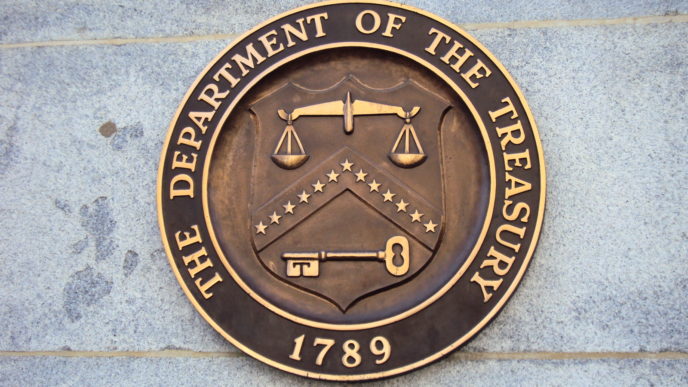
What the Treasury’s New Recommendations Would Mean for Financial Reform

This week, in response to President Donald Trump’s February executive order, the U.S. Treasury released the first in a series of reports examining the U.S. financial regulatory system.

The report identifies policies that would improve federal financial regulation in a manner consistent with the Trump administration’s seven core principles.

Treasury incorporated a wide range of perspectives on financial regulatory reform, and they should be commended for producing a large volume of specific reform proposals.

For the most part, the reforms seem perfectly in line with the administration’s core principles. And since those principles closely track the ideas in the Financial CHOICE Act—Texas Rep. Jeb Hensarling’s bill that recently passed the House—Americans should be rejoicing.

Treasury champions the innovative “off-ramp” approach to regulatory relief found in the CHOICE Act. For instance, page 12 states that:

Treasury supports an off-ramp exemption for [Dodd-Frank Act stress tests], [Comprehensive Capital Analysis and Review], and certain other prudential standards for any bank that elects to maintain a sufficiently high level of capital, such as the 10 percent leverage ratio proposed by H.R. 10, the Financial CHOICE Act of 2017.

Page 53 expands on the idea and says:

An alternative approach for providing regulatory relief that should be considered would be to establish a “regulatory off-ramp” from all capital and liquidity requirements, nearly all aspects of the Dodd-Frank’s enhanced prudential standards, and the Volcker Rule for depository institution holding companies and insured depository institutions.

The capital election is an incredibly simple yet powerful idea. If a bank chooses to improve its ability to absorb losses, it earns regulatory relief. There is, after all, little reason to heavily regulate banks that can absorb their own financial risks.

Ultimately, Congress could expand this idea to provide even more regulatory relief and build even stronger markets.

The report also aligns very closely with the CHOICE Act approach for reforming the Consumer Financial Protection Bureau (CFPB).

Here are a few highlights from the CFPB section.

The CFPB’s structure renders it unaccountable to the American people.

The CFPB’s combination of an unaccountable structure and broad, unchecked regulatory power is unprecedented.

The CFPB’s substantive authority is unduly broad, ill-defined, and susceptible to abuse.

The CFPB has exercised its authorities in a manner aimed at maximizing its discretion, rather than creating a stable regulatory environment.

The Consumer Complaint Database lacks appropriate safeguards.

The CFPB’s supervisory authority is duplicative and unnecessary.

The CFPB’s supervisory authority over nonbanks represents a major shift in regulatory practice, with no clear benefits to justify the additional burdens.

Treasury recommends, among other reforms, making the CFPB director removable at-will by the president, funding the CFPB through the regular appropriations process, and repealing the CFPB’s supervisory authority.

The House and the Trump administration are clearly on the same page with these reforms, and the CFPB is clearly in their crosshairs.

The report suggests many other positive reforms that would improve financial regulation in ways consistent with the administration’s core principles.

For instance, Treasury recommends that Congress “reduce regulatory fragmentation, overlap, and duplication,” reforms that are long overdue and that the CFPB (ultimately) phase out the Qualified Mortgage Patch, subjecting all market participants to the same transparent set of mortgage rules.

On balance, the report is very positive and shows clear support for the types of reforms that have passed the House. However, several sections of the report seem to favor keeping Dodd-Frank-type rules in place.

For instance, page 10 of the report states:

The key elements of the regulatory framework that should be retained through any reform include:

Explicit, appropriately risk-sensitive capital standards;

Supervised stress-testing appropriately tailored based on banking organizations’ complexity;

Explicit, measurable, and transparent liquidity requirements;

Actionable living wills for the largest systemically-important banks; and
Enhanced prudential standards, based on the size and complexity of financial institutions.

Many of these items align perfectly with the Dodd-Frank approach, not the administration’s core principles. Several other policies in the report might make sense because they provide some relief to smaller institutions, but ultimately they could be harmful.

For instance, Treasury makes the following recommendations:

The threshold for participation in the company-run [Dodd-Frank Act stress tests] be raised to $50 billion in total assets (from the current threshold of more than $10 billion);

That Congress amend the $50 billion threshold under Section 165 of Dodd-Frank for the application of enhanced prudential standards;

Changing the threshold for compliance with living will requirements for
bank holding companies from the current threshold of $50 billion to match the revised threshold for application of enhanced prudential standards;

Banking organizations with $10 billion or less in total consolidated assets should be entirely exempt from all aspects of the Volcker Rule. A further exemption from the proprietary trading prohibition should be provided for all consolidated banking organizations, regardless of size, that have less than $1 billion in trading assets and trading liabilities and whose trading assets and trading liabilities represent 10 percent or less of total assets.

In the absence of a permanent congressional repeal, or instituting an off-ramp to fully exempt banks, it might make sense to provide temporary relief measures such as these. Ultimately though, it provides little benefit—at great cost—to keep these regulations.

It makes no sense, for example, to force banks to prove they have a plan to stay in business when the economy goes south. They really don’t want to go out of business.

Similarly, policies such as the Volcker Rule provide no particular benefit and ultimately make it more difficult for a bank to diversify its risks. These kinds of rules do not make the system safer.

Even focusing regulatory relief only on smaller banks is problematic. Unless such reforms acknowledge that the principle behind the regulation is flawed, implementing relief in this manner sends a clear message to remain small and undiversified.

While small, narrowly focused banks sound harmless, the U.S. has a disastrous history with those types of banks. Both the Great Depression bank failures and the Savings and Loan crisis consisted of mostly small, undiversified banks. Small banks are not automatically safer.

Regardless, the Treasury’s report is another positive step toward strengthening financial markets, ending bailouts, and protecting taxpayers.

The report includes many specific reforms idea that are consistent with the administration’s seven core principles, particularly empowering Americans to make independent financial decisions and informed choices in the marketplace, save for retirement, and build individual wealth.

Dodd–Frank relies on the federal government to plan, protect, and prop up the financial system, all of which are contrary to the administration’s principles. The approach in Dodd-Frank is counter to the principles that support free enterprise and maximize individual wealth.

The House has done its job to reform financial regulations, and the Trump administration is practically begging for the chance to sign a reform package based on the CHOICE Act.

Now, it’s up to Senate.

Many observers think that the CHOICE Act will not go anywhere in the Senate because Democrats won’t support the bill.

The Senate’s 60-vote threshold is a real hurdle, but Senate Republicans can still pass key sections of the CHOICE Act—perhaps even the entire bill—with only the 52-seat majority they currently hold.

They can do so through the budget reconciliation process.

Senate rules require that budget bill provisions be “germane” to budgeting and avoid increasing the deficit. Does the CHOICE Act meet those requirements?

Yes, indeed it does. The nonpartisan Congressional Budget Office (CBO) recently estimated “that enacting the legislation would reduce federal deficits by $24.1 billion over the 2017-2027 period.”

The CBO report is a green light for the Senate. It’s now up to Senate Majority Leader Mitch McConnell and Senate Banking Chairman Mike Crapo to push for reforms that will strengthen financial markets, end bailouts, and protect taxpayers. (For more from the author of “What the Treasury’s New Recommendations Would Mean for Financial Reform” please click HERE)

Follow Joe Miller on Twitter HERE and Facebook HERE.

New Revelations Show Mueller is a Disaster, Intends Investigation to Kill Trump AND GOP

Everyone is talking about the latest bombshell report from The Washington Post. Five anonymous sources with knowledge of Robert Mueller’s independent Russian probe claim that President Trump is now being investigated for obstruction of justice.

It’s not an exaggeration to say that this is the top story of the day – Memeorandum has collected more than 50 news and commentary outlets that have addressed the story. And it is a development that can radically alter the political environment in the country, to the point where the impeachment question steps out of the daydreams of partisan Democrats … and enters the realm of possibility.

“The move by special counsel Robert S. Mueller III to investigate Trump’s conduct marks a major turning point in the nearly year-old FBI investigation,” the Post writes.

The FBI was previously conducting a counter-intelligence investigation into Russian interference in the 2016 election and collusion between Trump’s team and the Russian government. Impeachment was absolutely out of the question. But because obstruction of justice is a criminal charge, Mueller is now leading a criminal investigation into President Trump’s actions that began shortly after former FBI Director James Comey was fired.

From the Post:

The obstruction-of-justice investigation of the president began days after Comey was fired on May 9, according to people familiar with the matter. Mueller’s office has taken up that work, and the preliminary interviews scheduled with intelligence officials indicate that his team is actively pursuing potential witnesses inside and outside the government.

The interviews suggest that Mueller sees the question of attempted obstruction of justice as more than just a “he said, he said” dispute between the president and the fired FBI director, an official said.

Top administration officials to be questioned include Director of National Intelligence Daniel Coats, NSA chief Mike Rogers, and former NSA Deputy Administrator Richard Ledgett.

Law professor Alan Dershowitz says it is unlikely any investigation leads to a Trump’s indictment.

“The fact that Mueller is opening an investigation on obstruction doesn’t answer the two basic questions,” Dershowitz told Newsmax. “One — can a president be indicted while sitting? And two — can a president be indicted for obstruction — which is simply doing his job being the head of the executive branch?”

“I think the answer to both of these questions is still going to be no and no.”

A criminal indictment is a matter of law enforcement. As the chief executive, the president of the United States has the ultimate authority on matters of law enforcement. Therefore, he is within his constitutional right to refuse to indict himself. (That’s Dershowitz’s point.)

Separate from the law enforcement issue, however, is a political question – that of impeachment. If the investigation reveals that President Trump obstructed justice, the House of Representatives can initiate impeachment proceedings and, if the House votes to impeach the president, the U.S. Senate will hold a trial.

That the Republican-controlled House of Representatives would vote to begin impeachment proceedings against a president from their own party is almost unthinkable. Almost. With elections every two years, the House is the legislative body closest to the people. That means the House is most responsive to the political environment of the country. Popular sentiment seems to be drifting in support of impeachment for President Trump, with almost half of Americans supporting impeachment, if a recent survey from Public Policy Polling is to be believed.

If by this time next year the criminal investigation into President Trump has turned up evidence of obstruction, bet on House Republicans to keep one eye on President Trump’s approval ratings and the other on November elections. Is it beyond feckless Republicans, who have already betrayed the president’s campaign agenda, to turn on the president if there is evidence of wrongdoing … but public sentiment against the administration puts GOP congressional majorities in danger?

Should the Democratic Party retake the House of Representatives in 2018, it is all but guaranteed House Minority Leader Nancy Pelosi satiates the rabid Democratic base by holding a vote to impeach Trump. An impeachment trial in the Senate would also be politically advantageous for the Democrats, as they will vigorously campaign against any Republican senator who refuses to vote to convict the president. If impeachment doesn’t remove Trump from office after that, the 2020 election surely will.

Long story short: The news of this investigation is a disaster for the Trump administration and the Republican Party. Even under the best-case scenario for the administration, in which the investigation leads to absolutely nothing, the inevitable leaks of the probe’s developments will continue to distract from any accomplishments President Trump may have. Distract how? Look at the messaging from the president Thursday.

By responding to the Washington Post report, President Trump invites discussion of the investigation rather than discussion of his policies. Notice how Thursday’s executive order on apprenticeships has been buried by coverage of the Mueller investigation?

There is only one way out for the president and the Republican Party — the political environment needs to change. And the surest way to achieve that is to rally the Republican majorities in Congress back to the fundamental issues of Trump’s winning presidential campaign.

Restore the filibuster in the Senate to break the Democrats’ obstruction. Pass a full repeal of Obamacare and free-market health care reforms. Get the economy growing again with big anti-regulatory bills like the REINS Act. Have Congress use its Article III powers to rein in the courts and bring national security back to the forefront.

Public opinion will respond favorably to good governance, and good governance will persuade voters to keep Republicans in power … and end the question of impeaching President Trump once and for all. (For more from the author of “Mueller’s Trump Investigation Could Prove Fatal for Trump and GOP” please click HERE)

Follow Joe Miller on Twitter HERE and Facebook HERE.

Sarah Palin Considering Suing New York Times

Former Alaska Governor Sarah Palin is considering suing the New York Times for libel after the Times published a Wednesday editorial falsely accusing her of inciting Jared Lee Loughner to shoot Rep. Gabby Giffords in 2011 even though it has long been established that there has never been any evidence whatsoever linking Palin to the attempted assassination.

Palin tweeted that a journalist suggested to her on Thursday that the Times “has fulfilled the two criteria for libeling a public figure”—a reckless disregard for the truth and malice.

She said she is “talking to attorneys this AM and exploring options.”

After James T. Hodgkinson, who supported Sen. Bernie Sanders (I-VT) and hated President Donald Trump and Republicans, shot House Majority Whip Steve Scalise (R-LA) and targeted other Republicans as they were practicing for their Congressional baseball game, the Times decided to publish an editorial on Wednesday in which it falsely blamed Palin for the assassination attempt on Giffords:

Was this attack evidence of how vicious American politics has become? Probably. In 2011, when Jared Lee Loughner opened fire in a supermarket parking lot, grievously wounding Representative Gabby Giffords and killing six people, including a 9-year-old girl, the link to political incitement was clear. Before the shooting, Sarah Palin’s political action committee circulated a map of targeted electoral districts that put Ms. Giffords and 19 other Democrats under stylized cross hairs.

(Read more from “Sarah Palin Considering Suing New York Times” HERE)

Follow Joe Miller on Twitter HERE and Facebook HERE.

US State Becomes First to Allow Nonbinary on Drivers License

Oregon became the first U.S. state to allow residents to identify as “nonbinary,” neither male nor female, on their driver licenses and identification cards Thursday in a decision by The Oregon Transportation Commission.

Beginning July 1, Oregonians will be able to choose “X” for sex Instead of “F” or “M” on their licenses and identification cards. Applicants will have to pay replacement or renewal fees.

Transgender and intersex Oregonians say the change validates their identities and makes them safer as they hand over their licenses at restaurants, health clinics and airports. Oregon Department of Motor Vehicles officials say they received little opposition to the change, which they first announced plans to carry out last summer. Of 83 comments, both written and oral, only 12 people opposed the change.

The testimony offered “important insight into some DMV customers that according to one of the witnesses are as common as redheads,” said Tom McClellan, the division administrator for the department. “People didn’t share their testimony. They shared their stories. They told us of their struggles so we would understand the need.” (Read more from “US State Becomes First to Allow Nonbinary on Drivers License” HERE)

Follow Joe Miller on Twitter HERE and Facebook HERE.

Liberty: This Republican Has a Revolutionary DC Gun Bill

A day after the tragic shooting of House Majority Whip Steve Scalise, R-La,. and others in Alexandria, Va. Wednesday morning, multiple members of Congress have publicly pondered how to keep themselves and others safe from other such attacks.

Rep. Thomas Massie, R-Ky., has an idea: Give people the freedom to defend themselves in our nation’s capital.

On the Fox Business Network Thursday, Massie announced that he would be introducing the D.C. Personal Protection Reciprocity Act (similar to a measure introduced by House Freedom Caucus Member David Schweikert, R-Ariz., last year).

The bill would honor people’s concealed carry permits (not just members of Congress) in the District of Columbia, where even a 2008 loss at the Supreme Court for the gun-grabbers has not deterred the government from keeping a tight leash on people’s exercise of their Second Amendment rights.

In D.C., guns are only allowed in the home, unless one can offer a good enough reason for the District to issue them a carry permit. And very few can.

Had Scalise’s security detail not been present, Sen. Rand Paul, R-Ky., a GOP team member, said that Wednesday’s attack “would have been a massacre.”

“From the description of the incident yesterday that I’ve received from my colleagues, it’s clear that the Capitol Hill police who were there are heroic,” Massie said, per the Washington Examiner. “But had Steve Scalise not been there, there would have been far more, would have been fatalities and lot of congressmen would have been hurt.”

The D.C. Personal Protection Reciprocity Act has gained 21 co-sponsors so far, including House Freedom Caucus Chair Mark Meadows, R-N.C., according to its press release.

However, not everyone is on board.

Within hours of the announcement, the bill received blowback from D.C. Delegate Eleanor Holmes Norton, who chided Massie for “shamefully using the District as political fodder” and “abuse congressional authority over D.C.”

“The delegate from D.C. may seek to prevent her constituents from exercising their right to self-defense, but she lacks constitutional authority to deny that right to all those who visit the nation’s capital,” reads a response from Rep. Massie, via text message. “The Constitution is clear on Congress’ jurisdiction over D.C.” (For more from the author of “Liberty: This Republican Has a Revolutionary DC Gun Bill” please click HERE)

Follow Joe Miller on Twitter HERE and Facebook HERE.
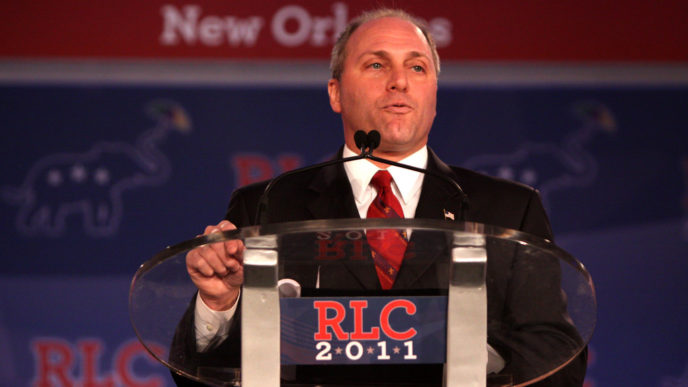
Steve Scalise Was Still Bleeding, and Liberals Were Calling for Gun Control

It didn’t take long for liberal pundits to reignite the gun control debate after a gunman opened fire on Republican lawmakers and staff at baseball practice Wednesday morning, wounding Louisiana Rep. Steve Scalise and four others.

Prominent liberal pundits and journalists used the Twitter hashtag “Gun Control” to bash Republican opposition on gun control and to push for more gun regulations not long after news of the shooting broke.

One freelance writer basically blamed Scalise for being shot. She tweeted, “The rep who was shot at the baseball game, Rep. Steve Scalise, introduced a bill to relax gun restrictions. https://t.co/GkR8bPt9HA.” The tweet has since been deleted. Other journalists immediately used the shooting to call for gun control.

(Read more from “Steve Scalise Was Still Bleeding, and Liberals Were Calling for Gun Control” HERE)

Follow Joe Miller on Twitter HERE and Facebook HERE.
Standing Together Against Evil

As long as the media, entertainers, and other public figures blatantly mock God, authority and laws, we will continue to witness horrific manifestations of evil like we saw in the attack on GOP representatives and senators in Alexandria, Virginia. If Americans continue to cast aside the principles upon which freedom stands, the blessings freedom offers will be lost. There is no substitute for the power of transforming truth that sets us free and keeps us free.

This latest senseless and evil act was not caused by the election of President Trump, his administration, or what he is trying to accomplish for America. The worthy goals he seeks to fulfill are, in fact, necessary to help bring such evil action under control.

It is perfectly appropriate and essential for our nation’s leaders to call for prayer and divine guidance. This call from President Trump, Senator Schumer, Speaker Paul Ryan and others is the right immediate step. Do not accept the foolishness of any individuals or media personalities who attack these calls as somehow unconstitutional or out of place. Prayer is in perfect harmony with the heart of our founding fathers, the spirit of our Constitution, and that which is essential for the future of freedom.

Evil is a Present Reality

Every one of us is distracted by evil, often defeated by evil, divided by evil and, tragically, sometimes destroyed by evil. Evil is a present reality; and calling good evil, or evil good, or light darkness does not solve the problem. Evil affects every one of us on the planet in this present age and will until we are in the kingdom to come, where there will be no evil. Although we are all distracted by it, often deceived, and defeated by it, this individual shooter at the baseball field was sold out to and controlled by evil.

Many of the active forces we witness around the world are acts perpetrated by people who have sold out to evil, and those forces must be resisted and destroyed. This is the rule of God-ordained authority and government of the people, by the people and for the people. (Read Romans 13:1-4.)

A Return to Righteousness and Unity

Right now, it is critically important that everyone who has a relationship with God the Father and Creator pray fervently for a supernatural awakening and a return to true righteousness and unity that only truth can make possible. The invitation from God, “Come now, and let us reason together,” is an invitation to the entire nation to come and reason together. Though our “sins be as scarlet they will become as white as snow.”

There is no substitute for repentance and a return to God. “When the enemy shall come in like a flood, the Spirit of the LORD shall lift up a standard against him” (Isaiah 59:19).

The heated rhetoric must cease on all sides. Instead of name-calling we must be calling on the name.

God still promises, “If my people, which are called by my name, shall humble themselves, and pray, and seek my face, and turn from their wicked ways; then will I hear from heaven, and will forgive their sin, and will heal their land” (2 Chron. 7:14). There is hope for the healing God freely offers to those who follow that glorious pathway. (For more from the author of “Standing Together Against Evil” please click HERE)

Follow Joe Miller on Twitter HERE and Facebook HERE.

Sessions’ Testimony: Zero Evidence of Trump Campaign Colluding With Russians

As part of their effort to prove the Trump campaign colluded with the Russians to influence the presidential election, Democrats in Congress are calling officials and former officials to testify before the Senate Intelligence Committee.

Last week, senators questioned former FBI Director James Comey. He disappointed the Democrats, since he affirmed Trump’s version of events. This week, they called Attorney General Jeff Sessions and Acting Attorney General Rod Rosenstein. The pair had recommended Trump fire Comey for the way he handled the probe into Hillary Clinton’s private email server.

Sessions’ testimony equally disappointed Democrats. He said repeatedly that he saw no evidence of collusion. He called the accusation that he personally colluded with the Russians to influence the election “a detestable lie.” At one point, he stormed, “The suggestion that I participated in any collusion or that I was aware of any collusion with the Russian government to hurt this country, which I have served with honor for over 35 years, or to undermine the integrity of our democratic process, is an appalling and detestable lie.”

He clarified that when he said during his confirmation hearing that he hadn’t spoken with Russians, he meant that no “surrogates had been meeting with Russians on a regular basis.” In fact, he said, he did not recall any of Trump’s campaign staff meeting with the Russians. He probably had two meetings with Russian ambassador Sergey Kislyak during the campaign. This is perfectly normal for presidential campaign officials.

Spy Fiction?

Sen. Tom Cotton (R-Ark.) engaged in the most dramatic exchange with Sessions. “Do you like spy fiction?” he asked. “Have you ever, ever in any of these fantastical situations heard of a plot line so ridiculous that a sitting United States senator and an ambassador of a foreign government colluded at an open setting with hundreds of other people to pull off the greatest caper in the history of espionage?”

He was referring to Trump’s first foreign policy speech at the Mayflower Hotel in April 2016. Both he and the Russian ambassador attended. Sessions does not recall talking to him.

Sessions laughed for the first time during the questioning. “Thank you for saying that, Senator Cotton. It’s just like through the looking glass,” he responded. “I mean, what is this? … I didn’t meet with them.”

Nothing Wrong With Trump Meeting Privately One-on-One With Comey

During Comey’s testimony last week, he said he felt awkward meeting with Trump one-on-one. He said he spoke with Sessions about it later, but he blew it off. Sessions said there was nothing “problematic” about the president privately meeting with Comey. “[Comey] did not tell me at that time any details about anything that was said that was improper.”

He saw “nothing wrong” with the president talking to the FBI director. “It didn’t seem to be a major problem. I knew that Director Comey, long-time experienced individual of the Department of Justice, could handle himself well.” Comey had said he spoke six or more times with President Obama and Trump.

Sessions denied he stayed silent when Comey urged him never to leave him alone again with Trump. He urged the FBI and Justice Department officials to follow proper protocol in their communications with the White House, he said. “[Comey] didn’t recall this, but I responded to his comment by agreeing.”

Sessions Protects Trump

Sessions declined to discuss Trump’s reasons for firing Comey. He said it was privileged information. Democrats accused him of stonewalling. Sessions denied doing so, saying he was just following the DOJ’s historic practices. He said he was protecting the president’s ability to invoke executive privilege. Democrats hammered him over this, saying he couldn’t invoke the privilege for Trump.

Sen. Lankford said he was amazed at the senators who thought Sessions was obliged to repeat private conversations with the president. He noted Democrats didn’t object when Obama’s AG Eric Holder withheld documents and private talks from Congress.

Referring to the rumor that Trump might fire Special prosecutor Robert Mueller, Sessions said that “the latest unnamed sourced story of the day” is “grabbing all the attention.” Mueller was appointed to look into the claims of collusion. Rosenstein had said in his testimony earlier in the day that only he as Acting AG has the authority to fire Mueller.

Sessions repeated what he told the president about firing Comey. “When Mr. Comey declined the Clinton prosecution, that was really a usurpation of the authority of the federal prosecutors in the Department of Justice.” Later on, he referred to it as a “Pretty breathtaking usurpation of the responsibility of the attorney general.” Comey’s public statement about the Clinton probe in July violated DOJ rules.

Since he had recused himself from the Russian probe, he said, his decision to fire Comey was not based on Comey’s actions there. He and Rosenstein had discussed replacing Comey before they were confirmed. “We both found that we shared common view that a fresh start would be appropriate.”

Sessions’ Recusal From the Russian Probe

Sessions explained he recused himself from the Russian probe because he had advised the campaign. He cited part of the federal code covering disqualification arising from personal or political relationship.

One senator asked him why Comey said his recusal was “problematic.” He responded irritatedly, “This is a secret innuendo being leaked out there about me, and I don’t appreciate it.”

As a result of recusing himself, he is not aware of any evidence that Russia hacked the election. “I never received any detailed briefing on how the hacking occurred,” he told the committee. The committee has found no evidence of collusion, Sen. James Risch (R-Idaho) told him.

Sessions defended the president from charges he’d interfered with law enforcement.“The President never asked me to do anything unethical or illegal.” (For more from the author of “Sessions’ Testimony: Zero Evidence of Trump Campaign Colluding With Russians” please click HERE)

Follow Joe Miller on Twitter HERE and Facebook HERE.