Trump’s Tariffs Ruled Illegal in Stunning Blow to President’s Agenda
A federal appeals court delivered a major setback to President Donald Trump’s trade agenda Friday, ruling that the sweeping tariffs he imposed earlier this year are illegal under U.S. law.
In a 3–0 decision, the U.S. Court of Appeals for the Federal Circuit found that the International Emergency Economic Powers Act (IEEPA) — the statute Trump cited to justify his global tariff program — does not grant the president authority to unilaterally impose such broad duties.
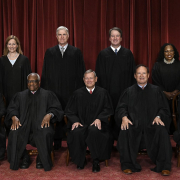
The ruling affirmed an earlier decision from the Court of International Trade, which struck down Trump’s executive orders in May. However, the appeals court paused its judgment until October 14 to allow the administration time to seek Supreme Court review.
“This is a significant constitutional question about the limits of presidential power,” said Georgetown University law professor Michael Ramsey. “The courts are signaling that trade policy — especially blanket tariffs — belongs to Congress, not the White House.”
Trump made tariffs a centerpiece of his second term after declaring a national emergency at the southern border on January 20. By April, he rolled out a sweeping tariff regime that reshaped U.S. trade relations with dozens of countries.
The measures included:
“Reciprocal tariffs”: a 10% baseline duty on nearly all imports, with higher surcharges for countries like China, India, and Canada.
Drug-related tariffs: 25% duties on Mexico and Canada and up to 20% on China, justified as part of the fight against fentanyl and cross-border trafficking.
Industry-specific tariffs: a 25% “fentanyl tariff” on Chinese pharmaceutical imports, a 100% duty on foreign films, and doubled steel and aluminum tariffs (from 25% to 50%).
Automobile duties: a 25% tariff on imported cars.
De minimis repeal: ending the exemption for low-value international packages, meaning even small online purchases from abroad now face tariffs.
At their peak, tariffs on Chinese goods climbed to 145% before a temporary July truce lowered rates to 30%. Canada, Mexico, and India were also hit with duties ranging from 25% to 50%.
The tariff blitz sparked immediate backlash. A coalition of small businesses and 12 states filed suit earlier this year, arguing that Trump’s actions were unconstitutional and exceeded his statutory authority.
Small manufacturers, retailers, and farm exporters said the tariffs increased costs, strained supply chains, and invited retaliatory measures from key trading partners. China and Canada both responded with their own counter-duties, escalating trade tensions.
“We’ve been left in a state of uncertainty for months,” said David Brown, who runs a small auto-parts importing business in North Carolina. “Now at least we know the courts are siding with the rule of law instead of executive overreach.”
The White House has not yet issued an official response, but senior officials are widely expected to appeal to the Supreme Court before the October deadline. If the high court agrees to hear the case, it could set up a defining legal battle over the scope of presidential authority in trade policy.
The ruling also reopens debate on Congress’s role in shaping tariffs and trade. While the Constitution grants Congress the power to regulate commerce with foreign nations, presidents of both parties have increasingly tested the boundaries of executive authority in the trade arena.
For now, businesses, consumers, and America’s trading partners are left waiting to see whether Trump’s tariffs — a cornerstone of his “America First” agenda — will survive judicial scrutiny.
Photo credit: Gage Skidmore via Flickr