China Deploys ‘Robot Wolves’ in Military Drills, Showcasing AI-Powered Combat Tactics

China has revealed that its armed forces have incorporated new “robot wolves” into military exercises, according to state media reports released Wednesday. The quadruped machines—designed to mimic the coordinated tactics of real wolf packs—are the latest sign of Beijing’s growing focus on autonomous battlefield technology.

Footage aired by state broadcaster CCTV and the Global Times showed the four-legged robots carrying rifles on their backs, climbing stairs, and maneuvering across challenging terrain. Officials claimed the machines can conduct precision strikes from as far as 100 meters, carry specialized equipment, and execute swarm tactics under the direction of a designated “pack leader.” This lead unit transmits reconnaissance data to human operators while coordinating the movements and attacks of the rest of the robotic pack.

The system bears similarities to tactics developed for drone swarms during the ongoing Russia-Ukraine conflict. By limiting the number of units that must maintain direct communication with human controllers, swarm formations can be more resistant to electronic jamming and signal interference.

While Chinese media promoted the “robot wolves” as a breakthrough in combat capabilities, analysts noted that such demonstrations often double as propaganda, and real-world battlefield performance remains untested. Similar claims about China’s edge in autonomous infantry drones have been made in the past, but no conclusive evidence of their combat effectiveness has emerged.

The U.S. military is pursuing parallel technology with its own Quadrupedal Unmanned Ground Vehicles (Q-UGVs). American designs range from weaponized models equipped with rifles or anti-tank rocket launchers to unarmed versions focused on reconnaissance and logistical support. The U.S. Marines have even explored using Q-UGVs as mobile air-defense units, leveraging artificial intelligence to detect and neutralize small aerial drones—a tactic developed in response to the proliferation of such systems in Ukraine.

The introduction of China’s “robot wolves” underscores the accelerating global race to integrate autonomous, AI-driven platforms into military doctrine.
Trump Orders a New Census

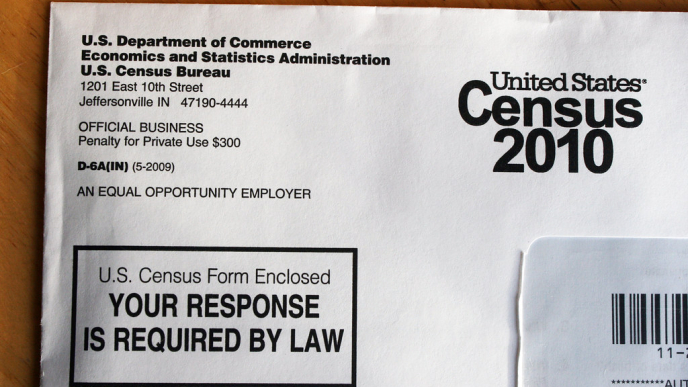
President Donald Trump has directed the Commerce Department to conduct a new census, one that counts citizens of the United States and omits illegal aliens.

“I have instructed our Department of Commerce to immediately begin work on a new and highly accurate CENSUS based on modern day facts and figures and, importantly, using the results and information gained from the Presidential Election of 2024. People who are in our Country illegally WILL NOT BE COUNTED IN THE CENSUS. Thank you for your attention to this matter!” Trump posted on Truth Social Thursday.

The 2020 Census was alarmingly inaccurate, resulting in faulty congressional representation in Washington D.C. From the Heritage Foundation:

In a shocking report that has not received the attention it deserves, the U.S. Census Bureau recently admitted that its 2020 Census count of the American population was incorrect in at least 14 states.

And those mistakes were costly to certain states in terms of congressional representation, number of electors, and money those states are likely to receive from the federal government during the next decade. To put the scope of these mistakes into perspective, contrast the errors in the Census Bureau’s latest recount (the 2020 Post-Enumeration Survey, or PES) with the recount from a decade ago (the 2010 Post-Enumeration Survey)—in which there was a net overcount of a mere 0.01 percent (36,000 people), a statistically insignificant error.

As explained below, as a result of these errors, Florida did not receive two additional congressional seats and Texas did not receive one more congressional seat. Meanwhile, two other states, Minnesota and Rhode Island, each retained a congressional seat that they should have lost, and Colorado gained a new seat to which it was rightfully not entitled.

(Read more from “Trump Orders a New Census” HERE)

Photo credit: Flickr

Biden Skipped 2024 Super Bowl Interview Over Hur Report Concerns, Aide Confirms

A trusted adviser to President Biden has confirmed that the decision to skip last year’s Super Bowl interview was influenced by concerns over the fallout from Special Counsel Robert Hur’s investigation into Biden’s handling of classified material.

Anita Dunn, 67, a longtime Biden confidant and former senior communications adviser, testified before the House Oversight Committee that the president’s inner circle anticipated tough questioning tied to the then-unreleased Hur report. According to sources familiar with her remarks, Biden’s team believed media attention would center on the classified records controversy rather than his policy agenda.

“They thought the main coverage would be about what he did with classified records and not about the President’s policy decisions,” one source recounted from Dunn’s testimony, adding that the decision was made even before the report’s official release.

Released on February 5, 2024, Hur’s report concluded that Biden would likely appear to a jury as “a sympathetic, well-meaning, elderly man with a poor memory” — language that ignited a heated national debate about his age and mental fitness. Biden’s legal team had reviewed the report on February 3 and 4, just days before the February 11 Super Bowl LVIII broadcast. News of his decision to decline the interview surfaced on February 3, marking the second consecutive year he had opted out.

The missed opportunity was notable — the annual Super Bowl interview offers presidents a rare, high-visibility platform to reach tens of millions of Americans, especially during an election year.

Dunn’s testimony also revealed that Biden’s top advisers discussed the possibility of a cognitive test but reached a consensus that it would yield “no political benefit.” While emphasizing that Biden was always the final decision-maker, she underscored that the choice not to pursue such testing was strategic rather than medically driven.

Despite these behind-the-scenes decisions, Dunn defended Biden’s engagement with the media. Citing research from Towson University’s Martha Joynt Kumar, she noted that over his presidency, Biden held 37 formal press conferences, participated in 151 interviews, and engaged in 679 informal gaggles with reporters — surpassing many of his predecessors since Ronald Reagan.

“I did not observe White House staff making key decisions or exercising the powers of the presidency without President Biden’s knowledge or consent,” Dunn testified.

Biden’s aides maintain that his avoidance of the Super Bowl interview was a calculated choice to prevent a political spectacle at a moment when the Hur report’s conclusions threatened to overshadow his policy messaging.

New Study Reveals the Real Driver of High Cholesterol

For decades, eggs have been at the center of a heated nutritional debate over their cholesterol content and potential impact on heart health. Now, new research suggests that eggs may not be the dietary villain they were once thought to be.

A team of Australian researchers has found that saturated fat — not dietary cholesterol — is the primary factor influencing levels of LDL cholesterol, often referred to as “bad cholesterol.” Their findings, published in the American Journal of Clinical Nutrition, challenge long-standing assumptions about eggs and cardiovascular risk.

The randomized, controlled study included 61 adults with elevated LDL cholesterol. Participants rotated through three different diets over five-week periods:

A high-cholesterol, low-saturated fat diet that included two eggs per day

A low-cholesterol, high-saturated fat diet without eggs

A high-cholesterol, high-saturated fat control diet with one egg per week

Surprisingly, the diet with two eggs per day and minimal saturated fat actually lowered LDL cholesterol more than the egg-free plan. Across all variations, researchers observed a consistent trend: saturated fat intake was directly linked to higher LDL cholesterol, while dietary cholesterol — found in foods like eggs and meat — was not.

“The key message is that it is not foods that are high in cholesterol that increase blood levels of ‘bad’ cholesterol, but it is the saturated fat in the foods that we consume,” explained study co-author Jon Buckley, executive dean at the University of South Australia. He noted that eggs are unique in that they are high in cholesterol but low in saturated fat.

This aligns with a December 2024 advisory from the U.S. Food and Drug Administration, which officially labeled eggs as “healthy,” citing mounting evidence that they do not significantly raise harmful cholesterol levels. The American Heart Association recommends keeping daily saturated fat intake to about 12–13 grams for a standard 2,000-calorie diet. With less than 2 grams of saturated fat per serving, eggs fit comfortably within those guidelines.

The findings may help put an end to the decades-long debate, restoring eggs’ reputation as a nutrient-dense food rich in protein, vitamins, and minerals. For those looking to improve heart health, the research suggests that reducing saturated fat — rather than avoiding eggs — should be the priority.

Photo credit: Flickr

NASA’s Curiosity Rover Captures ‘Coral’ Rock on Mars, Hinting at Ancient Water

NASA’s Curiosity rover has uncovered yet another fascinating clue about Mars’ watery past — a small, coral-like rock that may offer more evidence that the Red Planet once supported conditions for life.

The rock, about 1 inch (2.5 centimeters) wide and light in color, was discovered in the Gale Crater, a massive impact basin that has been a focal point of Curiosity’s decade-long mission. Captured by the rover’s Remote Micro Imager, the object bears an uncanny resemblance to coral found on Earth.

While striking, this isn’t the first time Curiosity has spotted such formations. According to NASA, these unusual shapes were created billions of years ago when liquid water still flowed across Mars. Water carried dissolved minerals into cracks in the rock, and as it evaporated, those minerals hardened into distinctive patterns. This process, common on Earth, has also produced other spectacular Martian features — including a flower-shaped rock captured in earlier missions.

“These findings remind us that Mars was once a planet of rivers, lakes, and possibly oceans,” NASA explained. “Although its surface water disappeared long ago, the minerals left behind tell a clear story of a world that was once much wetter.”

This summer, Curiosity also documented another intriguing geological phenomenon in the Gale Crater — intricate ridge networks nicknamed “spiderwebs” due to their insect-like patterns. These structures, like the coral rock, formed when water persisted underground even as the surface dried. Over time, Martian winds eroded the softer rock, revealing the hardened mineral ridges we see today.

“The images and data being collected are already raising new questions about how the Martian surface evolved over billions of years,” NASA said. “Remarkably, even as Mars transitioned into the cold desert we know now, water continued to shape its landscape beneath the surface.”

Photo credit: Flickr

Trump Signs Executive Order Cracking Down on ‘Debanking’: ‘Incompatible with a Free Society’

President Trump signed an executive order Thursday aimed at preventing banks from refusing to offer financial services to people based on their political beliefs or lawful business activities – a practice known as “debanking.”

“It is the policy of the United States that no American should be denied access to financial services because of their constitutionally or statutorily protected beliefs, affiliations, or political views, and to ensure that politicized or unlawful debanking is not used as a tool to inhibit such beliefs, affiliations, or political views,” Trump wrote in his order.

“Banking decisions must instead be made on the basis of individualized, objective, and risk-based analyses,” he added.

Earlier this week, Trump accused JPMorgan Chase and Bank of America of rejecting more than $1 billion of his deposits for political reasons.

“The banks discriminated against me very badly,” he told CNBC on Tuesday.

Former Republican Kansas Gov. Sam Brownback recently alleged he was “debanked” by JPMorgan over his conservative religious views – a claim the bank denied. (Read more from “Trump Signs Executive Order Cracking Down on ‘Debanking’: ‘Incompatible with a Free Society’” HERE)

Photo credit: Flickr

Arizona Lawmaker Could Face Charges After Tipping Off Illegals To ICE Presence

Arizona Republican lawmakers are calling for a federal investigation into a leftist state senator who tipped off her community about an Immigration and Customs Enforcement operation. It’s the latest case of a left-winger spouting incendiary rhetoric about ICE, a federal agency that has seen an 830 percent increase in assaults.

Arizona State Sen. Analise Ortiz shot back at a LibsOfTiktok post accusing the Phoenix Democrat of “actively impeding and doxxing” immigration enforcement officials. The far-left lawmaker has posted alerts from local groups sharing locations of ICE agents attempting to apprehend illegal immigrants. The LibsOfTiktok post, which copied ICE Director Tom Homan and the Department of Homeland Security, urged federal officials to charge Ortiz.

Ortiz defiantly responded, “Yep. When ICE is around, I will alert my community to stay out of the area, and I’m not f***king scared of you nor Trump’s masked goons,” the lawmaker wrote.

As of Wednesday evening, the post had received 10.7 million views. Among those watching was Arizona state Senate President Warren Petersen, who called Ortiz’s comments “deeply troubling.” (Read more from “Arizona Lawmaker Could Face Charges After Tipping Off Illegals To ICE Presence” HERE)

Photo credit: Flickr

Putin Drops Missile Pact, Sparking Fears of New U.S.-Russia Nuclear Arms Race

In a chilling throwback to Cold War brinkmanship, arms race fears are mounting as Putin says Russia is no longer bound by missile treaty limits that once curbed the deployment of intermediate-range nuclear weapons. The announcement has escalated tensions between Moscow and Washington to dangerous new levels as both nations engage in an increasingly volatile military standoff centered around Ukraine.

On Monday, the Russian Foreign Ministry declared an end to its self-imposed moratorium on intermediate-range missile deployments, citing aggressive moves by the United States and NATO allies, particularly the planned stationing of American Typhoon and Dark Eagle missile systems in Germany next year. The ministry warned that such deployments near Russian borders are a “direct threat” to the country’s security and could have “significant harmful consequences” for regional and global stability.

“Russia no longer has any limitations,” Kremlin spokesman Dmitry Peskov told reporters. “Russia believes it has the right to take respective steps if necessary.”

While the statement stopped short of detailing where or when Russia might deploy its own systems, President Vladimir Putin has already announced the coming placement of Russia’s new Oreshnik intermediate-range missiles in Belarus later this year. Designed for maximum speed and devastation, the Oreshnik—capable of flying at Mach 10 and carrying conventional or nuclear warheads—can reportedly reach any target in Europe.

NATO’s Missile Moves Spark Russian Reaction

Russia’s Foreign Ministry justified the policy shift as a response to Washington’s missile plans and broader NATO military buildup. “Decisions on specific parameters of response measures will be made based on the scale of deployment of American and other Western missiles,” the ministry said, stressing the need for a flexible strategy as the international security landscape evolves.

The United States and Russia both abandoned the Intermediate-Range Nuclear Forces (INF) Treaty in 2019 after accusing each other of violations. Signed in 1987 by Ronald Reagan and Mikhail Gorbachev, the INF Treaty had banned land-based missiles with ranges between 500 and 5,500 kilometers. Following the collapse of the agreement, Moscow pledged a voluntary halt in deployment—until now.

Former Russian President Dmitry Medvedev, now deputy chairman of the country’s Security Council, celebrated the end of the moratorium as a “new reality” that “all our opponents will have to reckon with.” In a post on X (formerly Twitter), Medvedev warned, “Expect further steps.”

Trump Orders Submarine Repositioning

The Kremlin’s announcement follows a separate development that could compound tensions. Former President Donald Trump, now leading in the polls as the 2024 election nears, said Friday he had ordered the repositioning of two U.S. nuclear submarines. The move came after a defiant Medvedev dismissed Trump’s warning to accept a Ukraine peace deal or face severe consequences.

Trump said he was alarmed by Medvedev’s combative rhetoric and nuclear threats, noting the escalation as a sign of worsening nuclear brinkmanship. “Each new ultimatum is a threat and a step toward war,” Medvedev had replied to Trump’s peace proposal.

With Trump’s self-imposed deadline for a Ukraine deal approaching, the maneuvering of both Russian and American nuclear assets underscores the renewed volatility in U.S.-Russia relations and the looming threat of a broader conflict that could involve NATO states.

Photo credit: Flickr

Trump Admin Poised To Ditch Biden-Era Taxpayer-Funded Abortion For Veterans

The Trump administration advanced its goal to eliminate taxpayer-funded abortion this week when it proposed ditching a Biden administration-era rule that forced taxpayers to subsidize veterans’ abortions.

One of President Donald Trump’s first actions in his second term was prohibiting Americans’ hard-earned dollars from going to organizations that lobby for, perform, or encourage abortions in other countries. The reinstatement of President Ronald Reagan’s Mexico City Policy brought the U.S. back up to speed with Americans’ majority opposition to taxpayer-funded abortions — especially overseas.

Now, six months into the Trump administration’s return, the Department of Veteran Affairs proposed a rule to rescind a 2022 policy that lumped abortions and “abortion counseling” into veterans’ taxpayer-funded medical benefits package.

“We believe the 2022 interim final rule was not only inappropriate as a matter of fact but also was legally questionable,” the August 4th notice posted to the federal register states.

As the proposed rule notes, “the regulatory determination that abortion is not a ‘needed’ service for veterans was accepted by every Secretary and Presidential administration for over 20 years.” It wasn’t until the Supreme Court’s Dobbs v. Jackson ruling in 2022 that the Biden administration saw an opportunity to advance its abortion agenda through the VA. (Read more from “Trump Admin Poised To Ditch Biden-Era Taxpayer-Funded Abortion For Veterans” HERE)

Photo credit: Flickr

Japan’s Demographic Crisis Deepens as Population Falls by Nearly a Million

Japan is facing its steepest population decline in modern history, with newly released government figures revealing a drop of more than 900,000 people in a single year—a record-setting contraction that highlights the country’s deepening demographic emergency.

According to data published this week by Japan’s Ministry of Internal Affairs and Communications, the total number of Japanese nationals fell by 908,574 in 2024. The nation’s population now stands at approximately 120 million, down from its peak of 126.6 million in 2009.

This marks the 16th consecutive year of population decline, driven by two reinforcing trends: persistently low birth rates and an aging society. In 2024 alone, Japan recorded fewer than 690,000 births, the lowest figure since the government began tracking the statistic in 1968. Meanwhile, nearly 1.6 million deaths occurred, marking the highest annual total on record.

The demographic imbalance is creating severe strain on Japan’s economic and social systems. The country’s working-age population (defined as individuals aged 15 to 64) has dropped to just 59% of the total population, significantly below the OECD global average of 65%.

At the same time, nearly one in three Japanese citizens is now over the age of 65, placing immense pressure on public pension systems, healthcare infrastructure, and eldercare services.

Economists warn that without a substantial reversal, Japan may face major labor shortages, economic stagnation, and difficulties maintaining basic public services—especially in rural areas that are losing residents faster than cities.

Japanese policymakers have been attempting to reverse the downward spiral for years, ramping up support for families and encouraging higher birth rates through a range of initiatives. These include offering financial incentives for childbirth, subsidizing housing for young families, and promoting greater participation in childcare by fathers.

But so far, those efforts have yielded limited results.

“Japan is confronting the consequences of demographic inertia,” said a Tokyo-based population analyst. “Even if the birth rate were to rise tomorrow, it would take decades for that shift to be reflected in a balanced age structure. The current pyramid is simply too top-heavy.”

Experts attribute Japan’s declining birthrate to a combination of economic insecurity, high living costs, and entrenched gender roles that continue to limit career and family options for women. Many young couples report delaying marriage and childbirth due to financial pressure or a lack of support in the workplace.

The fertility rate in Japan has hovered well below the replacement level of 2.1 children per woman since the 1970s and currently sits closer to 1.3. Unless that changes dramatically and quickly—a scenario many demographers view as unlikely—the population will continue to shrink for decades.

While Japan is not alone in facing aging demographics, the pace and scale of its population decline are among the most severe globally.

Photo credit: Flickr