Supreme Court Deals Blow to Deep State Control in Ruling Against EPA
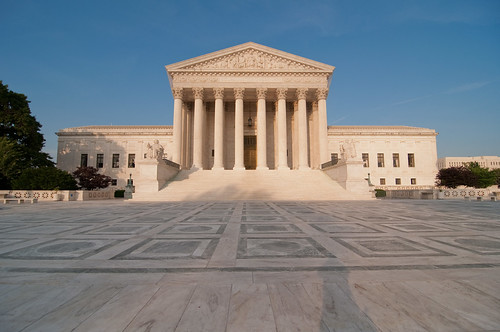
The U.S. Supreme Court took a major step in helping dismantle the federal government’s stranglehold on public policy on Wednesday. In an 8-0 decision, the court ruled that the Environmental Protection Agency (EPA) could not defend itself against a lawsuit from Oklahoma and Utah in its rubber-stamp home court, the D.C. Circuit.
The case arose from the EPA’s 2023 decision to deny the state implementation plans (SIP) submitted by 21 states in order to comply with the 2015 “good neighbor” revision to the Clean Air Act, which “mandates states to prevent their emissions from substantially affecting the air quality of neighboring states.” However, the facts of this case are essentially a secondary point, because the thrust of the Supreme Court appeal has to do with the venue at which the case can be heard.
The EPA wanted it to be heard in the D.C. Circuit, while Oklahoma and Utah, two states suing the EPA over the denial of their SIPs, want it to be heard in the 10th Circuit — their regional court. While the EPA has argued that the case should be heard in D.C. because the implementation plans are being requested by all 50 states, Oklahoma and Utah believe their local circumstances are much better heard by their own federal courts.
In this case, the EPA did individual state reviews “on their own merits,” but then denied the SIPs of certain states in one “omnibus” Federal Register rule in order to artificially shoehorn it into the D.C. Circuit to claim that such publication makes the denials a national action.
Justice Clarence Thomas, who authored the opinion, recognized that merely publishing those denials together does not constitute a national action that might warrant review in the D.C. Circuit, but rather that each denial is a matter between the individual state and the EPA. It should therefore be challenged regionally. (Read more from “Supreme Court Deals Blow to Deep State Control in Ruling Against EPA” HERE)
Photo credit: Flickr