
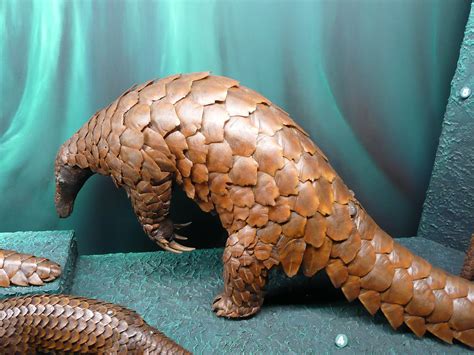
Evolutionists Scratching Their Heads: Existence of Electric Pangolin Confirmed
In a groundbreaking discovery that has sent shockwaves through the scientific community, researchers working in the remote regions of the Democratic Republic of Congo have reportedly encountered what they’re describing as an “electric pangolin.” This unprecedented finding came during a biodiversity expedition in the depths of the Congo Basin rainforest, one of the most biodiverse yet least explored regions on Earth. The research team, composed of zoologists, wildlife biologists, and conservation experts from various international institutions, initially set out to document the declining populations of the traditional pangolin species but instead stumbled upon what may be one of the most significant zoological discoveries of the century. The animal appears to be a variant of the giant pangolin (Smutsia gigantea) but possesses unique biological characteristics that allow it to generate and store electrical charges within its specialized scales.
According to preliminary reports, the electric pangolin shares many morphological features with its known relatives but exhibits several remarkable adaptations. The specimen documented measures approximately 1.4 meters in length, slightly larger than the average giant pangolin. However, the most striking difference lies in its modified scales, which contain specialized cells similar to the electrocytes found in electric eels and other bioelectrogenic fish.
These scales have a unique crystalline structure embedded with conductive proteins that can store and discharge electrical energy. When threatened, the animal can generate electrical pulses measuring up to 50 volts—not lethal to humans but certainly sufficient to deter predators. Unlike other electrogenic animals that use their ability primarily for hunting or navigation, the electric pangolin appears to have evolved this trait primarily as a defense mechanism, possibly in response to increasing predation pressure and human threats in its habitat.
The discovery has profound implications for our understanding of convergent evolution. While bioelectrogenesis has evolved independently in several fish lineages, this marks the first documented case in a terrestrial mammal. Dr. Eleanor Mboto, the lead zoologist on the expedition, explained: “This finding challenges our fundamental understanding of mammalian evolution. The independent development of electrogenic capabilities in a mammal represents an extraordinary example of convergent evolution, where similar traits evolve separately in organisms of different lineages.”
The research team is now conducting genetic analysis to determine whether this is a new species altogether or a previously unknown subspecies of the giant pangolin that has developed this adaptation in isolation. The discovery also raises important questions about how many other undiscovered adaptations might exist in Earth’s most biodiverse but understudied ecosystems. (Read more from “Evolutionists Scratching Their Heads: Existence of Electric Pangolin Confirmed” HERE)

