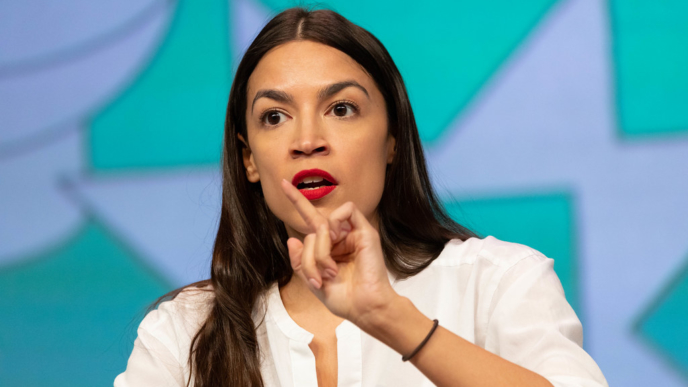
AG Barr Appoints U.S. Attorney to Investigate Origins of Russia Investigation

Attorney General Bill Barr has appointed a U.S. attorney to investigate the origins of the Russia investigation and to determine if the FBI’s surveillance of the Trump campaign in 2016 was legal.

The Associated Press reported that a source, who spoke on the condition of anonymity, said that Barr “appointed John Durham, the U.S. attorney in Connecticut, to conduct the inquiry.”

“The inquiry will focus on whether the government’s methods to collect intelligence relating to the Trump campaign were lawful and appropriate,” The AP added. “Durham has previously investigated law enforcement corruption, the destruction of CIA videotapes and the Boston FBI office’s relationship with mobsters.” . . .

Fox News reported on Monday that multiple sources had told the network that “Barr was ‘serious’ and had assigned DOJ personnel to the probe. Durham is known as a ‘hard-charging, bulldog’ prosecutor, Fox News is told.”

“Sources familiar with matter say the focus includes pre-transition period — prior to Nov. 7, 2016 – – including the use and initiation of informants, as well as potential Foreign Intelligence Surveillance Act (FISA) abuses,” Fox News added. “An informant working for U.S. intelligence posed as a Cambridge University research assistant in September 2016 to try to probe George Papadopoulos, then a Trump foreign policy adviser, on the campaign’s possible ties to Russia, it emerged earlier this month. And, Papadopoulos told Fox News, the informant tried to ‘seduce’ him as part of the ‘bizarre’ episode.” (Read more from “AG Barr Appoints U.S. Attorney to Investigate Origins of Russia Investigation” HERE)

Follow Joe Miller on Twitter HERE and Facebook HERE

Watch: President Trump Asked About War With Iran, Here’s How He Responded

President Donald Trump indicated that the world’s leading state sponsor of terrorism, Iran, is skating on very thin ice with its recent provocations in the Middle East and that if Iran does “anything, they will suffer greatly.”

“Are we going to war with Iran?” a reporter asked the president in the White House. “Are you seeking regime change?”

“We’ll see what happens with Iran,” Trump responded. “If they do anything it will be a very bad mistake, if they do anything. I’m hearing little stories about Iran. If they do anything, they will suffer greatly. We’ll see what happens with Iran.” . . .

“There was no immediate indication as to who may have been responsible or why the damage was inflicted, but the incidents occurred at the same time and place off the coast of the United Arab Emirates only days after the United States has dispatched warships and bombers to the area to deter alleged threats from Iran,” The Washington Post reported. “The location is near a sea lane critical to the world’s supply of oil, and the incidents followed a warning by U.S. maritime authorities that Iran might seek to disrupt commercial shipping in the area.” (Read more from “Watch: President Trump Asked About War With Iran, Here’s How He Responded” HERE)

Follow Joe Miller on Twitter HERE and Facebook HERE

Obama Judge Mandates Spanish-Language Ballots, Marketing, and Assistance in Elections

Teddy Roosevelt might have wished for there to be “room for but one language here, and that is the English language,” but now we have an unelected judge mandating that the states provide multilingual ballots for the core citizenship function of voting, based on his arbitrary standards.

On Friday, Judge Mark Walker of the Northern District of Florida ruled that Florida’s secretary of state must instruct 32 of Florida’s 67 counties to begin providing Spanish-language ballots with endless assistance, marketing, and advertisement, based on his reading of the demographics in those jurisdictions. This same Obama appointee ruled last September that sample ballots in those counties must be printed in Spanish. Now, he has extended that edict to Election Day ballots and marketing and assistance throughout the entire election process.

Even if federal law required what Judge Walker is demanding, it would be an unconstitutional commandeering of a state’s power over election law. Congress only has a small angle to get involved to set a national Election Day (Art. I, §4, cl. 1), and the 15th Amendment ensured that it cannot strip voting rights from freed slaves. Nothing in the text of the 14th or 15th Amendments fundamentally altered this arrangement of states controlling election law. Senator Jacob Howard, one of the prime drafters of the 14th Amendment, made it clear during the floor debate in 1866: “The second section leaves the right to regulate the elective franchise still with the States, and does not meddle with that right.”

Yet Judge Walker contends that section 4(e) of the Voting Rights Act (VRA) compels Florida to provide Spanish-language ballots and endless bilingual marketing and assistance for Puerto Ricans living in Florida (who are deemed automatic citizens). He contends that the law “prohibits English-only elections for those citizens — yes, citizens — educated in Puerto Rico in Spanish.”

For once, the judge is actually correct about the general law but not to the degree he applies it. In 1975, Congress did pass this unfunded liability on the states, at a time when there was only a fraction of the immigrant population we have in the country today. However, section 203 of the VRA only requires bilingual ballots based on census reporting that more than 10,000 individuals or five percent of the population in that county speak a specific language. How can a judge expand this in middle of a decennial census without new data?

Walker claims that section 4(e)(2) requires this result without question because it says that anyone from Puerto Rico, among other places, whose “predominant classroom language was other than English” must not “be denied the right to vote in any Federal, State, or local election because of his inability to read, write, understand, or interpret any matter in the English language.” But nobody is denying their right to vote. Forcing a county to affirmative supply bilingual ballots plus assistance, marketing, and advertising for them is quite a different story from denying them ballots, and such a mandate is only covered with valid census data pursuant to section 203.

The broader issue here is that the Florida government is not even trying to block Spanish-language ballots, and the judge even conceded that “the Governor and Secretary should be lauded for initiating a rulemaking process to ensure compliance.” Walker further admitted that “Plaintiffs conceded that no record evidence exists of a citizen who falls within the ambit of Section 4(e) but who was unable to cast an effective ballot under the protocols established by this Court’s prior preliminary injunction.”

Nonetheless, he says that he is entitled to babysit and intervene in every aspect of the process and order all sorts of processes and funding to be spent for a “toll-free, county-specific, Spanish-language hotline with at least one bilingual employee for the purpose of translating or otherwise assisting Spanish-language voters during all early voting hours, hours when polls are open, and all hours during which voters can cure deficiencies with absentee or provisional ballots following election days, and all business hours on other days.”

Why? Because Walker speculates that perhaps the reason why no Spanish-speaker was denied was “because this Court did not order proactive advertising or marketing regarding the sample ballots,” and thus, presumably, they never knew about the availability of bilingual ballots!

The judge therefore issued 11 orders demanding the secretary of state do everything she can to hire bilingual staff and provide bilingual assistance for every step of the electoral process.

Since when does a court have the power to demand appropriations and policies through a preliminary injunction? Courts have the power to protect individuals from positive action taken against them by the government. They don’t have the power to demand executives take authority or spend money they don’t want to spend, even when the judge is reading the law correctly. And in this case, if the other branches believe this law is unconstitutional, especially this judge’s expansion of it, they have an obligation to only use their resources in concert with the Constitution.

Also, where is the injury-in-fact? Who has been denied the vote? How can a court just order policies like a legislature? Courts are mechanical bodies that simply grant judgement or relief to a plaintiff.

Walker is the same judge who ruled even before Floridians voted to restore voting to felons that the Constitution mandates such a result. Clearly, Walker believes the courts can babysit every aspect of state election law.

There are a couple of other important observations in order:

Why is it that judges rule all the time states can thumb their noses at immigration law and help illegal aliens escape under the notion that ICE detainers unconstitutionally “commandeer” states? This is why some judges have said 8 U.S.C. § 1373 is unconstitutional, even though it requires nothing of the state but not to impede immigration officials’ communication with local law enforcement. Yet, at the same time, nobody has issues with the VRA, which tramples fundamental state powers and places expensive and cumbersome bilingual mandates on them.

Judges like to cite the VRA when it benefits them, but the irony is lost here that section 203 implicitly requires a census to ask the citizenship question because it requires local election jurisdictions to determine whether “more than 5 percent of the citizens of voting age of such State or political subdivision are members of a single language minority.” How could these judges then somehow say the government is downright prohibited from even asking the question on the census form?

How much English proficiency does it take to read the names off the ballot and color in a bubble? If one can’t even recognize the names, then how could he or she vote anyway? Thus, putting current law aside, isn’t it time to affirm our long-standing principles until recently that all official government business should be conducted in English?

Moreover, it’s time to go a step further and codify English as the official language for government business, programs, and grants. Congress should also re-introduce the 1996 bill that passed the House, which would have repealed the requirement to offer bilingual ballots. It should also remove any mandates on the states that either directly force them to cater to the balkanization agenda or open them up to private litigation.

Those who truly support the values of immigration should champion the movement to restore the English language to its proper role in our society, especially as it relates to those who are not just immigrants but have become American citizens. (For more from the author of “Obama Judge Mandates Spanish-Language Ballots, Marketing, and Assistance in Elections” please click HERE)

Follow Joe Miller on Twitter HERE and Facebook HERE

This Admission Shows the House Democrats’ Subpoena Fight Is All About the Headlines

House Judiciary Committee Chairman Jerry Nadler, D-N.Y., has admitted something that really ought to make the American people reconsider what last few weeks’ drama about the Mueller report was really supposed to be about.

Nadler now says that it was never really his intention to demand that the Department of Justice hand over secret grand jury information when his committee subpoenaed the full, unredacted Mueller report and its underlying evidence.

When asked why there was nothing in the subpoena to clarify that it didn’t demand the federally protected information, Nadler told the Washington Times, “The subpoena doesn’t have to say it,” and added that concern is “a red herring that the Republicans are raising.”

Was it really? Because from everyone else’s vantage point so far, the grand jury information contained in the report has been the biggest, most glaring sticking point in discussions over the subpoena.

And while the committee agreed to an amendment clarifying that grand jury information wouldn’t be subject to subpoena, there’s no such provision in the subpoena itself. If that were really the case, it might have helped negotiations with the Department of Justice and debates with committee Republicans to have been up front about that sooner.

Just to catch everyone up, here’s the time line so far:

Attorney General Barr released a redacted version of a confidential report on the Mueller report, which he was under no statutory obligation to do.

Nadler subpoenaed the full, unredacted Mueller report and its underlying evidence from the Department of Justice.
The Department has objected to this, saying that the requested materials contain grand jury information that is protected by section 6(e) of the Federal Rules of Criminal Procedure.

That section of the rules says that grand jury information cannot be made public without a court order, which has not been issued.

Despite all this, the DOJ has allowed a dozen members of Congress to come and view a less-redacted version in a secure location at the Department.

None of the six permitted Democrats have come forward so far to take advantage of that offer.

The Department of Justice reiterated its invitation for Nadler to come view the less-redacted report and work out a compromise in compliance with federal rules.

House/DOJ talks fell apart, and House Democrats scheduled contempt proceedings against Barr.

In response to the contempt proceedings, the White House invoked executive privilege over the contested portions of the Mueller report.

Now this fight enters the legal realm, and this latest admission could very well hurt Nadler’s chances in court, given the differences between the committee’s current position and the broad language of the subpoena.

When everything is viewed in context like that, and now that we know the grand jury info supposedly isn’t in question, it’s a wonder that there’s anything left for the involved parties to haggle over.

But there is.

Because what’s left after the grand jury info? According to the redactions in the public report, there’s still information in there that could harm ongoing investigations or other matters, which speaks to why the DOJ would like to keep that information in a secure location. It’s not difficult at all to imagine that, if just outright handed over to committee members and staff, that other sensitive sensitive information might find its way into the hands of a Trump-hostile press.

Given that possibility, it makes sense that DOJ would only open the information up to a select few members of Congress who had committee jurisdiction and not let them walk off with it.

In case anyone forgot, that’s exactly how things were handled with the follow-up investigation during the confirmation hearings for Supreme Court Justice Brett Kavanaugh, except that the secure location was within the Capitol complex.

However, whether or not such a setup for the House Judiciary Committee was discussed in the Nadler-Barr negotiations seems to be irrelevant now, given the current state of escalation.

But of course, that’s all part of the twofold advantage here for House Democrats: On the one hand, they have the option of convincing people who haven’t done their homework that the administration is somehow covering something up in those redacted portions of the report. On the other, if they actually get what they’re asking for, everyone should just be prepared to watch that information start leaking faster than a submarine with screen windows. (For more from the author of “This Admission Shows the House Democrats’ Subpoena Fight Is All About the Headlines” please click HERE)

Follow Joe Miller on Twitter HERE and Facebook HERE

Cartels ‘Kicking Our Butts’, as U.S. State Left Without Checkpoints

What happens when our government takes down its interior checkpoints north of the border in New Mexico? Well, the cartels, with the drug and human smuggling, are “kicking our butts,” according to one local official.

In an interview with CR, Couy Griffin, the chairman of the Otero County, New Mexico, county commission, explained how our government has exposed his county, and by extension, the rest of the nation, to unprecedented criminal activity from the Mexican cartels. In his view, by taking down the two secondary Border Patrol checkpoints in his county in order to focus on more processing of illegal immigrants, the federal government is missing the point.

“The cartel is winning and winning big; they are kicking our butts,” complained the commissioner of this sparsely populated but large county bordering Texas, near El Paso. “We get so tied up and focused on the asylum seekers or the illegal immigrant aspect of what’s going on at our southern border, but the reality of it is that it’s nothing but a mere smoke screen for the cartel. They’re using these large groups of migrants as nothing more than a smoke screen to smuggle their drugs across the southern border. Meanwhile, as soon as those agents are exhausted, those critical spots, they’re sending boatloads of drugs across the border in unsecured areas. The shutting down of the checkpoints on the major drug smuggling corridors is a recipe for disaster. Now they have a green light to shuttle drugs through our counties and through our rural areas, with no security in place.”

Otero County, while itself not on the international border, has two highways originating from the two main border towns where the illegal immigrants are coming in and the cartels are operating – U.S. Highway 70 and U.S. Highway 54. For years, there has been a checkpoint on each highway on the way to Alamogordo, the foremost town in this county. Griffin noted that while the cartels used to relegate their activity to remote parts of the southeast corner of the county, “Now, with our checkpoints being shut down, there’s no need to take it out to the middle of nowhere when they can just run it right up to main road.”

Otero County Sheriff David Black told me that his tiny three-man narcotics team and other deputies now have to deal with the cartels all on their own without any help from Border Patrol: “We have rerouted all of our overtime money to interdictions on the highway.” Black noted that his informants tell him the large stash houses in El Paso and even in source cities in Mexico like Juarez are now empty because the cartels “are taking advantage of the unprecedented open borders because nothing is stopping them.”

Obviously, his three-man narcotics team catches only a small amount of the drugs, but what they’ve seen demonstrates the relationship between the surge in the border migration distracting agents, the taking down of checkpoints, and the increased drug traffic.

“In February, before the closing of the checkpoints, we seized $3,500 worth of drugs, including meth, heroin, and marijuana. In March we seized $23,000, and in April we seized $61,790. For our county, that’s a lot.”

In total, there are six checkpoints in the El Paso Border Patrol sector: one in El Paso County, Texas, two in Otero County, N.M., and three in Doña Ana County, N.M. Customs and Border Protection has confirmed with CR that all six remain shut down. Thus, there is not a single checkpoint operating in New Mexico. While the politics of Doña Ana County and the central state government in the urban areas of Albuquerque and Santa Fe have rolled out the welcome mat to illegal immigration and cartel activity, officials in the more conservative and rural counties, such as Otero and its neighboring county to the north, Lincoln, resent the secondary effects and fear that more is coming.

“I’ve never seen all these checkpoints closed in my life, and I’ve been in Lincoln and Otero Counties for 30 years,” said Lincoln County Sheriff Robert Shepperd in an interview with CR. “I have friends who are out on ranches who now have to lock their doors and do things they shouldn’t have to do. It’s eerie watching these checkpoints look like ghost towns.”

Sheriff Black in Otero believes that in the greater El Paso area, the cartel operatives are picking up those who sneak in while Border Patrol is tied down. “I guarantee you they are picking them up in truckloads and driving them north with nothing stopping them in our county.” Black feels a responsibility not only for his county but as a gatekeeper for the entire country. But he has only the resources of a 65,000-person county to deal with the largest transnational criminal organizations at a volatile international border.

The El Paso-Juarez region is a hotbed for transnational cartel and gang activity. Kyle Williamson, the special agent in charge (SAC) for the DEA’s operations in the El Paso sector, explained to me in an interview last week that three major cartels are operating in the region: Sinaloa, Cartel Jalisco Nueva Generación (CJNG), and La Linea (Juarez Cartel). They are all served by three major transnational gangs operating in the Juarez-El Paso region, including the violent Barrio Aztecas, which were just elevated to a Tier 1 threat by Texas DPS’ gang threat assessment. According to Williamson, Sinaloa is still the dominant cartel in the region, but Cartel Jalisco New Generacion is “coming on strong and pushing a lot of meth.”

Williamson echoed the concerns of the local officials about the lack of checkpoints – with a federal perspective of particular concern to the DEA. “When they catch drugs at the checkpoints, unlike at the points of entry, we as DEA actually respond to those. At the points of entry, it’s Homeland Security Investigations that responds. Border Patrol catches a lot of drugs at those checkpoints, then we go out there and take the prisoners and drugs, continue to develop the investigation and get them into court.”

Thus, when the Border Patrol is diverted in order to process the influx of illegal aliens, it hampers the DEA’s core mission. “These checkpoints are a very effective and important second line of defense, absolutely vital and necessary.”

And while most of the politicians and the media are focused on opioids, Williamson believes there needs to be more attention paid to meth. “My biggest threat in New Mexico and West Texas is methamphetamine without a doubt. When you talk about Mexican cartels, the transnational criminal groups, and drugs, you can’t do so in the same breath as the opioid crisis.”

On top of the diverted federal resources, the more conservative rural counties in New Mexico must deal with the open-border policies of the governor, who doesn’t seem concerned about the empowerment of the cartels or the drugs coming into her state. Earlier this year, Governor Michelle Grisham scoffed at the notion that there even was an emergency and initially rebuffed requests for help from Hidalgo County when it was slammed with thousands of migrants. She even removed the National Guard troops from the border, who could have been used to free up more border agents, so they could return to the checkpoints.

Three weeks ago, Couy Griffin and his fellow commission members declared an emergency in Otero County because of the closure of the checkpoints. “If Governor Grisham really had a heart for the people, she would redeploy the National Guard to our border, which would relieve those agents from the border to come back to our checkpoints, but she won’t do that,” said Griffin in our interview.

Couy believes it all boils down to politics. “The politics of our state is what’s killing our state. It all just boils down to politics.”

Meanwhile, as American leaders fight over politics, cartel leaders fight over turf, drugs, and human smuggling routes made possible by these policies. Those with years of experience in law enforcement seem certain that things will only get worse from here. “About six months down the road is when we are going to start seeing a spike in property crimes and a spike in overdoses,” predicted Sheriff Black ominously. “We have not seen the worst of it yet; it’s still coming.”

Sheriff Shepperd sees the same picture just one county north. “It’s like the calm before the storm.” (For more from the author of “Cartels ‘Kicking Our Butts’, as U.S. State Left Without Checkpoints” please click HERE)

Follow Joe Miller on Twitter HERE and Facebook HERE

No Prison Time for Mother Who Killed Her Baby by Feeding Him Drug-Laced Breast Milk

By The Blaze. A Pennsylvania mother won’t go to prison for the death of her baby who died after she fed him drug-laced breast milk. . .

“I never wanted this to happen. I loved my little boy more than anything,” Jones said in court, according to the news outlet. “I loved him, and I have to live with this every day.”

The 31-year-old Bucks County woman pleaded guilty to involuntary manslaughter after an autopsy found the infant died from a lethal combination of methadone, amphetamine, and methamphetamine in April 2018. . .

The child’s father told police that he found Jones and their son in separate bedrooms at about 6 a.m. on April 2, 2018, according to KYW. (Read more from “No Prison Time for Mother Who Killed Her 11-Month-Old Baby by Feeding Him Drug-Laced Breast Milk” HERE)

_______________________________________________

No Prison Time for Pennsylvania Mother After Death of Baby

By CBS Philly. A Pennsylvania mother who prosecutors say killed her 11-week-old son with a lethal mix of drugs in her breast milk is not going to prison. Under terms of a plea agreement, a judge has sentenced 31-year-old Samantha Jones to three years’ probation and 100 hours of community service, after she pleaded guilty to involuntary manslaughter. . .

The investigation began on April 2, 2018 when the child was found pale, with bloody mucous coming from his nose. . .

According to an affidavit, Jones told police she’d been too tired to make the baby a bottle when he awoke crying and instead breast fed him. A few hours later, the baby was pale and died at a hospital.

Jones told police she had been prescribed methadone because of a painkiller addiction. Jones was approved to take methadone, and the drug alone is not considered unsafe for breastfeeding mothers and their babies. (Read more from “No Prison Time for Pennsylvania Mother After Baby Dies From Drug-Laced Breast Milk” HERE)

Follow Joe Miller on Twitter HERE and Facebook HERE
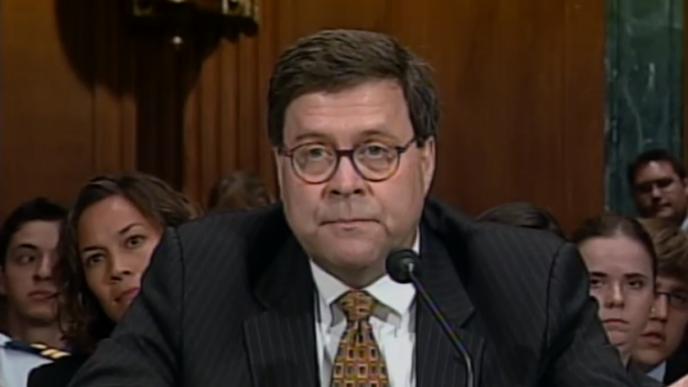
Here’s How a Massive Cookie Company Celebrated Mother’s Day

Cookie company Chips Ahoy! celebrated Mother’s Day by posting a video of a drag queen to social media.

The video featured Jose Cancel, an actor using the stage name Vanessa Vanjie Mateo, who competed in the most recent season of “RuPaul’s Drag Race.”

“#HappyMothersDay to your moms, your drag moms and everyone who celebrates you being YOU,” Chips Ahoy! captioned the video, which it posted to Twitter and Instagram.

(Read more from “Here’s How a Massive Cookie Company Celebrated Mother’s Day” HERE)

Follow Joe Miller on Twitter HERE and Facebook HERE

Ocasio-Cortez Walks Back Her ‘End of World’ Claims – Here’s the Excuse

Rep. Alexandria Ocasio-Cortez (D-NY) claimed Sunday that people who believe the suggestion that the world will end in 12 years have the intelligence of a “sea sponge,” even though Ocasio-Cortez made that very claim in January.

Ocasio-Cortez suggested that Republicans too often mischaracterize her dry humor and “fact check” her jokes, claiming that they take them too literally. One of her alleged jokes includes a January claim that the world will end in 12 years if we do not address climate change, comparing it to a modern World War II-style struggle.

“Like the ‘world ending in 12 years’ thing, you’d have to have the social intelligence of a sea sponge to think it’s literal. But the GOP is basically Dwight from The Office so who knows,” Ocasio-Cortez said:

“I think that the part of it that is generational is that millennials and Gen-Z and all these folks that come after us are looking up and we’re like, ‘The world is going to end in 12 years if we don’t address climate change,’ and your biggest issue is–your biggest issue is, ‘How are we going to pay for it?’” Ocasio-Cortez said. “And, like, this is the war; this is our World War II.”

(Read more from “Ocasio-Cortez Walks Back Her ‘End of World’ Claims – Here’s the Excuse” HERE)

Follow Joe Miller on Twitter HERE and Facebook HERE

Pollster Reveals the ‘Likely’ 2020 Democratic Nominee

Sunday on Fox News Channel’s “MediaBuzz,” pollster Frank Luntz predicted Sen. Bernie Sanders (I-VT) would be the eventual 2020 Democratic presidential nominee. . .

Partial transcript as follows:

HOWARD KURTZ, FOX NEWS: An exclusive first look at a poll about socialism versus capitalism. It turns out the ideas pushed by Democrats such as Bernie Sanders and Alexandria Ocasio-Cortez may have lots of support in their party, while capitalism isn’t polling so well.

Frank Luntz found in an online survey of 1,000 people that 52% of Hillary Clinton voters agree with the statement “I prefer living in a socialist country to a capitalist one,” against just 16% of Donald Trump voters. Asked about the AOC proposal to impose a 70% tax on the top 1% of taxpayers, 79% Clinton voters agree, and so do 46% of Trump voters. And veteran Republican pollster Frank Luntz joins us now. Before we get to more numbers, is the media kind of soft on socialism? I mean favorable press to Democrats like Bernie Sanders and AOC, being tough on flaws of capitalism, the excesses of big corporations.

FRANK LUNTZ: All you have do is read “The New York Times” business section. Typically seven stories, six of the seven will be hostile to a corporation or hostile to capitalism as we know it. In fact, it has gotten so bad that I started to say to people: stop trying to defend capitalism, it is economic freedom. Capitalism they think of Wall Street, profits, they think about losing their jobs. Economic freedom is Main Street, small business, why we are so successful as a country. It has been so demonized, and the rich and successful have been demonized — the assumption now is if you made money you did so in an improper way.

(Read more from “Pollster Reveals the ‘Likely’ 2020 Democratic Nominee” HERE)

Follow Joe Miller on Twitter HERE and Facebook HERE

Healthcare CEO Reveals the Severity of Medicare for All

Scott Flanders, the CEO of eHealth, said recently that Medicare for All would “collapse” Medicare and the overall healthcare system.

Flanders said recently that funding Medicare, Medicaid, and Social Security remains a daunting challenge for the American government, which is “all the more reason” why Medicare for All is “nearly irrational” to discuss.

“You’re already saying that it’s a challenge to fund what we’ve already committed to our seniors,” Flanders said. “So, to layer on another 180 million people outside of the employer market into Medicare would just collapse the system.”

The healthcare executive said that Medicare for All, including Sen. Bernie Sanders’ (I-VT) proposal, would eliminate all private health insurance. Flanders said, “So, 180 million employer-insured individuals and families would lose the insurance they have now.” . . .

“Medicare is the one aspect of the health care system that has higher customer satisfaction,” Flanders said. “The hospitals, the doctors have all learned to live with Medicare. And so, it’s part of the system that works — that’s why it’s become a popular Democratic platform to say ‘Medicare for all,’ because Medicare is an aspect of the system that’s generally delivering on strong patient outcomes at a reasonable cost.” (Read more from “Healthcare CEO Reveals the Severity of Medicare for All” HERE)

Follow Joe Miller on Twitter HERE and Facebook HERE