A world-renowned journalist who exposed corruption within the Clinton Foundation was found dead on Monday after a car bomb exploded with her inside.
Maltese Investigative journalist, Daphne Caruana Galizia, was responsible for leaking millions of documents from the Panama Papers, which exposed high-level government corruption from around the world.
Her most recent work revealed that Malta’s prime minister, Joseph Muscat, and two of his closest aides, had connections to offshore companies that linked them to the sale of Maltese passports, and showed that they had received payments from the government of Azerbaijan, according to a report from the Guardian.
During a press conference on the attack, Muscat acknowledged Galizia’s work, and said, “Everyone knows Ms. Caruana Galizia was a harsh critic of mine, both politically and personally, but nobody can justify this barbaric act in any way.” (Read more from “World-Renowned Journalist Who Exposed Clinton Foundation Dead in Car Bombing” HERE)
https://joemiller.us/wp-content/uploads/8306730923_61314e54df_b-3.jpg6801024Joe Millerhttps://joemiller.us/wp-content/uploads/logotext.pngJoe Miller2017-10-27 23:13:242017-10-28 21:28:44World-Renowned Journalist Who Exposed Clinton Foundation Dead in Car Bombing
In the wake of the monstrous Harvey Weinstein sexual assault scandal blowing up Hollywood, happy-go-lucky daytime host Ellen DeGeneres tweeted an image and a caption only she could get away with.
“Happy birthday, @KatyPerry,” Ellen wished to pop singer and fellow Trump-hater Katy Perry. “It’s time to bring out the big balloons!” she added, clearly referring to Perry’s breasts.
The photo accompanying the caption is one of Ellen staring straight at Ms. Perry’s rack:
The loud feminists eager to blast straight men for their apparent innate toxicity were oddly silent. The #MeToo brigade willing to even blast 90-year-old ex-presidents? Silencio.
This is what you might call “lesbian privilege.” (Read more from “Lesbian Privilege: Ellen Shares Tweet Only She Can Get Away With in Wake of Weinstein Scandal” HERE)
https://joemiller.us/wp-content/uploads/3371640116_7c51ba7a28_b.jpg6541024Joe Millerhttps://joemiller.us/wp-content/uploads/logotext.pngJoe Miller2017-10-27 23:06:542017-10-28 20:38:08Lesbian Privilege: Ellen Shares Tweet Only She Can Get Away With in Wake of Weinstein Scandal
The opposition research project that ultimately produced the controversial Trump-Russia dossier was initially backed by the conservative Washington Free Beacon website, it was revealed late Friday.
Free Beacon editor-in-chief Matthew Continetti and chairman Michael Goldfarb said in a statement that the publication had retained Fusion GPS to “provide research on multiple candidates in the [2016] Republican presidential primary,” as well as Democratic frontrunner Hillary Clinton.
Continetti and Goldfarb denied that the Free Beacon “had contact with, knowledge of, or provided payment for any work performed by Christopher Steele,” the former British spy who compiled the now-infamous file. The dossier, which was published by BuzzFeed in January, contained unverified and lurid allegations about dirt the Russians had on then-candidate Donald Trump and his campaign’s possible connections to Moscow.
Free Beacon’s connection with Fusion GPS was first reported by the Washington Examiner. According to the Examiner’s report, lawyers for the Free Beacon told the House Intelligence Committee that the website funded the research between the fall of 2015 and the spring of 2016. (Read more from “Conservative Website Funded Initial Fusion GPS Trump Opposition Effort” HERE)
By Fox News. New allegations from at least two actresses came out Friday alleging sexual assault by Hollywood producer Harvey Weinstein.
In a story by the New Yorker, actress Annabella Sciorra claims that Weinstein “violently raped” her, and actress Daryl Hannah says her career suffered after encounters with Weinstein . . .
Hannah said that when she first met Weinstein, she didn’t know about his reputation. So when he asked her hotel room number to schedule a meeting, she didn’t think much of it.
Later she heard “incessant” knocking on her hotel room door. She said she got so scared she eventually snuck out the back . . .
Several years later, Hannah allegedly encountered Weinstein again when he somehow got a key to her hotel room and let himself in. (Read more from “New Harvey Weinstein Sexual Assault Accusations Emerge” HERE)
Actress Annabella Sciorra Says Harvey Weinstein Raped Her in Her Apartment in the ’90s
By Ginger Adam Otis. For more than 20 years, actress Annabella Sciorra says she has kept a horrific secret: Movie mogul Harvey Weinstein raped her in the 1990s, and sexually harassed her for years later . . .
“It wasn’t that late … like it wasn’t the middle of the night, so I opened the door a crack to see who it was. And he pushed the door open,” she told The New Yorker.
Weinstein “walked in like it was his apartment, like he owned the place, and started unbuttoning his shirt. So it was very clear where he thought this was going to go. And I was in a nightgown. I didn’t have much on,” the actress said.
“He shoved me onto the bed, and he got on top of me. I kicked and I yelled,” she said in the interview.
But Weinstein, now 65, held her down, with her hands over her head, she told The New Yorker. She fought him – wearing a white cotton nightgown that was a family heirloom from Italy. (Read more from “Actress Annabella Sciorra Says Harvey Weinstein Raped Her in Her Apartment in the ’90s” HERE)
By Fox News. U.S. Defense Secretary Jim Mattis issued a stern warning to North Korea on Saturday: Despite its ongoing missile and nuclear programs, it is simply no match for the U.S.-South Korea alliance.
“Make no mistake,” Mattis said during a news conference in Seoul, “any attack on the United States or our allies will be defeated, and any use of nuclear weapons by the North will be met with a massive military response that is effective and overwhelming.”
During the joint appearance with South Korean Defense Minister Song Young-moo, Mattis acknowledged that the threat of a nuclear missile attack by North Korea was accelerating.
The CIA says North Korea could be just months away from being capable of hitting the U.S. with a nuclear strike, Reuters reported.
Mattis accused the regime of Kim Jong Un of illegal and unnecessary missile and nuclear programs — and vowed to defeat any attack. (Read more from “Mattis: US Will Not Accept a Nuclear North Korea” HERE)
______________________________________
James Mattis: Threat of North Korea Nuclear Attack ‘Is Accelerating’
By Associated Press. US defence secretary Jim Mattis has said the threat of nuclear missile attack by North Korea is accelerating.
In remarks in Seoul with South Korean defence minister Song Young-moo at his side, Mattis accused the North of illegal and unnecessary missile and nuclear programs – and vowed to defeat any attack . . .
As he emphasized throughout his weeklong Asia trip, which included stops in Thailand and the Philippines, Mattis said diplomacy remains the preferred way to deal with the North. (Read more from “James Mattis: Threat of North Korea Nuclear Attack ‘Is Accelerating'” HERE)
https://joemiller.us/wp-content/uploads/170123-D-GO396-0038.jpg23633427Joe Millerhttps://joemiller.us/wp-content/uploads/logotext.pngJoe Miller2017-10-27 22:28:002017-10-27 22:28:00Mattis: US Will Not Accept a Nuclear North Korea
A Middletown mother will spend 21/2 to 5 years in state prison for assaulting her daughter because the teen didn’t recite Bible verses correctly.
Rhonda Shoffner, 41, was sentenced by Dauphin County Judge John F. Cherry after she pleaded guilty to charges of aggravated assault, strangulation, child endangerment and making terroristic threats . . .
Police said Shoffner attacked the 13-year-old in March. She bit the girl and slammed the teen’s head into a bathroom wall, they said. Investigators said Shoffner told the girl, “I’m going to kill you.” (Read more from “Mom Who Beat Daughter for Not Knowing Bible Verse Sentenced” HERE)
https://joemiller.us/wp-content/uploads/5811115037_d41365b3c0_b-3-1.jpg6831024Joe Millerhttps://joemiller.us/wp-content/uploads/logotext.pngJoe Miller2017-10-27 22:15:242017-10-27 22:15:24Mom Who Beat Daughter for Not Knowing Bible Verse Sentenced
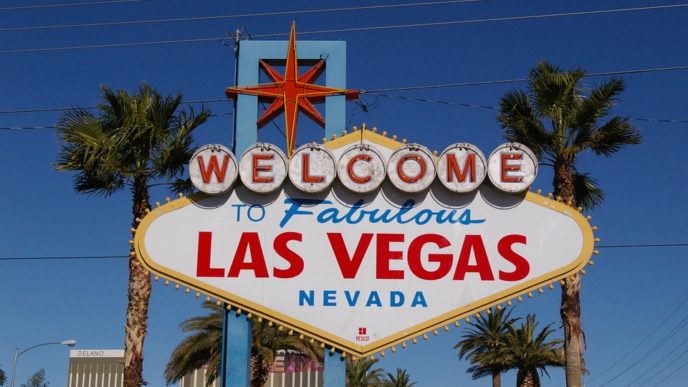
Fifty-eight people killed. More than 500 injured. And yet, nearly a month after the Las Vegas Strip experienced the worst mass shooting in modern American history, local and federal authorities are refusing to fill in the blanks.
It wasn’t always like this. In the days after Oct. 1, when Stephen Paddock opened fire on the Route 91 Harvest festival crowd from his Mandalay Bay corner suite, Las Vegas police were hosting multiple news conferences a day. Then, once a day. Then, once every few days.
They compiled and released snippets of officers’ body camera footage. They spent several minutes answering specific questions. They released a comprehensive timeline, which ended up being wrong. They took it back, and tried to clarify the errors, but instead caused more confusion.
By Oct. 13 — the last time the Metropolitan Police Department or the FBI addressed the media or public — something had changed. The sheriff, who had been straightforward and stern, was now emotional and at times combative. Both he and the FBI failed to provide much new information, and at the end of the meeting, they refused to take questions.
Since that day, the only person who has shed more light on the investigation is Mandalay Bay security guard Jesus Campos, who was shot in the leg while approaching the gunman’s room. His platform to share that information? “The Ellen DeGeneres Show,” which aired last week. He hasn’t made himself available to the media since. (Read more from “Brakes Slammed on Information Flow in Las Vegas Shooting” HERE)
https://joemiller.us/wp-content/uploads/welcome-to-las-vegas-1086412_960_720.jpg638960Joe Millerhttps://joemiller.us/wp-content/uploads/logotext.pngJoe Miller2017-10-27 22:08:512017-10-28 21:38:24Brakes Slammed on Information Flow in Las Vegas Shooting
While many Democrats are downplaying the Washington Post’s report that the Hillary Clinton campaign and the Democratic National Committee funded the controversial anti-Trump dossier, a prominent party figure – a former chief of staff to Bill Clinton and CIA director under Barack Obama – believes an investigation is warranted.
Leon Panetta, who also served as secretary of defense, director of the Office of Management and Budget, and a congressman from California, was asked by CNN’s Wolf Blitzer Thursday night how it was possible that neither “the chair of the DNC and the Clinton campaign” knew about payments for the dossier.
“Well, it’s obviously something that the Intelligence Committee is going to have to look at,” Panetta said. “You know, knowing presidential campaigns, they’re big operations and somehow the left hand may not know what the right hand is doing. And that could be the case here.”
Panetta said the committee “is going to have to get into this, determine just exactly what happened, who knew what and when.”
Blitzer asked Panetta why Clinton campaign attorney Marc Elias didn’t tell Clinton campaign chairman John Podesta that the campaign had paid for the dossier. The report was included by then-FBI Director James Comey in the intelligence community’s January report on Russian meddling in the election, even though Comey described it as “salacious and unverified.” (Read more from “Prominent Democrat Calls for Hillary Probe” HERE)
Executives at Disney Channel — and pro-gay groups — have given their stamp of approval for a coming-out tale for tweens on “Andi Mack.”
The second season of Disney’s coming-of-age show will feature a creative milestone that was pre-screened by such groups as the Gay and Lesbian Alliance Against Defamation (GLAAD) and PFLAG.
The series, which stars Peyton Elizabeth Lee, follows her character’s “uncharted course of self-discovery.”
“Everyone involved in the show takes great care in ensuring that it’s appropriate for all audiences and sends a powerful message about inclusion and respect for humanity,” the company said in a statement on Thursday via its ABC News subsidiary. (Read more from “Disney Approves First Story Line for ‘Coming-Out’ of Character” HERE)
https://joemiller.us/wp-content/uploads/disney-680246_960_720.jpg612960Joe Millerhttps://joemiller.us/wp-content/uploads/logotext.pngJoe Miller2017-10-27 21:44:292017-10-27 21:44:29Disney Approves First Story Line for ‘Coming-Out’ of Character
By Derrick Broze. In the wake of recent sexual abuse allegations against Hollywood mogul Harvey Weinstein, actor Corey Feldman has stepped back into the limelight with a crowdfunding campaign to help expose Hollywood pedophilia. In a tweet sent out at 5 am on Wednesday, Feldman released a YouTube video announcing the campaign with the text, “U asked 4 it….U got it…LETS DO THIS!”
In the new video Feldman describes how his efforts to expose Hollywood pedophilia have brought him heartache and caused several of his band mates to quit out of fear for their lives. “I am very alone, but I need to protect myself and my family,” Feldman stated. “What I am proposing is a plan that I believe can literally change the entertainment system as we know it, and I believe that I can also bring down, potentially, a pedophile ring that I have been aware of since I was a child.”
Feldman’s plan is to raise enough money to film a movie about his life which will reveal the truth about Hollywood pedophilia. “In his book, Coreyography, Corey describes what happened but it isn’t clear who exactly the predators are,” the campaign reads. “The best way, he feels, in order to tell the whole story, is for Corey to come forward in the form of a film about his life.” The campaign has raised over $20,000 since launching Wednesday morning.
Feldman goes on to say that he can name at least six names and that the crimes lead all the way to the head of a Hollywood studio. “Rumors have been told, stories have been made up about me. All because they fear what I know as the truth.”
The new video comes only days after Feldman and his touring band were detained and harassed by the Mangham Police Department in Louisiana on Saturday for legal possession of cannabis. He was charged with one count of possession of marijuana and a traffic charge. However, Feldman clarified the situation via Twitter, stating that he was not arrested for cannabis.
HI #EVERYBODY & HAPPY 22ND! 4 THE RECORD, I WAS NOT ARRESTED OR PUT IN JAIL. I RECEIVED A MISDEMEANOR IN LOUISIANA, DUE 2 A MEMBER OF MY
“4 THE RECORD, I WAS NOT ARRESTED OR PUT IN JAIL. I RECEIVED A MISDEMEANOR IN LOUISIANA, DUE 2 A MEMBER OF MY CREW HAVING MEDICAL MARIJUANA, WITH A LEGAL CA PRESCRIPTION, I HAD NOTHING ON ME, BUT WAS CHARGED BECAUSE ITS MY BUS.”
The timing of the stop has caused some onlookers to question the true reason for the harassment. Only days before, Feldman spoke publicly about the Harvey Weinstein allegations and the connection to Hollywood pedophilia.
“For the record, I will not be going on a talk show to disclose names of my abusers or anyone else’s abusers. So please stop asking me to do so,” Feldman wrote on Twitter. “The practice of sensationalizing this topic with no plan of action or protection for my family would prove fruitless. I have been through enough!”
Over the last decade Corey Feldman has become notorious for his comments regarding Hollywood pedophilia. Most notably, in August 2011 Feldman appeared on ABC’s Nightline to discuss the problem. “I can tell you that the No. 1 problem in Hollywood was and is and always will be pedophilia. That’s the biggest problem for children in this industry. … It’s the big secret,” Feldman said at the time.
“I was surrounded by [pedophiles] when I was 14 years old. … Didn’t even know it. It wasn’t until I was old enough to realize what they were and what they wanted … till I went, Oh, my God. They were everywhere,” Feldman stated.
Feldman is also not alone in his calling attention to Hollywood pedophilia. His friend and fellow celebrity Elijah Wood has previously spoken about the troubling problem, only to walk back some of his statements after the story went viral. It would seem more actors are aware of the problem than those who choose to speak out.
In Feldman’s new video he reiterates what he told Nightline in 2011. Namely that,
There was a circle of older men … around this group of kids. And they all had either their own power or connections to great power in the entertainment industry.
Will Corey Feldman’s attempt to shed light on this dark topic succeed? We wait to see. For now we are thankful he is choosing to continue talking about this horrible issue.
Further Down the Rabbit Hole
For those interested in diving farther down the rabbit hole of global sex slave rings and pedophile networks, I suggest further research on the royal families of Europe and the many reports that have surfaced over the years. However, don’t be fooled into thinking that all the vulgarity is reserved for the European authorities. American politicians also have a long, sordid history with these activities.
One particular story worth knowing is called the Franklin Scandal. In short, it involves allegations of a child sex ring involving members of the Nebraska Republican Party from 1988 to 1991. The allegations led to investigations of Lawrence E. King Jr., who worked for the Franklin Community Federal Credit Union (FCFCU) in Omaha, Nebraska. Eventually, a grand jury would find that the stories were false, and the result of a vindictive former employee.
However, Nick Bryant, author of The Franklin Scandal: A Story of Powerbrokers, Child Abuse & Betrayal, said the story does not end there. As he told the American Commentary blog,
In the Washington DC section of the book I show — through the grand jury documentation I acquired about 200 of Lawrence King’s flight receipts.
He continued:
And the vast majority of them go to Washington DC. And in DC there was a pedophilic pimp named Craig Spence, and he was also a CIA asset. And he said he was a CIA asset, and then I found other sources to corroborate that. And a lot of these pedophile parties went down in Craig Spence’s home. Spence’s guest lists were a veritable who’s who of people in congress, people in the upper echelon of the Reagan administration, the upper echelon of what would become the Bush administration, the upper echelon of the judiciary.
Bryant also discusses the now legendary documentary, Conspiracy of Silence. “It was going to be shown in the UK by the Discovery Channel, but they pulled the plug on it before it was finished. But someone in the production of this documentary felt it was so important that they leaked a copy of this documentary,” American Commentary noted. Bryant hosts a copy of Conspiracy of Silence on his website. For further studies, I also recommend The Franklin Cover-up: Child Abuse, Satanism, and Murder in Nebraska by John DeCamp, a former Republican member of the Nebraska Legislature. (For more from the author of “Corey Feldman Asks Public for Help Exposing Hollywood Pedophilia” please click HERE)
_________________________________________________
Corey Feldman Says His Life Is in Danger Because He Wants to Expose ‘Pedophile Ring’ That Abused Him
By Fox News. Corey Feldman has long said that he and ‘80s pal Corey Haim were victims of sexual abuse in Hollywood when they were children – now he’s determined to expose the pedophiles he says attacked them.
Feldman has alleged in the past that Haim was raped at age 11 by a powerful person in Hollywood and the experience led to Haim’s drug addiction issues. Feldman’s pal and “Lost Boys” costar died in 2010 at 38 from pneumonia.
“I believe we can… bring down potentially a pedophile ring that I have been aware of since I was a child. Right off the bat I can name six names,” he said in a video posted on Wednesday in which he announced the film and requested funding from his fans.
Feldman claimed he survived a “near-death experience” after two trucks tried to run him over — all because he’s working to expose pedophiles in Hollywood, he said. In the video, Feldman said his physical safety is in danger. (Read more from “Corey Feldman Says His Life Is in Danger Because He Wants to Expose ‘Pedophile Ring’ That Abused Him” HERE)
https://joemiller.us/wp-content/uploads/870162984_95c50729e1_z.jpg375500Joe Millerhttps://joemiller.us/wp-content/uploads/logotext.pngJoe Miller2017-10-26 21:13:162017-10-26 21:31:59Corey Feldman Asks Public for Help Exposing Hollywood Pedophilia, Says He Fears for His Life