
4 Conservative Senators Say They Can’t Vote for GOP’s Draft Health Care Bill

Four conservative senators promptly said they can’t support the draft of a health care bill released Thursday by the Senate’s Republican leadership as a cure for Obamacare.

“Currently, for a variety of reasons, we are not ready to vote for this bill, but we are open to negotiation and obtaining more information before it is brought to the floor,” Sens. Rand Paul of Kentucky, Ted Cruz of Texas, Ron Johnson of Wisconsin, and Mike Lee of Utah wrote in a formal statement.

The four Republicans said they oppose the Senate leadership plan, called the ‘‘Better Care Reconciliation Act of 2017,” because it does not fully repeal and replace Obamacare.

“There are provisions in this draft that represent an improvement to our current health care system, but it does not appear this draft as written will accomplish the most important promise that we made to Americans: to repeal Obamacare and lower their health care costs,” the four senators wrote.

The Senate plan would end mandates for health insurance, including the Obamacare mandate forcing consumers to buy insurance or pay a penalty. It also would phase out the Medicaid expansion under Obamacare over three years, Axios reported.

The eventual support of Cruz, Johnson, Lee, and Paul is crucial because Republicans have a 52-46 majority over Democrats in the Senate. Two independents caucus with the Democrats.

Republicans will need at least 51 votes to pass a health care bill under a procedure known as budget reconciliation, with Vice President Mike Pence empowered to break a tie.

President Donald Trump said Wednesday night in a speech in Cedar Rapids, Iowa, that it would be “so easy and so beautiful” if some Democrats would judge the final plan on its merits.

One major difference in form compared with the House-passed version of the health care bill is the absence of the so-called MacArthur amendment.

The MacArthur amendment, negotiated in the House to resolve differences between conservative and centrist Republicans, gives states “the ability to repeal cost-driving aspects of Obamacare” left in place in the original version of the American Health Care Act, the House Freedom Caucus said in a formal statement.

Freedom Caucus Chairman Mark Meadows, R-N.C., and Tuesday Group Co-chairman Tom MacArthur, R-N.J., negotiated the amendment.

The Senate proposal instead leans on Obamacare’s “1332 waiver,” described this way by Heritage Foundation health policy expert Bob Moffit in a recent report:

Section 1332 of Obamacare allows states to apply to the secretary of the Department of Health and Human Services (HHS) and get a ‘waiver’ from 11 statutory provisions, including the individual and employer mandates, the actuarial value mandate that determines coverage levels, the federal rules governing the definition of individual and small group coverage, and the federal essential health benefit requirements.

How much flexibility will states have under the Section 1332 waiver is an important question, some observers say.

In a statement provided to The Daily Signal, Moffit, who was traveling, said he is not sure how the Senate’s proposed legislation would repeal and replace Obamacare.

Overall, the Senate bill is better than Obamacare because it contains provisions to reduce insurance premiums and promote access to insurance in the short run; cut taxes; and provide major Medicaid reform that will help refocus the program to those most in need.

It is still an open question, however, whether the bill will repair enough of the damage caused by Obamacare so that the middle-class self-employed will be able to find affordable health insurance in five years.

The Senate plan retains Obamacare’s requirements for covering pre-existing conditions and preserves Obamacare’s tax credits for individuals based on age, location, income and geography, The Hill reported.

The legislation also would retain for two years Obamacare’s cost-sharing subsidies, which were created to reduce out-of-pocket costs for low-income patients who purchase silver-level insurance plans through Obamacare’s exchanges, as The Daily Signal previously reported.

Senate Democrats, some of whom Trump appears to be trying to shame publicly into negotiating, are wary of the draft. Minority Leader Chuck Schumer, D-N.Y., was among them, tweeting:

Sen. Martin Heinrich, D-N.M., tweeted:

The House passed its revised version of Republicans’ health care bill May 4 by a razor-thin vote of 217-213.

Senate Republicans are using the tool called budget reconciliation to pass a bill because it requires only 51 votes to clear the Senate, rather than 60 votes to end debate and proceed to a floor vote.

Senate Majority Leader Mitch McConnell, R-Ky., formally released the plan Thursday.

Four conservative senators promptly said they can’t support the draft of a health care bill released Thursday by the Senate’s Republican leadership as a cure for Obamacare.

“Currently, for a variety of reasons, we are not ready to vote for this bill, but we are open to negotiation and obtaining more information before it is brought to the floor,” Sens. Rand Paul of Kentucky, Ted Cruz of Texas, Ron Johnson of Wisconsin, and Mike Lee of Utah wrote in a formal statement.

The draft of the Senate bill would defund Planned Parenthood for a year, a promise that House Speaker Paul Ryan, R-Wis., made in March.

Senate Republicans’ draft also specifies that tax credits could not be used to pay for abortions.

Rep. Andy Biggs, R-Ariz., a member of the House Freedom Caucus, voiced concern in a statement about the Senate draft:

I am extremely disappointed by the lack of resolve from Congress to repeal Obamacare—most recently, with the U.S. Senate’s legislation. The American people demanded a full repeal. Now, the 115th Congress is dangerously close to abandoning our promise and opportunity to completely repeal Obamacare, remove government from the health care industry, permanently defund Planned Parenthood, and give Americans their long-awaited relief from overwhelming premiums.

Sen. James Lankford, R-Okla., another conservative senator, said he is studying the draft and hasn’t made up his mind.

“I’m going through it,” Lankford said in an interview with CNN. “I have a lot of questions still, a lot of things we have talked about. It’s 142 pages of text, but there’s things piled into that text that we’ve got to decipher. Put me down as a solid undecided.” (For more from the author of “4 Conservative Senators Say They Can’t Vote for GOP’s Draft Health Care Bill” please click HERE)

Follow Joe Miller on Twitter HERE and Facebook HERE.

Circuit Court Win for Religious Freedom on Gay Marriage

The 5th U.S. Circuit Court of Appeals ruled unanimously on Thursday that a Mississippi law that protects religious liberty and the rights of conscience in light of the redefinition of marriage may go into effect.

In the decision, the circuit court overruled a previous judgment from a district court judge who had declared the Mississippi law unconstitutional for violating the Establishment Clause and the Equal Protection Clause.

But as the circuit court pointed out, the challengers to Mississippi’s law lack standing because they “have not clearly shown injury-in-fact.” In other words, they did not show how the Mississippi law protecting liberty for people who hold to the pre-Obergefell v. Hodges definition of marriage harmed them.

The court explained that the “failure” of the “plaintiffs to assert anything more than a general stigmatic injury dooms their claim.”

While the ruling focused on the lack of standing of the plaintiffs, there are plenty of reasons to rule in favor of the constitutionality of laws like Mississippi’s on the merits.

As Sherif Girgis and I explain in our new book, “Debating Religious Liberty and Discrimination,” there is nothing scandalous about protections for particular views that are at odds with those on which the government acts.

When the government takes Americans to war, exceptions cover pacifists. When the government guarantees abortion, exceptions cover pro-lifers. These exemptions don’t amount to establishments of any religion, and neither do laws protecting dissenters after Obergefell.

Indeed, as law professor Richard Epstein explains, the Establishment Clause—meant to “knock down state coercion for religion”—can’t be used to invalidate “a statute whose whole purpose was to insulate private parties from any form of coercion.”

So, what does the Mississippi law do? As previously explained at The Daily Signal:

Religious organizations, like churches, cannot be forced to use their facilities to celebrate or solemnize weddings that violate their beliefs.

Religious convents, universities, and social service organizations can continue to maintain personnel and housing policies that reflect their beliefs.

Religious adoption agencies can continue to operate by their conviction that every child they serve deserves to be placed with a married mom and dad.

Bakers, photographers, florists, and similar wedding-specific vendors cannot be forced to use their talents to celebrate same-sex weddings if they cannot do so in good conscience.

State employees cannot be fired for expressing their beliefs about marriage outside the office, and individual state clerks can opt out of issuing marriage licenses so long as no valid marriage license is delayed or impeded.

Counselors and surgeons cannot be required to participate in gender identity transitioning or sex-reassignment surgeries against their faith and convictions, while guaranteeing that no one is denied emergency care or visitation rights.

Private businesses and schools, not bureaucrats, get to set their own bathroom, shower, and locker room policies.

This is a reasonable bill. It protects the consciences of people who hold to the historic definition of marriage in the aftermath of the Supreme Court redefining marriage, and it does so while avoiding the awful outcomes that critics fear. The bill provides that the government cannot punish, fine, or coerce specific people and organizations, in specific contexts. It doesn’t harm anyone.

Other states should follow Mississippi’s lead in protecting religious liberty and the rights of conscience after the redefinition of marriage. So, too, should Congress pass protections at the federal level.

Longstanding Precedent on Abortion

There is great precedent for such protections on the abortion issue, as Girgis and I explain in “Debating Religious Liberty and Discrimination.”

In 1973, just months after Roe v. Wade was handed down, Congress passed the Church Amendment, named for Sen. Frank Church, a Democrat from Idaho.

While Roe shielded the choice to have an abortion, the Church Amendment protected doctors’ and nurses’ choices not to perform one. It provided that health care organizations receiving federal funds could not force their doctors or nurses to perform or assist abortions.

Some 20 years later, Congress passed and President Bill Clinton signed the Coats–Snowe Amendment. It prohibits the government from discriminating against medical students who refuse to perform abortions and medical residency programs that leave out abortion training.

And in 2004, Congress passed the Hyde-Weldon Amendment, which keeps the government from discriminating against health care institutions that don’t offer abortions.

Since 1973, then, U.S. policy has protected a right to choose an abortion right alongside an individual and institutional right to choose against facilitating one.

Our law should now do the same on marriage. It needn’t and shouldn’t penalize private associations for their beliefs on this issue. Doing so would make no appreciable difference to the ability of same-sex couples to receive the goods and services they seek, but it would undermine conscience rights for some.

So lawmakers can and should grant a categorical accommodation.

Current Legislation

A proposed federal law would do that. Much like the Church, Coats-Snowe, and Hyde-Weldon amendments, the First Amendment Defense Act would protect the freedoms of citizens and organizations who hold a belief at odds with one enshrined by courts.

Protecting pro-life consciences did not violate the Constitution—by establishing a religion or engaging in viewpoint discrimination or otherwise. Nor do laws protecting pacifists. Their only aim is peaceful coexistence in the face of disagreement.

The same goes for the First Amendment Defense Act. It would enact a bright-line rule to keep government from penalizing someone just for acting on her belief that marriage is the union of husband and wife. It would protect people who hold that belief for religious or secular reasons, and it would shield organizations from losing nonprofit tax status, licensing, or accreditation for operating by these beliefs.

But even the First Amendment Defense Act’s categorical protections reflect a careful balance. They protect individuals, nonprofit charities, and privately held businesses, but not publicly traded corporations, or federal employees or contractors in the course of their work.

The First Amendment Defense Act makes clear that it does not relieve the federal government of its duty to provide services, medical care, or benefits to all who qualify. It must simply respect conscience in the course of doing so.

Mississippi has shown the way forward on this issue at the state level. And on Thursday, the 5th Circuit allowed that law to go into effect.

Other states should offer similar protections at the state level, and Congress should do the same at the federal level.

Protecting a New Minority

America is in a time of transition. The Supreme Court has redefined marriage, and beliefs about human sexuality are changing.

During this time, it is critical to protect the right to dissent and the civil liberties of those who speak and act in accord with what Americans had always previously believed about marriage—that it is the union of husband and wife.

Good public policy is needed at the local, state, and federal levels to protect cherished American values. Good policy would help achieve civil peace amid disagreement and protect pluralism and the rights of all Americans, regardless of what faith they may practice. (For more from the author of “Circuit Court Win for Religious Freedom on Gay Marriage” please click HERE)

Follow Joe Miller on Twitter HERE and Facebook HERE.

These Afghan Army Uniforms Cost American Taxpayers $28 Million ‘in the Name of Fashion’

The Pentagon is under fire for spending nearly $28 million procuring camouflage uniforms for the Afghan army, gear suited for environments so rare they account for just 2 percent of Afghanistan’s countryside, according to a new watchdog report.

The Defense Department organization overseeing efforts to train and equip Afghan forces supervised selection and design of the new proprietary woodland camouflage pattern without proper testing and assessment, according to the report published Wednesday by the Special Inspector General for Afghanistan Reconstruction.

For years, Afghan conventional forces and elite commandos have fielded the U.S. Army’s woodland pattern utility uniforms. In 2007, the Afghan Defense Ministry embarked on a quest to design new uniforms to counter efforts by the Taliban and militants battling government forces to counterfeit the clothing.

The new uniform was designed in similar fashion to the current uniform worn by the U.S. Army, called the Army Combat Uniform, but at a much higher cost, the inspector general determined.

According to the report, the HyperStealth’s Spec4ce Forest camouflage pattern was chosen by the then-Afghan Defense Minister Abdul Rahim Wardak — because he liked what he saw while browsing a website. (Read more from “These Afghan Army Uniforms Cost American Taxpayers $28 Million ‘in the Name of Fashion'” HERE)

Follow Joe Miller on Twitter HERE and Facebook HERE.

Former Government Worker Charged With Giving Top-Secret Info to China

The Justice Department announced Thursday that it had arrested and charged a former US government employee for sharing top-secret information with a Chinese government agent.

The criminal complaint states that Kevin Mallory has been charged with delivering defense information to aid a foreign government and making false statements to investigators. The Justice Department said Mallory could face a life sentence if convicted . . .

The criminal complaint says Mallory met with a Chinese national in Shanghai during March and April 2017 who “represented himself” as working for a think tank the FBI has said is intertwined with Chinese intelligence. Mallory consented to an interview with FBI agents in late May, where he told them about a communication device the Chinese national had provided him with. He allowed the FBI to examine the device, and the Justice Department said the FBI found classified information on it, including a document marked top-secret. (Read more from “Former Government Worker Charged With Giving Top-Secret Info to China” HERE)

Follow Joe Miller on Twitter HERE and Facebook HERE.
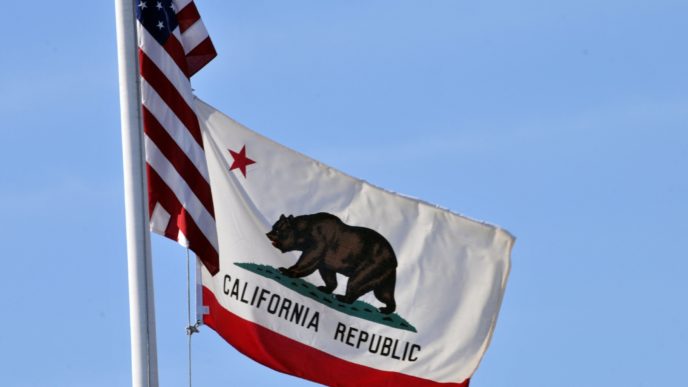
California Bans State Travel to Areas They View as ‘Discriminatory Towards Transgender and Homosexual People’

California is restricting publicly funded travel to four more states because of recent laws that leaders here view as discriminatory against gay and transgender people.

All totaled, California now bans most state-funded travel to eight states.

The new additions to California’s restricted travel list are Texas, Alabama, Kentucky and South Dakota.

They join Kansas, Mississippi, North Carolina and Tennessee as states already subjected to the ban.

California Attorney Xavier Becerra announced the new states at a Thursday press conference, where he was joined by representatives from ACLU Northern California and Equality California. (Read more from “California Bans State Travel to Areas They View as ‘Discriminatory Towards Transgender and Homosexual People'” HERE)

Follow Joe Miller on Twitter HERE and Facebook HERE.

Mega Actor Makes ‘Joke’ Towards Trump That Sounds More Like a Threat

By Patrick Smith. In a year that he would like to forget, which included his acrimonious divorce to Amber Heard, Johnny Depp appeared at a Q&A at the new Cinemageddon stage at Glastonbury.

Introducing his 2004 film The Libertine, about a 17th-century poet who notoriously drank himself to an early death, the 54-year-old chose to discuss American politics.

“I think [Donald] Trump needs help,” he said. “There are a lot of dark places he could go.”

He added: “I’m not insinuating anything – by the way this will be in the press and it will be horrible – but when was the last time an actor assassinated a president?”

Responding to loud cheers, Depp said: “Don’t worry, I’m not an actor, I lie for a living.” (Read more from “Mega Actor Makes ‘Joke’ Towards Trump That Sounds More Like a Threat” HERE)

_______________________________________

Elise Jordan Says Defending Trump ‘Like Hugging a Suicide Bomber’

By Aidan McLaughlin. Elise Jordan warned Republicans against defending a fact-challenged President Donald Trump, comparing doing so to “hugging a suicide bomber” on MSNBC Thursday.

The comments were in response to Trump’s latest tweets undermining his previous statement hinting that he may have recorded tapes of his conversations with former FBI director James Comey . . .

MSNBC’s Craig Melvin asked Jordan about the president’s tweets, noting “it would seem as if the president may have been lying all along about the existence of these tapes.”

“No, he’s just wasting — he wasted the country’s collective time speculating over whether these tapes existed or not,” Jordan said. “It’s a sad day when you cannot depend on the president’s word.”

Jordan — a Bush White House aide turned MSNBC analyst and TIME contributor — then doled out some advice for Republican lawmakers: “My advice would just be to Republicans who do cozy up to him — it’s like hugging a suicide bomber.” (Read more from “Elise Jordan Says Defending Trump ‘Like Hugging a Suicide Bomber'” HERE)

Follow Joe Miller on Twitter HERE and Facebook HERE.

30 GOP Congressmen Have Been Attacked or Threatened Since May

A total of 30 Republican members of Congress have either been attacked or revealed that they were the victim of a death threat since the beginning of May.

May 8: Wendi Wright, 35, was arrested after stalking Rep. David Kustoff (Tenn.) and trying to run him off the road. After pulling over, Wright “began to scream and strike the windows on Kustoff’s car and even reached inside the vehicle.”

May 9: Virginia Rep. Tom Garrett needed heavy security at a town hall after receiving a series of death threats in May that police “deemed to be credible and real.” . . .

May 12: A town hall participant accosted North Dakota Rep. Kevin Cramer, shoving fake dollar bills into his suit jacket. A Kramer supporter grabbed the same man by the neck. Both men were ejected by law enforcement, but neither were charged.

May 12: A Tucson, Ariz. school district employee was arrested by the FBI for sending several death threats to Arizona Rep. Martha McSally. The man threatened to shoot McSally and told her to “be careful” because her days “were numbered.” (Read more from “30 GOP Congressmen Have Been Attacked or Threatened Since May” HERE)

Follow Joe Miller on Twitter HERE and Facebook HERE.

Open Marriages Happier? Not So Fast, Family Research Expert Says

Anecdotal praise of open relationships can be found all over the internet. The New York Times’ May feature is the most prominent example. The headline wonders, “Is an Open Marriage a Happier Marriage?

Meanwhile, LGBT advocates are celebrating the first polyamorous “family” to be legally recognized in Colombia this month.

But are these kinds of relationships really as healthy as recent reports suggest?

Just as Happy?

Studies traditionally report that people in open marriages and other forms of polyamory are less happy than monogamous couples. A March study suggests that’s because society is biased against them. Researchers at SAGE Journals found that “CNM [consensual non-monogamous] relationships generally have equally positive relational outcomes as monogamous relationships.”

But Dr. Brad Wilcox said there is a lack of good evidence on the actual appeal of open marriages. For instance, the Times piece on open marriages was “data free.” That was “striking,” he told The Stream. Wilcox is the director of the National Marriage Project at the University of Virginia.

Studies favoring polyamory “are based on non-representative samples,” he said. “It’s not really good science.” Even the SAGE study’s authors admit their survey respondents were not chosen randomly. They may have been biased toward positive reporting.

“My guess is that these marriages are really unstable,” Wilcox said. The complexity that comes along with an open marriage might be harder in practice than in theory, he added.

Wilcox noted that most Americans still favor the idea of fidelity. And people who have had just one partner in the last year and not several tend to be happier, he said. He called those pushing for polyamory and open marriages “a small minority.”

Redefining Morality

Why is that minority so vocal? Perhaps it has to do with Americans’ shifting view of morality.

LifeWay Research released a telling study last month. It revealed that 81 percent of Americans worry about “declining moral behavior.” But people disagree about the meaning of “moral.” Nearly 50 percent said that right and wrong are absolutes. But 20 percent said something is “wrong” only if it hurts someone.

According to the study, “More than 6 in 10 of those older than 45 say right and wrong do not change. For those 35 and younger, fewer than 4 in 10 make that claim.” The age gap between the two is not surprising. Another recent study revealed that only 4 percent of millennials hold a “biblical worldview.”

Since many people don’t view moral truths as absolute, the growing acceptance of polyamory makes sense. If it doesn’t hurt anybody, why not? “How is love bad?” asks one husband who lives with his wife, daughter, and his wife’s boyfriend.

True Happiness Requires Holiness

The Times portrays its “Open Marriage” interview subjects with sophistication. The author is impressed by the “boldness” of their unconventional ways. But really, there’s nothing new or bold about seeking sensual pleasure.

In Galatians, Paul refers to sinful desires as “the flesh.” He warns Christians to “not use your freedom as an opportunity for the flesh.” (Galatians 5:13) A few verses later, he writes:

But I say, walk by the Spirit, and you will not gratify the desires of the flesh. For the desires of the flesh are against the Spirit, and the desires of the Spirit are against the flesh, for these are opposed to each other, to keep you from doing the things you want to do. (Galatians 5:16-17)

Christians are taught to reject fleshly desires in favor of something greater. We believe true joy is found in holiness. And we become holy by accepting God’s salvation through Jesus Chirst. In that salvation, there is freedom from the sin that enslaves all of us.

Anything in marriage beyond fidelity between one man and one woman is sin. And so participating in anything else is to resubmit to sin’s bondage. As D.C. McAllister wrote for The Federalist in 2015, critiquing a polyamorist columnist:

Burrows was so quick to throw off the chains of religion and social norms that she fails to see that she has entered a new kind of bondage: she is bound by the chains of her sexual desires. Little does she know that those butterflies that make her feel so alive will soon become dragons that burn off her soul and reduce her to an empty shell of animalistic appetites. Burrows fails to see that liberty — real liberty — is found in self-government and self-control.

The idea of open marriage and poly-romance isn’t new. Neither is defining happiness and freedom by the unbridled pursuit of sensual pleasure. But there is a recent wave of exploration when it comes to the idea of polyamory as a legitimate, ethical relationship (and parenting) style — even if led by a “small minority.” Founded on empty desires, false morality and little research, it’s a wave that deserves push-back. (For more from the author of “Open Marriages Happier? Not So Fast, Family Research Expert Says” please click HERE)

Follow Joe Miller on Twitter HERE and Facebook HERE.

Starbucks Caught Lying to Public Again: Spent Almost $100 Million Covering up GMO Use

First, it was Starbucks’ anti-family campaign, then its anti-gun fanaticism that turned off millions of conservative Americans to its high-priced coffee. Now, with Starbucks caught lying over GMO use, the coffee-giant is offending citizens of all political stripes. As reported by the Hearty Soul.

We live in an age of inequality and social divide. With 1% of the population in the United States holding 38% of the wealth and almost all of the power. Education, healthcare, the government, and even the food we eat and drink are owned by wealthy individuals and faceless corporations.

So it may not come as a surprise to you that a morning coffee from Starbucks is the last thing that you should be drinking to put a pep in your step. It has been discovered that the coffee conglomerate has spent nearly $100 million to cover up their use of GMOs in their drinks.

‘In the past two years alone, Starbucks has been a part of a GMA-led coalition that has donated more than $70 million dollars to defeat GMO labeling efforts in California and Washington State,’ said a spokesperson for Food Democracy Now. ‘By opposing GMO labeling, Starbucks has willingly climbed in bed with Monsanto and the GMA and is intentionally misleading customers about their commitment to sustainability and ethical sourcing.’

It’s a damning statement and is certainly warranted. Not only have Starbucks been putting on a facade as an ethical organization, but they have proactively sought to increase the usage of GMO foods. Considering that they have over 23,000 stores in 64 different countries, Starbucks has a huge influence on farmers.

Starbucks’ milk currently comes from factory farmed cows, usually owned by their partner Monsanto. These cows are kept in terrible conditions, pumped with unnatural antibiotics and fed GMO grains. According to the Organic Consumers Association (OCA) in 2011, Starbucks used over, ‘93 million gallons of milk per year, enough to fill 155 Olympic-sized swimming pools.’

Considering their continued growth over the past five years it is likely that the figure today would be even higher. Their continued desire to quash legislation that calls for the labeling of GMO foods equates to an awful lot of people consuming them without their prior knowledge.

Follow Joe Miller on Twitter HERE and Facebook HERE.

Did Obama Do Enough to Save Otto Warmbier in North Korea?

Did President Obama do enough to save Otto Warmbier?

Otto’s father, Fred, clearly doesn’t appear to think so. During a press conference following the return of his then-comatose son, Warmbier said that the Obama administration told him and the family to “take a low profile” — meaning, avoid speaking to the media or making public statements about his son’s plight.

“We did so without resolve,” Mr. Warmbier said of his family’s compliance, after receiving assurances that the Obama White House was working hard to secure his son’s release.

So, what exactly did Obama and his Cabinet do to ensure Otto Warmbier was brought home?

It all started in late February, when under notably visible, extreme duress, Warmbier “confessed” to an act he allegedly committed.

One month later, the regime in Pyongyang convicted Warmbier of “hostile acts” against the nation after he was charged with trying to steal a political banner in a hotel. The then-21-year-old Warmbier was sentenced to 15 years of hard labor for his actions.

On March 16, 2016, in response to a question about Warmbier, Obama White House Press Secretary Josh Earnest told reporters that “there is no greater priority for this administration than the welfare and safety of U.S. citizens abroad.”

“The allegations for which this individual was arrested and imprisoned would not give rise to arrest or imprisonment in the United States, or in just about any other country in the world,” Earnest said.

“We strongly urge the North Korean government to pardon him and grant him special amnesty and immediate release.”

That same day, President Obama signed an executive order sanctioning companies and individuals attached to the government of North Korea. However, Earnest said the sanctions were a response to North Korean ballistic missile tests the previous months, and seemingly not its imprisonment of an American citizen.

A search of public statements made by the Obama White House on Warmbier’s case, since Earnest’s call for his release, comes up almost entirely empty.

Months went by, and Otto Warmbier’s imprisonment seemed to be a forgotten cause. At this time, Fred Warmbier decided “the time for strategic patience was over.”

So, what did the Obama administration do behind the scenes while the young college student was suffering at the hands of the North Koreans?

Conservative Review reached out to the State Department to fill in the gaps.

“Together with Sweden, the protecting power for the United States in North Korea, we consistently raised concerns about Mr. Warmbier, the lack of consular access, and his harsh 15-year sentence to hard labor,” a State Department official told Conservative Review.

“We hold North Korea accountable for Otto Warmbier’s unjust imprisonment, and we want to see the three other Americans who are unjustly detained in North Korea come home as soon as possible.”

Nonetheless, until President Trump came into office, the diplomatic effort did not yield any noteworthy results.

“The question was, do I think the past administration could have done more? The results speak for themselves,” Warmbier told reporters, in a clear slight of the Obama White House.

Fred Warmbier credited the new administration with helping to bring his son home from captivity.

But four days after his release, Otto Warmbier died from complications stemming from a severe brain injury suffered in the custody of the tyrannical regime in North Korea. Otto was 22 years old. (For more from the author of “Did Obama Do Enough to Save Otto Warmbier in North Korea?” please click HERE)

Follow Joe Miller on Twitter HERE and Facebook HERE.